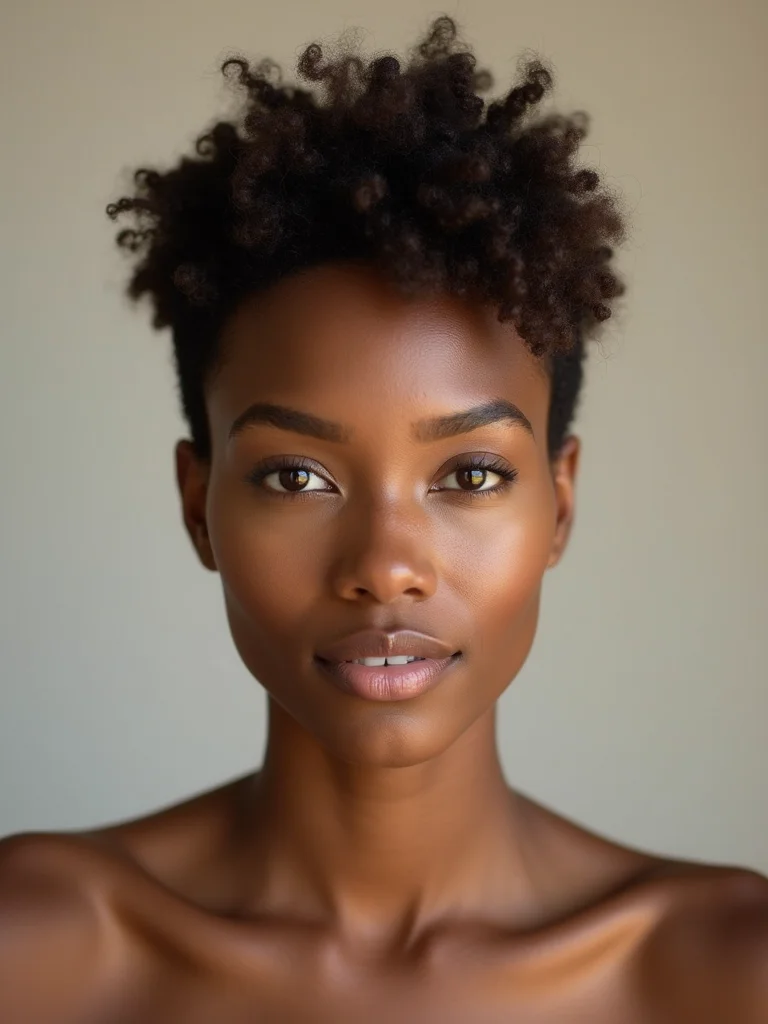
Wavy hair sits in an awkward spot: too much movement to behave like straight hair, too little to clump like curls. Most cuts fight that in-between. The wolf cut leans into it. Its choppy layers turn a wave’s natural bend into real, springy texture, which is why a wavy wolf cut is the easiest version of this whole trend to wear.
Here is who it flatters, how the cut is built, and how to style it without heat, plus the upkeep that keeps the waves alive. Most of it comes down to working with your wave.
The Quick Read
- A wavy wolf cut turns your natural wave into springy, textured movement
- It is the most forgiving, lowest-effort version of the wolf cut
- Most styling is heatless: scrunch, diffuse or air-dry, and go
- Budget about $70 to $120, with a trim every couple of months
- Layer placement and fringe choice decide how it flatters your face
Choppy, Layered, Beachy: The Wavy Wolf

At its core, a wavy wolf cut is a shag built to amplify waves. Choppy, layered crown pieces add lift, the mid-lengths are textured for swing, and the ends are left piecey so the wave breaks up into a beachy, undone finish. The cut gives your wave room to show off.
Wolf cut versus plain shag on waves
What makes it specifically a wolf cut, rather than a plain shag, is the contrast between a shorter, lifted crown and longer, textured ends. That gap is where the volume lives.
On waves, all of this happens with very little product. A salt spray and a scrunch is often the whole styling routine.

Which Faces the Wavy Wolf Flatters Most

Wavy hair is the texture I most often talk women into a wolf cut on, because the payoff is so easy. It flatters most faces, but the layers and fringe do the fine-tuning. Round faces gain length from crown height and a longer fringe, while square jaws soften under wispy, face-framing layers.
The one group I steer carefully is very fine wavy hair, where heavy layering can thin the ends. For that hair I keep the texture light and the perimeter full.
| Hair | Best length | Styling base |
|---|---|---|
| Fine waves | Shoulder length | Mousse, low diffuse |
| Thick waves | Mid to long | Salt spray, diffuse |
| Wavy-curly | Shoulder to long | Curl cream and gel |
Key Elements: Layers, Fringe, and Perimeter

Three things make or break a wavy wolf. The layers control where the volume sits, the fringe frames the face, and the perimeter decides whether the shape holds or falls into a triangle.
Why the perimeter matters on waves
On waves, I use point-cutting to keep every layer soft, since blunt layers can stack into bulk at the sides. The perimeter stays a little heavier to anchor the shape.
The fringe is the most personal choice. A curtain fringe suits almost everyone, while a piecey or micro fringe pushes the look bolder.
A Soft, Airy Wolf Cut for Fine Hair

Fine wavy hair gains the most from a wolf cut, as long as the layering stays gentle. Soft, airy, feathered layers fake the fullness fine waves lack, and the wave adds the movement, so fine hair finally looks like it has body. What matters is light thinning and a full perimeter, so the ends never go wispy.
- Ask for light, feathered layers and a full perimeter
- Scrunch a mousse for hold, then diffuse on low for lift
- Skip heavy oils that flatten fine waves at the root
The worry I hear most from wavy clients.
❌ Myth: Myth: layers make wavy hair frizzy
✅ Reality: Fact: point-cut layers add movement; frizz comes from over-thinning, not from layering itself.
❌ Myth: Myth: a wavy wolf needs daily heat
✅ Reality: Fact: it is built to air-dry, and heat actually flattens the texture it relies on.
Choppy Wavy Wolf Cut for Thick Hair

Thick wavy hair is made for a choppy wolf, once the weight is managed. I carve interior layers to debulk so the waves move freely, which keeps thick hair from spreading wide at the sides by afternoon.
The reward is huge volume with control, the kind thick waves rarely get to show. Choppy ends give it grit and keep it from looking heavy.
Scrunch a salt spray, diffuse on low, and let the texture do the work. Book a trim around the two-month mark, since thick hair fills back in fast.
Curly-Wavy Hybrid Wolf Cut

Some hair lives between wave and curl, and a wolf cut handles that hybrid beautifully. The layers are shaped to let the looser sections wave and the tighter sections spring, and on this texture I cut dry so the real pattern guides the shape.
Define with a curl cream layered under a light gel, then diffuse on low. The hybrid texture rewards a hands-off dry.
- Ask for a dry cut so mixed waves and curls are read true
- Use a cream-then-gel combo for definition and hold
- A curly wolf cut approach suits this in-between texture
Not sure which wavy wolf is yours? Start here.
1If your waves fall flat and fine
Go soft and airy: light layers at shoulder length.
2If your waves are thick and wide
Go choppy: interior debulking to free the movement.
3If your hair is between wave and curl
Go hybrid: a dry cut that reads both patterns true.
Shoulder-Length Wavy Wolf Cut

Shoulder length is the sweet spot for a wavy wolf, since it is long enough to swing and short enough to feel light. The waves hit their natural bend right around the shoulder, so the layers stack into easy, bouncy movement with no styling effort.
It is the length I recommend most for first-timers, because it is versatile and grows out kindly.
- The most versatile length for a wavy wolf
- Long enough to tie back, short enough to stay light
- A shoulder-length wolf cut suits almost every face
Long Wavy Wolf With Face-Framing

If you want to keep your length, a long wavy wolf adds internal layers and face-framing without losing your inches. The interior layering builds movement while the length stays, and the face-framing pieces frame your features up front.
Long waves can go heavy at the bottom, so the internal layers are what keep them from dragging flat. The face frame lifts the eye up.
Scrunch a mousse, rough-dry with your hands, and a long wolf cut keeps long waves bouncy and full of life.
A few terms worth knowing before you book.
📖Point-cutting
Cutting into the ends vertically to soften them and break the wave into pieces.
📖Perimeter
The outer length line; kept heavier on waves to anchor the shape.
📖Plopping
Cupping wet waves in a tee to encourage bend before they dry.
Bangs Variations to Flatter Your Face

Bangs are the fastest way to personalize a wavy wolf, and your face shape points to the right one. Curtain bangs flatter nearly everyone and grow out softly. A wispy, piecey fringe softens a strong jaw, while a fuller fringe balances a long face. On waves, every fringe is cut a touch long, since the wave springs it up as it dries.
- Curtain bangs: the safe, flattering, easy-grow-out default
- Wispy fringe: softens square or strong-jawed faces
- Fuller fringe: shortens and balances a long face
Broken-In, Undone Wavy Texture

The whole appeal of a wavy wolf is that broken-in, just-woke-up texture, and the cut is built to deliver it with almost no work. Because the layers are choppy and the ends are piecey, a quick scrunch reads as intentional, never messy. This is the version for women who want to look pulled-together without trying, and it is a true wash-and-go once the cut is right.
- Scrunch a salt spray into damp hair and let it dry
- Finger-tousle once dry; never brush waves out
- Day-two waves revive with a water-and-spray spritz
A No-Heat Defined Wavy Routine

You can get defined, bouncy waves with zero heat, which keeps the texture healthy and the routine short. Set the shape on soaking-wet hair, encourage the wave with a scrunch or a few loose twists, and let it dry undisturbed. The cut holds the shape, so the styling just enhances it.
- Apply product to soaking-wet hair, then scrunch upward
- Rope-twist a few sections for looser, defined bends
- Clip the roots while drying for lift, then leave it alone
Airy, Touchable Volume and Hold

Waves want hold that moves, not hold that freezes. The goal is airy, touchable volume, which means building product light to heavy and stopping before the wave goes crunchy. A little goes a long way on waves.
Layering product for movable hold
Start with a mousse for soft hold at the roots, add a salt spray through the mid-lengths for grip, and skip the heavy gels that can flatten a wave.
If your waves fall by afternoon, a dust of texture powder at the roots brings the volume back without weight.
Wavy Wolf Cut Specifics

A few specifics separate a great wavy wolf from a so-so one. The crown layers should start short enough to lift, the fringe should be cut dry so the wave is read true, and the ends should be point-cut to break the wave into pieces. Get those three right and the cut almost styles itself, which is exactly why waves love this shape.
- Crown layers short enough to build real lift
- Fringe cut dry so the wave spring is accounted for
- Point-cut ends so the wave breaks into piecey texture
Maintaining the Airy Layered Fringe

The fringe is the first part of a wavy wolf to grow out of shape, so it needs the most attention. The layers can stretch to a trim every couple of months, but a wavy fringe creeps into your eyeline in weeks.
Keep a small spray bottle and a little cream by the sink to reset the fringe between washes, finger-coiling the pieces back into their wave.
- Trim the fringe every three to four weeks, the layers less often
- Reset the fringe with water and a little cream between washes
- Reshape the fringe, and let the layers grow with the rest
Waves Tailored for Every Occasion

One quiet strength of the wavy wolf is how it shifts with the day. The same cut can air-dry into beachy texture for the weekend, then take a soft wand wave and a gloss spray for something polished at night. The layers hold both.
For a dressier finish, smooth the face-framing pieces and add shine; for everyday, let it do its undone thing. The cut carries either way.
- Daytime: air-dry beachy with a salt spray
- Evening: a loose wand wave and a shine spray
- Pulled-up: a soft half-up shows off the layers
Wavy Wolf Cut Questions
?Is a wavy wolf cut hard to style?
It is one of the easiest cuts to live with. Most days it is a scrunch of salt spray and an air-dry or low diffuse. The cut holds the shape, so the styling just brings the wave out.
?Will layers make my wavy hair frizzy?
Not when they are point-cut for your texture. The culprit is usually brushing the wave out once it is dry, or ends cut too fine. Ask your stylist to keep the layers soft and the perimeter full, and finger-style only once it is dry.
?How often does a wavy wolf cut need trimming?
The layers can stretch to a trim every couple of months, but a fringe needs a quick trim every three to four weeks since waves spring it up fast. Reshape the fringe and let the layers grow with the rest.
?How much does a wavy wolf cut cost?
Expect roughly $70 to $120 for the cut depending on your salon and city, with a fringe trim every few weeks if you have bangs, often free if you booked the cut there.
Let the Wave Lead
The reason a wolf cut works so well on wavy hair is that it stops fighting the wave and starts using it. The choppy layers, the point-cut ends, and the heavier perimeter all exist to turn that awkward in-between texture into springy, beachy movement, with barely any styling on your part. Few textures take to this cut so naturally.
So if your waves have been hanging flat or behaving like neither straight nor curly, this is the shape that finally lets them do their thing. Pick your length and fringe, find a stylist who point-cuts texture, and then mostly get out of your wave’s way.
Where to Next