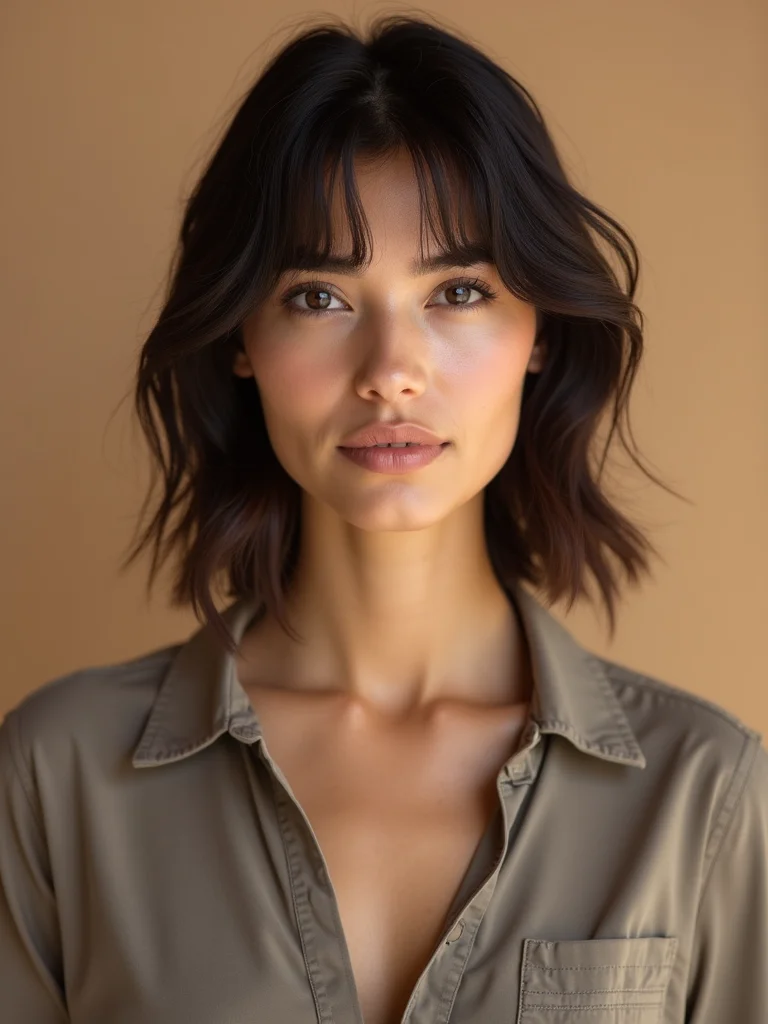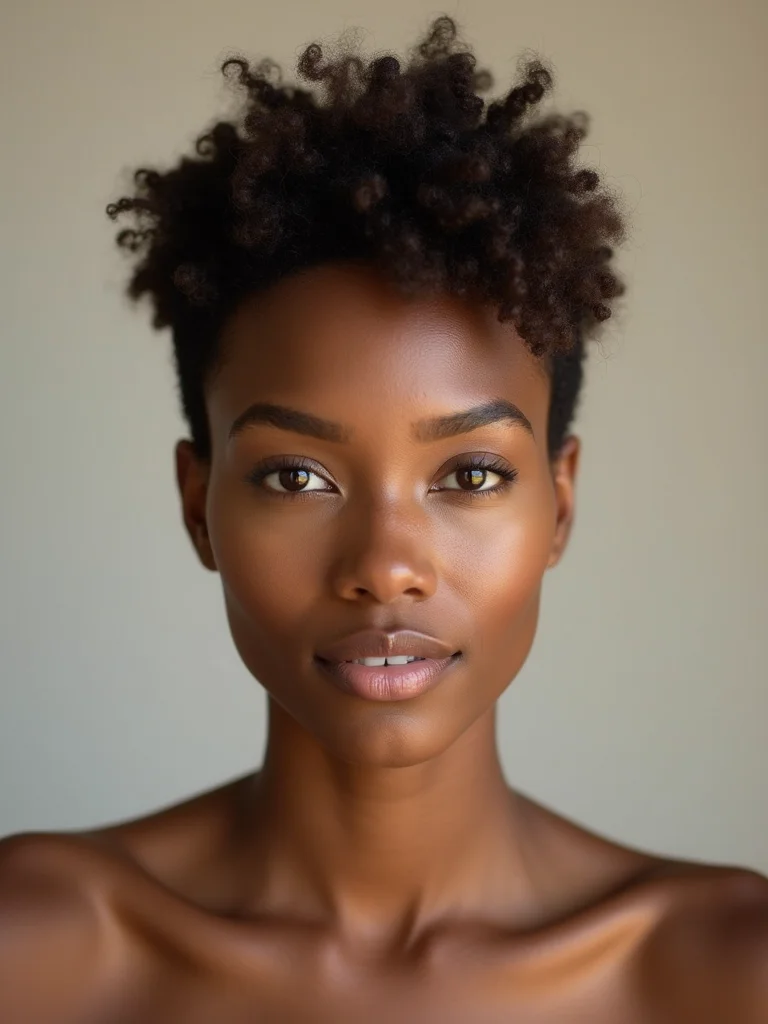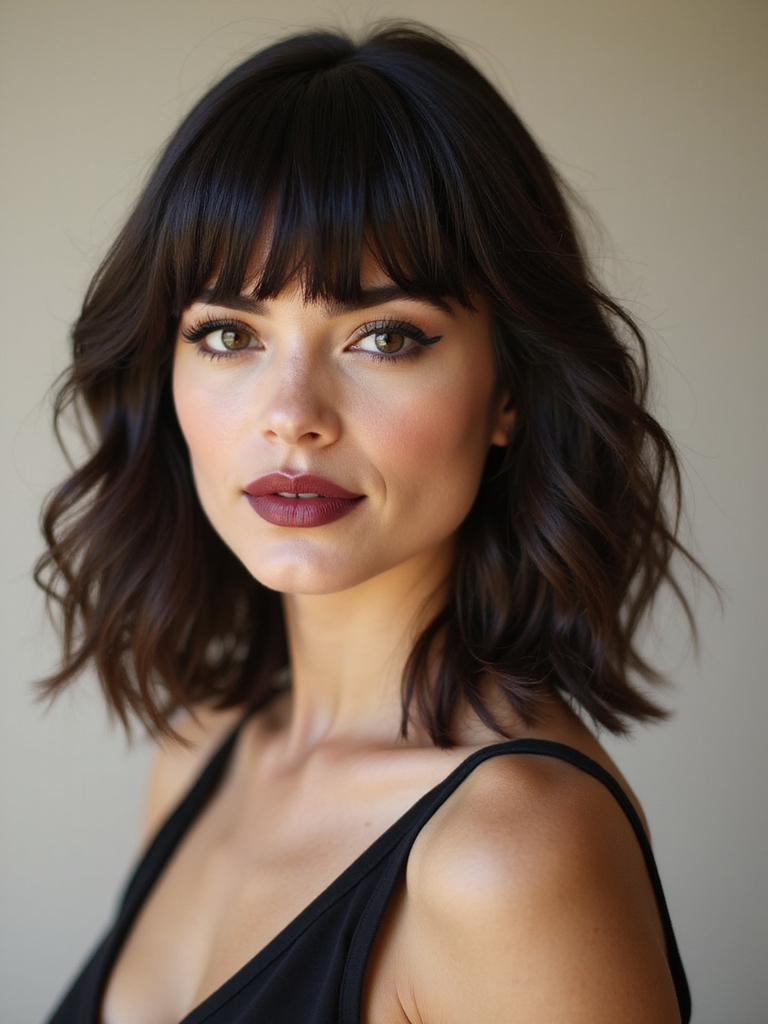
A stylist once handed a client a mirror right after finishing her cut and watched her go straight for the fringe first, ignoring the length entirely. That is usually how it goes with shoulder-length hair with bangs: the length sets the stage, but the fringe is what people actually react to.
The catch is that bangs are also the detail people regret most when they pick the wrong one. Below are the versions worth knowing, sorted by fringe type, with a straight read on who each one flatters and what it actually costs in upkeep.
Choosing Your Fringe, Fast
Does the fringe or the length actually make this look work? The fringe, almost every time. The shoulder length is just an easy, grown-up base; the specific bangs are what turn it into a look people notice.
Which bangs need the least upkeep? Curtain, shadow, and long blended bangs grow out with barely a seam. Blunt and micro bangs sit at the other end, needing their own trim between full cuts.
Can curly or wavy hair wear bangs the same way straight hair does? Not quite the same way. Curly and wavy textures need the fringe cut dry, in the pattern it actually falls into, or it comes out shorter than planned.
Soft Curtain Bangs With an Air-Dried Wave
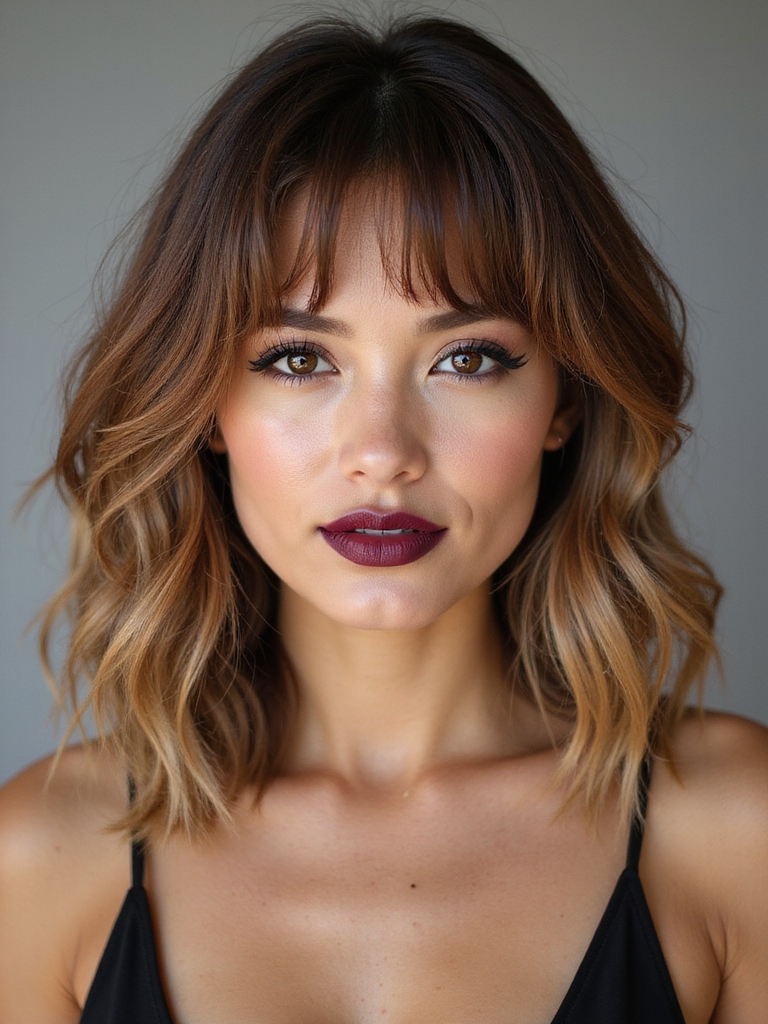
Curtain bangs are the fringe most associated with this whole look, parted in the center and swept softly to either side. On shoulder-length hair with a loose, air-dried wave, this is the easiest version of the trend to actually live in day to day.
Where this fringe wins is the grow-out: it blends into the surrounding layers as it lengthens instead of hitting an awkward stage. For the full cutting method, see our curtain bangs guide.
- Flatters nearly every face shape without much adjustment
- A round brush pointed away from the face adds lift; a rough air-dry works almost as well
- The most forgiving fringe here if you change your mind later
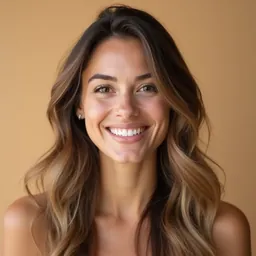
A Blunt Fringe on a Sleek Lob
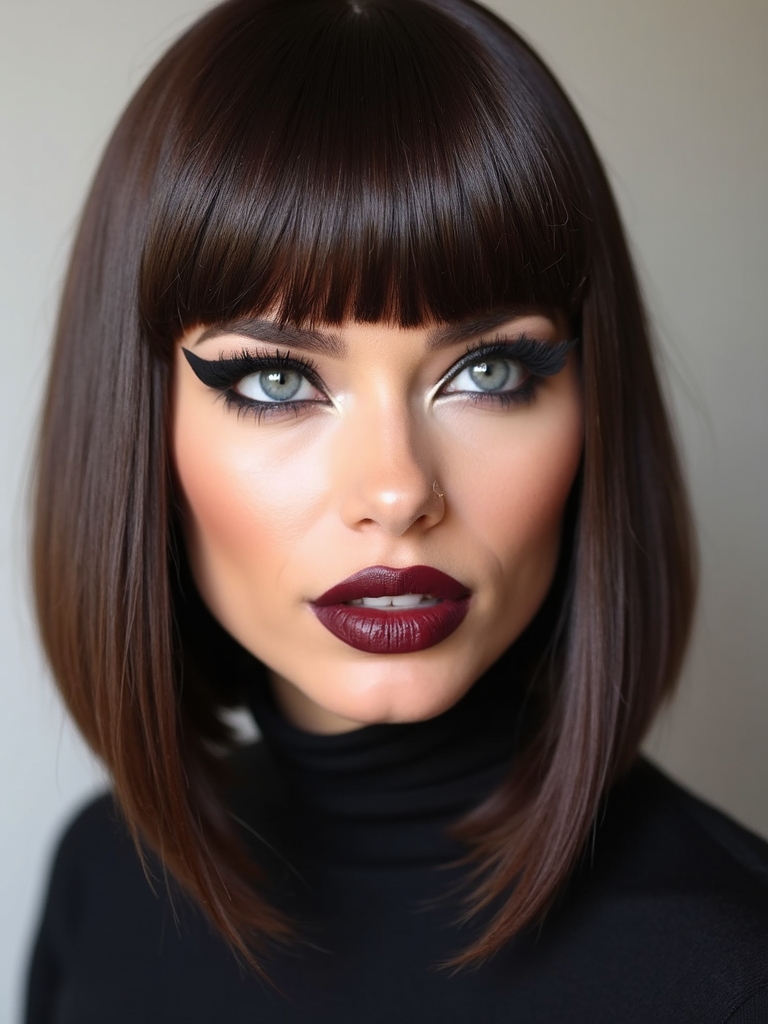
A blunt fringe cuts a hard, uninterrupted edge just above the eyebrows, and paired with a sleek shoulder-length lob it turns into a sharp, fashion-forward statement rather than a soft one.
The Highest-Upkeep Pairing Here
The catch is density. A blunt line needs enough hair underneath to look crisp rather than sparse, so it suits straight to loosely wavy hair best. It is also the fringe on this list that asks for the most frequent attention, since it shows unevenness in the growth faster than any other style here.
A flat iron most mornings keeps the line sharp; skip a day and the edge starts to soften on its own.
Two curtain-bang myths worth clearing up:
❌ Myth: Curtain bangs only work with wavy hair.
✅ Reality: They work on straight hair too; a round brush does the job the natural wave would otherwise handle.
❌ Myth: Curtain bangs need daily styling.
✅ Reality: Once they’re grown into the layers, most days need nothing more than fingers and a little product.
Wispy Bangs With Tousled Texture
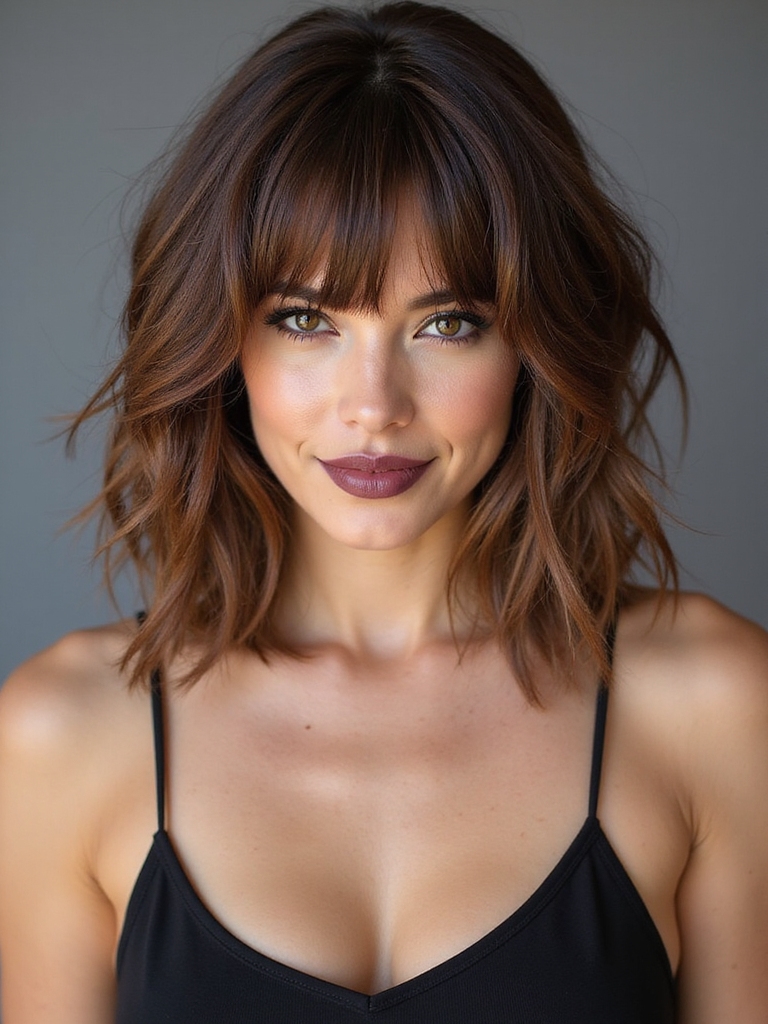
Wispy bangs are thin and see-through, a few delicate pieces that graze the brows rather than a full curtain. On tousled, textured shoulder-length hair, they look like they simply grew that way.
The Gentlest Way Into Bangs
They soften a tall forehead, suit fine hair particularly well, and grow out without ever forming a hard line. Where a blunt fringe demands commitment, this one barely asks for any.
A little texture spray worked through with fingers is the entire routine most mornings; there is no brush or heat involved.
Feathered Face-Framing Layers
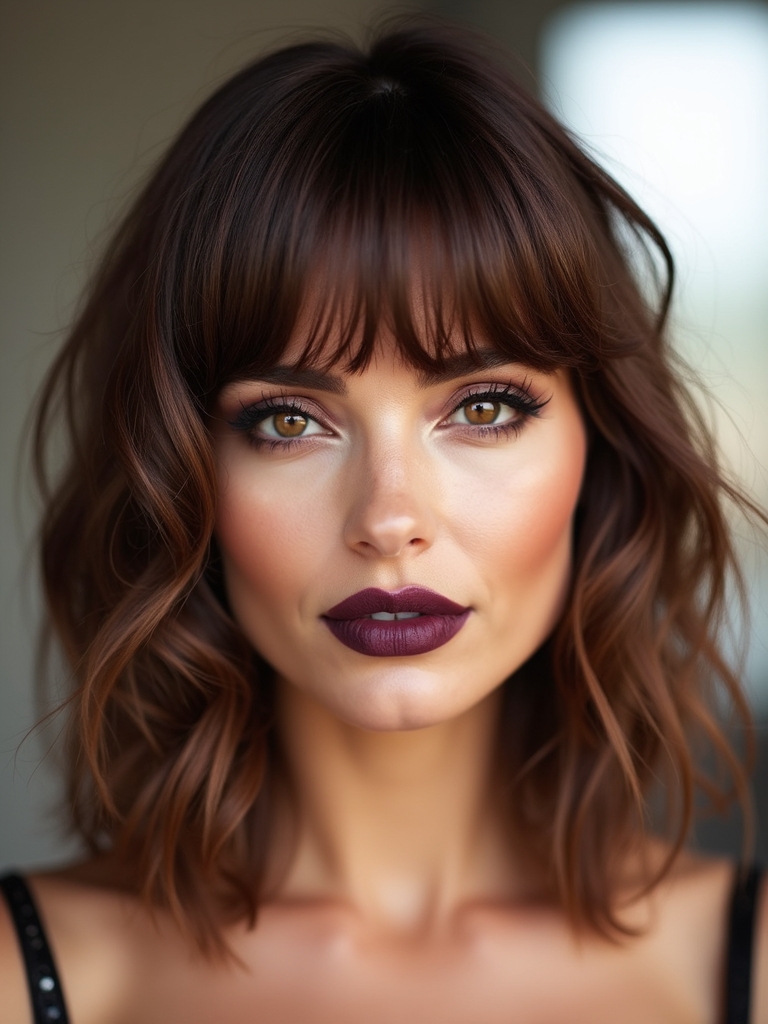
Sometimes the most flattering fringe is barely a fringe at all. Feathered face-framing pieces start short near the cheekbone and lengthen to merge with everything behind them, softening the face without the full commitment of true bangs.
For Anyone Who Panics at the Word Bangs
This is the option for someone who wants a fringe’s softening effect but wants zero risk of an awkward grow-out phase. The pieces are already part of the layering, so there is nothing separate to maintain on its own schedule.
Point a blow-dryer at the front sections while a brush pulls them back and slightly away from the face; a little bend is all it needs to sit right.
Drying feathered face-framing pieces so they sit right:
1Start damp, not soaked
Rough-dry to about eighty percent before picking up a brush.
2Dry back and slightly away
Pull the front pieces back off the face rather than straight down, then release.
Side-Swept Bangs, Polished
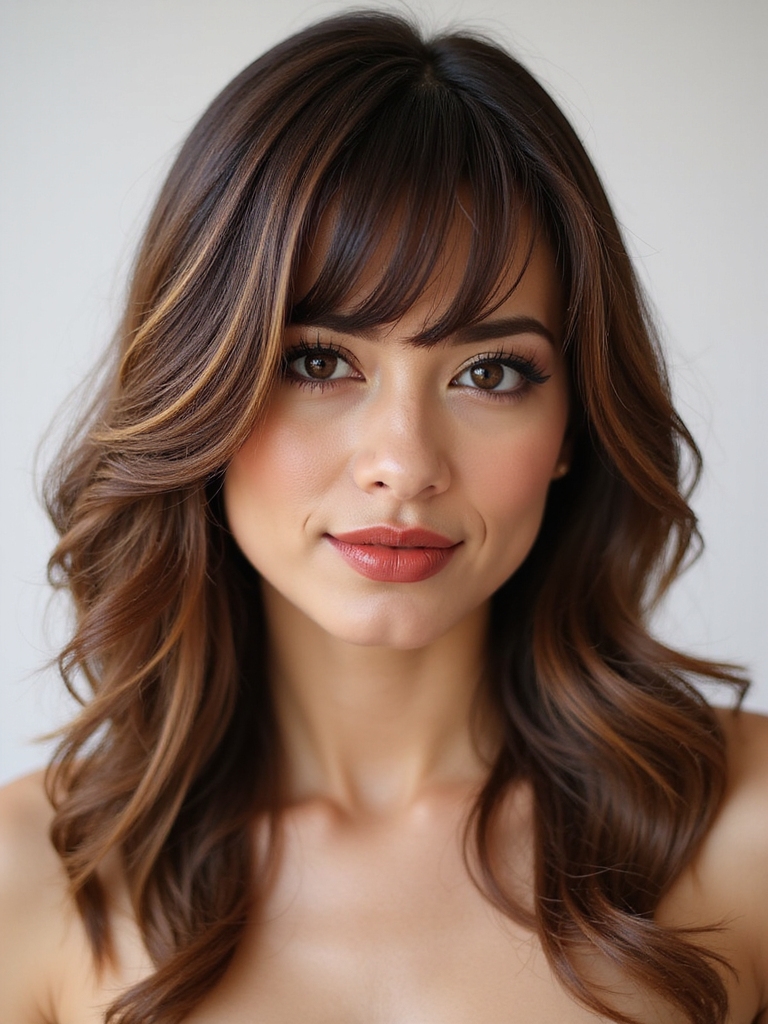
Side-swept bangs cut on a diagonal, sweeping toward one side until they merge with the longer pieces framing that side of the face. On a polished blowout, the effect reads grown-up and glossy rather than casual.
The diagonal line has a quiet slimming effect on rounder faces and takes the edge off a strong jawline; it has a practical upside too, since a growing-out fringe hides inside the sweep for weeks longer than a straight-across bang would.
Dry in the direction of the sweep with a round brush, curving the ends inward. A smoothing cream keeps the polish through the day.
A Curly Shag With Light Bangs
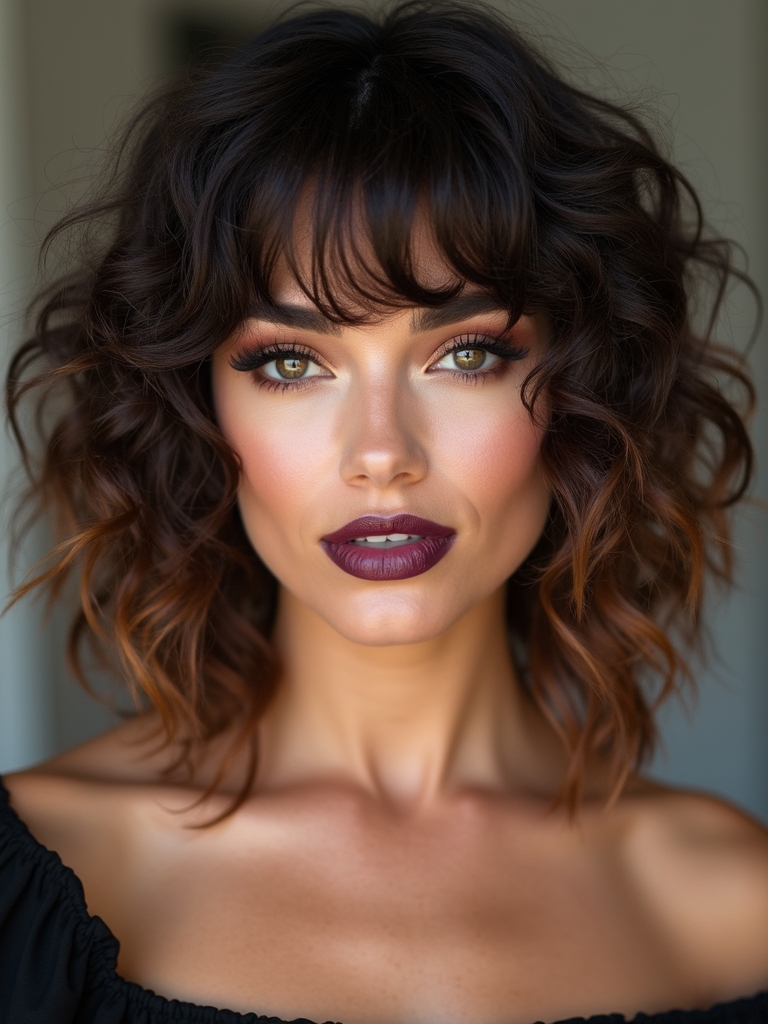
Curly and coily hair can wear bangs well, provided the fringe is cut for the curl rather than against it. On a shoulder-length curly shag, a light, springy fringe frames the face in soft coils that move with the rest of the texture.
The regret people describe with curly bangs almost always traces back to a wet cut. Cutting it dry, in its resting pattern, and leaving a little extra length for the spring-up is what keeps the fringe from landing shorter than planned.
A Textured Lob With a Piecey Fringe
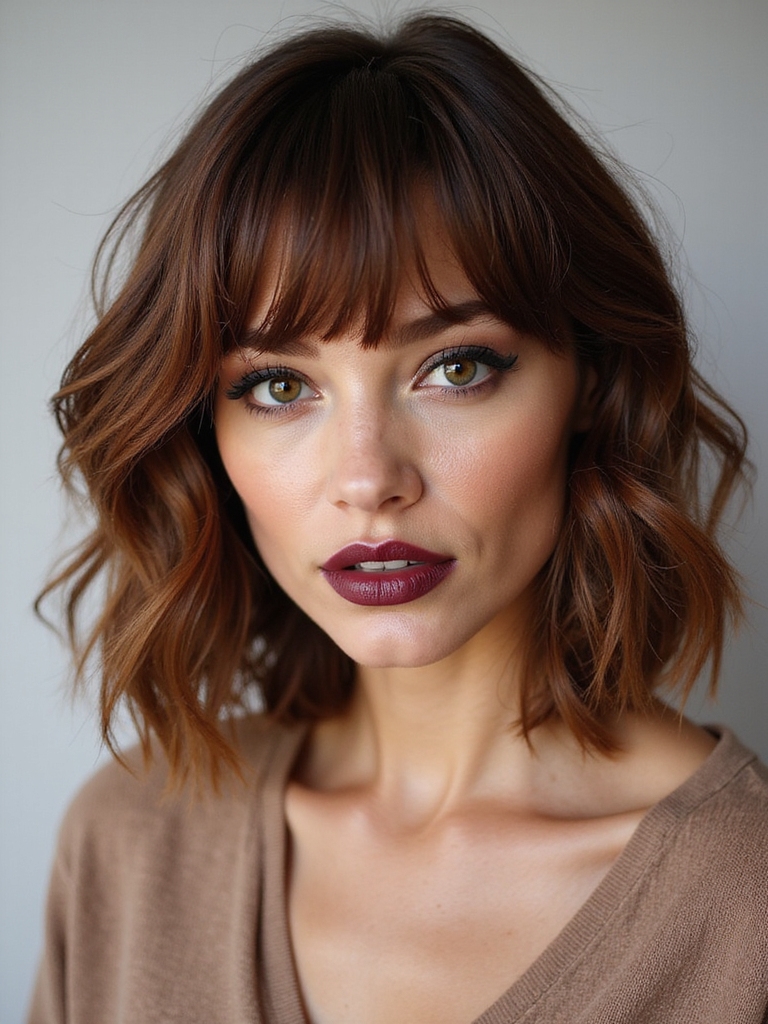
A piecey fringe is cut into separated, tapered points instead of a solid block, and on a textured lob it matches the broken-up movement already happening in the lengths. On fine hair specifically, this separation reads as texture instead of thinness, which a solid blunt line cannot fake.
- A razor or careful point-cutting creates the separated pieces
- A matte paste worked through the fringe and ends keeps them distinct
- Keep product light, or the pieces clump instead of staying separated
Quick definitions that make the consultation go smoother.
📖Point-cutting
Snipping into the ends at an angle to soften a blunt line and add texture.
📖Face-framing
Layers cut shorter at the front that curve toward the cheekbones and jaw.
📖Root lift
Volume added at the base of the hair, usually with a spray or a round-brush blowout.
📖Grow-out stage
The window where a fringe is too long to sit right but too short to blend into everything around it.
Choppy Layers With Micro Bangs
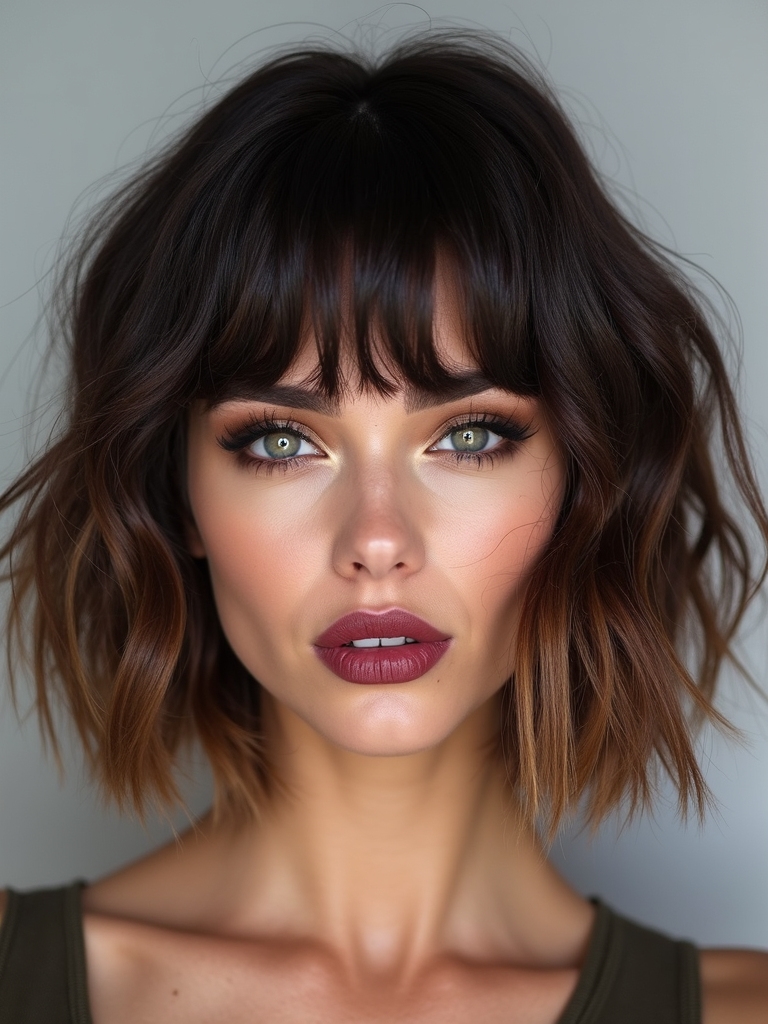
Micro bangs sit high above the brows, the boldest fringe on this list, and against choppy shoulder-length layers they create real contrast instead of blending in.
A Statement, Not a Whim
The longer, layered lengths balance the short fringe so the whole thing lands as intentional rather than severe. Where this pairing struggles is upkeep: the fringe needs shaping roughly every three weeks or it loses the sharp line that makes it work.
Go in knowing that, and it stays one of the most striking looks in this whole guide.
Shadow Bangs on a Wavy Cut
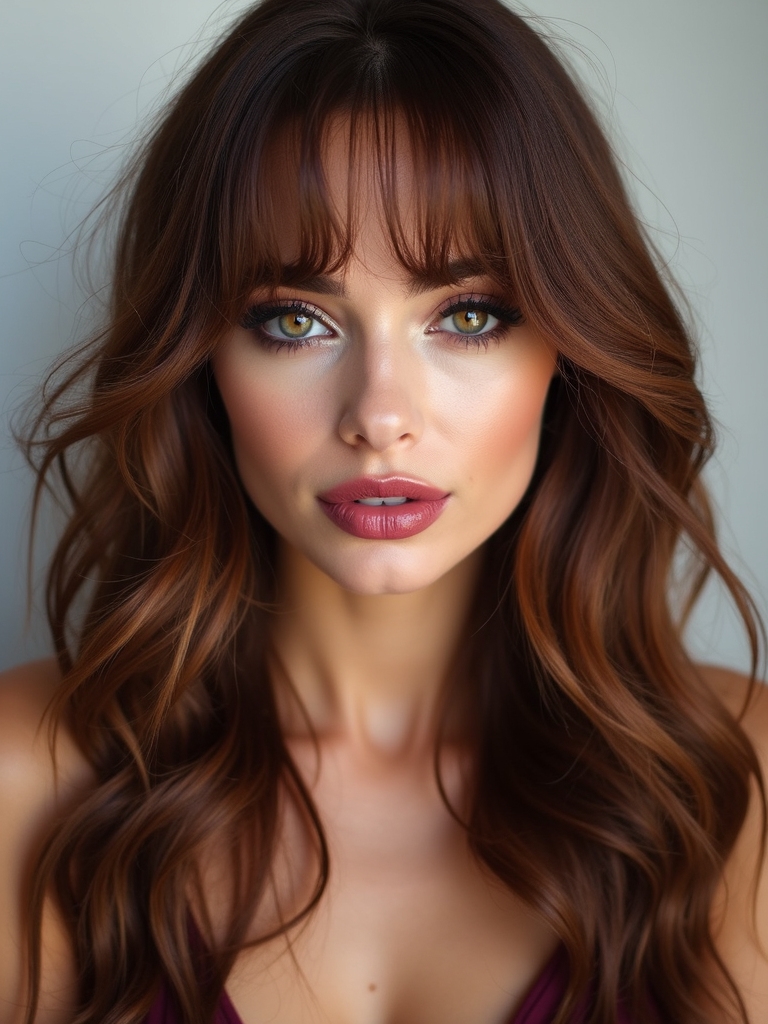
Shadow bangs are longer and softer than curtain bangs, landing around the cheekbones so they cast a gentle shadow at the sides of the face rather than a defined fringe.
Bangs for Someone Who Isn’t Ready to Commit
On a wavy shoulder-length cut they barely register as bangs at all, more a soft veil of face-framing pieces than a true fringe. That subtlety is the whole appeal for anyone nervous about the change.
They grow out so gradually that a dedicated bang trim is sometimes optional entirely.
Bottleneck Bangs With Subtle Layers
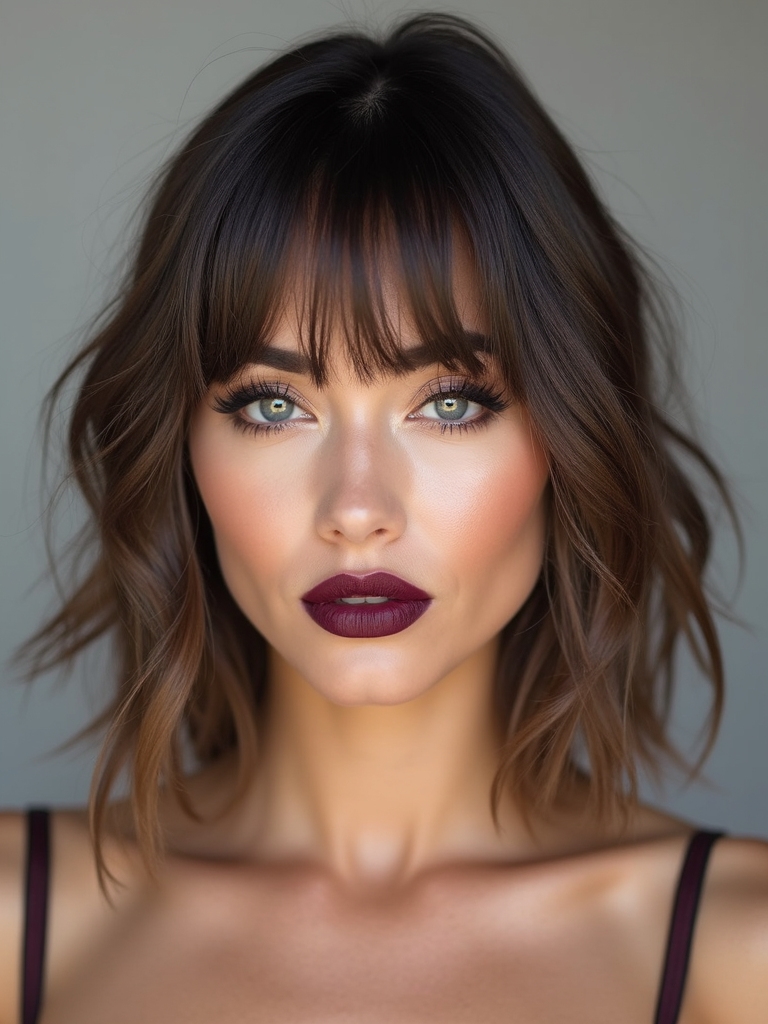
Bottleneck bangs split the difference between a curtain and a full fringe: shorter and rounder in the center, then lengthening at the sides like the neck of a bottle.
Built for Round and Square Faces
On shoulder-length hair with subtle layers, this shape frames the eyes while staying soft at the edges. Round and square faces benefit most, since the center creates a vertical line that visually narrows the widest part of the face.
Use a brush to curve the longer sides in toward the cheeks as you dry, not out and away from them.
Long Bangs Blended Into a Collarbone Cut
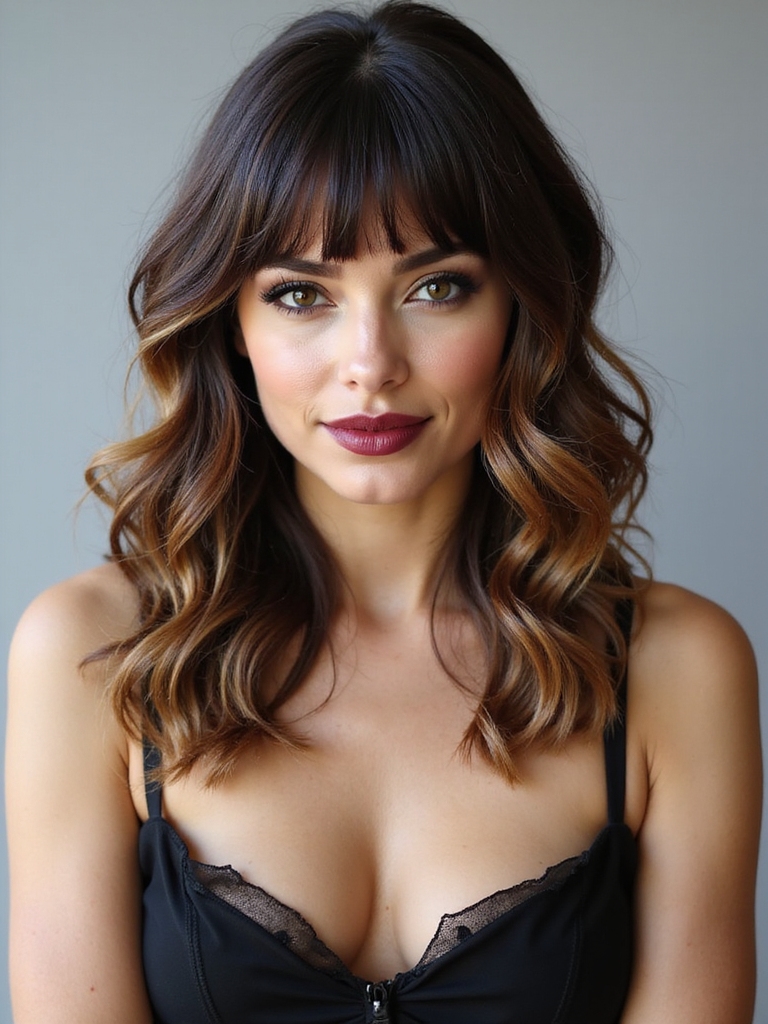
Long bangs reach the cheekbones or just below and blend so smoothly into a collarbone-length cut that there is no obvious line marking where the fringe ends.
This is the fringe for someone who wants the framing effect of bangs with almost none of the upkeep that usually comes with them. Because the length is already long, it can be tucked behind the ears on any day styling feels like too much.
- Grows out invisibly, with no awkward in-between stage
- Tucks behind the ears in seconds on low-effort days
- The lowest-upkeep way to wear a fringe on this entire list
A Long 70s-Style Fringe
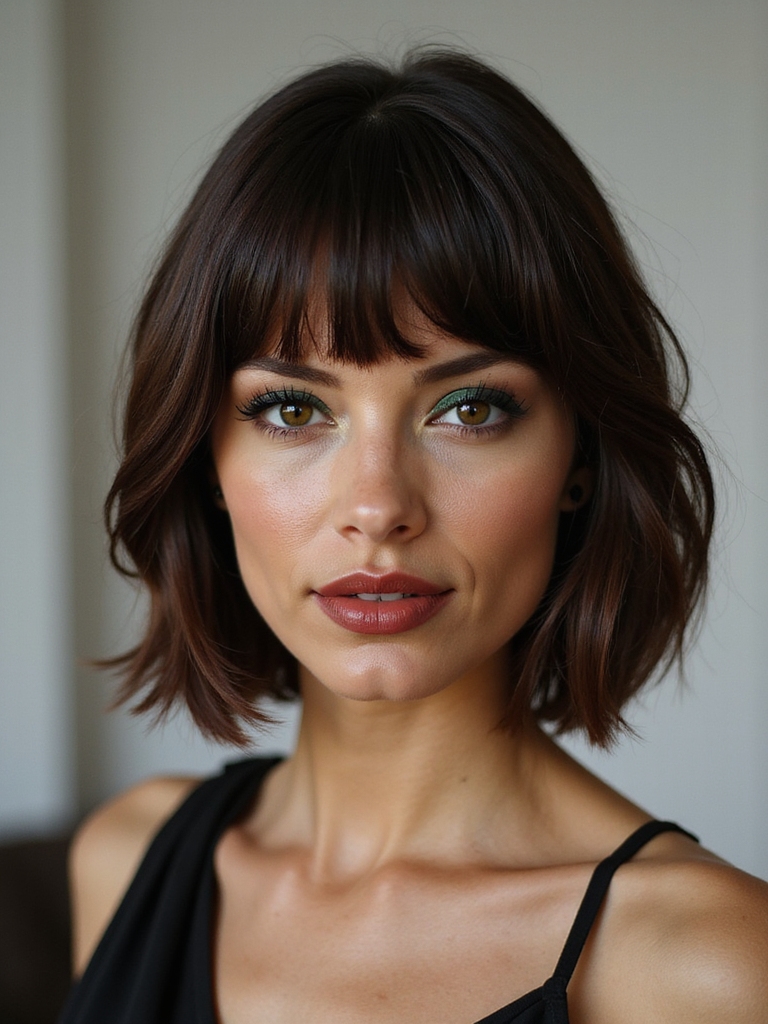
The long seventies fringe, sometimes called Birkin bangs, falls full but soft right to the lash line, with a feathery, slightly undone edge.
On shoulder-length hair with minimal layers, it brings instant retro character without tipping into costume. A full fringe like this is a genuine commitment, but the extra length keeps it from feeling fussy day to day.
- Suits straight to wavy hair best, since a full fringe needs some density
- Push it to one side for a softer look, or wear it straight down for full retro effect
- Reads expensive with almost no daily effort once it’s grown into shape
A Voluminous Round-Brush Blowout
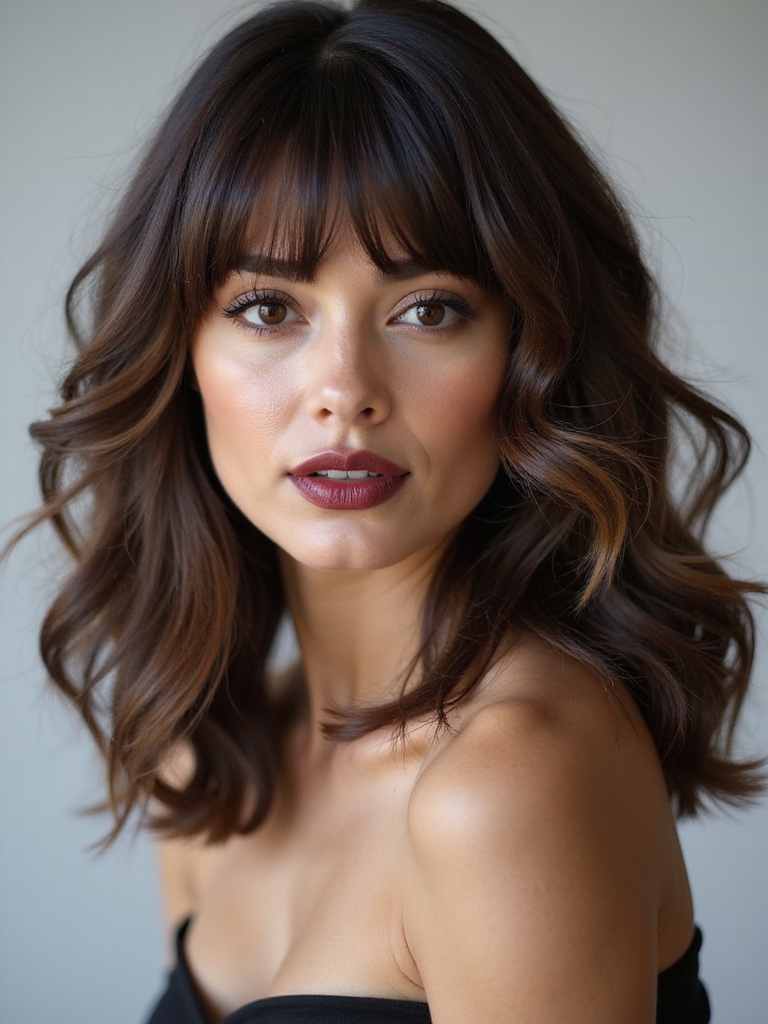
Sometimes the fringe is really about the bounce. A voluminous round-brush blowout paired with a soft, feathered fringe creates a lifted, polished look, the kind that reads put-together even on a day that was anything but.
- Fine hair gets the most dramatic lift from this styling method
- The fringe dries up and back for height instead of flat against the forehead
- Budget real time for it: a full round-brush blowout runs closer to twenty minutes than five, and a salon blowout service typically runs $45 to $65
💡Growing It Out
If this fringe ever feels like too much, it blends into a long bob within a few months rather than needing a fresh cut; the length does the transition work on its own.
Beachy Waves With Center-Parted Bangs
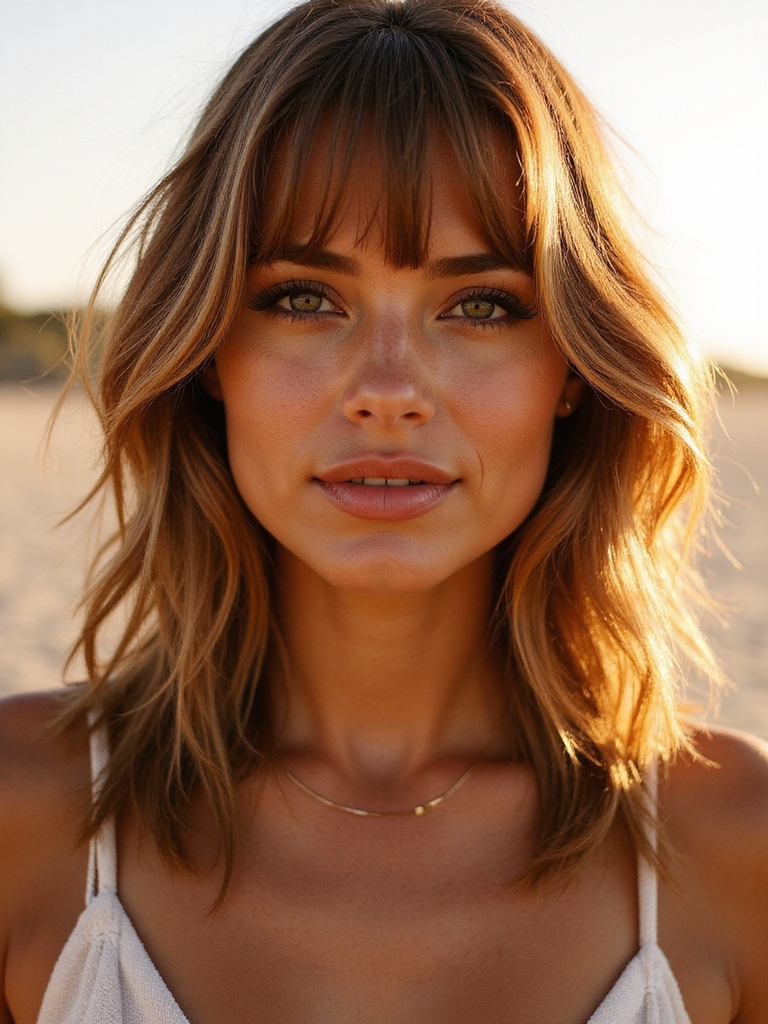
Center-parted bangs over loose, beachy waves make up the warm-weather version of this whole look: relaxed, a little undone, and built for a hands-off morning.
Salt Spray Does Most of the Work
The center part frames the face evenly while the waves keep everything soft and casual rather than styled. It looks like real effort went into it, when most days none really does.
Mist a sea-salt spray through damp hair, scrunch it in, then leave it completely alone until it dries; separate the fringe with fingers once everything is set.
A Sleek Middle-Part Lob With Curtain Bangs
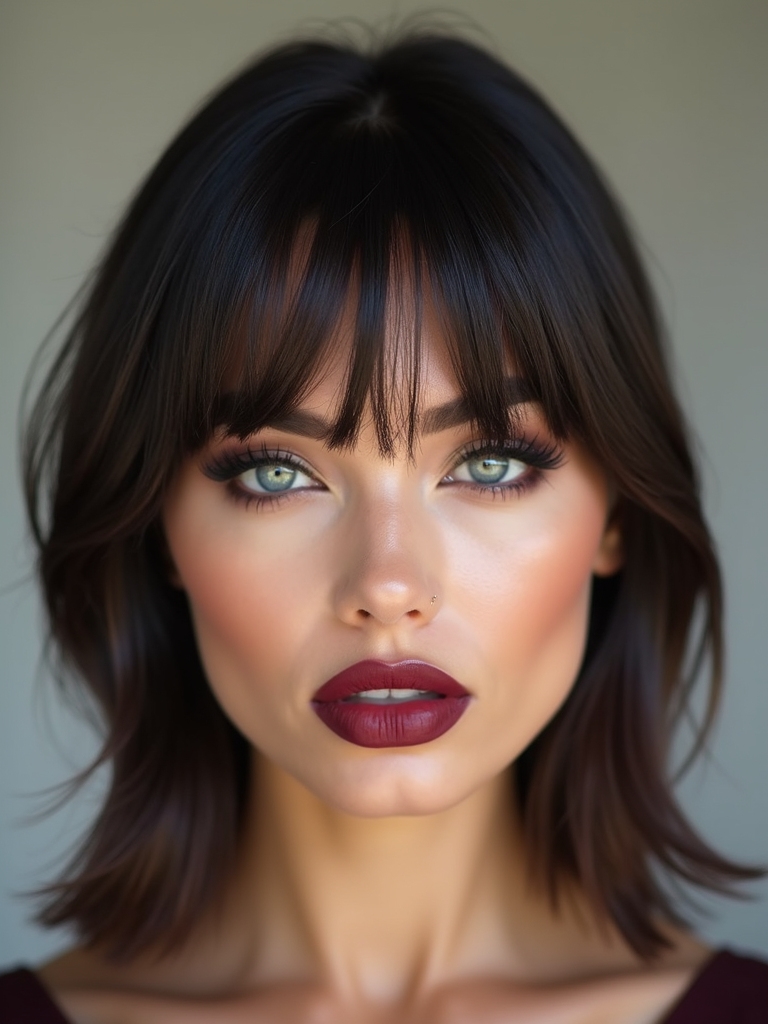
For a more polished take, a sleek middle-part lob with curtain bangs sits at the clean, expensive-looking end of this whole trend. The straight, glossy lengths and the soft curtain fringe balance precision with movement, which is why the combination looks so pulled-together.
- Blow the lengths smooth using a large round brush, then finish with a drop of glossing serum
- The curtain bangs keep even this sleek version from feeling severe
- Works especially well on straight to gently wavy hair
How to Get the Look
This look is not one specific fringe; it is whichever fringe actually fits your face and your patience for upkeep. Match the bangs to your texture first, since curly, wavy, and straight hair each behave differently under the same cut.
Then be honest about mornings. A blunt or micro fringe rewards someone willing to reach for a flat iron regularly, while curtain, shadow, and long blended bangs reward someone who wants to towel-dry and walk out the door.
Find the Fringe That Fits You
Shoulder-length hair gives a fringe room to be almost anything: soft and barely-there, sharp and graphic, or somewhere comfortably in between. The length does the easy part; the bangs are where the personality actually shows up.
If none of these feel like a clear yes yet, start with the lowest-commitment option. Curtain or shadow bangs grow out kindly enough that a change of mind costs you almost nothing. Which one would you actually reach for on a Tuesday morning?
Where to Next