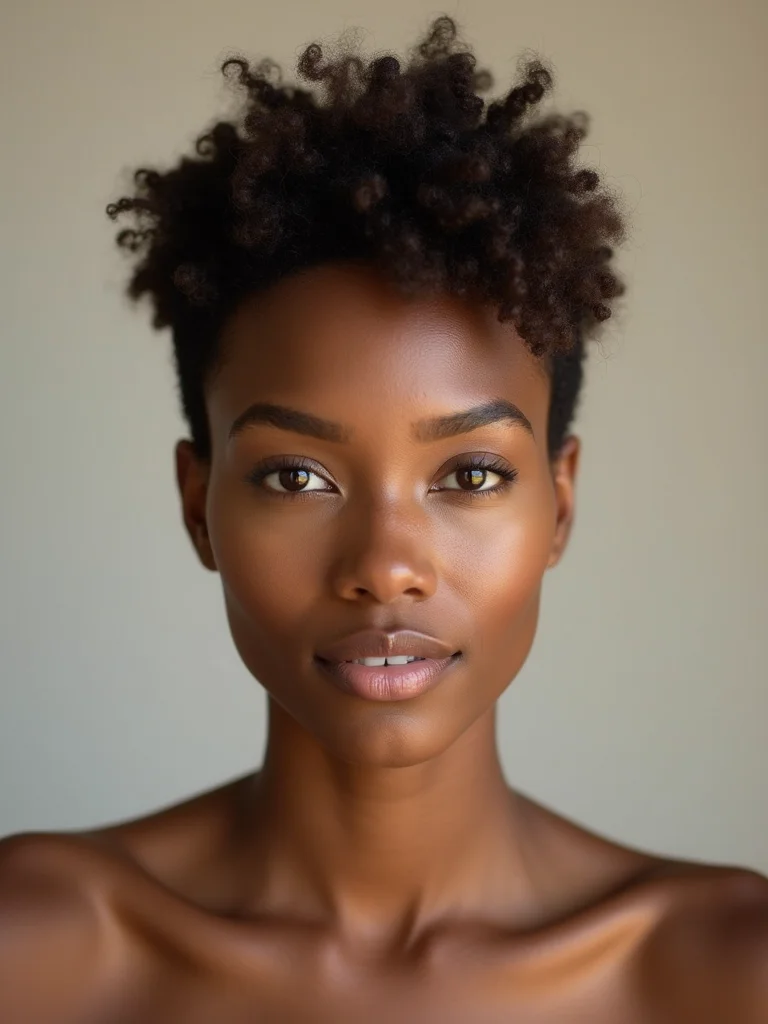
The biggest myth I hear about the shag is that it only works on a certain type of person, all cheekbones and twenty-something cool. That has never been true. The shag is among the most adaptable cuts there is, and at shoulder length it flatters more faces than almost anything else I cut.
The secret is that the layers, the fringe, and where the volume sits all get tuned to your face. Below I walk through the shoulder-length shag for each face shape, then for each hair type and texture, so you can find the version built for yours.
Tuning the Shag to Your Face
| Face shape | What to ask for |
|---|---|
| Round | Long face-framing layers and crown lift to add length |
| Oval | Almost anything; choose by hair type, not correction |
| Square | Feathered layers and a soft fringe to round the jaw |
| Heart | Weight and layers at the jaw, a wider fringe up top |
| Diamond | Volume at the forehead and chin, soft layers at the cheeks |
The Shag for a Round Face

A round face wants length and angles, and the shag is quietly perfect for the job. Its layers naturally draw the eye up and down along the face, and a little crown lift adds the height that visually stretches a rounder face taller.
Keep the face-framing long, falling past the jaw, so it carves a slimming vertical line. Add a side or off-center part to break the symmetry. Keep volume off the cheeks, the one spot a round face reads best left flat.

The Shag on an Oval Face

An oval face is the balanced one, a touch longer than it is wide with a soft jaw, and it can carry almost any shag you like. That is the good news and the mildly frustrating news, because the choice comes down to your hair type and your taste.
Lean into the texture: cheekbone-skimming layers, a curtain or wispy fringe, whatever speaks to you. My one note is to avoid burying balanced features under a heavy, dense fringe, since those even proportions are worth showing off.
- Nearly any shag flatters an oval face
- Choose by hair type and taste
- Keep a heavy fringe from hiding the features
ℹ️Good to Know
The shag is one of the few cuts that truly flatters every face shape, because almost everything about it is adjustable. The length of the face-framing, where the volume sits, and the style of fringe all get tuned to your features, which is why the same cut can balance a round face and a heart-shaped one. It is the closest thing to a universal haircut.
Softening a Square Face With a Shag

A square face has a strong, handsome jaw, and the goal is to soften the corners while keeping the bone structure on show. The shag’s feathered, wispy layers are made for this, blurring the hard line of the jaw with soft, broken-up movement around the face.
A soft or side-swept fringe breaks up a wide forehead at the same time. Let the layers fall below the jaw, past the strongest point of it, and curve the ends inward when you style. The movement is what rounds the angles.
A Shag for a Heart-Shaped Face

A heart-shaped face is wider at the forehead and narrows to a fine chin, so you want to build weight lower down and soften the top. A shoulder-length shag with fuller, more layered movement around the jaw adds the visual width a narrow chin needs.
Curtain bangs are the heart shape’s best friend, softening a broader forehead while keeping the top light. Keep the crown relatively flat and let the volume live at the jaw. Our curtain bangs guide has the fringe details.
A quick read before you book:
1Hair falls flat?
An airy or mullet-inspired shag with crown layers for lift.
2Natural wave or curl?
A wavy or curly shag, cut to spring into your pattern.
3Fine and thin?
Choppy crown layers and a volumizing mousse, lightly thinned.
4Thick and heavy?
Disconnected interior layers to take the weight out.
The Shag on a Diamond Face

A diamond face is narrow at the forehead and chin with striking, wide cheekbones, and the trick is to add width top and bottom while gently softening the middle. A shoulder-length shag handles this gracefully.
Balancing strong cheekbones
Build a little volume at the crown and keep movement down at the jaw to widen both ends. Feathered, cheekbone-skimming layers soften the widest point and keep it lively. A fringe that adds width across the forehead balances the narrow top.
Wide cheekbones are a gift, and the shag’s broken texture frames them instead of competing with them.
The Airy Shoulder-Length Shag

Beyond face shape, the texture of the shag changes everything, and the airy version is the most universally wearable. Light, soft layers feathered through the lengths give it movement without bulk, so it reads relaxed and current on nearly anyone.
This is the shag I cut most often, the easygoing one that air-dries into shape with a scrunch of texture spray and asks for very little. If you are not sure where to start, start here. Our layered shag guide covers it in full.
- Light feathered layers, movement without bulk
- The most universally wearable version
- Air-dries with a scrunch of texture spray
People think a shag is one haircut. It is really a framework I rebuild for every face that sits in the chair.
The Wavy Shoulder-Length Shag

If you have a natural wave, the shag was practically designed for you. The layers give the wave room to spring and clump into soft, defined movement, turning undefined waviness into a cut full of beachy texture.
This is the lowest-effort match on the list, since your hair does most of the styling for you, and the layers simply give the wave somewhere organized to fall once it dries. A wave that used to look shapeless suddenly has a shape to fall into.
Scrunch a sea-salt spray through damp hair and air-dry, then break the feathered ends apart with your fingers. A diffuser speeds it up on busy mornings.
The Curly Shoulder-Length Shag

Curly and coily hair turns a shoulder-length shag into a bouncy, sculptural crown of texture, but only when the layers are cut for the curl. The layering frees each coil to spring and separate, where it would otherwise stack into a heavy weight, and the shape lives or dies on the cut.
I cut every curly shag dry, in its natural pattern, so the layers land exactly where the curls fall, and I keep the perimeter gentle so nothing pulls tight at the hairline. Define with a curl cream, diffuse on low or air-dry, and let it do its thing. Our curly shag guide has the product picks.
- Layers free each coil to spring and separate
- Cut dry, in pattern, so the shape lands right
- Curl cream and a diffuser finish it
💡Stylist Tip
To wake up a shag between washes, mist a little water on the roots and crown, then scrunch in a pea of matte paste and rough-dry for thirty seconds with your head flipped. It revives the texture and crown lift without a full wash, and it is faster than a dry shampoo reset.
A Shag for Fine Hair

Fine hair and the shag are a happy pairing, because the choppy layers create the look of body that fine hair struggles to build on its own. Short, stacked layers at the crown lift the roots, while piece-y ends keep the hair from looking thin and stringy.
The mistake is over-thinning, which can leave fine hair wispy and sparse at the ends, so the layering stays light and deliberate. Add a volumizing mousse at the roots and a light texture spray, skip the oils entirely, and fine hair finally gets some movement and fullness.
- Choppy crown layers fake body and lift
- Strategic layering, never over-thinned
- Volumizing mousse and a light spray, no oils
A Shag for Thick Hair

Thick hair makes a glorious shag once the weight is handled, since there is so much texture to work with. Disconnected, layered cutting removes bulk from the interior so the hair moves and breathes, where before it sat in a dense pyramid.
Removing weight, keeping fullness
The key is taking weight out from underneath while leaving the surface full, so you get all the movement with none of the heaviness. Ask for internal debulking, the kind that thins from underneath and leaves the surface smooth.
Thick hair holds a shag beautifully between cuts, since the weight grows back gradually and the layers keep their movement for weeks.
The Side-Swept Shag

A deep side part and side-swept face-framing give the shag a diagonal line that flatters almost everyone, especially round and square faces. The asymmetry adds instant volume on the fuller side and a slimming sweep across the face.
It is also the easiest way to dress the shag up, since the swept shape reads a touch more polished, a small step up from a center part. Dry the front pieces back and across with a round brush, and switch your part deeper for an evening out.
- A diagonal sweep that flatters most faces
- Adds volume on the fuller side
- A deeper part dresses it up fast
The Bottleneck-Bang Shag

Bottleneck bangs are the clever fringe that narrows in the center and lengthens at the sides, and on a shag they tie the face-framing layers together at the front. They frame the eyes while staying soft and blendable at the edges, so they never feel heavy.
They suit round and square faces especially, softening the width with a diagonal instead of a straight edge. Blow them back and away from center with a round brush so they settle naturally into the surrounding layers.
The Center-Part Shag

The center-part shag is the cool-girl default, modern and a little undone, with the layers falling evenly on both sides of the face. It flatters oval and heart shapes best, since they can carry the symmetry while staying balanced.
It is the easiest way to wear the cut day to day, just part it down the middle and let the layers do the work. For a face that runs round, nudge the part slightly off-center to keep things from reading too wide.
- Modern, undone, layers even on both sides
- Best on oval and heart shapes
- Nudge it off-center for a rounder face
The Mullet-Inspired Shag

For someone who wants more edge, the mullet-inspired shag pushes the layers further, with a shorter, choppier crown and longer pieces through the back and sides. Worn soft and wispy, it reads modern and cool. It is bold, a half-step toward the wolf cut, and it suits a confident wearer who likes a little drama in their hair.
Build the crown volume with a root spray and a rough-dry, then break it up with a matte paste. Our wolf cut guide covers the wilder end of this family.
- Choppier crown, longer back and sides
- Soft and wispy, never costume
- Root spray and matte paste build the edge
The Low-Maintenance Shag

If easy upkeep is the whole point, the shag is one of the smartest cuts you can choose. Because the layers are already soft and disconnected, the cut grows out gracefully, so you can stretch your trims comfortably and it still holds its shape.
The styling is just as forgiving. Most days are a scrunch of product on damp hair and out the door, and the texture only looks better a day or two past a wash. It is the shag for a busy life. The styling ritual is optional. Our short shag guide covers the cropped version.
- Grows out gracefully, trims every eight to ten weeks
- A scrunch of product is most mornings
- Looks better on second-day hair
Styling Tips for a Shoulder-Length Shag
Whatever version you land on, a few habits keep a shag looking like a shag. Always style for separation, not smoothness: scrunch or rough-dry, since brushing it sleek erases the piece-y texture that makes the cut work. Keep your products light, a texture or sea-salt spray and a little matte paste at most, because heavy creams and oils flatten the movement you paid for.
Lean into your natural texture rather than fighting it, since the shag is built to work with waves and curls. And do not skip the trims, which keep the layers sharp; a reshape typically runs $60 to $100 and holds up for roughly two months before the shape starts to soften. Beyond that, the shag rewards a hands-off morning more than almost any cut I know.
Shoulder-Length Shag, Answered
?Does a shoulder-length shag suit every face shape?
Yes. The version just changes with your features: a longer face-framing piece here, a wider fringe there, the volume moved up or down. Ask your stylist to cut to your face, and bring a photo of the finished look you want.
?Is a shag good for fine hair?
It is, in skilled hands. The one thing to confirm at the consultation is that your stylist will keep the layering light, since aggressive thinning is what leaves fine hair sparse at the ends. A dry-finish texture spray beats any cream for holding the lift.
?How often does a shag need trimming?
Most shoulder-length shags hold their shape for eight to ten weeks, since the disconnected layers grow out gracefully. Add a fringe and you will want quicker bang trims in between, but the cut itself is forgiving.
A Shag for Your Face
If you take one thing from all of this, let it be that the shoulder-length shag is not a single haircut you either suit or you do not. It is a flexible framework, tuned by the layers, the fringe, and the volume to flatter whatever face shape and texture you bring to the chair.
So find your face shape and your hair type above, decide which details point to your version, and bring that to your stylist. Done right, the shag is the rare cut that looks intentional yet asks almost nothing of your mornings.
You Might Also Like