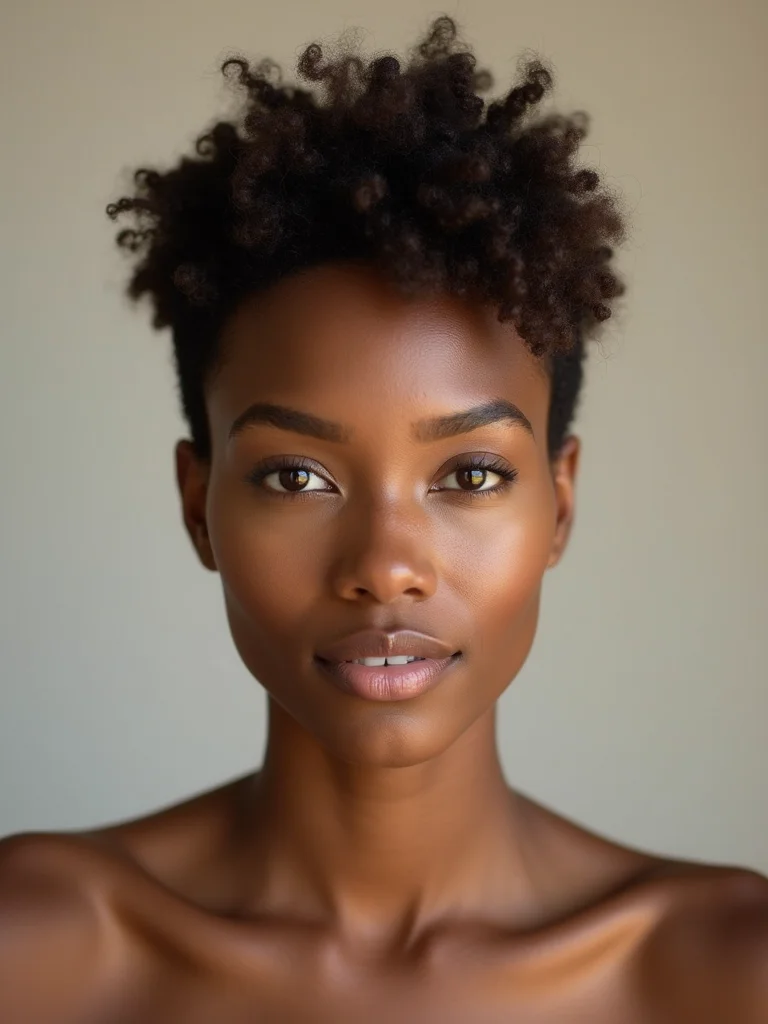
A spike is mostly product. That is the part nobody tells you before the appointment, and it changes what you should be asking for: the cut decides which spike is possible, and your hands decide whether it happens on a Tuesday morning.
Spiky pixie haircut spikes come in about a dozen distinct forms, from soft broken pieces to razored points that could draw blood, and each one wants a different cut underneath and a different jar on the shelf. Fifteen versions follow, each with what it demands of you.
Three Things That Decide Your Spike
- Length on top sets the ceiling. Under two inches you get points; past three you get a quiff. Nothing you buy changes that.
- Product finish matters more than hold strength. Matte paste separates and grips, while a shiny pomade slicks pieces back together no matter how firmly it holds.
- Short cuts show growth fast. Plan on a shape-up roughly every five weeks, around $55 in most salons, and an undercut needs a clipper pass more often than that.
A Textured Spiky Pixie With Tapered Sides
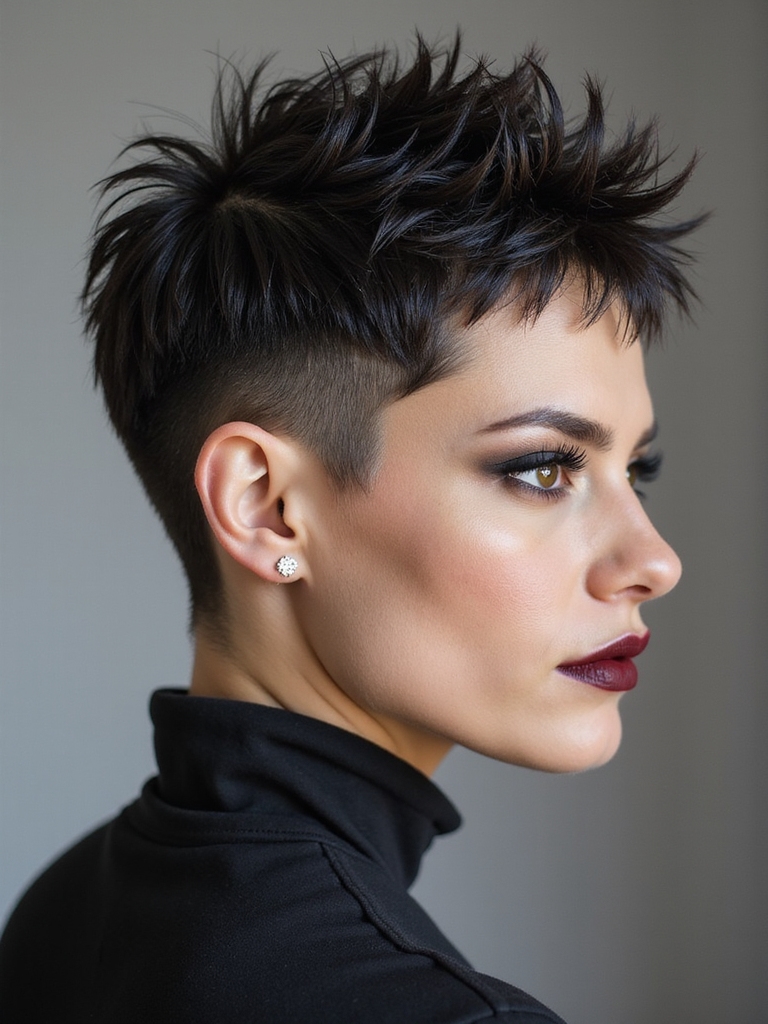
Start here if you have never worn a spike. The top is cut into short textured sections that will stand when you push them, and the sides taper down gradually so there is no hard line anywhere on your head.
The taper is doing quiet work. By shrinking the silhouette at the ears it makes whatever happens on top look taller, which means less product and less effort for the same spiky effect.
The catch is that a taper blurs quickly. Two weeks in, the graduation softens and the contrast that made the spikes pop starts to fade. Our edgy pixie haircuts guide covers bolder short shapes when this feels too safe.

A Piecey Spiky Pixie With Choppy Layers
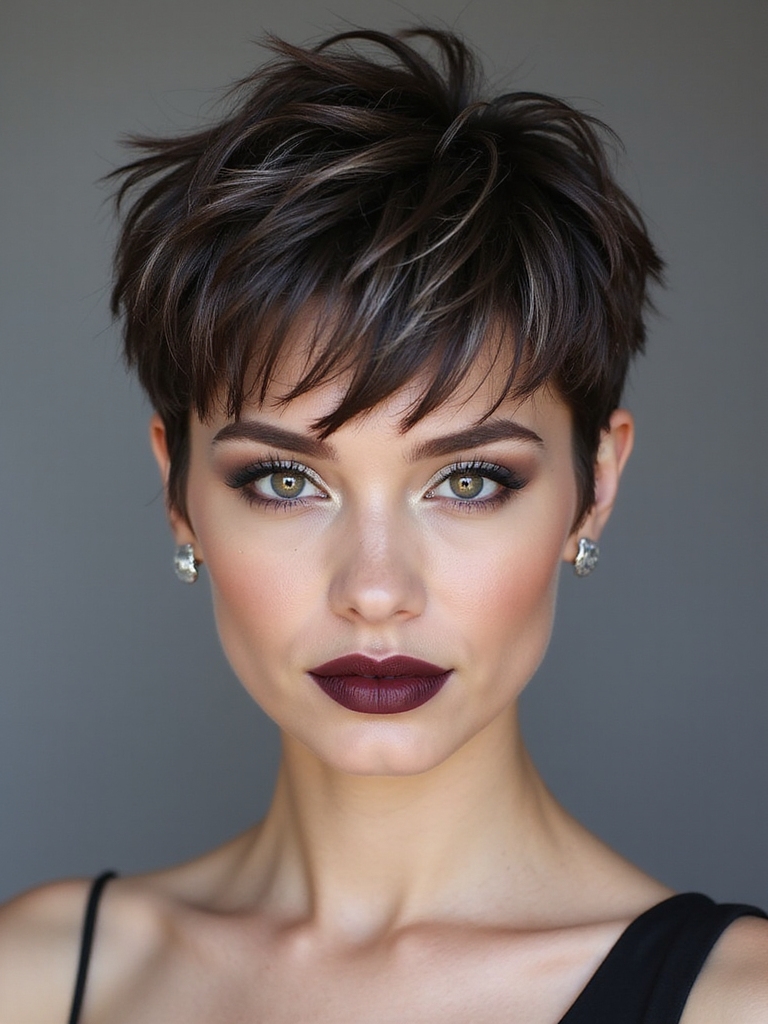
Choppy layering produces a different spike entirely. The lengths on top are cut at deliberately uneven points, so you end up with clumps of varying height that lean instead of standing to attention.
Why This One Forgives You
This is the most forgiving version on the list. Uneven texture hides uneven growth, and a morning where you barely styled still looks deliberate.
Work a texture paste through dry hair with your fingertips and pinch, do not push. Pushing makes points; pinching makes pieces. See our choppy pixie cut guide for the cutting detail.
A Micro Spiky Pixie With Razor-Sharp Spikes
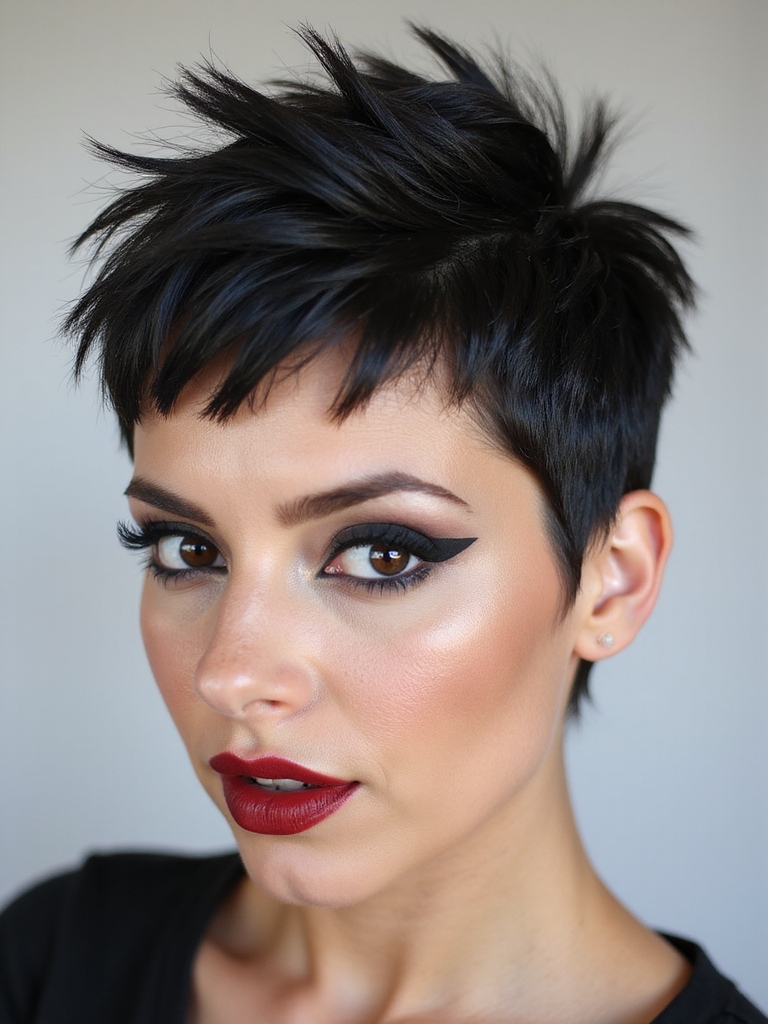
At the extreme end, the hair is cropped close to the skull and razored into fine points. A razor thins each strand along its length as it travels, and that gradual thinning is precisely why the points look like points.
It puts your bone structure entirely on display. There is no hair left to soften a jaw or a hairline, which some people love and others discover about themselves too late.
This one lives or dies on the stylist. A razor in unpracticed hands shreds the ends, they frizz within a week, and there is no length left to hide the damage under.
A Spiky Pixie With a Voluminous Crown
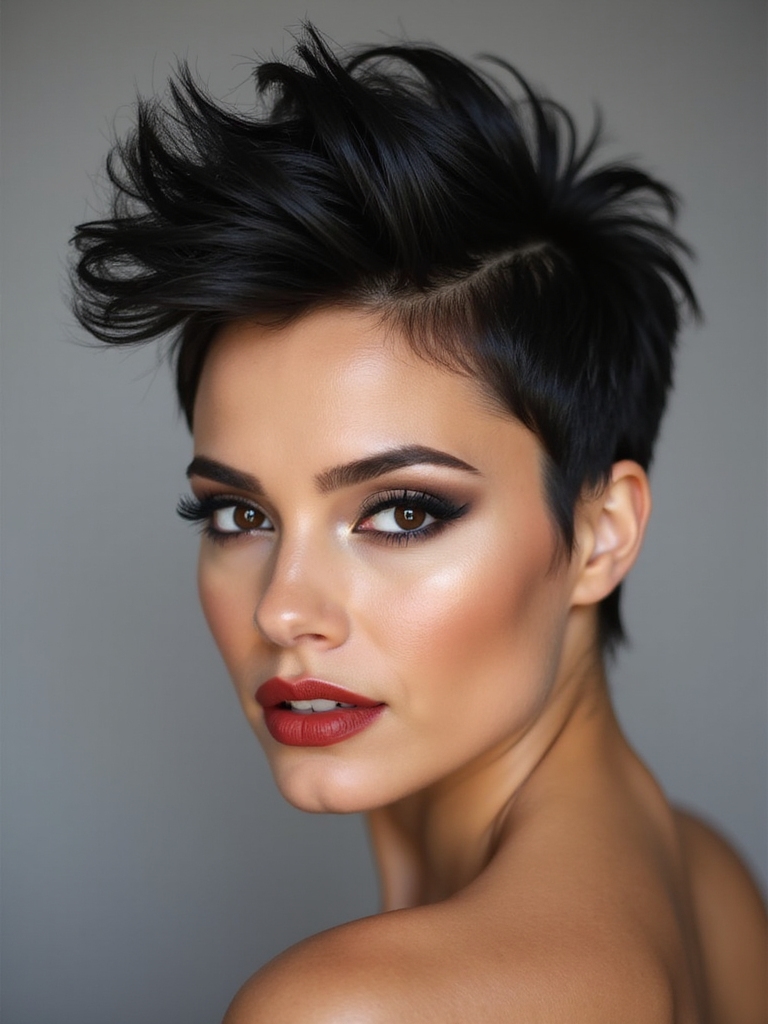
Height at the crown over flat sides is the most face-flattering version here, and the reason is simple geometry. A round or square face looks longer when the tallest point sits above the crown, and wider when the volume gathers at the ears.
Getting the height takes root work before product. Tease the crown sections at the base, dry them upward with a nozzle, and only then reach for paste. Product applied to flat hair holds it flat, and no amount of pushing fixes that afterward.
An Asymmetrical Spiky Fringe
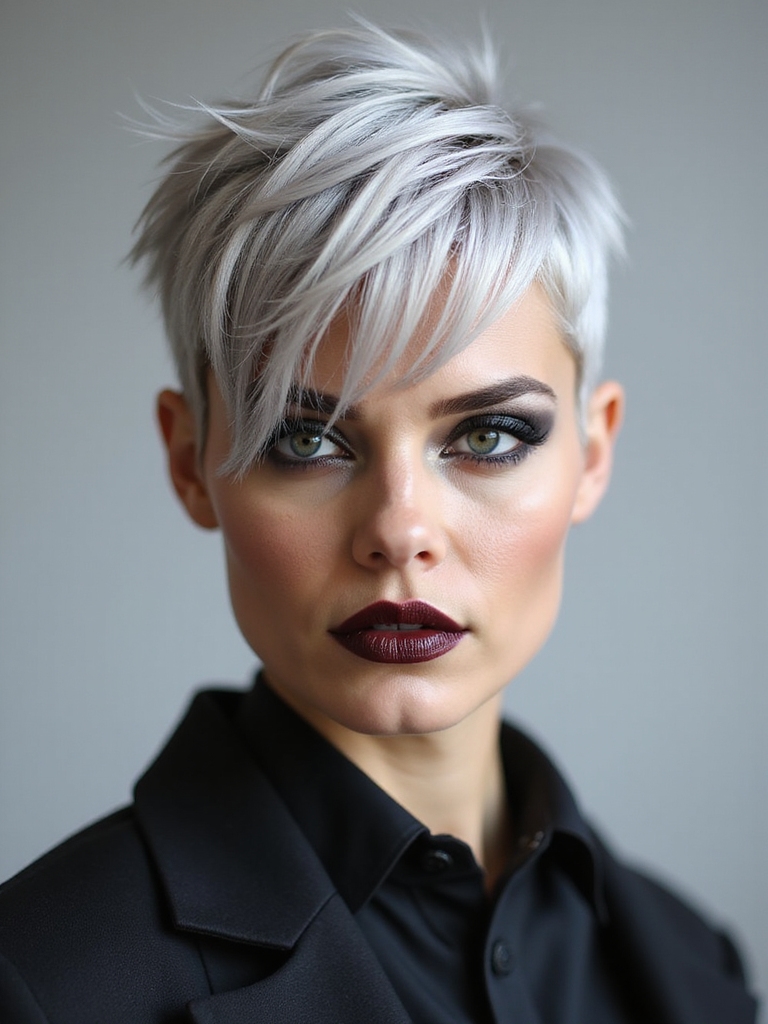
Breaking the symmetry is the cheapest way to make a short cut look designed. One side keeps a longer spiked fringe that sweeps across, the other stays cropped, and the diagonal between them does everything a complicated cut would have done. It also grows out unevenly on purpose, which buys you a week or two longer between appointments than a symmetrical crop would.
- Ask for the fringe long enough to sweep and spike, with the opposite side kept close
- Sweep first with a dryer, then spike the ends; the reverse order never holds
- More off-center shapes live in our asymmetrical pixie guide
Two things people believe about spiky cuts
❌ Myth: Spikes need a lot of product
✅ Reality: The opposite. A pea of matte paste on short hair spikes it; a spoonful glues the sections into a single lump you then have to wet down and start over.
❌ Myth: You need thick hair to pull it off
✅ Reality: Fine hair spikes more easily, because there is less weight fighting the height. What fine hair needs is root lift first, not stronger hold.
An Undercut Spiky Pixie With a Spiked Top
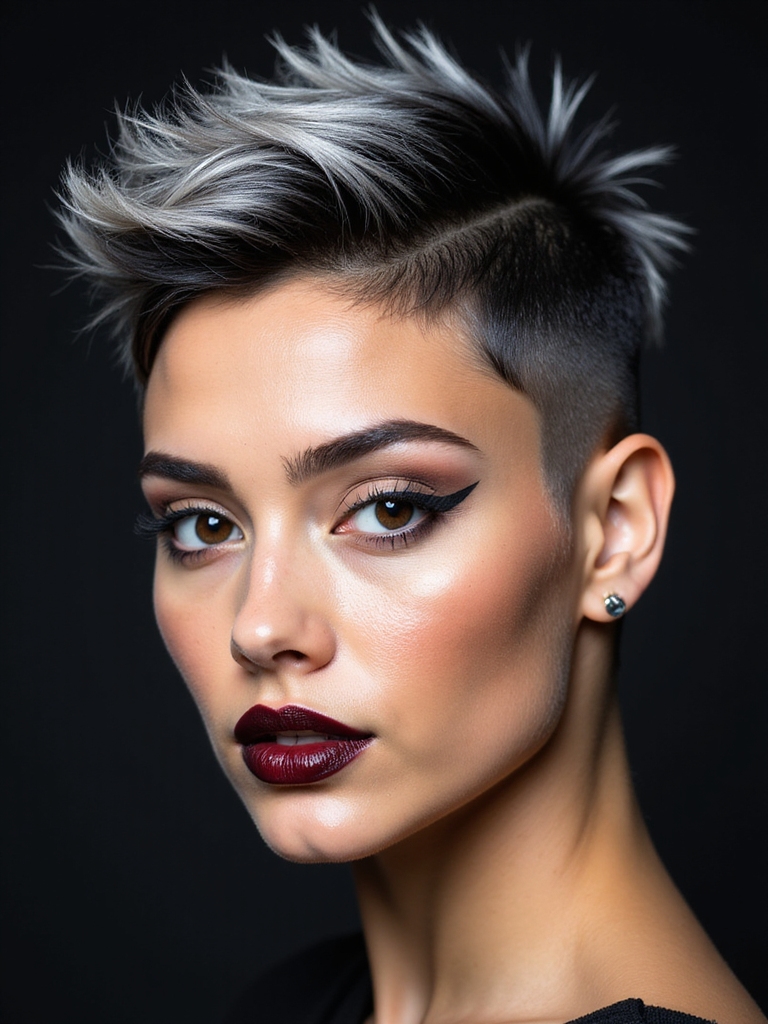
Shaving the sides and back to the skin removes every competing shape, so the spikes on top are the only thing anyone registers. It is the boldest configuration on this page and, once cut, the hardest to walk back, since growing out an undercut means several months of an odd shelf line where the buzzed section meets the length.
- Keep at least two inches on top or the spikes have nothing to work with
- The buzzed portion needs a clipper pass every fortnight to stay crisp
- Consider a low undercut hidden under the top length if you want an exit route
A Spiky Pixie With Tousled Bedhead Spikes
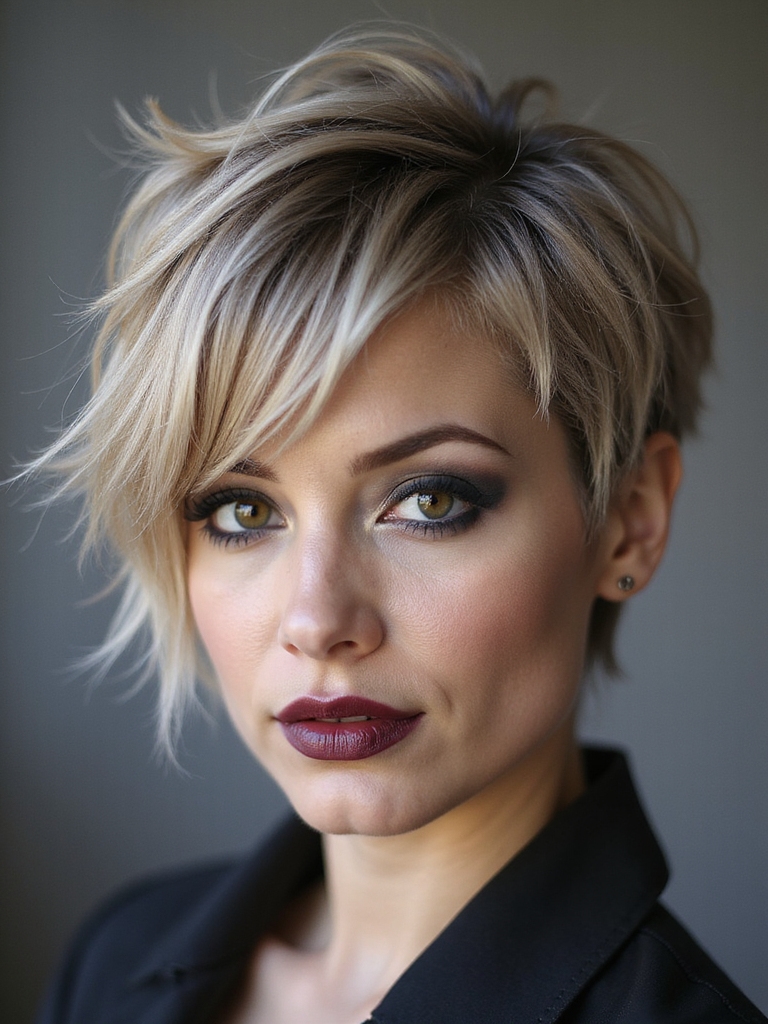
Not every spike wants to be sharp. The tousled version keeps the same cut and changes only the finish, so the pieces fall in different directions and the whole head looks handled by fingers, never sculpted. It is the version most people actually wear day to day, and our messy pixie haircut guide leans further into the undone end.
- Sea-salt spray on damp hair, rough-dried, before any paste goes near it
- Tousle with your whole hand instead of styling piece by piece
- Stop early; a tousled spike that has been perfected stops looking tousled
Nobody walks out of a salon with spikes. They walk out with a cut that can become spikes, twelve hours later, in their own bathroom.
A Soft Spiky Pixie for Fine Hair
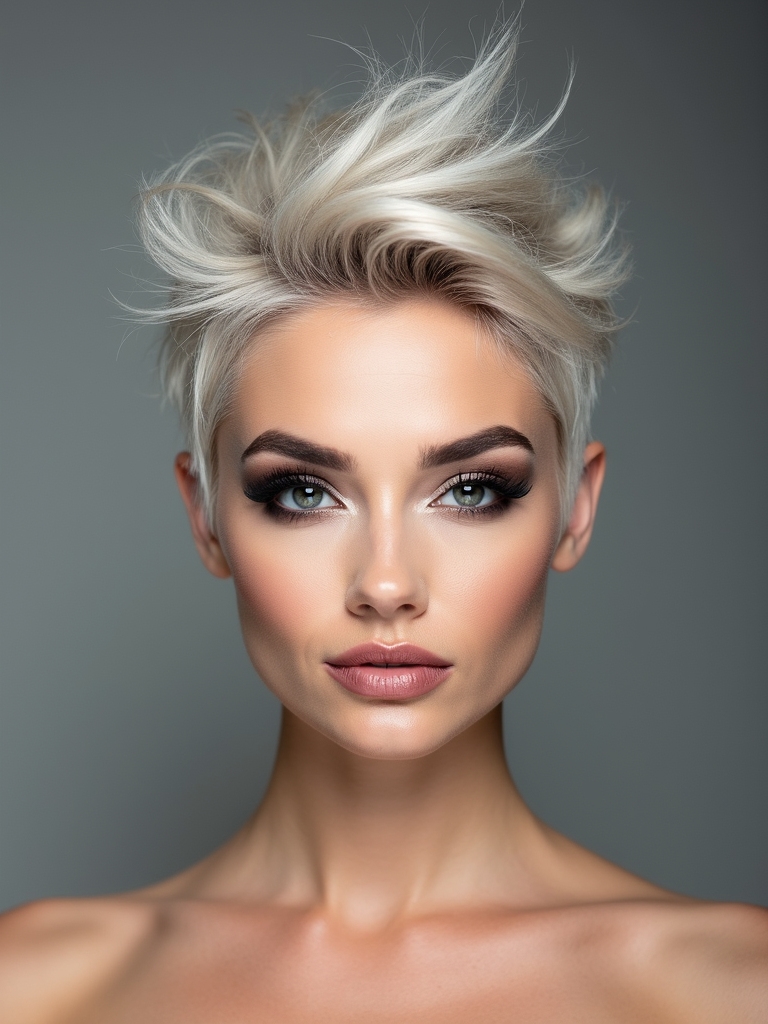
Fine hair and spikes are a better match than most people expect. A spike is height, and height is exactly what fine hair cannot produce on its own, so the cut supplies what the hair lacks.
The failure mode is weight. Fine strands collapse under anything creamy, so the sequence has to be volumizing powder at the roots first and a whisper of matte product on the tips only. Nothing goes in the middle, where it would drag the whole thing down by lunchtime.
A Curly Spiky Pixie With Defined Coils
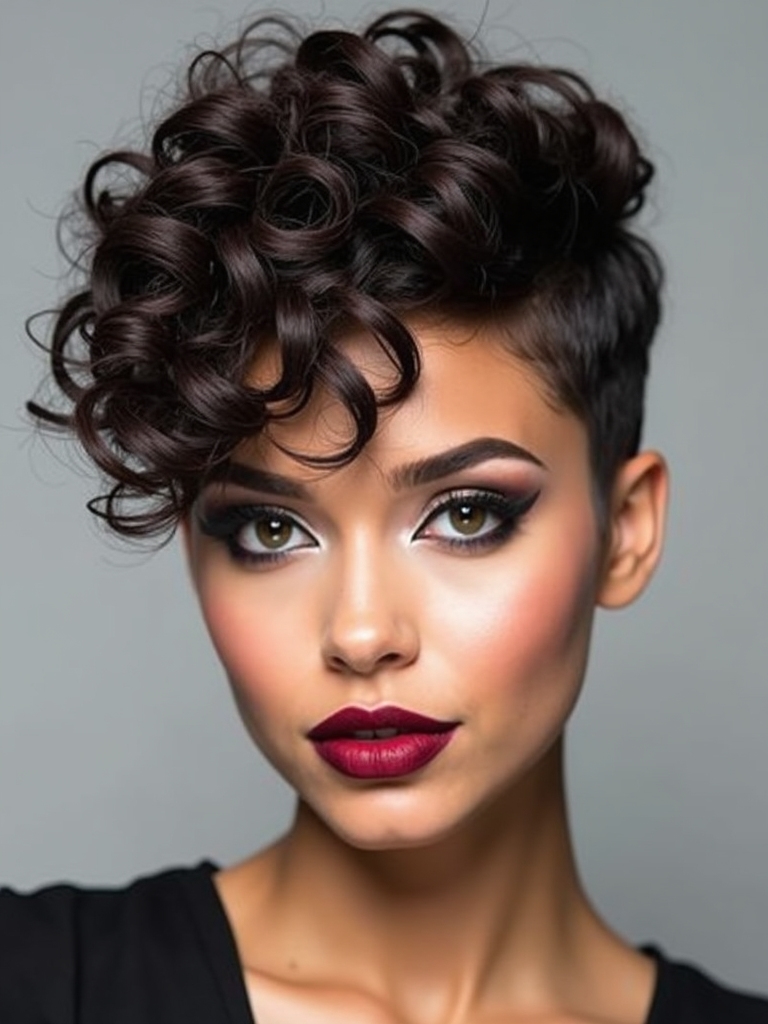
Coily and tightly curled hair spikes by itself. Each coil already stands away from the scalp, so the cut is editing texture that already exists.
That changes how the cut is done. The shape has to be built on dry hair, coil by coil, because a coil cut wet will sit an inch higher once it dries and takes its natural shape back.
- Insist the shaping is done dry so nothing shrinks into a different silhouette
- A light gel or curl cream defines the points without leaving a crunchy cast
- Our curly pixie haircut guide covers pattern-specific shaping
Before the Clippers Come Out
An undercut is a one-way decision for at least six months. The buzzed section grows back at a different rate to the top, and the shelf where they meet is very hard to disguise on short hair. If you are unsure, ask for a low, hidden undercut that the top length covers, then go higher next time.
A Spiky Pixie With a Shadow Root
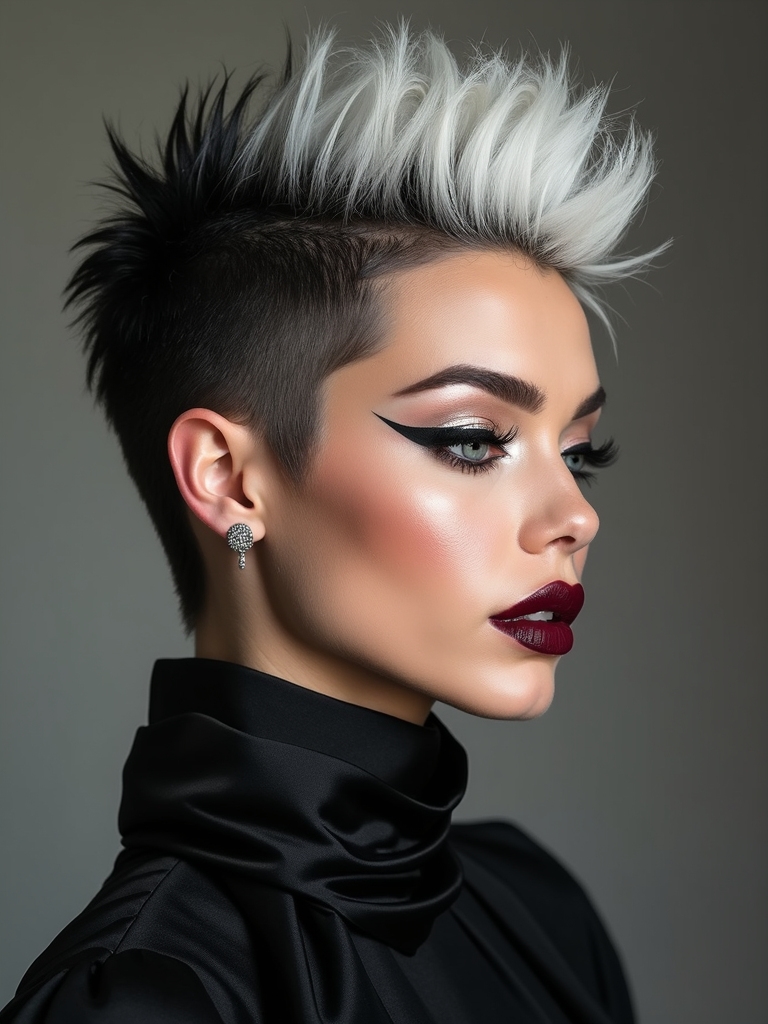
Bold color on a short cut has one obvious problem: roots show up within a fortnight when there are only two inches of hair to look at. A shadow root solves it by making the darker regrowth part of the design from day one.
The color also does something for the texture. Darker at the base and brighter at the tips means each spike ends in a lighter point, which shows more separation than the cut alone would give you.
- Ask for the shadow to sit within two shades of your natural base for the smoothest blend
- The dark base stretches your color appointments out considerably
- Use a color-safe matte product; shine sprays flatten the contrast
Choppy Spikes With Sideburn Detailing
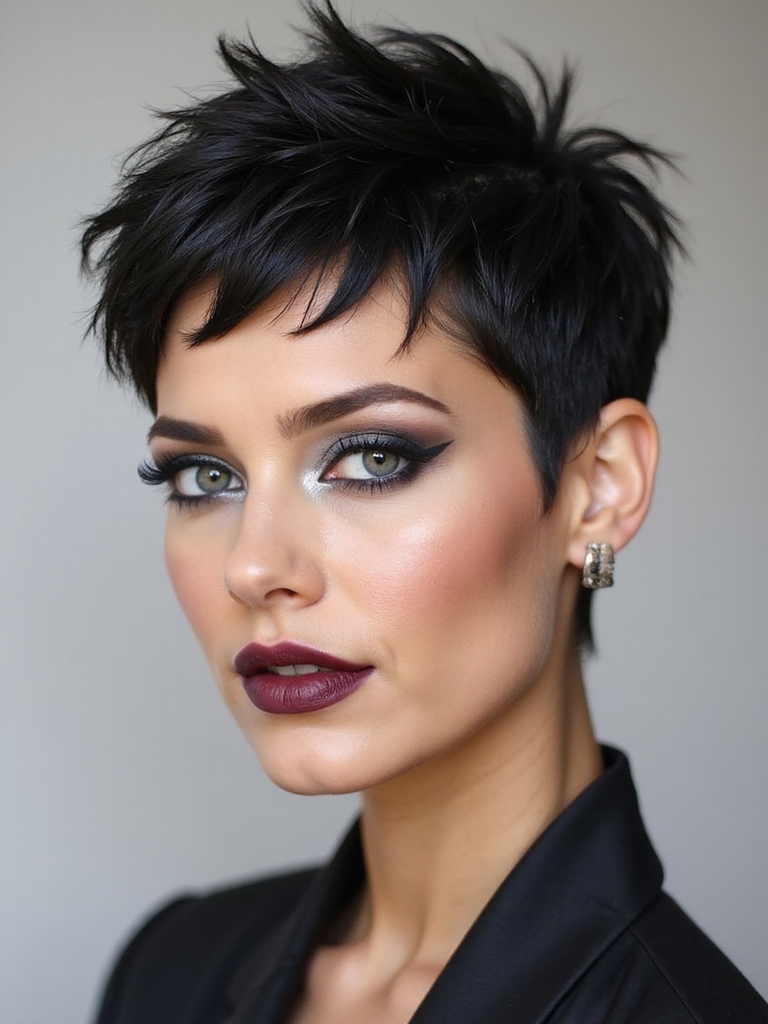
The difference between a good short cut and a sharp one usually lives somewhere you are not looking. Sideburns are the classic example: shaped into a clean point or a square taper, they finish the cut around the ear the way a hem finishes a garment.
This is barbering language, and it helps to use it. Ask for the sideburns and the nape to be detailed, and a stylist who does short hair well will know exactly what you mean.
The detail is also the first thing to go. Fuzz along the sideburn line shows up before the top loses shape, which is why a lot of people book a quick neck-and-sideburn clean-up between full cuts.
A Spiked Quiff With Slicked Sides
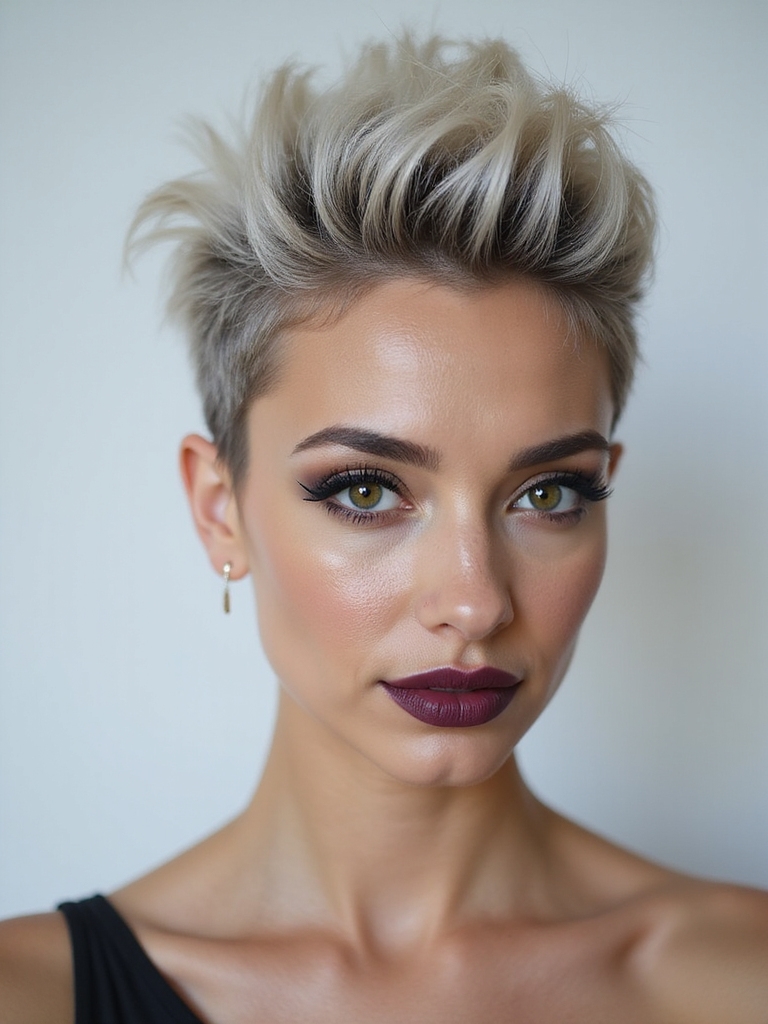
The quiff is the most polished thing you can do with spikes, and the only version on this page that needs a blow-dryer to work at all. The front is swept up and back, then spiked at the crown, with the sides combed flat and held.
Two Products, Not One
The height has to be built while the hair is damp. A round brush and a nozzle set the shape, and the product only preserves what the drying already created.
Two products, two finishes: a firm pomade for the sides and a matte paste for the top. Using one product for both is why home attempts end up either shiny all over or standing up everywhere.
A Platinum Spiky Pixie
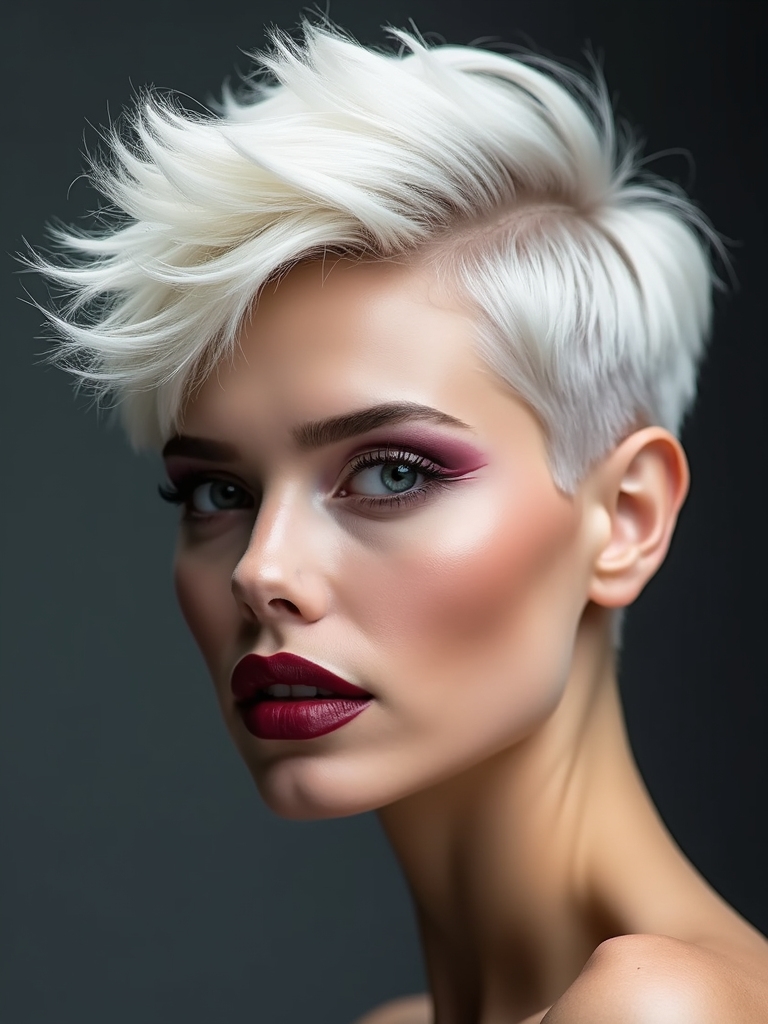
Platinum turns the texture into the entire point. Near-white hair catches light along every edge, so the spikes read as sculpture in a way that a mid-brown version of the identical cut never will.
The cost lands on the hair itself. Lifting to platinum is chemically hard on the strand, and bleached hair holds a spike differently, gripping product faster and drying stiffer.
That trade works in your favor here. Roughness and porosity are what ruin bleached long hair, and they are exactly what makes a short spike stand up, so platinum crops hold shape on days when your natural color would have collapsed.
Textured Spikes for Thick Hair
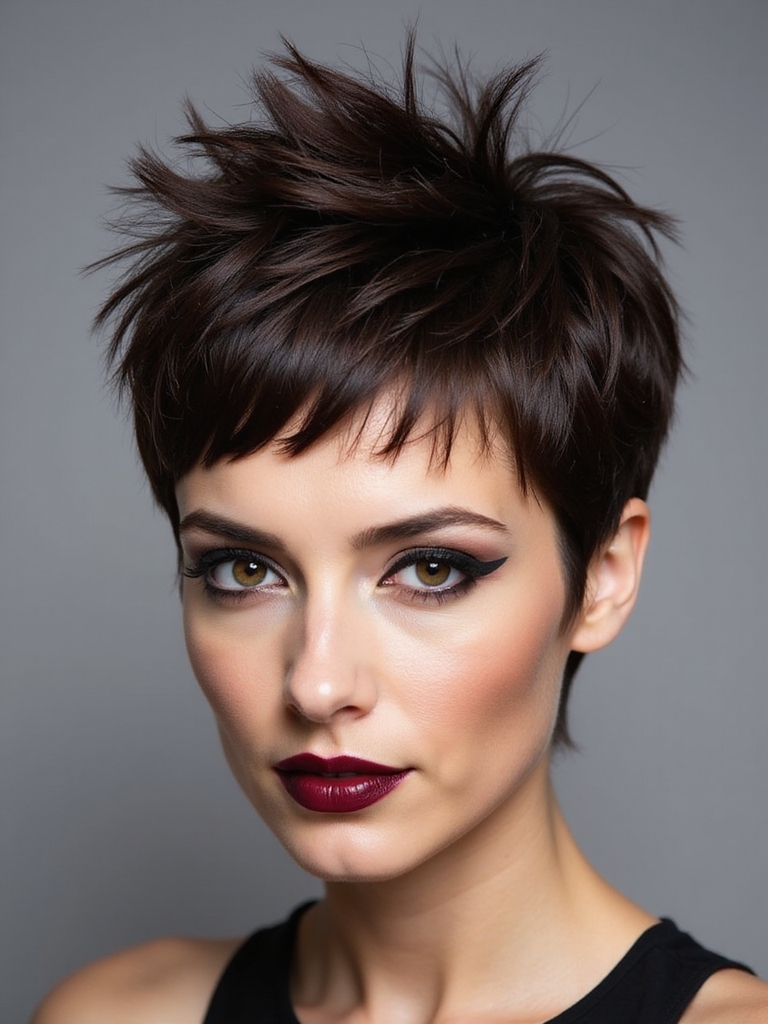
Thick hair has the density to hold structure with almost no product, which sounds like an advantage and is, until the bulk turns the whole top into one immovable block.
The fix is interior texturizing. Weight comes out from underneath while the surface stays intact, so individual sections gain enough independence to separate. Ask for it explicitly, because a stylist working blind on thick hair tends to just cut it shorter, and short thick hair sticks straight out on its own schedule.
| Spike you want | Product | Where it goes |
|---|---|---|
| Sharp, separated points | Matte clay or paste | Tips only, worked between fingertips first |
| Soft, leaning pieces | Texture spray, then a little cream | Roughly through the mid-lengths on dry hair |
| Tall quiff | Blow-dry, then firm pomade | Base and body while damp, surface once dry |
A Spiky Pixie With Vivid Color
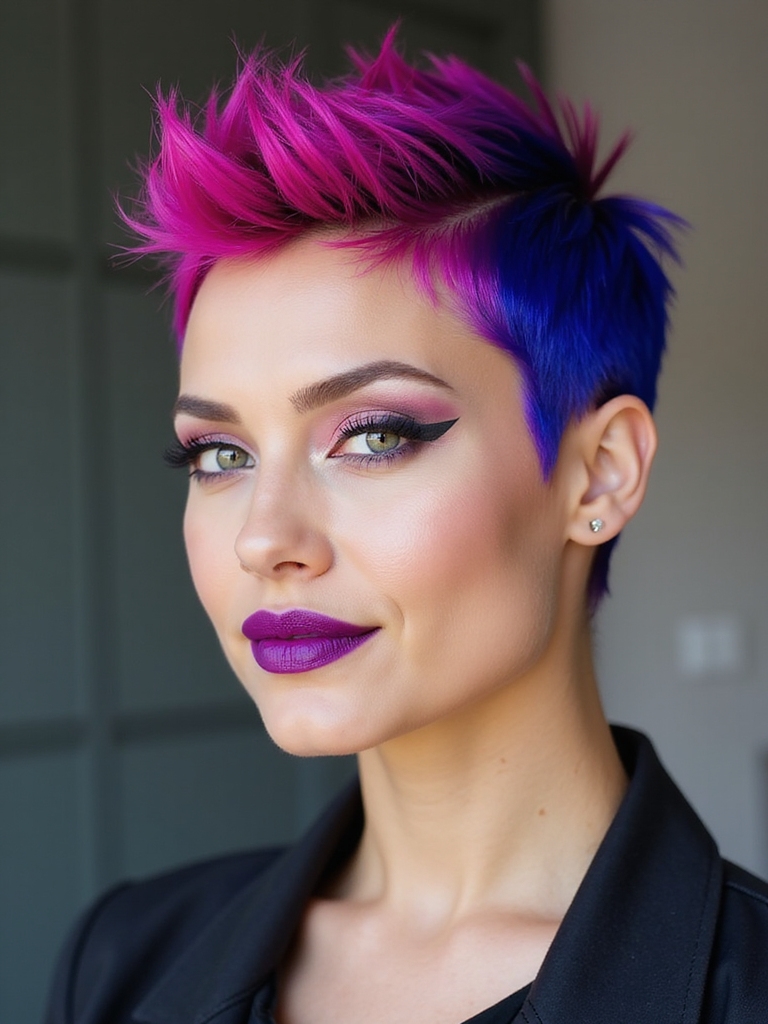
Vivid color and short hair are a practical pairing, which surprises people who assume neon is high-maintenance by definition. There is simply less hair to refresh, so a top-up takes twenty minutes at the sink instead of an afternoon.
The texture is what sells it. Piecey spikes break a flat block of color into dozens of angled surfaces, and the tone shifts slightly on each one depending on how the light hits.
Semi-permanent vivids fade rather than grow out, which suits this cut well since you are cutting the ends off regularly anyway. See our super short pixie guide for the shortest canvases.
Who It Suits Best
This cut rewards anyone willing to touch their hair every morning, which is the honest requirement nobody puts in the caption. Two minutes with paste is not much, but it is two minutes you cannot skip, because a spiky pixie left alone just looks like a grown-out crop. It suits strong features, it suits people who are bored, and it suits fine hair far better than fine hair usually gets told.
It suits you less well if you wear hats daily, if you swim most mornings, or if the idea of a shape-up appointment every five weeks makes you tired. Growing it out takes roughly a year of deliberately awkward stages. None of that is a reason to avoid the cut. It is a reason to walk in knowing what you are agreeing to.
The Cut Is the Easy Part
Looking back at fifteen versions, the pattern is that almost none of them are really about length. The razored micro crop and the tousled bedhead version can start from a nearly identical cut; what separates them is a jar and a habit.
Which is worth knowing before you book, because the question to answer is not how short you are willing to go. It is how much of your morning you want to spend making a decision visible.
You Might Also Like