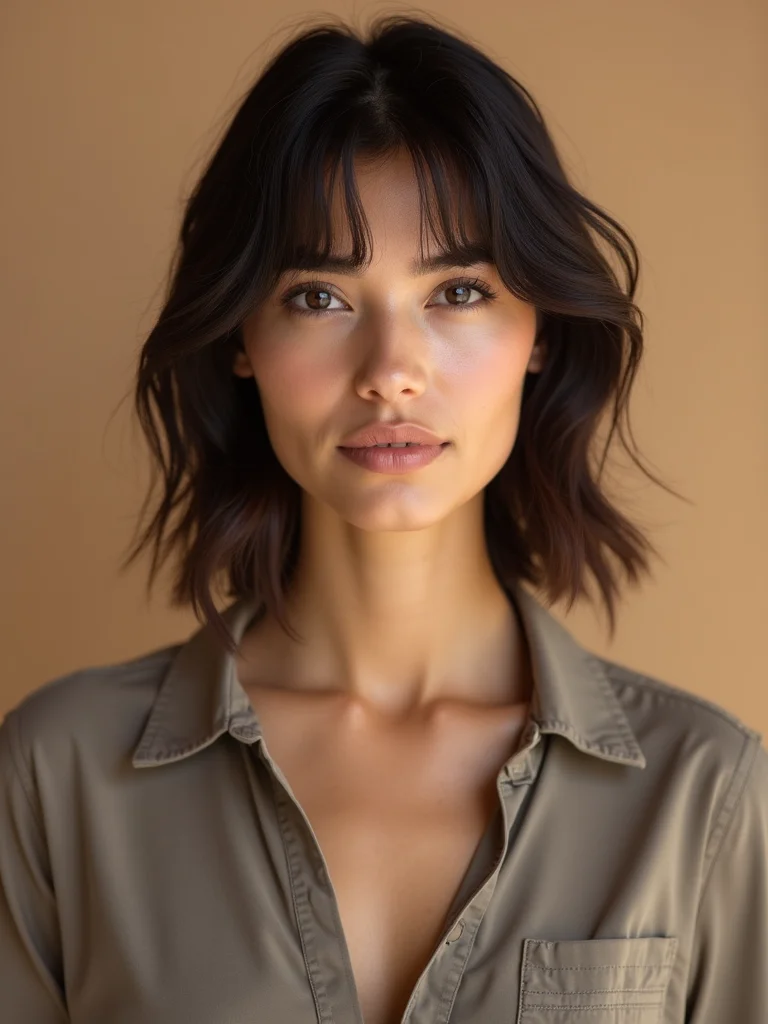
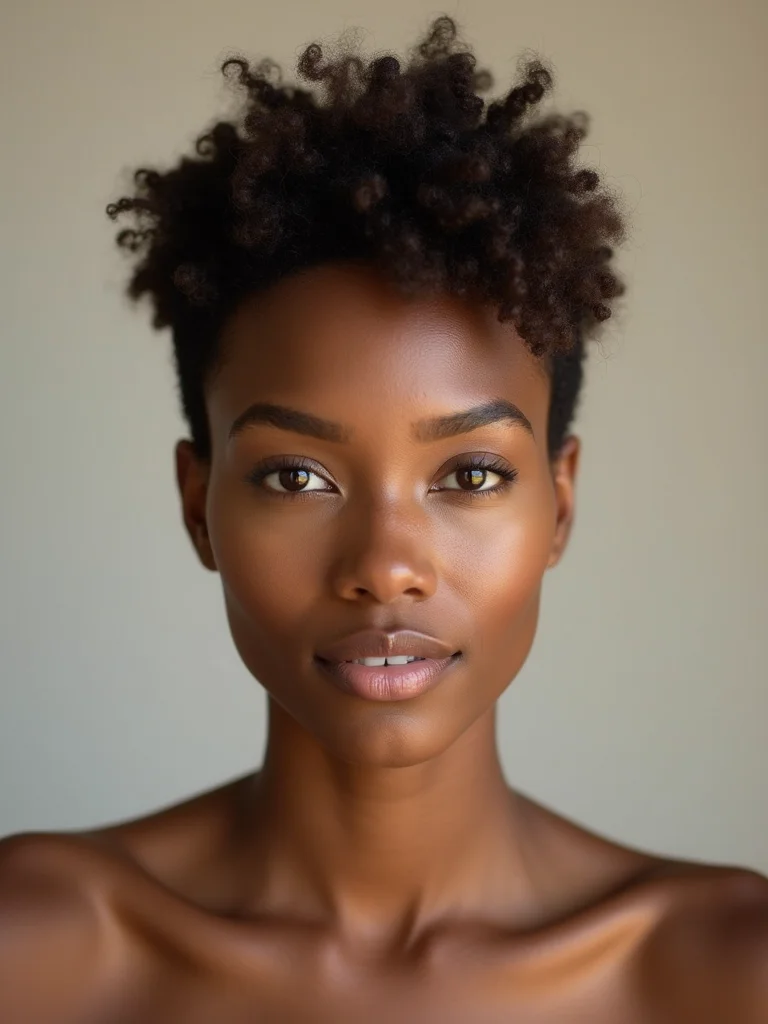
Watch the first pass of the scissors on a curly pixie haircut and you’ll notice the difference immediately: hair that was hanging heavy on the shoulders suddenly lifts and curls in tighter against the scalp, like it had been waiting the whole time to spring.
A curly pixie works because it removes the one thing holding curl down, which is weight. Fifteen versions follow, covering shape, color, and the cutting and care details that keep each one at its best right now.
Three Things That Actually Matter
| Factor | Why It Matters | What to Do |
|---|---|---|
| Dry cutting | Curl shrinks as it dries | Insist on a dry cut, never wet |
| Diffusing | Builds volume without frizz | Diffuse on low, cupping curls upward |
| Moisture | Short curls dry out fastest | Leave-in plus a satin pillowcase nightly |
Softer Framing at the Front
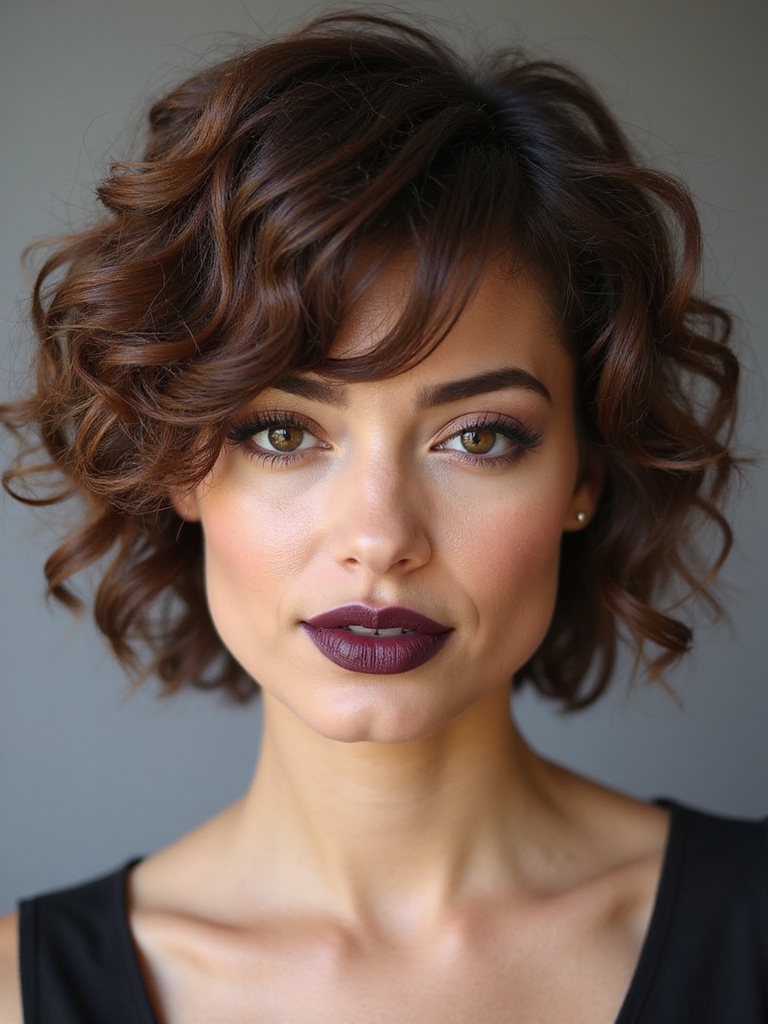
Leaving the front pieces a little longer than the rest of the crop lets curls fall softly around the face instead of piling on top of an even, all-over length.
Where Most First-Timers Start
You’ll notice this version is the one most first-timers land on, since the longer framing forgives a lot: uneven curl density, a face shape you’re not sure about yet, hair that hasn’t fully told you its pattern.
A leave-in worked through just the framing pieces keeps them defined without touching the shorter curls underneath, and there’s very little else to manage day to day.

Height Built Into the Crown
Tapering the sides close while leaving the crown coils full gives the shape a deliberate, sculpted contrast: short and controlled below, tall and springy on top.
Where the Height Actually Comes From
The height comes entirely from the coils themselves once the weight around them is gone, not from any product or styling trick.
Expect to book with someone who shapes tight coils regularly, since the taper has to blend cleanly into fuller curl without leaving a visible line where the two textures meet.
Layers That Give Each Curl Room
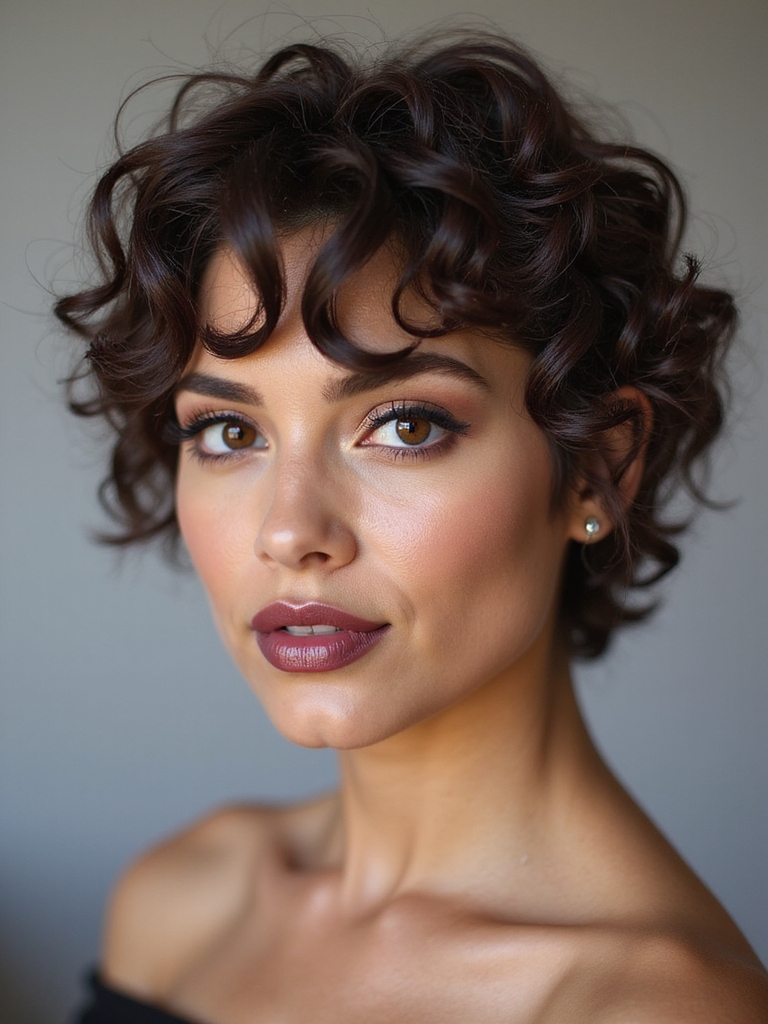
Layering breaks up what would otherwise be one heavy block of curl, giving each spiral or coil room to move independently instead of stacking into a dense triangle.
Looser waves need longer layers to show any movement at all; tighter coils need shorter, more aggressive layering to keep from reading as a solid dome.
This is the fix for a curly head that’s gone shapeless over time, more often than any other single change.
Skip the Wet Cut
A stylist cutting curly layers on wet hair is guessing at where each curl will land once it dries and pulls up. On a shape this dependent on precise layering, that guess shows.
A Micro Fringe Cut Into the Curl
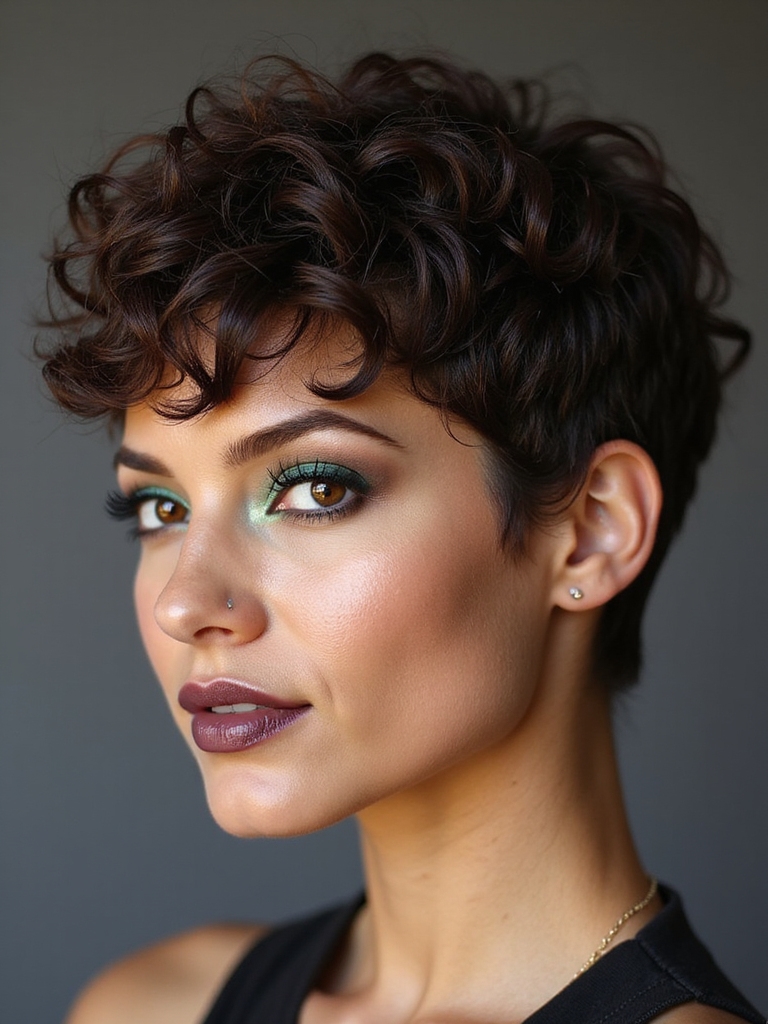
A short, springy micro fringe paired with the crop puts the curl pattern on full display right at the front, instead of softening it the way longer framing pieces do.
Why This Fringe Can’t Be Cut Wet
You’ll notice it has to be cut dry, without exception, since a fringe this short shrinks the most once the coil pulls up. Cut wet, it can land noticeably higher than planned.
It pairs well with fuller versions of this same cut if you decide to grow the rest out later, since the fringe itself stays fully independent of the length behind it.
Diffusing Without Disturbing the Curl
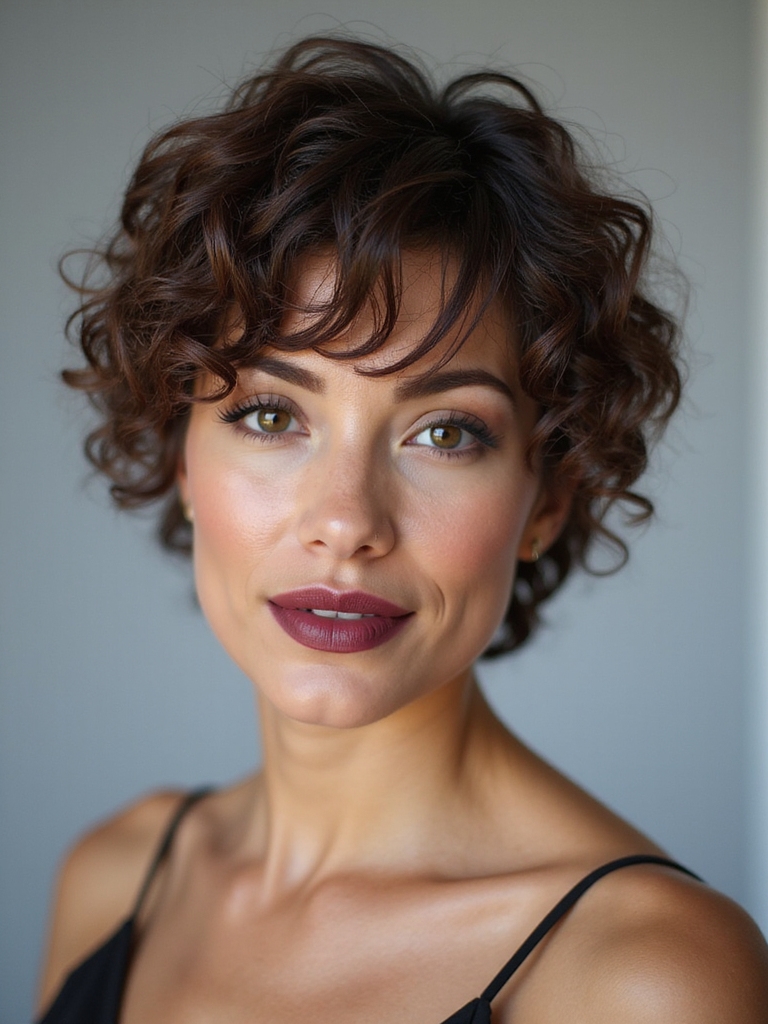
Drying with a diffuser on low heat is what actually builds the volume and definition people associate with a good curly pixie, more than any single product does.
The technique matters more than the tool: cup the curls up into the diffuser bowl and lift toward the roots, rather than blasting air at them from a distance.
- Finish on a cool shot once curls are fully dry to set the shape and cut frizz.
- The whole process takes about five minutes on hair this short.
- Skipping the diffuser is the single most common reason a good cut still looks flat.
A Clean, Sculpted Perimeter
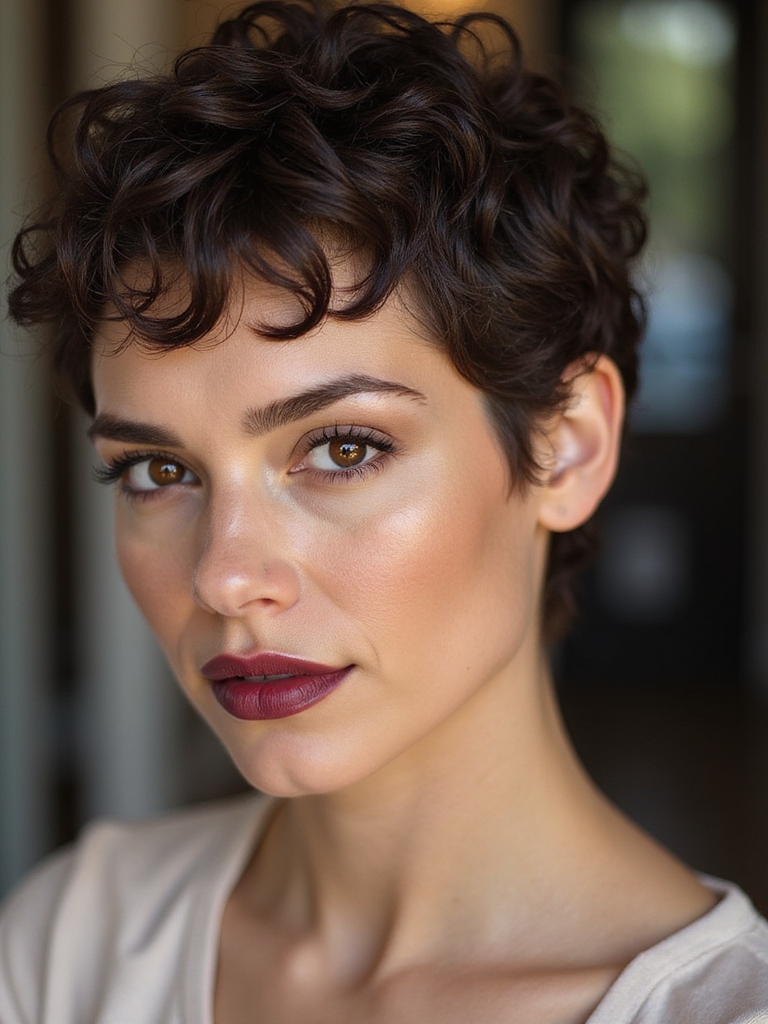
A crisp, sculpted perimeter around the hairline gives the whole crop a polished, finished look, while the curls themselves stay full just behind that line.
Keeping the Line Sharp Without Killing the Curl
Light edge control works best here. Heavy gel pressed too close to the hairline flattens the curl right where you want the most definition.
You’ll notice most people booking this shape return between full cuts just for a quick edge tidy, since the perimeter softens faster than the curl itself changes.
An Undercut for Dense, Heavy Curl
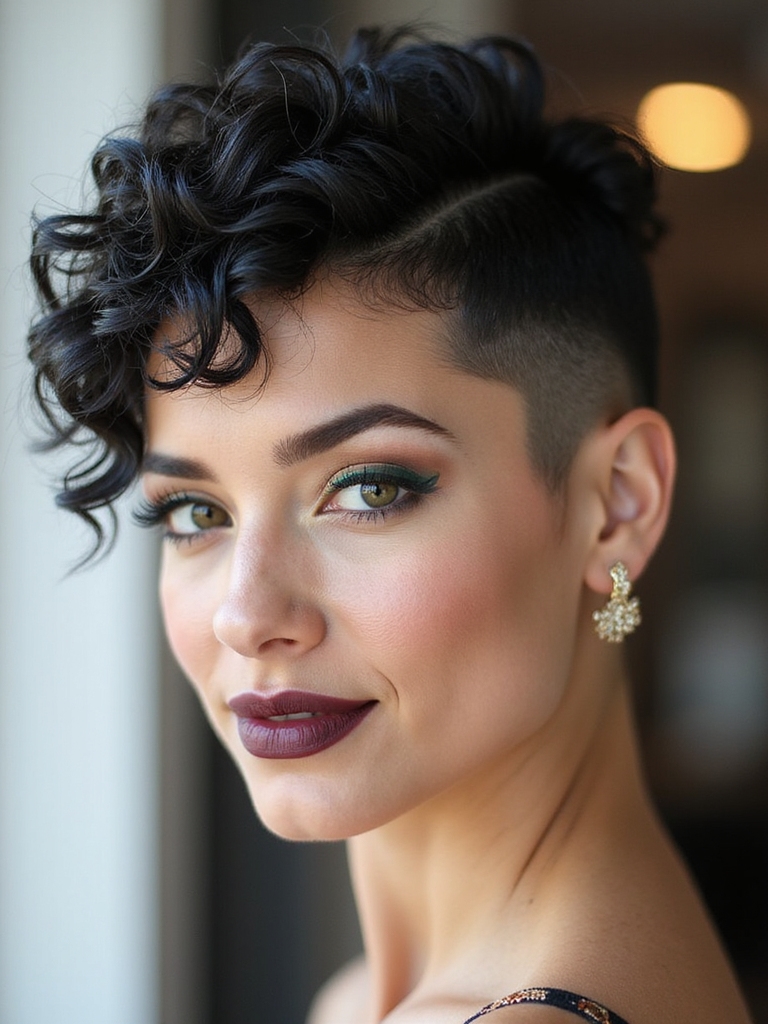
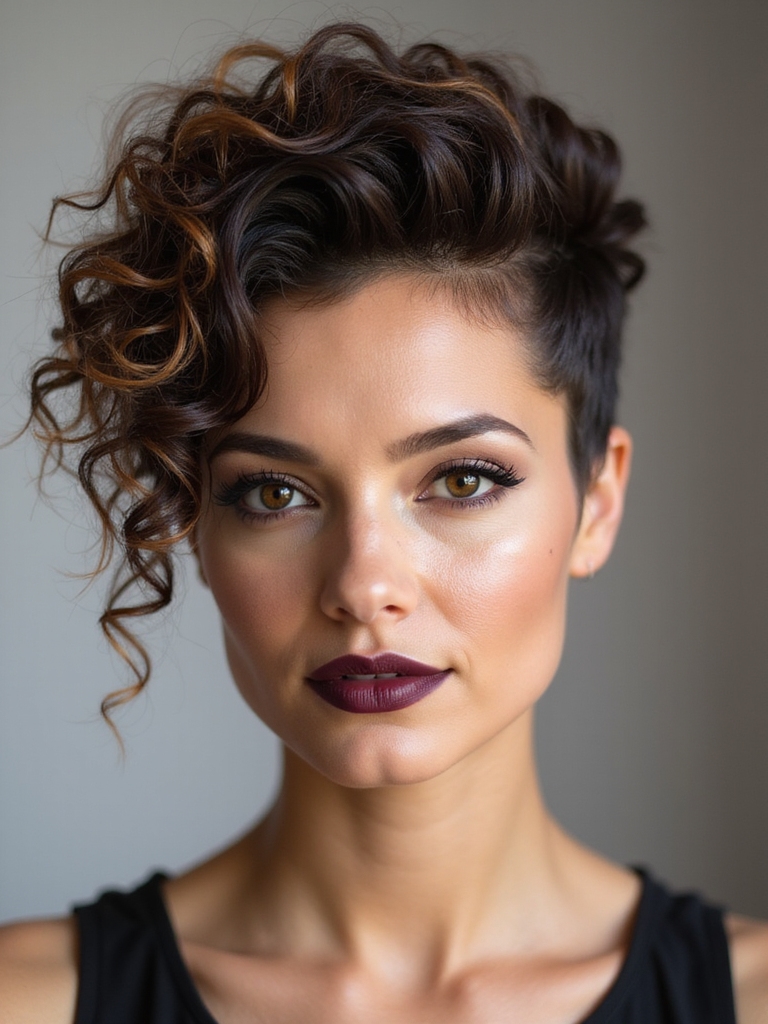
Shaving away hidden bulk underneath a full curly crown lets the visible curl pile up on top without the weight of a full head of hair working against it.
Expect this option to come up most for thick, dense curl, especially once summer heat makes a full head of hair feel like too much to manage every day. Browse more short shapes in our pixie hairstyles roundup.
Trying to decide how much to take off? Start with what’s actually bothering you:
🎯Hair feels too hot and heavy
An undercut removes hidden bulk without shortening the visible curl on top.
🎯Curl looks shapeless and flat
Layering redistributes weight so each curl can move on its own.
A Deep Part for Instant Asymmetry
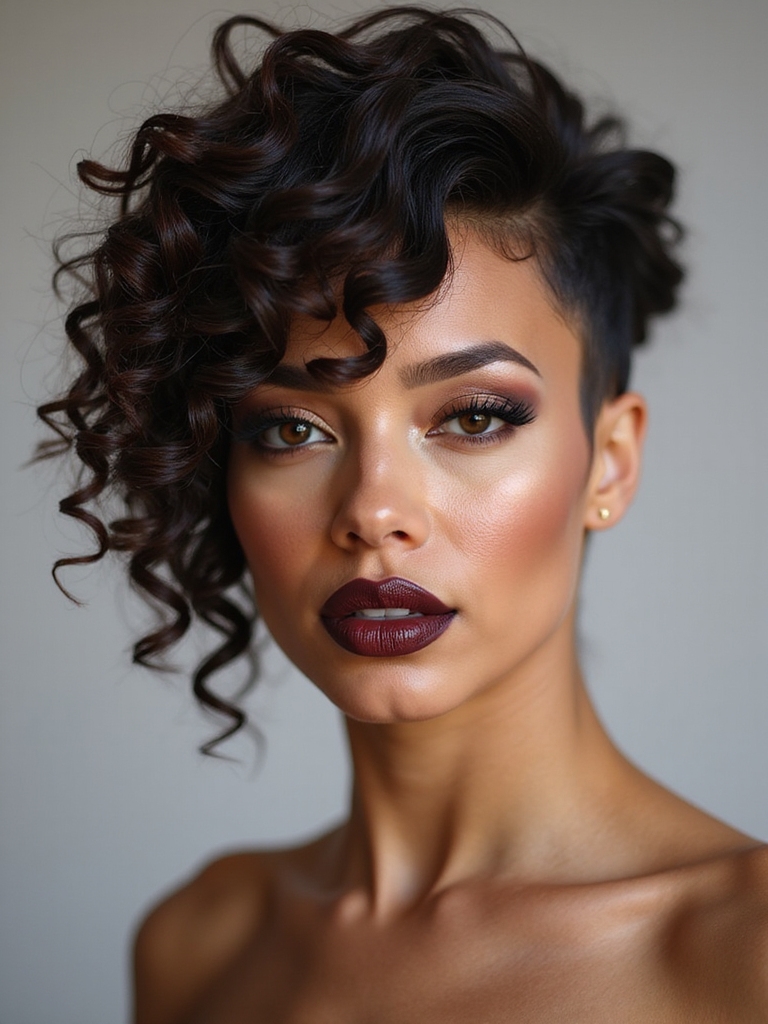
Sweeping a deep side part over shifts the whole shape off-center, lifting the roots on the fuller side and adding an asymmetric line without a single cut.
- Costs nothing beyond a change of part, so it’s the fastest restyle available on this cut.
- Adds instant height on the side carrying more volume.
- Works with nothing more than the end of a comb to set the part.
Shag Layering Through the Curl Ends
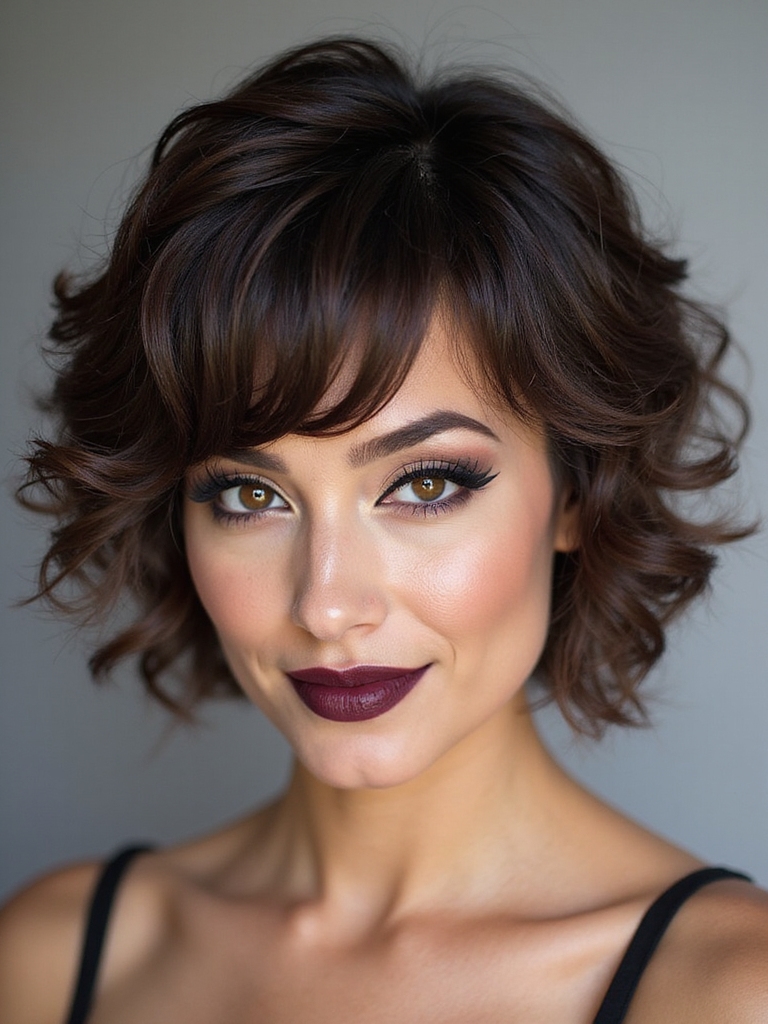
Borrowing the shag’s choppy layering lets the curl ends feather out instead of staying rounded, trading a clean dome shape for something looser and more textured.
You’ll notice it reads more relaxed and a little undone compared to the tighter, more sculpted versions on this list, which is exactly the appeal for anyone who wants the cut to feel less deliberate. Our curly shag guide covers the same layering idea at longer lengths.
The No-Styling Wash-and-Go Version
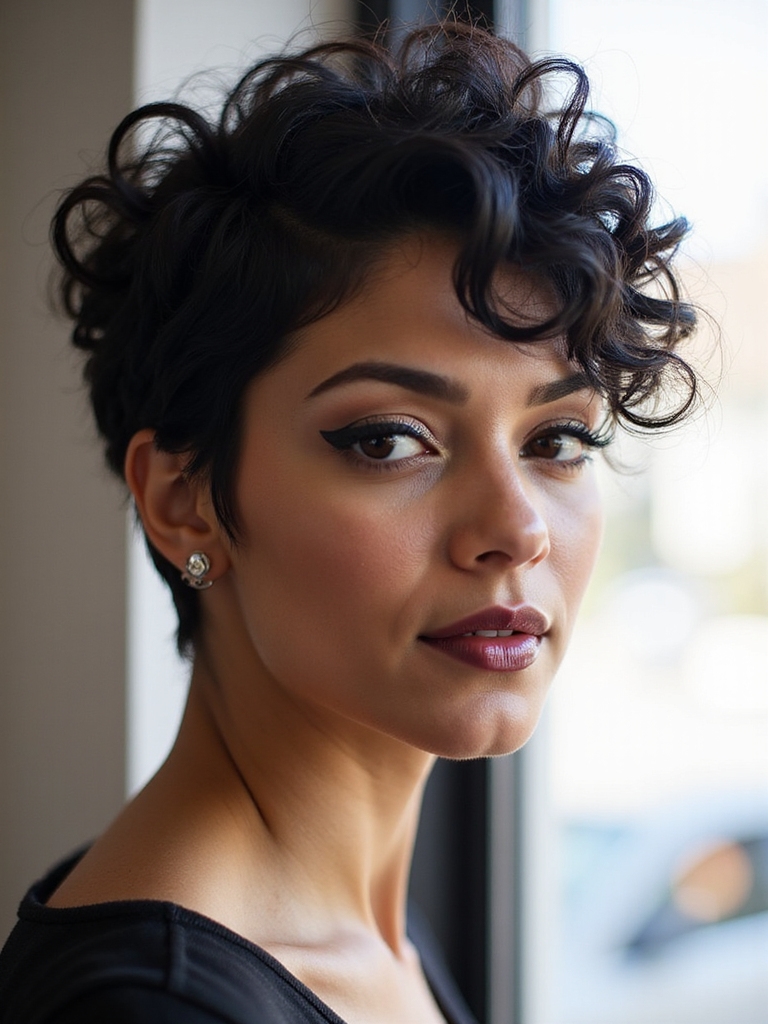
A wash-and-go pixie is built to need almost no active styling: the short length and defined curl pattern do most of the work on their own.
The Morning Routine, Start to Finish
Product goes on soaking wet, applied before a single drop of water evaporates, then the hair air-dries or gets a quick diffuse, and that’s the entire routine.
This is the version busy people ask for by name, since it gives back real time every single morning compared to a longer curly style. For a looser, undone take on low-effort short hair, see messy pixie haircut.
👍What You Get
- +Minimal daily styling time
- +Curls define almost entirely on their own
- +Works on nearly any curl pattern
👎What It Still Asks For
- –Needs a properly cut base underneath to look intentional, not just short
- –A humid day can still soften definition
- –Regrowth shows faster on a shape this short
A Moisture-First Routine for Bounce
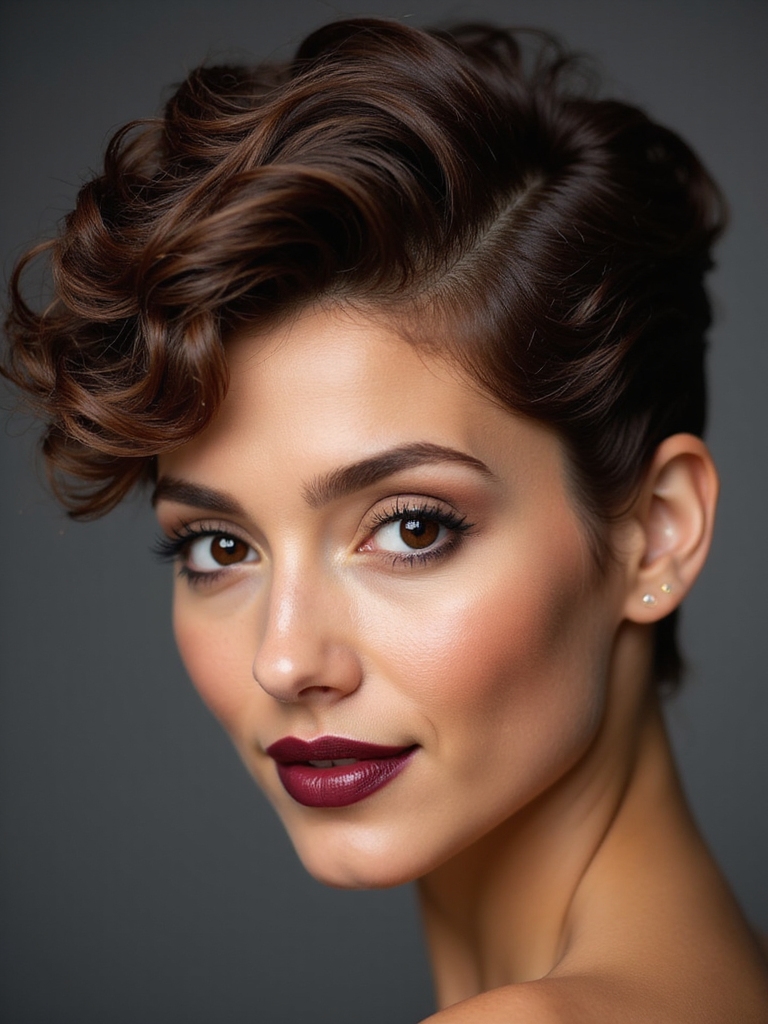
Short curls dry out faster than long ones, simply because there’s less hair to hold onto whatever moisture gets applied.
When the Bounce Disappears, Look at Moisture First
A leave-in worked through soaking-wet hair, followed by a light gel for hold, is what keeps the bounce from fading by the second or third day.
Expect dryness, not the cut itself, to be the real cause whenever a curly pixie starts looking dull or limp. The fix is almost always more moisture, not another trim.
Color That Plays Up the Pattern
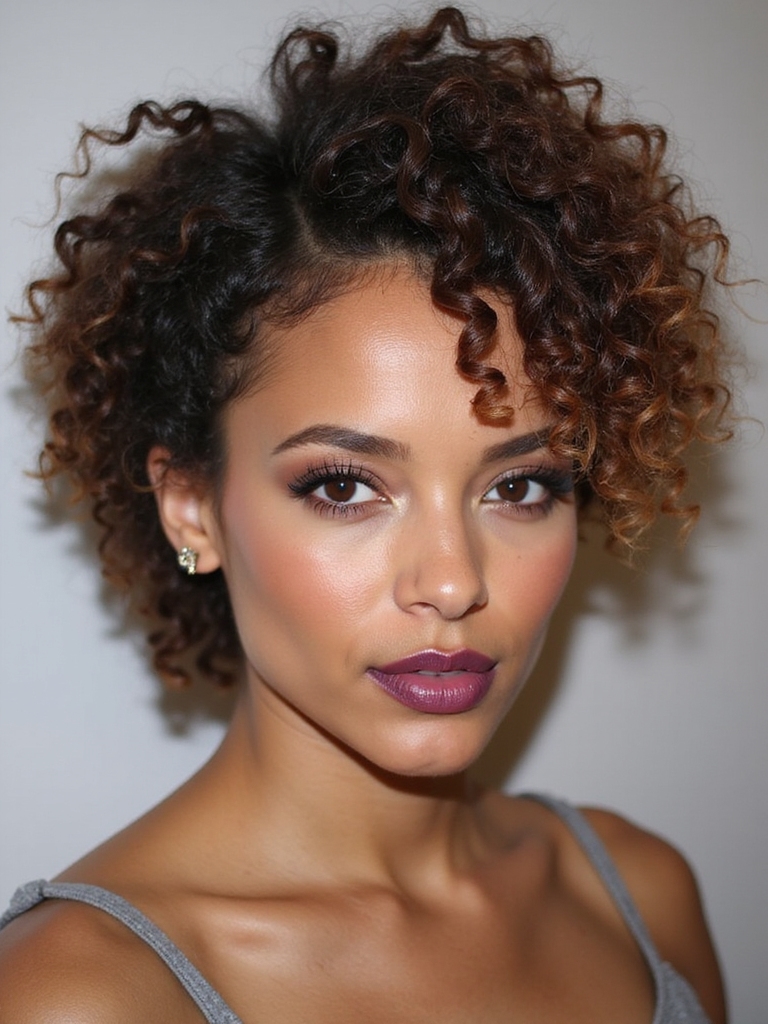
Soft, well-spaced highlights or a balayage catch individual curls and add real dimension to a short shape, without the heavy processing a full head of color would need.
- Keeping sessions spaced further apart protects moisture the curl can’t afford to lose.
- A richer conditioning routine afterward matters more here than on straight hair.
- Color shows up more clearly on defined curl than on hair styled smooth.
🅰️A Few Soft Highlights
Adds dimension without heavy processing. Lower upkeep, a more subtle result.
🅱️A Full Balayage
A bigger visual change. Needs more frequent conditioning to protect the curl.
An Easier Grow-Out Than Straight Hair
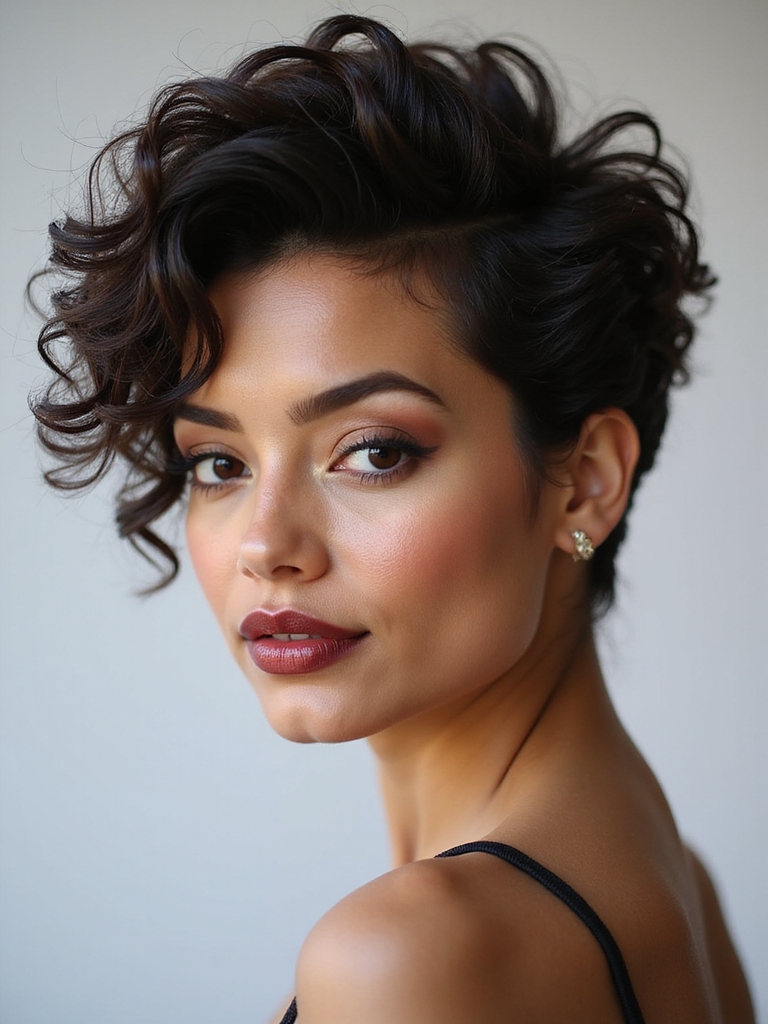
Growing out a curly pixie is noticeably kinder than growing out a straight one, since the curl itself hides uneven length in a way straight hair simply can’t.
Why Curls Grow Out Easier Than Straight Hair
Regular shape-up trims keep the crop balanced as it lengthens toward a bob, so the outline fades gradually instead of hitting one obvious awkward stage.
Expect the stretch toward a wearable bob to take the better part of a year for most curl patterns, longer for tighter coils that shrink more.
One Cut, Every Curl Pattern
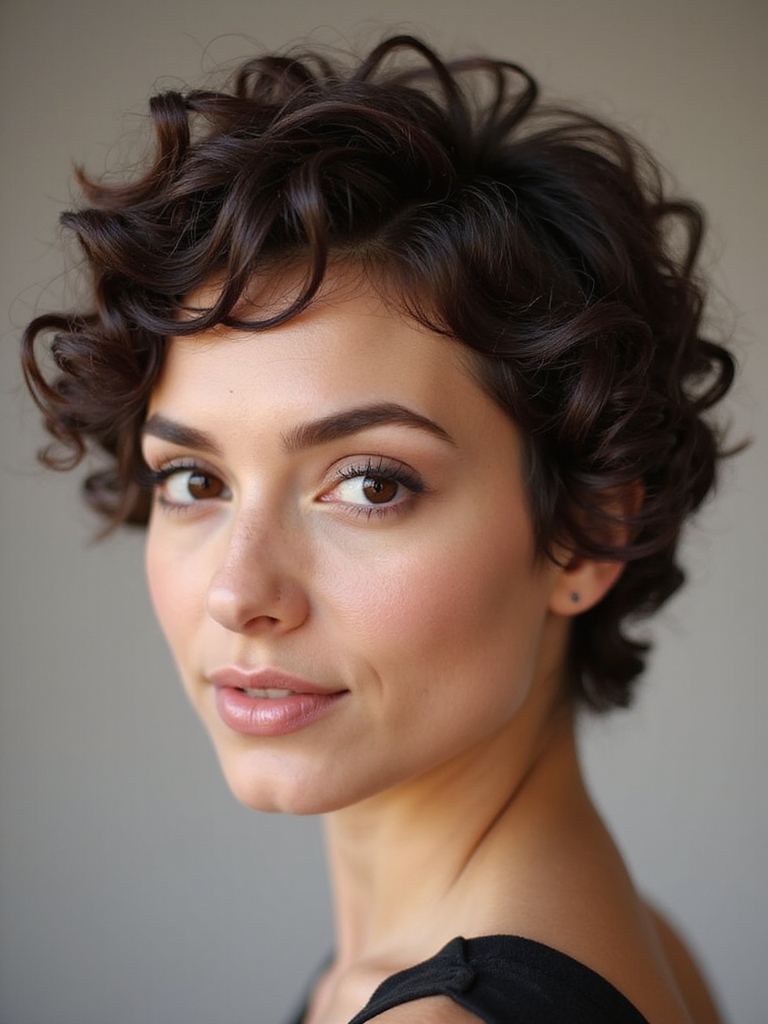
A curly pixie adapts to nearly any pattern once the cut is actually tuned to how that specific hair falls, rather than applied the same way regardless of texture.
The one detail that makes this work across patterns: hair cut dry, in its resting state, so the stylist can see and account for exactly how much each curl pulls up.
- Loose waves: a slightly longer, softer crop with wispy layering.
- Springy ringlets: a layered shape that lets each spiral show its full definition.
- Tight coils: a more sculpted, tapered crop with a crisp perimeter.
Maintenance Between Full Visits
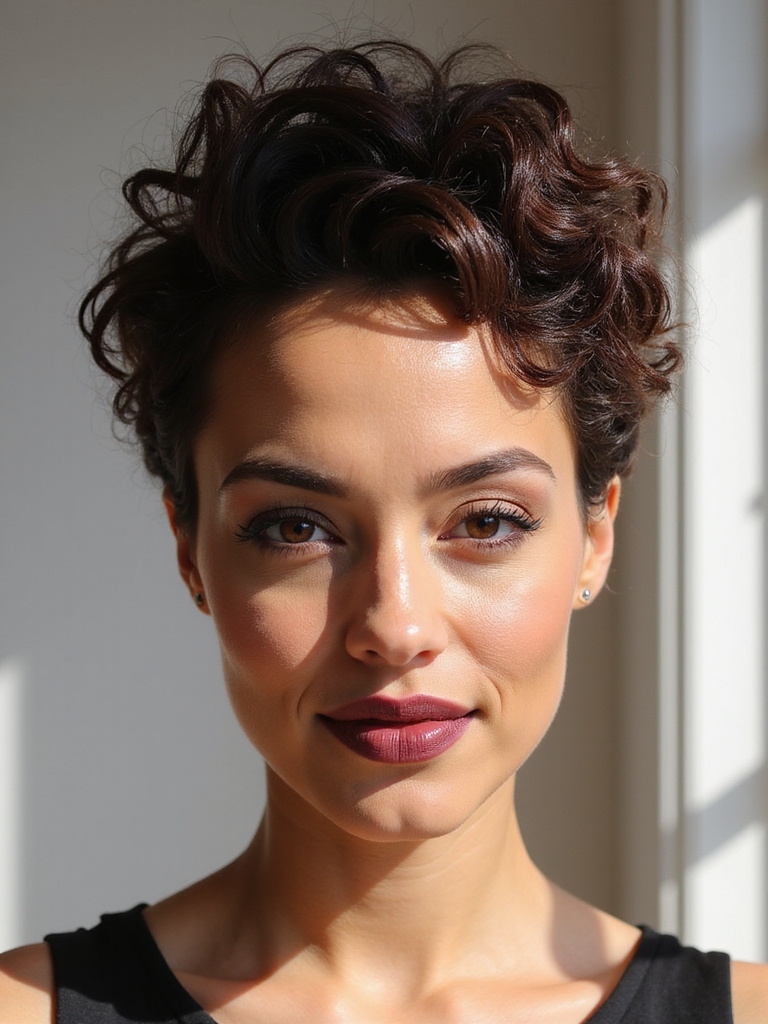
Holding the shape between full appointments comes down to reviving the curl pattern, not restyling it from scratch every few days.
- A water-and-leave-in refresh brings yesterday’s curls back to life with a light scrunch.
- Sleeping on satin, or gathering curls loosely on top of the head overnight, protects the shape while you sleep.
- A quick shape-up on a regular schedule keeps the perimeter from softening too far between full cuts.
What to Expect
Expect the first cut to feel more dramatic than any trim after it, since most of the length removed happens once, up front, rather than gradually. A specialist cut for curly and coily texture typically runs $60 to $120, more than a straight-hair trim, since dry-cutting curl by curl simply takes longer in the chair.
What you’re paying for is precision you can’t get any other way: a stylist who sees exactly how your pattern behaves before a single cut is made, instead of guessing and correcting after the fact. For more inspiration across lengths and textures, see best pixie hairstyles.
Curly Pixie Haircut Questions Worth Asking
?Will a curly pixie look different depending on the weather?
Somewhat, yes. Humidity can soften definition or add frizz by afternoon, which is normal for any curly cut this short. A quick water-and-cream refresh brings the shape back without needing to restyle from scratch.
?Is a curly pixie hard to grow out if I change my mind?
Easier than a straight pixie, actually. The curl pattern hides the in-between length that makes a straight grow-out look so awkward, so regular shape-up trims can carry you toward a bob without one obvious rough stage.
?Do I need different products than I used for longer curly hair?
Mostly the same category of products, just less of them. A leave-in and a lightweight gel go further on short hair than they did on length, and heavier creams or butters that worked fine at longer lengths can weigh a short cut down fast.
The Curl Was Always Enough
A curly pixie works because it stops asking your texture to behave like straight hair. Cut to the pattern you actually have, kept moisturized, and diffused instead of ignored, the curl does the rest of the work on its own. For more short, curl-friendly shapes, see wavy pixie cut.
So here’s the real question worth sitting with before you book: is it the curl itself giving you pause, or just the fear of losing the length? If it’s the second one, your texture is more ready for this than you might think.
Related Reads