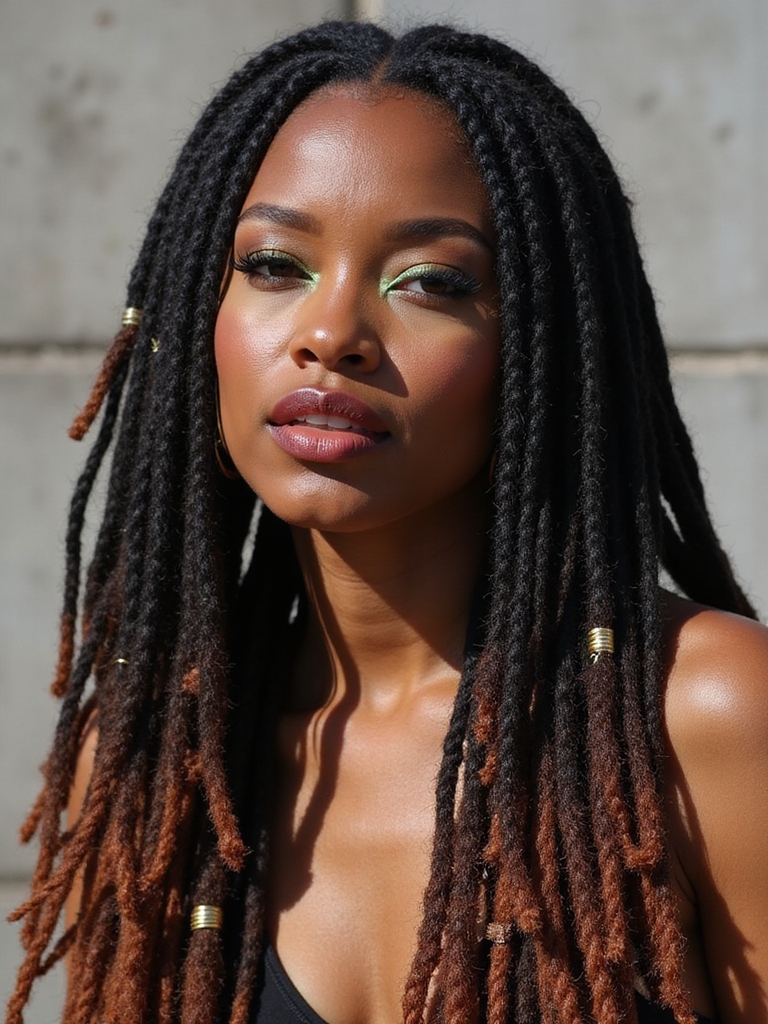
What actually keeps people from trying a fringe? Rarely the fringe itself. Usually it’s the fear of the grow-out, that stretch where bangs sit too long to wear forward and too short to tuck away cleanly.
This roundup does two things at once: it walks through the main fringe families worth knowing, and it lays out exactly how to grow one out without regret, so the way back feels as easy as the way in.
Fringe Families, Sorted by Regret Risk
- Curtain, side-swept, wispy, and long layered fringes blend into length as they grow, with the least regret.
- Blunt and micro fringes look striking but need trims on a much tighter schedule and a real grow-out stretch.
- Face shape decides more than any trend does; a fringe matched to it flatters, a mismatched one fights the features.
Why a Fringe Is Worth the Leap

A fringe changes the whole read of a face while leaving length untouched, which explains why it tempts even people committed to long hair. A few reasons it’s worth considering:
- It frames the face and pulls the eye directly toward the eyes themselves.
- It refreshes an entire look dramatically without sacrificing a single inch of length.
- It softens or balances features in a way color alone rarely manages.

The Main Fringe Families to Know

A fringe exists for nearly every face, hair type, and patience level, and understanding the broad families makes picking one considerably easier. Upkeep matters more than look alone here. Sorted by effort:
- Soft and forgiving: curtain, side-swept, wispy, and long layered fringes that blend as they grow.
- Bold and high-upkeep: blunt and micro fringes that make a statement but want frequent trims.
- Relaxed and low-effort: textured, choppy fringes that disguise the grow-out almost on their own.
Matching a Fringe to Face Shape

The most flattering fringe is the one cut for a specific face, not the one saved from someone else’s photo. The right shape balances features; the wrong one quietly works against them.
A Rough Map, Not a Rulebook
As a rough map, a round face tends to flatter with side-swept or longer fringes that draw a lengthening diagonal, while a square jaw softens under wispy or curtain bangs. A long face often suits a fuller, blunter fringe that adds width.
An oval face can generally carry almost any version. These function as starting points rather than firm rules, which is exactly why this conversation matters more at the consultation than any saved photo does.
Textured Bangs

Textured bangs get broken up with choppy, piece-y cutting, so they fall in a relaxed way rather than one smooth line. That broken edge is exactly what makes them easy to live with day to day.
They forgive a skipped styling morning and blend gracefully as they grow, since there’s no solid line to maintain in the first place.
- Styling stays minimal: a quick rough-dry plus a pinch of texture product separates the pieces.
- They pair especially well with a shaggy cut, sharing the same broken-up energy.
- The choppy ends disguise the in-between length, so the grow-out passes almost unnoticed.
Long Layered Fringes
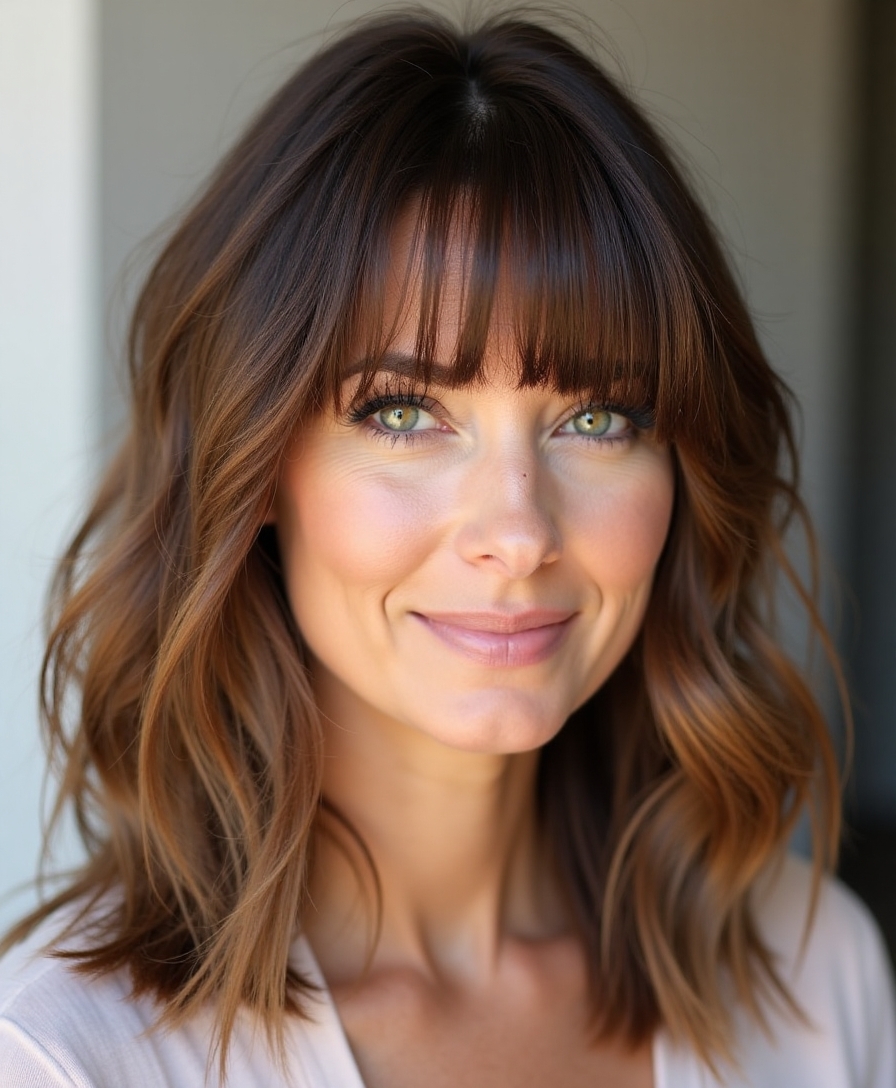
Long layered fringes sit lower than a traditional fringe and blend straight into face-framing layers, making them among the most grow-out-friendly options available. As they lengthen, they simply turn into longer framing pieces rather than an awkward in-between mess.
They deliver the softening effect of a fringe while staying out of the eyes more easily than a shorter version, and they ask for very little daily styling.
- Blend into soft face-framing layers rather than growing through a hard block.
- Stay out of the eyes longer than most shorter fringe styles.
- The face-framing bangs guide covers the longest, gentlest versions of this idea.
Photos Only Go So Far
A fringe that looks striking on thick, straight hair can behave completely differently on fine or curly texture. Bringing a photo still helps, but pairing it with an honest conversation about texture matters just as much.
Curtain Bangs

Curtain bangs have quietly taken over the last several years, parting softly at the center and sweeping to each side like an open curtain. They earn the reputation as the lowest-regret fringe because they grow out so kindly. A quick summary:
- Suit nearly every face shape without closing off the forehead entirely.
- Grow out gracefully, merging into length with barely a real awkward stage.
- Need very little daily styling once cut to the right length.
Blunt Bangs

Blunt bangs cut straight across the forehead in one heavy, solid line rank as the most dramatic fringe on this list. On fine hair specifically, that solid edge fakes real density, making thin strands read noticeably fuller. Worth knowing:
- This is the least grow-out-friendly fringe here, and the one most often underestimated at booking.
- Plan on a shaping trim every couple of weeks, often included free between full cuts.
- The bold, heavy line makes a statement most softer fringes simply can’t match.
The Side-Swept Fringe
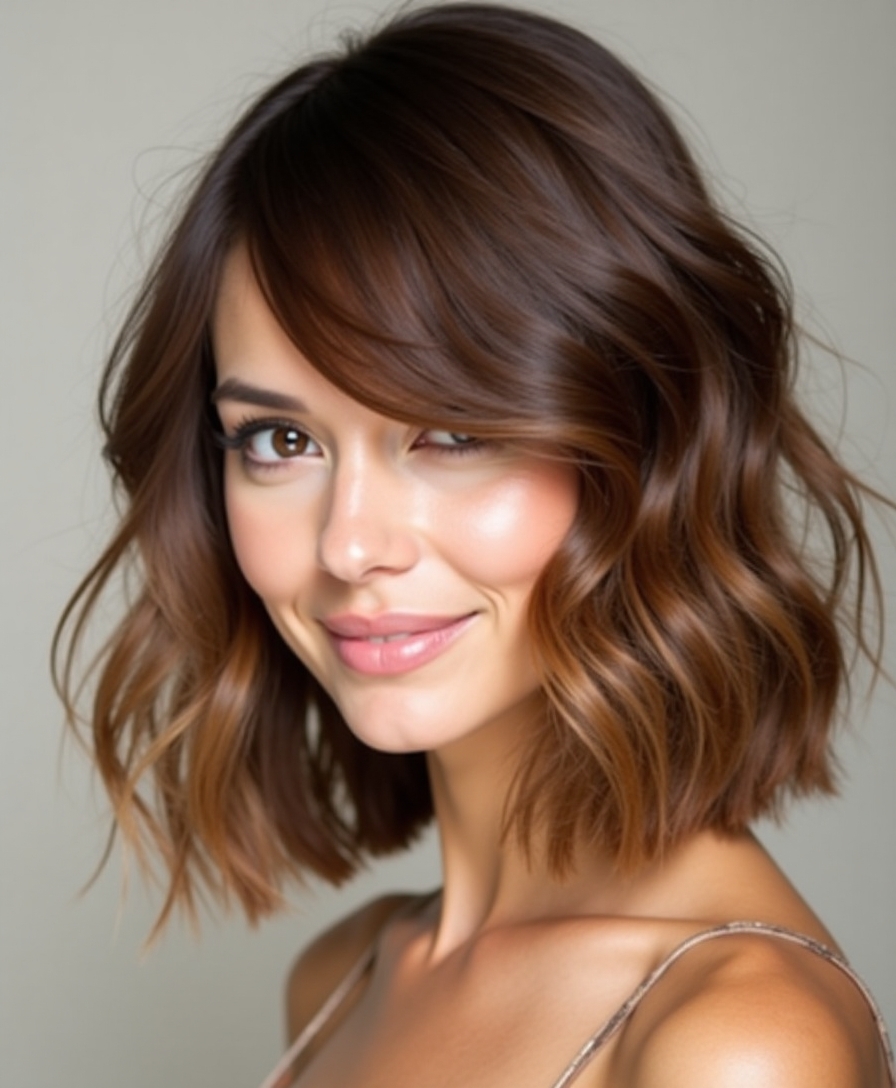
A side-swept fringe runs diagonally across the forehead toward one side, landing as one of the more universally flattering options on this entire list. The diagonal lengthens a round face and softens a square one, then grows out into face-framing pieces rather than an awkward block. Quick notes:
- Styles fast: swept into place with just a brush and a touch of product.
- Grows out softly into face-framing pieces, never a hard, obvious line.
- A gentle, low-commitment way to test a fringe before going shorter.
Wispy Bangs

Wispy bangs read soft, fine, and piece-y, falling across the forehead in a delicate, almost see-through way. That thinness is the entire point: it softens the face without a dramatic change, and because the strands carry so little weight, they blend into the rest of the hair as they grow.
Soft, Light, and Truly Forgiving
They flatter nearly every face shape and suit fine hair especially well, where a thicker fringe can look sparse but a wispy one reads intentional instead.
Styling stays minimal, usually just a quick rough-dry with fingers to keep pieces separated, and they tend to air-dry acceptably well on their own.
| Fringe Type | Grow-Out Ease | Typical Trim Pace |
|---|---|---|
| Curtain / side-swept | Very easy | Every 6-8 weeks |
| Wispy / long layered | Easy | Every 8-10 weeks |
| Blunt / micro | Hardest | Every 2-3 weeks |
Face-Framing Layers

Face-framing layers aren’t technically a fringe, more a close cousin, built from longer pieces cut to fall around the face rather than across the forehead.
The Closest Thing to a No-Risk Option
They function as close to a no-grow-out option as this list offers, since they’re already long and blended, softening features while asking for almost no daily upkeep.
Most face shapes and hair types can wear them without much adjustment, and since nothing sits directly across the forehead, every bit of existing styling versatility stays intact.
Maintaining a Fringe at Home

A fringe asks for a bit more daily attention than the rest of the hair, though a simple routine keeps it looking fresh between salon visits. Most fringes need a quick blow-dry or finger-style each morning, since sleeping on them tends to leave a visible crease.
The bigger favor anyone can do for a fringe they love is resisting home scissors entirely; a light dusting is fine between visits, but real shaping belongs to a professional.
- A fast damp-down and dry each morning resets the crease from sleep.
- Keeping the roots oil-free stops the fringe from separating into greasy strips by midday.
- Save any actual cutting for a stylist, even for tiny trims.
Surviving the Mid-Grow-Out Stage

The mid-grow-out stage, when a fringe is too long to wear forward but too short to blend fully, is the phase everyone dreads. It’s manageable once the goal shifts from wearing it as a fringe to working it into the rest of the hair.
The most effective move is sweeping the growing length into a deep side part, which instantly turns it into face-framing pieces instead of an awkward block.
- A deep side part converts growing bangs into usable face-framing length almost overnight.
- Clips or pins handle the days a side part refuses to cooperate.
- At the salon, ask for the grow-out to be shaped into the layers instead of cut shorter.
Accessories for the Grow-Out

Accessories function as a quiet secret weapon during a grow-out. The right clip, headband, or pin turns an awkward in-between length into something that reads deliberate, which matters most exactly when confidence is wobbling. A few reliable options:
- Decorative clips sweep growing length back as an intentional-looking detail.
- A padded headband holds hair off the face while reading polished rather than practical.
- Bobby pins tuck stray in-between pieces away in seconds, no real skill required.
“Most pros point clients toward a deep side part first when a fringe hits the awkward stage, since it solves the problem instantly without touching the scissors at all.”
Products Worth Keeping on Hand

A growing fringe behaves considerably better with a small, focused kit rather than a drawer full of random products. The goal is light control and a little hold, without grease or stiffness weighing anything down. Three things cover most of it:
- A light styling cream or pomade sweeps and blends the growing length.
- A texture spray helps the fringe merge visibly with the rest of the hair.
- A dry shampoo keeps roots oil-free so everything sits clean through the day.
Knowing When to Trim

Knowing when, and when not, to trim covers about half of keeping a fringe truly loved rather than tolerated. The right cadence depends entirely on the style: a blunt fringe wants attention roughly every three weeks, often $15 to $25 for a quick dust, while a curtain or wispy fringe can comfortably stretch six weeks or more.
A useful signal either way: once it brushes the lashes or stops sweeping cleanly to one side, it’s time. Most salons will dust a fringe between full cuts for little or nothing, which makes the trip worth it far more often than skipping does.
Managing Frizz in a Fringe

A fringe sits against the warmest, dampest part of the face, so it frizzes and falls flat faster than the rest of the hair does. The forehead runs warm and slightly oily, and steam from a hot kitchen or a workout lifts the cuticle and puffs even a smooth fringe within minutes.
Why the Forehead Fights the Fringe
The fix largely starts at the blow-dry stage: directing the fringe down and slightly to the side with a round brush and real tension, while it’s still damp, heads off most frizz before it starts.
A small amount of smoothing cream on dry hands tames flyaways afterward without weighing the pieces down or making them look overly styled.
The fringe that survives a grow-out is rarely the one with the perfect shape at day one. It’s the one someone was willing to keep shaping instead of abandoning at the awkward stage.
Building Volume in Longer Bangs

Once a fringe grows past the brow, it can go limp and sit flat, which often gets mistaken for a failed grow-out rather than what it actually is: a lift problem, not a length problem. A few minutes of directed drying restores the movement. Building it:
- Blow-dry the root area first, lifting up and back with a round brush.
- A blast of cool air sets the volume before it has a chance to fall.
- Finish with a light texture spray for separation, skipping heavy gel entirely.
Styling a Fringe as It Grows

A growing fringe isn’t really one look; it’s a whole series of them, and the easiest path through the months is styling for whatever length it happens to be at that moment rather than fighting it.
Style for the Length It’s At Right Now
Short and forward early on, it functions simply as a fringe. Around cheekbone length, it wants a soft side sweep instead. Past the jaw, it slips into face-framing layers and effectively disappears into the rest of the cut.
Matching the styling to the actual length, stage by stage, removes most of the friction people associate with growing a fringe out.
The Curly Fringe

A stubborn myth claims curls and bangs simply don’t mix, and that claim doesn’t hold up under closer scrutiny. A curly fringe works well once it’s cut specifically for the curl pattern, shaped dry so a stylist can see exactly where each spiral lands. A few essentials:
- Cut dry, never wet, so the fringe lands where the curl actually falls once finished.
- Leave extra length for shrinkage, since curls pull up noticeably as they dry.
- The curly bangs guide goes deeper into styling technique for this specific texture.
Keeping a Growing Fringe Safe From Scissors

Most fringe regret traces back not to a bad original cut, but to a good fringe trimmed shorter in a moment of impatience partway through growing it out.
The Scissors Are the Real Risk
The grow-out really tests patience, and the single best defense is putting real distance between anyone growing a fringe out and a pair of scissors at home.
Booking a professional dusting instead of self-trimming, and leaning on clips or a side part through the roughest week or two, handles most of the temptation before it becomes a problem.
Finding Real Fringe Inspiration

The most reliable way to land on the right fringe involves gathering a few reference photos, though gathering them honestly matters more than gathering a lot of them. A fringe that looks striking on thick, straight hair behaves differently on fine or curly texture. Building a useful reference set:
- Collect photos of people whose hair texture and face shape actually resemble your own.
- Be honest about how much daily styling is realistic, not aspirational.
- Talk through the expected grow-out with a stylist before any actual cutting begins.
Who It Suits Best
A fringe suits nearly anyone willing to match the style to their own face shape and texture rather than copying a photo exactly. It works especially well for anyone wanting a dramatic visual change without cutting any actual length off.
It suits people with the patience for a little extra daily styling, and especially those willing to lean on a side part and a few accessories through the inevitable grow-out stretch, rather than reaching for scissors out of impatience.
Fringe Questions, Answered
?How much extra time does a fringe realistically add to a morning routine?
For a forgiving style like curtain or wispy bangs, usually about two to three extra minutes: a quick damp-down at the roots and a brush-dry to direct the pieces. A blunt fringe takes a touch longer to get properly sleek.
?What’s the actual fix for the mid-grow-out stage?
Stop styling it as a fringe and sweep it into a deep side part instead, lean on clips or a light cream through the transition, and ask a stylist to shape the grow-out into the surrounding layers rather than trimming it shorter out of impatience.
?Can a fringe work with naturally curly hair?
Yes, as long as it’s cut dry, on the natural curl pattern, with extra length left for shrinkage. Cutting a curly fringe wet is the actual source of most bad-fringe stories involving curls, not the curl pattern itself.
The Way Out Is as Easy as the Way In
A fringe remains one of the fastest ways to change an entire look without sacrificing length, and the grow-out most people dread turns out considerably gentler than its reputation suggests once the right style gets chosen from the start.
Curtain, side-swept, wispy, and long layered fringes carry someone in and back out with barely a real awkward stage, while blunt and micro fringes simply reward a bit more ongoing devotion in exchange for their impact.
More Ideas Here