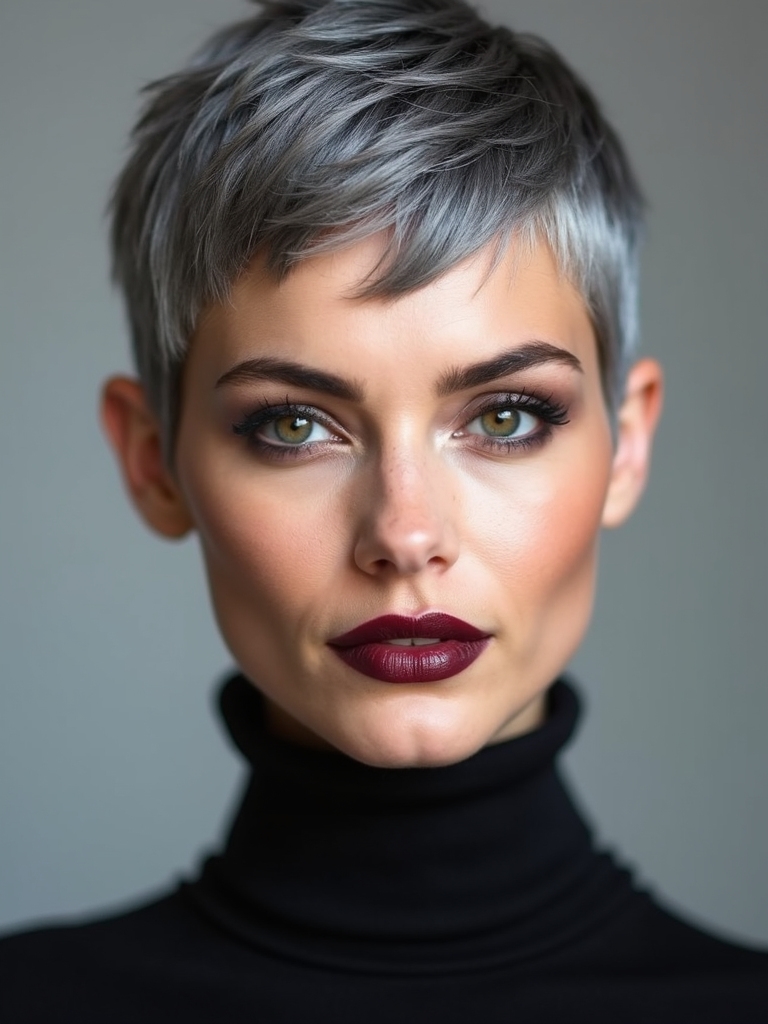
Most pros point to the same unpopular truth when a client hesitates over gray hair pixie cuts: going short and silver at the same time is usually the smart move, not the risky one. Short length shows off gray at its best, skips the grown-out two-tone line entirely, and looks younger when the cut carries the right softness.
What follows is a set of gray pixie shapes grouped by face shape, texture, and how much daily fuss feels reasonable. Each comes with what to request and what it actually costs in ongoing upkeep, since a pixie is a genuine commitment to the chair.
Gray Pixies, Quickly
- Softness is everything: textured, point-cut layers keep silver from looking helmet-stiff at any length.
- Tone management matters more than the cut itself; a weekly purple or blue shampoo is what keeps gray bright instead of yellowing.
- Upkeep varies widely by shape, from a forgiving six-to-seven-week stretch on a long pixie to a demanding two-week cleanup on buzzed sides.
Sleek Silver, Side-Swept

For anyone easing into silver rather than diving in, this is the starting point. A side-swept pixie keeps one longer, sweeping section across the forehead, softening the whole face while giving newly short hair something familiar to do.
The diagonal line suits most face shapes at once simply by breaking up a straight hairline, and that versatility explains why stylists reach for it so often with first-time pixie clients.
The top stays long enough to sweep to one side while the sides taper close, and that contrast is what keeps the whole shape reading sharp rather than accidental.
An Honest Salt-and-Pepper Crop

Salt-and-pepper describes the in-between stage where gray still mixes with natural pigment, and a textured crop celebrates that mix rather than fighting it. Choppy, piecey cutting separates the lighter and darker strands so both tones show clearly, creating a dimensional look that would otherwise take an expensive color service to fake.
Why the Mixed Tone Works in Its Favor
The cut wants disconnected pieces through the top over a shorter side, with every end point-cut so nothing lies blunt or heavy.
A matte clay suits this length best, since shine products can make the mixed tone look greasy rather than dimensional.
Feathered Layers for Soft Movement

Feathered layers are what keep a gray pixie from reading stiff. Fine, tapered layers cut to flick away from the face build in airy movement, and that movement is exactly what makes silver look light rather than dense.
Best for Fine or Thinning Hair
This approach suits fine or thinning hair especially well, since the feathering creates the illusion of more density than actually exists.
Layers cut to fall just past the cheekbone at their longest frame the eyes, and a lift at the root while drying supplies whatever volume the cut alone can’t provide.
Choppy, With a Piecey Fringe

For anyone wanting silver to read cool and a little undone, this is where most consultations land. A choppy pixie with a piecey fringe pairs separated, textured ends with a broken-up fringe that falls in soft points across the forehead.
It’s a young, edgy shape that suits anyone who doesn’t want a single piece that looks deliberately set.
The fringe is doing most of the work here: cut to brush the brows with deep point-cutting, it always falls in those same soft points regardless of how it’s styled that day.
📋Before Committing to a Choppy Fringe
- ✓Confirm with a stylist how often the fringe alone will need trimming between full cuts.
- ✓Bring a reference photo showing exactly how far forward the piecey points should fall.
- ✓Ask whether a cowlick or natural part will fight the broken-up shape.
The Clean, Tapered Nape

A tapered nape is the detail separating a truly polished gray pixie from a shapeless one. It’s the gradual fade of length down the back of the neck, and it’s what makes a cut look intentional from every angle a mirror shows.
- A graduated taper grows out softly between visits rather than leaving a visible line.
- Checking the nape with a hand mirror before leaving the chair confirms the back matches the front.
- A neckline cleanup roughly every three weeks keeps it razor-sharp, and many salons include this free between full cuts.
Volume at the Crown

Gray hair can lose some of the bounce it had while pigmented, which makes crown volume one of the most requested details once someone goes short. Layers lifted at the crown deliver flattering height that balances the face and looks youthful rather than flat.
Most of the effect comes down to a technique that’s easy to replicate at home once the moves are familiar.
- Drying the crown by lifting sections straight up, with fingers or a round brush, builds the base height.
- A root-lifting spray or mousse applied before drying sets that height so it holds through the day.
- A final blast of cool air with the head tipped upside down locks the lift in place.
👍Crown Volume at Home
- +Balances the face and reads more youthful overall.
- +Achievable in under five minutes once the technique is familiar.
- +Works with the natural growth pattern instead of against it.
👎Skipping the Volume Step
- –Silver can look flat and heavy without any lift at all.
- –A pixie with no crown height tends to read severe rather than soft.
- –Fine gray hair especially needs this step to avoid looking sparse.
An Asymmetrical Edge
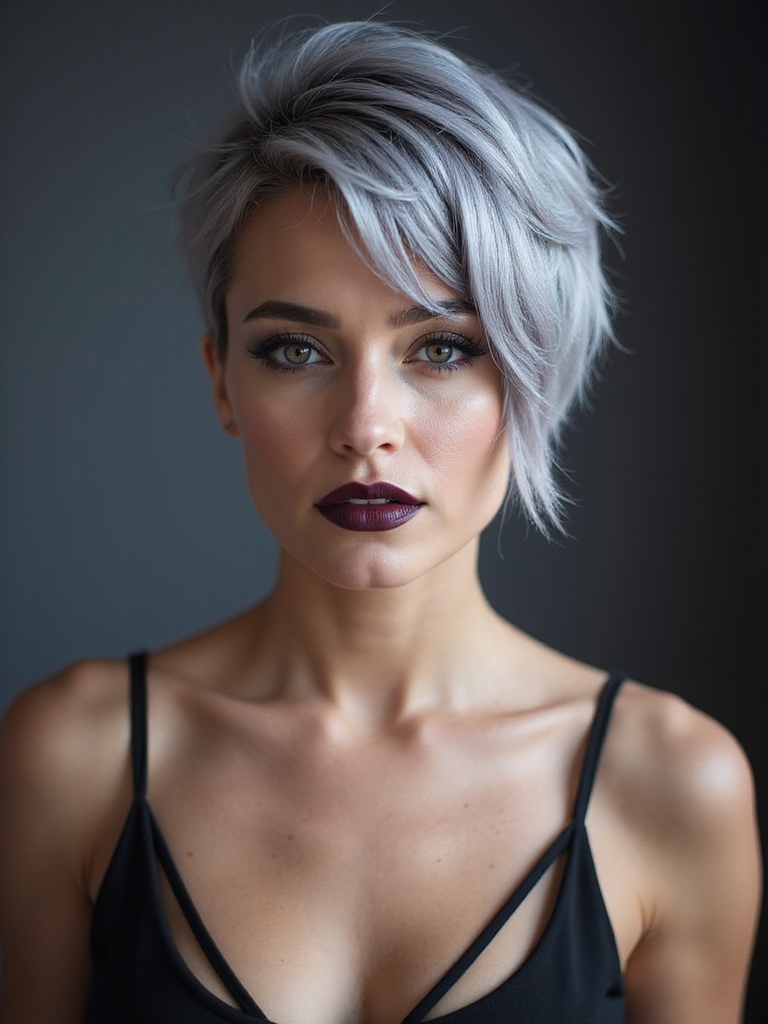
For anyone who wants their silver to make a clear statement, an asymmetrical pixie delivers exactly that. One side stays noticeably longer than the other, creating a strong diagonal line that comes across as deliberately modern.
The off-balance shape draws the eye across the face and flatters round and square faces especially well, since it visually elongates.
- The longer side should reach past the jaw, leaving room to tuck it back or sweep it forward for variety.
- A flat iron run through the long side keeps the asymmetry crisp for photos or events.
- The shorter side grows out faster than the long one, so trims need to account for both timelines separately.
Defined Coils on Curly Gray

Curly and coily gray hair makes a remarkably striking pixie, since the natural curl gives silver instant body while the gray itself lends the curls a soft, smoky depth. What matters most is respecting the texture: the cut needs to happen dry, curl by curl, so the exact fall of each spiral is visible before it’s shaped.
- Cutting wet risks the curl springing up shorter than intended once it dries.
- A dry, curl-by-curl approach lets the cut work with the natural pattern rather than against it.
- Coily gray tends to run drier than other textures, so a rich leave-in and curl cream on soaking-wet hair matter more here than almost anywhere else on this list.
An Undercut for Bold Contrast

For thick, hard-to-manage gray hair, an undercut pixie removes real bulk without it being visible from the front. Buzzing the sides or nape short while keeping length and texture on top lets the silver move freely instead of fighting its own density.
It also reads as quietly daring, dressed up or kept soft depending on the day.
- A hidden under-layer stays subtle for anyone not ready for a visible statement.
- A high fade turns the same idea into something bolder and more visible.
- The buzzed section needs a cleanup on a tighter schedule than the rest of the cut, roughly every couple of weeks.
The French-Girl Micro Pixie
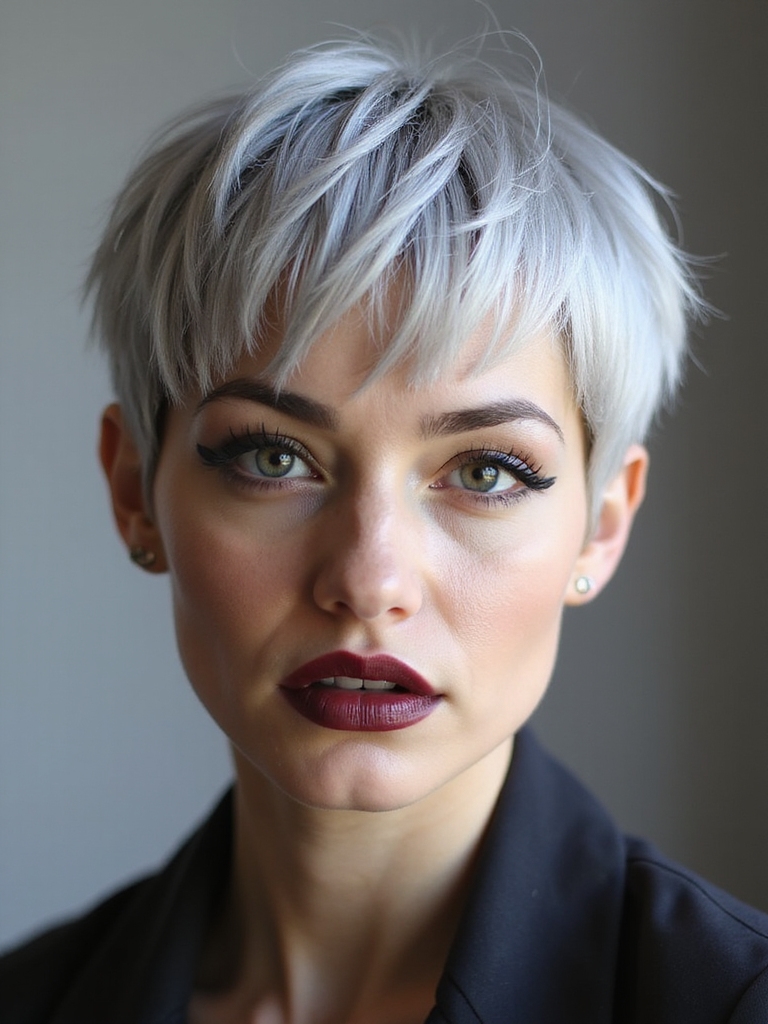
This is the shortest, most carefree shape on the whole list. A micro pixie keeps everything cropped close, with a slightly longer, tousled top worn soft and a little undone in that unbothered French way.
How Short Actually Works Here
On silver hair the effect looks chic and confident, and the at-home upkeep is close to nothing once the cut settles in.
A soft, rounded shape with a top long enough to push around with fingers alone is the goal, finished with a touch of light pomade rubbed between the palms for texture without stiffness.
Long, With Face-Framing Strands
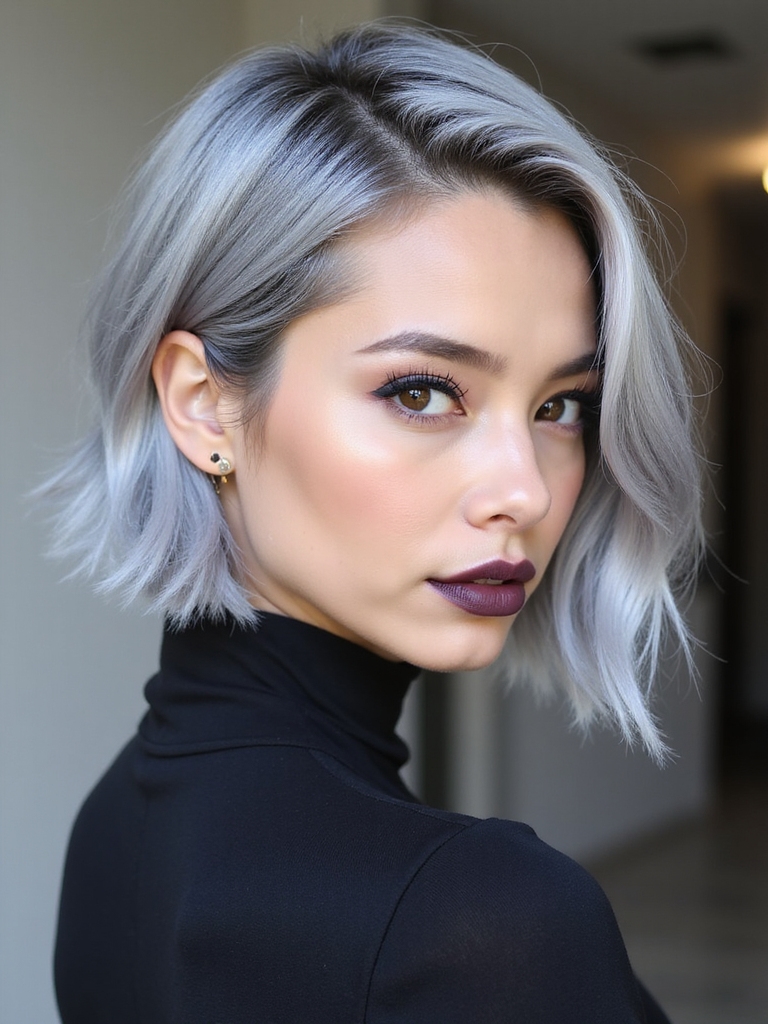
For anyone not ready to go truly short, a long pixie serves as the bridge. It keeps more length through the top and longer face-framing pieces at the front, delivering pixie-level freedom while still leaving hair to tuck and adjust.
It’s the most versatile shape on this list and often the first recommendation for someone’s very first pixie. Because it holds more length overall, it forgives a stretched interval between cuts far better than shorter versions, often reaching six to seven weeks before it needs attention.
Length Timeline Mismatch
On an asymmetrical shape, the shorter side grows out noticeably faster than the longer one. A single trim schedule for the whole head eventually throws the asymmetry off balance; the two sides usually need separate attention.
A Spiky, Metallic Finish

For silver that leans downright cool, spiking it is the move. A short, textured pixie styled into soft spikes plays up gray’s metallic quality, catching light in a way that resembles brushed steel.
Keeping Spikes Soft Rather Than Severe
This is the boldest styling choice on the list, favored by women who never cared much for soft-and-pretty in the first place.
The cut stays short and disconnected through the top so pieces can stand independently, and a firm-hold matte clay pinched through with fingertips holds the spikes without tipping into a wet, dated shine.
Wavy and Tousled
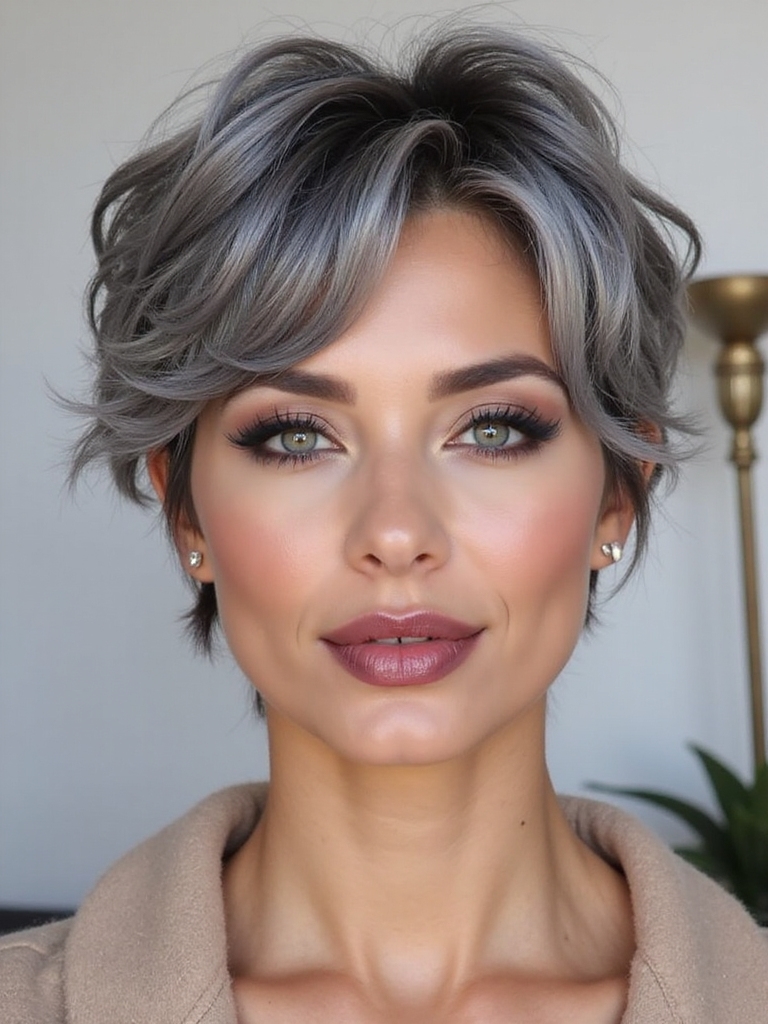
For anyone with a natural wave, leaning into it rather than fighting it is the easiest path. A tousled, wavy pixie stays soft and relaxed, and it’s easily the least fussy gray look to live with day to day, since the bend in the hair scatters light and makes the silver look dimensional on its own.
- A curl-enhancing cream or light mousse scrunched into damp hair encourages the natural bend.
- Air-drying, or diffusing on low if time is short, keeps the wave from blowing straight.
- A little texture spray and a final scrunch, with hands then left alone, finishes the look.
Buzzed Sides, Sleek Top
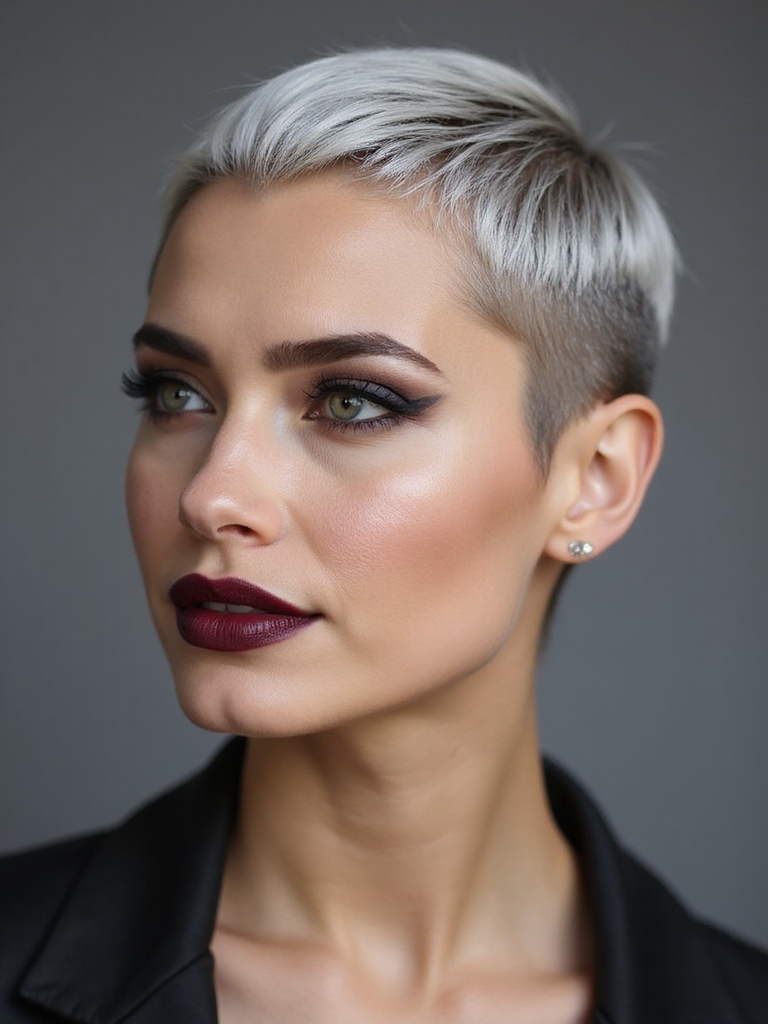
This is the sharpest, most architectural shape on the entire list. Buzzing the sides completely clean while keeping a smooth, sleek length on top creates a high-contrast silhouette that feels fashion-forward and, once styled, stays low-fuss day to day.
On silver hair specifically, the buzzed sides take on an almost brushed-metal look, which lands as striking rather than severe. The catch is the buzzed portion itself, which grows out within roughly two weeks, making this the highest-maintenance shape on this list even though the daily styling couldn’t be simpler.
| Shape | Trim Interval | Daily Effort |
|---|---|---|
| Long pixie with face-framing | 6 to 7 weeks | Low |
| Buzzed sides, sleek top | About 2 weeks | Low once styled |
| Tapered nape cleanup | About 3 weeks | Minimal |
The Grown-Out Shag Stage

Every pixie eventually hits an awkward grow-out stage, and the smart move is leaning into it rather than fighting it. Adding shaggy, choppy texture as the hair lengthens turns that in-between stretch into a deliberate shag that holds its own shape.
- Textured layers added at each visit as the hair grows keep the shape looking intentional throughout.
- A texture spray scrunched through damp or dry hair is close to the entire styling routine at this stage.
- This phase is a real advantage for anyone considering a longer cut eventually, since it’s already doing the transitional work.
Common Mistakes to Avoid
The most common misstep is skipping tone management entirely. Gray drifts yellow from hard water and heat styling regardless of how good the cut is, and the resulting dullness often gets blamed on the haircut rather than the actual culprit: brass. A purple or blue shampoo once or twice weekly, plus a monthly clarifying wash to clear buildup that toners can’t reach, solves most of it.
The second common mistake is cutting too severe a shape. A blunt, helmet-stiff pixie tends to age silver hair rather than flatter it, while soft, textured layers consistently do the opposite. Under-booking trims causes the third problem: most gray pixies actually need a shape-up on a monthly-ish rhythm to hold their line, and skipping that turns even a great cut shapeless within weeks.
Gray Pixie Cut Questions
?Does going gray and short at the same time actually work, or is that too much change at once?
It works more often than people expect, mostly because short hair shows the transition off cleanly instead of dragging out an awkward two-tone grow-out over many months.
?Will a pixie cut make gray hair look older?
Almost never, when the cut stays soft. A textured, layered pixie with some fringe tends to read younger; what actually ages silver is yellowing and an overly blunt, stiff shape, both of which are avoidable.
?Can curly or coily gray hair handle a pixie this short?
Yes, and it often looks especially good, since curl adds volume gray hair can otherwise lack. The one non-negotiable is a dry, curl-by-curl cut rather than one done on stretched, wet hair.
?How much should a gray pixie realistically cost to maintain?
A shape-up typically runs $40 to $70 depending on region, on top of whatever tone-management products get added at home; buzzed or heavily tapered versions need that appointment more often than a softer, longer pixie does.
Which Silver Feels Most Like You?
A gray pixie isn’t the safe choice or the giving-up choice; it’s the shape that puts silver front and center and lets the cut do the flattering work. Picking the version that matches both texture and the upkeep someone can honestly sustain, then keeping the tone cool, tends to answer most of the lingering hesitation on its own.
The soft side-swept pixie or the bold buzzed sides: which one actually sounds like a person’s real week? Bookmarking the two shapes that fit both face and lifestyle, then bringing them to a stylist as a starting point, is usually where the best results begin.
Worth a Look