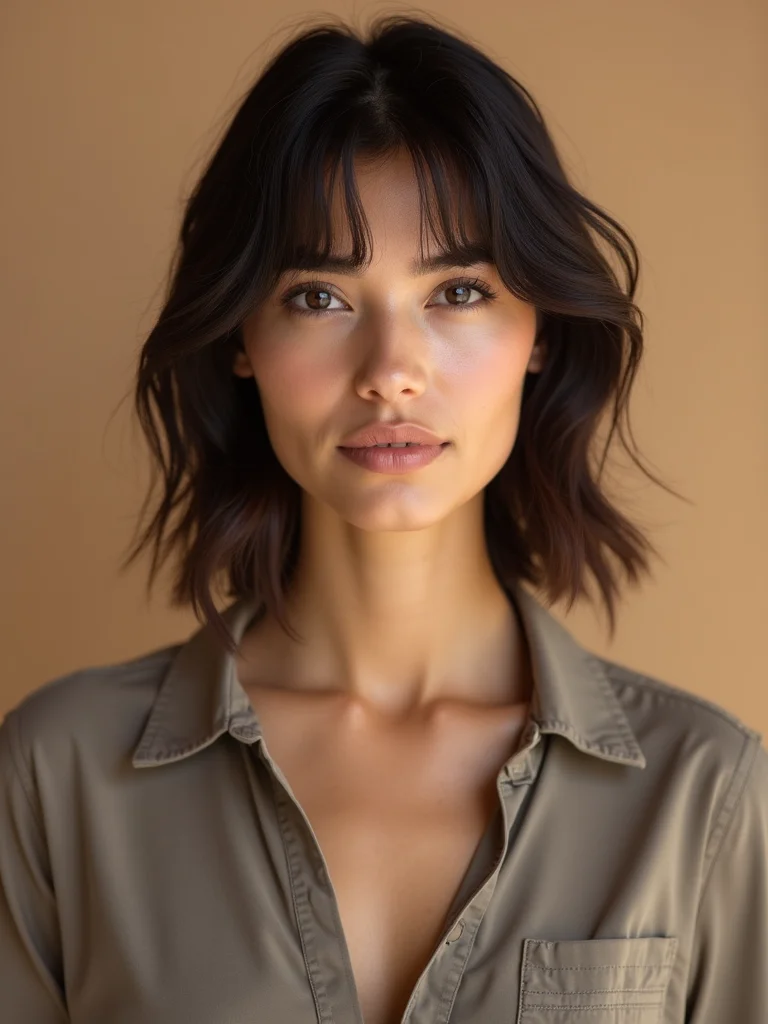
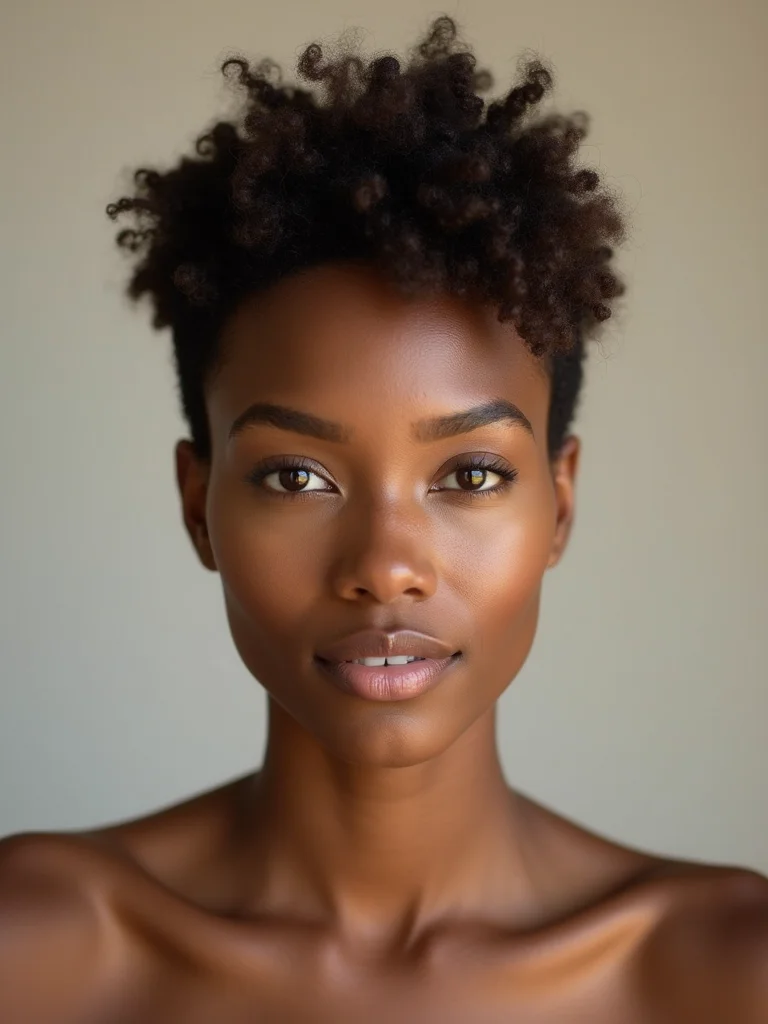
A round-faced client once brought in three different fringe photos, certain she had to pick exactly one. What she actually needed was a fringe that matched her shag’s own layers, not one borrowed from someone else’s cut. A shag without bangs puts the focus on length and volume; add a fringe and the balance shifts forward, toward the eyes and the brow line.
The catch is that not every fringe belongs on every shag. A blunt micro bang and a soft curtain fringe send opposite signals, and each one works best with a particular length and texture. The looks below are sorted by pairing, fringe to shag, so you can walk in and ask for the combination instead of guessing.
Fringe and Shag, the Fast Version
- A fringe shifts a shag’s balance forward, toward the eyes and brow line, softening a tall forehead.
- Not every fringe suits every shag: soft and wispy bangs are the most forgiving, while blunt and micro bangs ask for the most commitment.
- Match the fringe to your texture first, then let your stylist pick the shag length that carries it.
Soft Curtain Bangs on a Modern Shag

Curtain bangs are the easiest fringe to put on a shag, and the reason comes down to geometry. They part down the center and sweep open toward the temples, so their longest edges land right where the shag’s face-framing layers begin. The fringe grows directly out of the cut rather than sitting on top of it as a separate piece.
- Ask for the ends point-cut so they taper softly instead of ending in a blunt line
- The inner corners sit just below the brow, then lengthen toward the cheekbone
- Grows out into face-framing pieces with almost no awkward stage
A Tousled Wolf Cut With a Shaggy Fringe

The wolf cut takes the shag to its most disconnected version, so the fringe has to keep pace with that energy. A heavy, blunt bang would fight the choppy crown layers; this pairing calls for a broken, piecey fringe that splits into uneven tendrils instead.
Where this struggles is on very fine hair, since the piecing needs enough density to hold its shape rather than looking sparse. Keep the crown short and stacked while the fringe stays wispy and gapped, so the whole cut hangs together as one continuous idea from forehead to ends.
- Let the forehead peek through instead of covering it completely
- A matte texture paste worked through with fingers finishes the look
- See our wolf cut guide for the full crown-height breakdown
Growing a curtain fringe into your shag layers, step by step:
1Start at the part
Section straight back from the crown before the first cut so the part line stays clean.
2Cut it long first
Leave extra length on the first pass; curtain bangs shorten fast once they settle into place.
Wispy Bangs on a Shoulder-Grazing Shag

Wispy bangs are the lightest fringe of the bunch, which makes them a natural match for a shag whose layers are equally airy. On a shoulder-grazing cut, the fringe is sliced thin enough to see through, keeping the forehead open.
The connection point is texture, not length: the bangs are over-textured to taper into fine tips, echoing the finishing used on the shoulder-length ends around them. Best suited to fine or medium hair that would look weighed down under a thicker fringe.
- Ask for a sliced, see-through edge with feathered tips
- A quick blast of cool air while finger-drying sets the wisp
- Skip heavy product, which flattens the airy effect
A Curly Shag With a Face-Framing Fringe

Curls rewrite the fringe rules, since a coil that hangs at the brow when wet can spring up to the hairline once it dries. The fix is a soft, face-framing curly fringe cut specifically to work with how curls shrink as they dry. Dry cutting is not optional here: the stylist needs to see each curl at rest, section by section, before deciding where it should end.
- Cut wet, a curly fringe almost always lands shorter and tighter than planned
- The shag’s layers give each coil room to expand around the face
- For more on the technique, see our curly shag guide
Micro Bangs Set High on the Forehead

Micro bangs sit well above the brow, turning a shag from soft to bold in a single cut. The short, blunt line creates a hard graphic contrast against the choppy layers below, and that contrast is the entire point.
The Highest-Commitment Pairing on This List
Micro bangs flatter strong, balanced features and a forehead that is not especially tall; a grown-out morning leaves nowhere to hide the regrowth. Ask your stylist to walk you through what the fringe looks like at two, four, and six weeks out before booking, since the shape changes fast.
Styling stays simple once it is cut correctly: a little pomade smoothed across the line keeps it crisp, and that is the entire routine, start to finish. A bang-only trim between full cuts runs about half the price of a full reshape, often close to $20.
Wet or dry — which cut actually works for curls?
🎯Cut wet
The coil looks longer while soaked, then springs up shorter than expected once it fully dries.
🎯Cut dry
The stylist sees the true, at-rest length and shapes the fringe to match it exactly.
Airy Center-Parted Bangs on a Long Shag

On a long shag, the smartest fringe is barely a fringe at all. Long center-parted bangs start past the cheekbone and blend straight into the lengths, so there is no visible seam, just a continuous fall of face-framing pieces.
This is the pairing for someone who wants the shape of bangs without the upkeep, since the length reaches down far enough to tuck behind an ear on a lazy day. There is almost no trim schedule to plan around, because there is no short fringe left exposed to maintain.
A Full Fringe on a Retro Seventies Shag

The seventies shag is the original, and it wears a full, brow-skimming fringe with pride. This denser bang drops in a soft curve across the forehead, topping a heavily feathered, rounded silhouette that has come back through nearly every generation since.
- The crown stays feathered short while the sides flip outward for movement
- Round-brush the fringe under for a flicked, retro bend
- A flexible-hold spray keeps the curve without stiffening it
Short Piecey Bangs on a Shaggy Bob

Drop the length to the chin and the fringe has to shorten with it. A shaggy bob pairs naturally with short, piecey bangs that break into separated tendrils, keeping the cropped shape playful rather than stiff.
The piecey edge does real work here, drawing the eye toward the cheekbones and keeping a blunt little bob from reading flat. It holds cleanest on straight or loosely wavy hair that keeps a defined piece; ask for point-cut, separated tips with visible gaps between them.
Soft Bangs on a Midi Shag for Fine Hair

Fine hair benefits more from a well-placed fringe than almost any other texture, since soft, sliced bangs build visual density right where thin hair goes flat first. On a midi shag landing around the collarbone, the stylist layers the bangs in soft, overlapping sections that make the whole head read fuller than it is.
The One Mistake to Avoid
The fringe most fine-haired clients need fixed later is one cut too thick in a single piece, which strands the rest of the head looking sparse by comparison. Taking the fringe from a shallow section instead protects the volume at the crown.
A light root mousse under the bangs lifts them off the forehead without weighing down the rest of the shape.
“A piecey fringe on a bob needs upkeep in the middle of the cut, not just at the ends. The separation is what sells the whole look, and it grows out the fastest of any part of the fringe.”
Debulked Bangs on a Voluminous Shag for Thick Hair

Thick hair has the opposite problem, and the fix is subtraction. A voluminous shag on dense hair needs its fringe debulked, since a full-density bang balloons into a heavy curtain that swallows the forehead.
The technique is internal thinning worked from underneath: the stylist removes weight below the surface with thinning shears or a slide cut, so the top layer stays smooth while the bulk underneath drops away. A smoothing balm about the size of a coin tames flyaways without adding extra weight on top.
Long Side-Swept Bangs on a Layered Shag

Side-swept bangs are the gentlest way to test a fringe, sweeping diagonally across the forehead and settling into the layers on one side. On a layered shag they read as an extra-long piece of face-framing, which makes this the easy first step for anyone nervous about commitment.
- The diagonal line has a quietly slimming effect across a rounder face
- Pick a sweep direction and stick with it; switching sides later looks off
- Besides a center-parted fringe, this is the lowest-upkeep option here
| Hair type | What the fringe needs | Why |
|---|---|---|
| Fine | Sliced, soft sections | Builds the illusion of density |
| Thick | Internal debulking | Keeps the fringe from ballooning |
| Curly or coily | A dry cut, section by section | Accounts for shrinkage as it dries |
Bottleneck Bangs for Soft Structure

Bottleneck bangs land squarely between a curtain fringe and a full one, which is exactly why they work so well on a shag. The center stays short and gently rounded, then the fringe grows out at an angle on either side until it disappears into the surrounding layers, tracing an outline that gives the style its name.
- A real fringe feel in the center, softened by longer sides that keep the face open
- Flatters longer face shapes especially, by adding width where it is needed
- Tuck the long sides behind the ears on days you want it out of the way
A Feathered Fringe on a Short Shag Pixie

Take the shag all the way to a shag pixie and the fringe becomes the softest part of a short cut. A feathered fringe is cut in fine, tapered pieces that blend straight into the cropped crown, so nothing about the front reads as a separate element bolted onto the cut.
- Rewards strong bone structure, since the short length puts every feature on display
- Ask for piecey, feathered tips rather than a blunt baby fringe
- A dab of texture cream defines the tips without weighing them down
A Beachy Shag With Tousled Bangs

Some shags are about the finish more than the fringe itself, and the beachy version is one of them. The bangs and the layers get the same tousled, undone treatment, cut soft and a touch long, then roughed up so they fall in loose, separated pieces with visible gaps between them.
- A sea-salt spray misted through damp hair builds the texture
- Scrunch upward, then leave it alone while it dries
- This finish flatters natural waves best, though straight hair can fake it with a curling iron
Soft Bangs on a Layered Shag for Wavy Hair

Wavy hair and a soft fringe were made for each other, since the natural bend does half the styling already. On a layered shag, the bangs are cut soft enough to ripple along with the waves instead of fighting them, and the surrounding layers give each wave room to define itself.
Where the Length Matters Most
Leave the fringe just long enough that the wave can actually show through it. Cut too short, and it loses the bend entirely and frizzes instead of settling into shape.
A curl-defining cream raked through damp hair brings the whole look together; a flat iron erases the point of the cut entirely, so it is best left in the drawer.
Shag With Bangs, Answered
?How do I know if I should get a fringe with my shag or skip it?
Look at your forehead height and how much daily styling you want to add. A tall forehead usually looks better softened by some kind of fringe; a low or average forehead has more flexibility either way. If you are not ready to commit, side-swept or curtain bangs are the easiest to grow out without an awkward stage.
?Can curly hair get bangs on a shag, or does the fringe ruin the curl pattern?
Curly hair handles fringes well as long as the cut is dry, not wet. Because curls shrink as they dry, cutting a fringe wet almost always leaves it shorter than planned; a dry, section-by-section approach keeps the length where you actually want it.
?Do bangs on a shag add extra upkeep beyond the regular haircut schedule?
Usually yes, but it depends which fringe. Short, blunt, or micro bangs need their own trim between full haircuts, while curtain, side-swept, and long center-parted styles grow out gracefully enough to skip that extra visit most of the time.
?What’s the biggest mistake people make when asking for a shag with bangs?
Choosing the fringe from a photo instead of matching it to their own texture and forehead shape. A style that looks simple on straight, medium-density hair can behave completely differently on curly or very fine hair, so describing your actual texture matters more than the picture.
Finding Your Fringe
A shag is built to carry bangs, but only when the fringe and the length speak the same language. Curtain and side-swept fringes blend into almost any shag with little fuss; micro and full fringes ask for more commitment and the right forehead; curly and fine hair each need a cut tailored to their own texture.
Start with the pairing, not the picture. Decide how much upkeep you actually want, then let your stylist match the shag length to carry the fringe you chose. Bring one of these photos in and ask specifically for that pairing by name; naming the combination is what actually gets you the shape you pictured.
Don’t Miss These