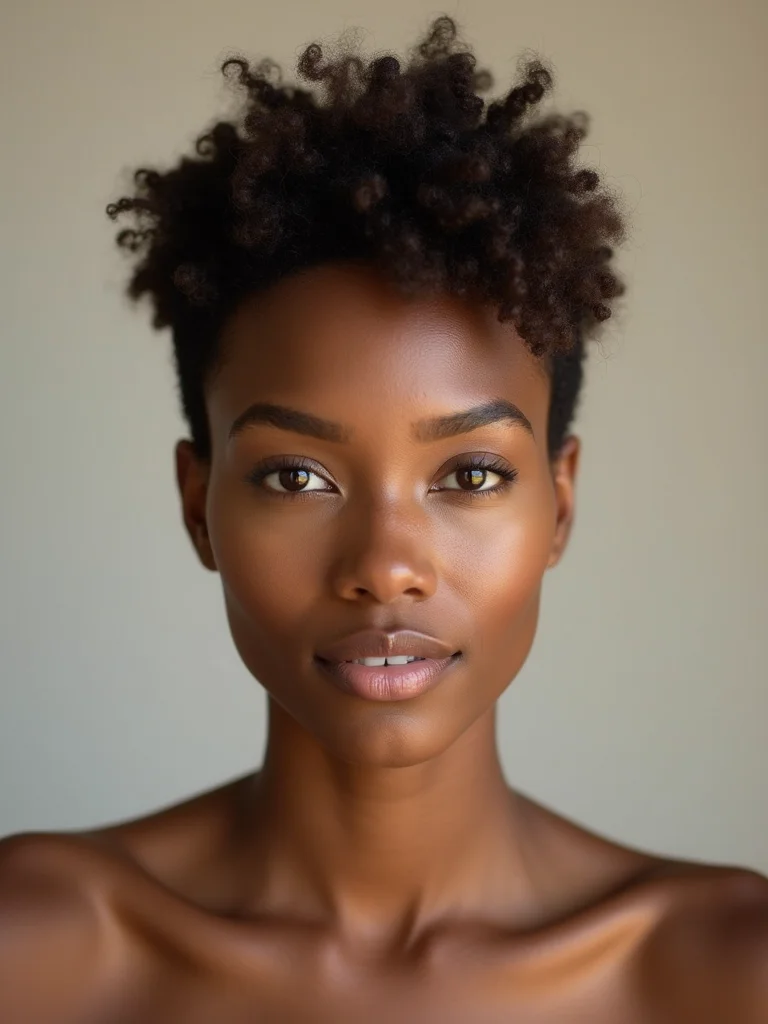
Most of the frizz I see on short curly hair is not the curl’s fault, it is the cut and the routine. Get those two things right and short curls behave, springing into defined, healthy coils that need less fuss than the long hair you may be leaving behind.
This is the full picture from the chair: how your curl pattern decides the cut, which short shapes work, how a curly cut should be done, and the simple product and care routine that keeps definition in and frizz out, season after season.
The Short Version
- Your curl pattern, from loose 2 waves to tight 4 coils, decides which short cut and routine will work, so start there.
- Curly and coily hair should be cut dry, in its natural state, so the shape follows your real pattern and shrinkage.
- Definition comes from moisture and product layering, not from fighting the texture; the cut just gives the curls room.
- A specialized curly cut runs more than a standard one, often $60 to $120, and is worth seeking out from a curl-trained stylist.
Start With Your Curl Pattern

Before any cut, know what you are working with. Curl patterns run from loose 2-type waves through springy 3-type curls to tight 4-type coils, and each behaves differently when it loses length. Knowing yours tells your stylist how much your hair will shrink and how short is too short.
Why Shrinkage Changes Everything
The number that matters most is shrinkage. Tight coils can spring up to half their stretched length or more, so a cut that looks chin-length wet can sit at the ear once it dries.
There is no better or worse pattern here, only different. The cut and care simply shift to match what your hair naturally does.
The Short List of Tools

You need far less than the internet sells you. A wide-tooth comb or just your fingers for detangling, a microfiber towel or cotton T-shirt for drying, and a diffuser for your blow-dryer cover nearly every curl type.
What to Leave in the Drawer
Skip the regular terry towel and the brush. Rough terry roughens the cuticle and causes frizz, and a brush through dry curls shatters the pattern you are trying to keep.
The diffuser is the one tool worth buying if you do not have it. It dries curls while supporting their shape instead of blasting them loose.
Two things people believe about short curly hair that simply are not true:
❌ Myth: “Curly hair can’t go short.”
✅ Reality: It can, and often looks healthier for it. Less length means less weight pulling the curl down, so short curls frequently spring up more defined than long ones.
❌ Myth: “Short curls are high-maintenance.”
✅ Reality: Once the cut and routine are right, short curls are usually lower-maintenance than long, since there is less hair to hydrate, detangle, and style each day.
Layering Products to Lock Out Frizz

Frizz shows up most often when the curl itself is under-moisturized and starts pulling humidity from the air to compensate. Loading the curl with moisture first, then locking it in behind a sealant, is what product layering actually does.
Wet Hair, in This Order
The order I use on most clients is leave-in conditioner, curl cream, then gel to set a cast over the top. On tighter coils, a richer butter or oil can slot in before the gel for extra sealing.
Apply everything to soaking-wet hair, not damp, since water is the first and most important layer. Rake it through, then scrunch upward to encourage the curl.
The Curly Pixie

A curly pixie is among the most freeing short cuts there is, but it is also the least forgiving, since there is little length to balance the shape. It rewards a confident wearer and a stylist who knows curls, because the whole look lives or dies on how well the cut reads your pattern. Done right, the shrinkage builds soft height and the curls do all the styling for you.
- Best on 3 and 4-type patterns, where the density holds a rounded shape
- Shrinkage works in your favor here, building height and volume up top
- Ask for a tapered, sculpted shape rather than an even all-over crop
The Curly Bob

If a pixie feels like too much, the curly bob is the gentler short cut. It keeps length through the curl while still reading short and shaped, and it suits nearly every pattern from waves to coils.
Just remember the shrinkage math: a curly bob is usually cut a little longer than you think, because it will spring up as it dries.
- Flatters the widest range of curl types and face shapes
- Cut to account for shrinkage, so it lands where you want it dry
- Wears as a true wash-and-go with the right product layering
Face-Framing for Curls

On short curls, a few well-placed face-framing pieces do more than any amount of restyling. Softening the curls right around the face draws the eye to your features and balances the volume that short curly cuts build up and out.
Small Change, Big Difference
The trick is to keep the framing curls the same length and definition as the rest, not thinned or straightened, so they blend instead of hanging limp.
For tighter coils, framing is less about length and more about shaping the perimeter so the curls fall toward the face rather than straight out.
🅰️Curly pixie
Boldest and most freeing, maximum volume up top; least forgiving, best for confident wearers and 3-4 patterns.
🅱️Curly bob
Keeps length and flatters the widest range of patterns and faces; the gentler, lower-risk way into short curls.
Layering for Curl Definition

Layering is how a stylist gives curls room to spring instead of stacking into a heavy triangle. Removing weight at the right depth lets each curl lift and separate, which is the same logic behind most layered curly cuts, just on a shorter canvas.
This is also why dry-cutting matters so much. A stylist needs to see where each curl actually falls to place the layers, which is impossible when the hair is stretched flat and wet.
- Internal layers remove bulk without losing your length
- Layers cut to your dry curl pattern fall into shape on their own
- Over-layering thins the ends and breaks up definition, so restraint matters
Sealing in Moisture

Beyond what you do on wash day, short curls live or die on their long-term moisture bank, the baseline hydration in the hair itself. Curls that are well-conditioned at the strand level frizz far less, no matter what you layer on top, so this is the slower, deeper work behind the daily styling.
The keystone here is a weekly deep-conditioning mask, ideally with a little heat from a shower cap or warm towel to help it absorb. On short hair it takes minutes, and it is the one habit that pays off more than any single styling product you can buy.
- Deep-condition weekly, with gentle heat to help it penetrate
- Don’t skip protein entirely; curls need a balance of moisture and protein to stay springy
- If curls feel mushy and limp, you need protein; if they feel dry and crunchy, you need moisture
Not sure where your curls sit? A rough guide:
1Loose S-shaped waves
Type 2: lighter products and gel to define, since heavy creams can flatten the wave.
2Springy ringlets to tight coils
Type 3 to 4: richer moisture and the liquid-cream-gel layering to keep definition and beat frizz.
A Fast Daily Routine

The reward for short curls is a real time-saver most mornings, as long as you are consistent. Most days you are reviving yesterday’s curls, not starting over, which takes only a couple of minutes once you find your rhythm. The trick is doing the same few steps in the same order every time, so your hands learn it and you stop thinking about it.
- Mist with water or a refresher spray to reactivate yesterday’s product
- Smooth a little leave-in over any frizzy spots and scrunch to revive the curl
- Air-dry or quickly diffuse, and you are done; full washes happen only every few days
Protecting Curls Overnight

How you sleep decides how your curls wake up, and it is the step most people skip. Cotton pillowcases drink the moisture out of your hair and rough up the cuticle, which is half the reason curls look flat and frizzy by morning.
Switch to a satin or silk pillowcase, or wrap short curls in a satin bonnet or scarf. For a little more length, loosely gather the curls into a high, loose pineapple on top of your head to keep them from crushing flat.
These methods, the bonnet, the pineapple, the satin, come straight from Black haircare traditions that have protected textured hair overnight for generations, and they work on every curl pattern. It is the single change I recommend most often, because clients come back amazed that one swap cut their morning frizz in half.
Seasonal Adjustments for Curls

Curls are weather-sensitive, and what works in July will not in January. The air’s moisture changes how much your hair drinks and how fast it dries, so a quick seasonal shift in your products keeps short curls defined and healthy year round instead of fighting you half the year.
- Summer: lean on a stronger gel and lighter creams to fight humidity
- Winter: switch to richer, heavier moisture, since dry indoor heat parches curls
- Transition months: adjust by feel, adding moisture when curls feel crunchy or dry
Coloring Curls Safely

Color and curls can absolutely coexist, but curl patterns tend to run drier than straight hair to begin with, so a softer, more gradual process pays off. Harsh, repeated lightening is what loosens curl pattern and invites breakage, which is the one outcome I steer clients hardest to avoid. Expect a textured-hair colorist to charge a little more, often $30 to $50 above a standard color, for the extra care and slower process your curls need.
- Favor demi-permanent color and gentle, low-lift techniques over heavy bleach
- Space out color appointments and double down on deep conditioning around them
- See a colorist experienced with textured hair, and budget more for the extra care
Pro Styling Secrets Worth Stealing

A handful of small habits separate so-so curls from great ones, and they are all easy to copy at home. These are the moves I find myself repeating to clients in the chair more than any others.
- Style on wet hair, never dry, and do not touch the curls again until they are fully dry
- Scrunch out the dried gel cast with a drop of oil for soft, defined curls
- Dry fully before judging the result, since wet curls always look different
Common Mistakes With Short Curls

A few habits quietly sabotage short curls, and in my chair most of them trace back to treating curly hair like straight hair that misbehaves. The big ones are brushing curls dry, touching them while they dry, and skipping the leave-in to save time.
The other common error is getting a curly cut from someone who cuts it wet and stretched. That is how people end up with a shape that springs up wrong and blame their curls, when the real problem was the cut. If you have natural texture, seek out a stylist who works on black and curly hair specifically, since dry-cutting coils is its own skill.
Beating Humidity

Humidity is curly hair’s oldest argument, because damp air pushes moisture into thirsty curls and swells them into frizz. The defense is a solid gel cast that seals the cuticle before the air can get in.
Apply a firm-hold gel over your cream on soaking-wet hair, let it dry fully, then scrunch the hard cast out for soft, defined curls that hold their shape.
On the worst days, less touching is your best friend. Every time you run your fingers through, you break the seal and invite the frizz back in.
Transitioning From Long to Short

The leap from long to short curls feels bigger than it is, mostly because of shrinkage. Remember that a cut which looks alarmingly short wet will spring up shorter still, so go in with eyes open and trust a stylist who works with curls.
Take It in Stages
If you are nervous, take it in stages. Go to a curly bob first, live with it for a few months, and decide from there whether a pixie is calling.
The payoff is real: less weight means more curl definition and bounce, and many of my clients say their curls look healthier short than they ever did long.
Curl-Enhancing Finishing Moves

Beyond the basics, a handful of finishing techniques pull the best from any curl pattern, and they are worth learning once and using forever. Most take seconds and make the difference between flat and springy.
The right combination depends on your pattern, so experiment with one at a time to see what your curls respond to. There is no universal recipe, only what works on your head.
- Plopping: cradle wet, product-soaked curls in a T-shirt for ten minutes to set the shape
- Root clipping: tuck small clips at the roots while drying for lasting lift
- Praying hands: smooth product down the hair flat-palmed to coat without disrupting the curl
What to Expect
If you are coming to short curls for the first time, set your expectations honestly. Expect the first week or two to be trial and error as you dial in the right amount of product and get a feel for how it actually dries, so do not judge the cut on day one.
Expect to find a routine within a month, and expect it to be shorter than your old one once you do. The whole promise of short curly hair is less manipulation, not more, and most people get there quickly.
And expect to invest a little more in the cut itself. A curl-trained stylist who dry-cuts to your pattern is worth the higher price, because the cut is doing most of the work that products would otherwise have to fake.
Short Curly Hair Questions, Answered
?Why does my curly hair shrink so much when it’s short?
Shrinkage is normal and pattern-dependent: the tighter your curl, the more it springs up as it dries, sometimes to half its wet length or less. A good stylist cuts your hair dry so the shape accounts for it, which is why a curly cut should never be done stretched and wet.
?How do I stop short curls from frizzing?
Frizz is curls reaching for moisture, so the answer is to hydrate first and seal second. Apply leave-in, then cream, then gel to soaking-wet hair, and let it dry fully without touching. A weekly deep conditioner and a satin pillowcase quietly prevent most frizz before it starts, which matters more than anything you do on a single bad day.
?How often should I wash short curly hair?
Usually every three to five days, not daily, since curls run dry and over-washing strips them. Refresh with water and a little leave-in on the days between, and save the full cleanse and restyle for wash day.
?Do short curls really need gel, or can I skip it?
Gel is what most curls rely on to hold definition and beat frizz, but it is not the only option. If you dislike the crunch, a strong-hold curl cream or a foaming mousse gives softer hold, just with less staying power on humid days. Whatever you choose, scrunch out the dried cast for soft, defined curls rather than leaving it hard.
?How much does a good curly cut cost?
Expect to pay more than a standard cut, often $60 to $120, because a curl-trained stylist dry-cuts to your individual pattern, which takes more time and skill. It is worth it, since the cut itself does most of the work of keeping your curls defined.
Short Curls, Less Drama
Short curly hair gets an unfair reputation for being difficult, when really it just asks to be understood. Start with your pattern, get a dry cut from someone who knows curls, layer your moisture before your hold, and protect it at night, and the frizz drama mostly disappears.
If you have been talking yourself out of going short, this is your nudge to find a curl-trained stylist and have the conversation. Browse a few curly hairstyles for inspiration, bring your questions about your pattern and shrinkage, and let someone who works with texture show you what your curls can do with less weight holding them down.
Don’t Miss These