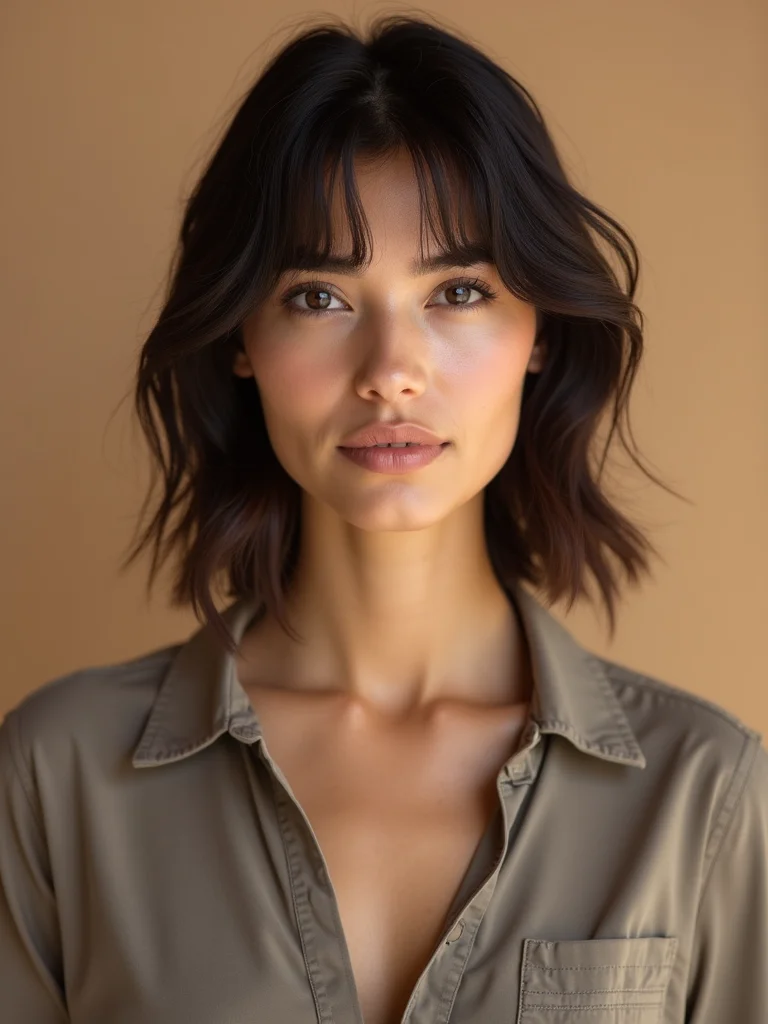
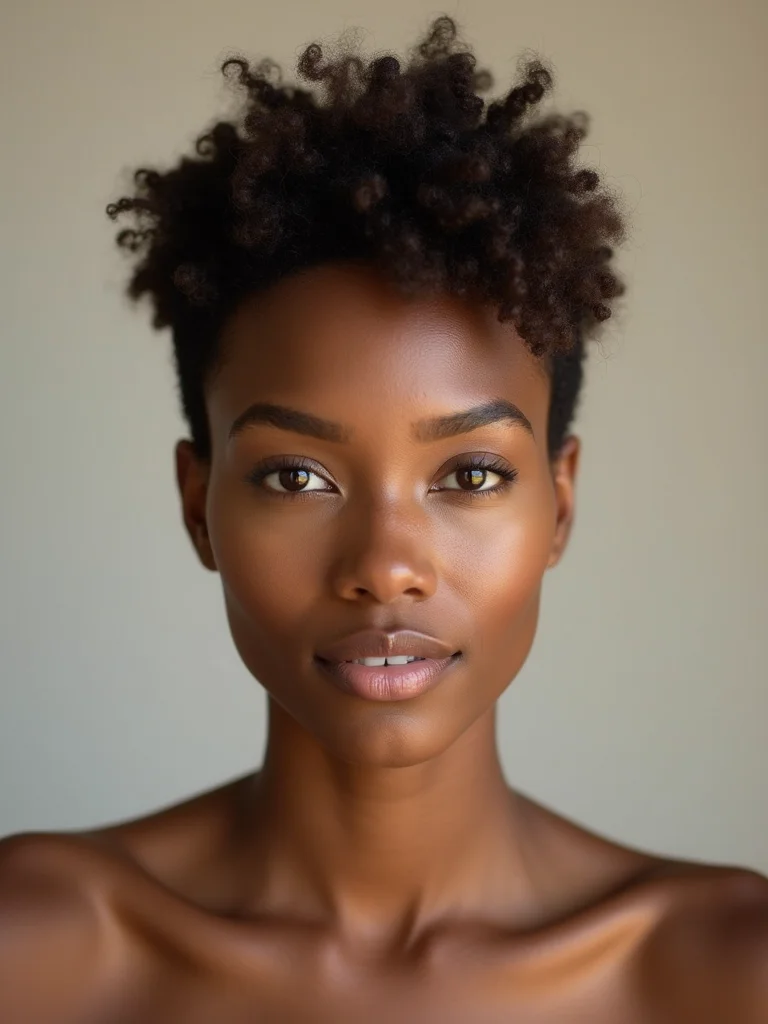
Layering curly hair sounds risky to a lot of people who’ve been told to just trim the ends and leave the rest alone. That advice usually comes from someone who last cut curls in a straight-hair frame of mind. Done right, layers are what let curls move, bounce, and actually shape themselves around the face instead of sitting as one dense mass.
Fifteen approaches follow, from face-framing pieces to a full curly shag, plus the two things that decide whether layering helps a given head of curls or works against it: curl pattern and density.
Before You Book: Three Real Questions
Will layering make my curls look thinner? Not if it’s done correctly. Layers remove bulk from dense areas, which usually makes curls look more defined, not thinner.
Do curls need to be cut wet or dry? Dry, in most cases, or at least finished dry. Curls shrink as they dry, so a cut based on wet length alone often lands shorter than planned.
How is layering different for tight coils versus loose waves? Tighter patterns usually need shorter, more targeted layers since the curl itself already removes visual weight; looser patterns can carry longer, more blended layering.
Layered Cuts for Curls

Layering exists to solve a specific problem on curly hair: weight. Left at one length, dense curls pile into a triangular or pyramid shape rather than settling into a rounder, more balanced silhouette.
Removing that excess weight through layers lets individual curls spring and define instead of clumping together under their own bulk. The shape holds better, and the curl pattern itself becomes more visible rather than compressed.
Find Your Curl Pattern and Density First

Curl pattern, from loose 2A waves to tight 4C coils, decides how much layering a head of hair can take before it starts to look thin rather than shaped.
Density matters separately from pattern. Thick, densely packed curls can handle more aggressive layering than fine, sparse curls, regardless of how tight or loose the actual curl pattern is.
Getting both assessed properly, ideally by a stylist experienced with textured cutting, avoids the single most common layering mistake: removing too much weight from hair that didn’t have enough to spare in the first place.
Face-Framing Layers for Soft Definition

Face-framing layers cut shorter pieces near the front of the face, letting them curl up and inward toward the cheeks rather than blending into the full length.
This works on nearly every curl pattern and length, since it’s a targeted addition rather than a change to the overall cut. It adds movement right where it shows most without touching the rest of the shape.
The Curly Shag for Shape and Movement
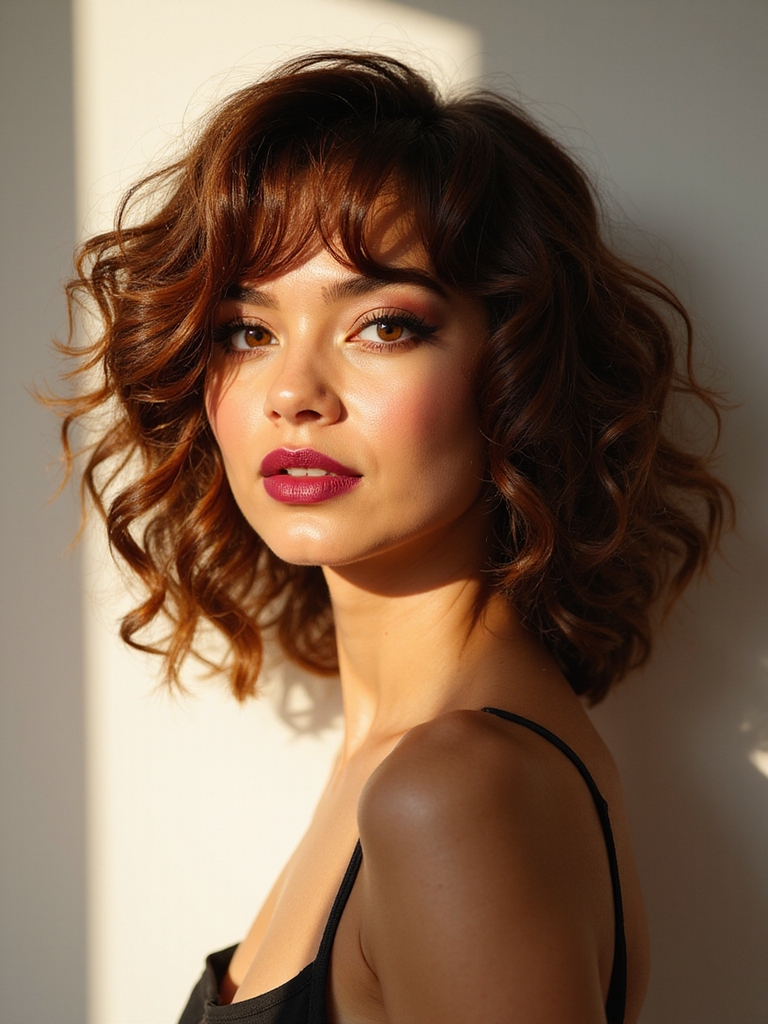
A curly shag layers heavily throughout, not just at the face, building the loose, piecey texture the shag silhouette is known for. The curly shag haircut guide covers the technique in full detail.
- Heavy layering throughout, not localized to one area
- Built for loose, piecey texture rather than a smooth silhouette
- Works across a wide range of curl patterns and lengths
Long Layers That Keep Length and Bounce

Long layers remove weight gradually rather than in one dramatic shift, keeping most of the overall length while still letting curls move and bounce through the ends.
This suits anyone hesitant about losing length but still dealing with curls that sit heavy and shapeless at one uniform length.
- Gradual weight removal, not a dramatic all-at-once cut
- Keeps most of the original length intact
- Adds bounce specifically through the ends
The shag works on curls the way it never quite works on straight hair, since the curl itself does half the texturizing work a straight-haired shag needs styling product to fake.
Shoulder-Length Layers for Everyday Wear

Shoulder-length curls hit a practical middle ground: long enough to pull back easily, short enough that layering doesn’t need to remove excessive weight to work.
Layers at this length usually focus on the crown and the ends rather than the whole head, since shoulder-length curls rarely build up the same dense, triangular shape that longer lengths can.
It’s also one of the more forgiving lengths for growing out a more dramatic cut, since the transition between lengths reads as intentional layering rather than an awkward in-between stage.
Rounded Shapes That Balance Volume

A rounded silhouette works with curl volume instead of against it, shaping the outer line into a controlled dome rather than trying to flatten curls into straighter lines.
Working With Volume, Not Against It
Layering toward this shape usually removes the most weight at the sides and slightly less at the crown, building the roundness gradually rather than cutting one uniform length shorter throughout.
It flatters most face shapes, since the rounded outer line balances rather than exaggerates whatever the face’s natural shape already is.
A few terms worth knowing before a layering consultation:
📖Curl shrinkage
How much shorter a curl pattern becomes once fully dry compared to its stretched-out length.
📖Weight line
The point in a haircut where the layering ends and the hair’s natural heaviness takes over, forming the outer silhouette.
Wolf Cut Layers With Curl-Friendly Edges

Heavy, choppy layering defines a wolf cut, and curl pattern naturally amplifies the shaggy, undone attitude the shape is built around. Cutting notes specific to this pairing live in a separate breakdown.
Curl pattern does a lot of the texturizing work a straight-haired wolf cut needs a flat iron or texture spray to fake, which makes this one of the lower-maintenance ways to wear the trend.
Layered Bobs for Lightweight Curls

A layered bob removes bulk from a shorter length, keeping the shape from reading heavy or blocky the way an unlayered curly bob sometimes can. The curly bob guide covers the base cut on its own.
- Removes bulk without losing the bob’s overall shape
- Prevents the blocky, heavy look an unlayered curly bob can carry
- Suits most curl patterns without major adjustment
Curl-by-Curl Dry Cutting

Curl-by-curl dry cutting shapes each curl individually while it’s dry and in its natural, sprung state, rather than cutting to a wet or stretched length.
This technique takes considerably longer than a standard wet cut, since every curl gets assessed and cut on its own rather than in sections. Plan on around $85 for a dry-cut appointment, noticeably more than a standard wet trim runs.
- Each curl cut individually in its natural, dry state
- Accounts for shrinkage directly rather than estimating it
- Takes noticeably longer than a standard wet cut
Fringe Ideas for Curly Layers

A curly fringe adds one more layered element right at the face, and it needs the same shrinkage-aware cutting the rest of a curly layered cut does.
One More Layer, Right at the Face
Face-framing layers and a full fringe can work together or separately; the two aren’t mutually exclusive, though combining both adds more maintenance than choosing just one.
The curly bangs guide covers fringe-specific styling in more depth for anyone considering this as an addition to an existing layered cut.
👍What Dry Cutting Gets Right
- +Accounts for shrinkage precisely, not by estimation
- +Result is visible immediately, not after the hair dries
- +Fewer surprises once the style is fully dry
👎What It Costs in Time and Money
- –Appointments run considerably longer than a wet cut
- –Costs more, comparable to a specialty service rather than a basic trim
- –Requires a stylist specifically trained in the technique
Managing Volume by Removing Bulk

Interior thinning removes weight from underneath the visible layers rather than shortening the outer length, which controls volume without changing the overall silhouette.
This technique matters most on very dense curl patterns, where visible layering alone sometimes isn’t enough to prevent a triangular, weighted-down shape.
- Removes weight from underneath, not from the visible length
- Controls volume without shortening the outer shape
- Most useful on dense, heavily packed curl patterns
Layer Placement for Different Curl Types

Layer placement shifts meaningfully across the curl spectrum. Looser waves generally take longer, more blended layers, while tighter coils often look best with shorter, more clearly defined layering.
Why One Layering Plan Doesn’t Fit Every Curl
A stylist working across multiple curl types on the same head, which happens often since curl pattern can vary by section, has to adjust the layering plan section by section rather than applying one uniform approach.
Getting this wrong is the most common reason a layered curly cut looks uneven once fully dry, even when the wet or stretched result looked balanced in the chair.
Styling Routines That Enhance Layers

Layers show their shape best with a routine that defines rather than smooths, since the whole point of the cut is visible movement between sections.
Applying product to soaking-wet hair, then diffusing or air-drying without disturbing the curls, lets each layer settle into its own shape instead of merging into the surrounding hair.
- Product goes on soaking wet, not partially dried
- Diffusing or air-drying without touching preserves layer definition
- Over-brushing dry curls breaks up layer definition faster than anything else
ℹ️How Much Curl Pattern Can Vary on One Head
It’s common for curl pattern to shift by a full category across different areas of the same head, looser at the crown and tighter at the nape, for example. A layering plan that ignores this mismatch is a common source of uneven results.
Maintenance Tips and Trim Schedules

Layered curly cuts need trims on a schedule that accounts for how visibly curls grow into and out of shape, which tends to happen faster than the same cut would show on straight hair.
Regular trims, spaced consistently rather than only when the shape feels obviously off, keep individual layers reading as intentional rather than as an old cut slowly losing its structure.
- Curl growth shows in the cut’s shape faster than length alone suggests
- Consistent spacing between trims beats waiting until the shape feels off
- A quick shape-up costs less than letting a cut grow out completely uneven
Styling Tips
The single biggest styling mistake on layered curly hair is treating every section the same way. Layers by definition behave differently at different lengths, so a routine built for one uniform length often under- or over-styles at least one section.
Working product through in sections, checking each layer’s response rather than applying everything at once, catches uneven definition before it dries into place.
Curly Layer Questions, Answered
?Can fine, low-density curls handle heavy layering?
Usually not without losing fullness. Fine, sparse curls typically do better with minimal, targeted layering, like face-framing pieces, rather than heavy layering throughout the whole head.
?How long does it take curls to fully show a new layered shape?
Often a few full wash cycles. Curls settle differently once they’ve been washed and styled a handful of times post-cut, so the very first style after a fresh cut isn’t always the final word on how it looks.
?Should layering be requested differently for a curly perm versus natural curls?
Yes, generally. A chemically permed curl pattern can behave less predictably during the shrinkage process than natural curls, so a stylist familiar with the specific perm formula matters more than for natural texture alone.
Layers Work With Curls, Not Against Them
Every approach here starts from the same premise: curls carry their own shape and movement, and layering exists to reveal that rather than override it.
A consultation with a stylist who actually works with textured hair regularly is worth the search before committing to a dramatic layering change.
More to Explore