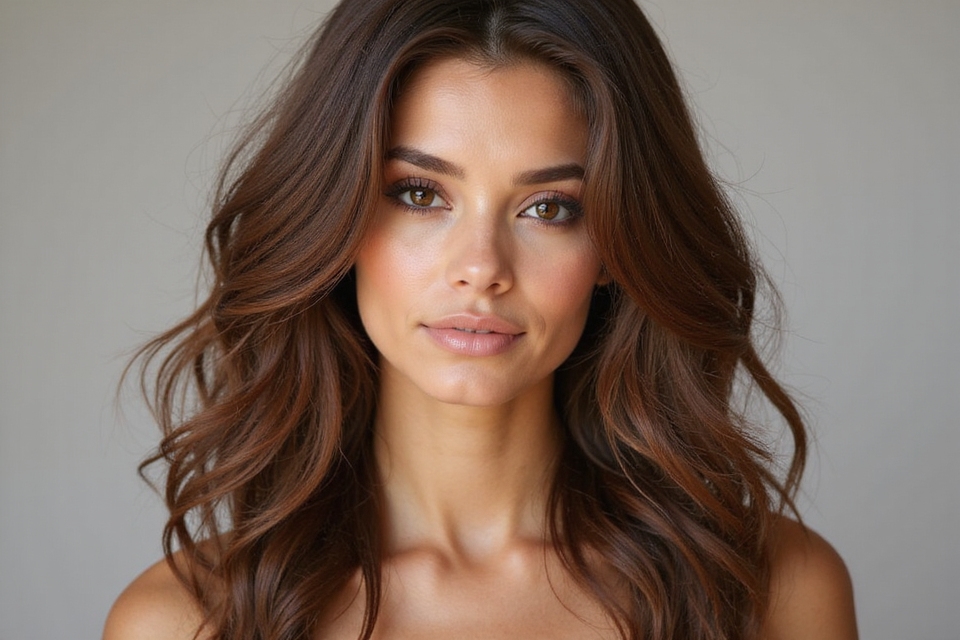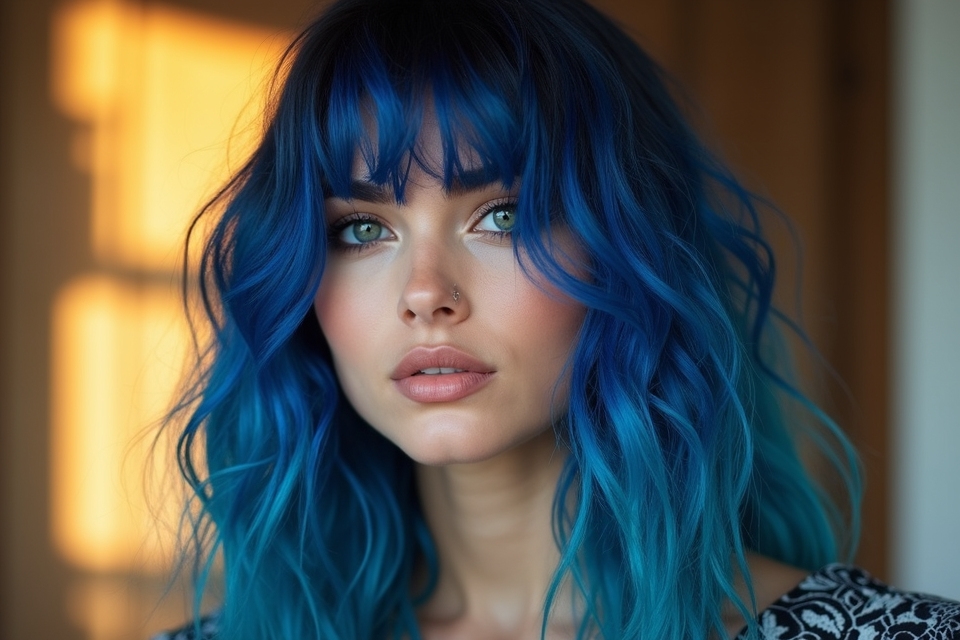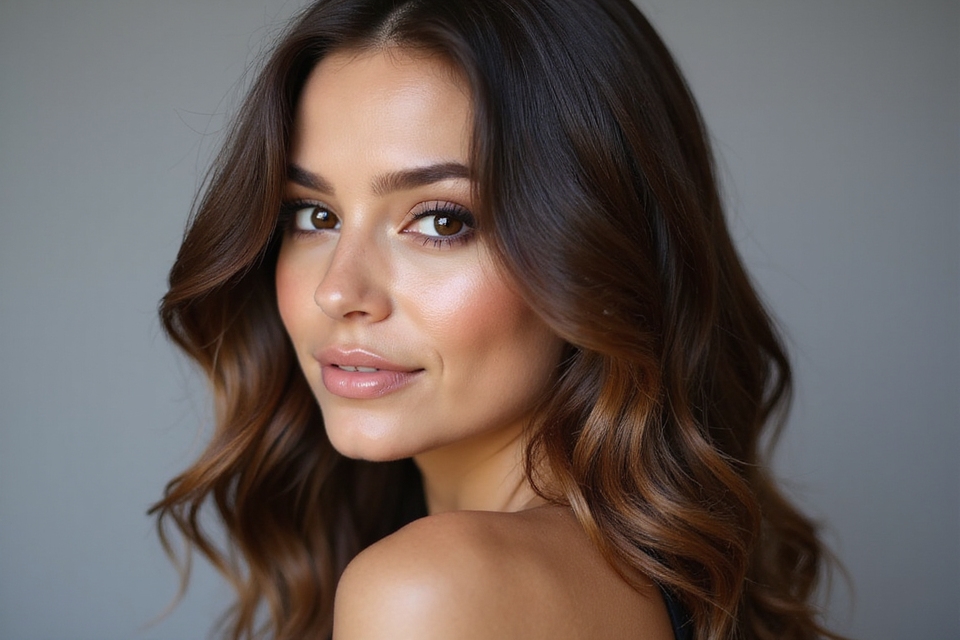
The biggest myth about balayage is that you need to be blonde, or willing to go blonde, to pull it off. Not true. Balayage was practically made for dark brown hair, the brunette’s shortcut to dimension, where hand-painted, sun-caught pieces add depth and movement without touching your natural base. You keep the rich brown you love and just give it dimension.
The second myth is that it’s zero-maintenance because the roots grow out soft. Also not quite true, since the painted lengths still fade and want the occasional gloss. This guide clears up both, and everything else: how balayage works on dark brown, which shades flatter your skin, what it costs, how to keep it looking rich, and the mistakes that turn a dream color muddy.
Balayage on Dark Brown, In Brief
Balayage is a freehand technique where color is painted onto the surface of the hair rather than saturated root to tip, so it grows out soft with no harsh regrowth line. On dark brown hair, it adds caramel, chocolate, or subtle honey dimension while keeping your natural depth, which is why it looks so believable and needs far less upkeep than all-over color.
The keys to a good result are matching the lightness to your undertone, building it gradually across a few sessions, and committing to a little upkeep: a gloss every few months and the right products to fight fade and dryness. Get those right and dark brown balayage rewards you with a color that’s both flattering and low-fuss.
Balayage Basics

Balayage takes its name from the French word for sweeping, and it works by having the colorist paint lightener freehand across the hair’s surface instead of wrapping every strand in foil. The result is a soft, graduated, sun-kissed effect. What sets it apart:
- Color is painted on the surface, so it builds gradually from the mid-shaft down toward the tips.
- There’s no hard regrowth line, since the root is left mostly natural.
- Every head is custom-painted, so no two balayages look exactly alike.
Why Balayage Suits Dark Brown

Dark brown may be the perfect canvas for balayage, and colorists tend to agree it’s one of the most forgiving bases to work on. Here’s why it works so beautifully:
- The rich brown base gives the lighter painted pieces depth and contrast to shine against.
- It looks natural, mimicking the way brown hair naturally lightens in the sun.
- You keep your dark base, so it feels like an enhancement, a lift to the brown you already have rather than a whole new color.
A Short History of Balayage

Balayage isn’t new, even if it feels like a modern obsession. It emerged in Parisian salons back in the 1970s as a natural-looking alternative to the heavy, striped highlights of the era, painted freehand for a softer, sun-lightened effect.
It stayed a European salon secret for decades before exploding worldwide in the 2010s, when social media put its soft, low-maintenance dimension in front of everyone. Today it ranks among the top color requests at nearly every salon, and the technique has only gotten more refined.
Choosing a Balayage Shade for Your Skin Tone

What most decides whether balayage suits you is how well the painted shade matches your undertone. Get it right and it lights up your face; get it wrong and it can look off. A rough guide:
- Warm, golden complexions glow with caramel, honey, and toasty chocolate tones.
- Cool skin often does better with ashy, mushroom, or cool-brown balayage.
- Deep and rich skin tones look striking with warm caramel or a soft chocolate lift.
ℹ️Undertone Is Everything
The most common reason balayage looks ‘off’ isn’t the technique, it’s a tone that fights your skin. Warm undertones glow with caramel and honey; cool undertones suit ashy and mushroom browns. When in doubt, a colorist can hold shades against your face to see which lights you up.
Balayage Techniques on Dark Brown

There’s more than one way to paint dark brown, and the technique changes the effect. Classic balayage sweeps lightener freehand below the crown for soft, natural dimension, while a foilyage wraps the painted pieces in foil for a brighter, more lifted result on stubborn dark hair.
Teasylights, where the hair is backcombed before painting, blend the transition even more softly for a smooth grow-out. On very dark or resistant brown, a colorist may also do a subtle root-shadow or gloss afterward to melt everything together.
The right technique depends on how bright you want to go and how dark you’re starting. This is exactly the kind of thing to talk through in a consultation, since dark brown often needs more than one session to lift safely.
Finding a Skilled Balayage Stylist

Balayage is a freehand art, which means the colorist’s skill matters more than with almost any other service. A great painter gives you smooth, custom dimension; a rushed one leaves stripes or muddy patches. It’s worth choosing carefully.
Dark brown especially rewards an experienced hand, since lifting it cleanly without going brassy takes real know-how. Do your homework before you book.
- Look at a stylist’s portfolio for balayage on dark hair specifically, since dark-base work takes different skill than blonde-on-blonde.
- Book a consultation to talk undertone, sessions, and realistic results.
- Budget for the skill involved: a full balayage often runs $150 to $250. Block off the afternoon too, since two to three hours in the chair is typical.
Salon or DIY for your dark brown?
🎯Want real lift or a big change?
See a professional; lifting dark brown cleanly is hard to do well at home.
🎯Just want a subtle glow?
Lightly hand-painting the top layer near your part can work on medium-to-dark brown.
Maintaining Balayage on Dark Brown

The great thing about balayage is that the grow-out is soft, so you’re not chained to root touch-ups every few weeks the way you are with all-over color. But low-maintenance isn’t no-maintenance, and the painted lengths do need care.
The main upkeep is fighting fade and dryness, since lightened pieces lose tone and moisture over time. A gloss every few months keeps the color rich and the ends healthy.
- Book a toning gloss every few months to refresh the painted pieces.
- You can stretch a full balayage six months or more between sessions.
- Deep-condition regularly, since the lightened lengths run drier than your base.
Seasonal Balayage

One of balayage’s quiet perks is how easily it shifts with the seasons. Because the base stays your natural brown, you can brighten or deepen the painted pieces without a full color overhaul, just by adjusting the tone at your next appointment.
In summer, lean into brighter caramel and honey for a sun-lightened glow; in the cooler months, deepen toward chocolate and mocha for something cozier and richer. It’s the same balayage, dialed warm or cool to suit the light.
- Summer: brighter caramel and honey for a sun-kissed effect.
- Winter: deeper chocolate and mocha for cozy richness.
- Only the tone changes, so it’s an easy seasonal refresh.
Products for Balayage-Treated Hair
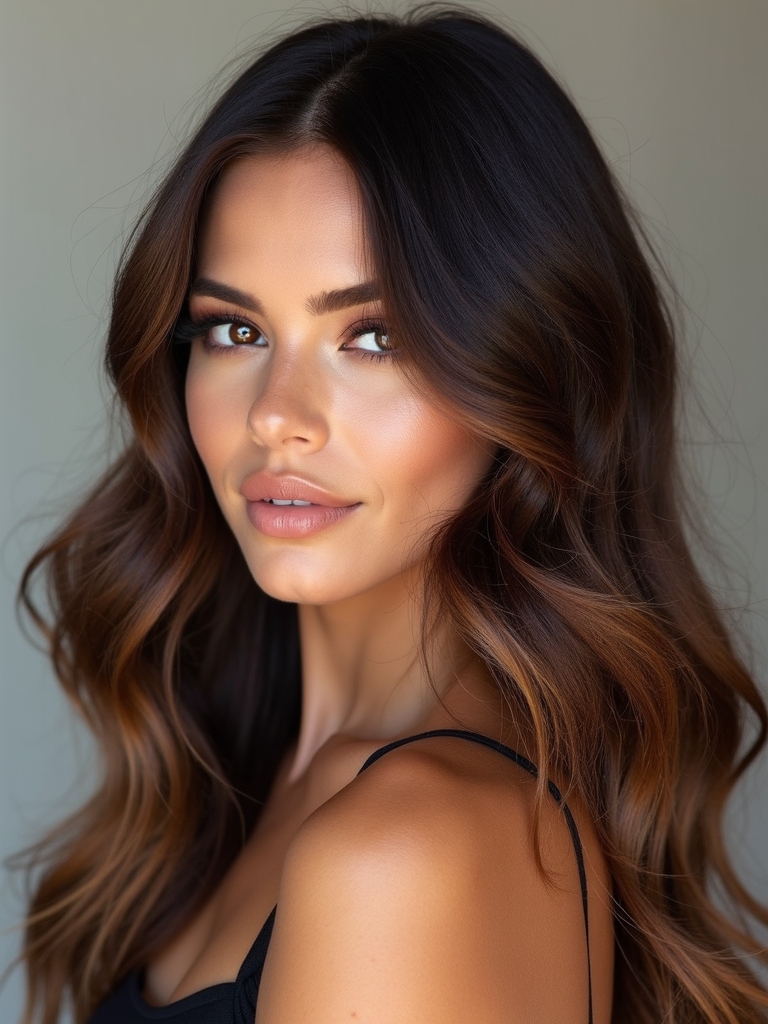
The products you use at home make a real difference to how long your balayage stays rich and how healthy the lightened pieces look. A few essentials are worth the shelf space:
- A sulfate-free, color-safe shampoo and conditioner to slow the fade.
- A purple or blue toning shampoo now and then to keep caramel from going brassy.
- A weekly deep-conditioning or bond treatment for the drier, lightened lengths.
Protecting Balayage When You Style

Lightened hair is more porous and fragile than your natural base, so how you style it matters for keeping the color and condition. Heat is the main culprit, since hot tools speed up both fade and dryness on painted pieces.
Style It Kindly
Always use a heat protectant before you blow-dry or iron, keep the temperature moderate, and give your hair regular heat-free days to recover. The sun fades balayage too, so a UV-protective spray helps in summer.
None of this is complicated; it’s just a little intention. Treat the lightened lengths gently and they stay glossy and rich for far longer. Shine is what makes balayage read expensive.
🅰️Natural and soft
Classic balayage swept below the crown for barely-there, grown-in dimension.
🅱️Bright and lifted
Foilyage or added foils for a bolder, higher-contrast lift on stubborn dark hair.
Common Balayage Mistakes

Nearly every balayage regret traces back to a few avoidable errors. The biggest is trying to go too light too fast, since forcing dark brown to blonde in one sitting risks brassiness and damage, so most colorists build it up across a few appointments for a safer, prettier result.
The others are common too: choosing a tone that fights your undertone, skipping the gloss and letting it fade brassy, and going to an inexperienced painter. Avoid those four, and dark brown balayage is hard to get wrong.
Balayage Versus Highlights

People often use the words interchangeably, but balayage and traditional highlights aren’t the same thing. Highlights are woven and wrapped in foil, which lifts them brighter and more uniformly, right up to the root, creating a more consistent, all-over lightness.
Balayage is painted freehand on the surface, so it’s softer, more natural, and concentrated away from the root, which is why it grows out with no harsh line. Highlights make more of a statement and need more upkeep; balayage is subtler and lower-maintenance.
Neither is better, just different. On dark brown, balayage usually wins for a natural, grown-in look, while foils suit anyone wanting brighter, more dramatic lift, and the two are often combined.
Balayage on Long Hair

Long dark brown hair might be balayage’s ideal showcase, since there’s plenty of length for the painted gradient to travel and really show. The dimension flows from a deep root down to brighter ends, catching the light with every movement.
Layers make it even better, giving the color somewhere to shift and shine. A soft caramel balayage on long, layered brown hair is a perennial favorite for good reason.
- Length lets the dark-to-light gradient develop fully.
- Layers add movement that reveals every painted tone.
- Keep the ends healthy, since the brightest color sits there.
Balayage on Short Hair
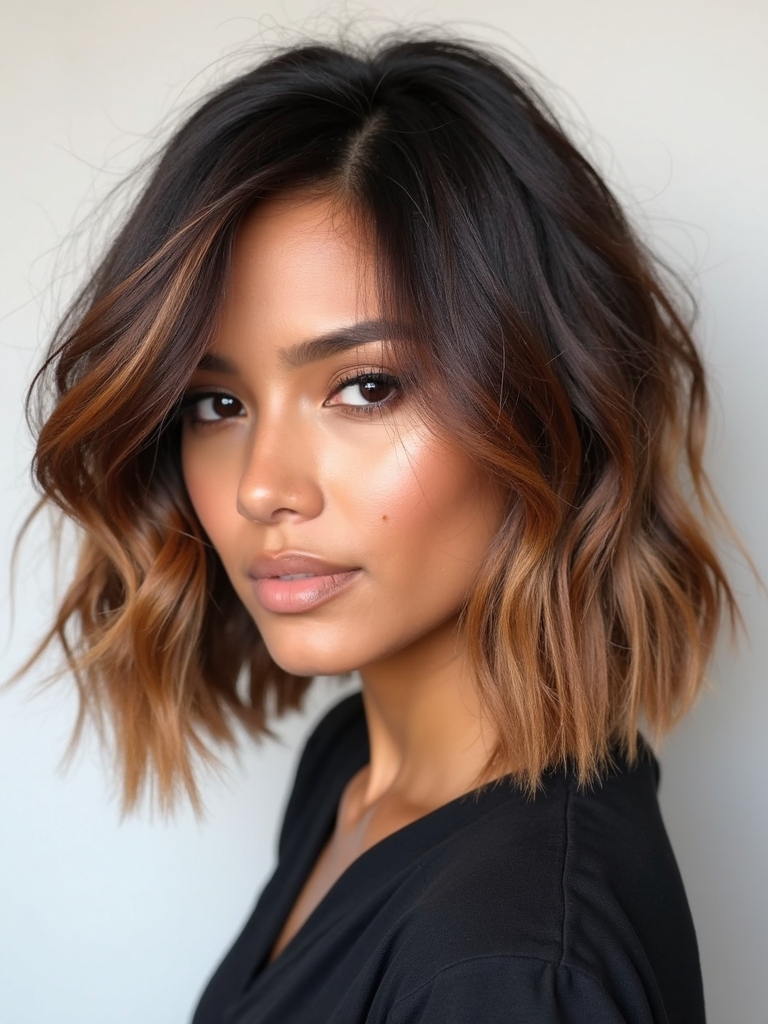
Short hair is often overlooked for balayage, but it takes the technique beautifully. On a bob or a lob, painted pieces add depth and movement that make the cut look more expensive and dimensional, and a face-framing sweep brightens the complexion.
The painting is more precise on short hair, since there’s less length to work with, so it especially rewards a skilled colorist. Done well, balayage on a dark brown bob is sharp, modern, and low-fuss.
- Painted pieces add dimension that flat color on short hair lacks.
- Face-framing balayage brightens the complexion beautifully.
- Precision matters more on short hair, so choose your colorist well.
A few terms your colorist might use:
📖Foilyage
Balayage painted pieces then wrapped in foil for extra lift, useful on dark, resistant hair that won’t lighten easily on its own.
📖Root shadow / gloss
A soft toner or shadow applied afterward to melt the color together and knock down any brassiness for a smooth finish.
From Ombre to Balayage

If you have an old ombre, that bold, horizontal dark-to-light gradient that was everywhere a decade ago, balayage is the modern way to soften and update it. Where ombre drops from dark to light in a fairly defined band, balayage blends the transition into painted, vertical pieces for a far more natural look.
A colorist can break up an ombre’s line by painting dimension back through the mid-lengths, melting the old gradient into something softer and current. It’s a popular update, and it uses the length you’ve already lightened, so it’s often gentler than starting over.
Balayage Inspiration for Dark Brown

The range of dark brown balayage is wide, which is half the fun. At the subtle end, a few soft caramel pieces add a barely-there glow that reads completely natural. In the middle sit rich chocolate and mocha blends that add depth without much lightness.
At the brighter end, warm honey and toffee balayage lifts dark brown toward a sun-kissed, high-dimension look, and cool takes like ashy or mushroom brown feel modern and understated. There’s a version for every personality and every level of commitment.
The trick is bringing photos to your colorist and being clear about how bright and how warm you want to go. A soft chocolate balayage and a bold honey one are worlds apart, so specifics matter.
DIY Balayage at Home

At-home balayage kits exist, and for a subtle, low-lift result on already-medium-brown hair, a careful DIY can work. But it comes with real caveats, since lifting dark brown cleanly is real work, and mistakes show. Go in with honest expectations.
If you try it, start conservative: a handful of pieces around the hairline are far more forgiving than a full head, and you can always add more. Anything ambitious, a big lift or a dramatic change, is worth leaving to a professional to avoid brassy, uneven, or damaged results.
- Section carefully and go thin near the part, where mistakes show most.
- Expect subtle lift only; dark brown resists big changes at home.
- Leave any dramatic transformation to a professional colorist.
Where Balayage Is Heading

Balayage keeps evolving, and the direction is toward ever softer, more natural, more personalized color. The heavy, high-contrast looks are giving way to subtle, skin-flattering dimension tailored to each person, a shift colorists say clients are actively asking for now. What’s rising:
- Ultra-natural, low-contrast balayage that looks born-with-it.
- Warm, glossy chocolate and mocha tones over stark blondes.
- More focus on hair health, with bond-builders woven into the service from the first appointment.
Dark Brown Balayage Questions
?Does balayage show up on dark brown hair?
Yes, beautifully, as long as it’s done well. Dark brown gives the painted pieces a rich base to contrast against, so caramel, chocolate, and honey tones read clearly. Very dark hair may need more than one session to lift cleanly, but balayage was practically made for brown; it adds visible dimension without you having to give up your natural depth.
?How much does balayage for dark brown cost?
A full balayage typically runs $150 to $250, and often more in big cities or if your hair needs several sessions to lift safely. Dark brown can cost a little more than lighter starting shades, since it takes more skill and sometimes more time to lighten cleanly. Add periodic gloss appointments to the budget for upkeep.
?How often do I need to maintain dark brown balayage?
Far less often than all-over color, which is the whole appeal. Because the roots grow out soft, you can go six months or more between full balayage sessions. The real upkeep is a toning gloss every few months to refresh the painted pieces and keep them from fading brassy, plus good at-home products to fight dryness.
?Can I do balayage on dark brown hair at home?
For a subtle result on medium-to-dark brown, hand-painting a thin section near the hairline can work with a good at-home kit. But lifting dark brown cleanly is truly difficult, and big or bright changes are easy to get wrong, ending up brassy or uneven. Anything ambitious is worth leaving to a professional colorist.
Dimension Without the Drama
The reason balayage has stayed at the top of the color world is exactly what makes it perfect for dark brown: it adds real, sun-caught dimension while keeping the rich base you already love, and it grows out soft with none of the constant root touch-ups all-over color demands. It’s an enhancement you can live with easily, which is precisely the point.
So if you’ve been eyeing a little dimension but didn’t want to commit to going blonde or living at the salon, dark brown balayage is your answer. Match the tone to your undertone, go gradually, keep up the gloss, and it rewards you with color that looks expensive and stays easy. Which shade of dimension would you paint into your brown?
Favorites to Revisit