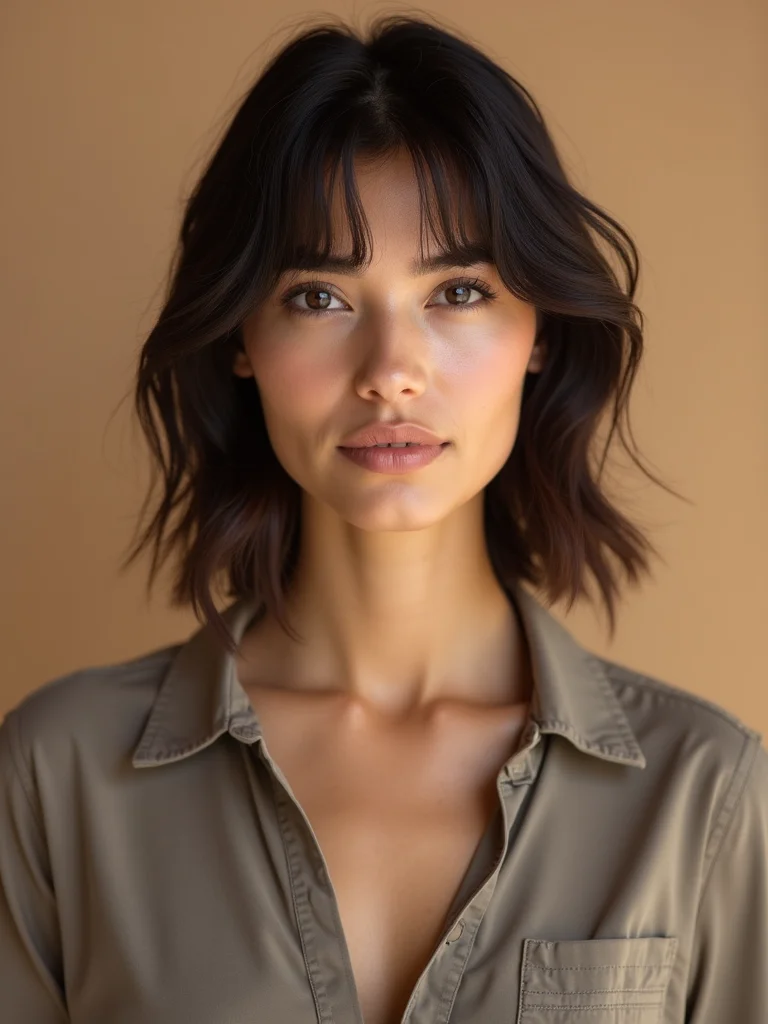
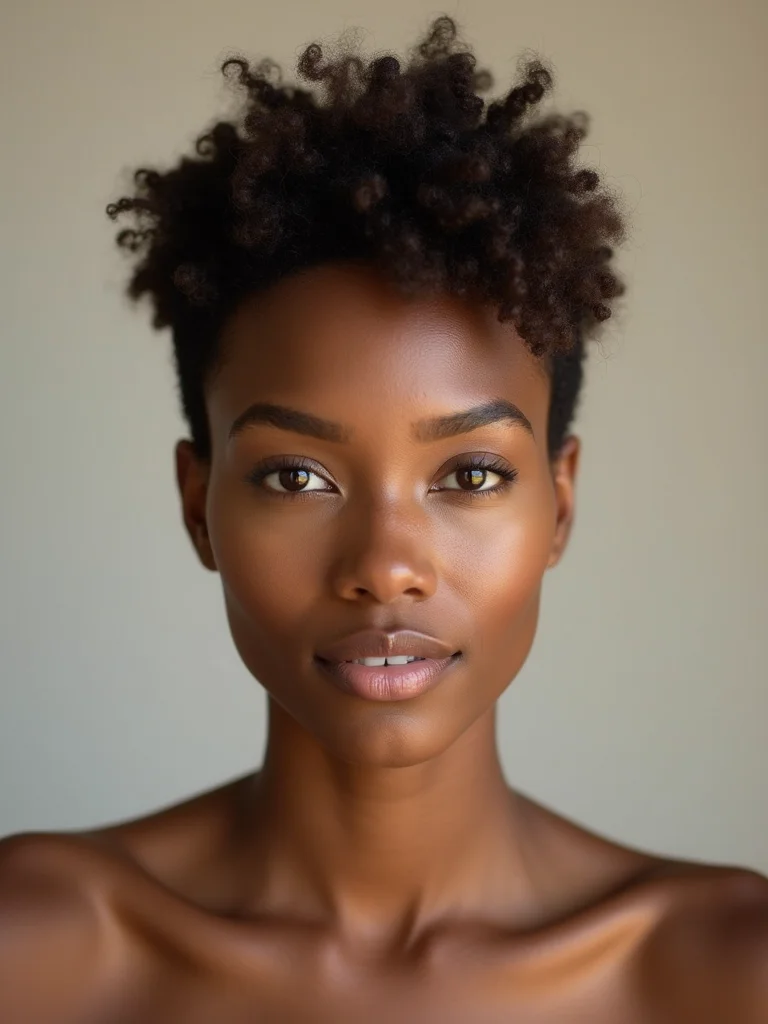
What actually separates a grown out pixie that reads as intentional from one that reads as an accident? Usually just two things: texture and a plan. The stretch between a cropped pixie and a full bob trips up almost everyone, because a flat, in-between length hides nothing and forgives even less.
The styles below cover that in-between length stage by stage, organized loosely by how much length there is to work with. Skim ahead to the current stage, or bookmark a few for where the hair is headed next.
The Grow-Out, Quickly
- Texture beats length as the main tool during a grow-out; a piecey, tousled finish hides uneven length far better than anything smooth.
- A part change or a fringe can reset the whole look in minutes, at no cost beyond a few strokes of a brush.
- Regular shaping trims keep the in-between looking deliberate; skipping them is what actually makes a grow-out look shapeless.
The Shaggy Grown-Out Silhouette
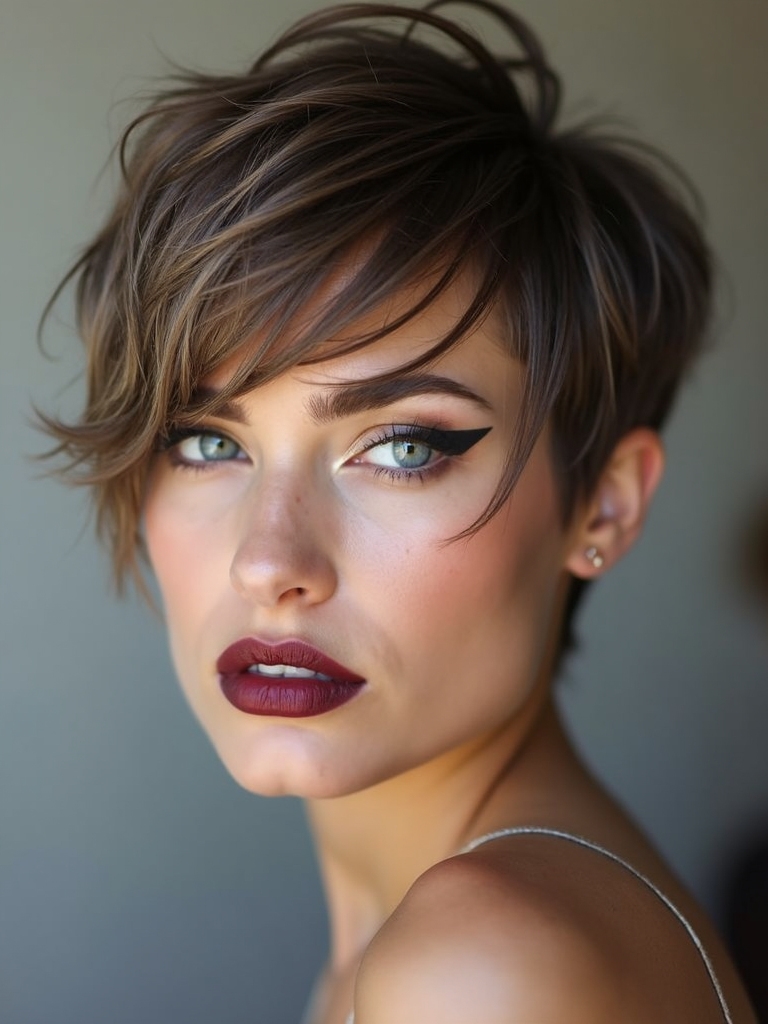
Most grown-out pixies eventually land here, and the reasoning is simple: a shag is built on exactly the uneven lengths a grow-out produces. Once the shape has a name, the in-between length stops reading as unfinished. Anyone who liked the choppy edge of a choppy pixie cut tends to find this stage an easy, familiar fit.
- Ask for choppy, point-cut layers through the crown so the ends stay light and piecey.
- Work a texture cream through damp lengths, then let it air-dry; that single step handles nearly all the styling on its own.
- This shape tends to suit rounder and squarer faces especially well, since the layers break up strong angles.

A Sleek Tuck Behind the Ears
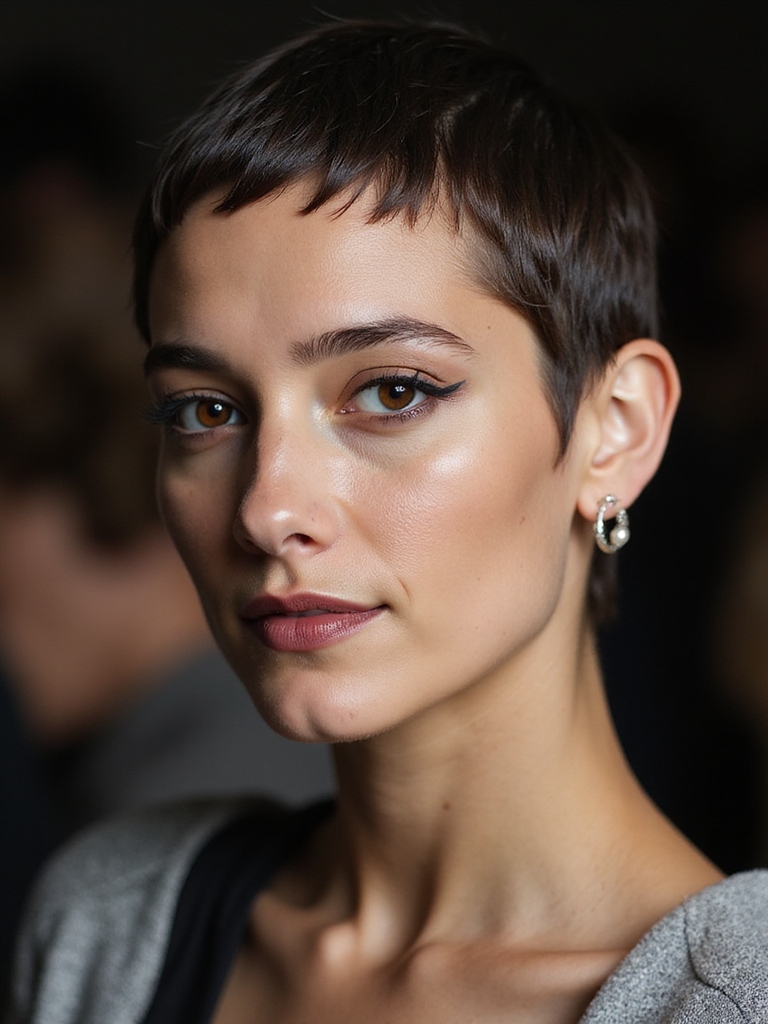
Once the sides reach ear length, tucking is the fastest route to looking finished without changing anything about the cut itself, and it works on days when there’s no time for a full styling routine. It also works well as a bridge from the earlier, shorter stages covered in the how to style short pixie hair guide, since the technique carries over cleanly as the length increases.
- Smooth a dime-sized dab of shine cream through damp or dry hair before tucking.
- A flat clip behind each ear anchors the tuck through a full day.
- Leave a little lift at the crown so the sleek sides don’t read as flat overall.
A Tousled, Textured Fringe
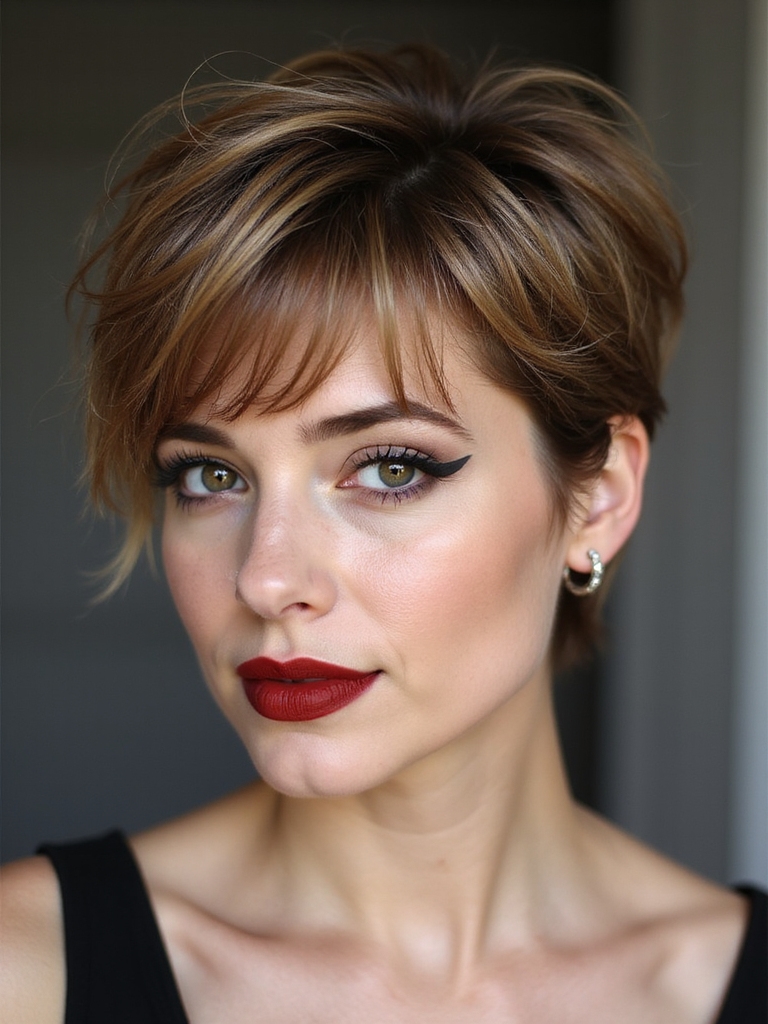
A looser, grittier finish suits the grow-out stage particularly well, because a roughed-up texture disguises uneven lengths that a smooth finish would only expose.
Why a Rough Fringe Works Here
The fringe carries most of the effect. A separated, piecey fringe pulled forward draws attention to the face and away from the shape still settling in behind it.
Matte paste, not a shine product, is the right pick here. A glossy finish flattens the grit this look depends on entirely.
💡Texture Cue
Work product through completely dry hair, not damp. Applying texture to wet hair collapses the separation before it has a real chance to hold.
A Curly Grown-Out Advantage
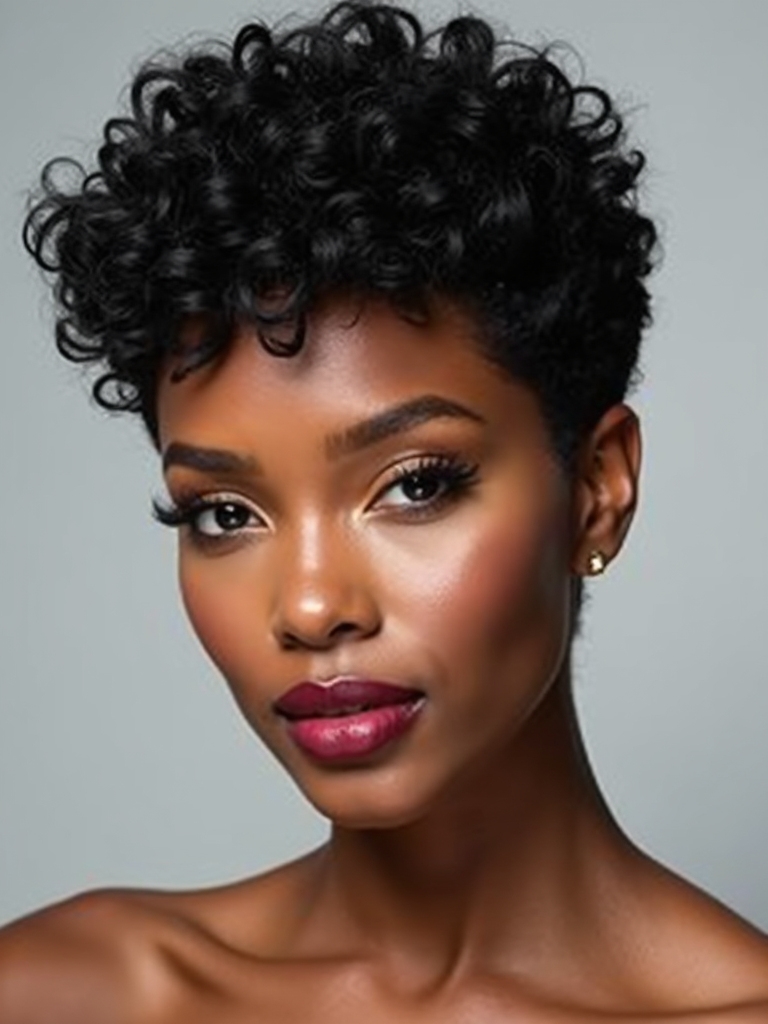
Curl pattern does a lot of the work that layering has to do on straight hair, since the natural bend hides uneven lengths as they happen, softening a stage that would otherwise look choppy in a bad way.
The priority at this stage shifts from cutting toward moisture. Keeping curls hydrated matters more during a grow-out than at almost any other point, since dry ends show first and hardest. For more on shaping curl through this length, the curly pixie hairstyles guide goes deeper.
When a trim is needed, cutting dry, curl by curl, tends to preserve spring better than cutting on stretched, wet hair, which can leave curls shorter than intended once they spring back up.
A Side-Swept Front
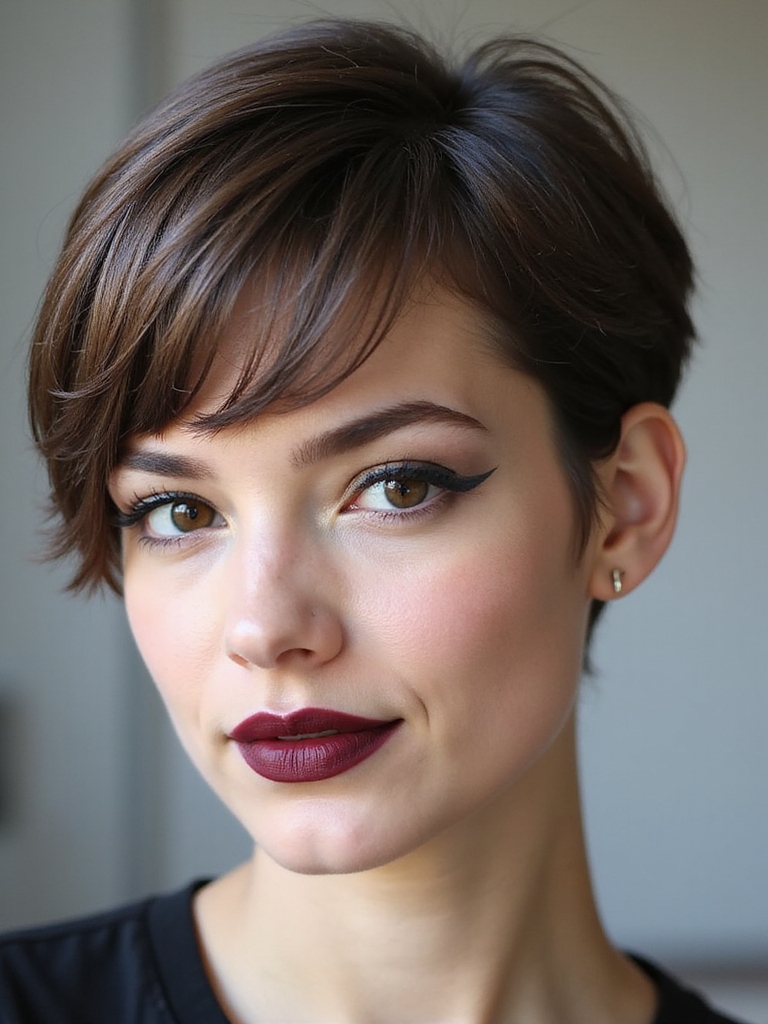
Once the front and top pieces are long enough to sweep, angling them across the forehead gives that gangly length an actual job to do.
Which Face Shapes Benefit Most
The diagonal line this creates suits most face shapes at once, softening angular jaws and adding visual length to rounder ones.
A light cream and a warm-air blast hold the sweep without stiffness, and it takes under two minutes once there is enough length to work with.
Reaching the Micro Bob Stage
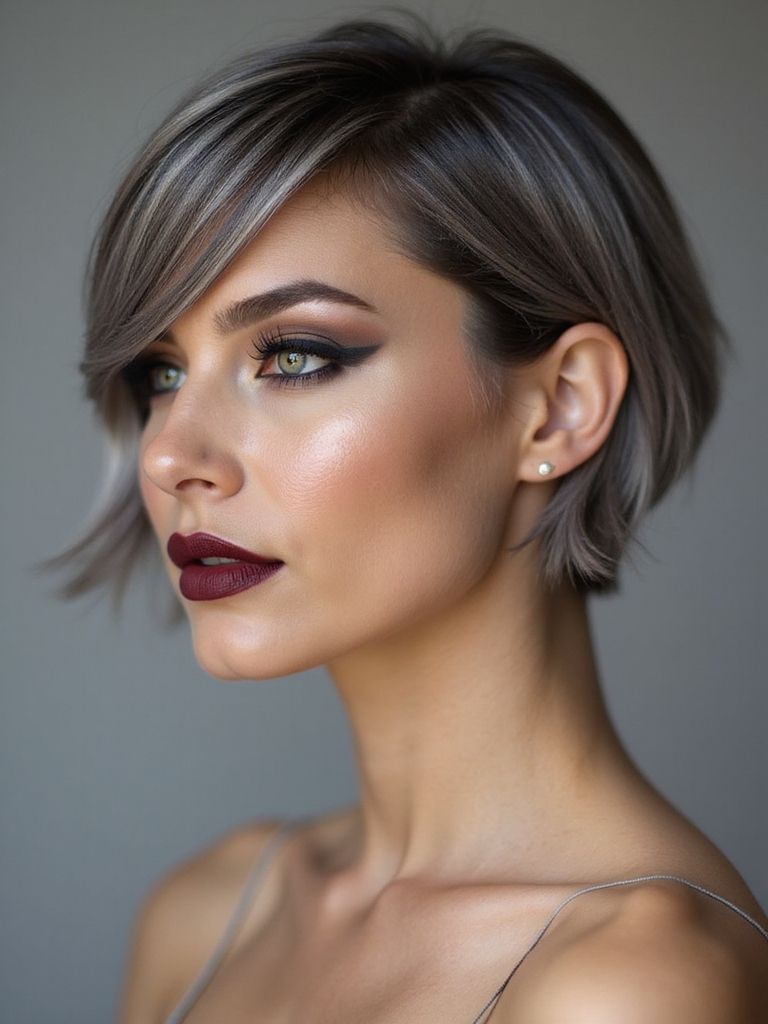
There’s a real milestone moment when a grow-out crosses into micro-bob territory, and blunt ends suddenly look thick and deliberate.
A clean shaping cut booked specifically for this stage is worth the appointment, since it marks the shift from surviving the grow-out to actually styling it on purpose.
- A blunt or soft A-line finish makes fine hair read fuller than it is.
- Both center and deep side parts work well at this length.
- A round-brush blowout turns the ends under for a polished finish.
The micro bob stage is where most clients stop asking when the awkward phase ends and start asking for a cut of their own.
Piecey Texture Through the Crown
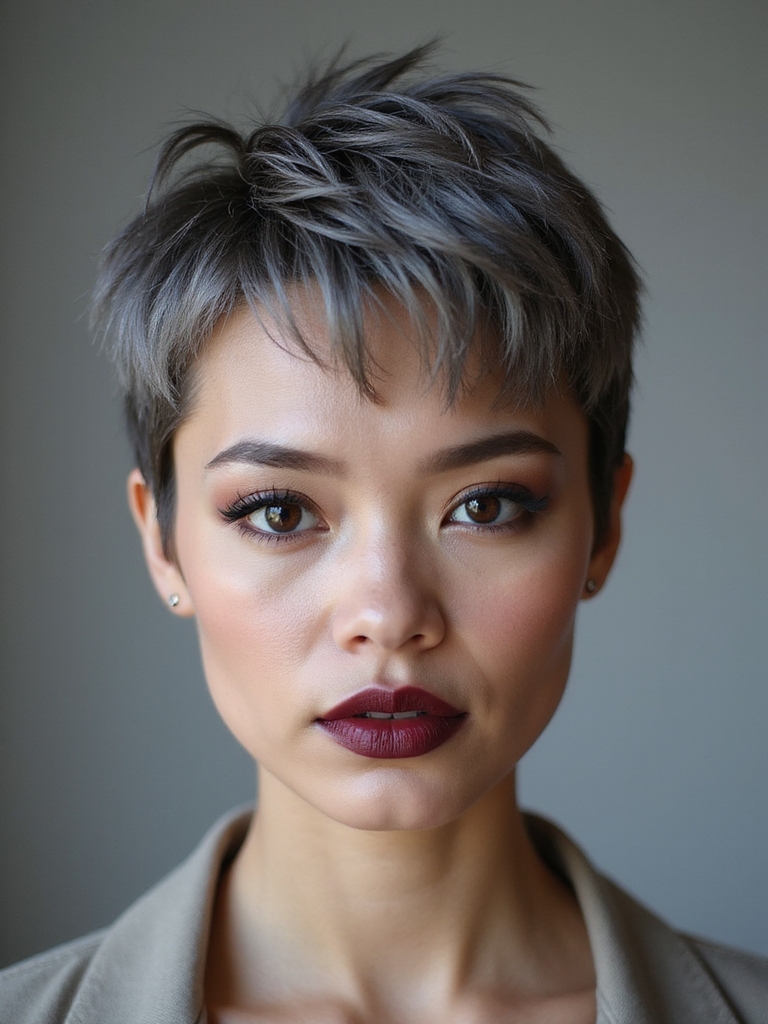
A grow-out that’s gone flat on top usually needs height more than length, and choppy crown layers are the direct fix for that specific problem.
Pinching small sections up with fingertips while a light paste sets does more for lift than any brush pass could, since the fingers can target exactly where the crown has gone flat. Heavy formulas work against this move, dragging the separation flat within hours of application, so a little product goes a long way here.
An Asymmetrical Sweep
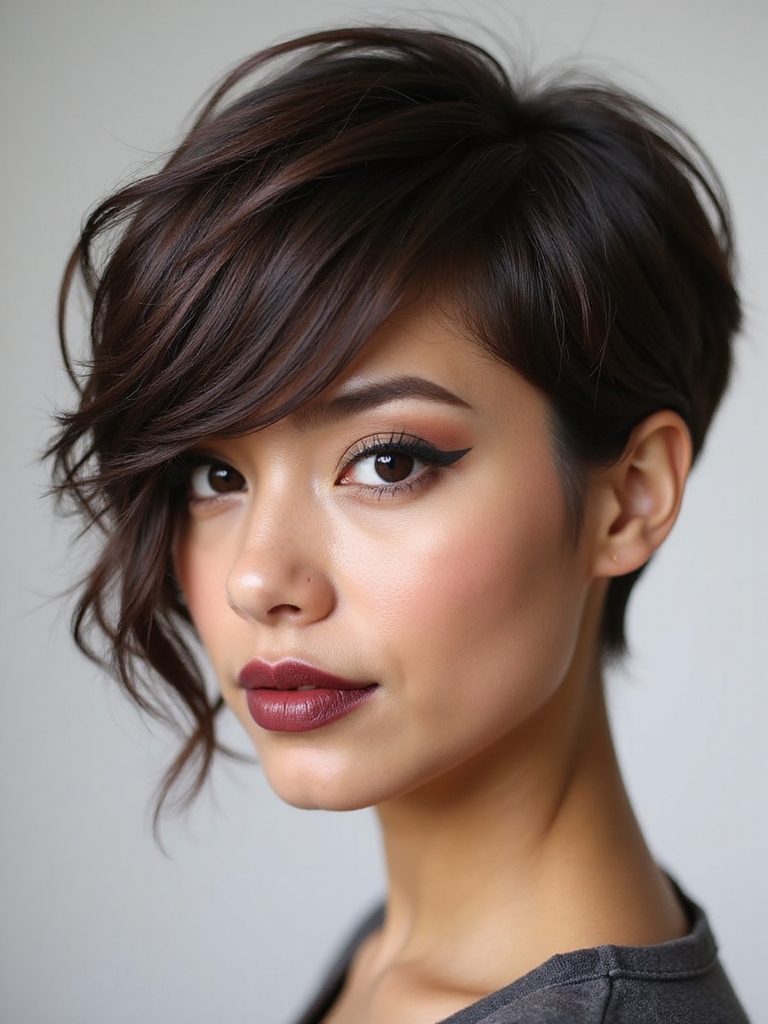
Uneven length turns into a deliberate design choice once one side is kept noticeably longer and swept across the face, instead of sitting there like an accident of timing that everyone can tell wasn’t planned. It reads as modern and a little bold once the length difference is intentional rather than incidental, and it’s surprisingly easy to wear day to day once the basic technique is down.
- Keep the longer side past the cheekbone so the line has somewhere to land.
- A flat-iron pass through just the long side keeps the asymmetry crisp for special occasions.
- Tucking the shorter side back adds contrast and shows off the angle underneath.
Soft, Feathered Waves
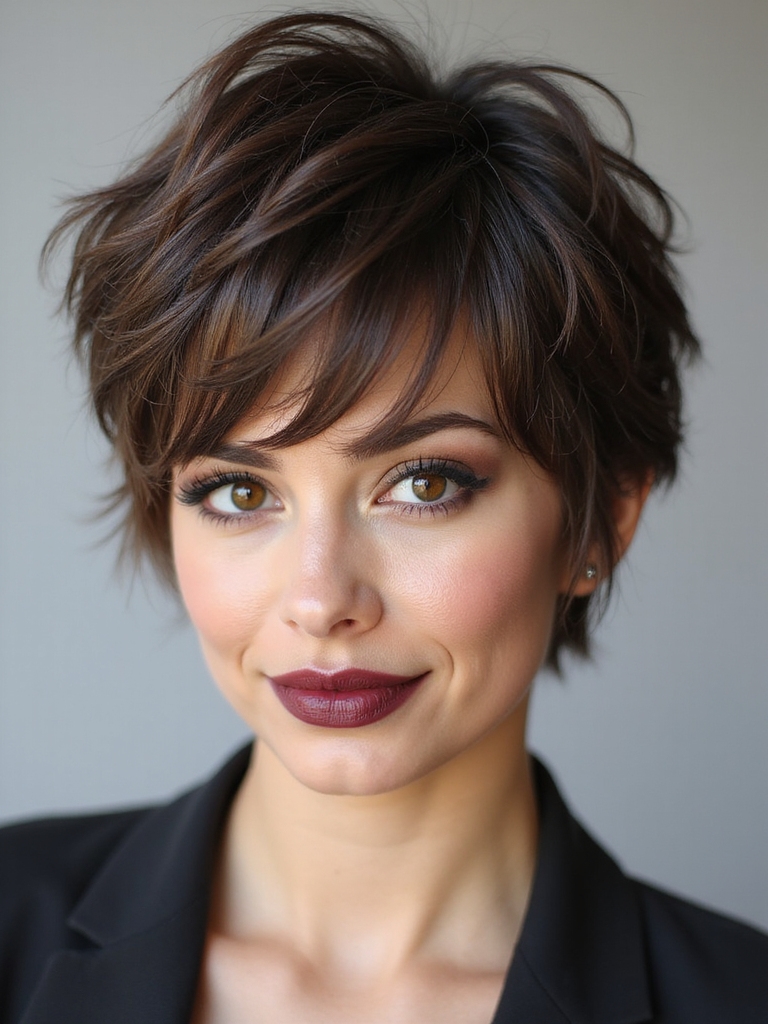
A few inches of extra length is enough to turn a grow-out into something quietly beautiful once the right bend is added. Loose, feathered waves break up the uniform length that otherwise sits flat and monotone, adding movement that looks planned. Even a single day of waves changes how the whole shape reads, since the eye follows the movement instead of counting the uneven lengths underneath it.
- A small-barrel wand with the ends left out gives a feathered, undone finish.
- Foam rollers set on barely damp hair deliver a similar bend with zero heat, overnight.
- Separate the waves by hand with a little texture spray once they’ve cooled or dried.
| Method | Best For | Set Time |
|---|---|---|
| Foam rollers | Overnight, no morning routine | 6 to 8 hours |
| Flat twists | Second-day definition | 6+ hours |
| Braid-out | Looser, wider waves | 4 to 6 hours |
A Sculpted Nape With Length on Top
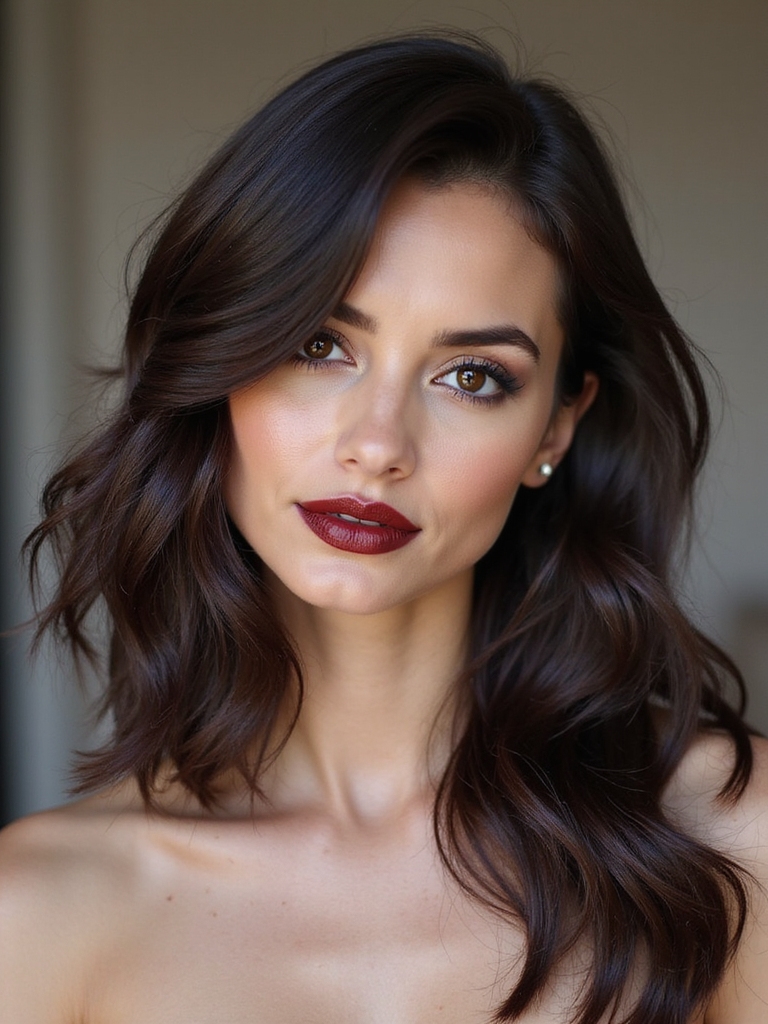
A cleanly graduated nape paired with longer, looser length on top comes across as architectural rather than half-finished, which explains why it’s a frequent request mid-grow-out.
Keeping the Contrast Clean
The nape and sides need regular shaping to stay crisp even as the crown is deliberately left alone to lengthen.
Texture and lift through the top pulls the eye upward, letting the sharp nape ground the whole shape.
Retro Flipped-Out Ends
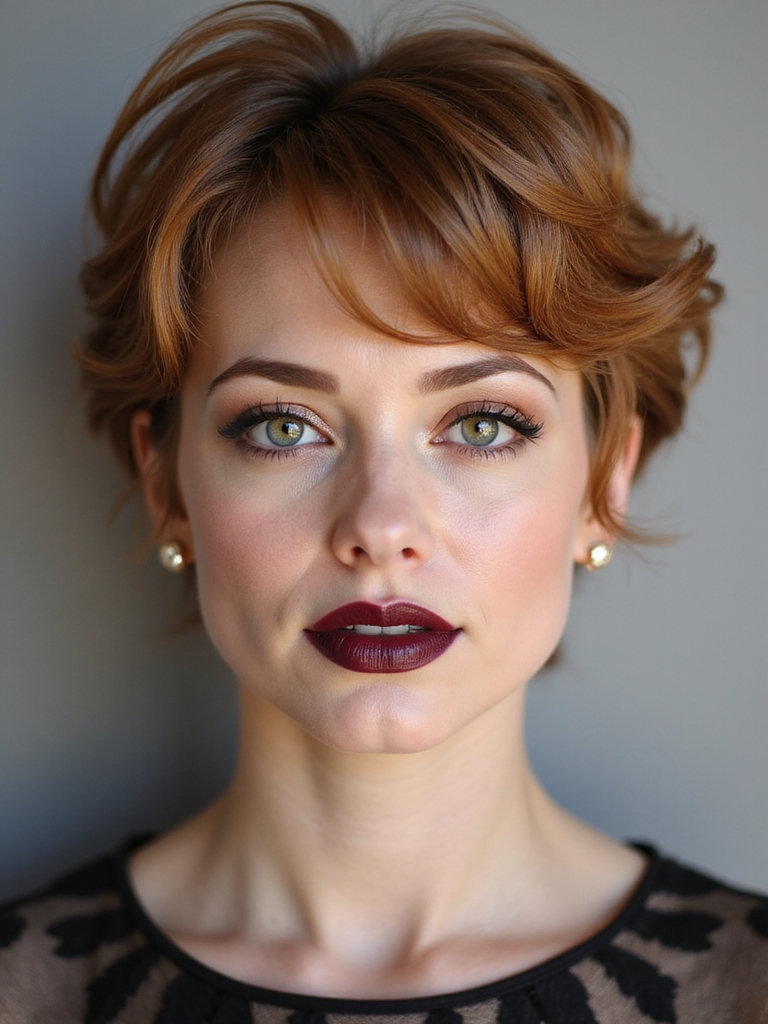
Once a grow-out reaches chin length, flipping the ends outward gives it a playful, sixties-leaning bounce that turns an awkward length into an actual style choice.
A flat iron or a round brush both do the job here, and the flip only takes a couple of minutes once the technique clicks.
- Direct the ends outward at the jawline with whichever tool feels easier to control.
- A light-hold spray keeps the flip from dropping through the afternoon.
- Pairing it with a deep part leans further into the retro feel.
A Polished, Parted Finish
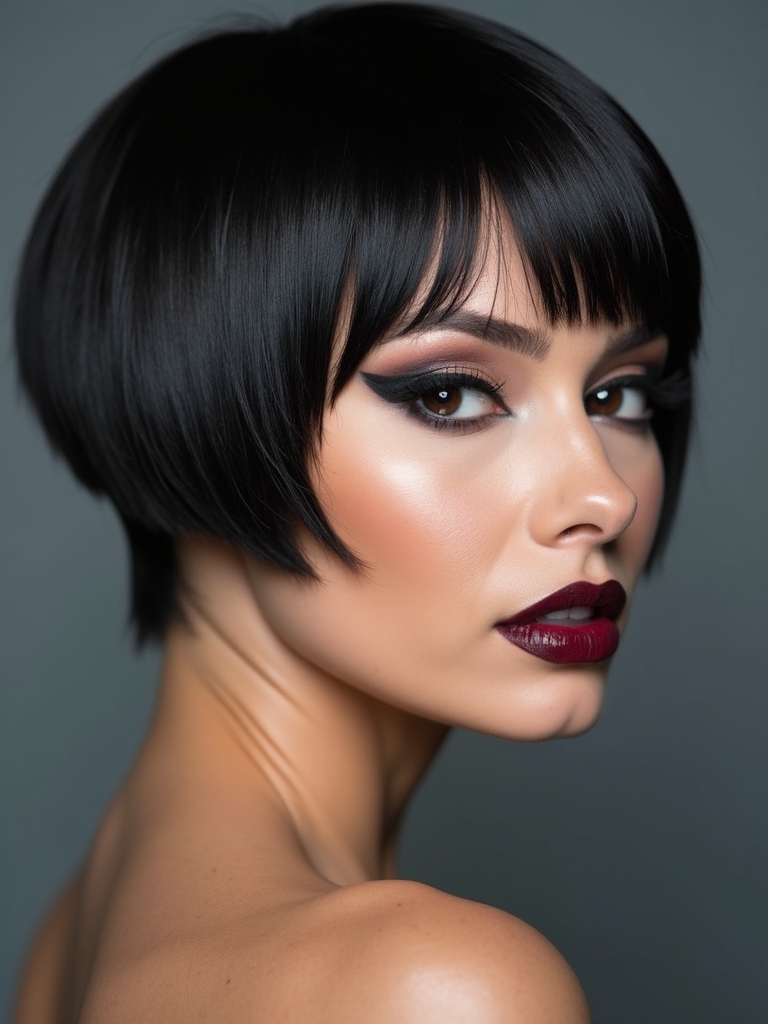
Sometimes the simplest move looks the most expensive. A deep part combined with a smooth, glossy finish turns a grown out pixie into something polished in well under five minutes, which makes it the version most people reach for before a meeting or an early flight when there’s no real time to style anything at all.
- Comb the part in while hair is still damp so the line sets cleanly.
- Smooth the top section with a flat iron for a glass-like finish.
- A small amount of shine serum on dry ends finishes the look without weighing it down.
Voluminous Roots, Matte Finish
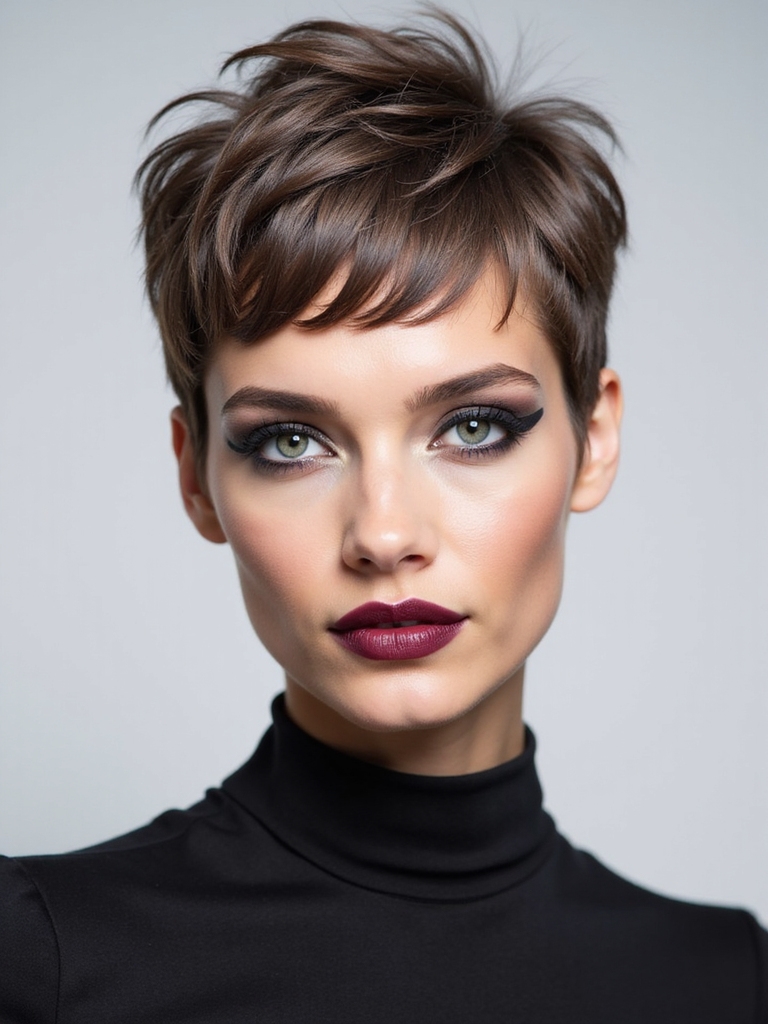
Fine hair tends to take the brunt of this stage, since there’s rarely enough density yet to fake body on its own. The fix here is a blow-dry technique rather than a cut.
Sectioning the roots and lifting each one straight up while directing warm air underneath builds real body at the base, in a way no product alone manages on fine strands.
A dry texture spray or matte powder worked in afterward locks that root lift in place through the day and keeps the finish from turning shiny or greasy-looking by evening.
A Minimalist, Clean-Lined Crop
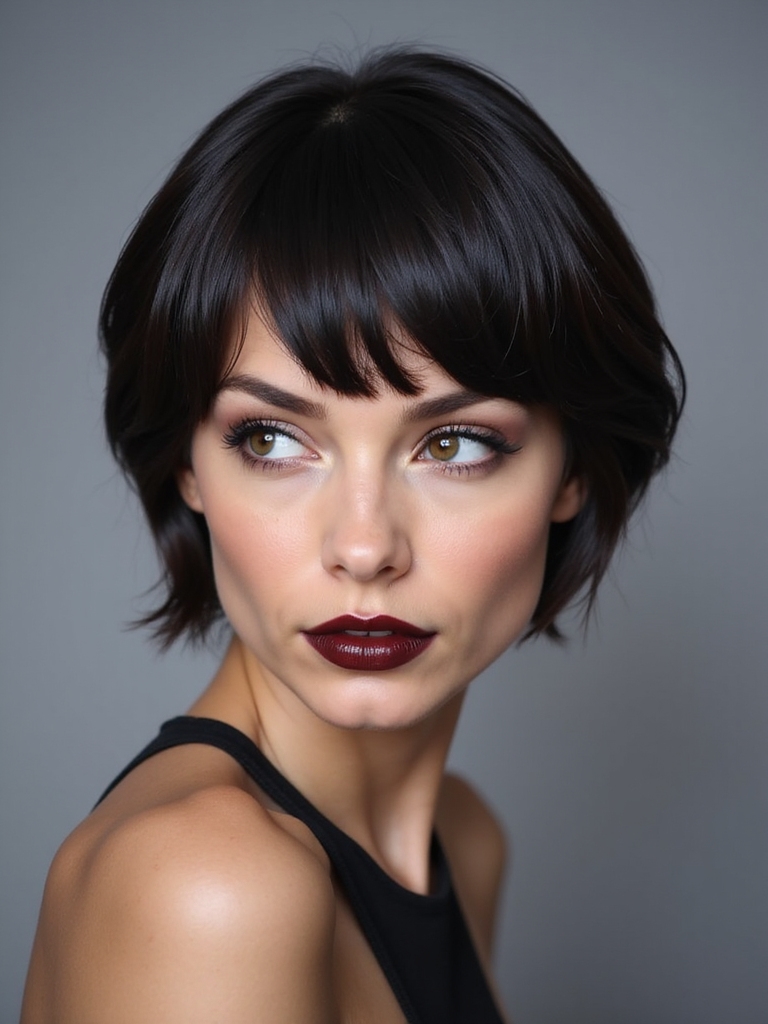
Not every grow-out needs texture and movement. A clean, minimal shape with sharp lines suits anyone who prefers precision over undone styling.
This finish leans hardest on the cut itself, since there’s nowhere for a sloppy line to hide once the styling stays this simple.
- Straight, healthy hair holds this shape best; texture works against the clean lines.
- Regular shape-up appointments, usually $30 to $50 and quicker than a full cut, matter more here than with any other version on this list.
- A lightweight serum and a single flat-iron pass make up the entire routine.
“Precision-cut shapes like this one show every missed appointment. If the schedule slips, the whole look drifts before the length even does.”
Fringe-Forward to Frame the Face
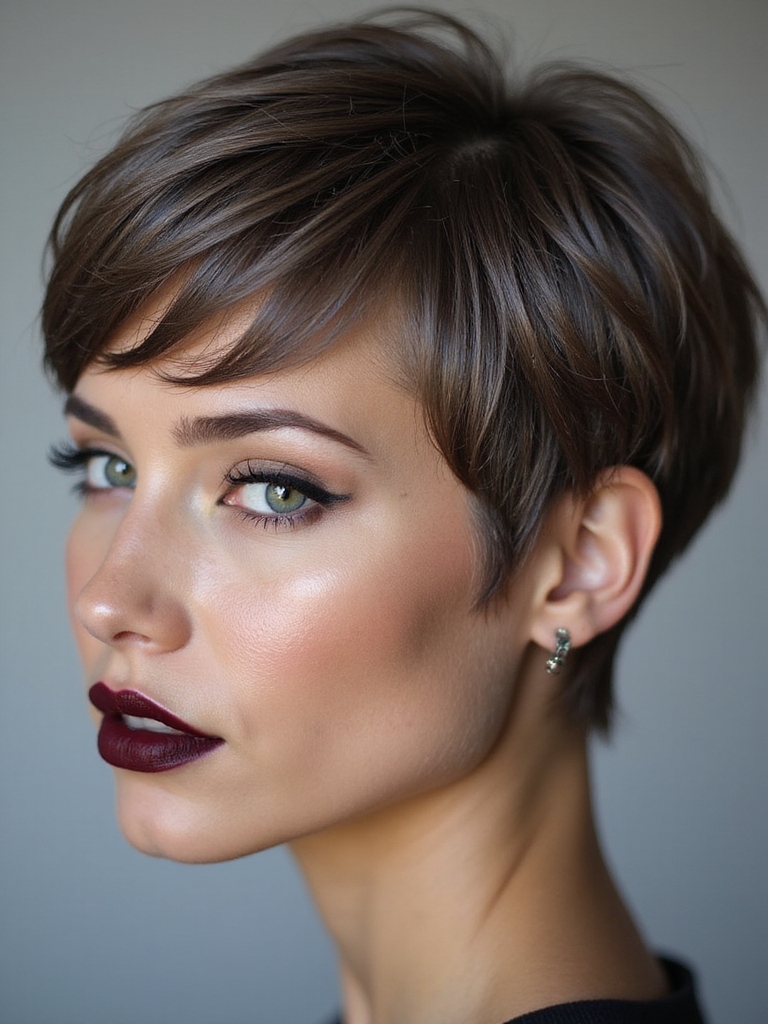
A fringe-forward shape does more for the face than any other option here, pulling the longer front pieces into an arc that lands at the cheekbones.
The arc itself is what makes this work. Front pieces cut and styled to curve inward sculpt the face and give the whole shape a focal point.
A round brush curving the pieces in, plus a light styling cream, holds the shape without ever looking overworked.
Grown-Out Pixie Questions
?What actually separates a grown out pixie from a bob?
Mostly the presence of shorter, structural layers still doing work underneath. A grown out pixie usually keeps some of the original crop’s shape even as the perimeter lengthens, while a bob has an even, defined line all the way around.
?How do I stop a grown-out pixie from forming a pyramid shape?
Ask a stylist to blend the shorter crown into the growing sides gradually, over several trims, rather than leaving them to grow at two different speeds. Without that blending, the crown stays short while the perimeter widens into a boxy, wide-at-the-bottom silhouette.
?Is it safe to skip trims entirely to save length?
It backfires more often than it helps. A grow-out with no shaping at all tends to look unkempt sooner than one getting light, regular dusting, since split, frayed ends make the whole length look thinner and less controlled.
?Which of these styles works best for a round face?
The side-swept front and the asymmetrical sweep both add a diagonal line that elongates a round face. The blunt micro bob and the minimalist crop tend to widen it, so they suit longer face shapes better.
The Length You Have Right Now Has a Style
A grown out pixie isn’t a single look stuck between two better ones, it’s a rotating set of options that changes as the length does. Tucked sleek one week, roughed up with texture the next, the in-between stops feeling like something to wait out.
Bookmark two or three of these that match the current length and face shape, then swap in a new one as the hair moves past it. For the stretch still ahead, the growing out a pixie timeline maps out what to expect next, and the long pixie guide picks up once the bob stage is behind you.
More Ideas Here