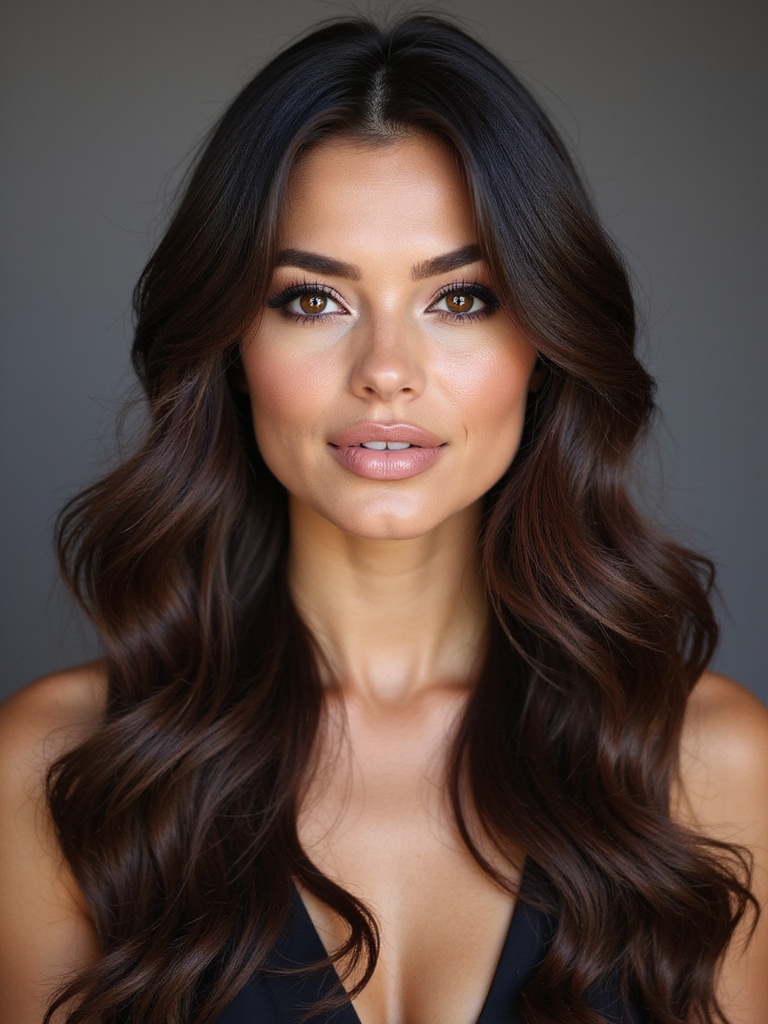
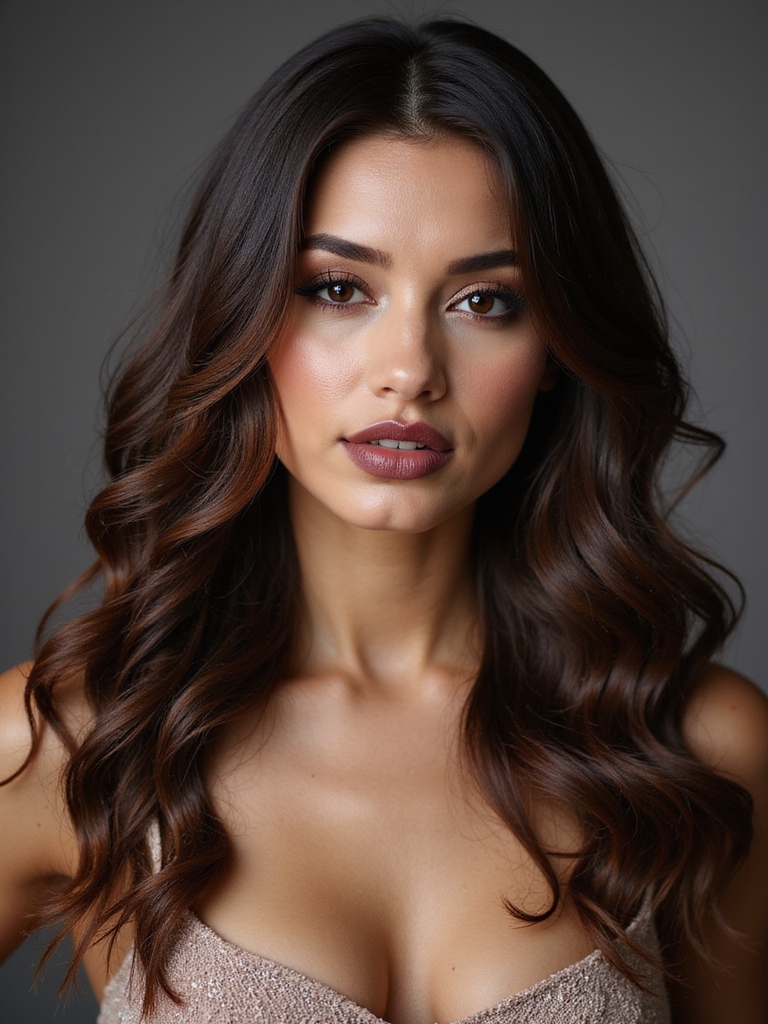
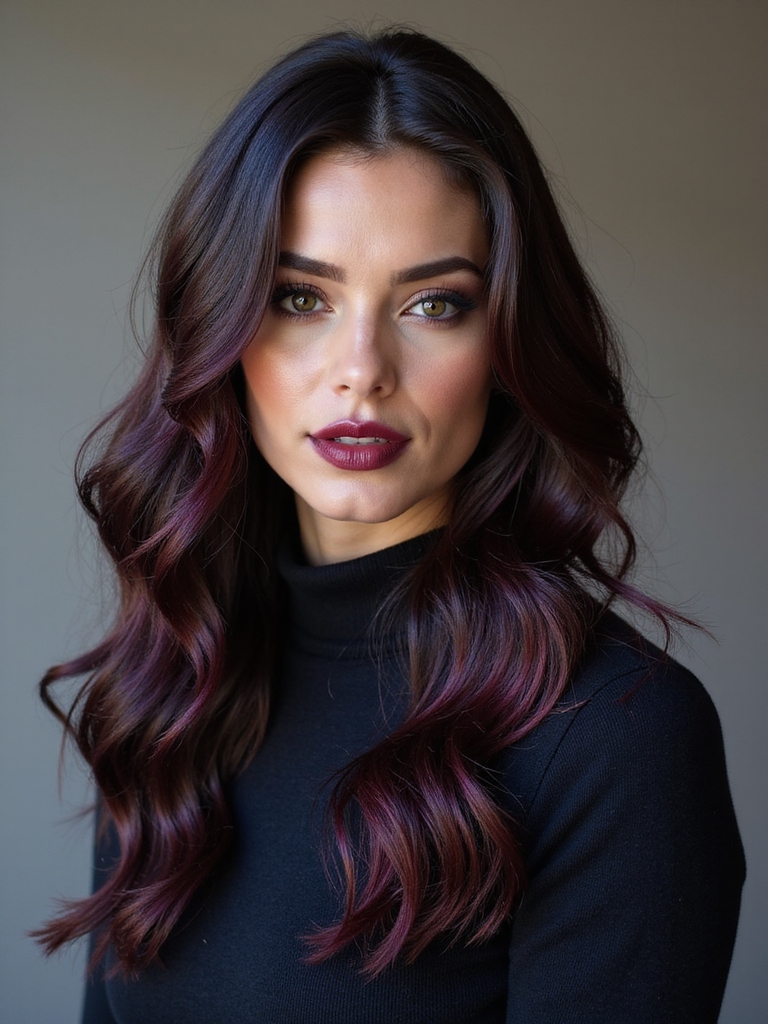
Winter color doesn’t have to default to brown-on-brown. That idea took hold somewhere along the way, but the cold months, when everyone’s bundled up and a little visually bored, are exactly when a jewel tone or a hidden pop pays off the most.
Fifteen ideas follow, ranging from full statement colors to pops you can hide entirely for the office, each with how to ask for it and how much it really costs to live with.
Fun Winter Color, Fast
- Jewel tones like sapphire, burgundy, and teal read bold without tipping into costume.
- Placement decides the commitment: hidden panels and colored ends are removable; full-color washes are not.
- Deeper jewel shades need little to no lightening on dark hair, which keeps them gentler than pastels.
- Tell your colorist how visible and how permanent you want it before showing a single photo.
Deep Sapphire, Worn as a Statement

Sapphire over a dark base gives you real, unmistakable color that flashes blue in the light while still reading sophisticated in a boardroom.
By the second week, most clients notice the base has barely faded, since a rich jewel tone deposited over dark hair needs no bleach and grows out without a hard demarcation line.
Ask for a sapphire gloss or tint layered over your natural depth, not an all-over bright dye job. It suits cooler skin especially well, and out of everything on this list, it costs the least in upkeep for the amount of impact it makes.

Frosted Silver-Blonde

For anyone who wants the fun without leaving blonde, a frosted silver tone is the icy, editorial option that photographs like it belongs in a magazine spread.
- Needs pre-lightened hair to read as true metallic silver rather than yellowed gray.
- A purple or silver-toned wash keeps it from warming up between salon visits.
- Expect toning appointments on a fairly tight schedule, since silver shifts warm the fastest of any cool shade.
Berry-Infused Balayage

Woven through a base as a balayage rather than painted on solid, berry-red tones catch the light and flash color only when the hair moves.
Why Balayage Makes Bold Wearable
Because it’s placed rather than saturated, the berry pieces stay easy to live with and easy to grow out compared to an all-over fashion shade.
A gloss is what gives the berry its juicy shine. It flatters cool and neutral skin particularly well, and it’s a solid first step for anyone unsure how much color commitment they actually want.
📋Before You Book a Bold Winter Color
- ✓Decide how visible you want it: full statement, hidden panel, or just the ends.
- ✓Bring a reference photo, but be specific about placement, since the same shade looks different all-over versus tucked underneath.
- ✓Ask directly whether your chosen shade needs bleach first, since that changes both cost and appointment length.
Rosy Copper Glow

A pink-leaning copper glows in a way a standard orange-copper never quite manages, and it flatters golden and neutral skin through the grayest stretch of the year.
Depending on the starting shade, it may need only light lifting, or sometimes none at all, which makes it considerably more accessible than most vivid colors.
- Ask specifically for a rosy or pink-leaning copper, not a plain orange base.
- Works especially well on hair already sitting in the copper-to-auburn family.
- A color-depositing conditioner between visits keeps the pink from fading to plain copper.
Smoky Ash Brown, Warmed Up

Not every kind of fun is loud. A smoky, cool-toned brown with soft highlights woven through feels different without ever reaching for a bottle of actual color.
A Quieter Kind of Different
The smoky undertone is what makes a plain brown feel current rather than default, while the highlights keep the whole thing from going flat.
It works well on cooler complexions, and it doubles as a quiet refresh for anyone who’d rather not explain a bold color choice at the office on Monday.
Icy Lavender, Kept to the Ends

Confining a pastel to just the ends spares the roots and scalp entirely, and it gives the whole head a dreamy, frosted flash of color only when it moves.
- Only the ends need lightening, so regrowth is a non-issue.
- Trims off cleanly whenever you’re ready to be done with it.
- A silver-leaning lavender tends to fade more evenly than a pink-leaning one.
Chestnut With Caramel Face-Framing

For fun built on warmth rather than saturation, a rich chestnut base paired with caramel pieces around the face delivers glow exactly where it shows.
- Set a deep chestnut base first for cozy, seasonal depth.
- Add caramel specifically at the face rather than throughout for a lift that reads intentional.
- A gloss blends the two tones and keeps the whole thing looking finished rather than patchy.
Deep Glossy Burgundy

Burgundy worn all over is bold in its richness while still reading grown-up enough for nearly any setting, which explains why it resurfaces as a winter favorite year after year.
Bold Without Losing Polish
Dark hair barely needs lightening for this one, since the color is deposited rather than lifted, which keeps the whole process far more manageable than the finished look suggests.
The gloss finish is what gives it that particular light-catching depth. It leans flattering on most complexions, and a color-depositing mask between salon visits holds the richness longer.
Rose Gold Balayage

A warm blend of soft copper and pink, rose gold reads romantic and playful without asking for the upkeep of a full fantasy color.
A lightened base is what makes this read as true rose gold rather than a muddy pink, so pre-highlighted hair takes to it best; starting from brunette gets you a deeper, warmer copper-rose variation instead.
Ask specifically for the balayage version to keep it soft and forgiving as it grows out, rather than a solid, harder-edged application.
Matching a shade to how much you actually want to commit:
🎯Lowest commitment
Honey bronze face-framing or ends-only lavender both spare most of your hair and grow out with barely a trace.
🎯Medium commitment
Berry balayage or rose gold ask for some lightening but stay soft and forgiving as they grow.
🎯Full commitment
Sapphire, burgundy, or indigo-accented navy make the boldest statement and hold their depth the longest.
Mushroom Beige Blonde

This soft, ashy greige has become something of a cult favorite precisely because it reads different without anyone being able to quite name why.
The Blonde People Can’t Quite Place
It asks for consistent cool toning to keep the greige from warming up, so it carries more upkeep than a standard blonde.
The payoff is a shade that feels sophisticated and current in a way most people notice without immediately clocking as unusual.
Hidden Jewel-Toned Accents
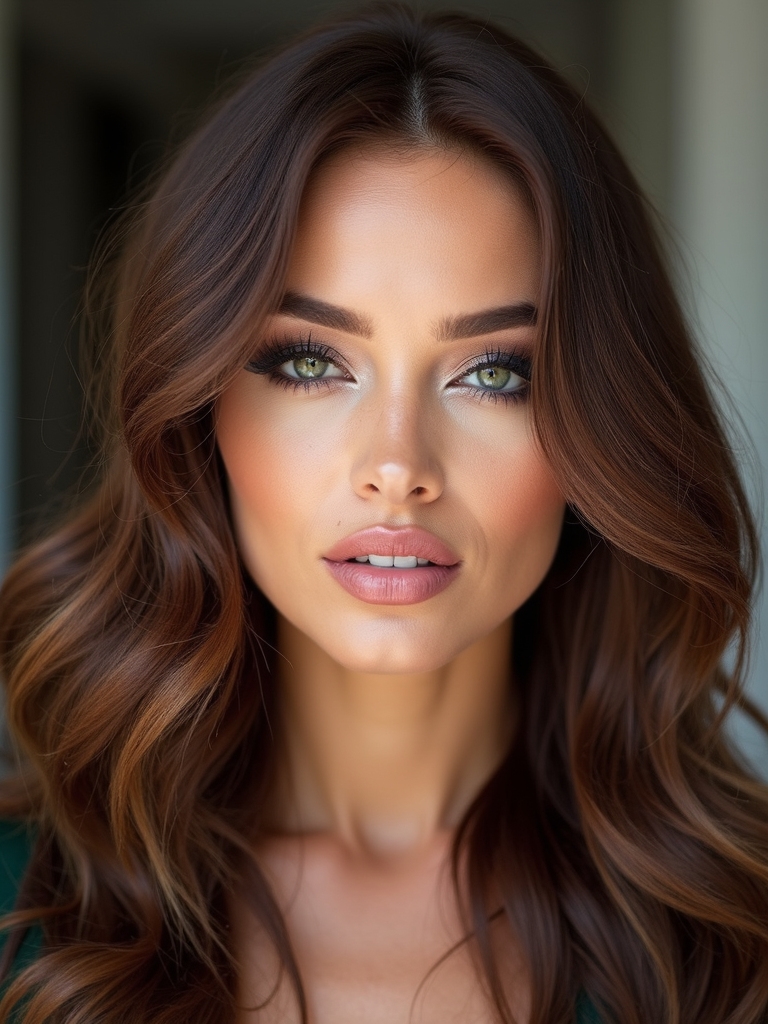
Bright jewel pieces tucked underneath the top layer stay completely invisible when hair falls down, then flash sapphire, emerald, or plum the moment it’s pinned up or moves.
- Ask specifically for hidden or peekaboo placement under the top section.
- Pick one jewel tone rather than mixing several, for a cleaner flash of color.
- Only the under-layer needs lightening, sparing the rest of the head entirely.
🅰️Hidden Jewel Accents
Completely concealable for work, flashes color only when pinned up or in motion. Lower upkeep, lower visibility.
🅱️Full Sapphire or Burgundy
Visible all day, every day. Higher impact, and still gentler on hair than most people expect since dark hair needs little lightening.
Silver-to-Warm Blonde Melt

A gradient running from cool silver at the roots into warmer blonde through the lengths gives a two-tone effect without a hard, obvious line.
- Keep the roots properly cool and smoky for real contrast against the ends.
- Blend the transition gradually rather than stopping it short in one spot.
- Both ends of the gradient need separate, regular toning to hold their distinct temperature.
Honey Bronze Face-Framing

Brightening only the pieces around the face with a warm, honeyed bronze lifts the whole complexion while leaving the rest of the color untouched.
Because so little is actually colored, this refreshes quickly and grows out with almost no visible transition, making it a low-stakes first experiment for anyone nervous about commitment.
Muted Teal With a Smoky Sheen

A grayed-down, smoky teal makes a genuine color statement while staying far more wearable than a bright mermaid blue-green.
Green-based tones fade slower than most fashion colors overall, which makes this one more forgiving month to month than a comparably bold pink or blue.
- Ask specifically for muted or smoky teal, not a saturated, vivid version.
- Suits cooler undertones especially well against the smoky finish.
- A blue-toned shampoo helps hold the green from drifting yellow between washes.
A couple of terms worth knowing before the appointment:
📖Deposit-only color
A tone added directly to the hair without lightening it first, used for jewel shades like burgundy, sapphire, and navy on dark hair.
📖Peekaboo placement
Color applied to a hidden underlayer of hair so it stays invisible until pinned up, tucked back, or caught by movement.
Indigo-Accented Navy

From across a room this reads almost black; up close, a sleek near-black navy with brighter indigo accents reveals its actual color.
Like sapphire, navy over dark hair needs little to no bleach, which keeps a color this striking surprisingly manageable to maintain.
The indigo accents are what give it dimension rather than flatness. It suits cooler skin tones and anyone drawn to a darker, more editorial palette overall.
What to Expect
The two questions that decide everything here are how visible you want the color and how permanent. Tell a colorist whether you’re after a full statement, a hidden peekaboo, or just the ends, and whether it should last or wash out over time, since those two answers shape the entire approach and appointment length.
On cost, a peekaboo or colored-ends placement runs closer to what a basic gloss service costs, often around $80. A full, all-over bold shade with lightening runs considerably more, closer to $250 for a complete color transformation, and the appointment itself takes proportionally longer too.
Fun Winter Color Questions, Answered
?What’s the lowest-commitment way to try a bold color?
A hidden peekaboo panel, a few small panels, or color kept strictly to the ends. All three spare most of the hair, can be concealed for work, and grow out or trim off easily if you change your mind.
?Which of these colors skip the bleach entirely?
Deep, jewel-toned shades applied over a dark base, like sapphire, indigo-accented navy, deep burgundy, and muted teal. These deposit color rather than lifting it, so they’re gentler on strand health than pastels or vivids.
?How long does a hidden color placement actually last?
Considerably longer than an all-over vivid, since it’s protected from sun and washing by the hair sitting over it. Most hidden panels hold their vibrancy for a couple of months before needing a refresh.
?Can I test one of these before committing fully?
Yes. Clip-in extensions dyed to match, or a semi-permanent gloss on a small section, both let you live with a color for a few weeks before booking anything permanent.
Winter Doesn’t Have to Play It Safe
There’s no rule requiring winter color to stay sensible. Whether the choice is a full sapphire commitment, a jewel-toned peekaboo tucked away for work, or lavender dipped just at the ends, matching the shade to how much attention you actually want to manage makes the decision simple rather than overwhelming.
More to Browse