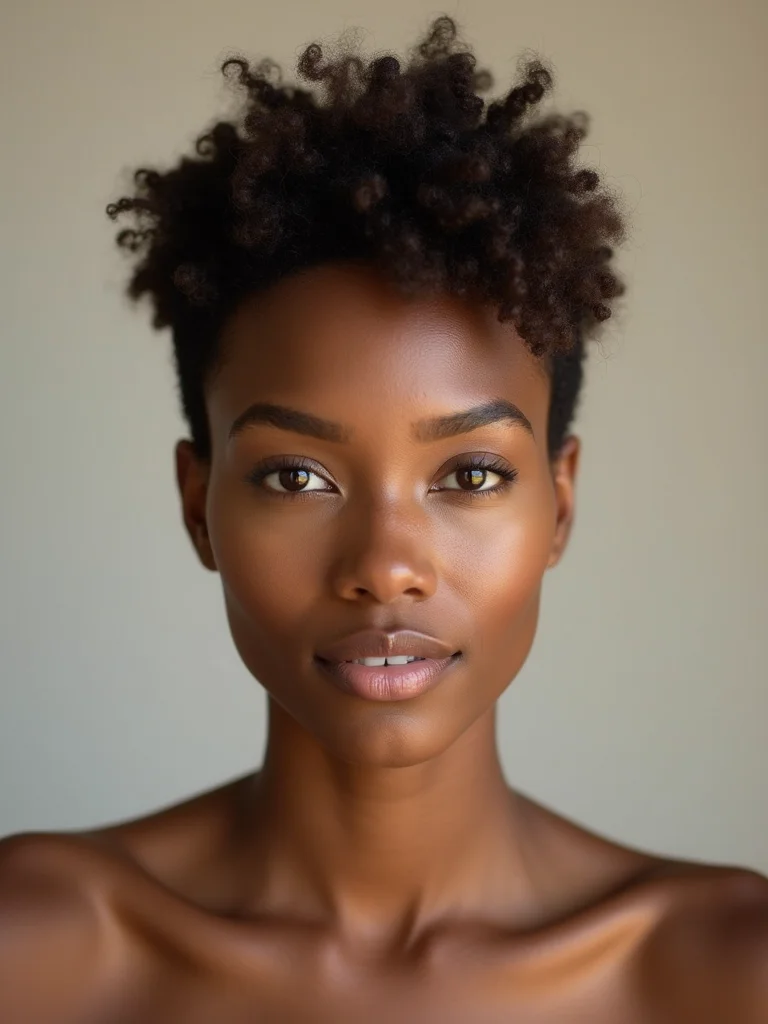
Fine-haired women are told to be afraid of short cuts, that losing length means losing the little fullness they have. I tell my fine-haired clients the opposite, and I mean it: nothing else on the menu does more for fine hair than a French bob. That blunt, chin-length line concentrates your hair into a weighty, dense edge that fine hair never achieves long.
The science is simple. Length thins fine hair out and drags it flat, while a French bob gathers it into one clean, full-looking line. These fifteen versions all work with fine hair rather than against it, building the look of density and movement, and for each I will tell you the cutting and styling tricks that make thin hair look twice as thick.
Why the French Bob Loves Fine Hair
- A blunt, chin-length line concentrates fine hair into a dense, full-looking edge that long hair cannot hold.
- Skip heavy thinning and over-layering, which strip the little density fine hair has; you want soft texture, not removal.
- Volume comes from the cut and a smart air-dry or root-lift routine, not from piling on heavy product.
The Blunt Jaw-Length Classic
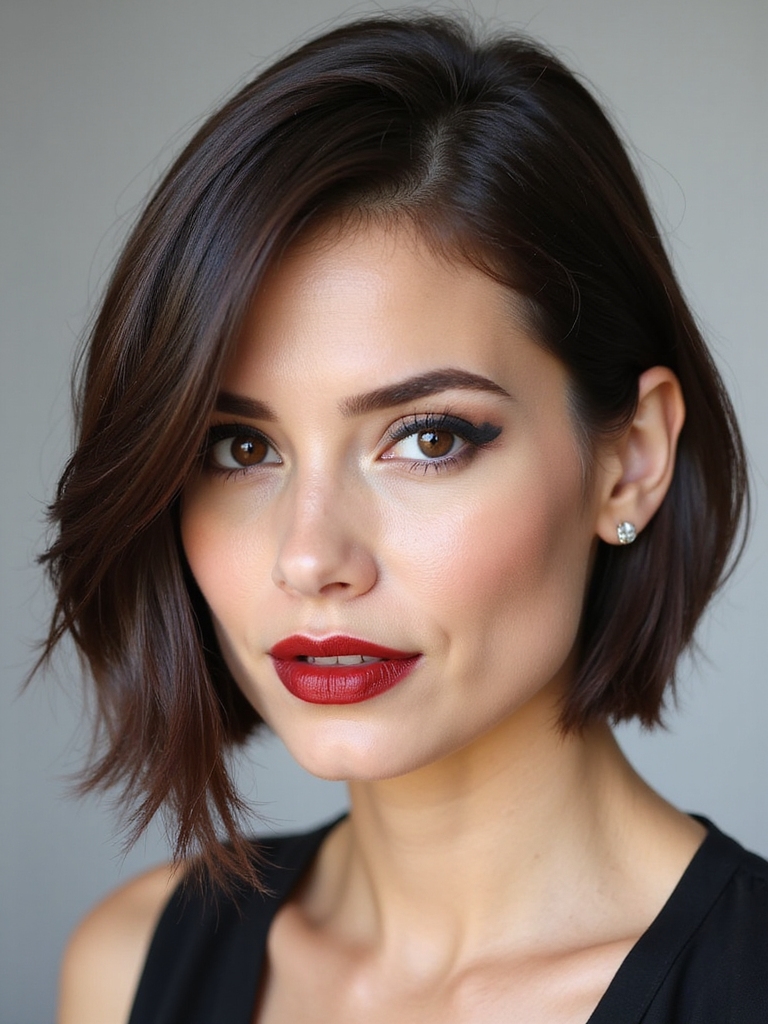
Start here, because this is the version that does the most for fine hair. A blunt cut at the jaw gathers every strand into one clean, heavy line, with no tapering or thinning cut into that sharp perimeter to dilute the weight it holds.
The jaw length is the sweet spot, long enough to still feel grown-up and chic, but short enough that the body stays up where fine hair actually needs it.
This is the cut I put almost every fine-haired client in first. It is the foundation, and every other version on this list is a variation on this one full, blunt line. For the cut in general, see the French bob haircut guide.

Feathered Ends for Movement

This is the version for pin-straight fine hair that finds a fully blunt line too severe against the face. Feathering just the very ends softens the edge without touching the perimeter’s actual weight. To get it right:
- Ask for feathering at the very ends only, not internal thinning.
- Keep the perimeter mostly blunt so the density stays.
- Style with a round brush to flick the feathered ends out for lift.
👍Why Fine Hair Loves It
- +A blunt line concentrates fine hair into a dense, full-looking edge.
- +Short length keeps body up where fine hair needs it, not dragged flat.
- +It styles fast and can air-dry, sparing fragile hair daily heat.
👎What to Watch
- –A heavy-handed stylist can over-thin it and undo the density.
- –Not forgiving of a botched cut the way longer layered styles can be, since there’s no length left to hide behind.
- –Very flat roots may need a deep part or light root product for lift.
The Micro-Fringe French Bob

A short micro-fringe is the most Parisian way to wear a fine-hair bob, and it works a clever trick: drawing the eye to the fringe and away from any thinness elsewhere. The blunt little bang reads bold and intentional, and it balances the strong line of the bob. It is fashion-forward and surprisingly flattering.
It does ask for upkeep, since a micro-fringe grows fast. A few notes:
- Keep the fringe blunt and short to match the graphic line of the bob.
- Plan a fringe trim every two to three weeks, often free at salons.
- Best on straight to lightly wavy fine hair, where the blunt line stays crisp.
Soft Waves for Subtle Volume
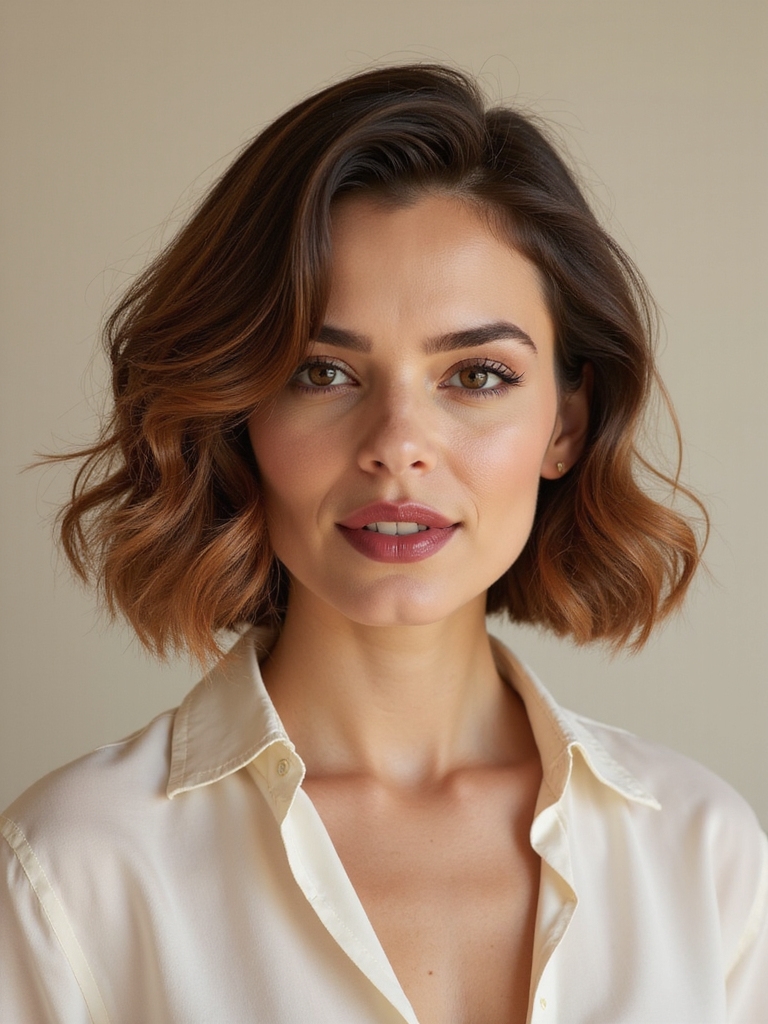
Fine hair that already carries a slight natural bend takes to this one fastest, since the wand is just amplifying a shape the hair wants to hold anyway rather than fighting pin-straight strands into submission.
You want a soft, undone wave, not a tight curl. Here is how:
- Use a wide-barrel wand or a heatless overnight set for soft bends.
- Curl the wand away from the face, keeping the very ends untouched for a softer finish.
- Set with a light texture spray, never a heavy product that flattens it.
| Fine-hair issue | The bob fix | How |
|---|---|---|
| Looks thin and flat | Blunt jaw-length line | Concentrates weight into a dense edge |
| Falls flat at the roots | Deep side part or stacked crown | Builds lift where hair goes limp |
| No movement or body | Soft waves or piece-y shag | Adds the look of fullness through texture |
The Glass-Smooth Bob
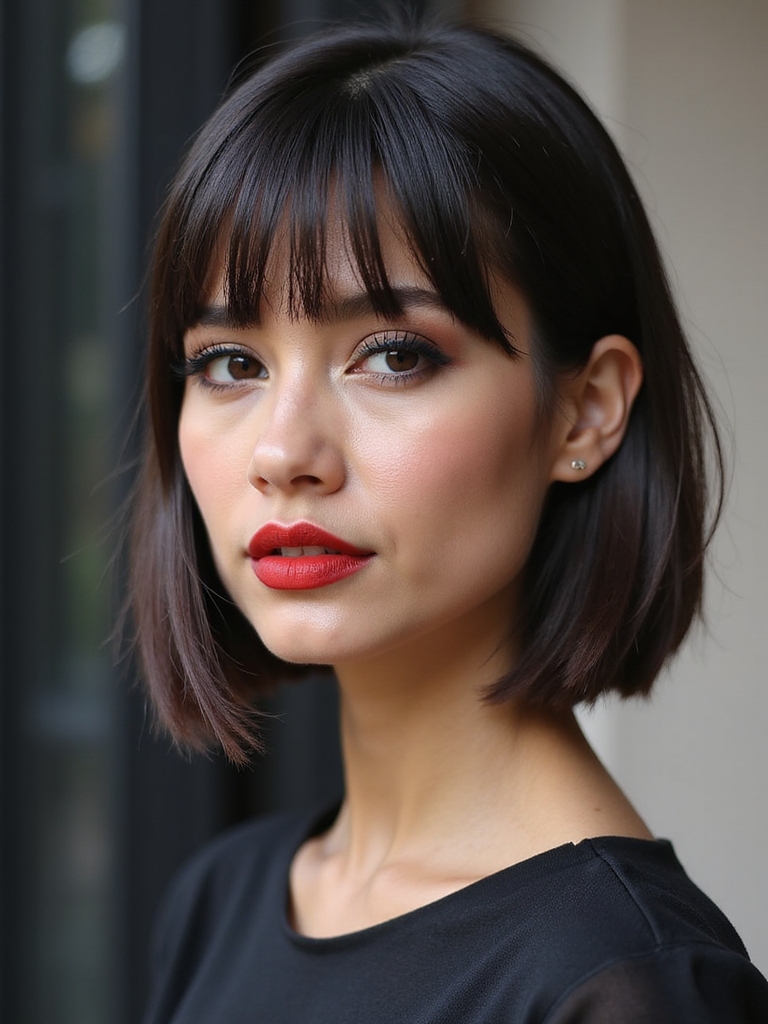
On the sleek end, a glass-smooth bob makes fine hair look like a sheet of polished density. When fine hair is blunt-cut and smoothed to a high shine, it reads as thick and healthy, because light bounces off one continuous clean line in a way it never can off thin, wispy ends scattered down a long length. It is the most editorial fine-hair look there is. To achieve it:
- Blow-dry the blunt bob smooth with a round brush and a drop of serum.
- Keep the line razor-clean, since this look lives on the perimeter.
- Finish with a shine spray for that glassy, dense surface.
Tousled Bob With Curtain Bangs
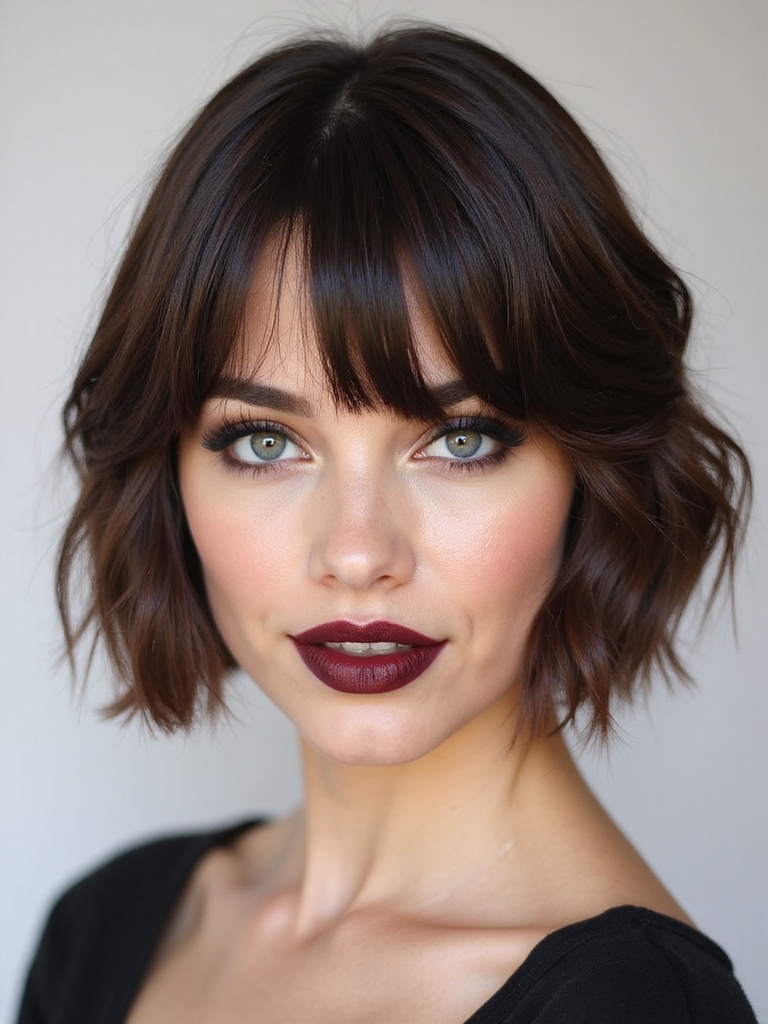
Pairing a tousled bob with soft curtain bangs adds volume right at the front, where fine hair shows thinness first. The curtain fringe brings body around the face, and the tousled texture lifts the whole bob, so the combination reads full and framed at once, which is exactly the one-two fix a woman with thin hair around her temples and forehead is usually looking for. It is a flattering, current pairing for thin hair. To wear it:
- Keep the curtain bangs soft and longish to blend into the bob.
- Rough-dry for tousled volume rather than smoothing it flat.
- For the fringe itself, see the curtain bangs guide.
📋What to Tell Your Stylist
- ✓Keep the perimeter blunt; that line is the density.
- ✓Minimal or no internal thinning, since fine hair has none to spare.
- ✓Face-framing layers only, if any, and a length at the jaw or chin.
The Tapered-Nape Chin Bob
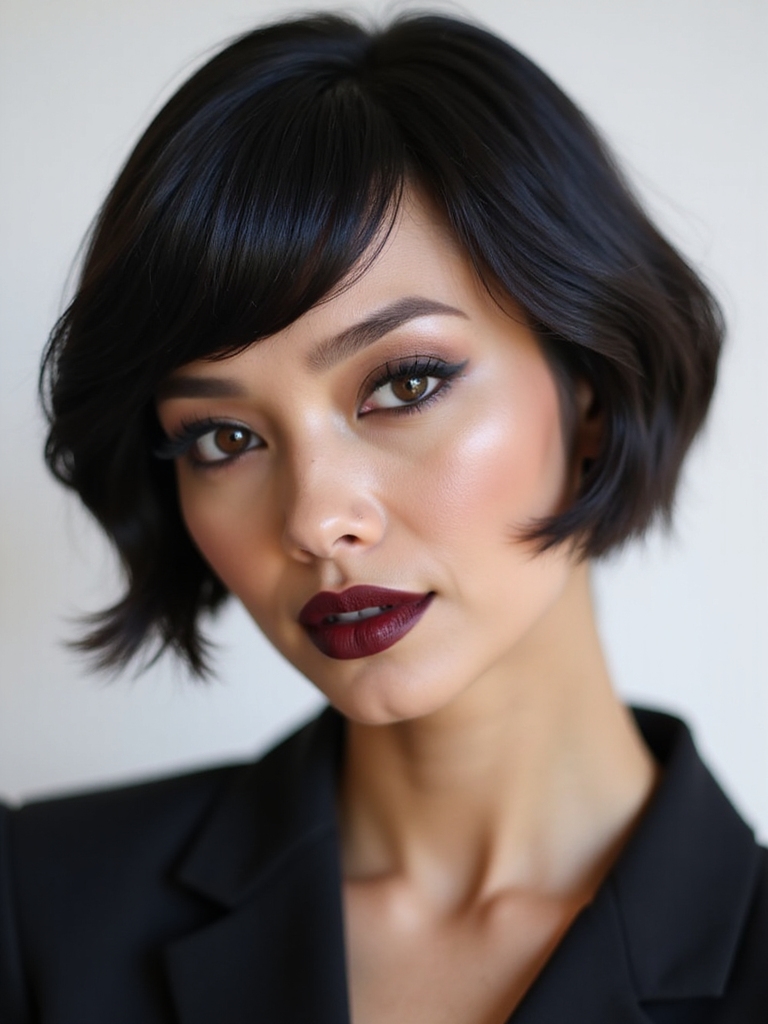
A chin-grazing bob with a softly tapered nape keeps fine hair neat at the back while the front stays full and blunt. The gentle taper at the neck removes bulk only where fine hair does not need it, so the weight stays up front where it counts. It is clean, French, and elongating for the neck.
Where to Remove Weight, and Where Not To
This version flatters women who feel a one-length bob sits heavy at the nape. The taper keeps it light and tidy without thinning the body.
Ask for a soft graduated nape, not a hard undercut, and keep the front perimeter blunt. The contrast between the full front and tidy back is the whole look.
Wavy Bob With Face-Framing Layers

Adding a few soft face-framing layers to a wavy fine-hair bob frames the face without gutting the density. The trick is keeping the layers only around the face, not internal, so they add shape where you see it and leave the body intact. Paired with a soft wave, it feels full and pretty. To do it:
- Ask for face-framing layers only, starting at the cheekbone.
- Avoid internal layering, which removes the density fine hair needs.
- Wave it softly so the layers and the body move together.
A few terms that help on fine hair:
📖Blunt cut
A clean, even perimeter with no tapering; the source of the French bob’s density on fine hair.
📖Internal texture
Layers or thinning inside the cut; on fine hair, you want almost none, since it removes fullness.
📖Root lift
Volume built at the scalp through a deep part, stacking, or light product, where fine hair falls flat.
Blunt Bob With Whisper-Light Texture

Ask specifically for point-cutting rather than razor-thinning here, since a razor removes weight unpredictably on hair that has so little to spare, while point-cutting nips only the very tips of a few sections.
Why the Stylist Matters Most Here
The risk is a heavy hand, so this version really depends on the stylist. A single test section on the underlayer first shows whether they understand the difference before they touch anything visible.
Ask specifically for a blunt perimeter with minimal internal texture, and be clear you want movement, not thinning. The distinction matters enormously on fine hair.
The Side-Parted Bob for Lift

The simplest volume trick costs nothing and takes a second: a deep side part. Parting fine hair well off-center forces the hair to lift up and over, building instant root volume on the heavier side. On a French bob, that lift lands real fullness at the crown.
The Free Volume Trick
It is the easiest fix for anyone whose fine hair falls flat from a center part. The deeper the part, the more lift you get.
Train the part with a few days of styling it the new way, since hair remembers its old part. A little root-lift product along the part holds the volume all day.
The Fine Curly French Bob

Fine curly hair makes a beautiful French bob, and the curl does the volume work for you, as long as the cut respects the texture. It must be cut dry, on the natural pattern, so the coils land where they actually spring and the bob falls full and round. Cut wet, fine curls shrink up unevenly and the shape goes wrong. A few specifics:
- Have it cut dry on your natural curl pattern by a texture specialist.
- Keep the shape rounded so the curls build fullness around the face.
- Define with a light curl cream that does not weigh fine curls down.
The Shaggy French Bob
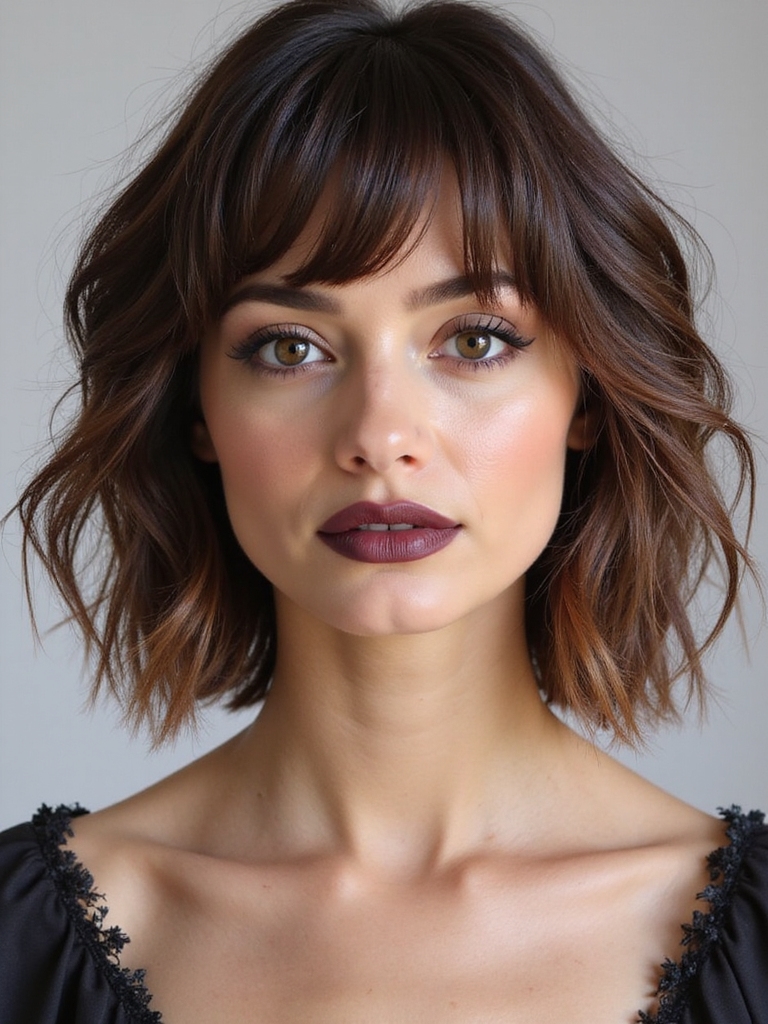
A shaggier take on the French bob uses piece-y layers to fake fullness, and on fine hair it works beautifully when done with restraint. The separated, textured pieces catch the light and come across as more hair than is actually there, giving thin hair a cool, undone quality. It is the trendiest version here.
Faking Fullness With Texture
The caution is the same as always with fine hair: a light hand. Over-shagging removes too much weight and leaves it stringy.
Ask for soft, piece-y shag layers kept toward the surface, and style with a texture spray for grit. It is fullness through texture rather than bulk.
The Asymmetrical French Bob

Cutting one side longer than the other adds a modern line and, cleverly, builds the look of volume through the angle. The asymmetry draws the eye along a diagonal, which distracts from flatness and gives the bob more visual interest than a perfectly even cut. It passes for fashion-forward on fine hair.
Keep both sides blunt to hold the density, and let the length difference do the styling work. The longer side can sweep across the face for extra framing and movement, which fine hair always benefits from.
The Inverted Crown-Volume Bob

An inverted, or stacked, bob builds height at the crown by graduating the back slightly shorter, which lifts the very spot where fine hair falls flattest. The stacked layers at the back create a rounded crown volume that a one-length bob cannot.
It is a smart structural fix for limp roots, building the lift into the cut so you do not have to fight for it every morning with a round brush. To wear it:
- Ask for a gently stacked back for crown lift, with a blunt front.
- Keep the stacking soft, since aggressive layering thins fine hair.
- Round-brush the crown up at the roots to maximize the built-in lift.
The Air-Dry French Bob

Fine hair is fragile, and the kindest French bob is one cut to air-dry well. Because the blunt shape holds its own form, a fine-hair bob can dry into a clean line with little more than a light product and your fingers, sparing your delicate hair the daily heat. It is the low-maintenance, hair-health choice, and it has most fine-haired clients out the door in under five minutes of styling.
Work a tiny amount of mousse or a light root spray in while damp, then scrunch gently as it dries. This builds soft body without weighing fine hair down.
Less heat also means less breakage, which matters more on fine hair than any other type. An air-dry bob keeps the hair you have healthy while it looks full. It is the routine I push hardest for fine-haired clients.
Who It Suits Best
The French bob suits more fine-haired women than almost any cut, but a few details point you to the right version. If your hair is fine and straight, the blunt classic and the glass-smooth bob maximize the density illusion. If it is fine and wavy, lean into soft waves and a shaggy texture, which build fullness with movement. Fine and curly hair wants the dry-cut curly version, where the coils do the volume work.
The one rule across all of them is restraint at the scissors: skip heavy thinning and aggressive internal layering, which strip the little density fine hair has. A blunt line plus a smart styling habit, an air-dry routine, a deep part, a soft wave, does more for thin hair than any volume product.
The everyday cost is low, a trim every six to eight weeks at $40 to $80, and the payoff is hair that looks twice as thick. For the bob plus a fringe, see the French bob with bangs guide.
Fine-Hair French Bob Questions, Answered
?Does a French bob really make fine hair look thicker?
Yes, it truly does. A blunt, chin-length line concentrates your hair into one dense edge instead of letting length thin it out and drag it flat. It is the single most effective cut for the look of fullness on fine hair.
?Should fine hair have layers in a French bob?
Very few, and only around the face if any. Internal layering removes the density that makes a fine-hair bob look full, so a blunt perimeter with minimal texture is the goal. Face-framing pieces are fine; gutting the interior is not.
?How do I add volume to a fine French bob?
Start with the cut, then use a deep side part, a soft wave, or a gently stacked crown for lift. A little mousse or root spray on damp hair helps, but heavy product flattens fine hair, so keep it light.
?How often does a fine-hair French bob need trimming?
Every six to eight weeks keeps the blunt line sharp, which is what holds the density. A grown-out bob loses its clean edge and starts to look thin again, so the trim schedule matters more here than on thicker hair.
Short Is the Fullest Thing You Can Do
Years spent growing fine hair long in hopes of more fullness usually work against the goal, since length is exactly what thins it out. A French bob does the opposite, gathering your hair into one dense, chic, full-looking line that fine hair simply cannot manage long. Few cuts flatter thin hair the way this one does.
Take the blunt classic to your stylist, ask them to keep the line full and the thinning minimal, and pick the one styling trick, a deep part, a soft wave, an air-dry routine, that fits your morning. You will be amazed how much more hair you appear to have the moment it falls to your jaw.
Worth a Look