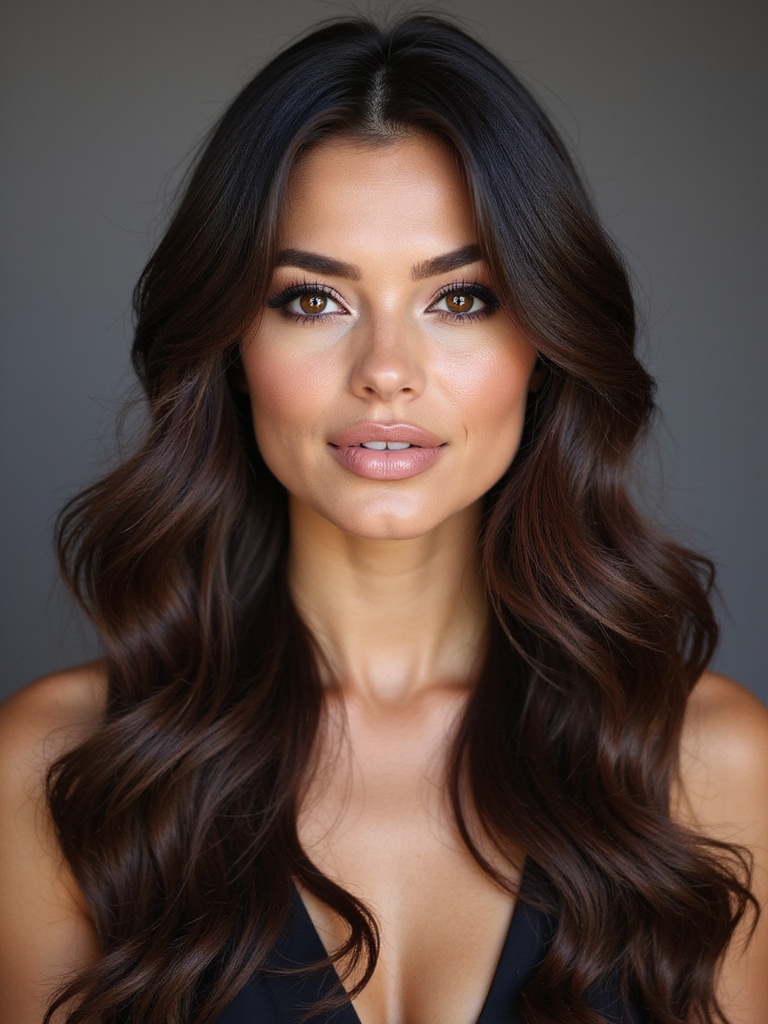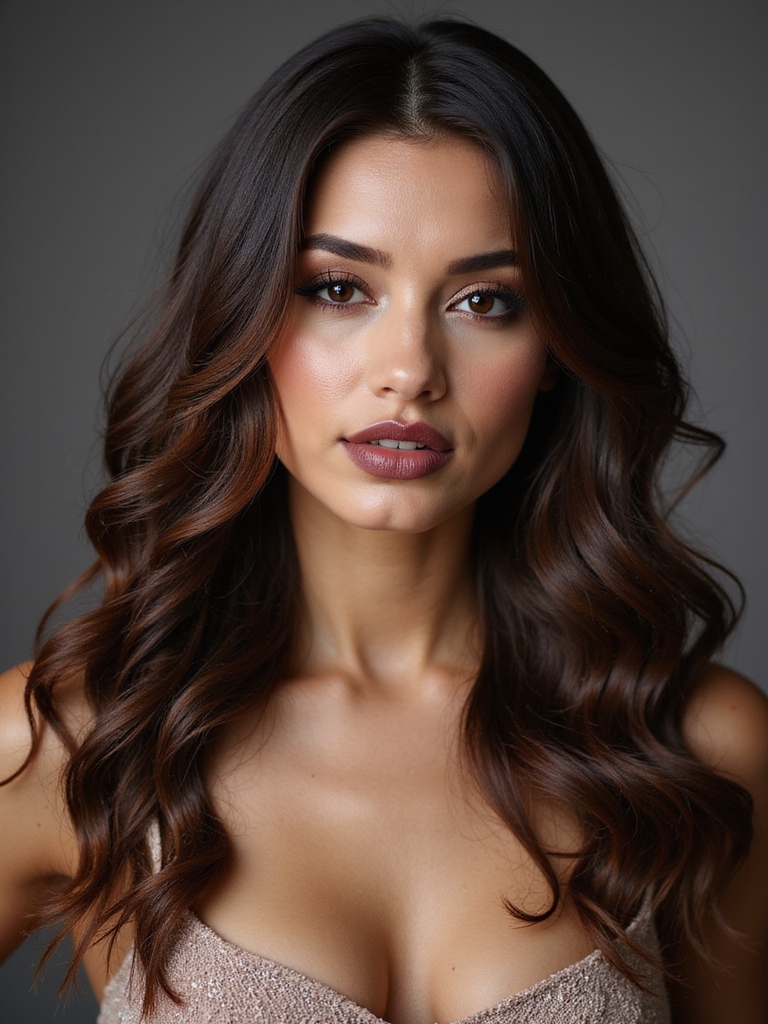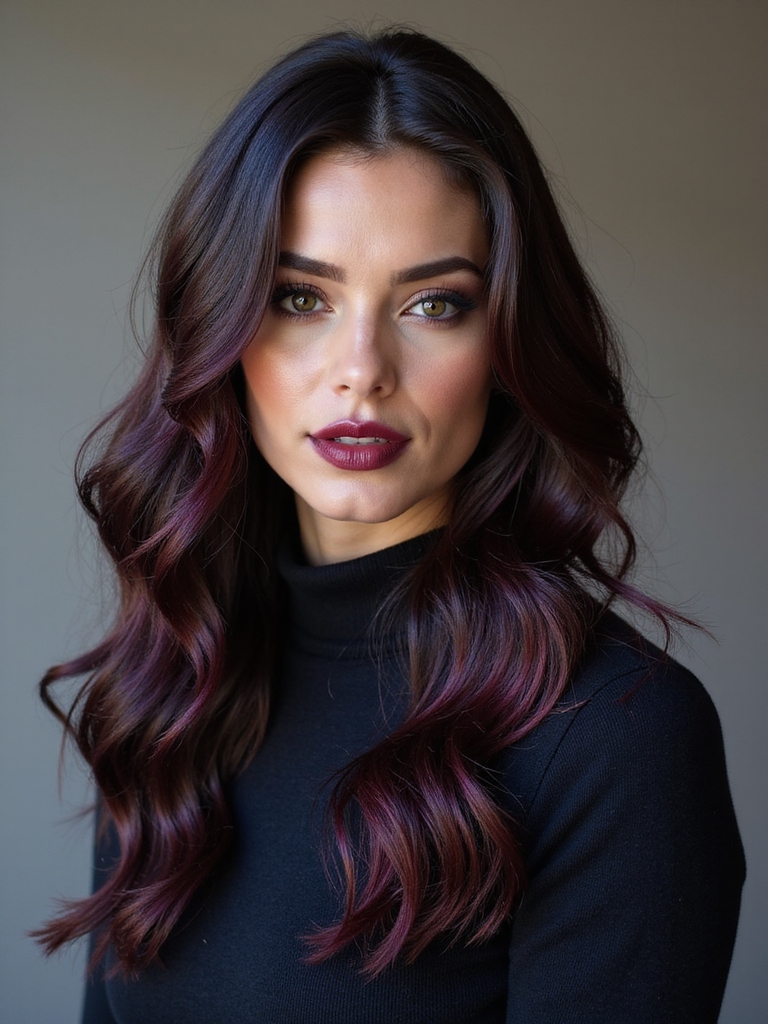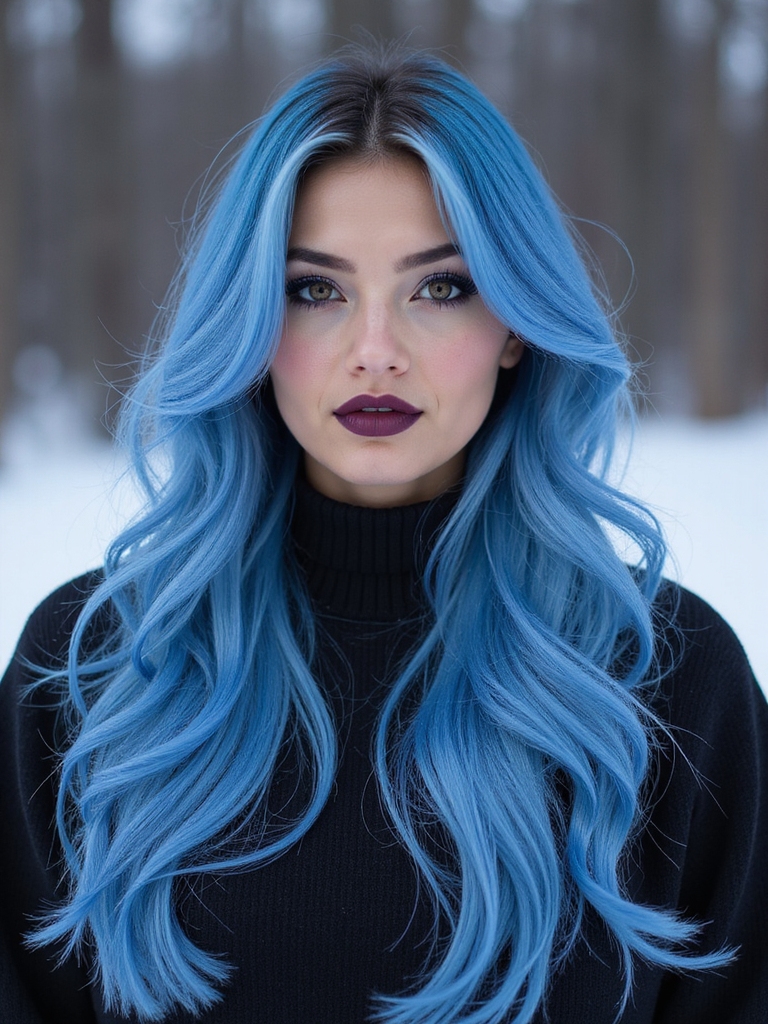
Bright winter hair color ideas take a real hit once the heating comes on indoors. Dry air and hot showers pull pigment out of hair faster than almost anyone expects, so a vivid shade that looked saturated in December can look dull and patchy by February. This isn’t a gallery of pretty colors.
Fifteen shades follow, pulled from across the color palette and each one rated for how it actually holds up once the heat comes on, paired with the glossing rhythm that keeps it looking saturated. Some stay sharp with almost no effort; others ask for a standing appointment.
Fade Speed at a Glance
| Tier | Typical refresh cadence | Shades that fit here |
|---|---|---|
| Low-fuss | Eight weeks or more between visits | Cranberry root-melt, smoky plum, violet glaze |
| Moderate | Roughly five to seven weeks | Jewel-tone balayage, copper, slate-blue |
| High-upkeep | Roughly three to five weeks | Pastels, sapphire glaze, teal peekaboo |
Jewel-Toned Balayage That Holds Its Shine

Jewel tones are one of the smarter bright choices for winter, mostly because of where the color actually sits. Painted in as a balayage, sapphire, emerald, or amethyst keeps the root close to natural depth, so grow-out blurs softly instead of leaving a hard line.
That soft blur is the whole difference between a color that needs babysitting and one that wears for months without an emergency call to the salon.
- Bleeds a little through the first two washes, so a color-safe, sulfate-free shampoo matters early on
- No hard regrowth line means appointments can stretch well past the usual schedule
- Reads especially rich in low winter light, once the sun starts setting early
Icy Pastel Ends Sealed With a Demi Gloss
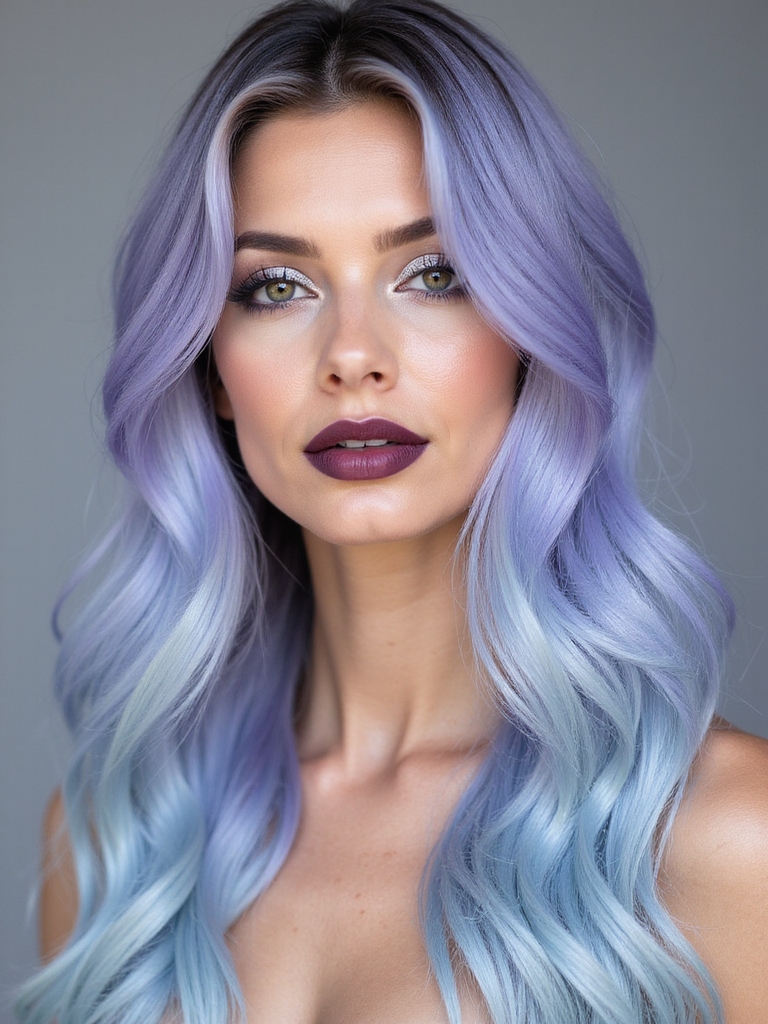
Pastel ends look delicate, but they only work once the hair’s already been lifted to a pale level first; any warmth left underneath turns the pastel murky.
The real work happens before the fun color ever goes on: an even pre-lighten, then demi-permanent gloss laid over the top. This pastel demands the most upkeep of all.
- Fades a little with every wash, part of the charm but also the real cost
- Expect a gloss refresh roughly every month to keep it from sliding into dishwater
- Worth skipping if a standing monthly appointment isn’t realistic
Two honest paths through this list:
🎯Low-commitment
Cranberry, smoky plum, or a violet glaze over natural brunette; all forgive a busy routine.
🎯High-reward, high-upkeep
Pastels, sapphire, and teal; real head-turners, but only for someone who enjoys the maintenance ritual.
Deep Cranberry Roots Into Glossy Ends

Cranberry is one of the more forgiving reds here. A shadowed root melting into brighter, glossier ends gives the richness of a full winter red while skipping the upkeep a solid scarlet demands.
The dark base hides regrowth, so appointments stretch to eight or ten weeks. Reds typically fade fastest of any color family since the pigment molecules are large and rinse out easily; cranberry gets around that by keeping the deepest tone right at the root, where it fades slowest.
Cool Sapphire Glaze Over a Dark Base

Sapphire is the easier blue to wear in winter, since it doesn’t need much lift at all. Painted as a sheer glaze over a dark brown or black base, it shows up as a jewel-like shift in the light without demanding bleach.
Blue pigment is fugitive, and it comes with one honest warning: as it fades, it can drift toward green if any yellow is left in the hair underneath. A colorist neutralizing that base tone first is what prevents it.
📋Before Booking a Sapphire Glaze
- ✓Confirm the colorist neutralizes underlying yellow tones before applying blue
- ✓Budget for a top-up before it sheers out, usually within two months
- ✓Ask specifically about a dark base; sapphire needs almost no lift to show up
Emerald Face-Framing Panels

Green, head to toe, feels like too much. Emerald face-framing panels solve that problem, working as the low-risk entry point. A few bright slices around the face catch the light right where people look, so the color comes across bold while most of the head stays untouched.
Because the panels sit at the front, they take the brunt of styling heat and sun, so they fade first and fastest of anywhere on the head.
- The cheapest bright update covered here, and the fastest to reverse if it’s not a fit
- Worth asking for a shade slightly deeper than the target, since panels lighten into place over the first couple of weeks
- A realistic test option for anyone unsure about a full commitment
Frosted Lavender With a Low-Fade Grow-Out

Frosted lavender is a pastel that ages unusually well. The cool, silvery cast fades toward soft ash rather than an unflattering yellow, so the grow-out actually stays wearable for weeks. The ash blonde hair guide has more on that same cool-fade principle.
The catch is the same as every pastel: it only lives on pre-lightened hair, and porosity matters here more than it does for almost any other pastel in this bunch.
- Uneven porosity gets filled before glazing, or the color grabs unevenly
- Holds its frost noticeably longer than mint or pink once that prep is right
- A silver-leaning lavender resists yellow-drift better than a pink-leaning one
Layered Copper-Infused Red

Copper-infused red is close to the brightest shade most people can actually live with day to day, since copper carries staying power that a pure scarlet simply doesn’t have.
Building the red in layers, with copper woven through, creates a color that looks vivid from across the room and surprisingly complex up close, where the warmer pieces show movement as light hits them.
The hairline fades fastest here, since shampoo hits it first every time. A weekly color-depositing conditioner in the same tone tops up what the shower strips, and it’s the single habit that separates a red that holds from one that fades within weeks.
Rose Gold Melt for a Warm Winter Glow

Rose gold answers all the cool jewel tones above with real warmth. A melt of soft copper and pink blended down into lightened ends gives that warmth without the upkeep of a full vivid color, since the root stays soft and the pigment concentrates only where it flatters most.
The Warm Answer to Every Cool Tone Above
It needs a pale-ish base to work. On a base that’s already warm, it can turn muddy peach instead of rose, so it lands best on hair that’s already blonde or highlighted; on darker hair, expect a deeper copper-rose look instead.
Fade here is gentle, drifting toward a soft warm blonde, which explains why so many people pick it when they want color without watching a hard regrowth line creep in.
Teal Peekaboo Highlights, Bond-Protected

Teal peekaboo highlights deliver a real jolt of fashion color that can be shown or hidden entirely on demand. Placed underneath the top section, they flash when the head moves or the hair gets pinned up, then disappear the moment it falls back down.
Some workplaces frown on visible bright color. This is the easy workaround that actually works.
Teal needs those underneath pieces lifted fairly light first, which is exactly where bond-builders earn their place in the lightening process; skipping them on a vivid lift like this one isn’t worth the risk to hair structure.
Smoky Plum Worn Soft and Grown-In

Smoky plum is the jewel tone built for anyone who wants depth more than flash. Muted mauve and cool violet blended into a soft base look dark and rich indoors, then catch a purple shimmer the moment daylight hits.
It’s bright the way good wine is bright: all depth, no glare.
The muted, grown-in quality is what keeps this one easy to live with. With no sharp line at the root, regrowth simply softens the look as it grows, which means appointments can stretch to eight weeks or beyond.
🅰️Wants real impact
Sapphire, teal, or a full pastel: bold, but paired with a strict upkeep routine.
🅱️Wants impact without the ritual
Smoky plum, cranberry, or a violet glaze: real depth and color, minus the standing appointment.
Neon Coral Ends, Tempered to Last

Solid neon head-to-toe is a young commitment. Tempered coral, concentrated through the lower half of each strand, gives the same pop without that high-maintenance lifestyle attached.
- Blending vivid coral over a softer base keeps the brightness looking deliberate
- The clearest exit strategy of any shade here, since the brightest section can simply be cut away over time
- A low-porosity sealing glaze and a toning shampoo made for fashion color slow the bleed considerably
Classic Copper Sealed for Shine

Copper doesn’t chase trends. That steadiness is the real reason it holds up through winter better than most bright shades. It flatters a wider range of skin tones than people assume, warming up a sallow complexion in flat winter light. For the cooler opposite of this same seasonal logic, see the ashy blonde hair guide.
- Sealed with a shine-locking gloss, it holds a glassy surface dry indoor air would otherwise flatten
- Holds noticeably longer than a fashion red, though it still wants a gloss on a regular cycle
- A weekly cool-toned conditioner keeps it from sliding toward orange over time
Slate-Blue All-Over Demi Tint

Slate blue is the grown-up way to wear blue. It skips the bright cobalt entirely for a smoky, inked tone that looks almost like a cool dark brown until light actually catches it.
That muted quality is what makes an all-over blue easy to wear day to day, and built on a demi-permanent base, it fades softer than a permanent blue and corrects far more easily if it needs adjusting later.
- Flatters a surprisingly wide range of skin tones for a blue-family shade
- Can drift as it fades like any blue, so cool, sulfate-free upkeep matters
- A demi-permanent base means a gentler process than a full permanent tint
Two color terms worth knowing before booking:
📖Demi-permanent
A gentler formula that fades gradually over several weeks, with no hard grow-out line, and corrects more easily than permanent color.
📖Root-melt
Blending a slightly deeper tone at the root into a brighter color through the lengths, so regrowth blends in and looks intentional.
Pastel Mint With a Blended Root

Mint is probably the trickiest pastel to keep looking clean, so a blended root does most of the real maintenance work here.
- Pre-lighten to a pale, even base and tone out any yellow first, or the mint turns swampy fast
- Feathering the mint up from the ends into a slightly deeper root softens grow-out into a gradient
- A weekly toning wash between salon visits stretches the time between appointments considerably
Violet-Glazed Brunette Refresh

Not everyone wants to lighten their hair, and a violet-glazed brunette is the bright option that skips bleach entirely. A sheer violet glaze laid over natural brown deepens it, cancels winter brassiness, and adds a cool shimmer that only really shows in motion. For more seasonal options at every commitment level, check the winter hair color trends and fun winter hair color ideas guides.
It’s the lowest-commitment color here. Because there’s no lift involved, there’s next to no damage, and the grow-out stays invisible.
The violet itself fades out quietly over a few weeks, leaving natural color behind with no awkward in-between stage to sit through, which makes this the shade suggested most often to anyone who’s never colored their hair before.
How to Get the Look
Across all fifteen shades, the real split isn’t about which color looks best. It’s about which upkeep tier actually fits a real routine. A single glaze refresh typically runs $50 to $90, and most people book one every 6 to 8 weeks to keep a shade like this looking fresh, roughly half the cost of a full re-color.
That makes the low-commitment options here a realistic starting point for anyone unsure how much upkeep they’ll actually stick to. For a similarly high-contrast option worth comparing, the black and blonde hair guide is worth a look.
Whichever tier gets chosen, cooler water on wash days, a sulfate-free color-safe shampoo, and honesty about how often a standing appointment will actually happen matter more than the shade itself.
?Why does bright hair color fade faster specifically in winter?
Indoor heating dries out the hair’s cuticle, and hot showers swell it open further, so pigment rinses out faster than it would during warmer months. Turning the water a little cooler and washing less often slows that fade down more than any single product on a shelf.
?Which of these colors is truly the lowest maintenance?
A violet glaze over natural brunette, by a clear margin. It skips lightening entirely and grows out with no visible line at all, so there’s no real upkeep schedule to fall behind on, and no extra charge at the colorist for skipping the lift.
?Do jewel tones need less upkeep than pastels?
Generally yes, and it comes down to placement more than the color itself. Jewel tones are usually painted on as a balayage that blurs into natural roots, while pastels require a full pre-lighten that grows out with a much more visible line.
?Can any of these bright colors work without bleaching the hair first?
Yes, specifically the glaze-based options: a violet glaze over brunette, a sapphire wash over a dark base, or a cranberry root-melt. All of them deposit color onto the hair’s existing depth without lifting it first.
Match the Color to the Routine You Actually Have
Every shade here can look striking through a full winter; what actually decides whether it does is whether the upkeep tier behind it matches the week someone is really living.
Worth starting with the lowest-commitment version of whichever color catches the eye, a simple glaze, and building up from there once the real routine proves itself.
Hand-Picked for You