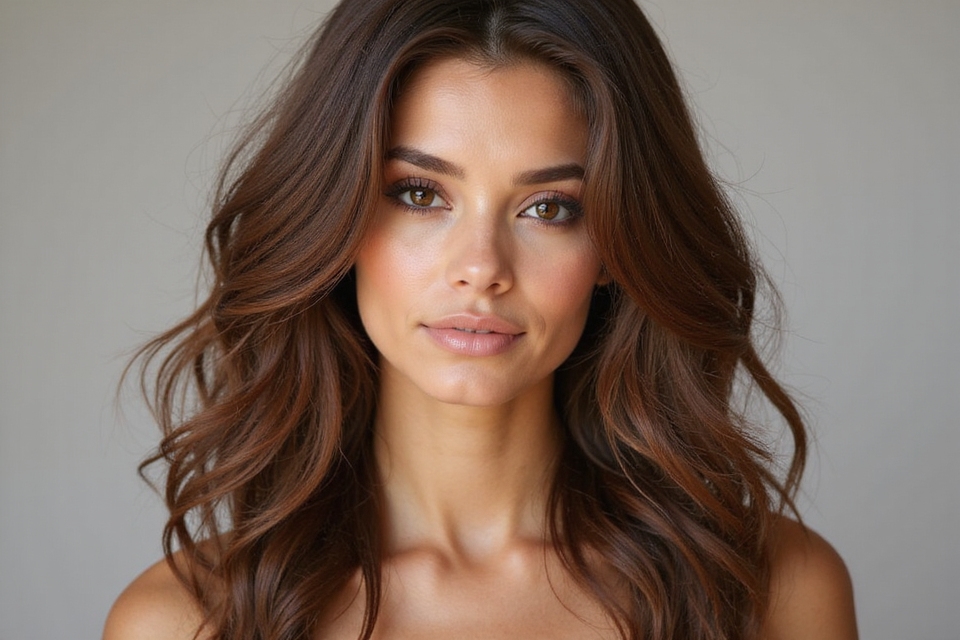
The common assumption: black is the deepest color hair can go, full stop. Colorists see it differently. Dark brunette, done well, often carries more richness than true black, because brown holds onto a warmth that black simply doesn’t have to reflect.
Sixteen versions follow, from glossy espresso to a raven-brown ponytail, plus the two mechanics, shine and dimension, that separate an expensive-looking deep brown from a flat one.
What Actually Separates Rich Brown From Flat Brown
- Depth alone isn’t the goal. Without shine and a little tonal variation, even the richest brown looks flat under normal light.
- Warm and cool undertones both work at this depth; the difference shows up in which skin tones each version flatters most.
- Fine techniques like balayage or lowlights hold longer at this depth than on lighter bases, since there’s less contrast to grow out.
Classic Espresso Waves

Espresso sits near the darkest end of the brunette range, a near-black brown that still carries a visible warm undertone once light hits it. That undertone is the entire difference between espresso and flat black.
Most colorists point new dark-hair clients toward this shade first, since it stays sleek and timeless without tipping into severe. Waves help the effect along, bending light across the surface so the gloss shows rather than sitting flat.

Rich Chestnut Bob

A chestnut bob carries a soft red-brown undertone that keeps the depth from ever feeling cold, and the blunt shape of a bob displays that color as one clean, unbroken block.
This pairing suits anyone drawn to dark hair but wary of how harsh true black can look against certain skin tones; chestnut’s warmth softens that same depth considerably.
- Red-brown warmth layered over a near-black base
- Blunt edges show the color with no visible break
- A polished way to wear deep brown short
Mocha Balayage Highlights

Mocha balayage for dark brown hair paints soft, coffee-toned strands through the base without lifting the hair light, which keeps the technique low-maintenance since the painted tone sits close to the natural color underneath. A colorist typically works in freehand sweeps rather than foils here, since the goal is a soft blend, not a hard edge.
- Coffee-toned strands painted in without going light
- Adds movement while the base stays deep and dark
- Grows out softly since the tone barely shifts from the root
Deep Mahogany Glow
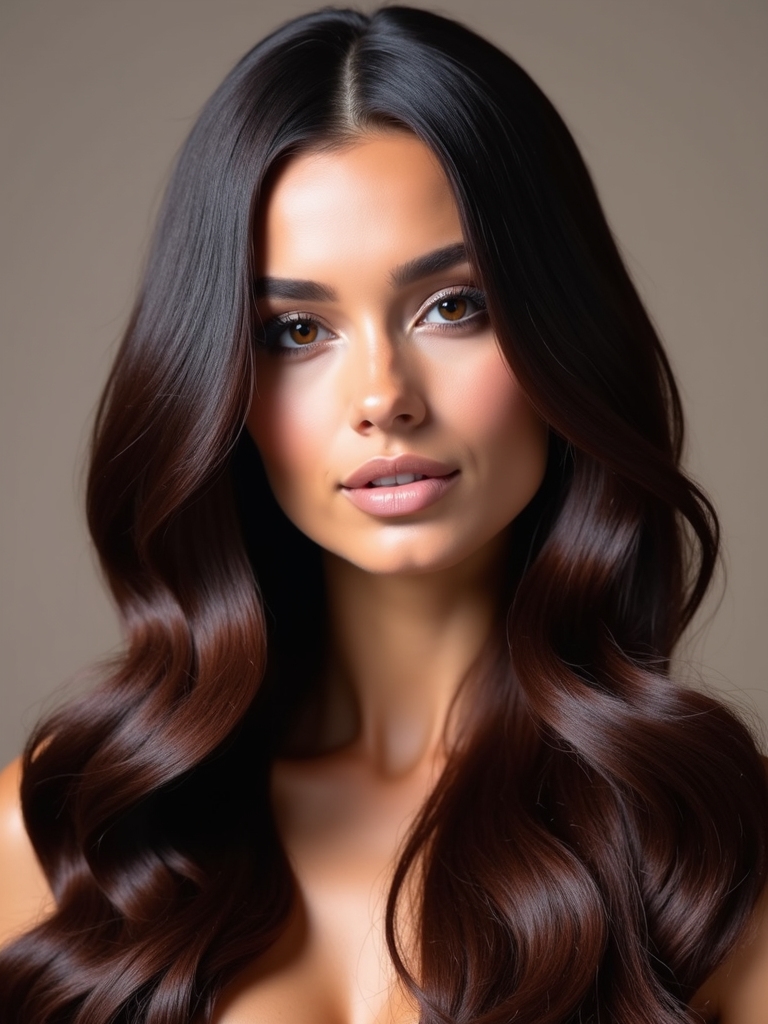
Mahogany threads a rich, wine-toned red through the base color, closer to polished wood than to ordinary warm brown. On cool and neutral skin, that red stays refined rather than orange; on warmer skin it can pull slightly muddy, so most colorists check undertone before mixing the formula.
- A cool, purple-red undertone runs through a near-black base
- Looks jewel-toned rather than simply dark
- Works best when undertone is checked before the formula is mixed
Dark Chocolate Ombre

A chocolate brown hair ombre eases a deep root into a slightly lighter shade toward the ends, staying entirely within the brown family with no blonde and no real brightness.
The contrast is subtle enough that regrowth barely shows, which makes this one of the lower-maintenance ways to add movement to dark hair without a lightening service.
- Root stays deep; ends lift only slightly toward the tips
- No blonde involved, so regrowth barely announces itself
- Adds movement to the depth without lightening anything
🅰️Mahogany
Cool, wine-red undertone; needs a color-safe purple shampoo to hold the tone
🅱️Chestnut
Warm, orange-red undertone; fades gently without special upkeep
Midnight Brown Layers

Midnight brown sits at the deepest edge of brown before true black, reading almost black at a glance but holding a warm core once light catches it directly.
Layers keep that depth from settling into a single dense mass. As the hair moves, the cut breaks the color into light and shadow, which is what gives midnight brown its dimensional, dramatic finish.
- Reads nearly black with a warm brown core underneath
- Layers break up the depth instead of one solid block
- A glossing service keeps the surface reflective, not dull
Cocoa Swirl Curls

On curls, cocoa brown turns dimensional in a way flat hair can’t match, since each coil catches and angles the light differently as it moves. Moisture matters more here than almost any styling step: dry curls dull even the richest color, no matter how good the base tone is.
- Each curl reflects the color at a slightly different angle
- Dry, brittle curls dull the depth fast
- A leave-in conditioner keeps the shine visible between washes
A few terms a colorist might use for this depth:
📖Glossing
A translucent, non-permanent treatment that boosts shine and refreshes tone without lifting color.
📖Melt
A hand-blended transition between two or more shades with no visible line where one starts and the other ends.
Luxurious Onyx Shine

Onyx brown is a deep, near-black brown built entirely around shine; the depth is really just the canvas the gloss sits on top of.
Most pros gloss this shade more often than any other on this list, since a healthy, glossed head of onyx reflects light like polished stone. Skip the gloss and it fades into ordinary dark hair within weeks. Plan on around $45 for a standalone gloss service roughly every five to six weeks.
Toasted Almond Accents

Toasted almond pieces warm the depth with a soft, nutty brown, roughly half a shade warmer than mocha and quiet enough that few people would even clock it as a highlight.
Warmth Without an Obvious Highlight
Experts map this tone to warm and neutral skin, where it picks up gold already present in the complexion rather than fighting against it.
Against a deep base, the almond pieces look like the hair simply caught some sun, which is the effect most people asking for a soft refresh actually want.
Dark Caramel Highlights

Dark caramel highlights add warm, golden-brown light without straying far from the base, staying a step brighter than toasted almond but still rooted firmly in brown.
Because the caramel sits only a few shades up from the natural depth, the grow-out stays soft and upkeep stays low. Anyone chasing a warmer effect than this might prefer copper brown hair instead, which pushes the same warmth further.
- Golden-brown light layered a few shades above the base
- Warm and golden skin tones wear it particularly well
- Soft grow-out keeps salon visits infrequent
Quick self-check before booking:
1Do you color your own hair at home most of the time?
Skip this one. Almond pieces need a colorist’s hand to place them convincingly; a box dye can’t paint in individual strands.
2Can you commit to a touch-up appointment roughly every three months?
That’s about the real cadence for almond pieces before they need refreshing; anything more frequent probably means a different shade suits the routine better.
Jet Black With Subtle Dimension

At the very deepest end of brown, jet black with subtle dimension keeps near-black hair from reading as one solid wall of color.
Faint espresso or brown pieces give the eye something to catch, and that small detail is what makes a black feel dramatic instead of flat. The pieces stay quiet enough that they only show once light hits them directly.
- Faint brown pieces break up a true-black base
- Shows dimension only when light catches it
- The one detail that keeps near-black from looking cheap
Suede Brunette Melt

A suede brunette melt blends warm and cool brown tones so smoothly that the finish stays soft and matte, never glossy, the way the fabric it borrows its name from behaves.
There are no hard lines anywhere in this technique, just a slow shift between shades of deep brown from root to end.
This is one of the more colorist-dependent looks on this list, since the melt has to be hand-blended carefully to avoid any visible transition point. Bring a clear reference photo to the consultation.
| Shade | Lightening Needed | Typical Gloss Cadence |
|---|---|---|
| Jet black + dimension | None on dark hair; toner-level only | Every 8 to 10 weeks |
| Onyx brown | None; shine is the main service | Every 5 to 6 weeks |
| Midnight brown | None on dark bases | About every seven weeks |
Ash Undertones on a Dark Brunette Base

Ash pulls the depth in a cool direction, muting warmth for a smoky, modern finish that works especially well for anyone whose ash brown hair keeps drifting brassy or red as it fades. It’s less a standalone shade than a correction layered into an existing brunette formula, so most colorists apply it as a toner rather than a full color change.
- Cools any red or brassy cast in the base color
- Suits cool and neutral skin tones best
- A purple- or blue-toned conditioner keeps the cast neutral between visits
Coffee Bean Lowlights

Coffee bean lowlights work opposite to highlights, weaving darker, espresso-toned pieces through the base to add richness instead of brightness.
The result reads fuller and more sculpted than a single flat tone, and it’s the go-to dimension option for anyone who doesn’t want anything lighter introduced into their hair at all. Because every added piece is darker than the surrounding color, there’s zero risk of visible regrowth lines between salon visits.
Cappuccino Hues With Bangs

Cappuccino tones bring a soft, milky warmth to the depth, a touch lighter and creamier than the base color underneath.
Warmth Right Where the Face Frames It
Paired with a fringe, that warmth frames the face directly and softens the depth exactly where it’s most visible day to day.
A drop of glossing serum on the fringe specifically keeps it catching light, since front pieces show color first and fastest.
Sleek Raven Brown Ponytail

Raven brown is the glossiest, most near-black version of the depth, and pulled back into a sleek ponytail, it becomes pure shine with nothing to distract from it.
The Formal-Event Version of Deep Brown
Most stylists reach for this one before red-carpet moments and black-tie events; a smooth, high ponytail looks polished the moment it’s finished.
A smoothing serum worked through before pulling the hair back, plus a flat, close finish at the crown, is really all the styling this one needs.
What to Expect
The consultation matters more than the shade name. Bring a photo, but also describe how the last color faded, whether it pulled warm, red, or ashy, since that history tells a colorist more about the right formula than the reference image alone.
Anyone drawn to this depth but wanting something a shade lighter overall has light brunette hair as a natural next step, while a warmer red-brown lean points toward dark auburn hair instead. Skin undertone decides which of these shades actually flatters; the specific name matters less than getting that match right.
The Undertone Decides More Than the Shade Name Does
Espresso, mahogany, and onyx all sit at roughly the same depth; what actually separates a flattering result from a flat one is whether the undertone underneath matches the skin it’s framing.
Pick the shade that caught your eye and bring a clear photo to your next consultation; a colorist can map the warmth to your specific skin tone from there.
Next Up