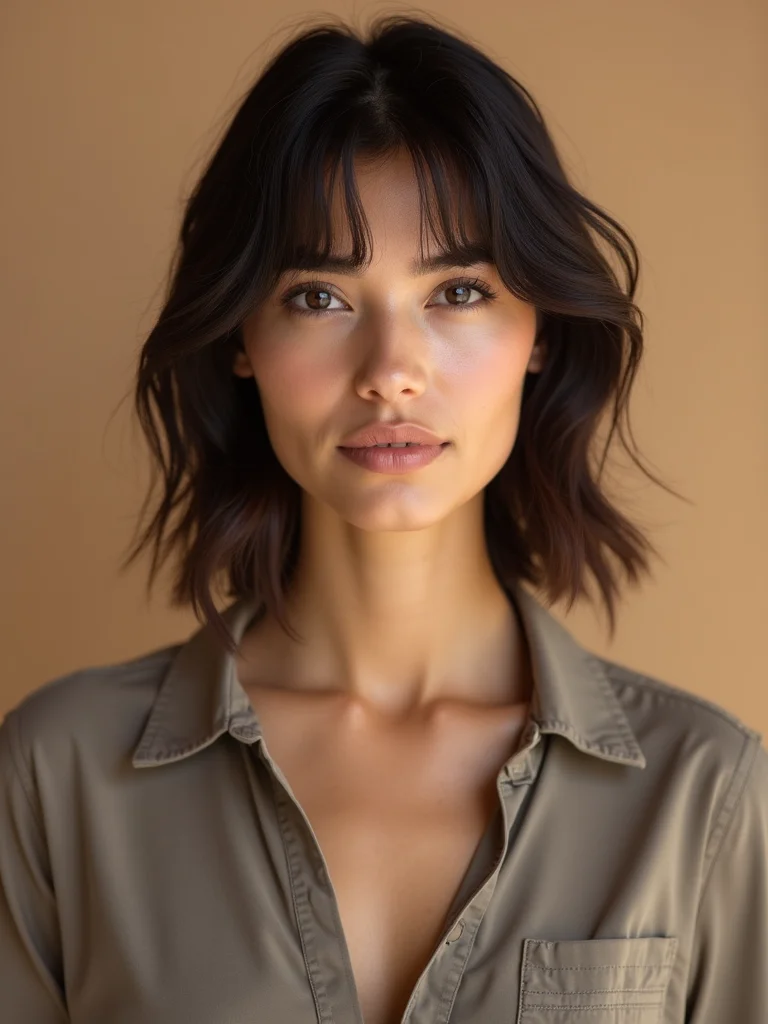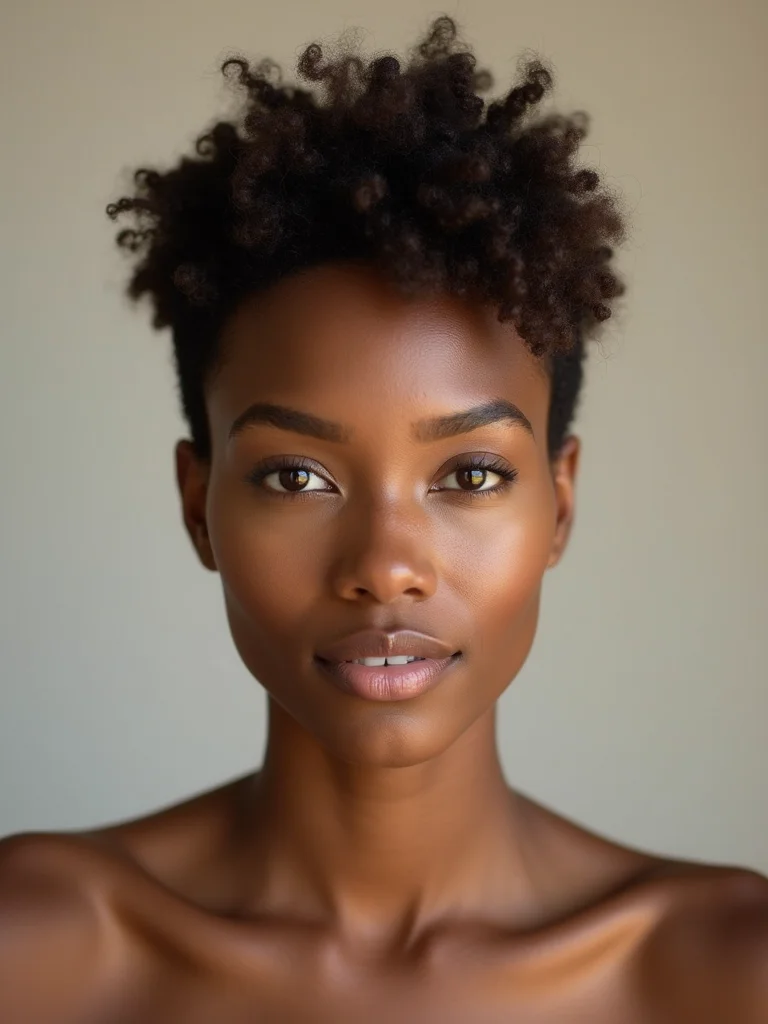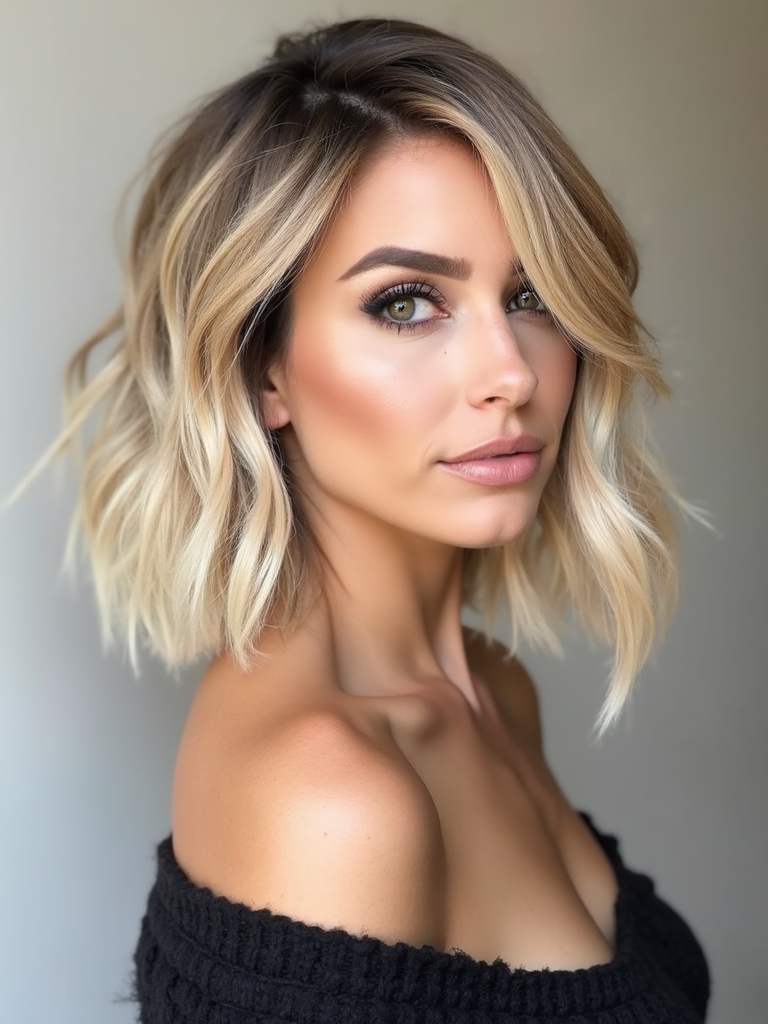
By early afternoon, a lot of fine hair has already given up the volume it had at breakfast, and a shaggy lob for fine hair is built to fix exactly that. Where does the lift actually go?
It doesn’t vanish; it just never had anything holding it up past the first hour. A shaggy lob for fine hair solves that by building the lift into the cut, not the blow-dry. Cut to the collarbone with layering stacked through the crown and interior, the shape itself keeps standing long after a round brush would have quit. Here are the versions worth asking for, the routine that keeps them standing, and the mistakes that flatten them early.
Fast Facts on Fine-Hair Lobs
| Style | Best For | Upkeep |
|---|---|---|
| Razored lob + curtain bangs | Framing the face without added weight | Trim near the 10-12 week mark |
| Inverted, stacked lob | Maximum crown volume | Reshape close to the 3-month mark |
Razored Ends and Curtain Bangs

A razor does something scissors can’t for fine hair: it tapers the very ends into a soft, gradually thinned edge. Blunt scissor-cut ends stay heavy at the perimeter, and that heaviness is exactly what pulls lift down by midday, so removing it is the whole point.
Curtain bangs then frame the face and add movement up front, while the rest of the layering keeps doing the structural work. On fine strands the pairing reads soft and light, since neither element depends on thickness to look finished. If you like this approach, the classic shaggy lob uses a similar razored edge at a longer length.
- Ask for light razoring through the mid-lengths only; razored ends are fragile.
- Keep the fringe at a length that sweeps, not choppy short.
- Dry with a round brush turned under so the tapered ends bend up.

Feathered Length at the Shoulder

At shoulder length, feathering removes enough weight from the ends that they stop dragging the roots down. Shorter feathered pieces closer to the crown bank height into the cut itself, so there’s structure to fall back on once styling wears off.
This length suits hair that’s fine and wants a step past a bob without going all the way to a heavier lob. It also air-dries well, which matters on days a full blowout isn’t happening.
- Request feathering concentrated at the crown, close to the roots.
- Ask your stylist to point-cut the layers for softer, feathered ends.
- Skip heavy serums; they weigh feathered ends down fast.
An Asymmetrical, Choppy Edge

Cutting one side noticeably shorter than the other tricks the eye into perceiving more volume than is actually there, since the uneven lengths create depth and a focal point that comes across as extra fullness.
It also adds a bit of edge to what would otherwise be a soft, predictable lob, a detail fine-haired clients don’t always realize is available to them.
- Keep the shorter side more heavily layered for extra lift.
- Let the longer side stay piecey and textured for movement.
- Pair with a deep side part to boost root volume on the fuller side.
ℹ️The Lift Mechanic
Feathered ends carry almost no weight, so there’s little pulling the roots flat by afternoon; the crown layers are doing the actual work of holding height.
Inverted Shape, Built-In Volume

An inverted lob, shorter and stacked at the back, longer toward the front, builds crown volume directly into the architecture of the cut, so the lift survives well past the point a blow-dry finish would have faded.
That stacking props the hair up exactly where fine hair tends to fall flattest first, and because the lift is structural, it holds through a full day in a way styled-in volume rarely does.
The trade-off is upkeep: the stacked shape needs reshaping near the twelve-week mark before it grows out and softens the structure. When nothing else holds volume on fine strands, that maintenance is usually worth it.
Bottleneck Bangs for Airy Lift

Bottleneck bangs, rounded and short through the center and winged out at the sides, put a pocket of lift right at the front, the spot fine hair goes flat first and most obviously.
They read as a fresher option than a standard fringe, and on a piecey lob they keep the eye moving up and off the flattest section of hair.
- The rounded center holds its own shape and lift on its own.
- Winged sides blend into the layering with no heavy edge.
- Gives the impression of a fuller fringe without needing dense hair.
Layered Texture on Wavy Strands

Wavy fine hair already has an advantage most straight fine hair doesn’t: the bend itself creates body. Internal layering just gives that natural movement somewhere to land.
The layering has to run through the interior and near the root, so the wave lifts starting up top and carries all the way down.
Cut this way, damp waves fall into shape straight out of an air-dry, with little need to force volume through styling.
Face-Framing Layers, Softened

Face-framing layers earn their keep twice on a fine-hair lob: they flatter the features and add the impression of fullness exactly where people look first.
Keeping It Soft
Cut shorter toward the front, they swing forward and create movement around the face.
The keyword here is soft. A blunt frame exposes how fine the hair really is, while feathered, piecey framing blends in and reads fuller.
🅰️Air-Dried
Loose, soft waves with the cut doing all the structural work: minimal product, no heat.
🅱️Diffused
Choppier texturizing plus a diffuser for tighter, more defined waves that hold shape longer.
The Tousled, Beachy Finish

The beachy lob gets its volume the lazy way, through undone, gritty texture. On fine hair, that grit is what gives strands something to grip onto, which matters more here than on thicker hair that already holds shape without help.
- Scrunch a texturizing spray into damp hair, focusing at the roots.
- Air-dry for grip; a sleek blowout smooths that texture away.
- Refresh midday with a light spritz if it starts to soften.
A Side-Swept, Feathered Part

Parting deeply to one side, paired with feathered, side-swept lengths, is close to a free volume trick: it costs nothing but a comb and five extra seconds.
The Free Volume Trick
Parting against the hair’s natural fall forces the roots on the heavier side to stand up, which reads as lift at the crown without any product.
Feathered layers on the swept side keep it light enough that it doesn’t collapse under its own weight by midday, using the same crown layering principle as shaggy layered cuts.
Two ways to build the texture, depending on how much time you have:
🎯Salt Spray
Fastest option: mist onto damp hair and scrunch, then let it air-dry undisturbed.
🎯Texturizing Cream
Slower but more control: worked through with fingers for a softer, less crunchy finish.
The Midi Length Sweet Spot

The midi shaggy lob sits right at or just below the collarbone, which turns out to be the exact point where fine hair holds the most volume for the least effort: long enough to feel grown-up, short enough that gravity doesn’t get much weight to work with.
- Short enough that little weight drags the roots flat.
- Enough length to tie back or tuck behind an ear.
- Layers hold their lift at this length better than on a longer lob.
A Blunt Edge, Airy Underneath

A slightly blunt perimeter paired with an airy, layered interior gives fine hair two things it usually can’t have at once.
The blunt-ish edge reads thick and dense at the bottom, exactly where thinness usually shows, while the internal layering keeps everything above it lifted and moving.
Balance matters here: too blunt and the whole shape goes heavy, too layered and the dense edge disappears. This is a cut best planned with an experienced stylist in a real consultation, since photos alone rarely show how the balance holds up close.
Texturizing Built for Waves

Where the air-dried wavy version leans soft, this one is the defined, amplified version: heavier texturizing plus a diffuser for bigger, longer-lasting bend.
It’s a distinct finish from the earlier wavy option, built for hair chasing bolder movement: the choppier the cut, the more surface the wave has to grip, and diffusing locks that shape in far harder than air-drying alone ever could.
It suits wavy hair on the finer side, chasing bold, defined movement.
A Soft Wolf-Cut Influence

Borrowing the heavy crown layering from a wolf cut gives fine hair exactly the lasting lift it struggles to hold on its own, and keeps the rest soft enough to actually wear day to day, closer to real hair than a styled photo. For the fuller version of this idea, browse the wolf cut roundup.
- Ask for crown layering without the harsher disconnected spikes of a full wolf cut.
- Keep the lengths piecey so they don’t hang flat below the lifted crown.
- Expect the most crown volume of any version on this list.
📋Diffusing Routine
- ✓Work a curl cream or mousse through damp hair first
- ✓Diffuse on low heat, cupping and lifting at the roots
- ✓Stop before hair is bone-dry to avoid frizz
A Clean Center Part

A center part on a collarbone shag lob is the modern, polished option. It relies less on the part line itself for root volume than a side part does, so the structural layering underneath carries most of that weight.
- Lean on crown layers since the part itself won’t add lift.
- Lift hair off the part line while drying so it doesn’t sit flat against the scalp.
- Keep the ends textured for a clean-but-full finish.
Rooty Color for Extra Depth

Color is a quiet volume trick most people overlook, and a soft, rooty version does the most for fine hair specifically.
Shadow at the Root
A smudged, shadowed root with brighter lengths adds the impression of depth exactly where the scalp tends to show through, mostly at the crown, while the lighter ends catch light and look denser than they are.
It’s low-upkeep too, since a soft root grows out without a hard line. Refreshing just the root smudge on top of an existing balayage typically runs $100 to $150, well under the cost of redoing a full-head color.
Common Mistakes to Avoid
The most common one is going too heavy on product, layering three or four things meant to add body that end up gluing the hair flat together. Fine hair generally holds volume best with a light hand; piling on more just weighs it down.
The second is skipping the reshape appointment. Structural lift depends on the layers staying where they were cut, and once they grow out past that point, the shape stops doing its job no matter how good the original cut was. For more length and style options in the same family, see our shaggy haircut ideas.
Fine-Hair Shaggy Lob Questions, Answered
?Will a shaggy lob work on hair that’s fine but also thick in density?
Yes, and it often works even better. Fine texture with high density gives the layering more to grip onto, so the volume holds longer than on hair that’s both fine and sparse. The cut still needs the same structural layering either way.
?Does a shaggy lob need heat styling to look finished?
Not if the cutting is right. Several of the versions above are built to air-dry, since the lift comes from where the layers are placed, not from a blow-dryer doing extra work. Heat can refine the finish, but the structure holds without it.
?How do I ask a stylist for volume specifically, without vague words like ‘body’?
Bring up crown layering and internal layering by name, and mention the collarbone as your target length. Those details tell a stylist you want structural lift, which leads to a different consultation than a vague request for ‘more body.’
?Can color alone fix flat-looking fine hair without changing the cut?
It helps, though the physical lift through the day still comes from the cut itself. A rooty or shadowed color adds visual depth that reads as fuller hair in photos and in the mirror, purely as an optical effect.
?What’s the biggest difference between this and a regular layered lob?
A regular layered lob adds movement throughout the lengths. A shaggy lob is more specific: it concentrates layering at the crown and through the interior, right where gravity needs the most resistance.
Where Your Volume Actually Comes From
None of the above works forever without maintenance, but none of it depends on a curling iron either. That’s really the shift: the cut is doing the job a blow-dry used to be asked to do alone.
Pick the version that matches how much upkeep is realistic for you, book the reshape before it’s overdue, and the volume that used to disappear by lunch has a much better chance of still being there when you get home. Pairs well with curtain bangs if you want more framing up front.
More to Explore