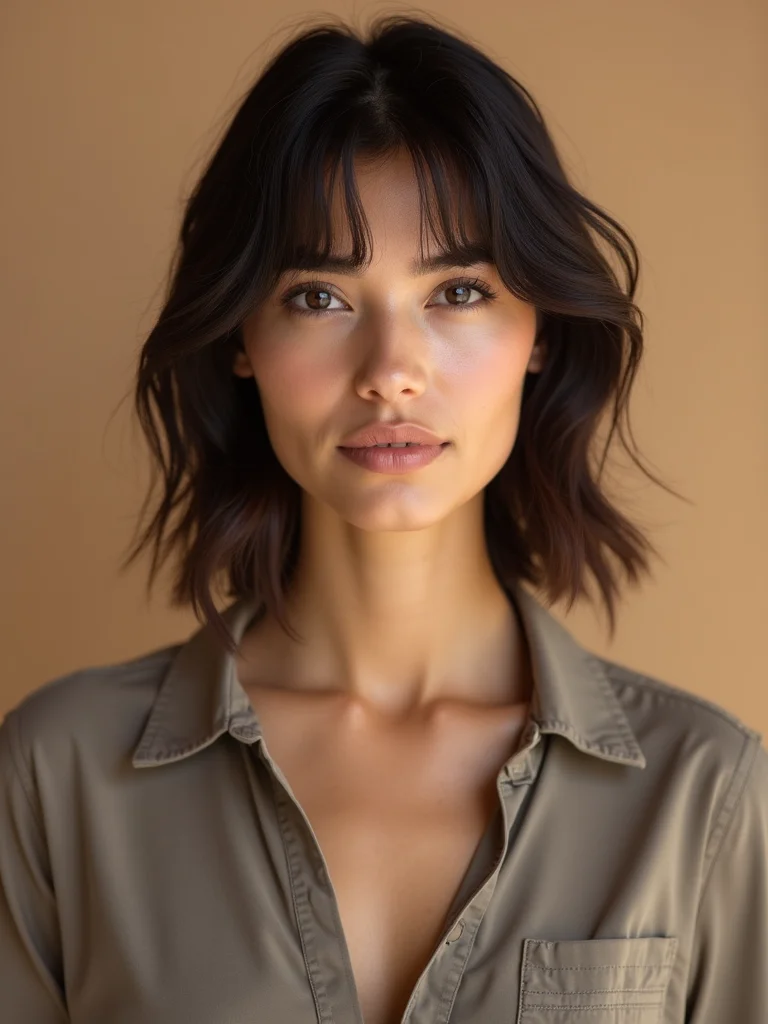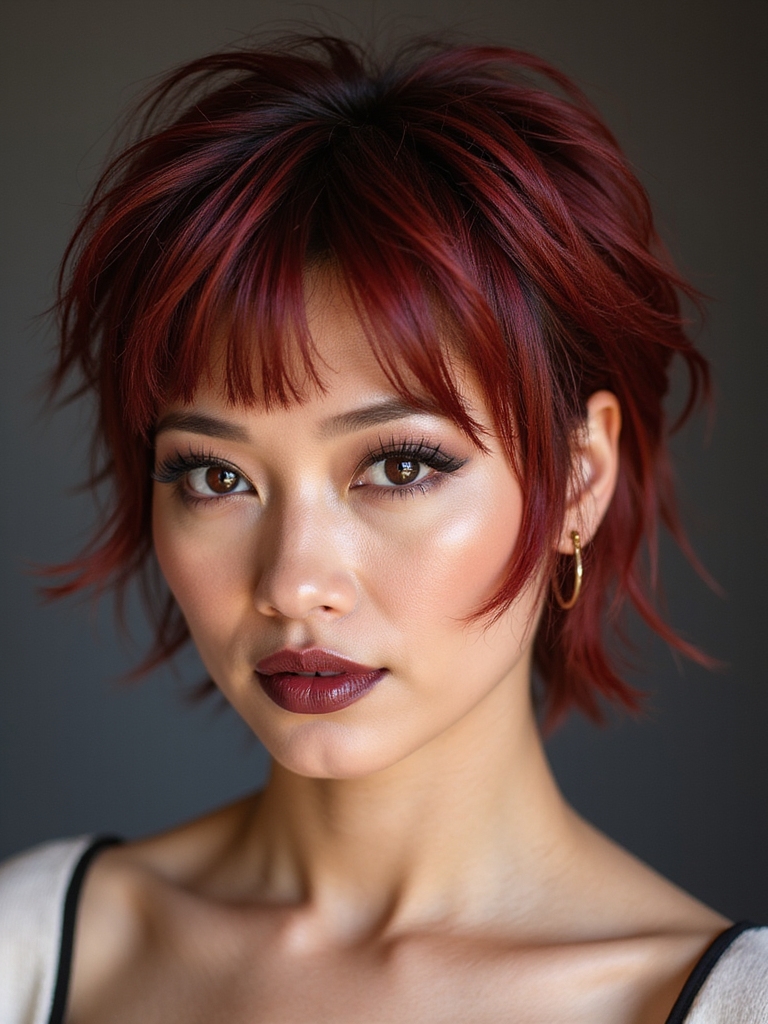
The first cherry red wolf cut I ever sent out the door got stopped twice on the sidewalk before the client reached her car. That is the thing about this combination: the shape gives you movement and edge, and the color makes sure nobody misses it. Together they photograph beautifully and turn heads in person, which is exactly why the look keeps showing up everywhere right now.
But here is what those photos never tell you. The cut and the color are two separate commitments, and red is the most demanding color there is to keep looking fresh. Below are fifteen ways to wear a cherry wolf, from bright scarlet to deep burgundy, with straight talk on what each one costs you in upkeep so you can pick the version that fits your actual life.
Cherry Wolf Cut: The Quick Answers
Does the red or the cut cost more to maintain? The color. A wolf cut needs a trim every 6-8 weeks, but bright cherry red can need a gloss every 3-4 weeks to stop it fading to orange.
Which version is lowest maintenance? A deep burgundy or black-cherry with a shadow root. The dark base hides regrowth and the cool tone fades far more gracefully than a bright fire-engine red.
Will it work on my hair type? Yes. Wolf cuts are built for texture, so fine, wavy, and curly hair all take the shape well; the layering just gets tailored to your density.
Crimson Wolf Cut With a Shaggy Fringe

A shaggy fringe is what keeps a bold crimson from tipping into costume. The piecey, broken-up bang softens the intensity of the color and frames the eyes, so the red feels intentional. It is the version I suggest to clients who want the impact of cherry red but worry it will be too much, and it is usually the one that wins them over.
Ask for a deep crimson gloss over the base for shine, then razored layers through the lengths for that signature wolf movement. The shaggier the fringe, the more forgiving the grow-out, which is a real advantage when you are also keeping a bright color fresh.
- Style with a lightweight mousse and diffuse on low heat.
- Pinch the fringe ends with a little pomade for separation.
- Book a trim every 6-8 weeks to keep the shape sharp.

Deep Cherry, Shoulder-Length and Textured

Shoulder-length is the easiest place to start a wolf cut, because there is enough length to carry the layers without the upkeep of a long shag. In deep cherry, it gives you instant edge with a shape that still pulls back for work. Here is how it usually comes together.
- Cut shaggy, graduated layers from the jaw down for movement.
- Add face-framing pieces that sweep forward to brighten your features.
- Color in a deep cherry gloss over a warm base for depth.
- Style with a salt-mousse mix and a low diffuser for tousled texture.
🅰️Bright Cherry
Maximum impact and the most fun, but it fades fast and wants a gloss every 3-4 weeks. Choose it if you love the upkeep.
🅱️Deep Burgundy
Almost as striking, far kinder to maintain. The dark base hides regrowth and the cool tone fades gracefully over months.
Wine-Red Tousled Wolf With Face-Framing

Wine red is where the cherry wolf gets its cool-girl polish. The deeper, slightly muted tone looks more grown-up than a bright cherry, and the tousled layers keep it from looking too done. Cheekbone-skimming tendrils around the face are the detail that pulls the whole thing together. It is a smart middle ground if true red feels like a lot.
- Ask for razored layers and curved face-framing detail.
- Finish with a gloss glaze to keep the wine tone rich.
- A satin heat protectant before styling stops the color dulling.
Scarlet Micro Wolf With Choppy Layers

The micro wolf is the shortest version here, and on the right person it is the sharpest. Scarlet layers cut close and choppy keep the silhouette airy, so even a short shape stays light and full of movement. The broken-up ends are doing real work, preventing bulk and keeping movement even at a shorter length.
This one rewards a confident face shape and a willingness to style it. A choppy micro fringe adds instant edge, but get the lengths tailored to your forehead and cheekbones so the bright color frames your face at the right scale. It is bold, and it is meant to be. The clients who pull it off best are the ones who actually enjoy styling their hair in the morning.
Styling a short, choppy wolf so it looks intentional and not flat:
1Rough-dry first
Get the hair 80 percent dry with your fingers to build natural volume before any tools touch it.
2Diffuse on low
Cup the ends into a diffuser on low heat to keep the choppy texture springy, not frizzy.
3Pinch and separate
Work a pea-size bit of pomade through the tips and the fringe to define the piecey ends.
Burgundy Root Melt on Soft Wolf Layers

If you want the drama of red without the salon-every-month reality, a burgundy root melt is the answer. Deeper roots blend down into cherry mid-lengths, so the color has plush dimension and the regrowth simply softens the look as it grows. This is the lowest-maintenance way to wear a cherry wolf.
Why the Root Melt Saves You Money
The softer, airy layers keep the overall feel modern and light. Because the darkest tone sits at the root where fade is slowest, you stretch your refreshes considerably.
Plan on a gloss refresh every six to eight weeks, far less often than a bright all-over red would need, which is a real saving. A heat-protectant routine keeps the wine depth from going dull.
Fire-Engine Red Wolf With Curtain Bangs

Fire-engine red is the loudest shade on this list and the highest-maintenance, so I will be straight with you. That stoplight brightness only stays crisp with real commitment: heat protection, sulfate-free washes, and a gloss refresh on a tight schedule. Skip the routine and it slides to orange within weeks.
Curtain bangs are the perfect frame for it, softening the intensity and drawing attention to the eyes. Coax them with a round brush, low heat, and a root-lift mist so they fall open across the forehead. I have watched more than one fire-engine red slide to pumpkin because someone washed it daily in hot water, so take the upkeep seriously.
- Refresh the gloss every 3-4 weeks to fight the fade to orange.
- Wash less often, in cool water, with color-safe products only.
- Best for people who actually enjoy the upkeep ritual.
ℹ️Good to Know
Red is the most fugitive hair color there is. The dye molecules are large and wash out faster than any other shade, which is why bright cherry and fire-engine reds fade toward orange so quickly. Cool, deep reds like burgundy and black-cherry hold far longer.
Dark Cherry Wolf With Wispy Ends

Dark cherry gives you edge without the heaviness, which is the whole point of this version. The saturated tone stays rich, while wispy, feathered ends keep the perimeter light and full of movement. It flatters a wide range of skin tones because the depth keeps it from looking harsh.
The feathered finish is what makes it low-effort to wear day to day. Point-cut, shattered ends move on their own, so you can air-dry or rough-dry and still get shape.
Keep the roots a touch deeper for dimension, use a lightweight mousse, and finish with a shine spray. The darker base also means the color holds longer between glosses than a bright cherry would.
Copper-Cherry Blend on a Long Wolf

A copper-to-cherry melt on a long wolf cut is the version that looks most luxe, because the warm copper catches light while the cherry adds depth underneath. The long, shaggy layers become the spotlight, the color shifting as you move. Here is how a colorist builds it.
- Start cherry through the base for richness and depth.
- Blend warmer copper through the mid-lengths where light hits.
- Gloss the whole thing so the two tones flow without a hard line.
- Maintain with sulfate-free care and a gloss every 5-6 weeks.
People come in worried the wolf shape will make a bold red too much. It is the opposite. All that broken-up texture actually breaks up the color, so even a loud cherry ends up looking wearable.
Vivid Red Wolf With Razor-Cut Edges

Razor-cut edges are what give this version its attitude. The razor slices movement straight into the shape, with shaggy layers up top and tapered ends that flick out, so the silhouette stays defined and airy at once. On a vivid red, that sharpness makes the color look deliberate and modern.
It is worth knowing that razored ends can be harder on already-color-processed hair, so this works best when your hair is in good condition. Ask for slide-cutting and point detailing to prevent bulk.
- Finish with a lightweight texturizing spray, then pinch the tips.
- A heat protectant keeps the cherry tone from scorching dull.
- Best on healthy hair that can take the razor work.
Black-Cherry Wolf With a Voluminous Crown

Black-cherry is the most understated red here, and quietly the most striking. The inky, plum-dark tone delivers rich depth up top and drama through the lengths, so it looks sophisticated even though the color is bold. It is a great choice for the office that still wants something dark and interesting.
A voluminous crown keeps all that depth from looking flat. Lift the roots at the crown with a round brush, and let the long-layered shag give airy movement through the lengths.
Because the tone is so deep and cool, this is among the lowest-maintenance reds for fade. A velvet-gloss glaze keeps the cherry dimension alive, and diffused waves suit it better than tight curls.
Neon Ruby Wolf With Piecey Bangs

Neon ruby is the high-octane cousin of cherry, all electric brightness and razor-sculpted texture. Paired with piecey, shattered bangs, it is a true statement look that frames the eyes and electrifies every bit of movement. This is fashion color, so go in knowing the upkeep is real. Here is how to get it right.
- Ask for slide-cut layers and soft thinning near the crown.
- A dry-cut finish lets the stylist place the texture precisely.
- Keep shine with a color-safe gloss and an airy salt spray for lift.
- Expect frequent toning to hold the vivid ruby, every 3-4 weeks.
Merlot Wolf With Feathered Layers

Merlot is richness with restraint, the shade for someone who wants depth without the volume of a bright red. The cool wine tone stays luxe and quiet, while feathered layers soften the profile and let the movement breathe. It is one of the easier reds to carry into a professional setting.
Merlot for the Low-Key Crowd
The feathering also makes it forgiving to style. Soft, point-cut layers fall into place with minimal work, so a round brush and low heat are all you really need.
Keep the sheen up with a velvet-gloss color conditioner, and blend a shadow root so grow-out stays soft. A satin pillowcase really does help reduce the friction that dulls color overnight.
Cherry Balayage on a Soft-Textured Wolf

Balayage is the way to get cherry that glows without committing your whole head to fashion color. Hand-painted through the mid-lengths and ends, it kisses the layers with brightness while the roots stay your natural depth, which keeps the upkeep sane. Here is the approach.
- Paint brighter cherry ribbons around the face to lift your complexion.
- Keep the roots natural so there is no harsh regrowth to chase.
- Ask for demi-permanent cherry on a warm base for a soft finish.
- Maintain with sulfate-free shampoo, cool rinses, and a trim every 8 weeks.
Glossy Garnet Wolf, Worn Loose

Garnet turns up the sheen for a cherry that looks polished but never fussy. The deep red-with-a-hint-of-brown tone catches light beautifully, and worn in loose, undone waves it stays soft and easy. This is the version for someone who wants the color to do the talking without a styled-to-death finish.
Keep the crown airy and the ends shattered so the waves move naturally. A velvet-gloss topcoat is the secret to that glassy garnet shine, and a salt-mist scrunch on low heat gives you the loose bend without making it look try-hard.
Two-Tone Cherry and Plum Wolf

For the boldest version, split the palette: vivid cherry through the crown, deep plum grazing the ends, so the wolf cut’s layers flash contrast with every move. Mapping the gradient where light hits, brighter near the part and richer at the tips, is what keeps two tones from looking like a mistake.
Ask your colorist for demi-permanent dyes, a shadowed root, and razor-softened layers to keep the dimension. Gloss for reflection, then diffuse-dry for airy texture. It is the most maintenance of all, since you are keeping two fashion tones fresh at once, but the payoff is a look nobody else has.
How to Ask Your Stylist for a Cherry Wolf
Bring two photos: one for the cut and one for the color, because they are separate decisions and your stylist will plan them differently. For the cut, point to the layer length and how much fringe you want; for the color, be specific about bright versus deep, since fire-engine and burgundy live in completely different upkeep worlds.
A wolf cut alone runs roughly $60-120, and going from dark hair to a bright cherry can add $80-200 and two to three hours in the chair. Ask point-blank how often you will need to come back, and budget for it before you commit.
Be honest about your hair’s condition, too. If you are going from dark to a bright cherry, that is a lightening process, and razored wolf layers on top of over-processed hair will not hold. A good stylist will tell you whether to do it in one visit or stage it.
If you want to see how the shape plays in other shades first, our blonde wolf cut and ginger wolf cut guides show the same cut in different colors, and dyed wolf cut covers fashion-color options more broadly. Curly textures can absolutely pull this off; see the wolf cut for curly hair guide for how the layering changes.
Pick the Cherry That Fits Your Life
A cherry red wolf cut is two commitments wearing one outfit: a shape that needs trimming and a color that needs feeding. The good news is that the spectrum here runs from high-octane fire-engine red all the way to a forgiving black-cherry, so there is a version for every tolerance for upkeep. Match the brightness to how much salon time you actually want, and the look will love you back.
If you are tempted, start one notch deeper than the photo that inspired you. A burgundy or wine version gives you most of the drama with a fraction of the maintenance, and you can always go brighter once you know how the upkeep feels in real life.
Next Up