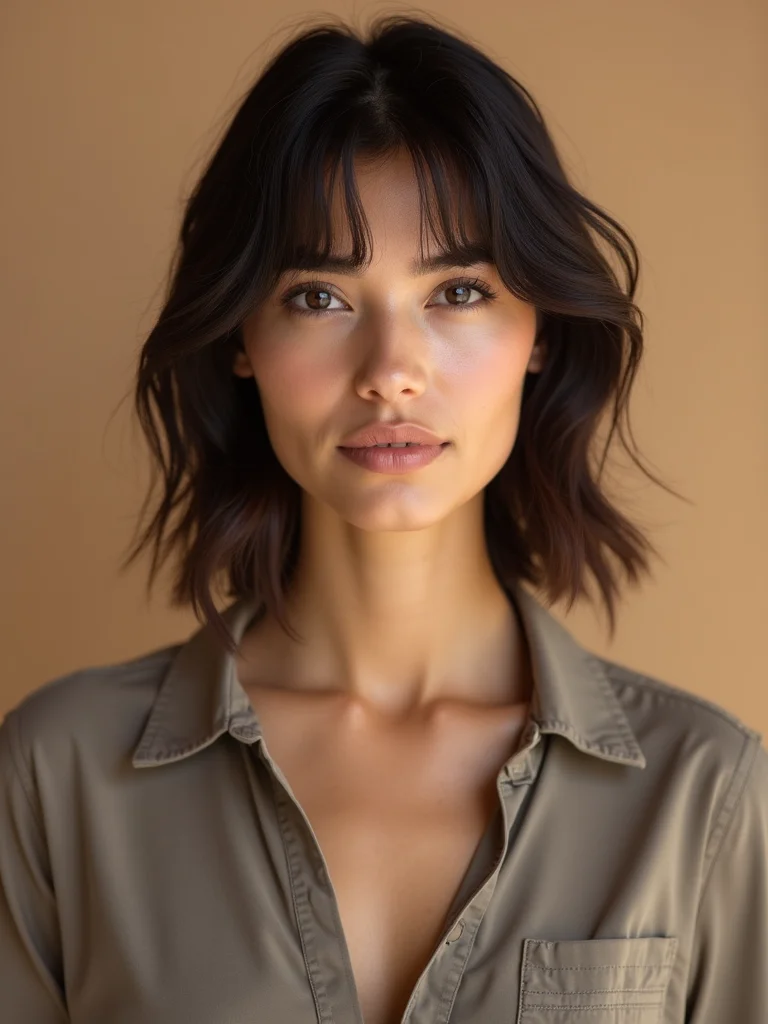
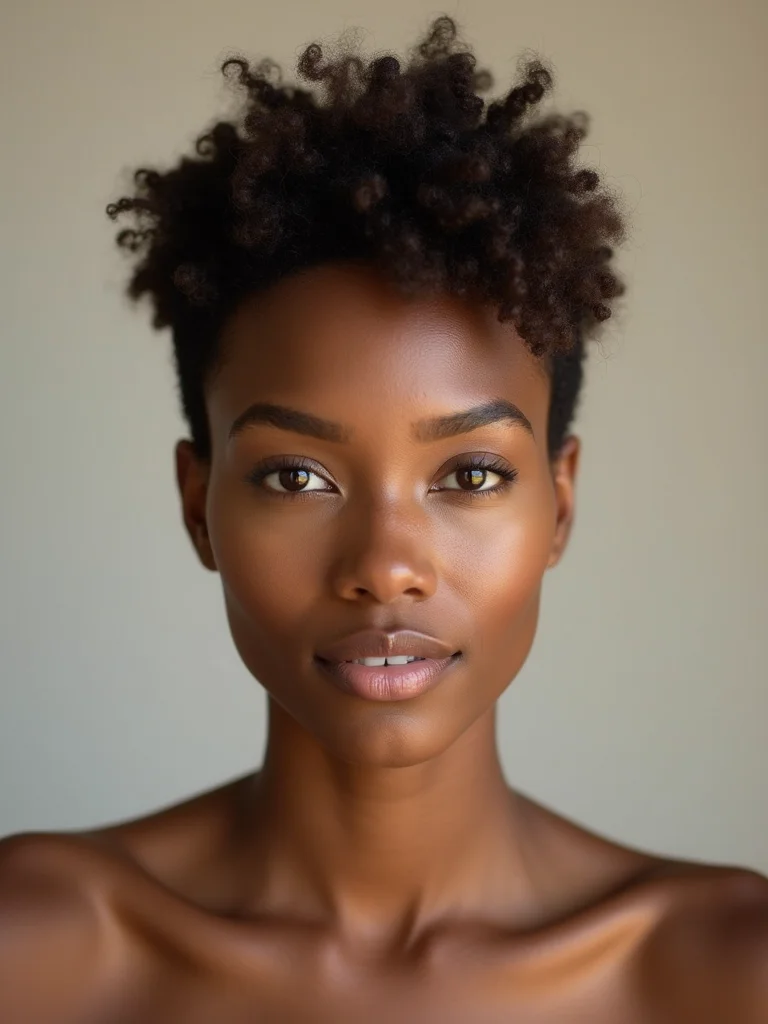
Piled-up layers catch a breeze, one section swings forward across the cheek, and even standing still the whole shape looks mid-motion. That’s the wolf cut’s actual trick: it’s built to look alive rather than fixed.
But that same shape behaves completely differently depending on what it’s cut into. Sixteen versions below, each tuned to a specific texture, length, or mood, with the trade-off worth knowing before booking any of them.
What Actually Makes a Wolf Cut Work
A wolf cut isn’t really one haircut so much as a layering approach, tuned differently for fine, thick, wavy, straight, curly, and coily hair. The same base shape comes out completely differently depending on which starting texture it’s cut into.
Face-framing is where most of the flattery lives, curls and coils need a dry cut so the stylist can see exactly where the hair falls, and the first week of learning to style new layers tends to be the hardest part by far.
Classic Shaggy Wolf Cut With Curtain Bangs

This is the version most people picture first: piled-up shaggy layers on top, longer pieces underneath, and a soft curtain bangs fringe tying the whole front together.
It earns the default spot because of how broadly it flatters. The stacked layering and parted bangs work across most face shapes and most textures with only minor adjustment.
The catch is that broad appeal comes from a fairly demanding cut. A stylist has to blend the fringe directly into the face-framing pieces rather than treating them as two separate blocks, or the front looks choppy instead of intentional.

Soft Shag Wolf Cut for Wavy Hair

On wavy hair, a gentler version of the shag haircut styles almost on its own, since the natural bend does most of the work a flat iron would otherwise need to do. The build:
- Keep the layering soft rather than heavily choppy, so the wave comes across as texture, not frizz.
- A scrunch of salt spray on damp hair covers most of the daily routine.
- Air-dry rather than diffuse for the most natural-looking result.
Curly Wolf Cut With Defined Layers

On curls, this shape produces some of the most dramatic results of any texture, letting coils stack into a full, rounded silhouette instead of one heavy mass.
The one non-negotiable is the cut itself has to happen dry. Curls spring up considerably once they’re released from water weight, so a wolf cut for curly hair needs a stylist working with the hair already in its natural, settled state.
- Insist on a dry cut regardless of a salon’s default policy.
- Define curls afterward with a curl cream or gel, then let them dry undisturbed.
- Expect the shape to look noticeably different wet versus fully dry.
Not sure whether your curl pattern is ready for this cut?
🎯Curls are well-defined and hold a consistent pattern
The layering will show clearly and the shape comes across as intentional.
🎯Curls are looser or a mix of patterns
A softer layer count works better than heavy, aggressive layering.
Micro-Fringe Wolf Cut for a Bold Edge

Pairing this shape with a micro fringe produces the most unapologetic version here: short, blunt bangs sitting high above the brows against a head of tousled length. The build:
- Cut the fringe short and blunt, well above the brow line.
- Keep the rest of the layering shaggy and undone for contrast.
- Plan for more frequent trims; at that length, small amounts of growth change the whole proportion fast.
Long Wolf Cut With Face-Framing Pieces
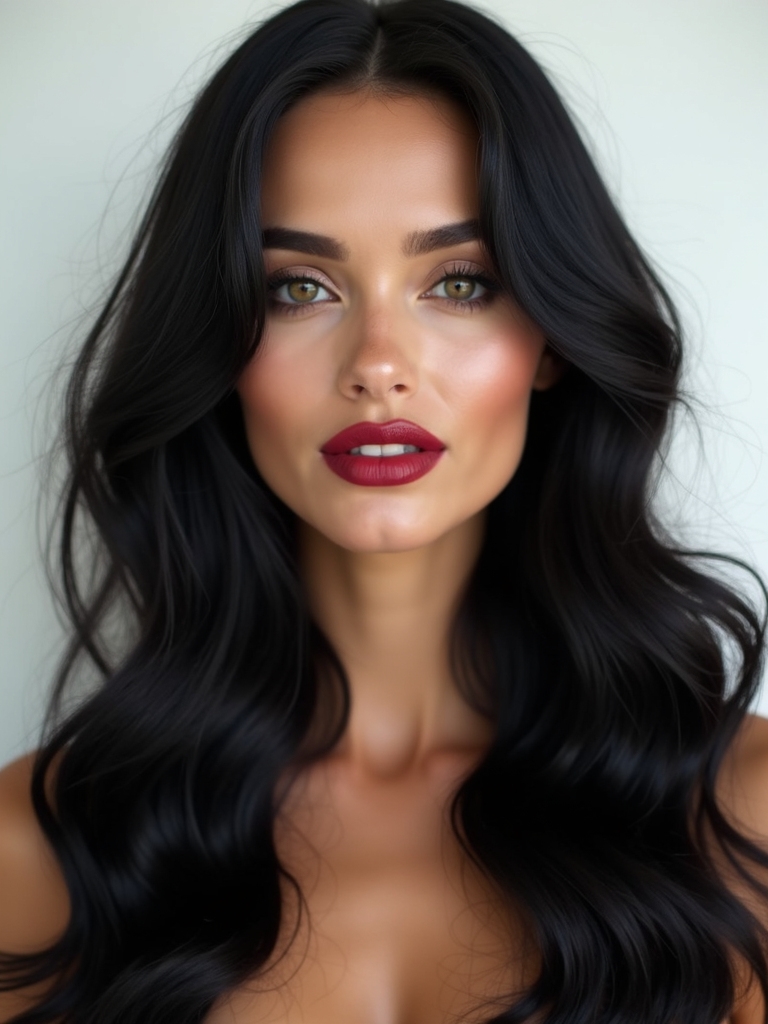
For anyone unwilling to give up length, this version keeps nearly all of it while still delivering layered movement through face-framing bangs up front.
Because the rest of the length stays intact, where those framing pieces start decides most of the flattery. Starting them around the cheekbones tends to work most universally.
The catch is that the movement stays concentrated at the face; from the back, this version looks far closer to regular long layers than to a dramatic wolf shape.
Short Wolf Pixie-Mullet Hybrid
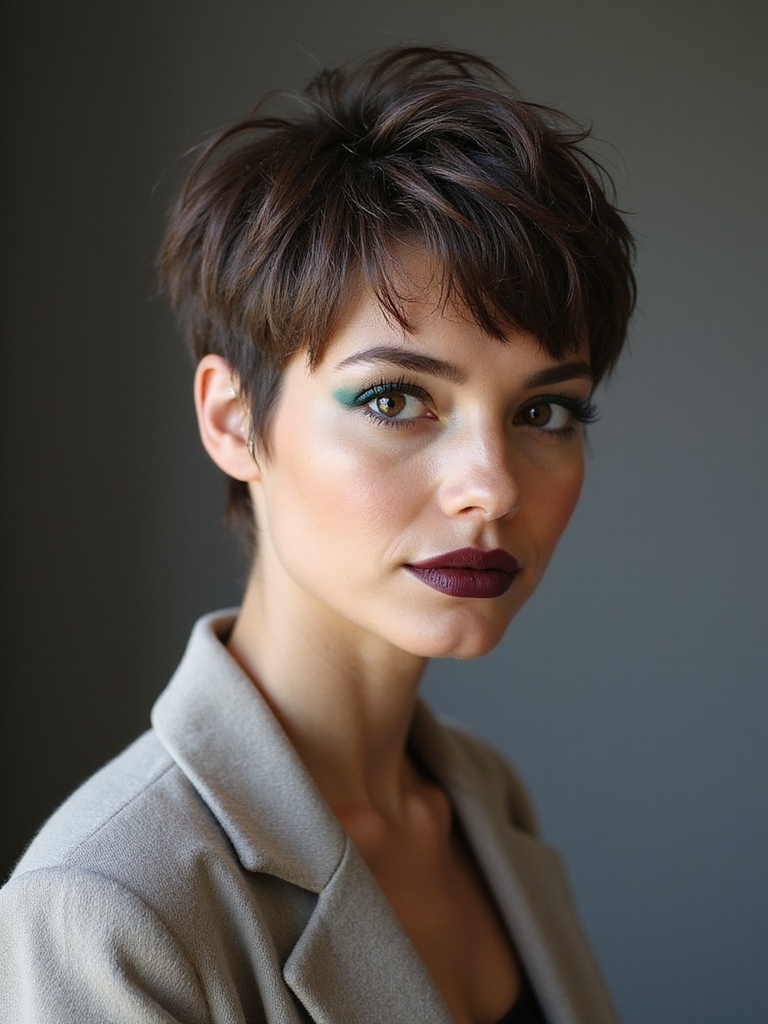
At the boldest end sits a short, choppy pixie-mullet hybrid that keeps a little length at the nape while cropping everything else close and spiky.
It’s the most fashion-forward version here, and the trade-off is upkeep: that short a length needs trims on a noticeably tighter schedule to stay sharp rather than shapeless, since a few weeks of growth is enough to soften the whole silhouette.
Voluminous Wolf Cut for Thick Hair

Thick hair often gets layered defensively, out of fear of a triangle shape, but a well-cut wolf shape does the opposite: it turns that weight into movement instead of bulk.
- Ask specifically for weight removed from inside the hair, not off the visible surface.
- Keep the outer perimeter solid so the shape slims rather than widens.
- Done well, it often air-dries into shape with little extra effort.
Weightless Layered Wolf for Fine Hair
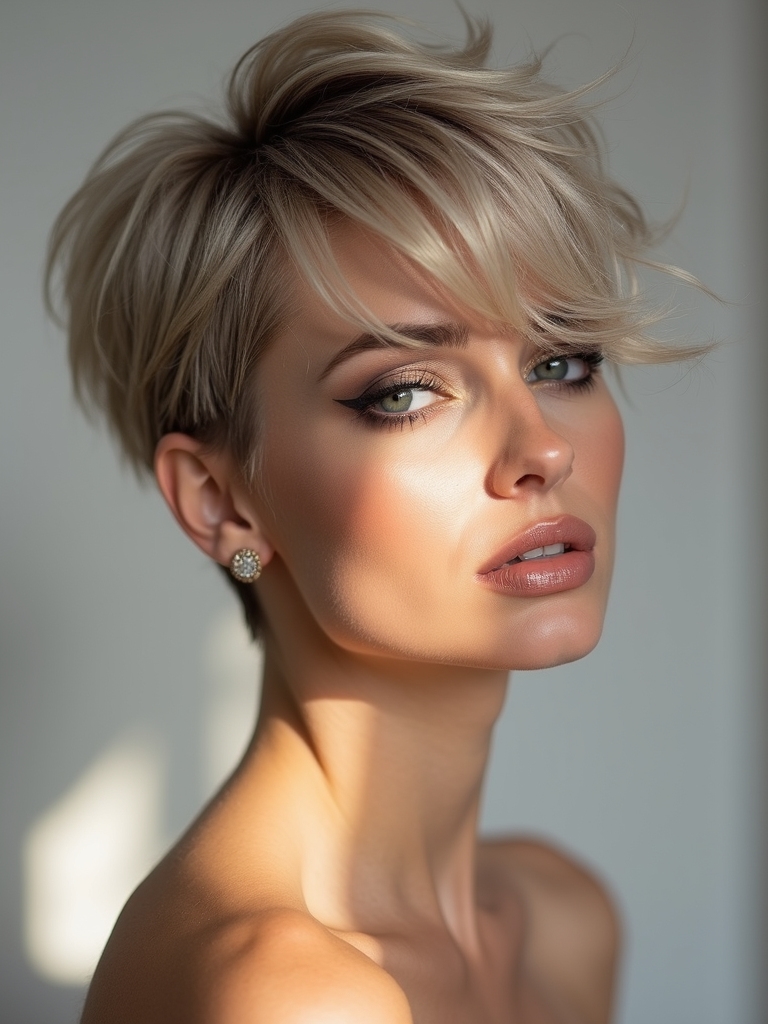
Fine hair is a better candidate for this cut than most people expect, since the layering manufactures body that thin strands can’t hold on their own. What to ask for:
- Soft, light layering, never heavy thinning, which only exposes how fine the hair already is.
- A volumizing mousse worked in at the root for extra lift.
- Expect the finished cut to look noticeably fuller than the hair actually is.
Layered Wolf Cut With Wispy Ends

Finishing the layers with fine, feathered ends is what makes this version look consistently polished, since those tips move and catch light instead of sitting as one heavy block.
Why Point-Cutting Reads Modern
The specific technique to ask for by name is point-cutting, tapering each end to a fine point rather than a blunt line.
It falls apart on very short layers, though, since there’s not enough length in each section for the taper to show up clearly.
Textured Wolf Cut With Choppy Bangs

For maximum texture, choppy bangs over heavily layered length echo each other, the broken-up fringe matching the broken-up body for one cohesive, deliberately undone look.
The trade-off is subtlety; this version lands loud by design, and toning it down usually means growing the bangs out rather than adjusting the technique.
🅰️Choppy Bangs
Broken, piecey ends that echo the body’s texture; louder, more editorial.
🅱️Curtain Bangs
Softer, parted fringe that blends into face-framing; quieter, more universally wearable.
Razor Layers for Extra Movement

Cutting the layers with a razor instead of shears gives this shape its most feathery, weightless movement, since the blade tapers each section to a fine, floating point.
Where this struggles is hair health. Razoring can rough up fragile or chemically processed strands, so it works best on hair that’s already in reasonably good condition.
- Best suited to healthy, undamaged hair rather than color-treated or heavily processed strands.
- Produces an airier result than scissor-cut layers of the same length.
- Style gently; the fine ends are more prone to frizz if roughed up.
Shaggy Wolf Cut With Side-Swept Fringe

Swapping a center fringe for a side-swept one gives the shaggy version a softer, more asymmetric feel, the bangs sweeping across the forehead from a deep part.
- Has no precise center to maintain, so it tucks away easily on low-effort days.
- Tends to flatter wider or rounder faces especially well.
- Adds a little extra lift at the root from the asymmetry alone.
ℹ️Why Asymmetry Reads as Lower Maintenance
A centered fringe has to stay perfectly split to look intentional, while a side-swept one already has a natural direction, so a few days of regrowth or humidity barely change how it sits.
Sculpted Crown for Coily Wolf Cuts

Coily hair wears this shape beautifully once the crown is cut with shrinkage in mind, so the rounded silhouette settles where it’s meant to once the coils spring up fully. What that takes:
- A dry, stretched cut, since 4-type hair can shrink by half its length or more once it dries naturally.
- A stylist who respects the existing coil pattern rather than forcing a generic round shape onto it.
- Patience through the first wash, since the true shape only shows up once shrinkage happens.
Sleek Straight Wolf Cut With Blunt Fringe

On pin-straight hair worn smooth, this shape takes a sharper, more graphic turn, especially paired against a blunt fringe.
The forgiveness runs low here. Straight hair hides nothing, so the precision of the cut and the fringe line both show clearly if either one is off.
- Rewards a clean blow-dry and a little shine product over air-drying.
- Reads more editorial and less undone than the shaggier versions.
- The most polished way to wear this cut overall.
📋Before Booking a Sleek Straight Wolf Cut
- ✓Hair is naturally straight or blow-dried straight most days, not left textured.
- ✓Comfortable with a fringe line that needs regular upkeep to stay sharp.
- ✓Willing to spend a little extra time on the blow-dry for the polished result.
Color-Blocked Wolf Cut for Contrast

Adding high-contrast color-blocked dimension makes the layers explode with definition, since a sharp shift between two tones traces every choppy edge of the cut.
It’s the most attention-grabbing version here, and the trade-off is real: color and cut become two separate commitments, each running on its own maintenance schedule.
A colorist typically treats this as its own service on top of the cut, often adding another $75 to $150 depending on how much lightening the contrast needs, and worth budgeting separate time for rather than folding into a single quick appointment.
A Second-Day Wolf Cut Refresh
Beyond any single texture or length, this cut rewards a specific styling habit: refreshing it on day two rather than reaching for a full restyle.
A little dry shampoo at the root, worked through with just fingers rather than a brush, tends to reveal the layers better than fresh-washed hair does, since a bit of grip helps each piece hold its own shape instead of falling into one flat mass.
Maintenance & Care
The mistake that undoes more wolf cuts than any other is cutting curly or wavy hair while it’s still wet. Both textures shrink up considerably once the water weight releases, leaving a wet-cut result noticeably shorter than planned.
The second is over-thinning fine hair specifically; aggressive texturizing removes what little density is there instead of building the fullness soft layering would have created. Between cuts, a light-hold texture product and minimal brushing keep the shape from collapsing into one solid mass.
Wolf Cut Hairstyle Questions, Answered
?Does a wolf cut actually work on every hair type?
Yes, but the layering has to be adapted to the texture rather than applied identically. Fine, thick, wavy, straight, curly, and coily hair all suit some version of it, though the same technique can produce very different results across those textures.
?Why does curly or coily hair need a dry cut specifically?
Curls and coils shrink upward once released from water weight, sometimes by half their length or more. Working with hair that’s already dry lets a stylist place each layer where the curl pattern actually settles, rather than guessing at a wet length that won’t hold once it dries.
?How long does it take before a new wolf cut feels normal to style?
Most people find the first week the hardest, since unfamiliar layers can feel unpredictable. After that initial adjustment, the cut typically settles into a routine that takes only a few minutes.
?Is a wolf cut hard to grow out?
It’s more forgiving than many layered cuts, since the shaggy, blended nature of the layers disguises regrowth better than a precise, structured style would. Regular shaping trims stretch the transition out even further.
?What’s the difference between a wolf cut and a regular shag?
The two overlap heavily, but a wolf cut typically combines more dramatic crown volume with mullet-influenced length at the back, while a shag tends to stay more uniform in its layering throughout.
Find the Wolf Cut That Is Yours
Scroll past enough of these and they start to blur together, but each version above was built around a specific texture, length, or trade-off, not a single universal template.
Pull the elements that actually match your hair, bring them to a stylist who can adapt the layering accordingly, and try the version suited to your texture before chasing a look built for someone else’s.
You Might Also Like