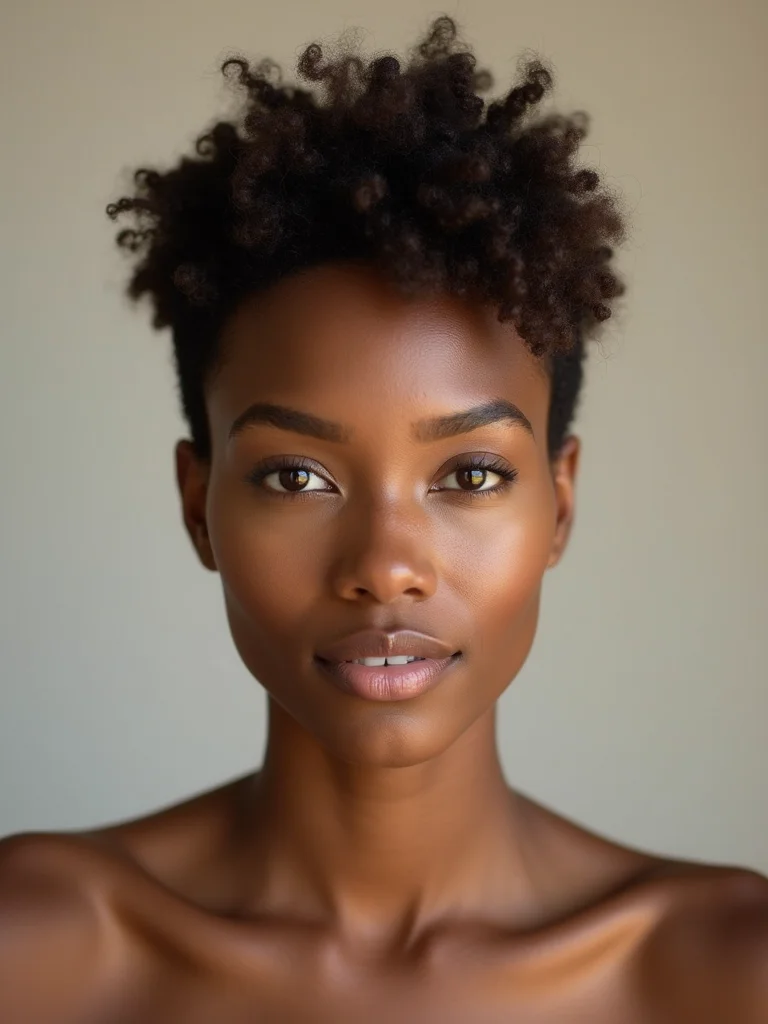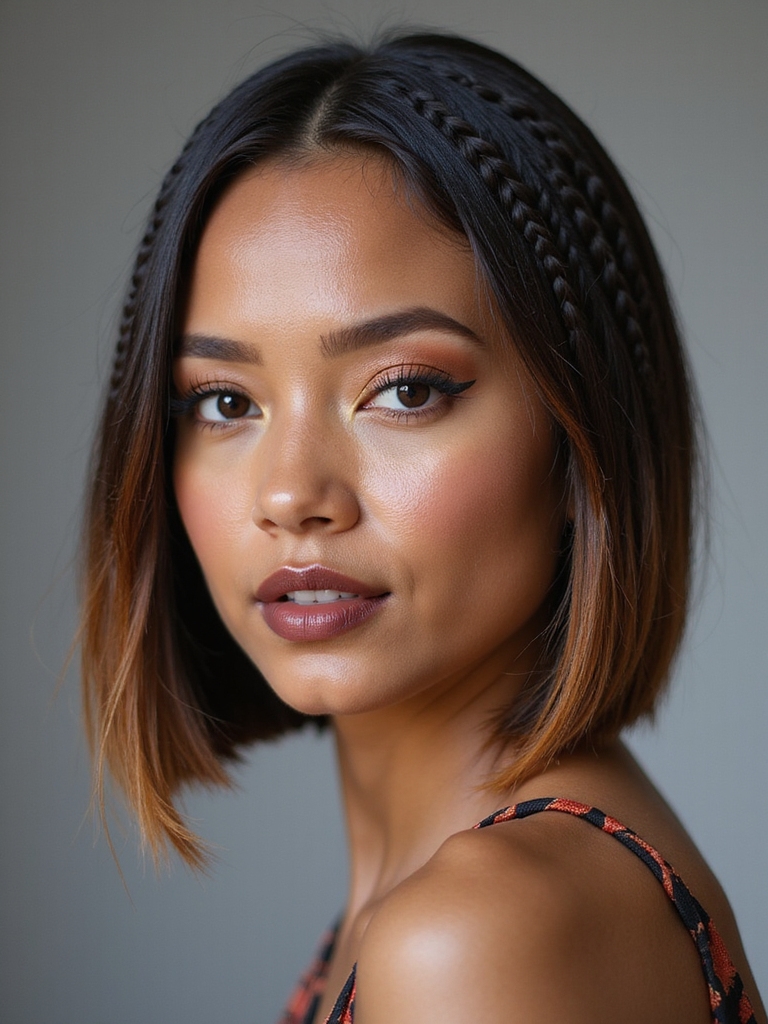
Run a finger along the part of a fresh knotless braid and there is nothing to catch on: no bump, no knot, just a clean line straight down the scalp. That flat foundation is what makes bob length different from every other knotless install, since short hair shows off whatever happens at the parting far more than a longer set ever would.
Fifteen ways to wear the knotless bob follow, organized around what each parting or finish actually does, with the honest trade-off that comes attached to it.
What the Knotless Base Actually Buys You
- A flat, knot-free base is what makes curved scalp designs (like a heart part) possible at all.
- Micro braids take the most chair time; jumbo braids finish fastest but show scalp sooner.
- Knotless lowers tension at the root, but a part pulled too tight still stresses the hairline regardless of method.
Sleek Middle-Part Bob Knotless Braids
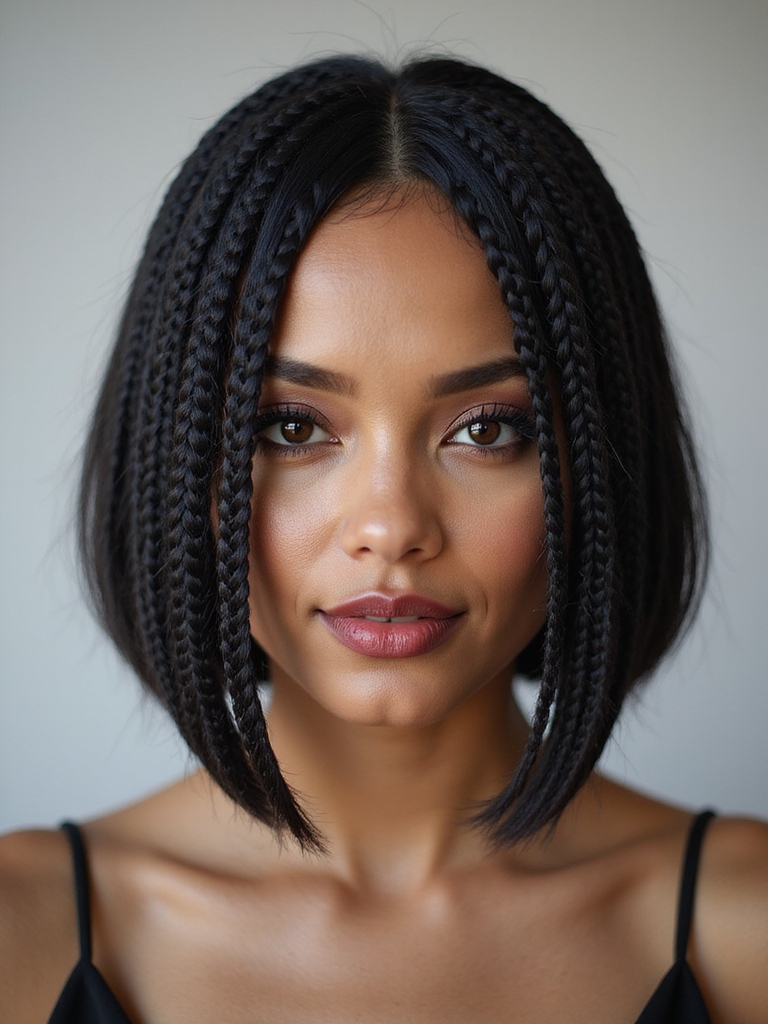
A knotless base earns its keep most clearly at a center part. Because there’s no knot sitting at the root, the part runs as one continuous, unbroken line straight down the scalp, dividing the braids evenly on either side.
Where a Center Part Can Go Wrong
The catch is precision: a center part shows every wobble, so it only looks polished when the line is truly straight from front to back. Balanced or oval faces suit it best, since a dead-center line draws the eye straight down the face.
A rattail comb, used slowly and rechecked from above rather than only in a mirror, is what keeps that line honest.
Deep Side-Part Bob With Tucked Ends

Shifting the part deep to one side and tucking the ends under at the bottom turns a plain knotless bob into something more polished. The two changes reinforce each other: the deep part adds asymmetry and a little lift at the root, and the tucked ends round off the whole silhouette.
Where this one struggles is at the hairline on the heavier side, since more braids pull toward that one part line than the other. A knotless base handles that extra weight more comfortably than a knotted one would, but it’s still worth flagging to a braider before the first section goes in.
Shoulder-Skimming Flipped Bob Braids
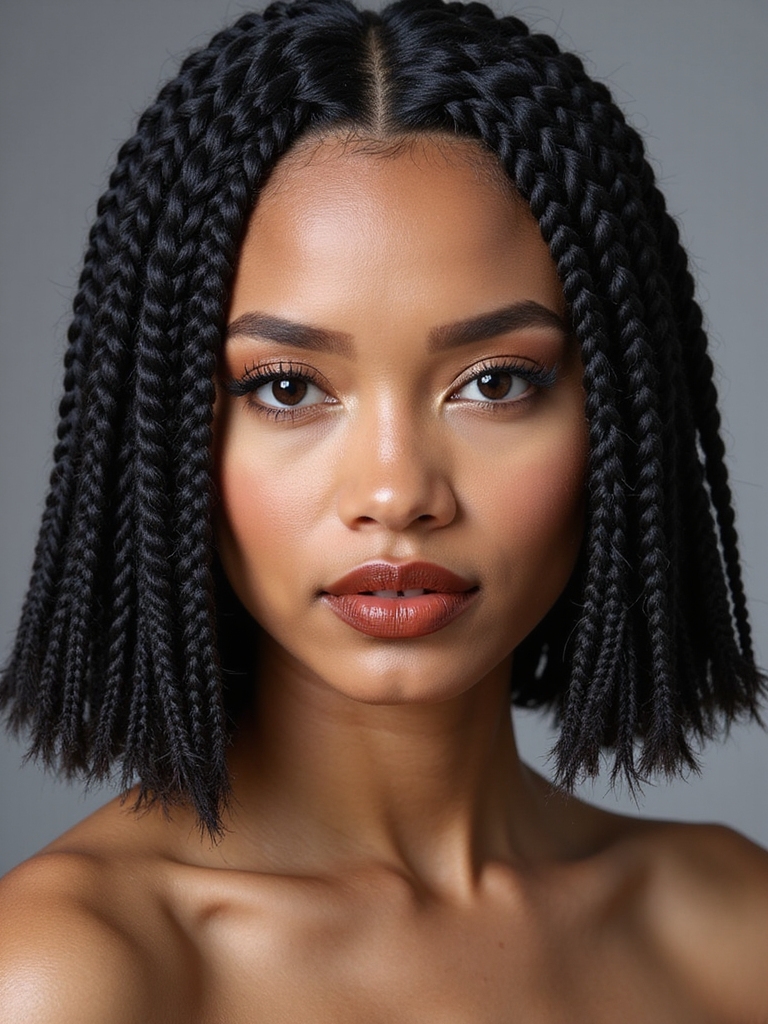
Worn at the shoulders with the ends flipped under, this version carries a bouncy, retro character closer to a blow-dried bob than a typical braid set.
Setting the Flip at Home
The flip itself is simple to recreate at home: wrap the ends around a large rod, dip briefly in hot water, then let them cool completely before unwrapping. Skipping the cooling step is the most common reason the curl falls out within a day.
Because braided hair holds a set shape better than loose hair does, that flip tends to survive the full wear with only occasional touch-ups.
| Detail | At bob length |
|---|---|
| Typical install time | Two to four hours |
| Typical wear before take-down | Six to eight weeks |
Chin-Length Micro Knotless Bob
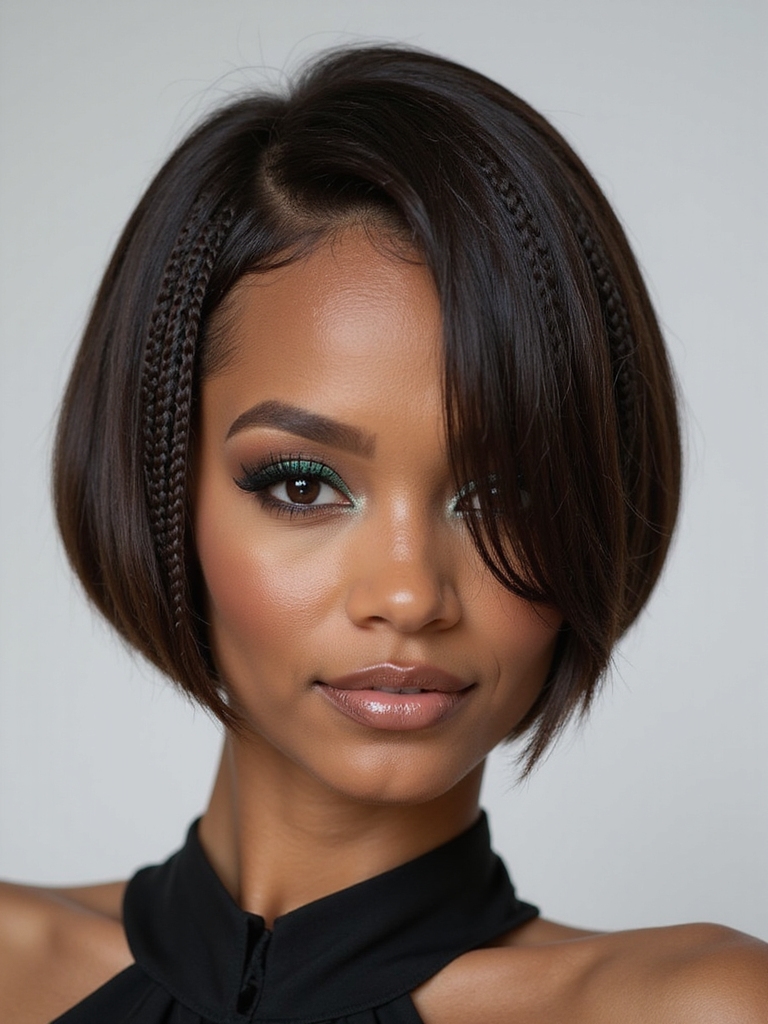
Micro braids at chin length carry an unusually loose, natural quality that chunkier braids can’t quite copy. The honest trade-off is time in the chair: with far more sections to part and braid than a jumbo set, a micro install can run most of a day rather than a few hours.
- More sections means more total tension points, even on a knotless base
- A careful braider matters more here than on any other size
- Worth checking the hairline specifically for tightness before leaving the chair
Jumbo Bob Braids With Clean Lines

Jumbo braids sit at the opposite end of the same scale: a bold, chunky silhouette built from far fewer individual sections. Speed is the real advantage here.
A jumbo set finishes in roughly half the time a comparable micro set takes and sits lighter on the head throughout the wear. The trade-off shows up sooner in the look, though: bigger braids reveal more scalp and start looking fuzzy earlier than fine ones do.
- Fastest install of any braid size on this list
- Lightest feel on the head, especially at bob length
- Shows scalp and frizz sooner than smaller braids
Layered Bob Knotless Braids for Volume
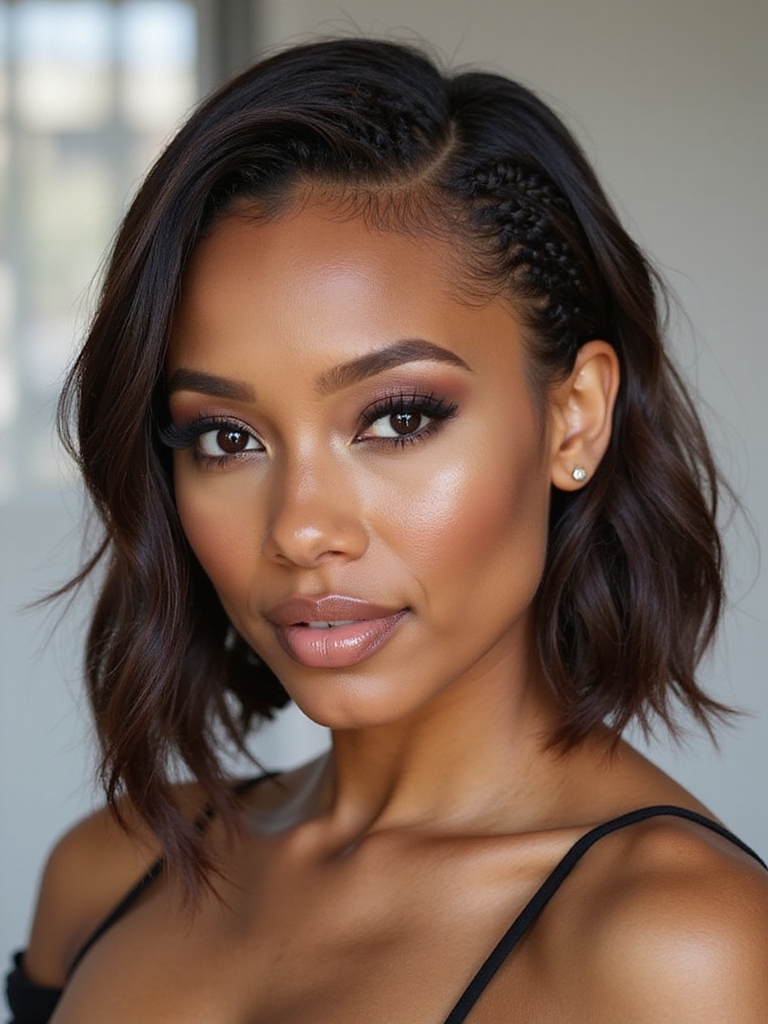
Cutting the braids to graduated lengths builds real shape into what would otherwise be one flat line. The varied lengths round out the silhouette and keep a fuller install from looking blocky.
- Ask for subtle graduation: shorter through the crown, longer toward the front
- Works best on thicker installs, where there’s enough braid density to carry the shape
- Adds real volume without adding a single extra braid
Angled Lob-Length Knotless Braids

Taken to lob length and angled longer toward the front, this version carries a sharp, deliberate line that a chin-length bob can’t quite hold, since there’s more length to work the angle into.
The extra length also buys more ways to wear it day to day: half up, tucked behind one ear, or left to frame the jaw fully.
Where it asks more of the install is at the shortest point near the nape, since those braids need securing just as carefully as the longer front sections despite doing less visible work.
Color-Pop Bob Braids With Highlights
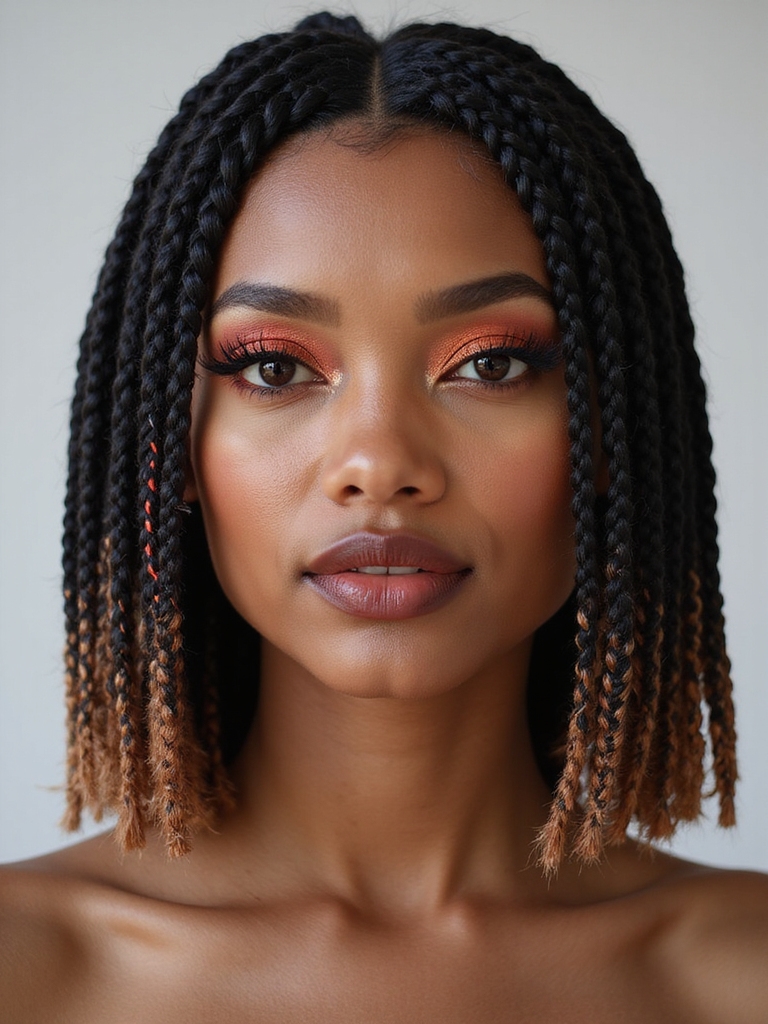
Threading a brighter shade through select braids adds a visible pop of color that lives entirely in the extension hair, never touching or lightening the natural strands underneath.
A face-framing piece near the front works as an easy first try; a handful scattered through the whole set looks bolder. Either way, the color resets completely at the next install, so there’s no long-term color commitment sitting on natural hair between sets.
The trade-off is subtlety: too many bright pieces at once can start to look scattered, so most colorists suggest picking one placement idea and committing to it fully.
Color in extension hair is one of the few low-risk experiments on this whole list. If it doesn’t work, it’s gone at the next take-down, not grown out over months.
Ombre Bob Knotless Braids

An ombre knotless bob fades from a darker root into progressively lighter ends, and because bob length is short, that fade compresses into a shorter span than it would on a longer set.
Why the Fade Reads Faster at Bob Length
The compression is actually the appeal: the contrast between root and end reads clearly, since it isn’t stretched thin across extra length.
Like the highlighted version, none of this touches natural hair, so a different blend, warmer one install, cooler the next, can be tried each time with no lasting commitment.
Bead-Adorned Bob With Cuffs

Threading beads and sliding on a few metal cuffs brings texture and a quiet bit of adornment to a knotless bob, a practice with real roots in braided hairstyling traditions that goes back long before it trended online.
At bob length, restraint tends to look more intentional than covering every braid: a handful of cuffs clustered near the face feels like a considered accent, and the lighter overall weight keeps the bob swinging freely.
“Ask specifically for sealed ends under any bead placed near the face. An unsealed end under a bead is the most common reason braids start slipping loose within the first week.”
Curly-End Bob Knotless Braids

Leaving the last few inches of each braid loose and curled softens the whole bob considerably. Because the curl is set into the extension hair itself, it holds its bounce for the full wear while the rest of each braid stays fully protected.
- Set curls with a brief hot-water dip on rods, then let them cool fully before releasing
- A light mousse keeps the curl defined as it naturally relaxes over the week
- A gentler middle ground for anyone who finds a fully sleek braid too severe
Boho Bob With Wavy Pieces
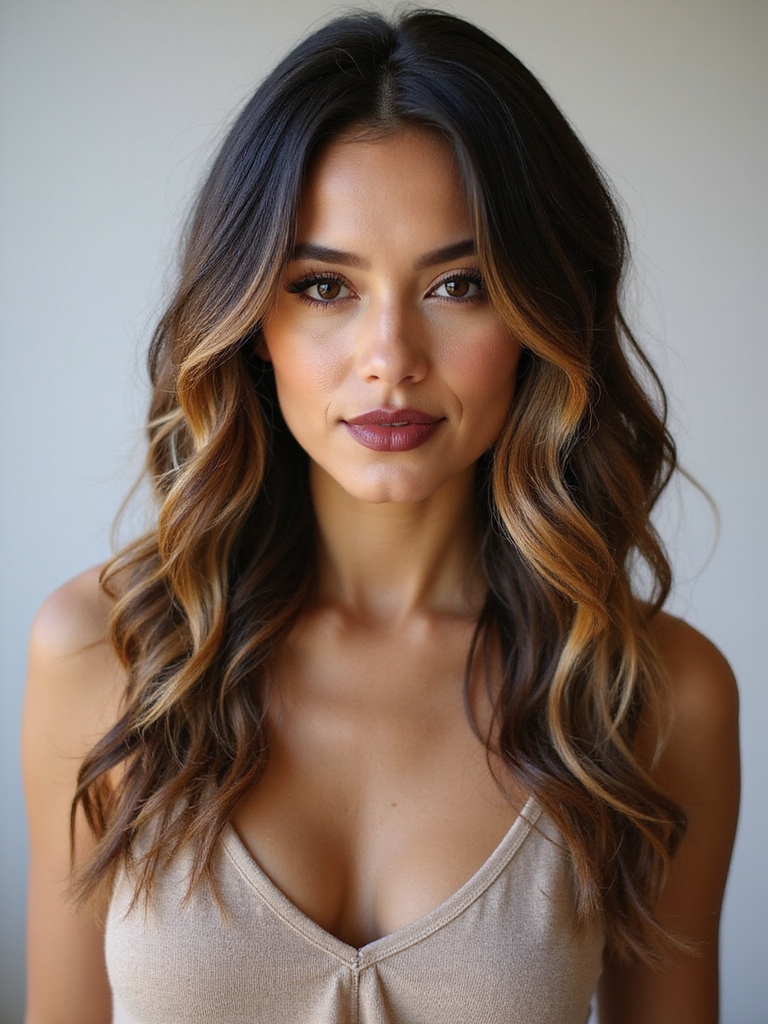
Leaving some wavy pieces loose along the braids blurs the line between a braid and free-flowing hair, closer in spirit to a boho braids bob than a sleek, structured set.
The loose pieces need more attention than the braided sections do, since they dry out and frizz faster without any braid protecting them.
The trade-off is worth it for the relaxed effect it delivers: spritzing loose pieces with water and a curl-defining product, then wrapping them at night, keeps the wave intact through most of the wear.
Heart-Part Knotless Blunt Bob
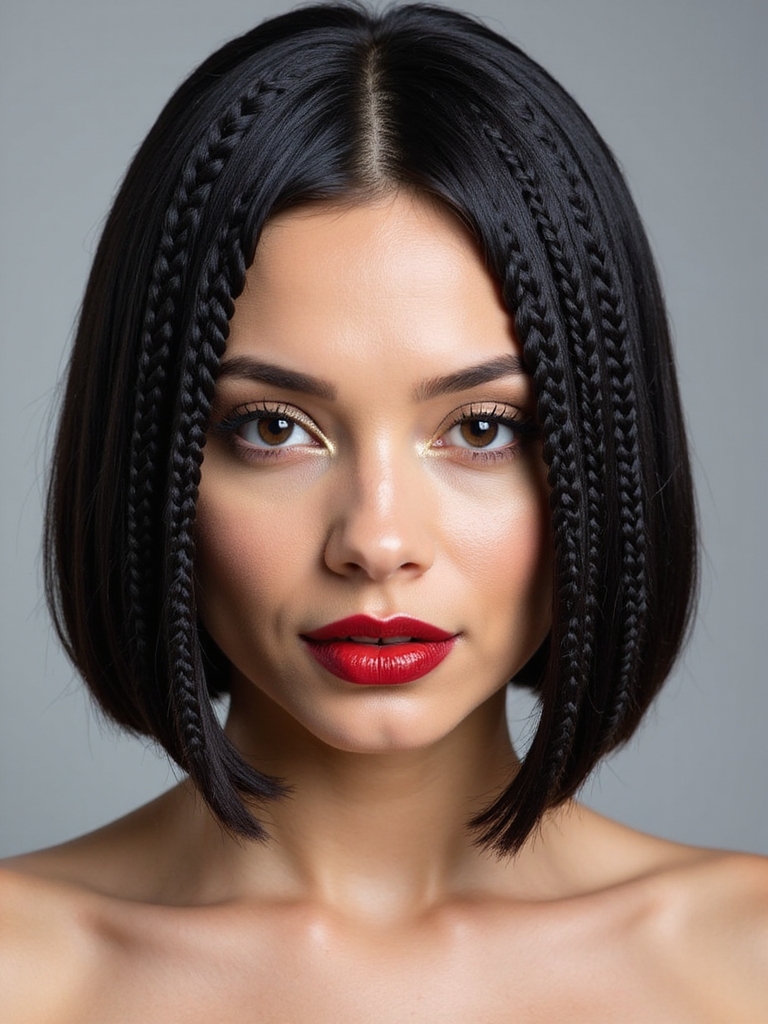
A heart-shaped part carved into the scalp at the crown turns the parting itself into a design detail on its own. A curve this clean truly isn’t possible on a knotted base, which needs straighter lines to hide where each knot sits.
On a blunt bob, the playful curved part plays against the sharp, even hemline below it for a combination that lands both cute and precise at once.
- Needs a braider specifically experienced with scalp designs, not just braiding speed
- Holds its shape best in the first few weeks before natural regrowth softens the curve
- Pairs most cleanly with a blunt, even hemline rather than layers
Keeping a scalp design crisp between washes:
1Cleanse around the design, not through it
Focus product and water on the scalp itself rather than scrubbing directly over the parted lines.
2Reapply light oil sparingly
A small amount along the part keeps the design visible without weighing the braids down.
Box-Part Precision Knotless Bob

Box parts divide the scalp into neat, even squares, and on a knotless bob those grid lines become a visible part of the finished look.
The trade-off is time at the very start: box sectioning takes longer to map out than a simple side or center part, so it’s worth choosing a braider specifically known for clean, even sections rather than speed.
Side-Swept Knotless Bob With Triangle Parts
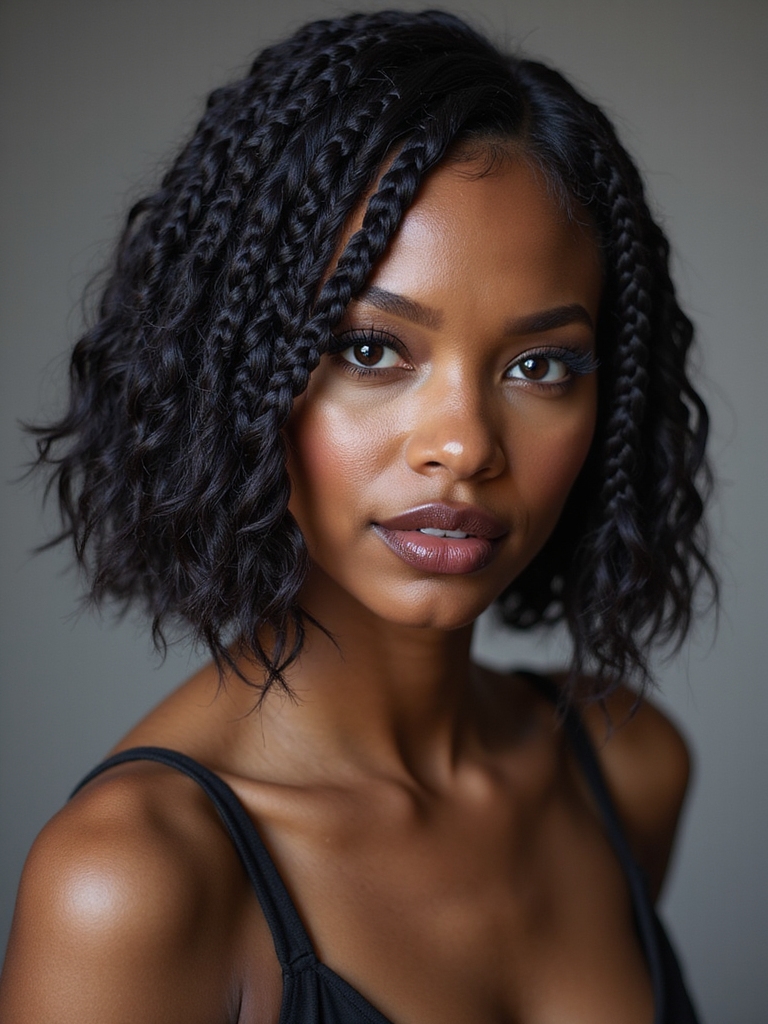
Triangle parts trade the usual squares for angled sections, which hide the scalp more effectively and give the bob a fuller look, since less skin shows as the braids move. Paired with a side sweep, the angled bases and the diagonal fall reinforce each other.
- Hides scalp better than square box parts, especially on finer braids
- Reads as more deliberately designed than a plain side part alone
- Ask in advance; triangle sectioning takes longer than square or center parting
Living With a Knotless Bob Day to Day
The knotless method itself is what makes the whole bob-length category comfortable: the braid feeds in gradually from natural hair instead of starting at a hard knot, so there’s less tension pulling at the root from day one.
That gentler start doesn’t mean zero tension, though. Any part pulled too tight, at the center, the side, or across a scalp design, can still stress the hairline over a full wear, so it’s worth flagging any tender spots before the first section even goes in. A full bob-length install typically runs about half the price of a comparable waist-length set, often under $150 depending on braid size and location.
- Cover the braids at night with a satin scarf or bonnet, without exception
- Cleanse the scalp itself every week or two with a diluted, residue-free shampoo
- A light oil at the part keeps the scalp from drying out under the braids
Knotless Bob Questions Worth Asking First
?Does a knotless bob really pull less than a knotted one?
Generally yes, since the braid feeds in gradually instead of starting at a hard knot pressed against the root. It isn’t automatically painless, though; a part pulled too tight still stresses the hairline regardless of the base, so tension technique matters as much as the method itself.
?Can a scalp design like a heart part be added to any install?
Only really on a knotless base, since the flat foundation is what lets a braider carve a clean curved line. A knotted base needs straighter divisions to hide where each knot sits, which rules out most rounded scalp designs.
?Is a bob-length set actually faster than a longer one?
Yes, noticeably. Less hair to section and braid means a shorter appointment across every braid size, though the exact time still depends heavily on how fine the braids are and whether a scalp design is involved.
The Base Decides What the Part Can Do
Every version of this braided bob comes back to the same mechanic: a knotless base lies flat enough to carry whatever happens at the parting, whether that’s a dead-straight center line, a scalp design, or nothing more elaborate than a deep side sweep.
Anyone unsure where to start might try the simplest parting first, a clean center or a side sweep, before committing to a more intricate scalp design; it’s the easier place to judge how a braider actually handles tension and precision.
More to Browse