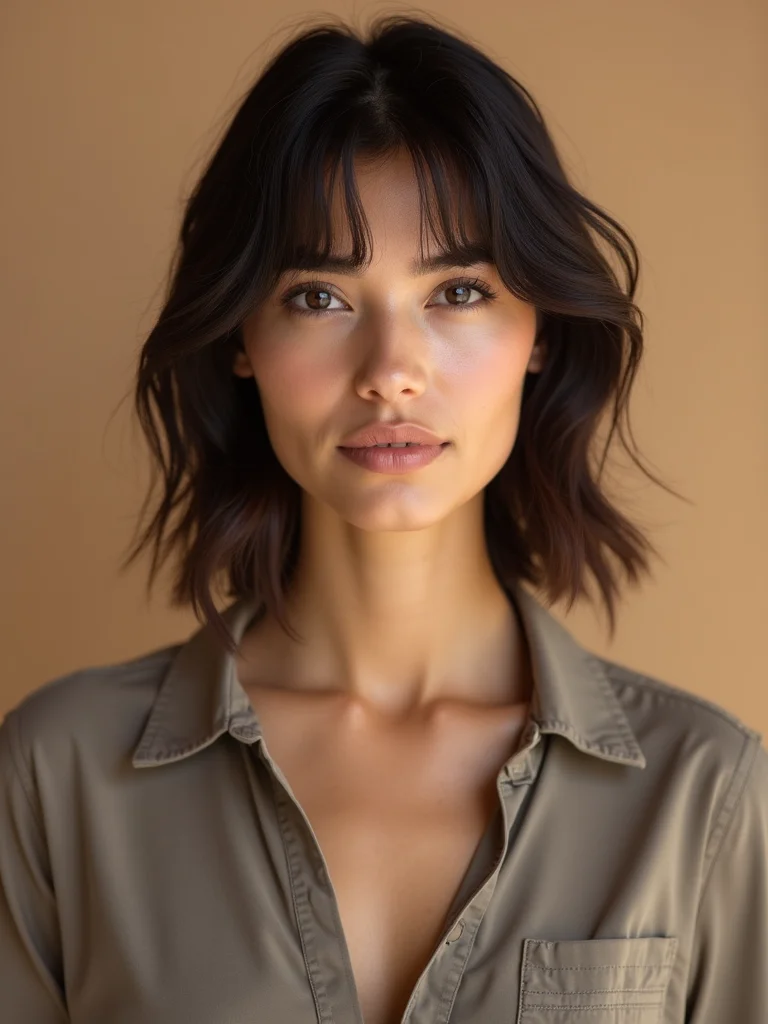
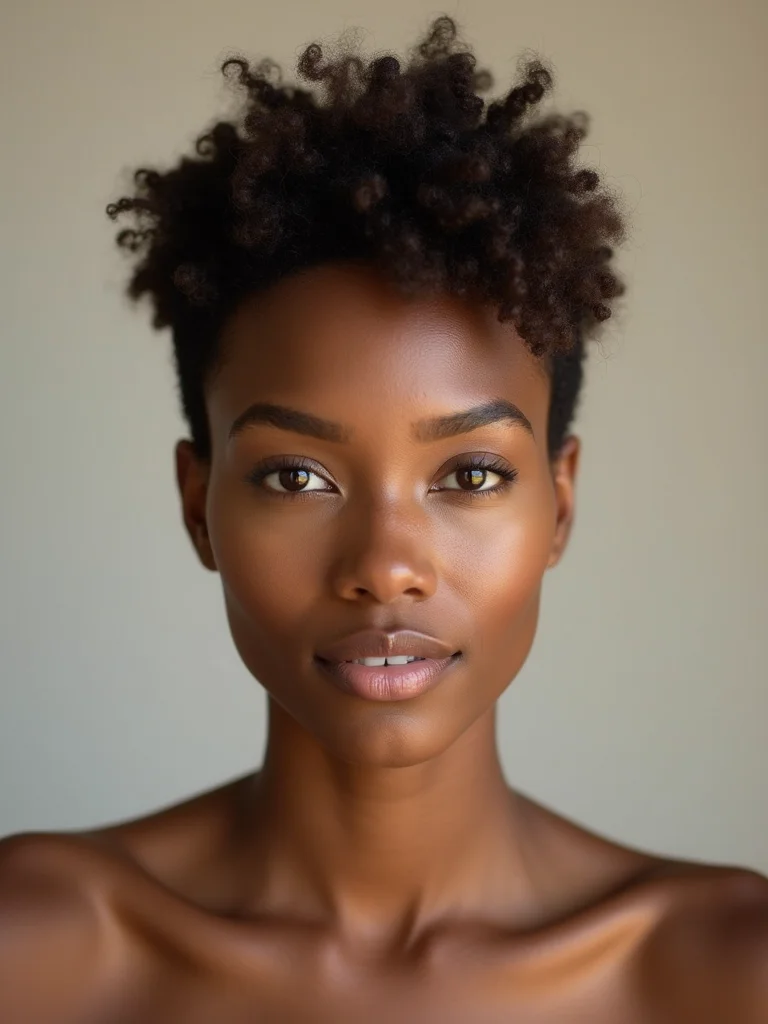
Someone once described a shag to a stylist as “the length you’d want if you couldn’t decide.” That’s not far off. A medium shag doesn’t ask you to commit to one face-flattering strategy or one texture-management trick; it bends toward whichever one you actually need.
The fifteen versions below aren’t variations on a theme so much as fifteen different answers to the same question: what does your specific face and hair actually require from a haircut?
The Short Answer
A medium shag is really a layering strategy, not a single fixed shape. Where the shortest layers sit, how heavily they’re cut, and whether the perimeter stays blunt or piecey all shift depending on your face shape and hair type.
Most stylists start by asking two questions before touching scissors: what feature should the framing highlight, and how much daily styling effort feels realistic. Those two answers, more than any single reference photo, determine which of these fifteen versions actually fits.
Face-Framing Layers

Face-framing layers concentrate the shortest pieces near the cheeks and jaw, leaving the length behind them untouched. It’s the most broadly adaptable entry point into this whole cut, since the framing adjusts to nearly any face shape by moving where it starts. Most stylists treat this as an add-on rather than a full redesign, which keeps the cost modest, typically $15 to $30 on top of a standard trim.
- Works as an addition to almost any other version on this list.
- Shorter framing pulls focus toward the eyes; longer framing softens the jawline instead.
- Grows out unevenly with the rest of the shag, so it needs its own occasional touch-up.

Soft Curtain Bangs

Curtain bangs part down the middle and sweep toward each side, extending the shag’s face-framing effect all the way up to the hairline.
Experts map this pairing to round and square faces most often, since the parted fringe adds length through the center of the face that a heavier, blunt bang doesn’t provide. Because they blend into the shortest layers already in place, curtain bangs added to an existing shag rarely require a separate cutting appointment.
The Shoulder-Grazing Shag

Cut right where the hair meets the shoulder, this length keeps the shag subtle: enough texture to avoid looking flat, not so much that it demands daily attention. It sits at the exact midpoint between a barely-layered cut and a fully committed shag.
It’s often the recommended starting point for anyone trying a shag for the first time, since it can be styled sleek for work or tousled for the weekend without looking like two different haircuts.
The Wavy Shag Lob

A wavy shag lob keeps length at the collarbone while layering enough to let a natural wave pattern show through instead of weighing it down flat.
- Best suited to naturally wavy hair rather than straight hair pushed into waves.
- The bounce comes from the layering, not from extra styling time.
- Salt spray on damp hair is usually the only product this version needs.
Razor-Cut Featherlight Ends

A razor blade shaves weight directly off the ends, producing a featherlight finish that scissors alone rarely match on this length of hair.
The trade-off is durability. Fragile, color-treated, or very fine strands can fray under a razor rather than feathering evenly, so condition matters as much as texture when deciding on this option. A quick strand test at the salon, rather than committing the whole head, is worth asking for if there’s any doubt about how the hair will respond.
On resilient, medium-density straight or wavy hair, the airiness this technique produces is hard to replicate any other way.
🅰️Scissor-Cut Layers
Softer, more controlled texture; safer for fragile or color-treated hair.
🅱️Razor-Cut Layers
Airier, more feathered finish; needs healthy, resilient hair to avoid fraying.
The Air-Dry Friendly Shag

Cut with enough built-in texture, a medium shag can be left to dry completely on its own and still look intentional rather than unfinished. The layering itself does most of the styling work that a blunt cut would otherwise need a brush and dryer to fake.
- Best for hair with some natural wave or texture to begin with.
- A lightweight cream on damp lengths defines the texture before it dries.
- Heat styling becomes optional rather than a daily requirement.
Tousled Volume Without Bulk

This version layers heavily through the crown specifically, building height and volume there while keeping the ends light enough that the overall effect never reads heavy.
It’s a common request from anyone whose medium hair tends to go flat at the root by midday, since the crown layering gives it somewhere to lift from.
A Shag to Lift Fine Hair

On fine hair, a shag’s short, feathered layers create the illusion of more density and movement than the hair actually has on its own. That illusion is the entire appeal for anyone who has spent years hearing that fine hair simply can’t hold volume.
The layering has to stay soft and high here; cut too aggressively, fine hair thins out visibly instead of gaining the intended fullness.
Don’t Over-Thin Fine Hair
It’s tempting to remove more weight from already-fine hair to add texture, but aggressive thinning shears do the opposite: they create thin, see-through patches instead of movement. Ask for soft layering placed high, not heavy thinning throughout.
A Shag That Controls Thick Hair

Thick hair carries the opposite problem: too much density sitting in one solid mass rather than moving as separate, layered pieces.
Where the Weight Actually Needs to Go
A shag cut for thick hair removes weight from underneath the surface, letting the visible layers stay full while the interior thins out.
Ask specifically for interior thinning rather than blunt thinning shears at the ends, which is the detail that most often separates a shag that moves from one that just sits shorter.
The Blunt-Shag Hybrid

A blunt-shag hybrid keeps the perimeter cut clean and straight-across while adding shag-style layering only through the interior and crown.
The result looks fuller and more structured than a typical shag, appealing to anyone who likes texture but isn’t drawn to a choppy, undone perimeter. It photographs more polished than a classic shag while still moving more than a true blunt cut would.
- Best for hair with enough density to hold a blunt line.
- Interior layers stay hidden beneath the solid outline.
- Suits a more polished, put-together daily look than a classic shag.
Curly and Coily Shags

On curly and coily hair, a shag has to be cut dry, in the hair’s fully sprung shape, since curls contract as they dry and a wet cut risks landing far shorter than planned. This is the single detail that separates a shag that flatters natural texture from one that fights it.
Done this way, the layers give curls and coils room to bounce individually instead of clumping into one dense shape.
A shag cut for curly hair and a shag cut for straight hair can look like two entirely different haircuts, even from the same stylist working off the same reference photo.
The Mullet-Inspired Shag

Borrowing the mullet’s shorter crown and longer back, this version pushes the shag’s usual texture into something bolder and more disconnected. It comes across less like a subtle style shift and more like a deliberate statement, which is exactly the point for anyone drawn to it.
- The boldest, most attention-drawing version on this list.
- Needs more frequent shape-ups to keep the disconnection looking deliberate.
- Best suited to anyone comfortable with a cut that draws comments.
Low-Maintenance Styling

Most shag versions on this list share one trait: the texture is built into the cut itself, so the daily styling burden is lighter than it looks in photos.
A five-minute routine, scrunch, air-dry or diffuse, done, covers most of these looks on an average morning.
- Second-day hair often looks better than freshly washed hair on this cut.
- Dry shampoo at the roots extends the style rather than flattening it.
- Heavy, weighty products work against the texture rather than for it.
Color That Amplifies Texture

Dimensional color, lighter and darker pieces woven through the layers, catches the light differently as the hair moves, which makes a shag’s texture look more pronounced than a single flat color would.
Face-framing pieces are the most common spot for the lightest highlights, since they sit closest to the face and catch the most light there.
- Balayage or foilyage both work well with a shag’s layering.
- Plan on a refresh appointment roughly every three months to keep dimension from growing out unevenly.
- Gloss treatments between color visits keep the shine that makes texture read well.
Getting dimensional color right on a shag, in order:
1Start with the face-framing pieces
These sit closest to the face and benefit most from the lightest tones.
2Add lowlights through the crown and interior
This keeps depth in the areas that would otherwise look flat next to the highlights.
3Finish with a gloss
This blends the new color into the existing base and adds shine to the layered texture.
Growing Out Your Shag Gracefully

Because a shag’s layers are already blended rather than cut in one hard line, growing it out tends to look like an evolving style rather than an obvious in-between stage.
- A dusting trim on roughly a ten-week cycle keeps the shortest layers from getting stringy.
- Face-framing pieces usually need attention before the longer sections do.
- A texturizing spray disguises the awkward stage better than a flat-ironed, sleek finish would.
Who It Suits Best
There isn’t one ideal candidate for a medium shag; there are fifteen, sorted by what each person actually needs from it. Someone with fine, flat hair and someone with thick, heavy hair are both being served by the same haircut family, just cut in opposite directions. Even the amount of daily effort someone wants to put in shapes which version actually fits, not just their face shape or texture.
The version worth booking is the one that solves your specific problem, whether that’s volume, bulk, curl definition, or simply how much time you have most mornings.
Medium Length Shag Haircuts, Answered
?Can I switch between a low-maintenance style and a bolder mullet-inspired look with the same haircut?
To some extent, since both rely on the same underlying layering. Going fully mullet-inspired usually requires cutting the crown shorter than a standard shag, which isn’t easily reversed without growing it out.
?Does a medium shag work well with a side part instead of a center part?
Yes, particularly with face-framing or curtain-bang versions, since a deep side part shifts more of the framing toward one side and can slim a rounder face shape.
?How do I know if my hair is thick enough for the blunt-shag hybrid?
If your hair holds a straight, blunt line without looking limp on its own, it likely has enough density. Fine hair tends to look sparse rather than structured in a blunt perimeter.
?Will a medium shag show more gray regrowth than a one-length cut?
Somewhat, since the shortest layers near the face grow out first and can reveal a visible root line before the rest of the length does, especially with lighter, dimensional color.
?Is a medium shag a good option for second-day styling if I work out in the mornings?
Yes, it’s one of the more forgiving cuts for that routine. The built-in texture tends to look intentional even after a workout, especially with a little dry shampoo at the roots.
One Cut, Fifteen Directions
A medium shag earns its popularity precisely because it isn’t one look pretending to be many. It’s a set of layering decisions that can be pointed toward volume, control, curl, or simplicity, depending on what’s actually needed.
Whichever version you’re drawn to, bring your stylist the actual problem you’re trying to solve, not just the photo. That detail will shape the cut more than the picture ever could, and it’s the difference between a shag that fits your life and one that only fit the photo it came from.
You Might Also Like