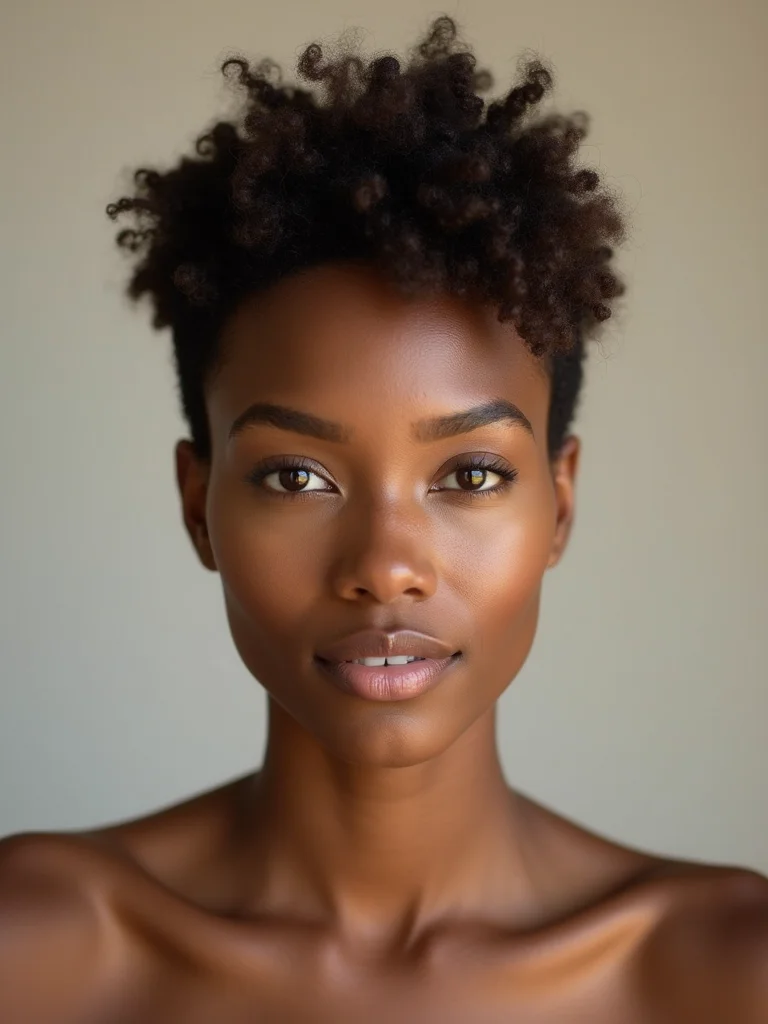
Walk into any salon this season and the shoulder length shag haircut turns up on half the inspiration photos people hand me. It refuses to settle on short or long, and that is the whole appeal. The cut lands right around the collarbone, layered enough to show real movement yet long enough to twist up on a hot afternoon when you have had enough of it. Plenty of my clients want exactly that.
What follows is a working tour of the versions I cut most often, sorted by texture, by face shape, and by how much effort you want to spend each morning. Find the one that matches your hair and the cut does most of the styling for you.
Shoulder-Length Shag Basics
A shoulder-length shag is built from stacked layers that land around the collarbone, so you keep the length to tie back while the layers do the moving. The right version leans on your texture and face shape far more than on any passing trend.
Expect to pay roughly $60 to $120 for the cut, and to book a trim every 8 to 10 weeks so the layers hold their shape. Curly and razor-cut versions ask for a little more care, which is worth knowing before you sit down.
Soft Curtain Bangs on a Shoulder Length Shag

Curtain bangs and a shoulder-length shag belong together. The fringe parts in the middle and sweeps back toward the cheekbones, melting into the face-framing layers so the front falls as one continuous shape. This is the version I point first-timers toward. It grows out softly, and you can pin it back on the days you cannot be bothered. To see the full spread of fringe, the shag with bangs covers every option.
- Ask for bangs that hit around the cheekbone, with enough length to tuck behind the ears.
- Works on most face shapes; the center part adds a little length to a rounder face.
- Refresh the fringe with a dusting trim every 4 to 6 weeks, separate from your full cut.

Choppy Piecey Layers for Bold Texture

Take a shoulder-length shag and cut the layers shorter and more aggressively, and you get the choppy version. The pieces are deliberately uneven, so the hair breaks into chunky, defined sections rather than one smooth sheet. It looks modern and a little undone.
Keeping chop from going stringy
When someone shows me a choppy photo, I size up their natural density before anything else. Medium to thick hair carries chop well. Very fine hair can go stringy once it is broken up that much, so I ease the choppiness back for finer textures and keep a little more weight in the perimeter to hold the shape together. A point-cutting or slide-cutting technique creates those separated tips.
Style it with a matte paste or texture spray worked through dry hair. Skip the smoothing serum, since you want grit and separation, not shine. To push the look shorter, the medium choppy shag takes the same idea further.
A few terms worth knowing before your consultation:
📖Shag
A layered cut with shorter crown layers and a fuller, textured perimeter that creates movement.
📖Face-framing layers
Pieces cut around the face, usually starting near the cheekbone, that soften and shape the front.
📖Feathering
A finishing technique that thins and softens the ends into airy, broken-up tips.
A Wispy Fringe That Flatters Round Faces

A round face looks softer when a shoulder-length shag is built with vertical movement. The layers carry the eye up and down, and a wispy fringe broken into separate pieces keeps the forehead from looking heavy.
The longest layers do the work here: keep the perimeter grazing the collarbone so the cut draws the face longer, and ease the width off the cheek where a round face reads widest. A few longer pieces around the jaw pull a soft vertical line down past the chin.
Fine hair does best with a feathered fringe, cut so it lies in airy strands across the brow rather than a solid curtain.
Face-Framing Layers to Soften a Square Jaw

A strong, square jaw is a feature worth flattering, and a shoulder-length shag does it with soft, curved face-framing layers. The front pieces sweep past the jaw, curving in toward the chin so the angle softens.
Where this goes wrong is a perimeter cut dead straight at jaw level, which only echoes the square angle. Ask for the framing to start higher, up around the cheekbone, and to taper down past the jaw in a gentle curve.
- Start face-framing up at the cheekbone for the softest result.
- Let the longest front pieces fall just below the chin to draw the eye down.
- Curved, sweeping ends soften an angle far better than blunt ones.
Not sure which fringe to ask for? A quick gut check:
1Face reads round or forehead feels wide?
Go for a center-parted wispy fringe to draw a little length.
2High forehead you would rather cover?
A fuller, feathered curtain bang gives coverage without a hard blunt line.
Airy Feathered Ends for Lightness

Feathering is the finishing move that gives a shag its lightness. The stylist thins the very ends so they taper into fine, separated points, and the cut loses any blocky heaviness. On straight and wavy hair it builds that soft, floaty perimeter the shag is known for.
It rewards the right hair type. Medium textures take feathering well. If your hair is already fine or fragile, heavy feathering can leave the ends looking sparse. Use a light hand here. Tell your stylist how much density you are willing to give up before they start.
A Wavy Shag That Works With Natural Texture

Natural waves and a shag are a near-perfect match. The layers give each wave room to bend, so the hair stacks and springs with volume and skips the blow-dryer entirely. If you have been hiding your waves under length, this is the cut that finally puts them to work. Here is how I set up a wavy shag for clients:
- Keep some weight on the layers so the waves have the body to form a defined bend.
- Work a curl cream or sea-salt spray through damp hair, then scrunch upward toward the roots.
- Air-dry or diffuse on low. Rough towel-drying is what turns waves to frizz.
- Refresh day-two waves with a little water and cream; a full re-wet is overkill.
Heads-Up
Over-feathered ends are the most common regret I see, especially on fine hair. Once the perimeter is thinned out it can take months to grow back to a fuller line. Ask for conservative feathering on the first visit — a second pass to remove more is easy to schedule, and there’s no walking back a cut that went too thin.
Curly Shag Layers for Full Volume

Curly hair was made for a shag, but only when it is cut correctly. The layers stop curls from piling into a heavy triangle, so each coil stacks and springs with volume at the crown and movement down the sides. Done right, a curly shag is among the most flattering cuts going.
Why dry cutting matters for curls
One rule governs the whole cut: shape curls dry, in their natural state. I learned this the hard way early on, when I cut a client’s coils wet and watched them spring up nearly two inches shorter than either of us expected. A dry cut lets the stylist see where each curl actually lands and set the layers there.
Expect a dry curl cut to run higher, often $90 to $150, and to take longer than a standard cut. It earns the difference. For the technique in detail, the curly shag haircut digs into cutting and styling coils.
Fine Hair and a Lifted Crown for Fullness

Fine hair and a shag get along better than most people expect, as long as the layers build height. Short, stacked layers at the crown lift the roots and create the look of more density right where fine hair tends to fall flattest, which is the whole reason a well-cut shag works so well on thin textures.
Build height at the crown
The fine-haired clients who leave happiest are the ones who let me build lift at the crown and leave the length down the back alone. A round brush at the roots, or a few large velcro rollers, locks that height in. A volumizing mousse at the roots does more for fine hair than any product you put on the ends.
Keep the feathering gentle. Over-thinned fine hair frays and loses the fullness you were after, so the layering should add separation while protecting density. The shaggy bob for fine hair is a shorter take on the same approach.
🅰️Cut dry
Best for curly and coily hair. The stylist can see true shrinkage and set each layer where the curl actually falls. A little pricier and slower.
🅱️Cut wet
Fine for hair that dries predictably, like straight or loose waves. Faster, though it risks taking curls too short once they spring up.
Thick Hair and Debulked Layers That Move

Thick hair can wear a shag beautifully once the weight is managed. Left all one length, dense hair sits like a solid block and spreads into a pyramid at the bottom. Internal layering pulls weight from inside the shape, so the hair falls in moving, textured sections. A few things make a thick shag work:
- Ask for internal debulking so weight comes out from deep within the shape.
- Keep the perimeter around the collarbone to stop the cut spreading too wide.
- Smooth a cream through damp hair to keep the texture controlled and calm.
- Book trims every 8 weeks; thick hair regains bulk fast and the shape blurs quickly.
A Center Part for Balanced Proportions

A center part takes the shoulder-length shag in a clean, symmetrical direction. Splitting the hair evenly down the middle gives both sides matching face-framing pieces, dropping like two soft curtains that mirror each other around the face.
When a center part flatters you
It flatters balanced, oval, and longer faces best, since a center part plays up symmetry and adds vertical length, though on a rounder face you may want the framing layers to start a touch lower to give back a little width at the sides.
The texture of the shag keeps a center part easy. A sleek center-parted lob can feel stiff, while the layers and movement here soften the whole thing.
Side-Swept Bangs for Heart-Shaped Faces

A heart-shaped face, wider at the forehead and narrower at the chin, comes into balance with side-swept bangs over a shoulder-length shag. The fringe crosses on a diagonal from a deeper side part, softening the upper face, while the lower layers add fullness around the jaw to even out the proportions. Here is how to ask for it:
- Request a deep side part so the fringe has room to sweep across the forehead.
- Cut the bangs to blend into the face-framing layers, not as a separate blunt fringe.
- Build soft fullness in the layers around the jaw to balance a narrower chin.
- Train the sweep with a round brush so it falls to the side and stays out of your eyes.
Razor-Cut Detailing for Softer Ends

A razor finish trades the clean line of scissors for soft, tapered edges that melt into airy texture. The blade thins and feathers each end, so the shag falls in wispy, separated pieces with a softer, more undone finish.
When to skip the razor
It suits straight to wavy hair that wants a piecey, broken-up edge. There is a real caveat: razoring is rough on very dry or coarse hair, since the angled cut can lift the cuticle and invite frizz and split ends. On the right hair it is lovely. On the wrong hair it fights you all month.
If you like this softer, piecey direction, the modern shag haircut leans into razored texture across more lengths.
Shattered Ends for Restless Movement

Shattered ends push the perimeter past simple feathering into deliberately broken, irregular tips. The ends are cut at varied depths so the hairline looks intentionally uneven, which lands as energetic movement.
It is one of the more fashion-forward ways to wear a shag, and it brings a practical perk: the irregular edge hides grow-out well, since there is no single blunt line to go soft. That buys you a few extra weeks between salon visits. The layered shag offers a gentler version of the same energy.
- Best on straight to wavy hair where the broken edge shows clearly.
- Style with texture spray to play up the separation.
- Stretch trims to 10 to 12 weeks, since the uneven edge hides growth.
A Low-Maintenance Wash-and-Go Shag

A wash-and-go shag is built so the cut does the styling for you. The layers and texture are placed so the hair dries into an intentional shape with little more than a bit of product, which saves your mornings and spares your hair the daily heat.
It only works when the cut is shaped for air-drying from the start, so tell your stylist up front that you want minimal daily styling. There needs to be enough weight left at the perimeter that the air-dried shape looks deliberate.
- Ask for a cut shaped to fall correctly as it air-dries.
- Work a leave-in or light cream through damp hair, then leave it be.
- Scrunch, do not brush, once it is dry to keep the texture intact.
A Polished, Sleek Finish When You Want It

A shag does not have to look undone. The same layers smooth into a sleeker, dressed-up finish when you blow them out, so this one cut swings between casual and polished on the strength of how you style it.
Blow the lengths out with a brush to calm the texture into soft, controlled movement, then add a drop of shine serum on the mid-lengths and ends. A polished blow-dry adds maybe 20 to 30 minutes to your routine, so save it for the days you want the cut to look dressed up.
- Aim the nozzle down the hair shaft as you brush for shine.
- A single drop of smoothing serum controls flyaways without weighing the layers down.
- Finish with a cool shot of air to set the smoother shape.
Common Mistakes to Avoid
The mistake I correct most often is layers cut too short at the crown, which leaves a pouf on top and thin, stringy ends below. A shoulder-length shag needs its shortest layers to stay long enough to blend, so bring a photo and be clear about how much texture you actually want. One reference picture does more than any amount of describing.
The other common misstep is asking for face-framing that starts too low. It thins out the perimeter and loses the shoulder-grazing weight that makes this length work. Lead your consultation with your hair type and the amount of movement you want, then let your stylist place the layers from there. Lately the softer, grown-out version of the shag is what most people are asking for, and it is the most forgiving place to start.
Finding the Shag That Fits You
The shoulder-length shag earns its spot because it sits in the sweet spot: long enough to tie back and dress up, short enough to put all that layered texture on show. It bends to fine, thick, curly, straight, and wavy hair, and it shapes around round, square, heart, and oval faces once the framing and fringe match your features. The medium shag hairstyles are worth a look if you want to go a touch shorter.
Think about your texture first, then how much movement you want, then your honest tolerance for daily styling. Bring a photo, ask for the version that fits all three, and you walk out with a cut that works for your hair.
More Ideas Here