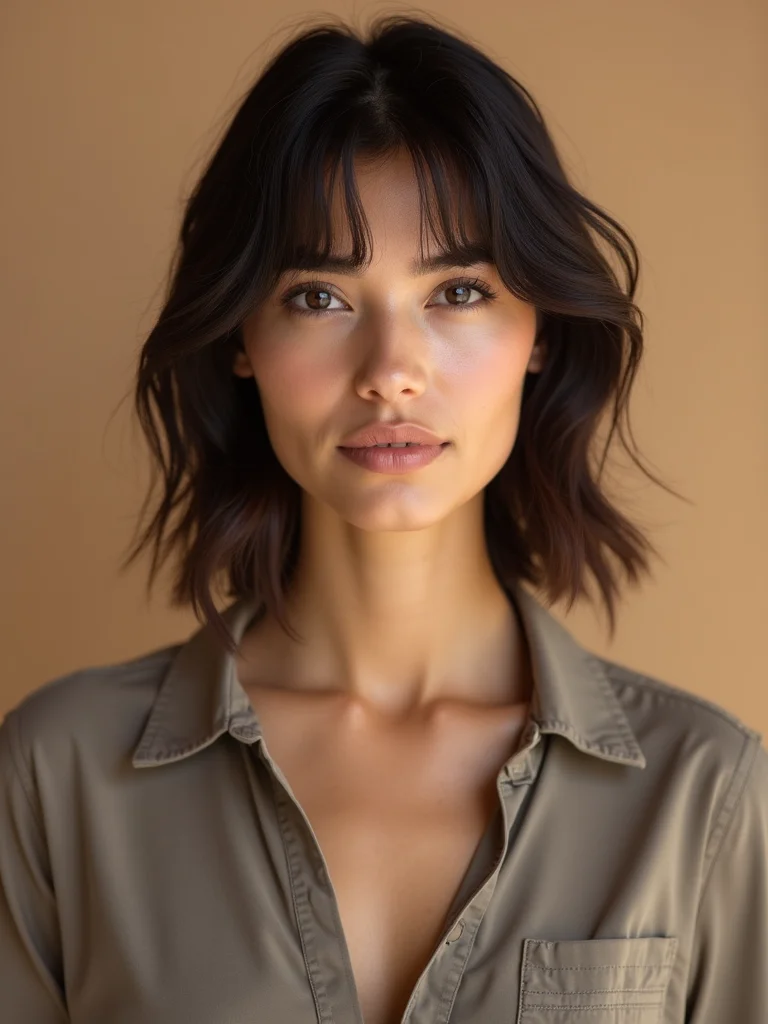
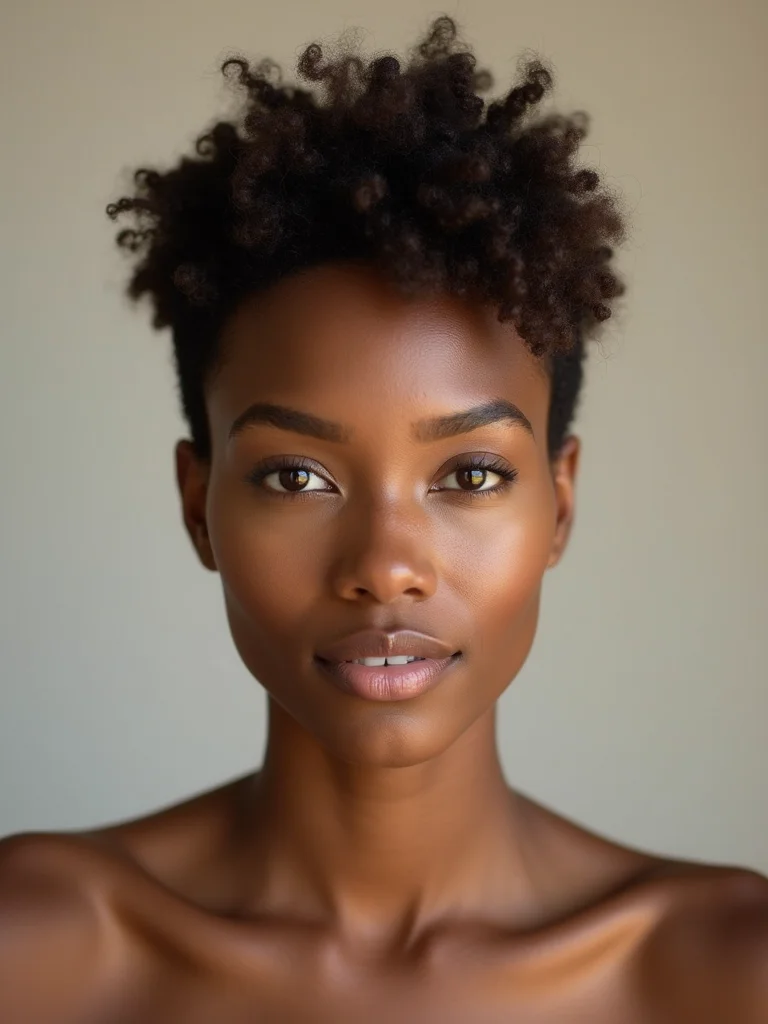
The myth around pairing bangs with a shag is that it doubles the upkeep, one more thing to trim, one more thing to style. In practice the fringe and the layers usually share the same texture, so keeping one sharp handles most of the other automatically.
Fifteen versions follow, from a classic feathered 70s fringe to grown-out split bangs, each with the honest maintenance behind the look.
What Bangs Actually Add to a Shag
| Question | Answer | Why |
|---|---|---|
| Does adding bangs mean double the trims? | Not really, since the fringe blends into the same layering | One texture, one styling routine |
| Do bangs work on curly or coily shags? | Yes, if cut dry to the curl pattern | Wet-cut bangs on curls shrink unpredictably |
| What’s the lowest-upkeep bang option here? | Curtain bangs blended into face-framing layers | They grow directly into the cut, with no hard trim line to maintain |
Classic 70s Shag With a Feathered Fringe

Choppy shag layers finished with a soft, feathered fringe skimming the brow make up the pairing most people picture first when they hear the words together. The feathering keeps the whole thing light on the forehead, never heavy.
Blow-dry the fringe with a small round brush, rolling the ends under and out at the same time for that classic flip. This is the version that started the whole trend, and it still holds up decades later.

A Wolf Cut With Piecey Bangs

The wolf cut pushes the shag idea further with heavier crown layering, and piecey, separated bangs match that same broken-up texture.
- Bangs get point-cut rather than cut in one clean line, so pieces separate naturally
- A little matte paste worked through the ends keeps the separation visible all day
- Pairs well with a deep side part, similar to a wolf cut with curtain bangs, letting bangs sweep naturally across the forehead
💡Separating Pieces Without Overdrying
Rub a rice-grain amount of paste between the palms first, then press it through just the bang ends. Too much product at once can look greasy fast on such a small section of hair.
Curly Shag With a Rounded Micro Fringe

Curly bangs, cut short and rounded, read bold without fighting the curl pattern, since the roundness follows how coils naturally cluster at the hairline.
- Cut dry, curl by curl, so the fringe lands at its true length once it springs up
- Define with a small amount of curl cream, never a heavy gel that can weigh the shape down
- Best on tighter curl patterns, where shrinkage keeps the fringe from reading too long
Wavy Shag With Soft Curtain Bangs

Curtain bangs part naturally down the center and sweep to either side, which makes them the gentlest possible introduction to a fringe on wavy hair.
- Parts down the center by default, but pushes to a deep side part just as easily for a different mood
- Grows out gracefully, simply tucking back into the length on its own
- Air-dries alongside the whole cut using the same sea-salt spray
Textured Bob Shag With Wispy Bangs

On a shorter, bob-length shag, a wispy fringe keeps proportions light rather than top-heavy, thinned out enough to see through. I point most first-time fringe clients toward this length specifically, since a wispy line forgives an uneven cut far better than a blunt one does, and it suits both high and low foreheads equally well.
- Ask for the fringe point-cut and thinned at the ends, not blunt across
- A light hold spray keeps wispy pieces from flattening by midday
- Super-wispy bangs like these need a trim closer to every three weeks to stay sheer
Long Layered Shag With Airy Bangs

Long hair carries weight that can flatten a shag’s movement, and airy, wispy bangs counter that by adding lightness right where the eye lands first.
Keeping Length From Overwhelming the Fringe
The bangs need their own thinning separate from the rest of the cut, since long layers alone won’t give them enough separation to read as airy.
Refresh with a texturizing spray at the roots of the fringe specifically, not just the crown, to keep it from going flat under its own length.
📋Before Cutting Bangs Into Long Hair
- ✓Confirm the stylist will thin the fringe on its own, not folded into the overall layering pass
- ✓Decide on length now; bangs above the brow read very differently from ones that graze it
- ✓A fringe-only trim typically runs $15 to $25 between full shag appointments
Shag Mullet With a Choppy Fringe

The shag mullet leans into contrast: short, choppy layers up front and through the crown, with more length left at the back. A choppy fringe matches that energy instead of softening it.
Point-cutting throughout keeps every piece, bangs included, looking sharp and deliberate.
- Bangs cut short enough to clear the brow for a bolder statement
- Works well through a longer grow-out, since choppy pieces hide new growth
- Straight to wavy hair holds the choppy separation better than curl patterns do
A couple of terms worth knowing before a fringe consultation:
📖Weight line
The spot in a fringe where the shears leave the most density; moving it higher or lower changes how heavy the bangs look without changing their length
📖Root drag
How much a wet fringe stretches down before drying and springing back up; stylists factor this in most on curly and wavy bangs
The Shullet With Flipped-Out Ends

A shullet, the shag-mullet hybrid with more polish, pairs flipped-out ends throughout with a fringe that follows that same upward flick.
Getting the Flip to Hold
Round-brush the fringe up and away from the face while blow-drying, then set with a cool shot of air to lock the bend in place.
The overall effect reads more editorial than a classic mullet, fully intentional rather than retro.
Razor-Cut Shag With Baby Bangs

For the boldest option on this list, baby bangs sit high above the brow, razor-cut so the ends taper softly.
This is a real commitment: baby bangs show grow-out fastest of any fringe length, since even a few days of growth changes how high they sit. I ask anyone considering this cut to hold a strip of paper at the intended length for a full day first, since the commitment reads very differently in a mirror than in a photo.
- A high, clear forehead gives the extra length above the brow room to actually show
- A trim closer to every two weeks keeps the line from creeping down
- Razoring softens the ends so they don’t read as one stiff block
Coily Shag With Sculpted Bangs

On coily and kinky textures, sculpted bangs get cut and shaped while the hair sits in its natural, unstretched state, so the finished shape matches exactly how the curls sit day to day. I stopped cutting coily bangs on stretched hair years ago, after watching one spring up two inches shorter than planned the moment it dried.
- Ask specifically for a dry cut, worked through section by section
- A curl-defining gel, applied to damp hair, holds the sculpted shape without crunch once it’s scrunched out
- Edge control at the hairline keeps the fringe’s edge crisp between wash days
Fine-Hair Shag With Volume Bangs

Fine hair and bangs can go flat together fast, but volume-focused bangs fix that by building lift right at the root.
A small round brush and a blast of warm air, lifted straight up from the root before curving the ends under, builds nearly all the lift on its own.
Skip heavy creams on fine bangs specifically; they weigh down the one section of hair with the least density to spare.
Shag With Face-Framing Bangs and Layers

Sometimes the best fringe isn’t a fringe at all in the traditional sense, just longer face-framing pieces cut into the front of an existing shag.
A Softer Way to Wear a Fringe
These pieces taper down past the chin rather than stopping at the brow, which makes this the most reversible option on the list: growing out two or three inches blends them straight back into the rest of the layers with no special trim needed.
It’s the version to ask for if you’re curious about bangs but not ready to commit to a true fringe.
Wet-Look Shag With a Blunt Mini Fringe

For a sleek, editorial finish, a wet-look styling gel over the whole shag pairs with a short, blunt mini fringe cut in one clean line.
The contrast is the point: texture and gloss everywhere else, one crisp, graphic line right at the forehead.
- Work a strong-hold gel through damp hair, then let it air-dry or diffuse on low
- Keep the fringe line razor-straight; any softness undercuts the wet-look effect
- A touch of gel on dry hair the next morning refreshes the look without a full restyle
Shag With Grown-Out Split Bangs

Growing out bangs doesn’t have to mean an awkward middle stage. Splitting the growing fringe into two sections and blending each side into the layers on either side of the part gets ahead of the awkward stretch.
Working With the Grow-Out, Not Against It
Ask a stylist to cut a few connecting layers between the growing bangs and the surrounding length, so the split holds its shape evenly as it grows.
I walk nearly every grow-out client through this split technique before suggesting anything more drastic, since it buys real time without a single extra cut.
ℹ️The Grow-Out Timeline
Most bangs take about eight weeks to clear the eyes, but closer to a year to grow long enough to blend fully into layers past the chin. Splitting and blending early shortens how much of that stretch actually looks unfinished.
Tousled Shag With Soft, Piecey Bangs

Texture left deliberately loose, with bangs that come across soft, makes this the undone version here.
Work a texturizing cream through the fringe and lengths while hair is still damp, scrunching upward, then leave it alone until it’s fully dry.
A finger comb-through in the morning is the entire routine, making this the lowest-effort version here by a clear margin.
How to Get the Look
Face shape matters here more than most people expect. Rounder faces tend to do best with fuller, longer fringe types like curtain or face-framing pieces, since they add length. Longer or narrower faces can carry a blunt or micro fringe well, since the horizontal line adds width. A high forehead has room for baby bangs; a lower one usually looks better with something that skims the brow.
A cowlick at the hairline changes more plans than any face shape does. Bring it up at the first consultation, not after the cut, since a strong cowlick can push a straight fringe into a permanent side-swept shape no matter how it’s styled at home.
Shag Bangs Questions Worth Asking
?Do bangs actually need more daily styling time than the rest of a shag?
A little, mostly because the fringe sits closest to the face where any flaw shows first. Most of that extra time is a quick round-brush pass or a scrunch with product, rarely more than an extra minute or two.
?Can curly or coily hair wear any fringe style, or only certain ones?
Nearly any style works as long as it’s cut dry to the curl’s natural state. Micro and sculpted fringes tend to hold their shape best on tighter patterns, while looser curls can wear longer, curtain-style bangs just as easily.
?What happens if bangs get cut and the length turns out wrong?
Too-short bangs grow out in a few weeks and can be blended into face-framing layers in the meantime; too-long bangs can usually be trimmed at the next visit. Bring extra reference photos next time to close the gap between expectation and result.
?Is it possible to switch between having bangs and not having them without a drastic haircut?
Yes, especially with curtain or face-framing styles, since they blend into the existing layers on their own. Growing them out mostly means a few months of styling them swept to the side.
?Do bangs get oily faster than the rest of the hair?
Often, since the fringe sits directly against the forehead where natural oils and skincare products transfer onto it. A light dust of dry shampoo at the fringe’s roots between washes handles most of that.
A Fringe Worth Trying, Not Just Admiring
Bangs and a shag were built for each other: one texture doing double duty, whether that means soft curtain pieces or a committed micro fringe.
Save the two or three versions that match your hair type and face shape, then bring them to a consultation alongside honest notes about styling time.
More Inspiration