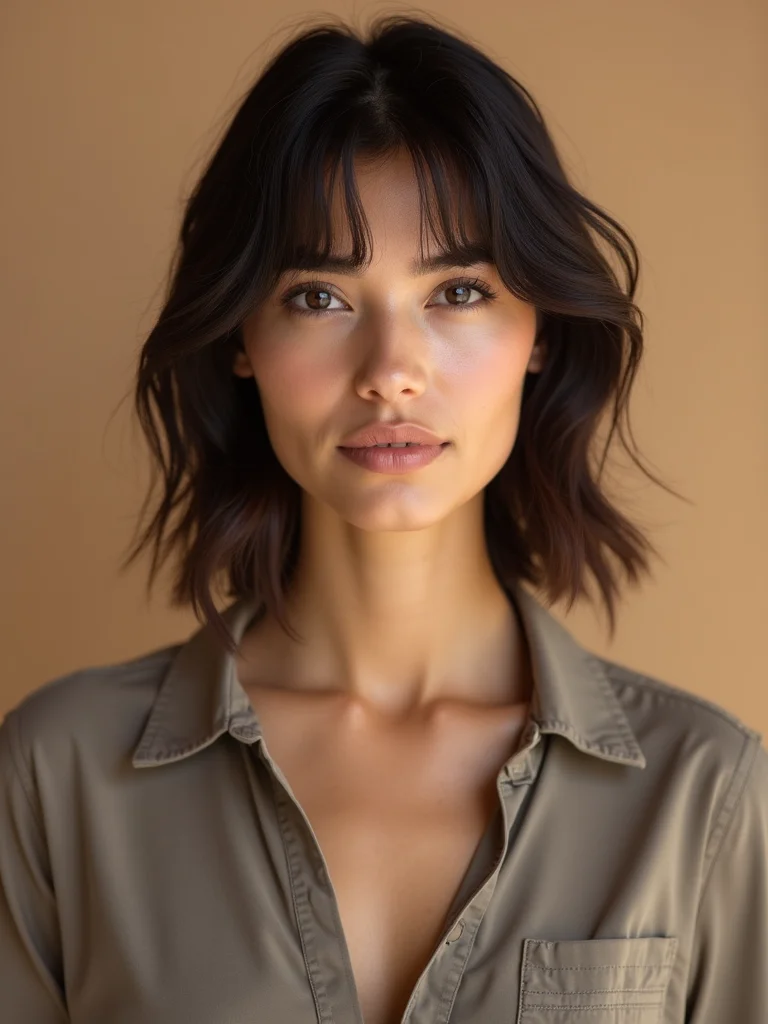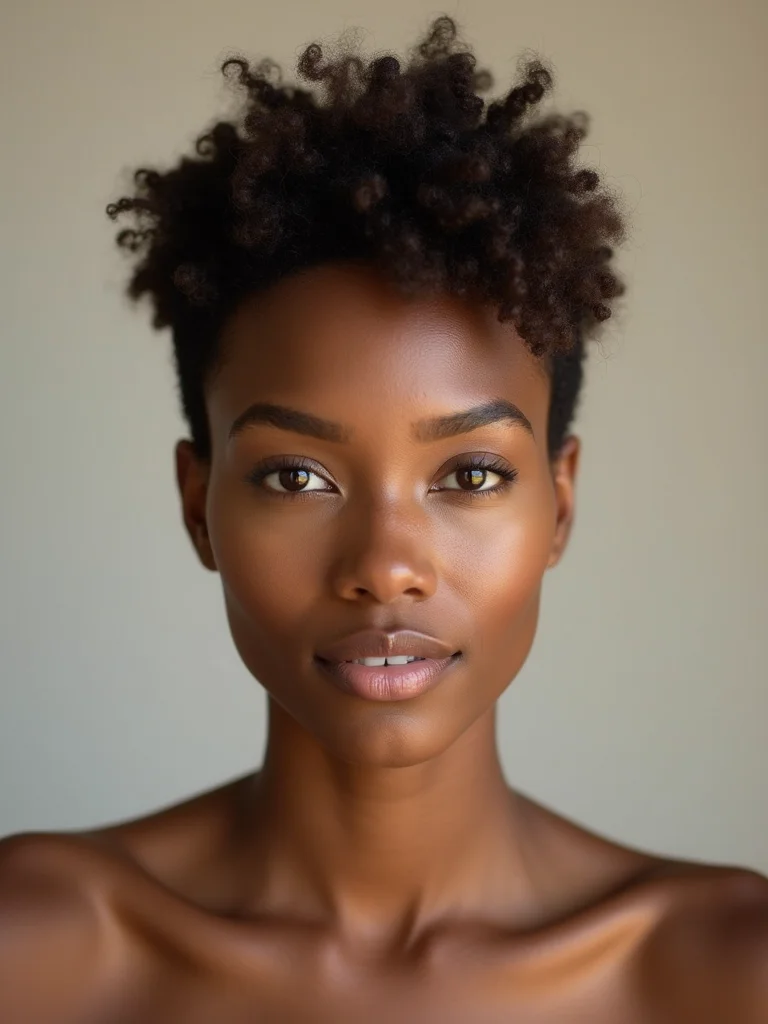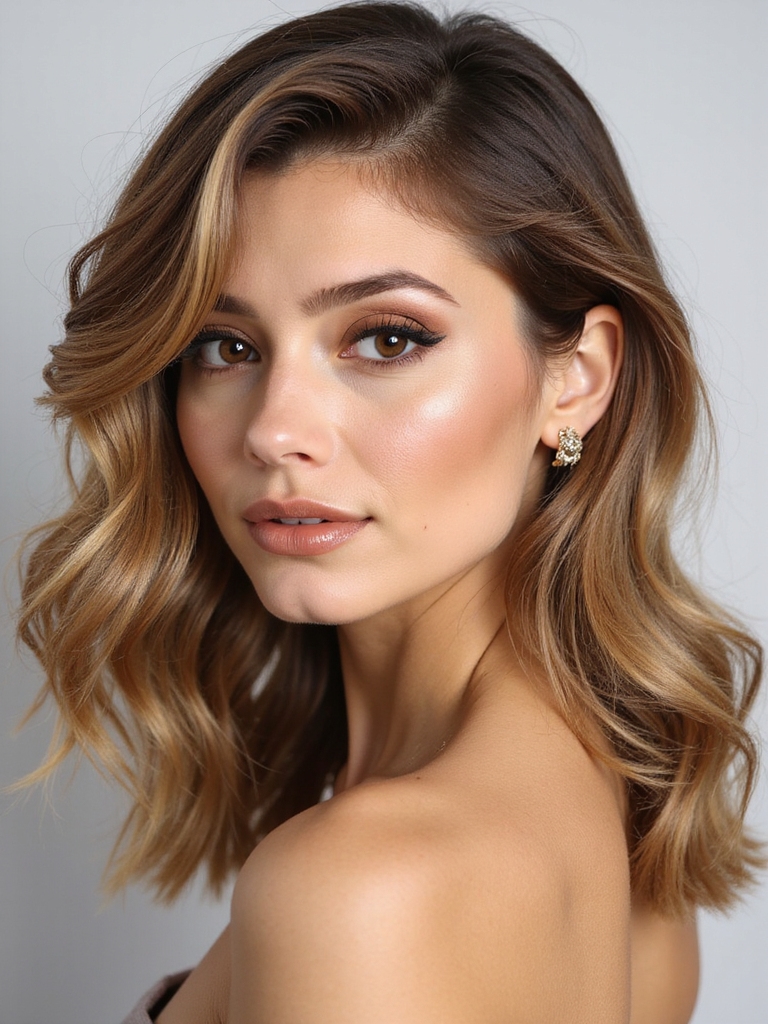
Two clients can ask for the same medium layered haircut in the same week and walk out with completely different hair. One gets soft, feathered movement. The other gets sharp, choppy texture with real attitude.
The length was identical both times. The cutting technique decided everything else. The sixteen approaches below sort by that technique, soft versus sharp, so you can ask for the actual result you want instead of just a length.
Match the Ask to the Result
| Want This | Ask For | Skip |
|---|---|---|
| Soft, gentle movement | Feathered or invisible layers | Choppy point-cutting |
| Sharp, edgy texture | Choppy or razor-cut layers | Long, blended feathering |
| Change without commitment | Face-framing layers only | Layers through the whole head |
Face-Framing Layers as the Foundation Move

Face-framing layers shape the pieces around your face into a soft, tapered frame, carving dimension into the front of the cut where it actually shows. Most other looks on this list build on top of this one starting point. For a face-shape-first take on the same length, medium layered hair approaches it from a different angle.
- The shortest piece traces the cheekbone or jaw to flatter the face
- Adds shape up front without touching overall length
- A brush lifts and sets the frame once it’s dry
Feathered Layers for the Softest Possible Movement

Feathered layers taper the ends into fine, wispy points, keeping the hair light and airy instead of sharp. It’s about as gentle a texture as this length allows, with no hard lines anywhere in the cut.
Most pros point to this as the version to suggest when someone wants movement but is nervous about anything bold, since feathering grows out cleanly with no defined stage to manage.
- Suits straight and wavy hair best, where the tapered ends show clearly
- A round brush flicking the ends outward while drying builds the most movement
- The catch is coarse or very thick hair can swallow the effect entirely
A few terms come up constantly once you start describing what kind of medium layers you actually want.
📖Feathering
Tapering the very ends into fine points so they flick and lift rather than sit heavy.
📖Point-cutting
A scissor technique that breaks a straight edge into irregular pieces, the scissors held vertically rather than straight across.
Invisible Layers That Hide Inside the Cut

The whole trick with this technique is that nothing about it shows from the outside. A stylist works underneath the top layer, removing weight where nobody sees it happen, while the surface keeps its full, uninterrupted line.
Why This Reads as Thicker, Not Thinner
Fine hair benefits from this approach more than almost any other, since it gains real movement without the visible thinning surface layers tend to cause.
Name the technique specifically when you book: interior layering, or invisible layering. Describing a look instead of the method is how this one most often gets lost in translation at the chair.
Stacking Enough Layers to Build a Shag

Stack enough soft, choppy layers and medium length turns into a shag, the most textured, undone shape on this whole list. Volume builds at the crown while movement runs through the rest of the length.
Wavy and thick hair come alive here in a way straight, fine hair doesn’t quite manage; the layering releases weight the texture can then move with.
Scrunch a texture spray through damp hair and rough-dry with fingers. Skip the round brush entirely; a shag wants to stay undone rather than smoothed.
🅰️Feathered Layers
Soft, tapered movement built for a gentle, low-commitment change.
🅱️Shaggy Layers
Heavy, choppy texture stacked through the whole head for a bigger, bolder shift.
Long Curtain Bangs Paired With the Layers

Long curtain bangs and medium layers were made for each other. The fringe parts in the center and sweeps into the layers below, so the whole front reads as one continuous, soft shape rather than a fringe added on top.
It grows out gracefully into longer face-framing pieces, which makes it one of the lower-risk ways to add a fringe to an existing layered cut.
A Textured Lob Between Polished and Undone

Sitting right at the collarbone, this version stays a lob at heart but scatters soft layers and a slightly rumpled finish through it, refusing to fully commit to either polished or undone. For the broader category this belongs to, layered haircut covers more variations.
The layers add just enough shape to keep the length from reading flat or blocky, while the length itself stays easy to dress up or rough up depending on the day.
- Wave it for texture, or smooth it for polish; both read intentional
- Suits most face shapes and textures without much adjustment
- The default length most people land on when they’re unsure
| Textured Lob | Full Medium Layers | |
|---|---|---|
| Length | Collarbone, fairly fixed | Chin to shoulder, more range |
| Styling effort | Low; a wave or smooth-down both work | Depends heavily on the technique chosen |
Layers Built Specifically for Fine Density

Fine hair and layers have a complicated relationship. Too many layers thin it out further; the right ones add the impression of body it can’t build on its own.
The answer is long, subtle layers with a kept perimeter, so movement builds in without the ends going sparse. Where this struggles is any version with short, choppy layering, which removes exactly the density fine hair can’t spare.
- Ask for long, soft layers and a solid, uncut perimeter
- A root mousse worked into damp roots does more here than most products applied to the ends
- Rough-dry with fingers rather than a brush for the most lift
Debulking Thick Hair From the Inside Out

Thick hair needs the opposite treatment from fine hair. Here, layers exist mainly to remove weight through interior debulking, thinning the dense underlayer so the visible hair moves and falls in soft pieces instead of puffing outward.
Done well, a thick head of medium-length hair stops building into a triangle shape and starts showing the same movement fine hair often has to fake with product.
Layers That Let a Wave Actually Show

On wavy hair, layers are what let the wave actually show instead of getting dragged straight by its own weight. Releasing that weight lets each wave spring up and build real dimension as the hair falls.
Letting the Cut Do What Product Can’t
It’s the difference between a flat, tired wave and one that reads as deliberate rather than accidental. For more length options built around the same idea, mid-length layered haircuts goes further into it.
Define with a salt spray or wave cream on damp hair, then scrunch and air-dry for the most natural result.
Choppy, Point-Cut Layers for Real Edge

Choppy layers are cut with bold, point-cut ends for sharp, separated texture, the deliberately undone end of the spectrum where the pieces read distinct rather than blended.
It suits anyone who wants attitude built into the cut itself, and it works best on hair with some natural texture already there to hold the separation.
- On very fine hair, ask for a softer version so the ends don’t read sparse
- A matte paste worked through dry hair and pinched at the ends defines the pieces
- The sharper cousin of feathering; the two rarely belong in the same cut
Swoopy Layers Built for a Bouncy Blowout

Swoopy layers are cut to bend and curve into a rounded, glossy blowout, the kind of voluminous shape that actually swings when you move rather than sitting stiff.
The layers round under and frame the face, so a blow-dry falls into that polished, salon-fresh curve with comparatively little effort once the cut itself is right.
- The most polished, retro-leaning texture on this whole list
- A round brush and a blast of cool air at the end set the swoop for hours
- Requested most often before events where the style needs to hold all night
A Side-Swept Fringe Layered Into the Cut

Side-swept bangs over medium layers cast a soft diagonal across the face, an angle that flatters round and square face shapes by adding length where they need it most.
- The swept fringe blends into the layers for one continuous frame
- Train the sweep to the side with a brush while drying
- Keep the bangs long enough that they blend into the layers as both grow
Razor-Cut Layers for a Lighter Kind of Edge

A razor tapers each layer into a fine, wispy point in a way scissors can’t quite copy, thinning the ends as it shapes them so the whole cut feels airy and undone.
- Best on healthy, medium-to-coarse hair that can take the taper
- The catch is fragile or fine hair can dry out and fray under the blade
- Ask specifically for a stylist experienced with a razor; not everyone is
👍What a Razor Delivers
- +A lighter, airier finish than scissors alone can build
- +Piecey texture with no extra styling required
- +Especially flattering on hair with natural coarseness
👎What It Asks in Return
- –Can dry and fray fine or already-fragile ends
- –Needs a stylist specifically experienced with the technique
- –Conditioning becomes non-negotiable afterward
A Blunt Perimeter Hiding Internal Layers

Wanting texture and density at the same time usually means a blunt perimeter with internal layers underneath: a strong, solid bottom edge that keeps visible weight, paired with hidden layers that add movement from inside. For a look at this same combination from a face-matching angle, layered haircuts for medium hair covers it further.
The blunt edge reads polished and full, while the internal work keeps the whole thing from sitting like one heavy block.
It’s a smart pick for fine hair chasing density and shape at once, though the technique matters more than the visible shape, so naming it specifically at the consultation counts.
A Layered Bob at the Shortest End of Medium

A layered bob at shoulder-grazing length is the shortest cut on this whole list, where the layering gives what could otherwise be a stiff shape real movement and lift. A long layered bob covers the same rounded idea at a slightly longer length.
- Stops a shoulder-length cut from sitting flat or flipping out unpredictably
- Especially useful for adding body to fine or limp hair
- A round brush under the ends builds a polished, rounded finish
Layers Engineered Specifically to Air-Dry Well

Some layered cuts are built specifically to fall into shape without any heat at all, the pieces placed so the hair settles on its own rather than needing a blow-out to look finished.
- No round brush, no heat; a leave-in or light cream on damp hair does the whole job
- Especially kind to hair that hot tools tend to dry out
- Let it dry completely undisturbed to avoid frizz; touching it halfway through is the most common mistake
Maintenance & Care
Plan on a trim close to every two and a half months to keep any of these shapes from blurring at the edges. Layers lose their defined lines faster than a one-length cut does as they grow out.
A cut like this is priced closer to a standard haircut than a specialty service, plan on around $60 at most salons, though sharper techniques like razoring or heavy choppy work can run a bit more for the extra time involved.
The Technique Decides More Than the Length Does
The real range in medium layered haircuts lives inside the cutting technique, not the length itself. The same chin-to-shoulder cut can come out feathered soft, razored sharp, stacked into a shag, or kept blunt with hidden movement, depending entirely on how it’s cut.
Figure out which texture you’re actually chasing, soft or sharp, low-maintenance or high-drama, and say that plainly at your next appointment. The right words at the consultation do more for the outcome than any single reference photo ever will.
Worth a Look