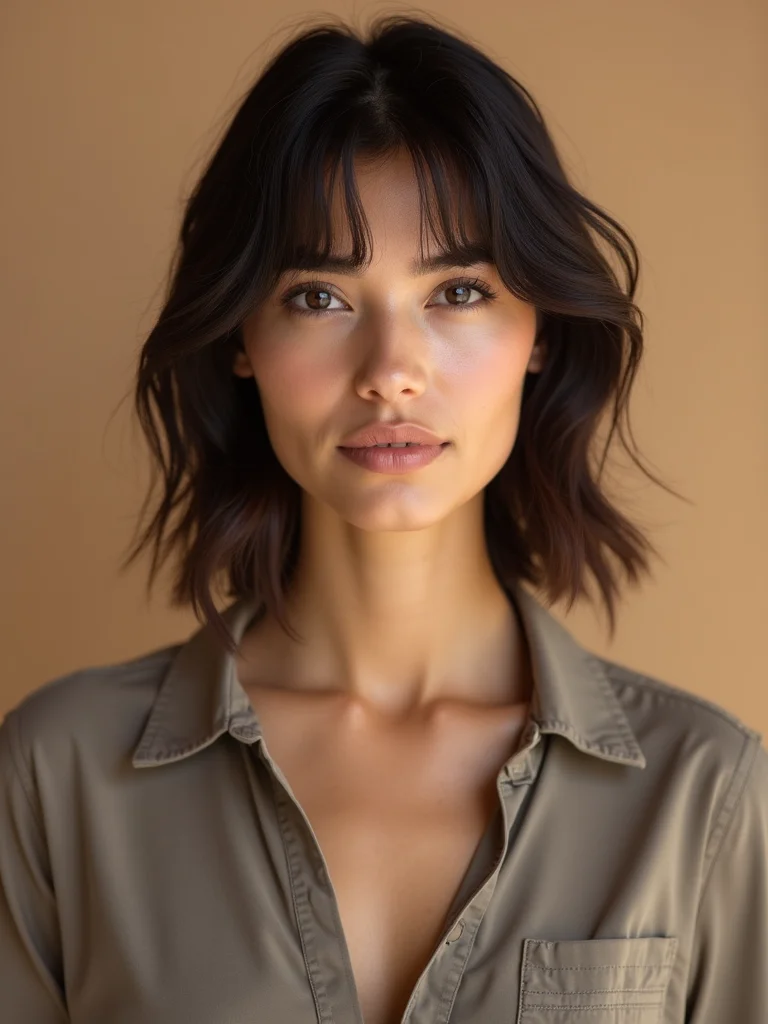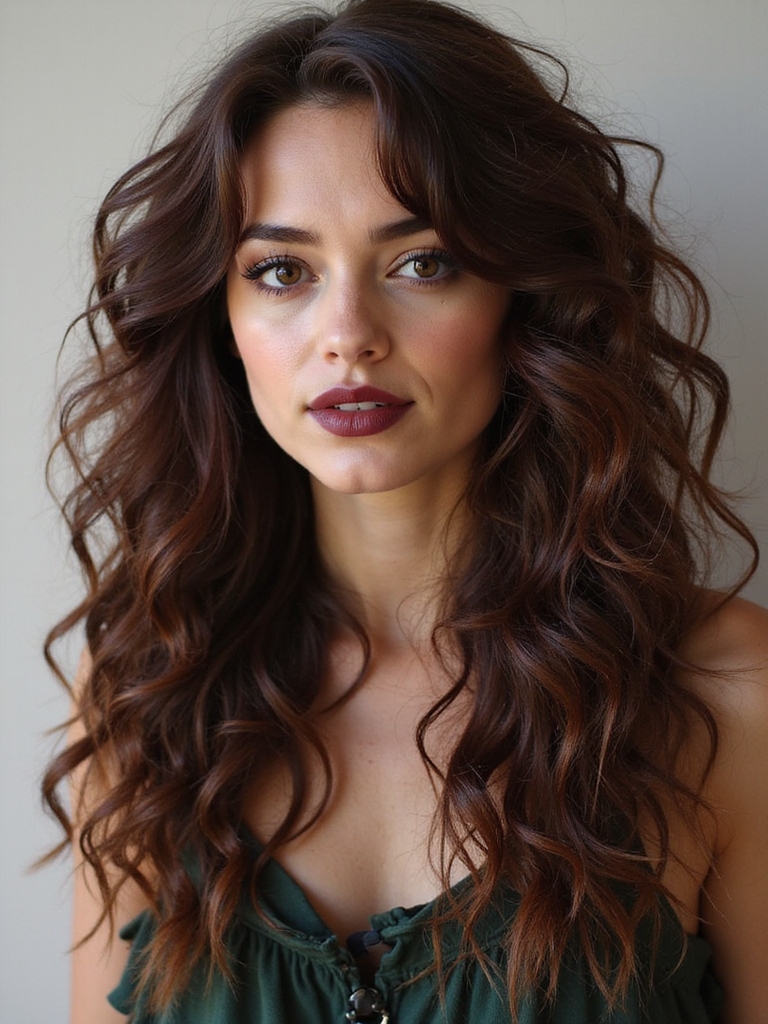
Long shaggy curly hair exists to solve a trade-off no one warns you about: the longer curly hair grows, the heavier it gets, until the weight drags the curls down into a flat-rooted, bottom-heavy triangle. So curly women keep getting told the only fix is to cut it short, to lose the length to lose the bulk.
That advice is wrong, and a long curly shag is the proof. By threading shaggy, graduated layers through long curls, a stylist removes the bulk that causes the triangle while keeping nearly all your length, so the curls lift and spring instead of hanging heavy. This guide covers how the layering works, the versions worth knowing, and how to style it.
Long Curly Shag at a Glance
The problem a long curly shag solves is the triangle: long curls go flat at the root and pile up heavy at the bottom. Shaggy, tiered layers carve weight out of the interior so the curls lift and spring instead of sinking, all without losing the length.
Two things make or break it. The cut should be done dry, curl by curl, so the layers land where each coil actually falls, and the styling should lean on a wash-and-go with a diffuser rather than heat, so the new shape gets to do its job.
Why Long Curls Need a Shag

A single-length cut is the worst thing you can do to long curls, because it leaves all the weight stacked at the bottom, which is exactly what flattens the roots and forms the triangle. The shag fixes this with staggered layers that get gradually shorter toward the crown, redistributing the weight up the head.
Those tiered, face-framing layers are the whole point: they take bulk out of the interior so the lower curls are not dragging the upper ones flat, and they put movement and shape around the face. The result is long hair that finally has lift at the root and definition through the lengths.
- Graduated layers remove interior weight so the roots can lift.
- Face-framing layers add shape exactly where it flatters most.
- You keep the length; only the bulk that causes the triangle goes.
The Long Curly Shag With Curtain Bangs

Adding curly curtain bangs to a long shag is the pairing I get asked for most, because both pieces do the same job of framing the face with soft, curl-friendly movement. Cut to part in the middle and sweep to each side, curly curtain bangs blend right into the longer face-framing layers rather than sitting apart from them.
The key is cutting them with the curl, not against it, leaving extra length for shrinkage so they spring up to frame rather than retract too short. On wash-and-go days they fall naturally; on smoother days they sweep into place with a little curl cream. Our curly curtain bangs guide goes deeper.
Which long curly shag fits your hair? Start here:
🎯Flat, heavy roots
The crown-lifting shag, with short choppy layers concentrated at the top to build lift where curls collapse.
🎯Very thick, dense curls
Weightless crown layers, which carve out interior bulk while the surface stays long and full.
🎯Want it bold and edgy
The wolf curly shag, with dramatic graduation and maximum, show-off volume.
🎯Want it soft and polished
The long round shag, with gentle graduation for a balanced, rounded halo of curls.
The Crown-Lifting Long Curly Shag
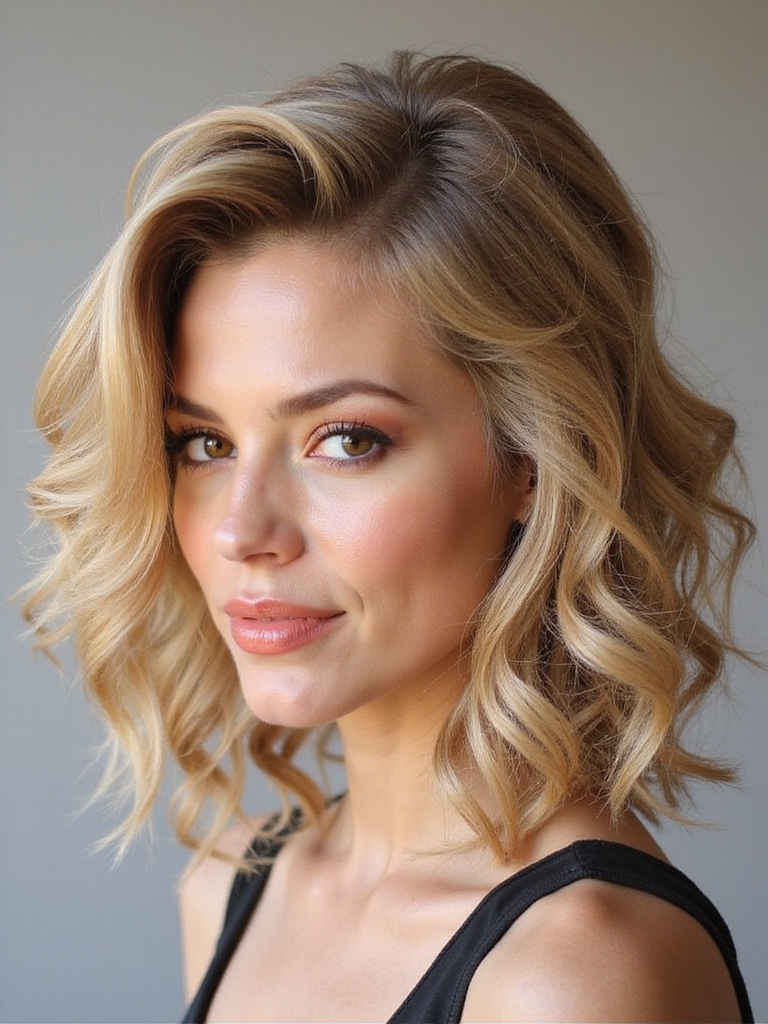
If your curls fall flattest at the crown, this is the version to ask for. Most of the curly clients in my chair come in frustrated by exactly this, all volume at the bottom and nothing up top.
By concentrating short, choppy layers right at the top of the head, the stylist builds in root lift exactly where long curls tend to collapse, so the whole shape rises instead of sinking. It is the most direct fix for the flat-on-top, heavy-at-the-bottom problem, and it makes long curly hair read full and rounded rather than weighed down.
- Short crown layers build lift where long curls fall flattest.
- Best for anyone whose volume disappears at the top of the head.
- Rounds out the shape instead of letting it sink and widen.
The Wolf Curly Shag

The wolf cut takes the shag’s choppy layering to its boldest extreme, with heavier, more dramatic graduation and a cool, undone, almost mullet-adjacent shape. On long curls it reads edgy and modern, all defined ringlets and serious volume, which makes it a favorite with anyone who wants their curls loud rather than quiet.
- Heavier, more dramatic layering than a classic shag.
- Reads edgy and modern, with maximum volume and movement.
- A bold choice for curls you want to show off. See our wolf cut guide.
You almost never have to cut curly hair short to fix the bulk. You have to redistribute the weight, and that is exactly what a shag does.
Shattered Ends to Debulk and Define

The ends are where a long curly cut is won or lost. Left blunt and heavy, they clump the coils together into that thick, solid bottom edge; shattered, or point-cut, into soft, irregular ends, they let each coil separate and spring on its own.
Shattering the ends does two jobs at once: it removes weight from the heaviest part of the hair, and it lets individual curls define instead of fusing into a block. This is the detail that separates a long curly shag that looks intentional from one that just looks grown out.
I cut every curly head dry, in the curl’s natural state, so I can see exactly where each coil lands and carve accordingly. A blunt scissor line cut wet will spring up wrong every time, so it’s worth finding a curl specialist, usually $80 to $150, who finishes the cut curl by curl instead of wet and straight across.
The Long Round Curly Shag

Not every curly shag has to be choppy and edgy. A long round shag uses softer, rounder graduation to build a balanced, full shape rather than a sharp, mullet-leaning one, which suits anyone who wants the volume without the attitude.
A Round Shape Beats the Triangle
The aim here is a rounded silhouette, adding width and fullness through the middle and crown so the shape reads like a soft halo of curls rather than a wedge. The layers are blended more gently, with less obvious choppiness.
This is the shape worth requesting when the goal is polished and pretty rather than rock-and-roll, and it suits most face shapes by keeping the overall silhouette soft and balanced.
How a long curly shag should be cut, so you know what to ask for:
1Cut it dry
The hair is cut in its natural, dry curl state, never soaking wet, so the stylist can see where every coil actually falls.
2Carve, do not blunt
Layers are point-cut and shattered rather than cut straight across, so the ends separate and define instead of clumping.
3Layer for lift, not just length
Graduation is concentrated where your curls fall flattest, usually the crown, to redistribute weight up and off the bottom.
Weightless Crown Layers

Sometimes the fix is invisible. This is the version for very thick, dense curls that feel like too much hair, where the weight is the real enemy. Weightless crown layers carve bulk out of the interior while leaving the outer length looking long and full, so you get lift and movement with no obvious short pieces on the surface.
It is the curly answer to thinning out thick hair: the dense underneath comes out, the curls on top keep their length, and the cut still reads as one long, full shape.
- Interior weight is carved out while the length stays long.
- Lifts the roots with no obvious short pieces on the surface.
- Ideal for very thick, dense curls that feel heavy and flat.
A Textured Fringe for Curls

A curly fringe is bolder than curtain bangs, sitting fuller across the forehead for anyone who wants a real statement. On a long shag, a textured, piecey fringe frames the eyes and adds character, and it plays beautifully off the longer layers behind it.
The rules are the same as the rest of curly cutting: cut it dry, account for shrinkage, and keep it textured rather than blunt so it falls in soft, separated pieces. Worn with a wash-and-go it springs into place on its own. Our curly bangs guide covers the styling.
- A fuller, bolder frame than curtain bangs for a real statement.
- Cut dry and textured so it springs into soft, piecey curls.
- Leave extra length for shrinkage so it does not retract too short.
The Heat-Free Styling Routine

A good curly shag is built to be worn as a wash-and-go, which means no daily heat and very little time. After washing, apply a leave-in and a curl cream or gel to soaking-wet hair, then scrunch upward to encourage the curl and press the product in along the length.
Plopping, wrapping the wet hair in a soft T-shirt or microfiber towel for ten to fifteen minutes, soaks up excess water while the curls set in a lifted position rather than dragging down flat. Then air-dry or diffuse on low, scrunch out any crunch once it is fully dry, and the shag does the rest. The whole point of the cut is that it works without a single hot tool.
Low-Heat Root Lift

On days the roots still want more height, there is a gentle, low-heat trick that adds lift without straightening or stressing the curl. Using a diffuser on a low-heat setting, dry the roots first with your head flipped over or to the side, cupping the curls up toward the scalp so they set with the root standing up.
Root clips are the no-heat version of the same idea: small clips set into the roots while the hair dries hold the curls up off the scalp, locking in volume as they dry. Either way, you are setting the root in a lifted position, which is what keeps the crown from collapsing back into the flat-rooted triangle the cut was designed to beat.
- Diffuse the roots first, head flipped, cupping curls toward the scalp.
- Use root clips for a no-heat way to set lift at the crown.
- Both set the root standing up, so the volume lasts the day.
Common Long Curly Shag Mistakes to Avoid
Most disappointment with a curly shag comes from a few avoidable missteps, and nearly all of them start in the chair. The biggest is letting a stylist cut your curls soaking wet with a blunt, straight line; on curly hair, that almost guarantees the springy, uneven ends and lost shape you were trying to avoid.
The rest are about styling. Brushing dry curls shatters the definition the cut created, touching the hair while it dries breaks the curl clumps into frizz, and reaching for a flat iron undoes the lift the layers were built to give. Work with the cut, not against it, and it rewards you.
- Letting it be cut wet and blunt instead of dry and shattered.
- Brushing or touching the curls as they dry, which causes frizz.
- Skipping the diffuser or root lift, so the crown falls flat again.
Long Curly Shag Questions, Answered
?Will a long curly shag make my hair look thinner?
No. It removes weight from the dense interior, not from the length or the outline, so the hair looks fuller and more lifted, not thinner. The bulk that goes is the bulk that was flattening your roots.
?How is a long curly shag different from long curly layers?
Plain long layers remove some length but leave most of the weight low, so the triangle often survives. A shag stacks shorter, staggered layers higher up and shatters the ends, which redistributes the bulk and lifts the roots in a way standard layers do not.
?How often does a long curly shag need trimming?
Less often than a sleek cut, usually every three to four months, because the shaggy, textured shape blends as it grows and hides grow-out far better than a blunt line. A specialist curly cut runs roughly $80 to $150.
?Can I get a long curly shag on coily or very tight curls?
Absolutely. The shag principle, carving interior weight to lift the roots, works across the full range of curl and coil patterns. The tighter the pattern, the more shrinkage to account for, so leave extra length in the cut.
?Do I need heat to style it?
No, that is the point of the cut. A wash-and-go with a leave-in, curl cream, plopping, and a diffuser on low is all it needs. The shag is designed to look its best with no hot tools at all.
Keep the Length, Lose the Triangle
The whole promise of long shaggy curly hair comes down to this: keep the length, get the lift too. The triangle shape is a weight problem more than a length problem, and shaggy graduated layers solve it by carving the bulk out of the interior so your curls can finally spring and rise.
If you have been told to cut your curls short to manage the bulk, take this guide to a stylist who cuts curly hair dry and ask for a long shag instead. You can keep the hair you love and lose only the weight that was dragging it down.
Don’t Miss These