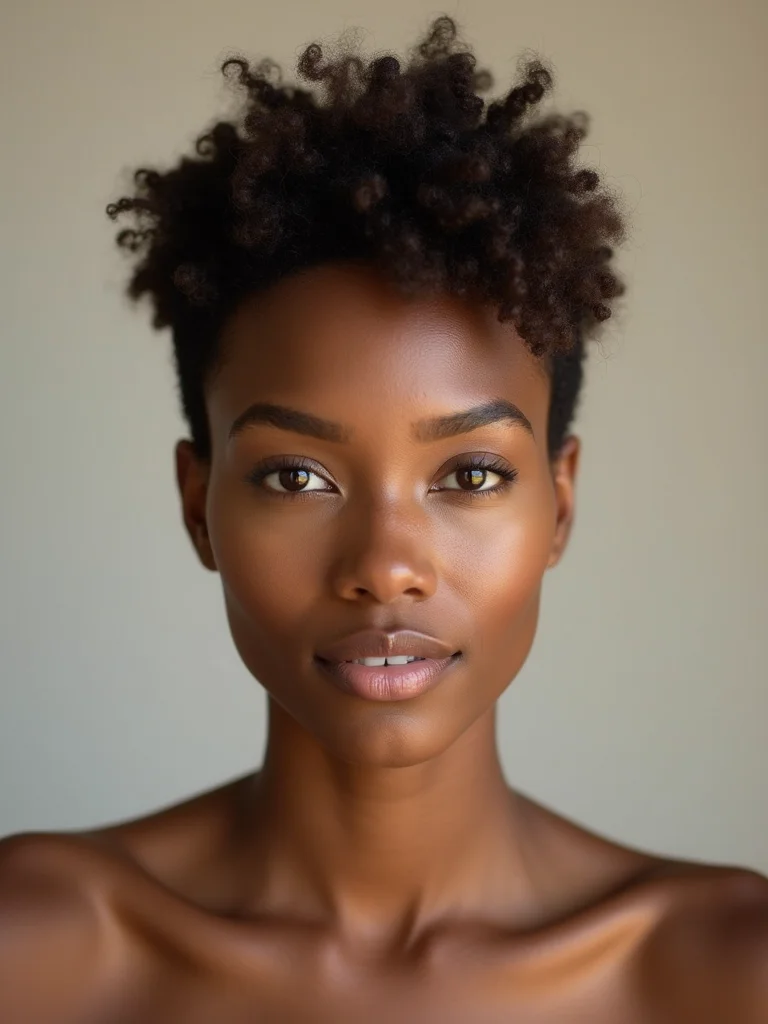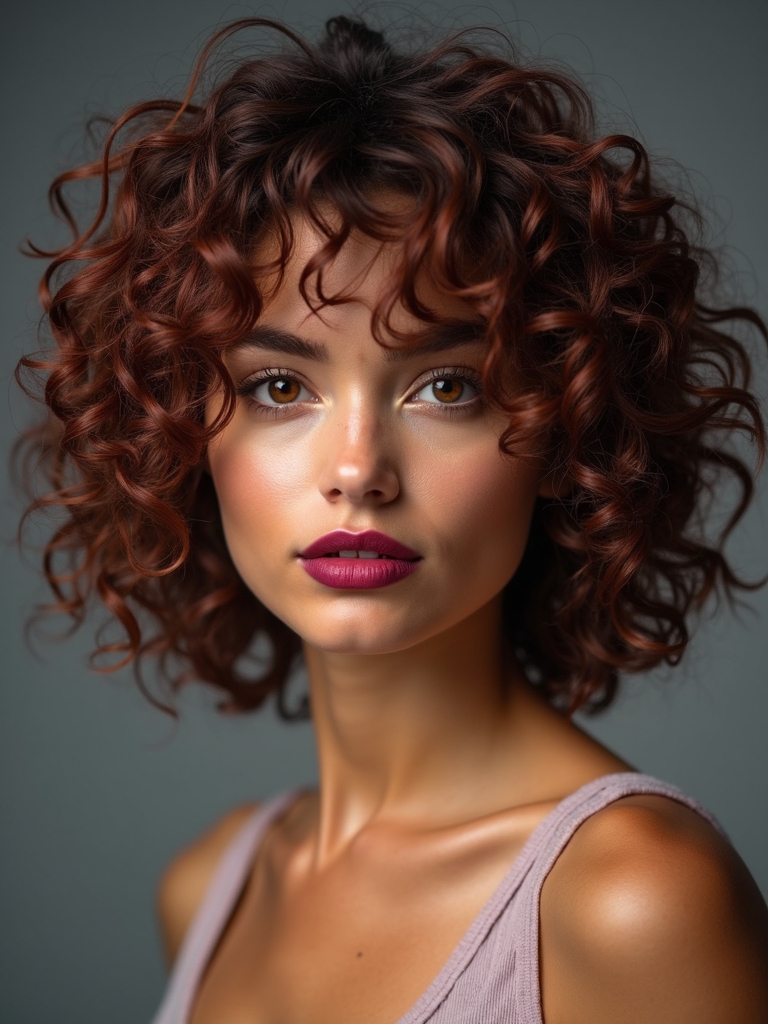
Why does the shag look so good on curly hair? Because it was practically built for it. The layers and removed weight give curls exactly what they want: room to spring up and out instead of piling into a heavy, flat-on-top triangle.
Done right, shaggy curly hair works with your natural pattern rather than forcing it into submission. Below is the curly shag broken down by curl type and length, plus how to dry it, what to put on it, and the care that keeps your curls healthy, because your curls were never the problem; the wrong cut was.
The Curly Shag, At a Glance
| If your hair is | The shag does this | Cut it |
|---|---|---|
| Loose waves (type 2) | Adds soft, beachy, undone movement | Dry, lightly layered |
| Ringlets (type 3) | Builds defined, springy volume | Dry, weight removed for bounce |
| Coils (type 4) | Sculpts a deliberate, shaped silhouette | Dry, on stretched-out hair |
What a Curly Shag Gets Right
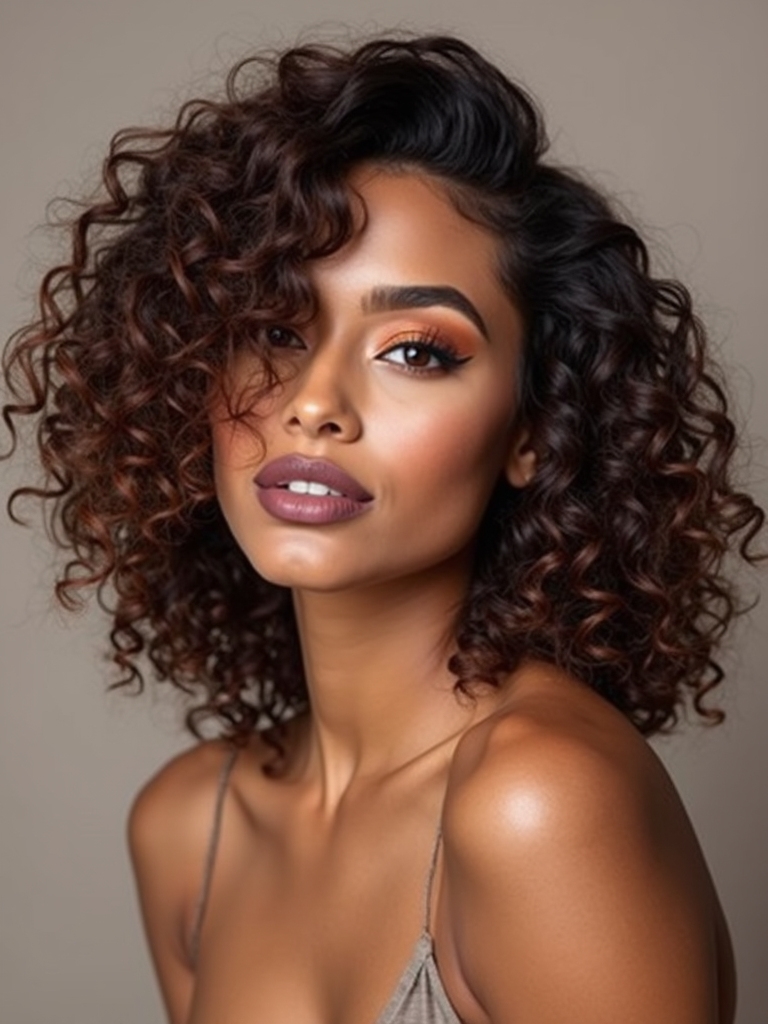
The reason the shag suits curls so well comes down to one idea: it removes weight from the right places so the curls can do what they naturally want to do. Heavy, one-length cuts drag curls down at the bottom and pile them up on top, which is where the dreaded triangle comes from.
Why Dry-Cutting Matters
A shag’s internal layers take out that bulk through the body of the hair, so the curls spring up evenly all over instead of collapsing under their own weight. The face-framing pieces then give the shape direction around the face, the same logic behind a shag haircut on any texture.
The single non-negotiable: every cut in this guide happens dry, one section at a time. Wet curls stretch out straight and hide their true shape, so cutting them wet is how people end up far shorter and far more triangular than they wanted. This is the rule every section below depends on.

The Shag for Loose Waves and Type 2 Curls
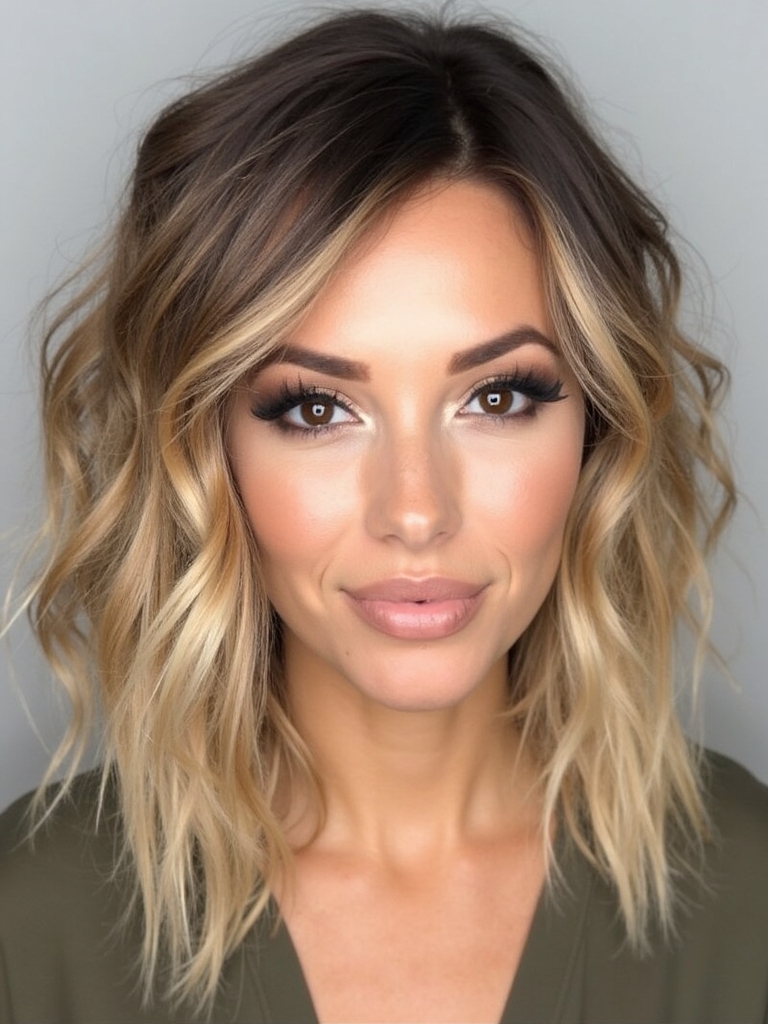
If your texture is loose, S-shaped waves rather than tight curls, the shag turns that gentle bend into easy, beachy movement. Type 2 hair can fall limp and shapeless on its own, and the layers give it the lift and separation it lacks. Here’s how to get it right:
- Keep the layering light; too much can leave fine wavy hair looking stringy rather than full.
- Ask for long, soft face-framing pieces that enhance the wave around the face.
- Style with a light mousse scrunched in, since heavy creams flatten loose waves fast.
👍Why curlies love the shag
- +Removes the weight that causes the dreaded triangle, so curls spring up evenly.
- +Truly low-effort once cut; most versions are wash, product, and air-dry.
- +Works on every curl type and length, from loose waves to tight coils.
👎What to go in knowing
- –Must be cut dry by someone who truly understands curls, which not every stylist does.
- –Shrinkage means it reads shorter dry than the cut length suggests; plan for it.
- –Curly hair needs ongoing moisture and gentle handling to keep the shape looking its best.
The Shag for Type 3 Ringlets
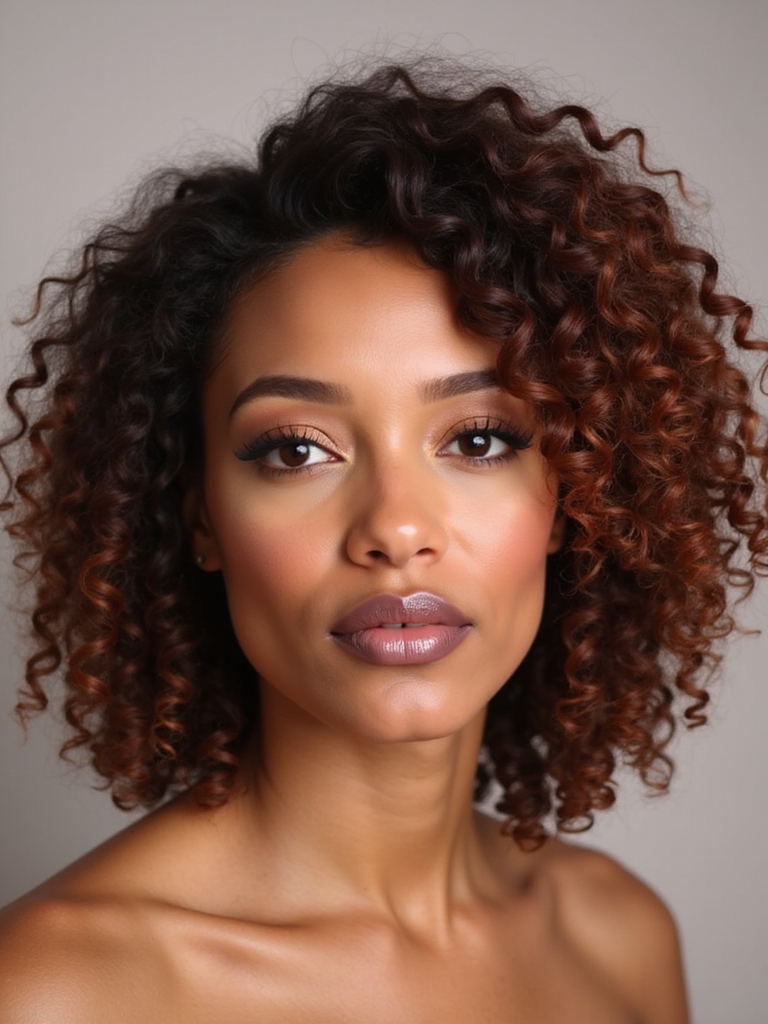
Type 3 ringlets, those defined, spiral curls, are where the curly shag really shows off, because the layers give each ringlet room to bounce up into a full, defined shape. This is the texture clients most often have when they bring me a curly-shag photo. To make it sing:
- Have the weight removed through the mid-lengths so the ringlets lift instead of hanging heavy.
- Keep enough length at the perimeter that the curls don’t expand into a pyramid.
- Work a curl cream or gel through hair that is still dripping wet, scrunch upward, then leave it completely alone as it dries.
The Shag for Type 4 Coils
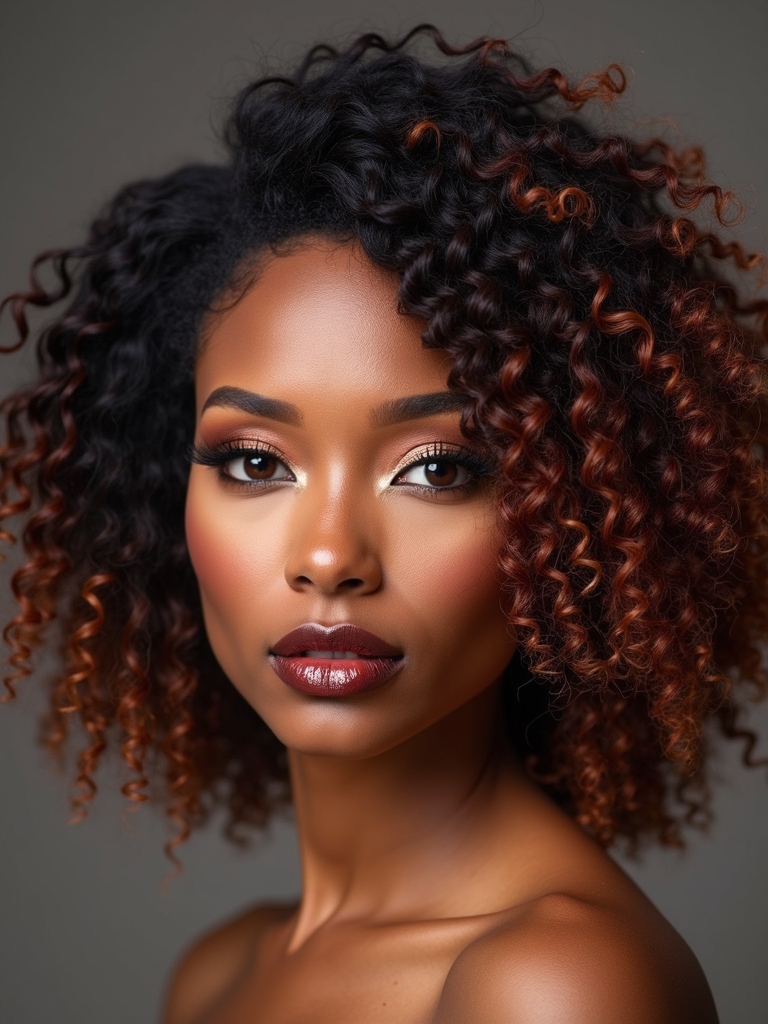
Type 4 hair, coily and kinky, takes to a shag beautifully, but it demands the most careful cutting of the bunch, since the drop from wet length to dry length runs steep on this texture. The goal is a deliberate, sculpted shape that celebrates the volume rather than flattening it. The approach:
- Cut on dry, stretched-out hair so the true length after shrinkage is visible; coils can shrink by half or more.
- Shape the silhouette rather than just removing length, building a rounded, intentional form.
- Keep moisture front and center, since type 4 hair is the most prone to dryness; layer a leave-in conditioner under a curl custard or butter to define the coils and keep frizz down.
- Treat the curls gently, with no tight tension or rough brushing, so the edges and the hair stay healthy over time.
“A curl specialist often charges more than a standard cut, and on textured hair it’s money well spent. Dry-cutting curl by curl takes longer and takes real skill, so you’re paying for time and expertise, not a markup. If a salon offers a dry curl cut as its own service, that’s usually a good sign they actually know textured hair, rather than treating it as an afterthought between straight-hair clients.”
The Curly Shag With Curtain Bangs
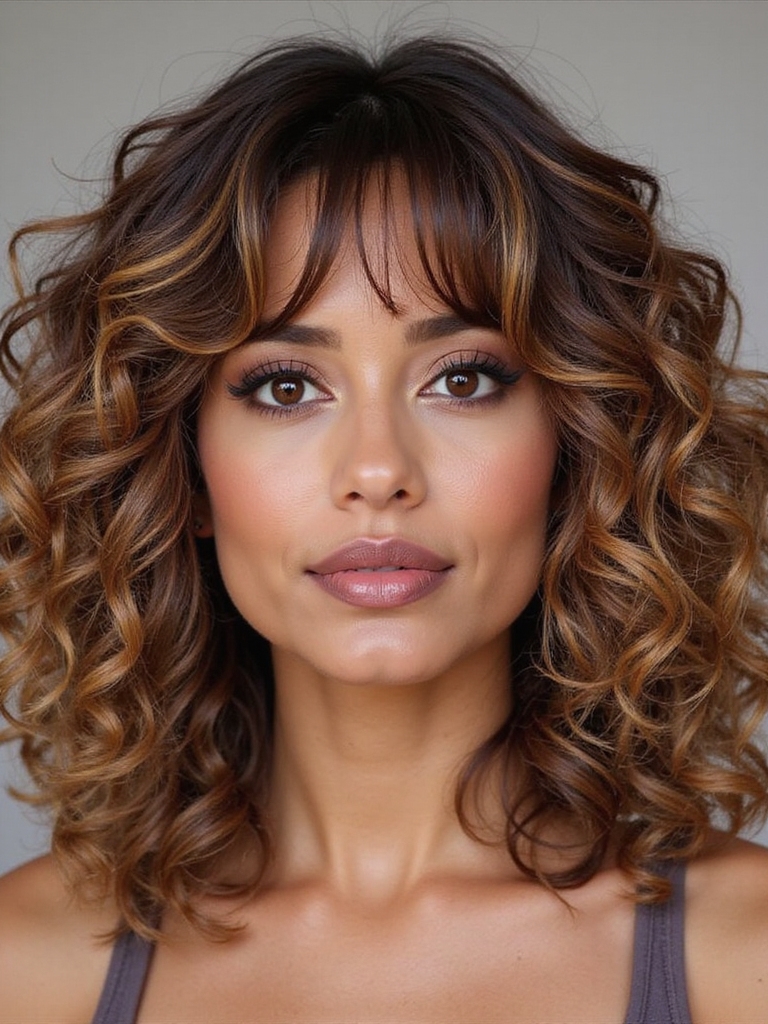
Curtain bangs on curly hair are a quiet revelation, because the curl turns them into soft, springy pieces that frame the face with zero of the daily styling a straight fringe demands. They part in the middle and merge with the layers already framing the face.
The trick, as always with curls, is in the cut and the drying. Get those right and they need almost nothing day to day:
- Cut the bang dry so you can see exactly where the curl springs to once it shrinks up.
- Keep it long enough that even at full shrinkage it still frames rather than sitting too short.
- Let it dry untouched alongside the rest of the head so the bang curls to match everything around it; see more curly looks for how the whole shape comes together.
The Curly Wolf Cut
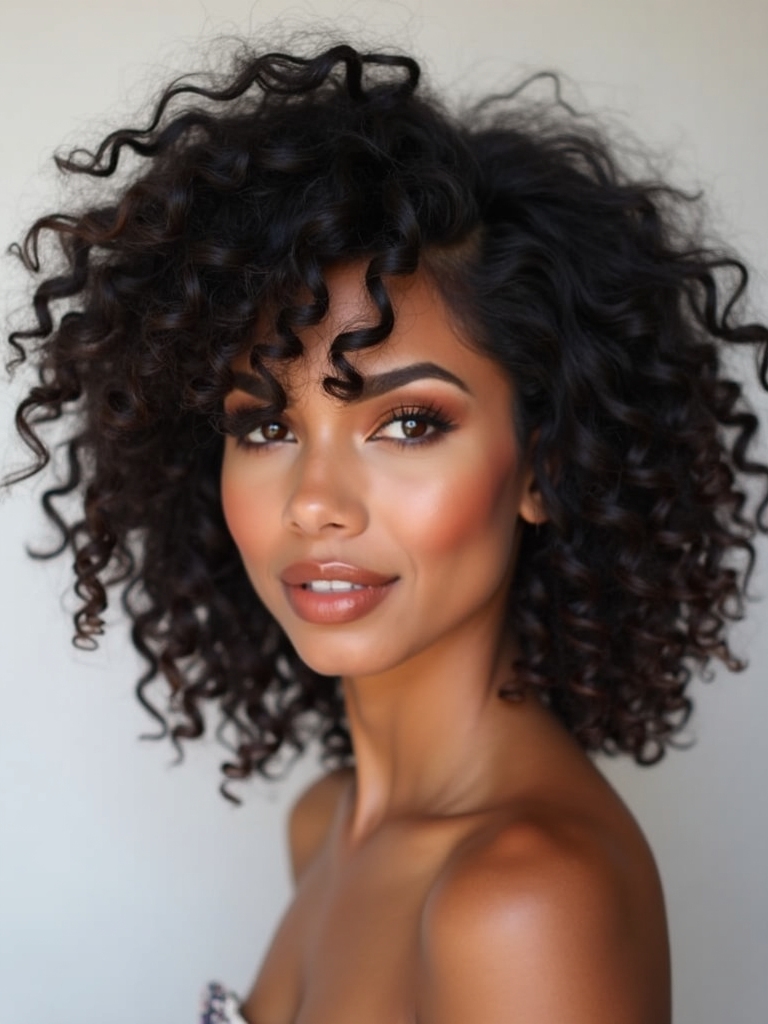
When you want maximum volume and edge, the curly wolf cut takes the shag’s layering and pushes it further, with a heavily layered, disconnected crown and piecey, separated lengths. On curls it looks wild in the best way.
The aggressive crown layering gives huge lift up top, which curly hair carries easily, while the shorter, choppy pieces around the face add the rocker-ish edge the cut is known for. It’s bold, undeniably, but the day-to-day styling stays surprisingly simple once it’s cut.
It suits confident curlies who want a statement and don’t mind their hair being a focal point. As with every curly cut here, it has to be done dry so the disconnection lands where it should once the curls spring up.
What bugs you most about your curls right now? Start there:
🎯A flat-on-top triangle
Layering through the body is the fix; it pulls weight out so the crown lifts and the sides stop widening.
🎯Curls that fall limp and shapeless
You likely need lighter layering plus better drying and product, not more length removed.
🎯Dryness and frizz
The cut helps, but moisture does the heavy lifting here: leave-in, gentle handling, and product on soaking-wet hair.
The Short Cropped Curly Shag
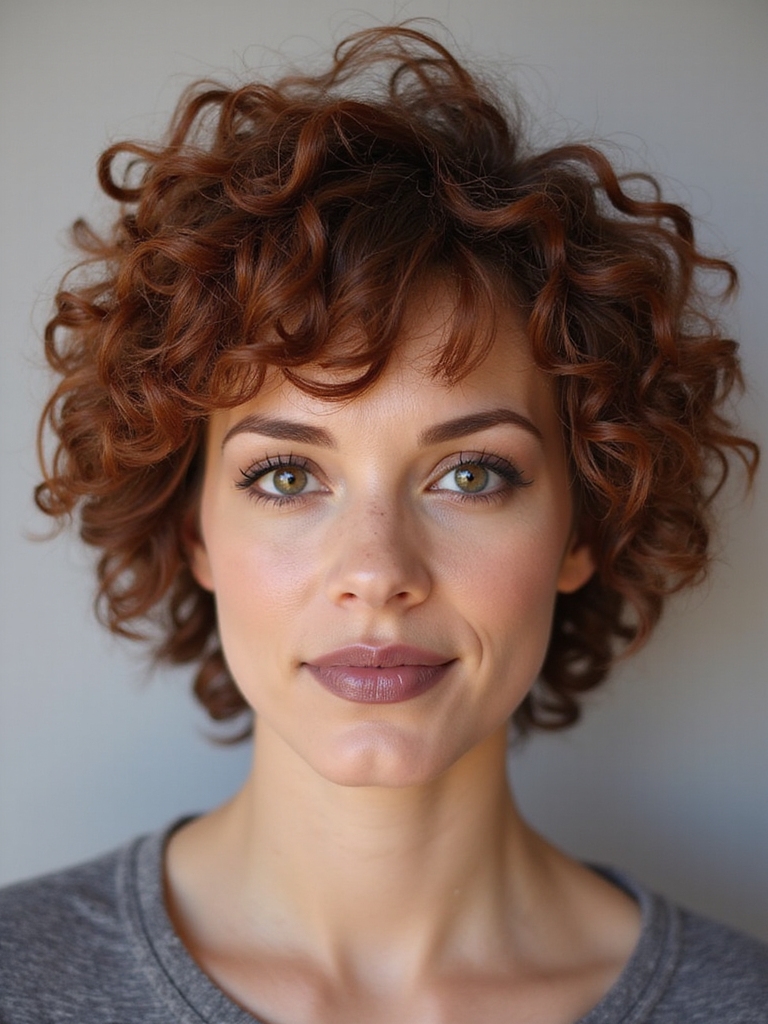
A short, cropped curly shag ranks among the most freeing cuts to give, and clients often say they wish they had done it years sooner. Cropped close with shaggy layers, it puts all the volume up and out and takes almost no time to style. What to know before you go short:
- Remember shrinkage: a cropped curly cut reads much shorter dry than the cut length suggests, so plan for it.
- It needs a confident stylist who cuts curls dry and shapes the volume rather than just buzzing length off.
- Daily care is minimal, often just a water-and-leave-in refresh, but trims come more often to keep the shape.
The Shoulder-Length Curly Shag
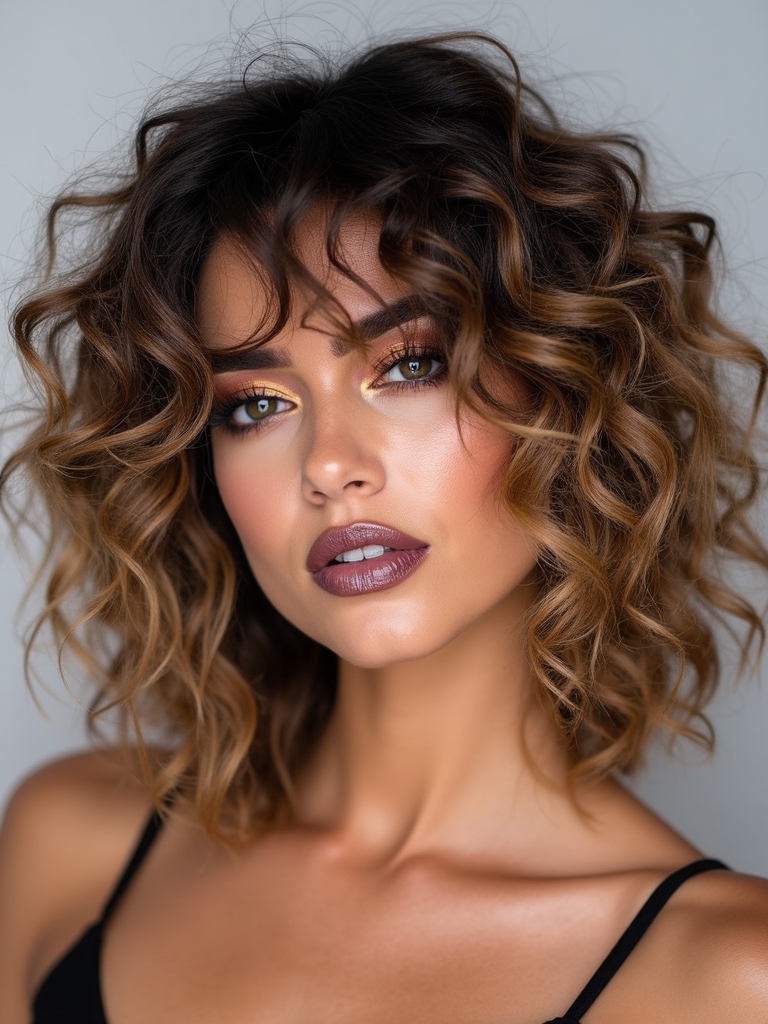
If you’re not ready to commit to short or long, the shoulder-length curly shag is the easy, versatile middle ground, and probably the most popular curly shag length I cut. It keeps enough length to pull back while still getting all the benefits of the layered shape. Why it works for so many people:
- There’s enough length to tie up or clip back on lazy days, which short curly cuts can’t offer.
- The layers still take out the bulk that causes the triangle, so it stays shaped, not bulky.
- It flatters most curl types and face shapes, making it the safe first step, much like a shaggy bob is for shorter lengths.
📋Before You Book a Curly Shag
- ✓Bring a photo of curls close to your own type, not a straightened version.
- ✓Arrive with clean, defined, product-set curls so the stylist sees your real pattern.
- ✓Know your shrinkage and say it out loud, so you don’t leave shorter than you wanted.
- ✓Be honest about your daily routine so the cut fits the effort you’ll actually give.
- ✓Ask how the layers will grow out, so the in-between weeks still look good.
The Long Curly Shag
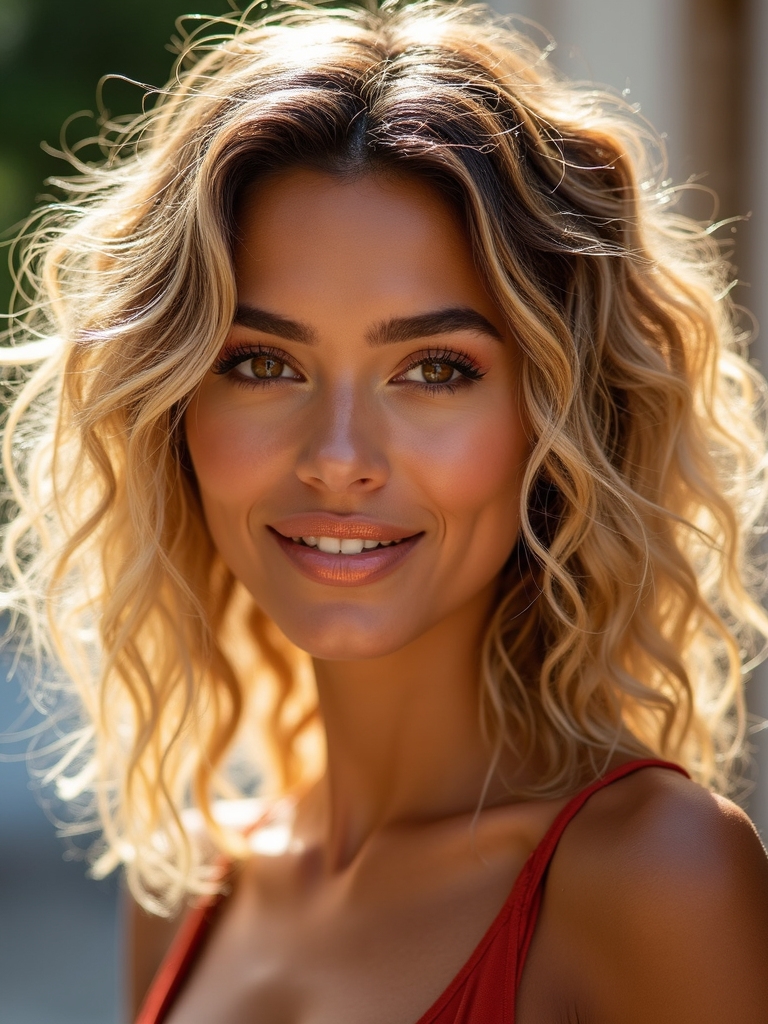
Plenty of curlies want to keep their length, and the long curly shag proves you don’t have to chop it all off to escape the heavy triangle. The layering removes internal bulk while leaving the length intact, so long curls finally move and breathe; these layered curly cuts show the same idea at length.
It’s the answer for anyone who’s been holding onto length but feels their curls have gone flat and shapeless. Here’s how to keep long curls from dragging down:
- Ask for layers throughout, not just at the ends, so weight comes out of the whole length.
- Keep long, defined face-framing pieces so the shape reads intentional, not just long and heavy.
- Stay on top of moisture and trims, since the ends are the oldest, driest part of long curly hair.
The Curly Shaggy Mullet
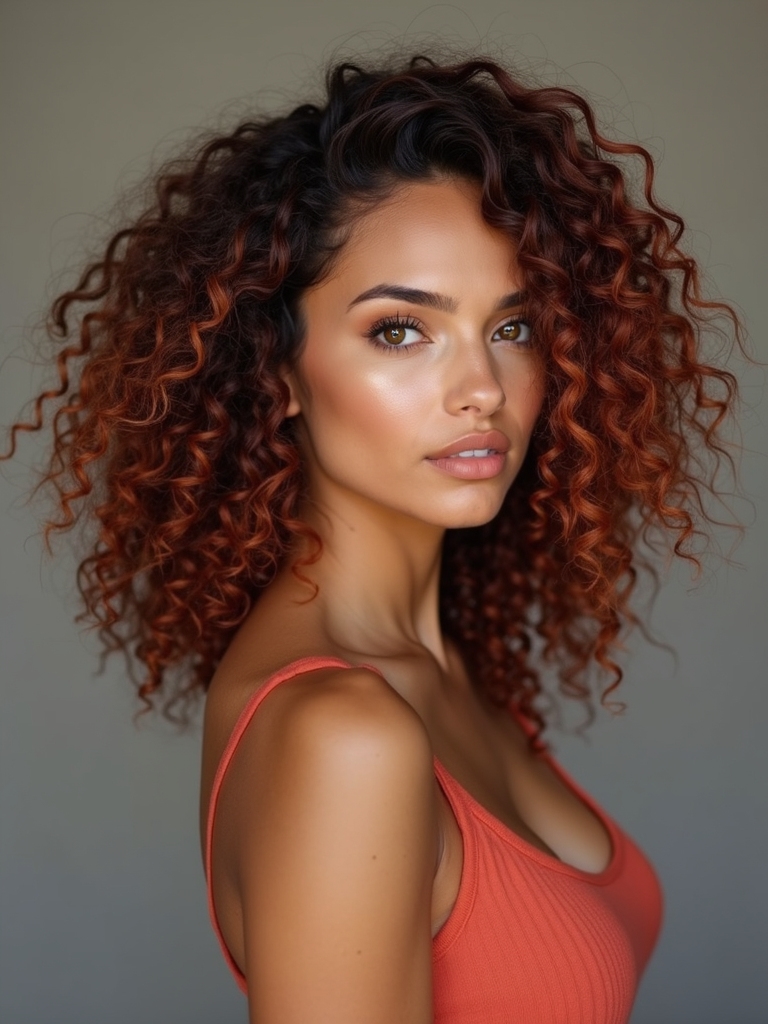
For the boldest curlies, the shaggy mullet pushes everything a notch further: cropped and layered from the crown forward, then left to run long and loose behind. On curly hair the contrast is striking and full of personality.
It’s a true statement cut, not for the faint of heart, but the curl softens the harsh short-long line of a classic mullet into something that reads cool and modern rather than costume. Cut dry like every curly shape here, it’s the most fashion-forward way to wear your texture, and it carries a relaxed attitude no straight mullet can match.
Diffusing and Air-Drying a Curly Shag
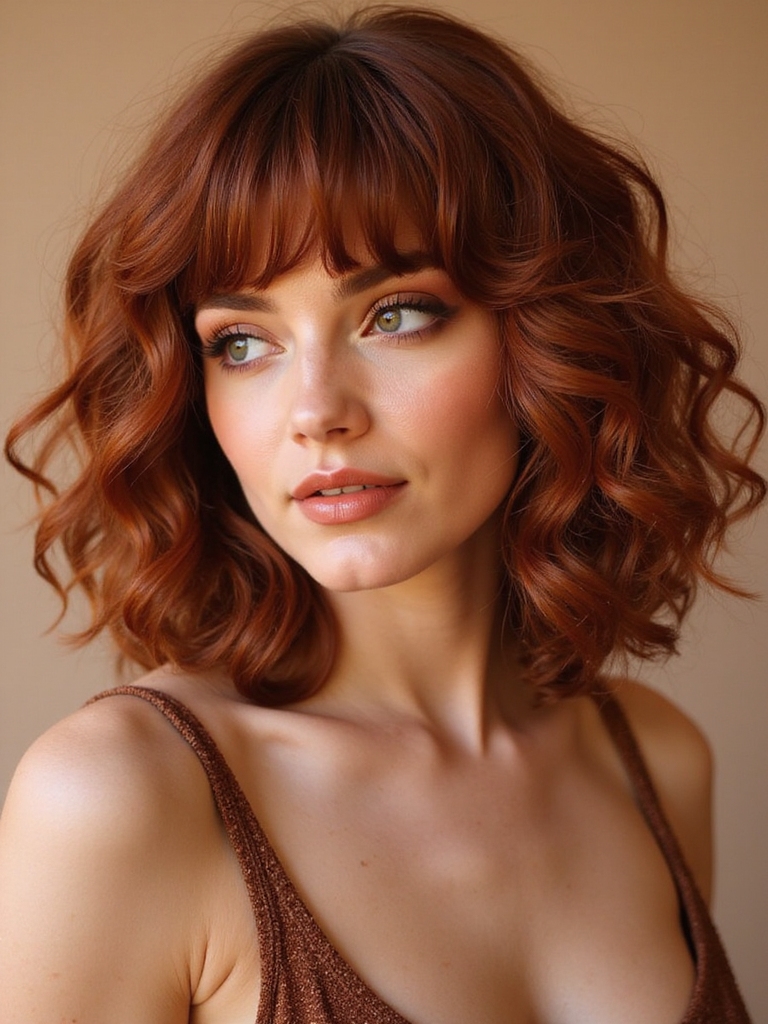
Here’s a truth I repeat in the chair daily: a beautiful curly cut can be undone by bad drying. How you dry curls matters almost as much as how they’re cut, because it sets the shape for days. Follow this order:
- Blot, don’t rub, excess water with a microfiber towel or cotton tee to avoid roughing up the cuticle and causing frizz.
- Apply product to soaking-wet hair and scrunch upward toward the scalp to encourage the curl clumps.
- Diffuse on low heat and low speed, cupping sections without disturbing them, or clip the roots and air-dry.
- Do not touch the curls while they set; once fully dry, scrunch out any crunch from the gel for soft, defined curls.
Leave-In, Mousse, and Serum, in Order
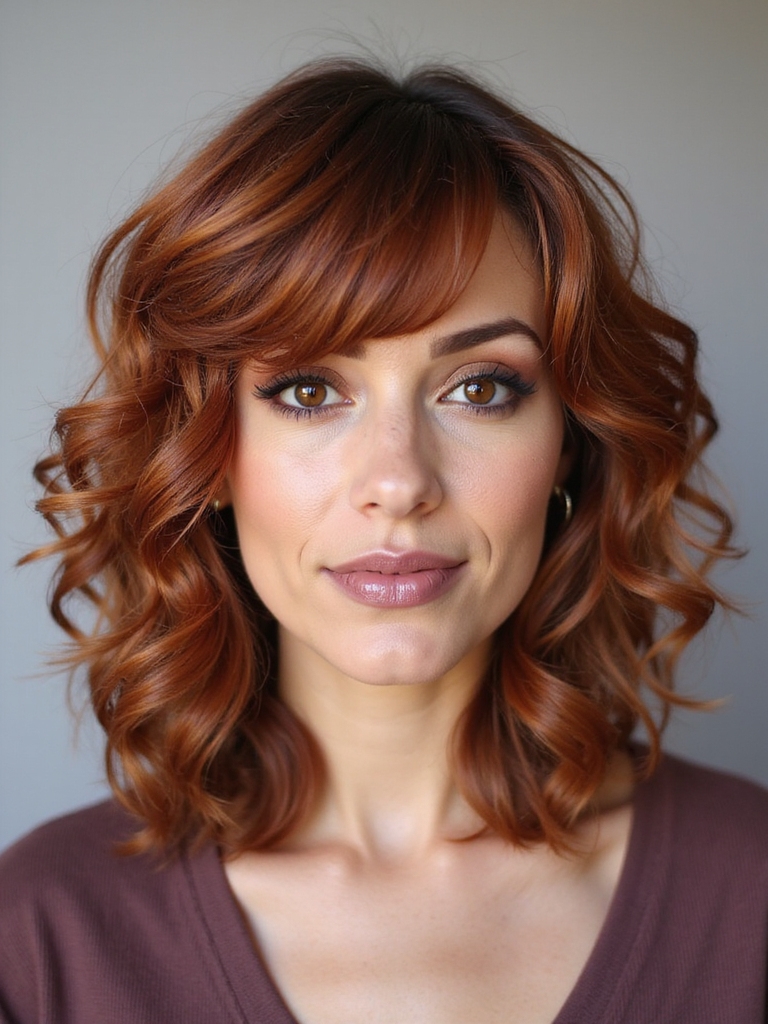
You don’t need a bathroom full of bottles to keep a curly shag happy; you need the right few in the right order. The principle is simple: moisture first, then definition, then seal it in. Layer them like this on soaking-wet hair:
- Start with a leave-in conditioner for moisture, the foundation everything else sits on.
- Add a curl cream, mousse, or gel for definition and hold, choosing lighter for waves and richer for coils.
- Seal with a light oil or serum on the lengths only if your hair runs dry, especially type 4 coils.
- Less is more on waves and more is more on coils; match the product weight to your curl pattern.
Dimensional Balayage on a Curly Shag
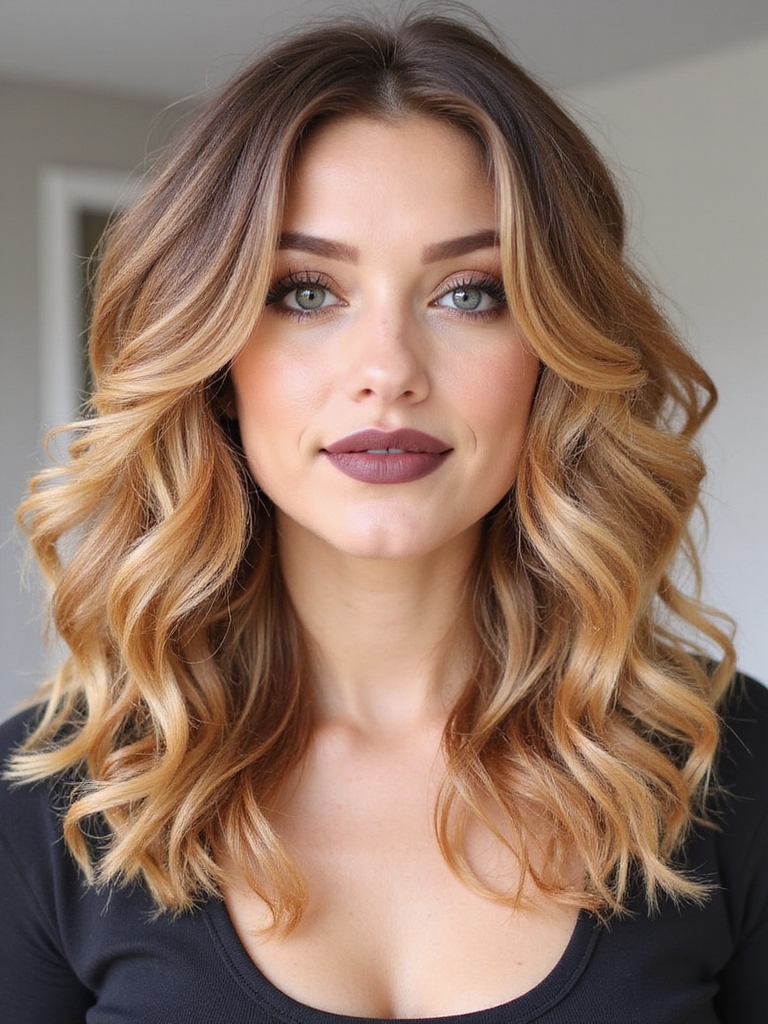
Color and a curly shag are a great match, because painted-in dimension follows the movement of the curls and layers, making the shape pop in a way flat color never can. A soft, low-contrast balayage placed around the face and through the layers catches the light every time the curls move.
The honest caveat is that curly hair is more fragile and more prone to dryness than straight hair, so lightening it asks for care. Keep the color soft and low-maintenance, lean on a bond-building treatment, and double down on moisture afterward. A balayage on curls runs roughly $150 to $300 and is worth booking with someone who colors textured hair often.
Gentle Care and Planned Trims
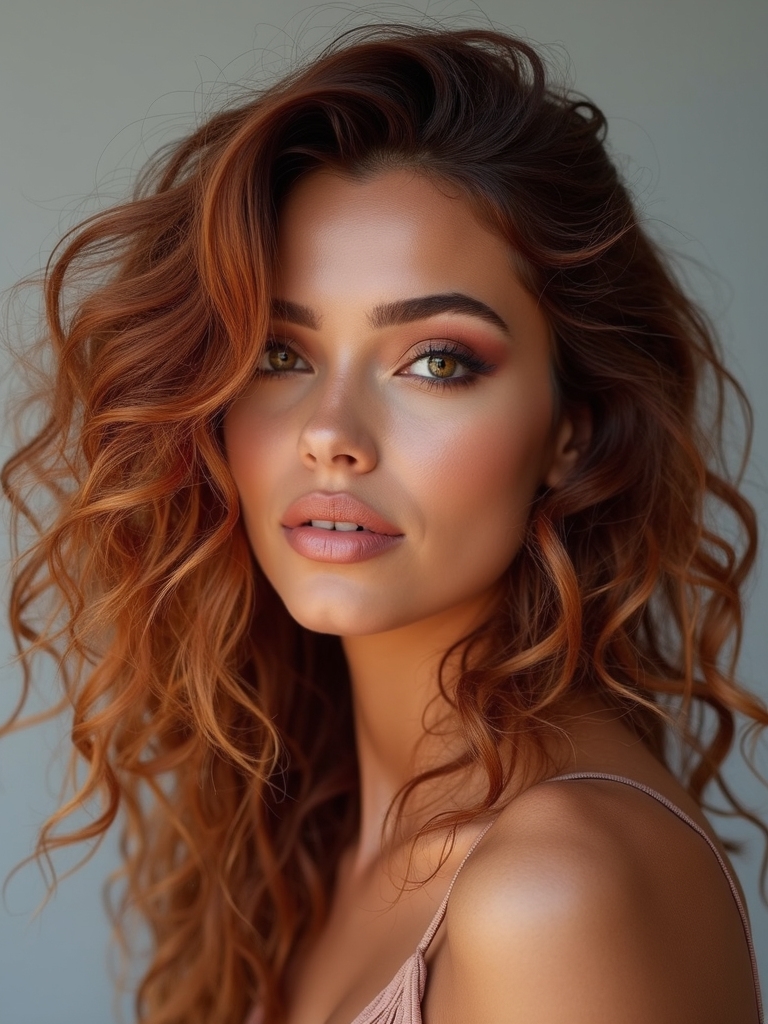
A curly shag stays beautiful only if the curls underneath stay healthy, and curly hair has specific needs that mainstream advice often gets wrong. The big three are moisture, gentle handling, and regular shaping.
Curls are naturally drier than straight hair because scalp oils struggle to travel down the bends, so deep-condition regularly, sleep on satin or in a loose pineapple, and detangle gently with conditioner and fingers or a wide-tooth comb, never a brush on dry curls. Avoid constant tight tension on the hair, which stresses the strands and the edges over time.
For trims, plan on a reshape every ten to sixteen weeks; curly hair grows out more forgivingly than blunt cuts, but the shaped layers do need renewing, and dusting the dry ends keeps frizz and splits in check.
The Curly Shag by Face Shape
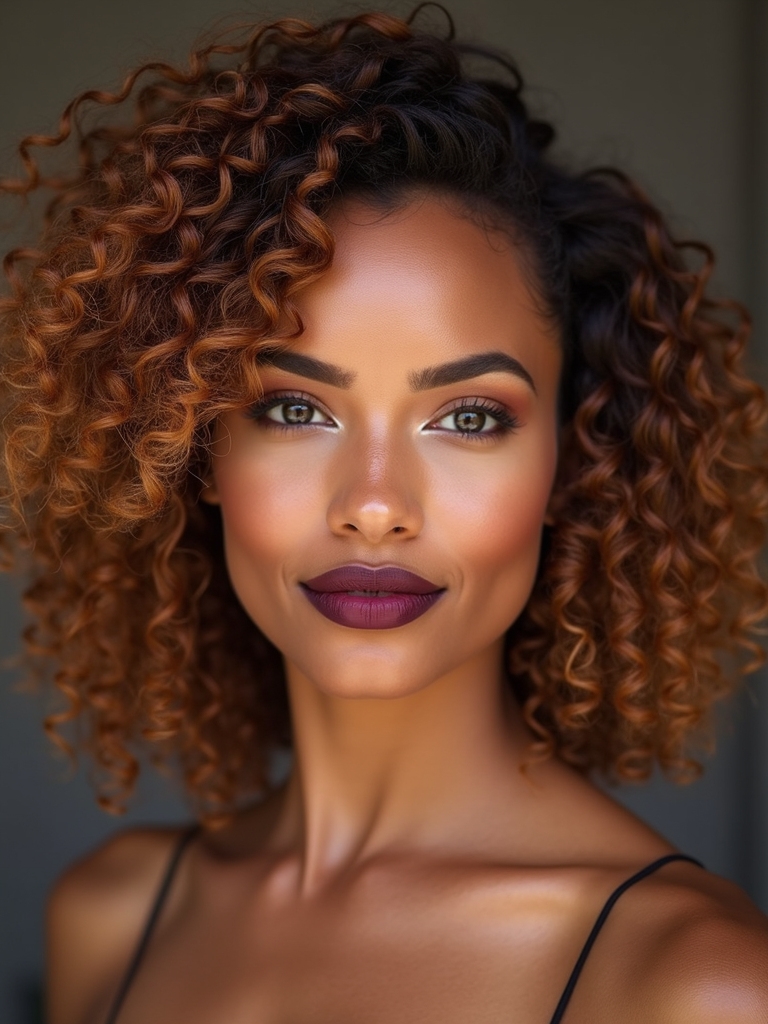
One of the quiet strengths of the curly shag is how easily it adapts to your face, simply by moving where the volume and the face-framing pieces sit. I tailor it to each face rather than handing everyone the same shape, and it’s the adjustment clients notice most. As a rough guide:
- Round face: keep height and volume at the crown and longer framing to lengthen, not widen.
- Long face: build volume at the sides and add curly bangs to shorten the face visually.
- Square or strong jaw: soft curls and face-framing around the jaw soften the angles.
- Heart face: a little more fullness toward the chin balances a wider forehead.
Curly Shag Questions, Answered
?What actually goes wrong if a stylist cuts a curly shag wet?
Wet curls stretch out and hide their true shape and length, so the stylist has no real way to see where each curl will land. A curl springs up much shorter and often more triangular than intended once it dries. Working dry, one section at a time, lets the stylist watch exactly how each piece falls and shrinks before making the next cut.
?How is a curly shag different from plain long layers?
Long layers just take length off in tiers; a curly shag removes weight throughout the interior and adds shorter, choppier face-framing and crown pieces, so it actively reshapes the silhouette rather than only thinning the ends. That’s why a shag lifts curls into a rounded, intentional shape while basic long layers can still leave you with a heavy bottom and a flat top.
?How often does a curly shag need trimming?
Less often than a blunt cut, usually every ten to sixteen weeks, because a layered shape grows out gracefully on curls instead of losing its line. You’ll want a reshape to refresh the layers and a dusting of the dry ends to keep splits and frizz in check, but you can stretch the time between salon visits more than straight-haired friends can.
?Can I get a curly shag if my hair is thin or fine?
Yes, with a lighter hand. Fine, wavy, or loosely curly hair can go stringy if it’s over-layered, so the key is conservative layering that adds movement without removing too much. Tell your stylist your hair is fine and ask for soft, light layers; you’ll get the lift and shape of a shag without losing the little density you have.
Your Curls Were Never the Problem
If your curls have ever felt like too much, flat on top and wide at the bottom, frizzy and shapeless, it almost certainly wasn’t your hair. It was a cut that fought your texture instead of working with it. The curly shag flips that, removing weight so your curls can finally fall into the shape they wanted all along.
Find a stylist who cuts curls dry, pick the length that fits your life, and feed your curls the moisture and gentle care they need. Then watch your texture become the best thing about your hair instead of the thing you’ve been managing. Your curls were always the point.
More Inspiration