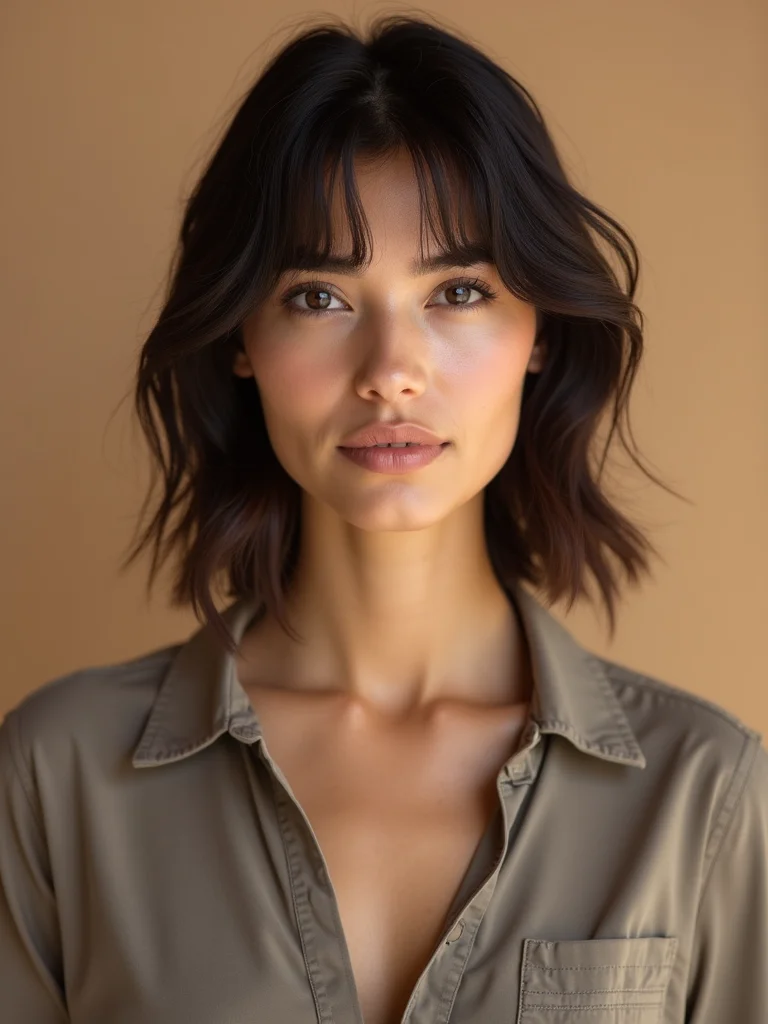
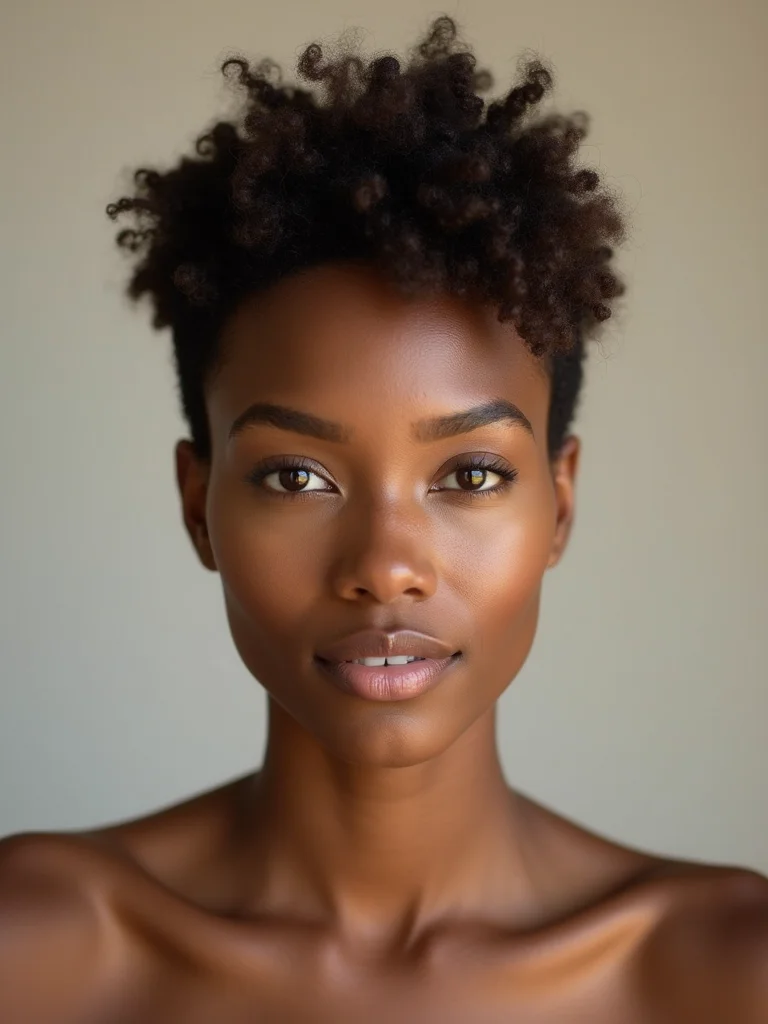
Most advice about layered hair skips the one variable that actually decides whether a cut flatters you: face shape. Layers that lengthen a round face will overwhelm a long one, and the same soft framing that calms a square jaw can drag an oval face down instead of lifting it.
Medium-length hair happens to be the easiest range for placing those layers with real intention, long enough for the shortest piece to land somewhere deliberate, short enough to stay easy to live with day to day. What follows is sorted by face shape first, texture second.
Where the Shortest Layer Should Land
| Face Shape | Shortest Layer Lands | Avoid |
|---|---|---|
| Round | Below the chin | Layers stopping right at the cheekbone |
| Square | Softly grazing the jaw | A blunt, heavy perimeter |
| Heart | Below the cheekbones | Extra width up at the forehead |
Placement Decides Whether Layers Flatter You

A flattering layered cut comes down to one thing: where the shortest layer actually falls, not which trend it’s borrowed from. That single point either balances a face or works against it, and medium length gives a stylist real room to place it with intention.
- Below the chin lengthens a round face
- At the cheekbone widens a long or narrow face
- Sweeping the jaw softens a square one
The Right Layers for a Round Face

A round face is widest at the cheeks and close to as long as it is wide, so the goal is adding length and narrowing the sides rather than adding more width anywhere near the cheekbones.
Long, face-framing pieces that start at the jaw and fall past it draw a vertical line that stretches the face and carries the eye downward, past the widest point. Paired with a center or deep side part, this reads noticeably longer than the same length worn without any layers at all.
Two starting points for the same question: where should the shortest layer land?
🎯I want length or slimming
Keep the shortest piece below the chin or jawline.
🎯I want width or softness up top
Bring the shortest piece up to the cheekbone.
Softening a Square Jaw With Layers

A square face carries a strong, angular jaw and a broad forehead, so the job here is softening those corners rather than sharpening them further.
Curved, face-framing layers that graze the jawline do the actual work, trading the jaw’s hard corners for movement. A side part adds a bit of asymmetry that softens the shape even more.
Keep the ends soft and piecey rather than one heavy, blunt line, since a straight edge only echoes the angle the cut is trying to break up in the first place.
Adding Fullness Where a Heart-Shaped Face Needs It

A heart-shaped face runs wider at the forehead and tapers to a point at the chin, so the fix is building fullness lower down to balance what’s happening up top.
Layers kept longer and fuller below the cheekbones add exactly that width where the chin narrows. A chin-length face-framing piece pulls the eye down and balances a wider forehead especially well; a curtain fringe softens that same forehead by breaking up its width.
Why an Oval Face Forgives Almost Any Placement

An oval face runs a little longer than it is wide, with gently rounded edges, and the good news is there’s almost nothing here that needs correcting. For the same idea applied to longer hair, long layered hair covers more variations.
The Face Shape With the Fewest Rules
With no hard angle to soften and no width to balance, an oval face gets to choose layers for the look it wants rather than the fix it needs.
The one caution: very heavy, long layers can stretch an oval face longer than flattering, so keep some width somewhere in the cut.
Volume-Building Layers for Fine Medium Hair

Fine medium hair needs layers that lift, since at this length it tends toward falling flat and stringy by afternoon rather than holding any shape on its own.
Where Lift Actually Comes From
Volume-building layers stay high and soft, adding body at the crown while the ends stay fuller and less likely to go thin-looking.
Over-layering is the single most common mistake here. Too many layers strip away the small amount of weight fine hair already has, and the volume disappears instead of building.
Removing Weight From Thick Medium Hair

Thick medium hair carries the opposite problem, sitting heavy and expanding wider by the afternoon instead of falling flat. Weight-removing layers strip bulk from the interior, so the shape holds and the ends stop flaring outward.
- Ask specifically for internal weight removal, not surface-only layers
- Point out exactly where the hair balloons widest so a stylist can target it
- A smoothing cream on the ends keeps the de-bulked shape sleek
Letting Layers Bring Out a Natural Wave
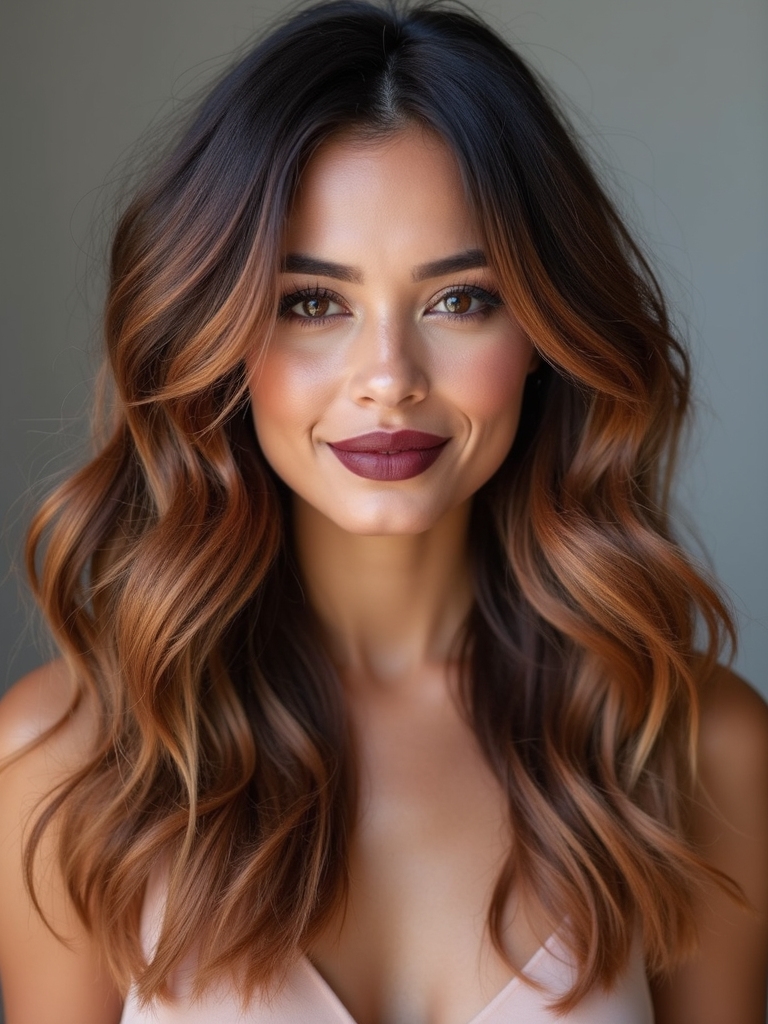
Wavy medium hair and layers pair naturally, the layers giving each wave room to bend into soft, beachy pieces instead of falling as one flat mass. Heavy layering backfires here, turning the shortest ends into a frizzy halo on any humid day.
- Keep the layering light; a few well-placed pieces do the whole job
- A light salt spray on damp hair brings the texture forward
- Scrunch and air-dry rather than brushing the wave out
Definition-First Layers for Curly Medium Hair

Curly medium hair wears definition-forward layers well, cut to free the coils so they spring rather than settle into one heavy mass by the ends.
The one non-negotiable is a dry cut, shaped in the pattern the curls actually hold once they’ve sprung up, since a wet measurement here tells a stylist very little.
- Insist on a dry cut, shaped in your natural pattern, not a wet trim
- The right layering keeps medium curls from building into a triangle shape
- A leave-in followed by curl cream on soaking-wet hair defines the finished shape
🅰️Wet Cut
Faster in the chair, but curls spring up shorter than planned once they’ve fully dried.
🅱️Dry Cut
Slower to complete, but the layers land exactly where the curl pattern actually sits.
Face-Framing Layers as the Universal Brightener

Face-framing layers work as close to a universal flatterer as medium length gets, the pieces around the face shaped to open and brighten the features regardless of the face shape underneath. For a broader roster built around this same detail, medium layered hair covers several more takes.
- Placed correctly, it suits every face shape, not just some
- Brightens the features without touching the length elsewhere
- Grows out invisibly, blending into the surrounding length
A Modern Shag at Medium Length

A modern shag at medium length is the trend-forward option, layered heavily enough for piecey, undone texture while staying wearable at this length rather than tipping into a full commitment. For a technique-first breakdown of similar cuts, medium layered haircuts goes deeper.
- Best on hair with some natural wave or coarseness already there to hold the shape
- A texture spray defines the piecey ends without weighing them down
- Looks its best styled with a light hand, not a heavy one
Butterfly Layers for Crown Volume

Butterfly layers bring real volume to medium hair by pairing a cropped upper section with the full length underneath. At this length, the two blend without a visible seam.
It’s built for hair that goes flat at the crown specifically; the shortest top layer usually lands around the chin, and a diffuser or round brush used upside down brings out the lift.
ℹ️Where This Works Best
Butterfly layers depend on enough length to build the two distinct sections. On hair barely past the shoulders, the crop can end up reading like ordinary face-framing instead of the layered, dimensional shape it’s meant to be.
Long Curtain Bangs Added to the Layers

Long curtain bangs paired with medium layers refresh the whole front without touching the overall length. The center-parted fringe frames the face and sweeps directly into the layers behind it.
- Match the fringe length to your face shape for the most flattering result
- A brush sets the soft, swept shape once it’s dry
- Suits nearly every face shape when the length is right
The Lowest-Maintenance Way to Wear Medium Layers
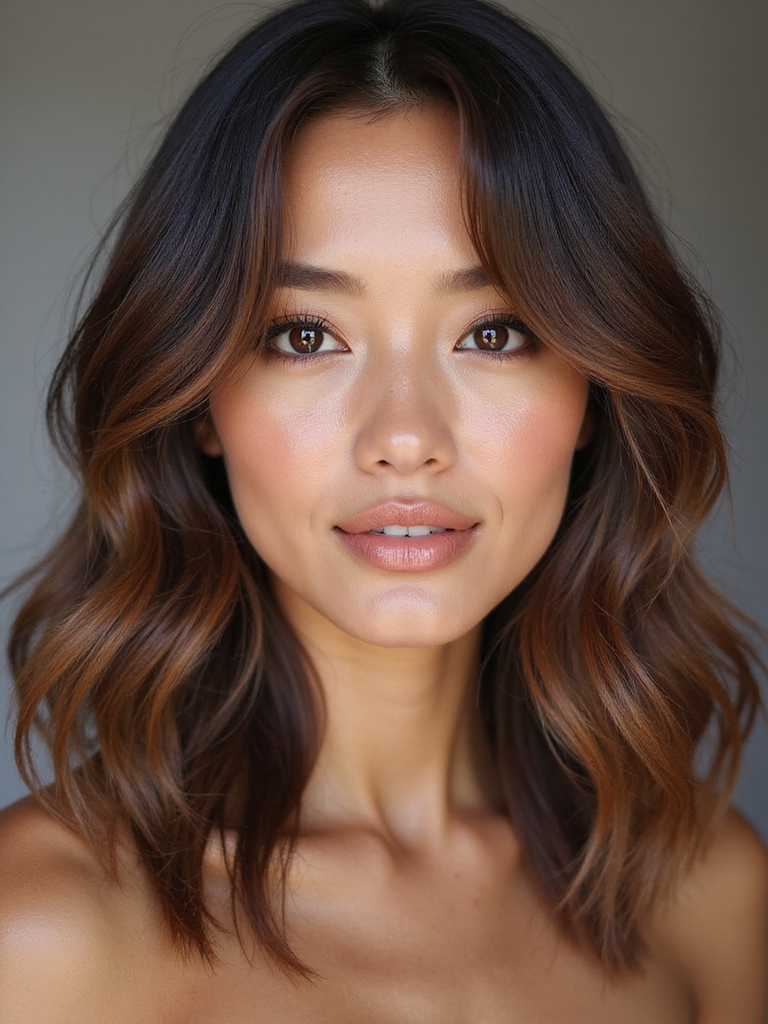
For anyone whose mornings are short, keeping the layers long and soft is what lets a medium cut air-dry well and grow out cleanly instead of losing its shape. For more length-specific low-effort options, mid-length layered haircuts rounds up several.
The goal is a shape that behaves with a scrunch of product and no hot tools at all, stretching comfortably to ten or twelve weeks between trims, plan on around $60 for the reshape.
A couple of terms worth knowing before booking any version of this cut.
📖Face-framing layer
The shortest piece in the cut, placed specifically around the face rather than through the whole head.
📖Internal debulking
Removing weight from underneath the surface so the outline barely changes but the hair moves more freely.
Building Movement Into Layers Without Heat
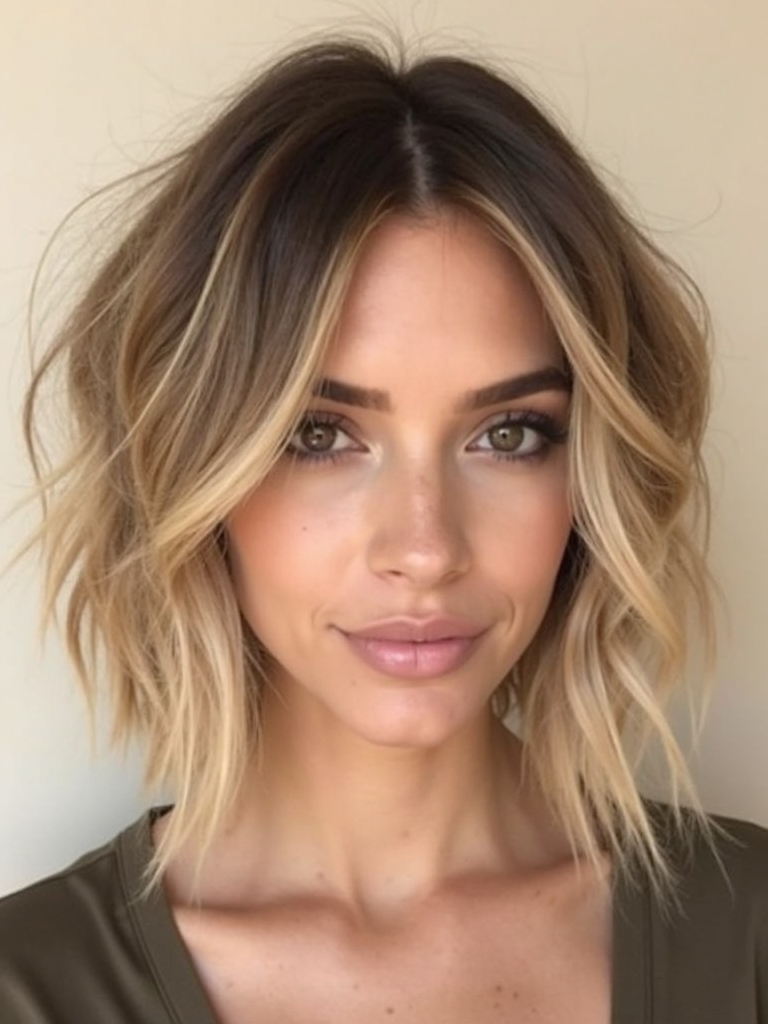
Medium length happens to be the easiest range to air-dry well, long enough to fall into shape on its own and short enough to actually dry before you need to leave.
A few no-heat habits build real movement into the layers while you do something else entirely.
- Clip the crown roots up while damp to set lift with zero heat
- Twist damp sections and let them dry into soft waves overnight
- A scrunch of mousse or cream on wet hair locks the air-dried shape in
The Products That Actually Keep Layers Bouncy

The right products keep layered medium hair light and moving; the wrong ones flatten it within hours. The rule is simple: stay light.
Less Product Than You’d Think
Mousses, light creams, and texture sprays add movement, while heavy butters and oils drag the layers down toward the scalp instead of lifting away from it.
Apply product from the midpoint of the hair down, keeping it away from the roots entirely, and start with about half of what feels like enough. It’s far easier to add more than to undo hair that’s already weighed down.
Who It Suits Best
Medium length rewards nearly every face shape, since it gives a stylist enough hair to place the shortest layer with real intention while staying short enough to remain easy to manage day to day.
Match the specific version above to your face shape first and your texture second, and bring both to the consultation rather than a single reference photo. That combination decides far more about the final result than the name of the cut ever does.
Layered Medium Hair, Face-Shape First
?How do I figure out my own face shape before booking?
Pull your hair back and look straight into a mirror. Widest at the cheeks and about as long as it is wide reads round; a strong, angular jaw reads square; a wide forehead narrowing to the chin reads heart; balanced and slightly longer than wide reads oval.
?Is medium length really the most flattering option for layers?
It’s the most flexible, at minimum. Medium gives a stylist enough hair to place the shortest layer exactly where a given face shape needs it, while staying short enough to remain easy to style day to day.
?Can layers actually make a round face look longer?
Yes, when the shortest piece is kept below the chin rather than up at the cheekbone. A layer that stops at the cheekbone adds width at the widest point of a round face; one that falls past the jaw does the opposite.
?Do these face-shape rules still apply if my hair is curly or very textured?
Mostly, though curl pattern adds its own variable, since coils shift visual weight and width differently than straight hair does. A stylist experienced with texture can usually blend the face-shape placement with what the curl pattern is already doing.
?What if I don’t fit neatly into one face shape category?
Most real faces are a blend rather than a textbook shape. Describe the two features you want addressed, more length here, less width there, and let a stylist combine placements instead of forcing you into a single category.
Placement, Not the Trend, Is What Flatters You
The reason one person looks striking in a layered cut and another looks washed out in the exact same length usually has nothing to do with the cut itself. It comes down to where the shortest layer lands relative to their features.
Bring your stylist a goal, not just a screenshot. Describe what you want your face to do, be honest about your texture and your mornings, and let a cut built around your actual features do the rest of the work.
Next Up