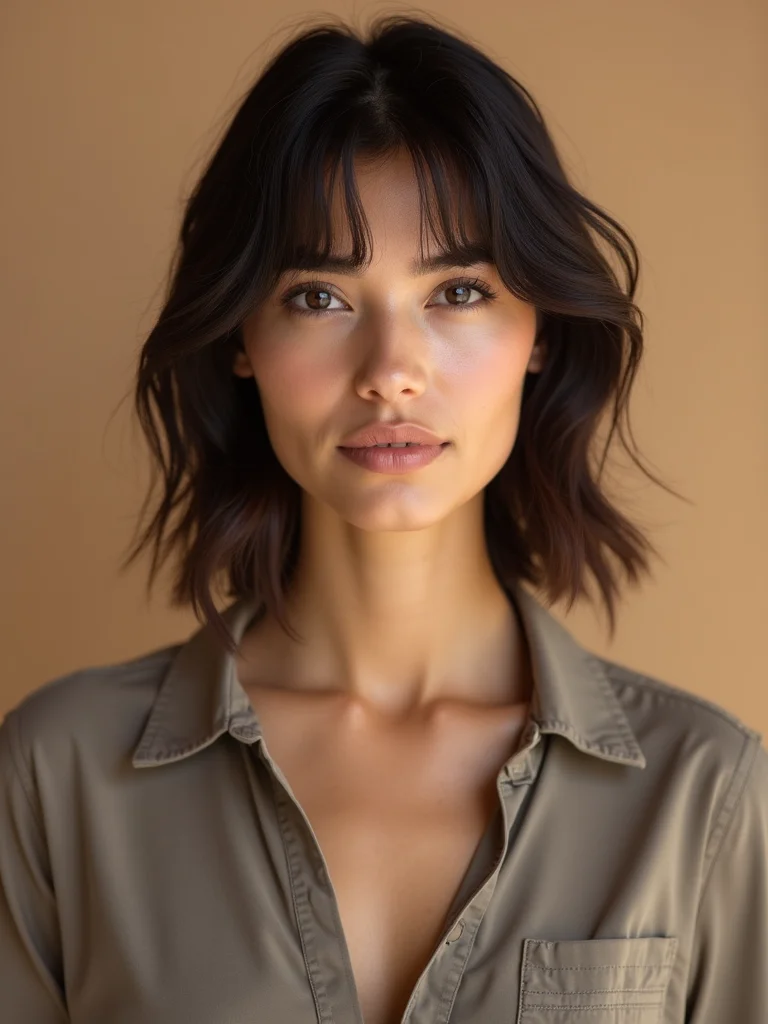
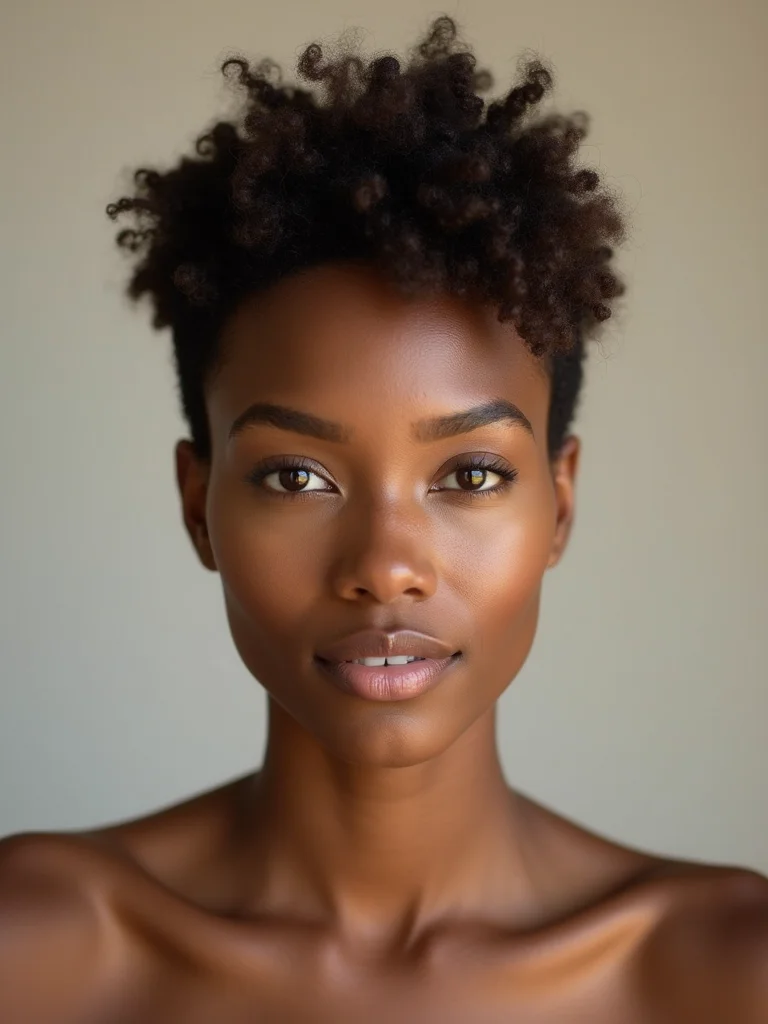
Straight hair either does exactly what a cut asks of it, or it does nothing at all. There’s rarely an in-between, and layers are usually the reason why: cut well, they add the movement straight hair can’t generate on its own; cut wrong, they leave thin, stringy ends with nowhere to hide the mistake.
Medium length, roughly chin to collarbone, happens to be the most forgiving range for this. It carries enough weight to fall cleanly while still showing real movement where it matters. Sixteen versions follow, each matched to a specific face shape and density. For a broader look at the shape this borrows from, see our layered hairstyles guide.
Layering Straight Hair, in Three Facts
- Precision matters more here than on any other texture, since straight hair hides nothing.
- Match the layering to your density: fine hair wants soft, internal layers and a near-blunt perimeter; thick hair wants real weight removed.
- A trim to keep the lines clean runs about half what a full color service costs, and most people need it less often than they assume.
Face-Framing Layers
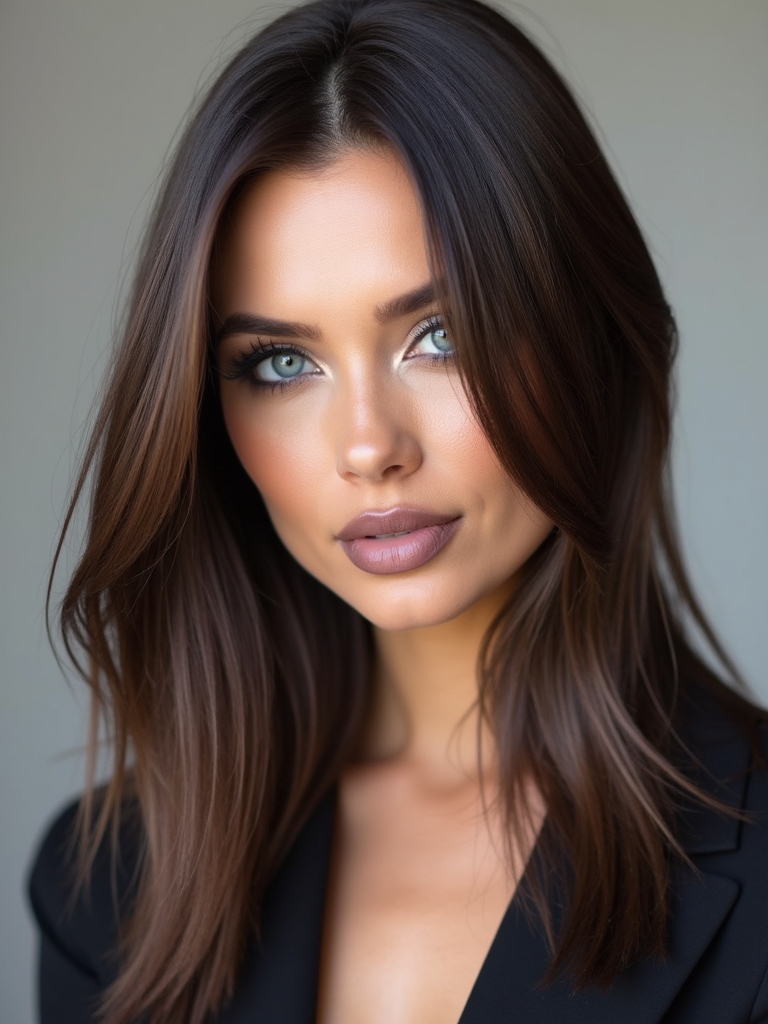
Face-framing layers do the most visible work of any layering choice on straight hair, since the cut lines show with nothing to soften them. Pieces cut to graze the cheekbones and jaw pull attention toward your features, softening the shape of the cut around them.
Where the shortest piece starts changes the effect entirely. Starting at the cheekbone lifts a rounder face; starting lower, near the jaw, softens a stronger one instead.
The catch is precision. On straight hair there’s no texture to blur an uneven line, so this placement is worth booking with someone who cuts face-framing layers often, not as an occasional add-on.
Soft Shag Layers

Borrowing soft shag layering brings movement to straight hair while keeping its sleek quality intact. Gentle, blended layers through the mid-lengths give the hair somewhere to bend along its length.
Where this struggles is with a heavy hand. Chopped, aggressive layering on straight hair looks thin and stringy at the ends fast, so the whole effect depends on the layers staying properly soft.
- Works best on medium-to-thick density, which can absorb the layering without thinning visibly.
- Ask specifically for blended, not stacked, layers to keep the shag reference subtle.
- Suits most face shapes, since the movement stays gentle and understated.
Blunt Ends With Layers
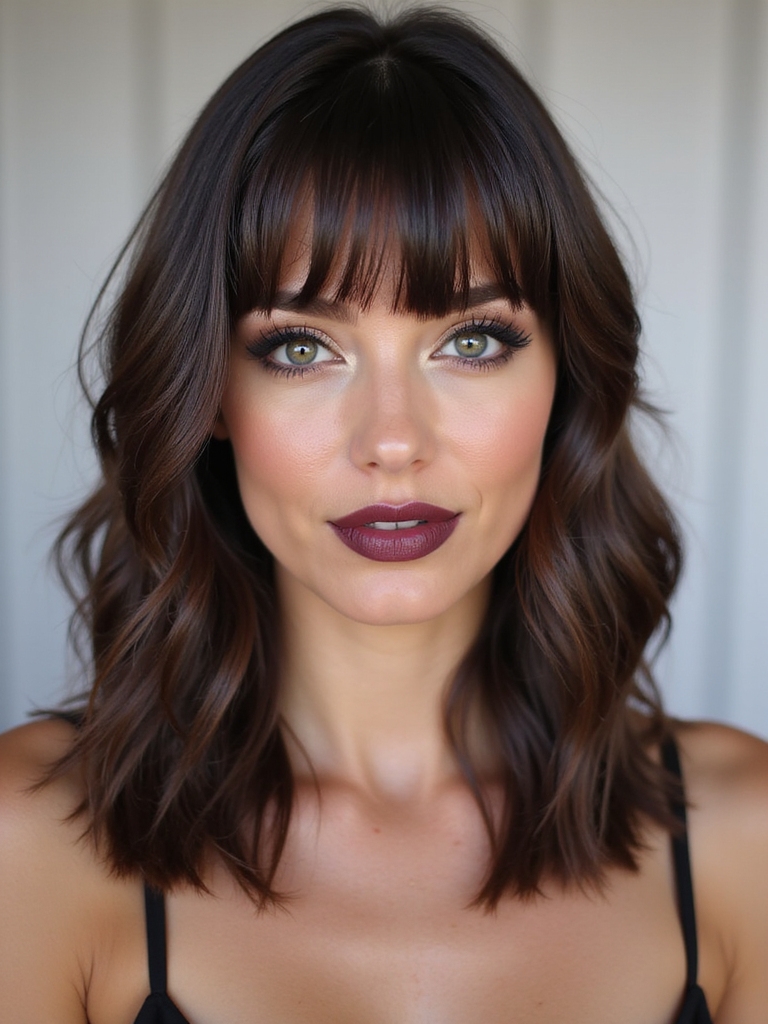
For anyone who wants thick, polished-looking ends but still craves movement, a blunt perimeter with layers hidden inside is the compromise. The visible bottom line stays dense and strong while the internal layers add body without showing themselves.
This combination suits fine straight hair especially well, since the blunt edge keeps the ends reading full even while the inside layers stop the hair from lying completely flat.
- Delivers density and movement from the same single cut.
- A medium round brush rolled under on the blunt ends keeps the line clean.
- A small amount of shine serum on just the ends keeps that line sharp.
Curtain Bangs With Layers

Curtain bangs and layered straight hair share the same basic idea, so pairing them feels like one continuous decision. The center-parted fringe echoes the face-framing layers already built into the sides.
One fringe, blended into the whole cut
They suit nearly every face shape and carry relatively low risk, since a curtain fringe grows straight into the surrounding layers with barely any separate trim schedule needed.
Fuller, longer pieces balance a longer face; shorter, wispier ones suit a rounder one. Ask your stylist to cut the fringe as one continuous piece with the face-framing layers, not a separate element. For more on the fringe alone, see our curtain bangs guide.
| Face shape | Fringe style | Why |
|---|---|---|
| Round | Wispy, shorter curtain | Avoids adding width at the cheeks |
| Long | Fuller, longer curtain or bottleneck | Adds width and shortens visual length |
Glass-Hair Layers
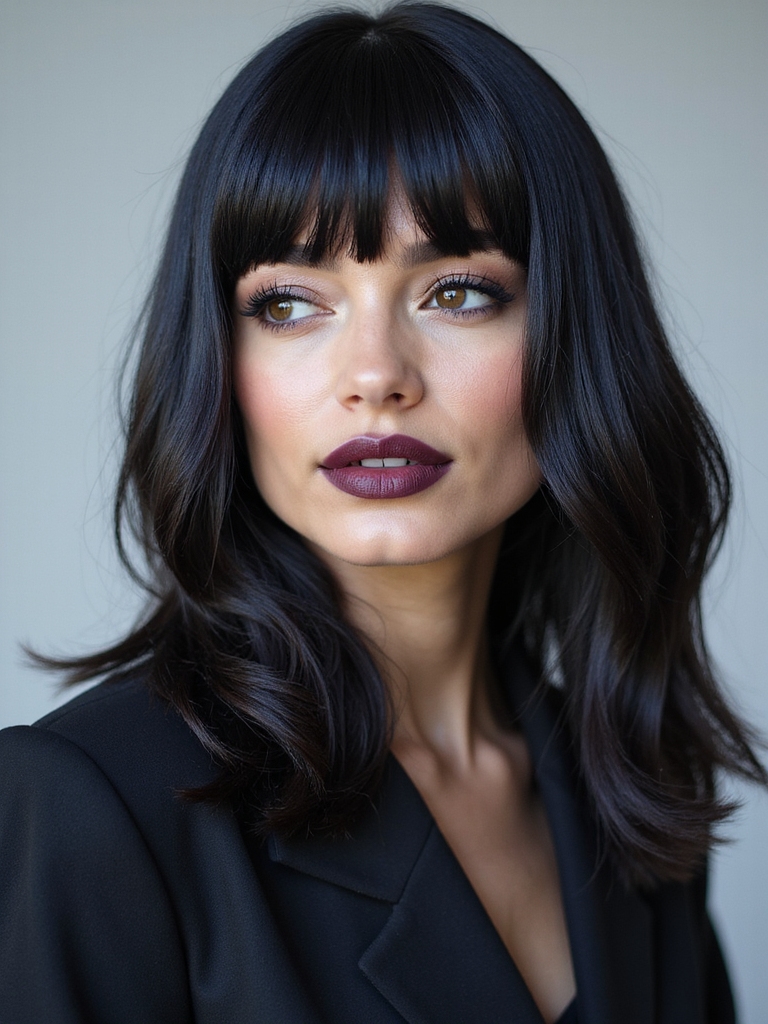
Glass hair is the sleekest, most mirror-like finish this cut can produce, built on light, subtly graduated layers with almost no visible weight. The layering keeps the shape from reading stiff while the smooth surface does the actual shining.
The catch is upkeep: this finish shows every bit of frizz, split end, or dullness, so it asks for hair in good condition and a careful blow-dry. A smoothing treatment and a single low-heat pass with a flat iron are usually what separate this from an ordinary straight blow-dry.
Feathered Layers

Feathered layers add a lightweight kind of volume to straight hair, with ends tapered thin enough to actually lift off the shoulders. The feathering catches air in a way flat, one-length ends almost never manage on their own.
- Especially useful on fine-to-medium density that needs help holding any body at all.
- A cool shot at the end of the blow-dry locks the lift in place.
- Keep products lightweight; anything heavy weighs the feathered pieces back down. See our feathered layered hairstyles for more ways to wear this technique.
📋Before Your Layering Appointment
- ✓Know your density: fine, medium, or thick, since layer placement depends on it entirely.
- ✓Bring a photo, but point specifically to the movement, not just the length.
- ✓Confirm exactly where the shortest layer begins before the first cut goes in — that one detail shapes the entire result.
Bottleneck Bangs

Bottleneck bangs work as the fuller alternative to curtain bangs: dense through the middle, then narrowing gradually toward each temple. The shape frames the eyes head-on and still blends fully into the rest of the layering.
- Suits longer face shapes especially well, since the fuller center adds visual width.
- Needs a touch more upkeep than a curtain fringe to keep the center from thinning out visually.
- On very fine hair, ask for it kept soft so the denser center doesn’t look sparse.
Internal Layering
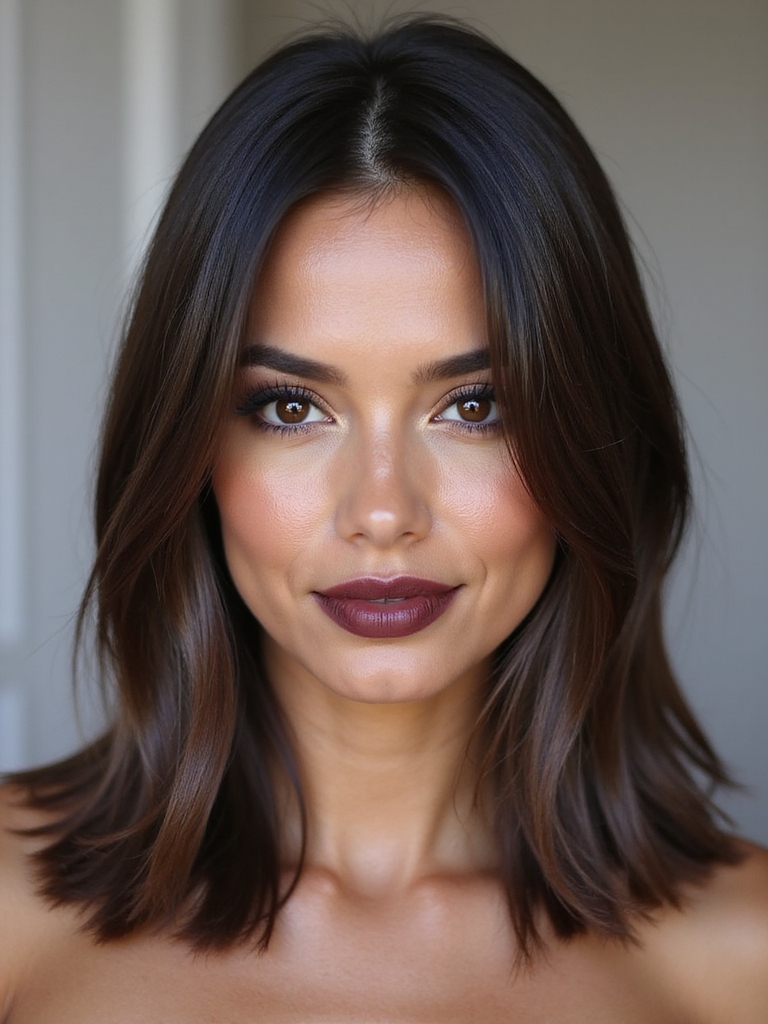
Internal layering is the quiet option for straight hair that needs body without any visible sign of layering at all. The cuts happen beneath the surface, so the outside keeps a smooth, one-length appearance while movement happens underneath it.
It’s the go-to solution when you want movement without a single obvious step showing anywhere in the cut. It works across most densities, though it’s especially useful on fine hair, where visible surface layers would only thin the ends further.
- Adds body without changing how the cut looks at rest.
- A blow-dry with a medium brush is usually all the styling it needs to show its work.
- Nearly invisible in photos, which is exactly the intended effect.
Flipped-Out Ends

Flipped-out ends bring a retro-leaning twist to any layered straight cut, with the bottom section flicked outward at the very ends. This lives entirely in the blow-dry, not the scissors, so nearly any layered shape here can wear it on a given day.
- Blow-dry the ends first, then use a flat iron to bend just the very bottom outward.
- Flip the face-framing pieces out too for a shape that looks intentional, not accidental.
- Set with a light-hold spray; straight hair drops a flip faster than textured hair does.
Flip Fades Fast
This styling choice doesn’t hold overnight the way a cut-in shape does. Expect to redo the flip most mornings, or skip it on days you don’t have five extra minutes.
A Sleek Layered Lob

Taking this layered shape to a collarbone length produces the sleek lob: whisper-light layers that keep the cut feeling current without losing the clean line straight hair does so well.
The shorter length itself adds a kind of natural body that longer straight hair tends to lose under its own weight, while soft internal layers still give it a real swing.
It’s a low-fuss length to style day to day and suits most face shapes without much adjustment needed. For other lengths in this same family, browse our medium layered hair and medium layered haircuts roundups.
Center-Part Layers
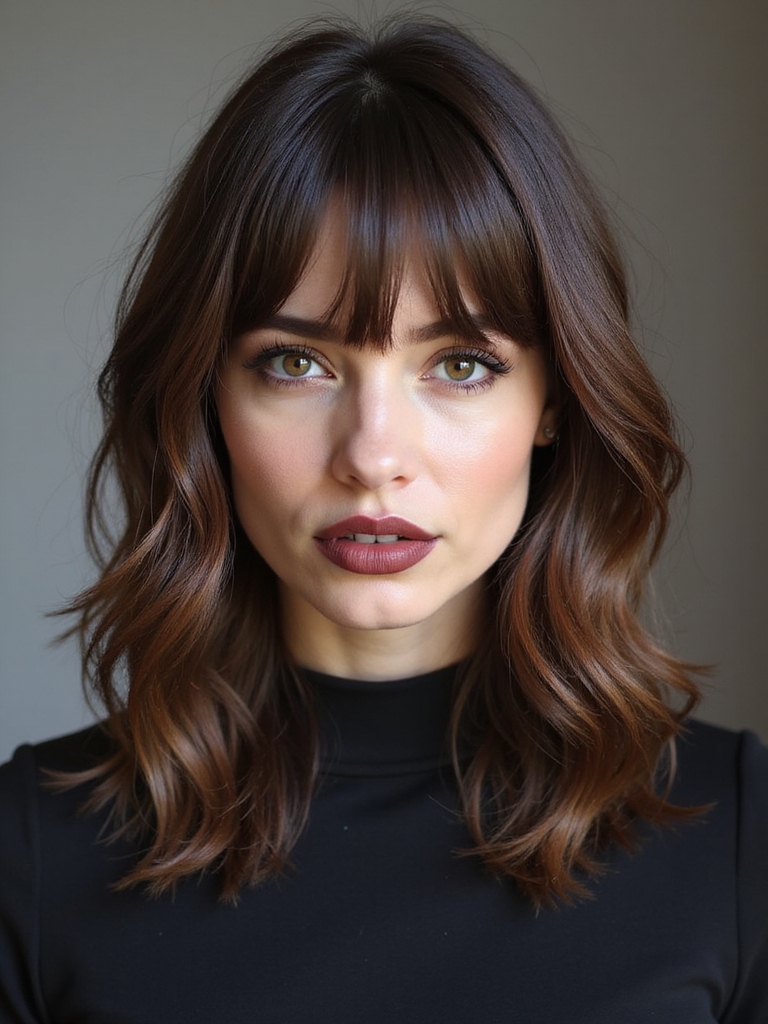
A center part with minimal layering is close to the cleanest, most symmetrical way to wear straight hair. The even part frames the face evenly on both sides, while soft layers keep the lengths from reading completely flat, landing somewhere between polished and stiff.
- Flatters oval and heart-shaped faces especially, since the central line draws attention to already-balanced features.
- On a rounder face, a very slight off-center part often flatters more than a dead-center one.
- Keep the layers subtle here; heavy layering fights the whole point of the symmetry.
Side-Part Layers

Switching to a deep side part adds instant asymmetry and a slimming diagonal line to layered straight hair, without a single cut changing.
Volume without touching the scissors
The sweep of hair across the forehead builds volume on one side while the opposite side sits closer to the face, creating a soft, narrowing effect down that half.
Part the hair deeper than feels natural at first for the most dramatic lift, and blow the heavier side up and back at the root before it dries flat.
Micro Layers for Fine Hair

Fine straight hair benefits from the smallest, most restrained layers on this whole list: whisper-thin cuts placed mainly near the crown, where lift matters most.
Less layering, placed more precisely
The catch with fine hair is that anything heavier than this thins visibly instead of shaping cleanly, so restraint is the entire strategy here.
Ask your stylist to keep the perimeter close to blunt while the micro layers do their work only near the roots, where the volume actually needs to happen.
Layers for Thick Hair
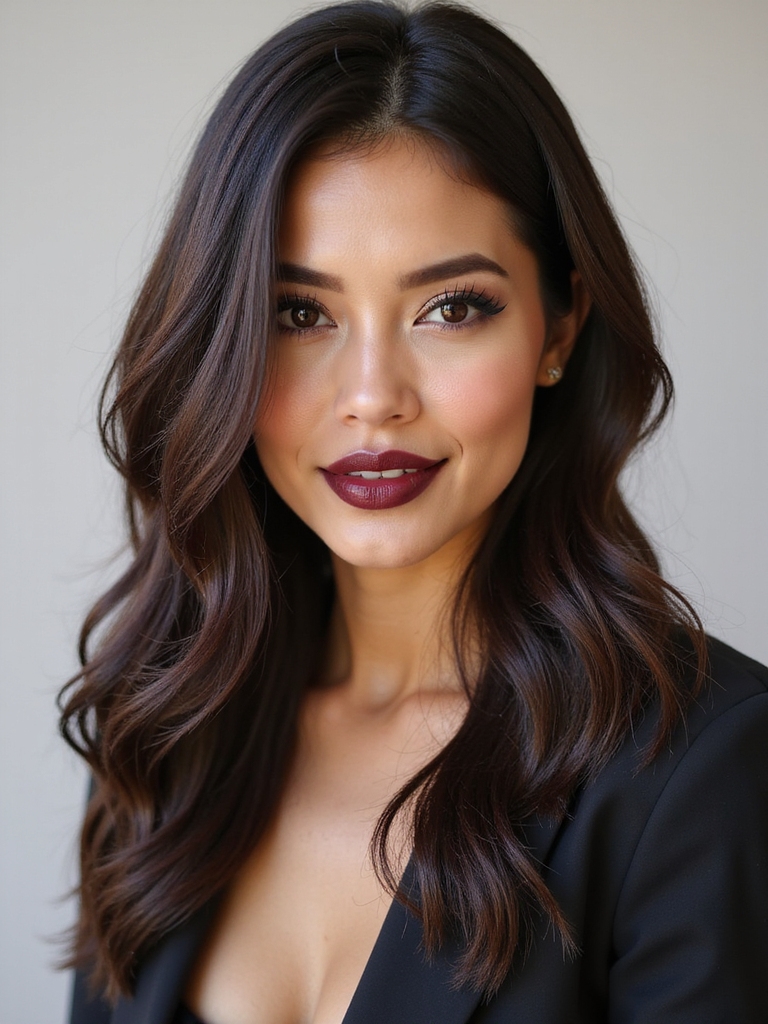
Thick straight hair asks for the opposite approach: real weight removed so the density can move instead of sitting as one heavy mass. Layers here are doing genuine subtraction, not just adding shape.
Expect the layers to start higher and go deeper than on fine hair, since there’s simply more bulk to work through before the cut starts moving the way you want it to.
💡Thinning Shears, Used Sparingly
Thinning shears remove bulk fast, but overusing them creates a fuzzy, uneven edge. A skilled cut removes most of the weight through slide-cutting or point-cutting long before reaching for thinning shears at all.
Heatless Layered Styling

You don’t need daily heat to keep this cut looking finished. An overnight silk wrap or loose braid on damp hair smooths the layers into soft waves by morning, no flat iron required.
The layering actually helps here, since the internal movement gives the overnight technique something real to catch onto and hold past noon.
Undo the braid, run your fingers through gently, and the layers fall into shape mostly on their own.
Matching the Cut to Your Density
Across every version here, density decides more than face shape ever does. Fine hair wants restraint: internal layers, a near-blunt perimeter, and volume concentrated at the root.
Thick hair wants the opposite: real weight removed through the mid-lengths so it stops sitting heavy. A trim to keep the shape clean typically runs $45 to $70, and most people need it far less often than they think.
Medium Straight Layered Hair Questions People Ask
?Why do layers sometimes make straight hair look thinner instead of fuller?
It usually happens when layers are cut too short and too high on hair that doesn’t have the density to support them. The shorter pieces stick out or separate from the rest instead of blending in, and that separation shows up as thinness on camera and in person alike.
?Can I add layers to straight hair without losing much length?
Yes, internal layering is built exactly for this. The cuts happen underneath the visible length, so the perimeter stays nearly untouched while the hair still gains real movement from within.
?Do face-framing layers need to be redone every time I get a trim?
Not every visit, but they do grow out faster than everything around them since they’re the shortest pieces in the whole cut. Most people need them refreshed on a separate, shorter cycle than a full haircut.
?Is a blunt cut with hidden layers better than fully layered hair for fine straight hair?
It depends on what you’re after. The hidden-layer approach protects the appearance of density better, while fully layered hair gives more visible movement at the cost of that solid-looking perimeter.
?What’s a quick way to tell my stylist how much density I actually have?
Pinch a section at the crown between two fingers before your appointment. A section that feels dense and hard to compress signals real density for heavier layering; one that flattens easily under light pressure signals fine hair better suited to the internal, restrained approach.
The Cut That Rewards Precision
Layered straight hair lives or dies on precision, since there’s no texture anywhere to hide an uneven line or a heavy-handed layer. Done right, though, it turns hair that just hangs into hair that actually moves.
Match the version here to your actual density first, before the photo that caught your eye, and let your stylist adjust from there. The right layering, once it’s in, tends to need far less daily effort than people expect going in.
Favorites to Revisit