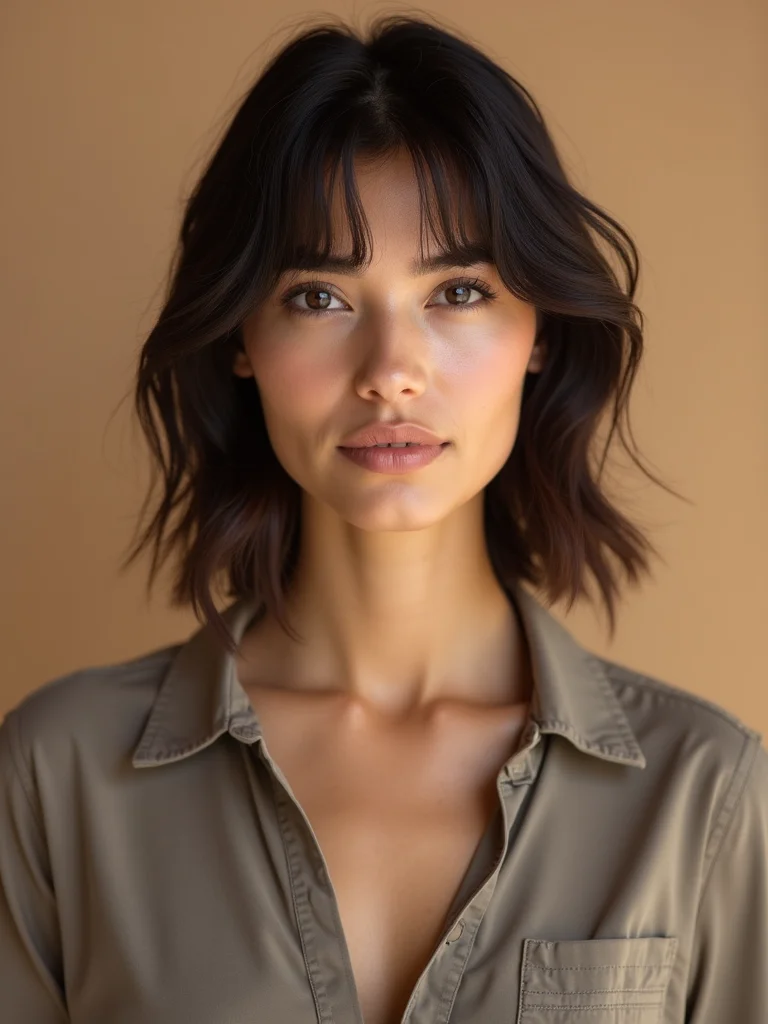
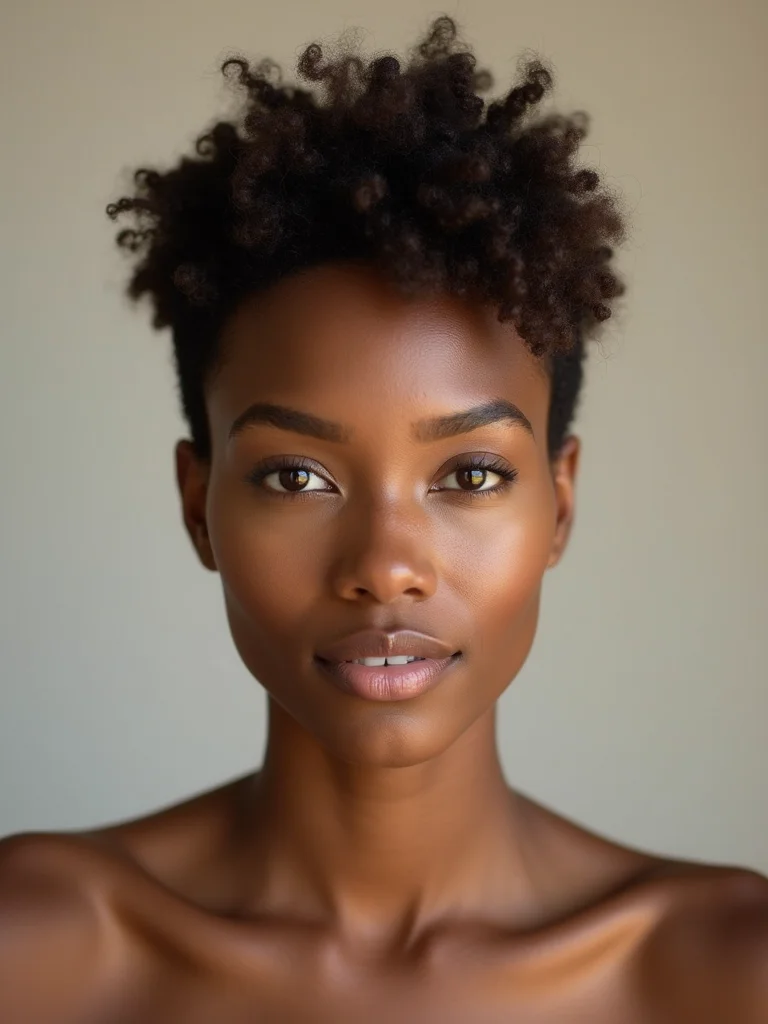
People hear “layers” and picture length disappearing off the ends. That’s backwards. Good layering at medium length removes almost no visible length at all; it just lets a few shorter pieces around your face move while everything else stays exactly where it was.
Medium, chin to collarbone, happens to be the length where those face-framing pieces do the most visible work. Below are ten ways to place them, sorted by hair type and by how much of a change each one actually makes, along with what to say out loud at the consultation so the version you walk out with actually matches the one you had in mind.
Quick Answers Before the Chair
Do I have to cut length to get face-framing layers? No. The frame comes from a few shorter pieces up front; the rest of your length stays put.
Which layer style fits my hair type? Feathered for fine hair, debulked from underneath for thick hair, a dry cut for curls; the shape changes, the frame doesn’t.
How do I make sure my stylist gets the frame right? Tell them exactly where you want the shortest piece to land: cheekbone, jaw, or chin.
Soft Curtain Layers That Open Around the Face

Curtain layers part down the center and sweep back on both sides, opening around the face the way a curtain pulls back from a window. The wispy ends keep the whole thing light. The symmetry does most of the work, flattering an unusually wide range of faces without asking for a dramatic change from whatever you already had.
- Works at almost any length, from a chin bob to well past the shoulders
- The shorter front pieces curve along the cheekbones, softening a strong jaw or forehead
- Grows out gently, since the shape has no hard edge to lose
Cheekbone-Grazing Pieces, the Single Best Placement

The cheekbone is the most flattering place on the whole face to land a layer. A piece cut to hit right there traces the highest point of your bone structure and pulls the eye up, which is a bigger visual lift than most people expect from one small cut. It’s a change most people notice on themselves within the first blow-dry, well before anyone else comments on it.
- Flatters round, square, and long face shapes about equally
- Tuck one side behind your ear to show the frame off deliberately
- The catch is fine hair can thin out fast if the piece is cut too choppy
💡Say This at the Consult
Naming the exact spot matters more than naming a style. Say “cheekbone” for the most lift, “jaw” for something softer, or “chin” for barely-there framing. A stylist can work from any of the three, but only if you’re specific about which one.
A Layered Lob With the Shaping Hidden Inside

A layered lob keeps the collarbone length looking full while internal layers, cut underneath the surface, add movement nobody can trace back to a specific cut.
From the outside it reads dense and healthy. Nothing about it looks obvious. Underneath, the shaping lets it bend with a softness a plain one-length lob never quite reaches.
Round-brush the ends under for a polished finish, or leave them wavy for something softer and less deliberate-looking.
An Airy Shag for Constant Movement

A shag at medium length stacks soft layers throughout for maximum motion and a loose, undone texture. The face-framing pieces blend straight into the shaggy layers, disappearing into the same texture.
Wavy and thick hair come alive in this shape, since the layering releases weight the texture can then move with. The shag rewards a light hand more than any cut on this list.
- Scrunch a texture spray through damp hair, then rough-dry it and you’re done
- Where this struggles is very fine hair, where thinness shows up before texture does
- Best left slightly undone; a heavy brush-out flattens the texture the cut depends on
Collarbone Layers Paired With a Side Sweep

Collarbone-skimming layers paired with side-swept bangs frame the whole face top to bottom in one continuous line. The bangs cast a flattering diagonal across the forehead while the layers shape everything below it.
Getting the Sweep to Actually Sit
It’s a strong combination for round and square faces, since the side sweep adds an angle that visually slims, doing quietly what a heavier, blunt fringe would otherwise have to work much harder to achieve.
The collarbone length also keeps enough options open for a low pony or a half-up style without losing the frame entirely.
Feathered Layers That Fake Volume on Fine Hair

On fine hair, feathered layers fake volume that would otherwise take a lot of product to fake. Long, subtle tapering adds the impression of body without the weight loss short, choppy layers cause. Length protects fine hair here more than any product will.
Ask for the feathering to stay long and soft. The moment it goes short and blunt, fine hair reads thinner than it should.
Where Fine Hair Loses
Short, choppy layers are the one version of this cut that backfires on fine hair; they remove exactly the density you’re trying to protect. If your hair is already fine, keep every layer long.
Layers That Give Curls Room to Spring

On curly hair, medium layers give each coil room to lift, so it stays out of one heavy triangle at the bottom. Shorter face-framing pieces curl in softly around the cheeks while the rest of the shape stays rounded.
Why Dry-Cutting Changes the Frame
It has to be cut dry, one curl at a time, so the stylist can see exactly where each coil lands before placing the frame.
A curl cream worked through on wet hair, then diffused on low heat, defines the shape once it’s cut, and a quick refresh with the same cream on day two brings most of it back without a full restyle.
Debulking for Hair With Too Much Density

Thick hair needs weight removed from underneath so the layers can actually move. Done well, the face-framing pieces show clearly through all that density, rather than getting lost somewhere inside it.
The framing pieces carry even more weight here, since they’re what carves an actual shape out of that density and pulls focus back to your face instead of leaving it as one solid mass. A stylist working section by section, checking as they thin, keeps the result even rather than patchy.
- Ask for internal thinning combined with the face-framing layers, not just random thinning shears
- A light cream smoothed through keeps frizz down without adding more weight
- Round-brushing just the front pieces is usually enough to direct the whole frame
S-Curve Waves That Show the Layers Off

S-curve waves bend the hair into soft, alternating shapes that put every layer on display, since each curve catches a different length and adds real dimension.
Paired with chin-to-collarbone layers, the effect frames the face in soft, sculpted movement. It’s the dressed-up version of medium layers, suited to an event or any day that calls for a little polish rather than a wash-and-go routine.
Leave the ends out of the curl for a softer, more current wave; curling every single strand the exact same way all the way through to the tip looks dated fast.
Building the S-shape takes alternating direction, not just wrapping hair around a wand the same way each time.
1Start at the part
Wrap the first section away from your face on a medium-barrel wand.
2Alternate the next section
Wrap the section beneath it toward your face, so the curls meet in an S shape.
Bottleneck Bangs Curving Into the Frame

Bottleneck bangs dip shortest right at the center part, then lengthen out toward each temple, meeting the rest of the frame at a soft angle. They give the eyes a frame without the full commitment of a blunt fringe.
- Round-brush the shorter center section back and let the longer outer pieces fall forward
- Suits most face shapes and grows out softly into longer framing pieces
- The middle section needs the most help; a texture spray keeps it from going flat by midday
Matching the Frame to Your Face Shape
Round faces tend to do best with layers landing at the jaw or below, since anything shorter at the cheekbone adds width exactly where a round face already has plenty to spare. Square faces usually want the opposite treatment: cheekbone-height pieces soften the jaw’s strongest angle and pull the eye upward, away from the sides.
Oval faces have the most room to experiment, since nearly every placement in this list works reasonably well on that shape without much risk of it looking wrong. Heart-shaped faces generally do best with fuller pieces landing near the jaw, balancing out width that naturally sits higher up near the forehead and temples.
- Round faces: ask specifically for length at or past the jaw, never shorter
- Square faces: a slightly rounded, softer edge reads better here than a blunt one
- Oval and heart-shaped faces can borrow from almost any placement on this list
How to Ask for This at the Salon
A stylist can work from a photo, but the placement matters more than the picture itself. Naming the exact spot, cheekbone, jaw, or chin, gets you closer to the actual result than any reference image alone, since the same photo reads completely differently depending on where your own face happens to carry its width.
Bring up your texture in the same breath as the photo: fine hair needs restraint, thick hair needs the density thinned, and curls need a dry cut. A consultation that starts with this information tends to run smoother than one where the stylist has to guess it partway through the cut.
It’s also worth saying out loud how much daily styling you’re actually willing to do. A soft curtain layer or a lob needs almost none; an airy shag or feathered layering around the face asks for a few minutes with a brush or a texture spray most mornings. Being honest about that upfront saves a second visit to soften a cut that turned out to be more work than expected.
Before You Book a Face-Framing Cut
?Do I need to bring a specific photo, or can I just describe what I want?
A photo helps, but only if you also point to exactly where the shortest layer lands in it. Face shape and hair texture change how the same photo translates onto your head, so describe your own features alongside the picture rather than relying on it to speak for itself.
?Can I get face-framing layers without changing my medium-length hair at all?
Mostly yes. The shorter pieces come from cutting into hair that’s already there rather than trimming length off the bottom, so your overall length barely moves. Most appointments for this kind of cut run about 45 minutes, closer to a standard trim than a full restyle.
?Will layers make my hair harder to style day to day?
Soft, longer layers barely change your routine at all. Shorter, choppier framing pieces need a round brush or a quick wave to lie the way they do in photos, so factor that extra step into a normal weekday morning before you commit to one.
?How much does a face-framing cut like this typically run?
Most stylists price it close to a standard haircut, plan on around $55 at a mid-range salon, since the work concentrates up front. Trimming your own face-framing pieces at home costs nothing but a pair of scissors, and it’s exactly the kind of shortcut that goes wrong first.
?Do these layers work if I color my hair often?
Layering itself doesn’t interact with color, though very processed or dry ends do better with a gentler point-cut than heavy thinning shears. Mention your color history before the appointment, including how recently you last lightened or lifted it, so your stylist can adjust the technique instead of finding out mid-cut that the ends need gentler handling than planned.
One Decision Matters More Than the Rest
Every cut here works the same way: a few shorter pieces do the framing, and the rest of the length just comes along for the ride. Where you put that shortest piece, cheekbone, jaw, or chin, decides more about the final look than which specific style you picked from this list, and it’s the one detail worth settling before you sit down in the chair.
Settle that one placement first, match it to your texture, and any of these ten will do what a layered cut is supposed to do: move, catch the light, and put the shorter pieces to work around your face instead of just adding bulk to a length that was already there.
Favorites to Revisit