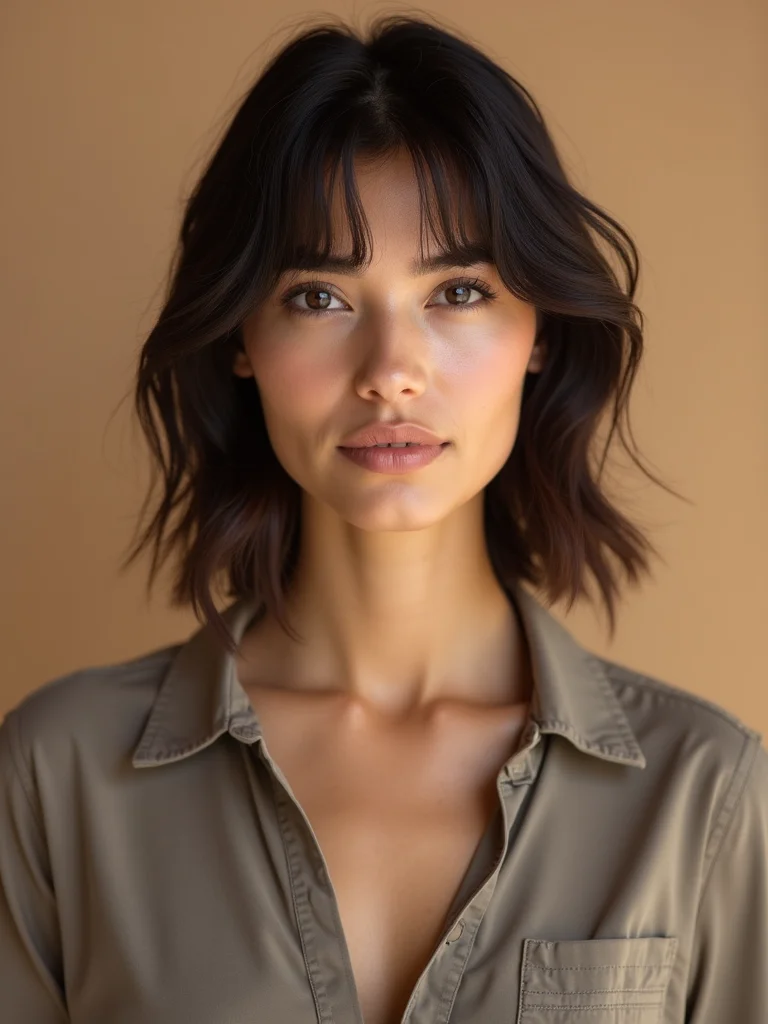
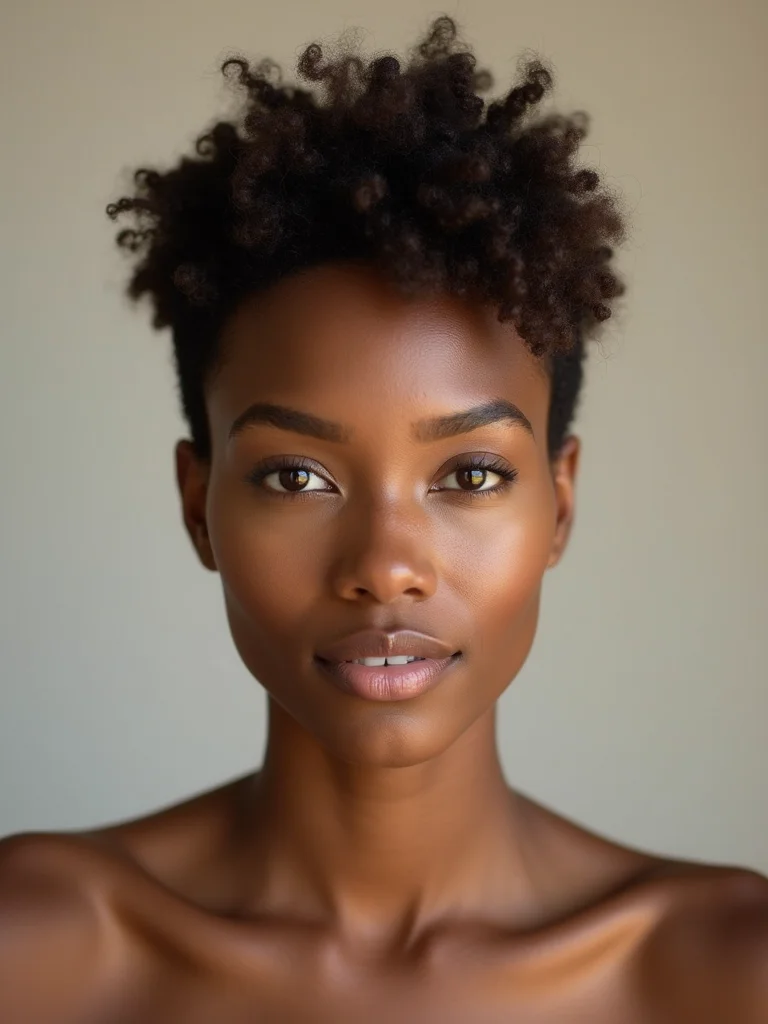
Picture two haircuts colliding: a pixie’s cropped ease and a shag’s choppy, undone texture. That collision is exactly what a shag pixie is, and it changes short hair completely. You get a cut that moves, catches light differently at every angle, and lands closer to rock star than tidy crop.
It also asks more of you than a plain pixie does, with real decisions about layering, fringe, and how often you can realistically get to a chair. Get those decisions right and a shag pixie ranks among the most striking short cuts around; get them wrong and it just reads grown-out.
Shag Pixie, In Brief
| Hair type | What matters most | Quick note |
|---|---|---|
| Fine | Choppy layers fake density at the root | Ask for stacked layers, not overall thinning |
| Thick | Internal weight removal keeps it light | Bulk comes out underneath, not off the top |
| Curly or coily | Cut fully dry so pattern and shrinkage align | A leave-in keeps definition through the day |
What Makes a Shag Pixie
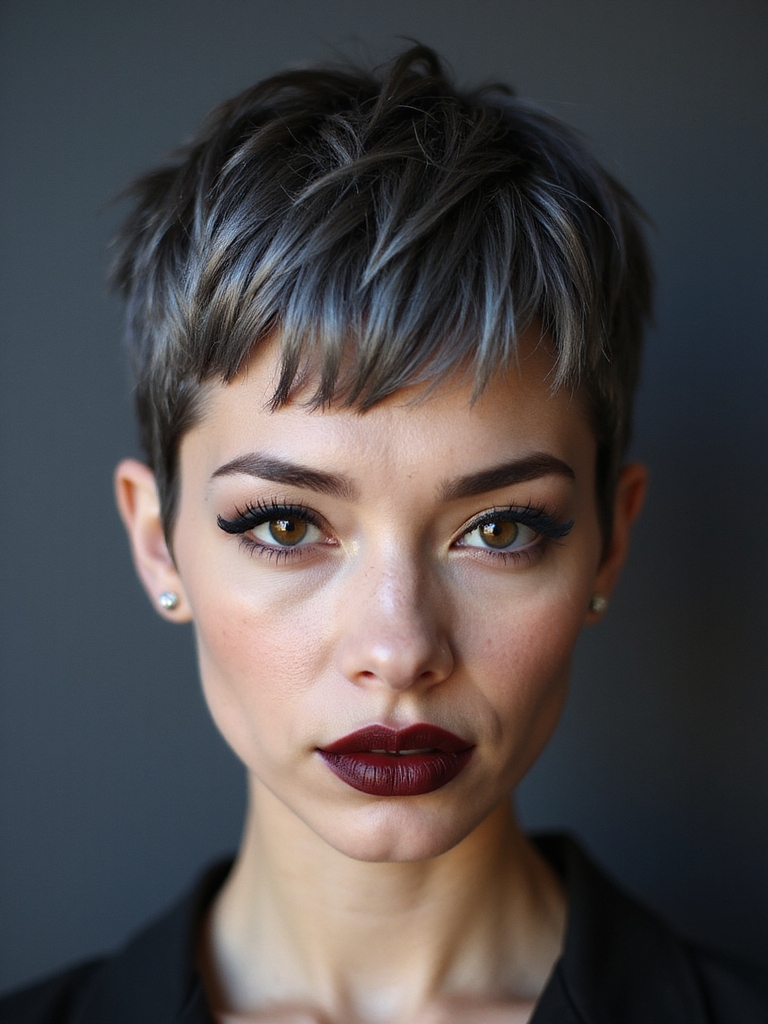
A shag pixie happens when two of the boldest short cuts meet. From the pixie haircut, you keep the cropped length. From the shag haircut, you borrow choppy, disconnected layers and a piece-y, undone finish. The result gives you short hair with real edge, nothing like a smooth, rounded classic crop.
- Short overall length, typically ear to jaw.
- Choppy, disconnected layers built for texture and lift.
- A piece-y, undone finish rather than a polished one.
Matching a Shag Pixie to Your Face Shape
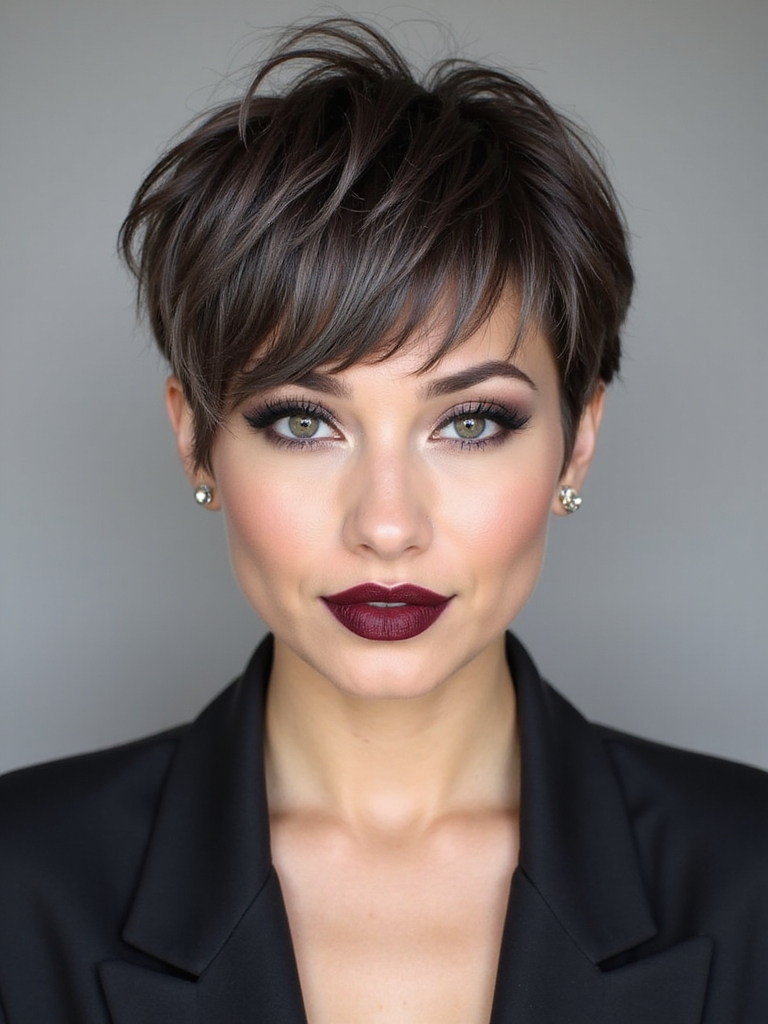
You’ll find a shag pixie adapts to face shape more easily than most short cuts, since the layers and fringe can be repositioned rather than the underlying length changed.
- Oval faces can wear nearly any version without much adjustment.
- Round faces benefit from height at the crown and longer pieces at the sides.
- Square jaws soften with wispy, textured edges near the cheek.
The Layering Behind a Shag Pixie
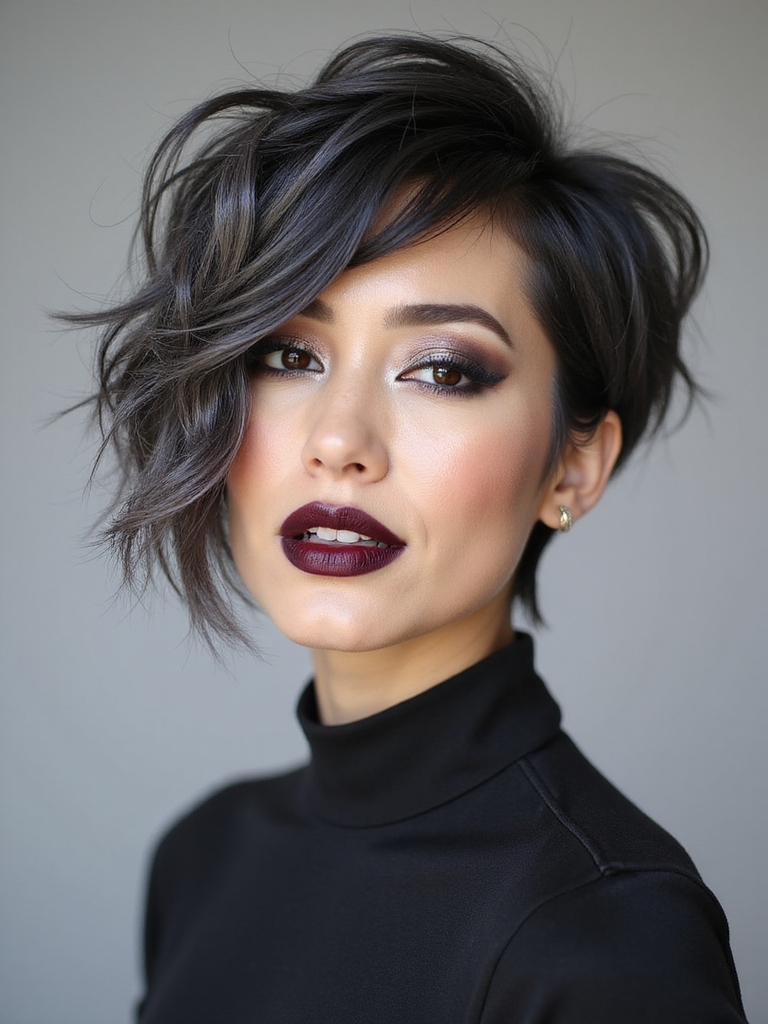
Layering drives the entire cut. Short, stacked pieces build height through the crown, while longer, choppy sections around the face and nape add the movement that gives a shag pixie its signature disconnected look.
The skill sits entirely in the contrast. Too few layers and you’re left with a plain pixie; too many in the wrong spot and the shape turns patchy instead of intentional.
- For more volume, ask for heavier layering right at the crown.
- For a softer effect, request the ends blended a touch more.
- A stylist should build layers around your growth pattern, not a generic template.
Fringe Options for a Shag Pixie
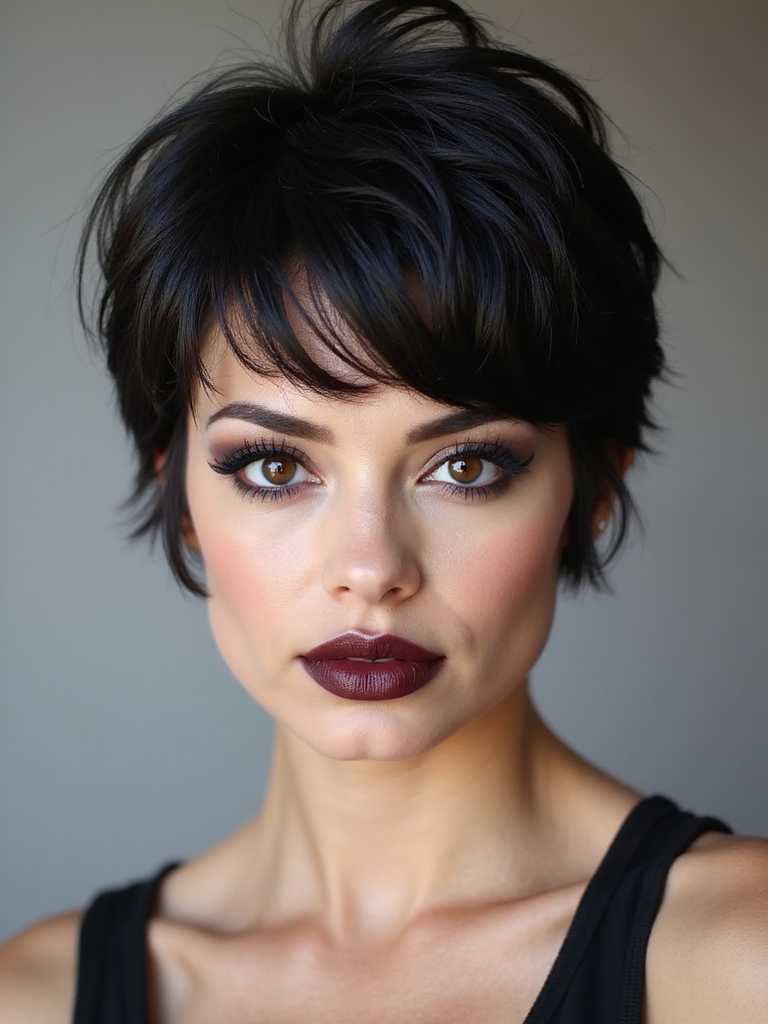
The fringe decides the entire mood of a shag pixie more than any other single choice you’ll make.
Setting the Mood
A heavy, blunt fringe comes across bold and graphic. Soft, piece-y bangs feel wearable and easygoing. A long side-sweep works best for anyone easing in, since it can be pinned back on days you’d rather not deal with it.
Whichever direction you pick, expect the fringe to need its own attention between full cuts, since it grows into your eyeline faster than the rest of the shape does.
ℹ️Reading Disconnection
Disconnection just means the layers are cut at deliberately different lengths so they don’t blend into one smooth shape. It’s the single detail that separates a shag pixie from a standard layered crop, and it’s worth naming out loud at the consultation.
Working With Your Natural Texture
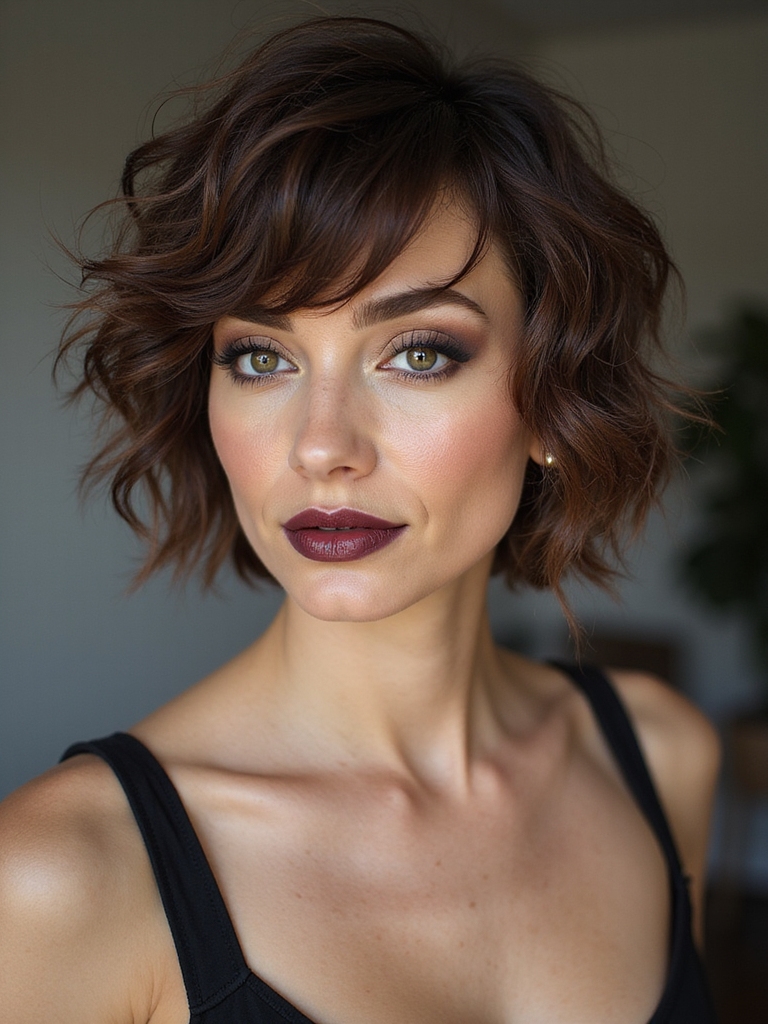
Your natural texture changes how a shag pixie behaves day to day, and the cutting approach should shift to match it rather than fight it.
Straight hair shows the choppy layers with crisp, defined edges. Wavy hair softens them into easy movement without much effort. Curly and coily patterns turn the whole shape into a halo of springy, separated pieces once cut correctly.
Curly and coily hair specifically wants a dry cut, so the layers land exactly where each curl actually falls once shrinkage is accounted for. The curly pixie haircut guide covers this in more depth.
Shag Pixie Strategies for Hair Density
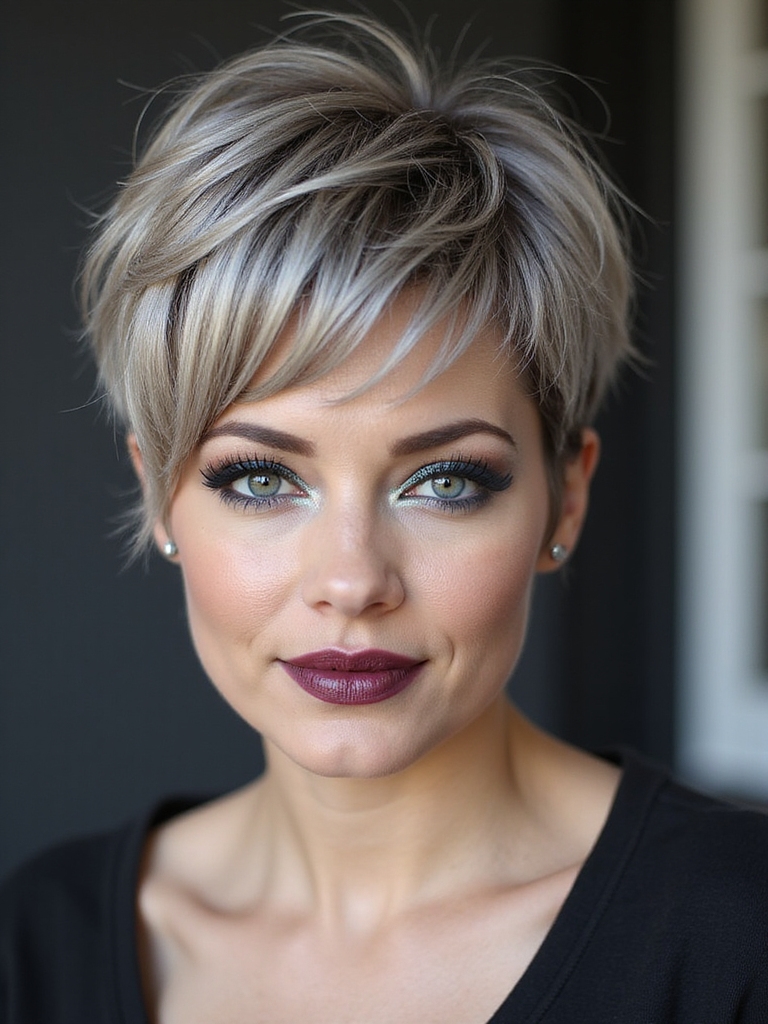
Density, meaning how much hair you actually have, shapes the cutting approach just as much as texture does. Fine and thick hair both wear a shag pixie well, but they need close to opposite handling at the chair.
- Fine hair: stacked, textured layers plus a volumizing product at the root build the illusion of fullness.
- Thick hair: internal debulking removes weight from underneath so the shape stays light instead of puffing out.
- Either way, the surface layer should stay mostly intact so the outline stays clean. The pixie haircut for thick hair guide has more on the density side of this.
🅰️Hair is straight or wavy
Ask for crisp, defined layers with a light paste to hold separation through the day.
🅱️Hair is curly or coily
Insist on a dry cut, section by section, so the stylist can see the true pattern before cutting.
Razor or Scissors: the Cutting Method
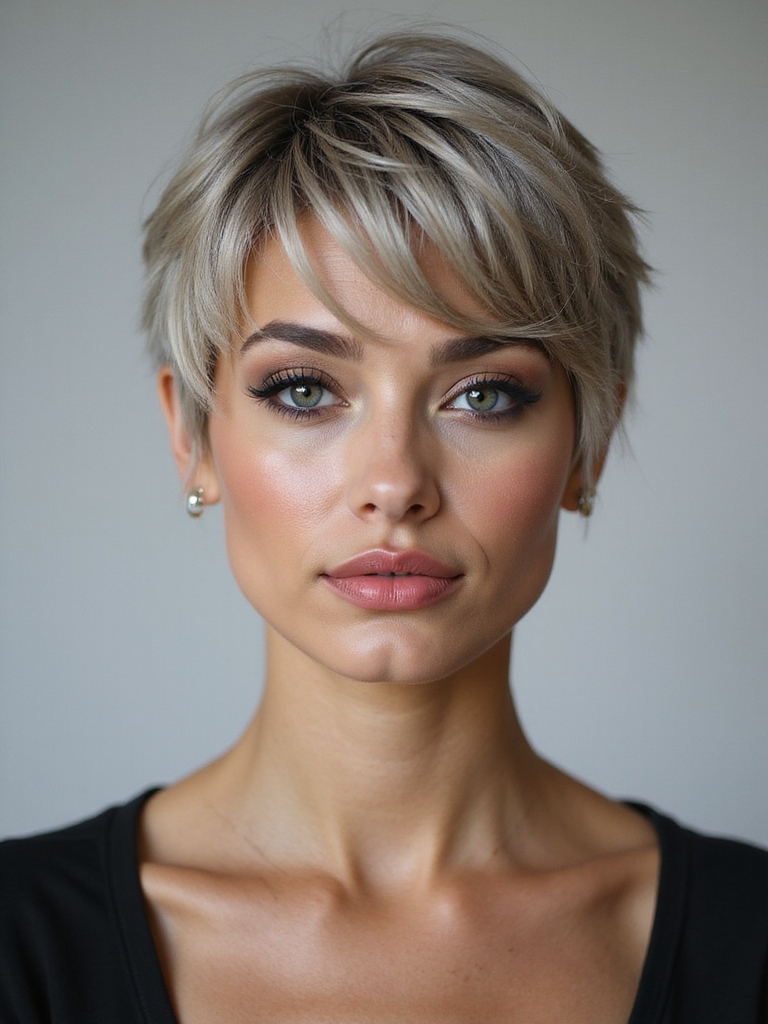
How the cut actually gets made, razor or scissors, changes the finish more than most people expect walking in.
- Scissors give a cleaner, slightly heavier edge, better suited to fine hair and crisp, graphic shapes.
- A razor produces a softer, more feathered, piece-y finish, the look most associated with a shag pixie.
- Healthy hair handles a razor well; dry, fragile, or color-damaged hair does better with scissors.
Edgy Color Ideas for a Shag Pixie
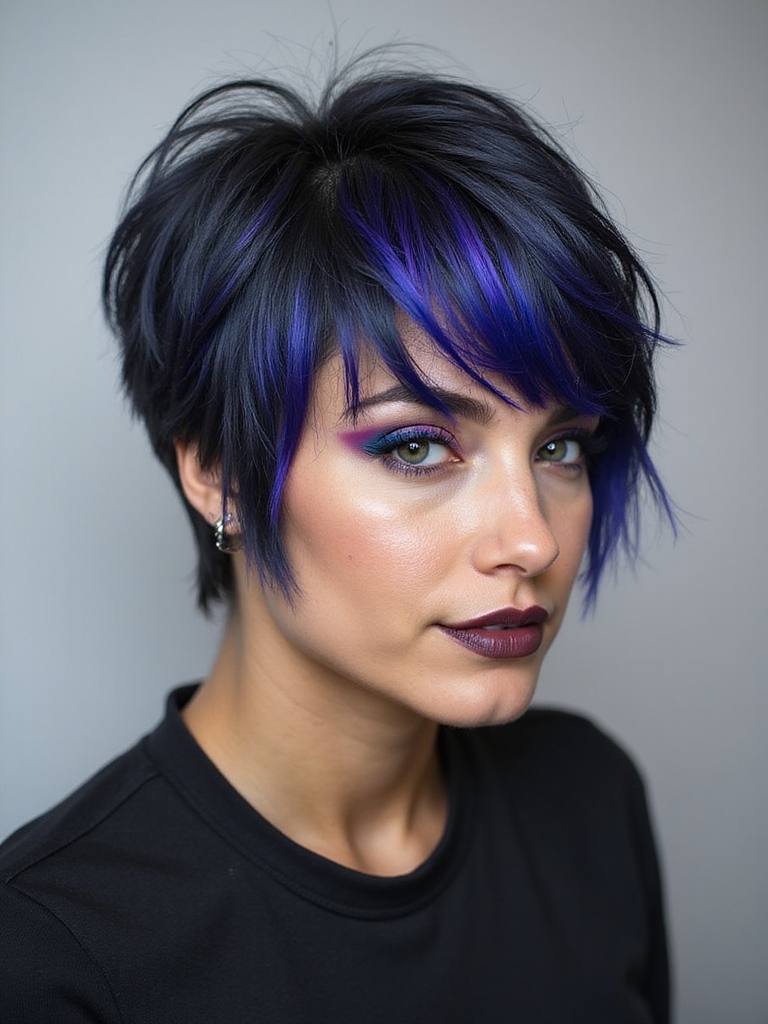
A shag pixie works as a small canvas, which makes it a good candidate for bold color you might hesitate to commit to on longer hair.
- Money-piece highlights around the face catch light differently against the choppy layers.
- A high-contrast root smudge lands dramatic without needing constant upkeep.
- An all-over metallic plays especially well with texture, since the layers scatter light rather than reflecting it flat.
Where a Razor Goes Wrong
A razor only belongs on healthy hair in experienced hands. Used on compromised strands, it frays ends that were already fragile, turning texture into visible damage within a few washes.
The Right Products for a Shag Pixie
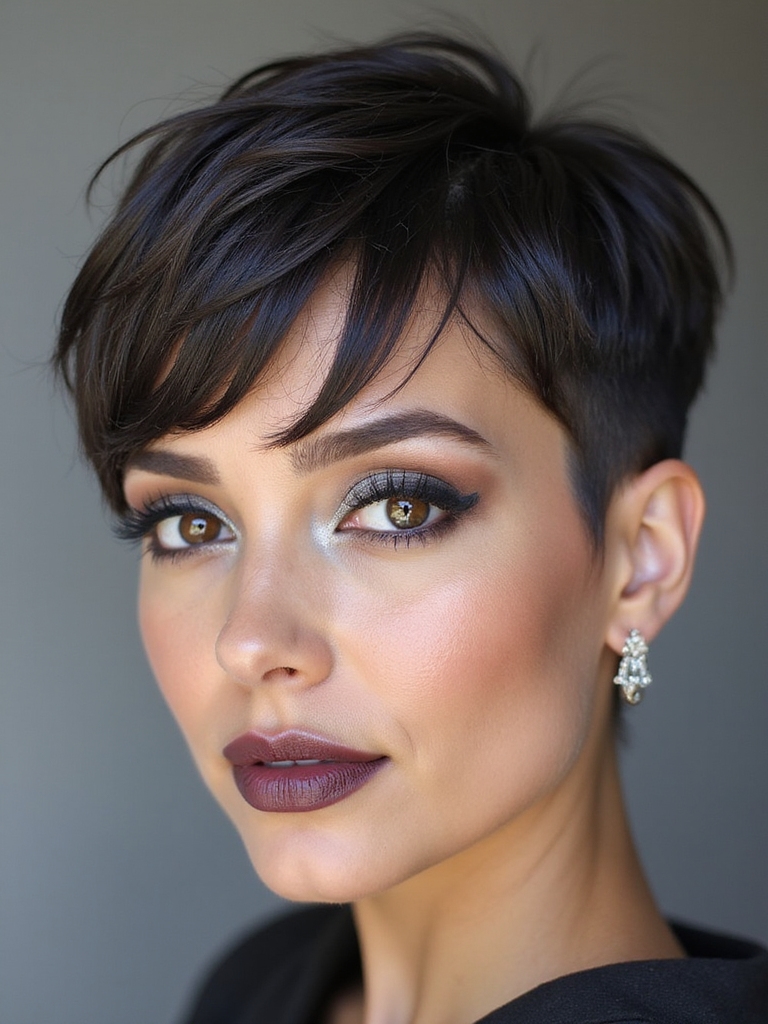
You don’t need much to style a shag pixie well, but the right few products make a real difference. The whole point is touchable, piece-y texture, so reach for matte, flexible formulas over anything stiff or glossy.
Steer clear of heavy oils, serums, and high-shine pomades, which flatten the texture and can make short hair look greasy faster than expected.
- A matte paste or clay for separation and hold, worked through dry hair with fingers.
- A texture or sea-salt spray for grip and volume on damp hair.
- A light dry shampoo to revive the roots between washes.
Styling a Shag Pixie, With or Without Heat
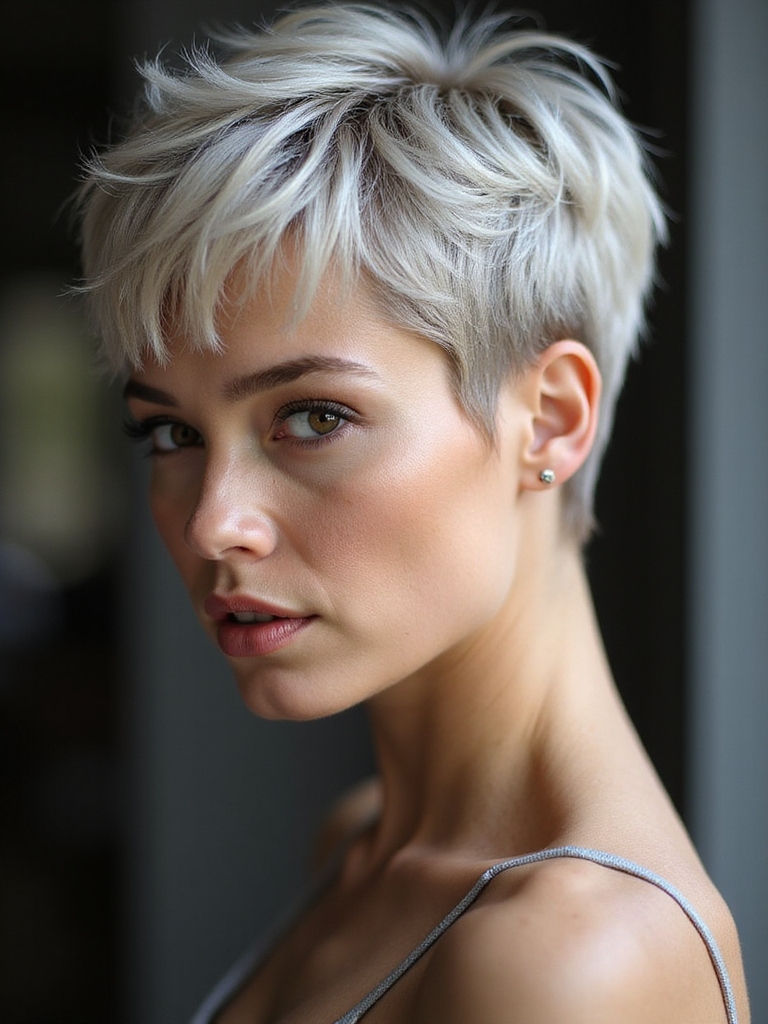
Day to day, a shag pixie ranks among the fastest cuts to style, whether or not heat gets involved. Most mornings, you can skip tools entirely and still leave the house looking finished.
When extra polish is worth the effort, rough-dry with fingers first, then twist a few pieces with a flat iron for definition. Diffusing the roots or flipping your head while blow-drying builds volume without much extra time.
Maintenance and Trim Schedule
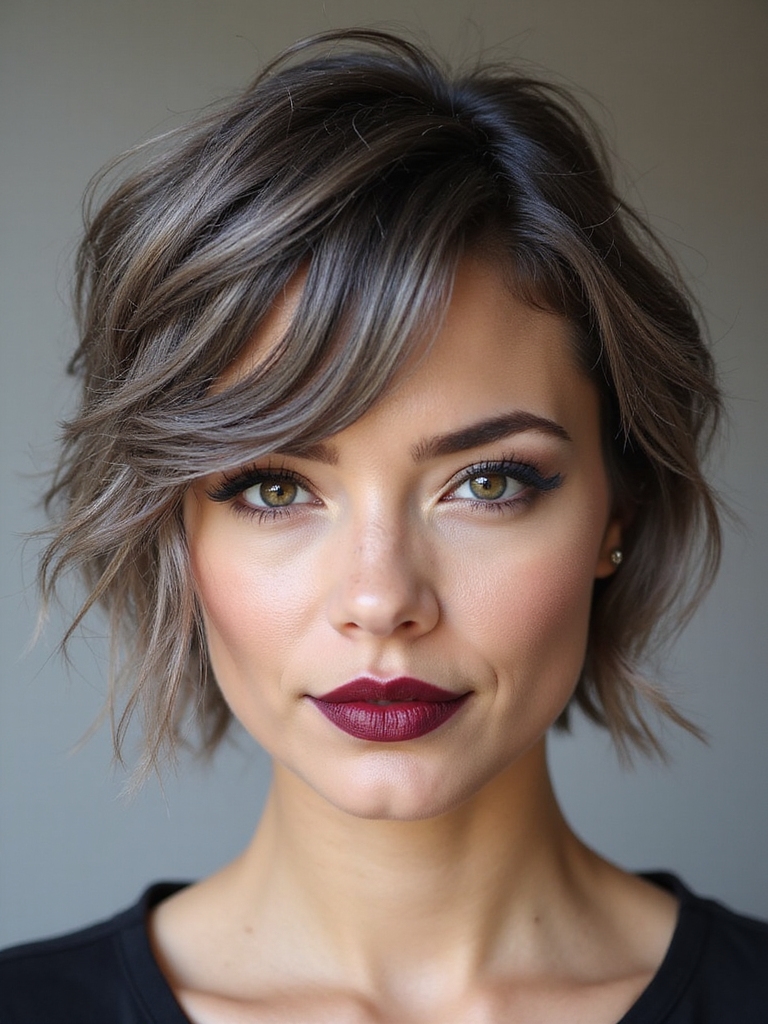
The honest trade-off with any pixie is salon frequency, and a shag pixie is no exception to that rule.
Because the shape is short and precise, it grows out of form faster than longer cuts do, so regular trims are simply the price of keeping it sharp. Plan on around $65 for a typical shape-up, depending on the salon.
The fringe usually needs its own trim on a separate, tighter schedule, since it grows into the eyes long before the crop needs a full reshape. Stretch either past its natural window, and the shape starts reading as a grown-out pixie rather than a deliberate shag.
Versatile Styling for Work or Weekend
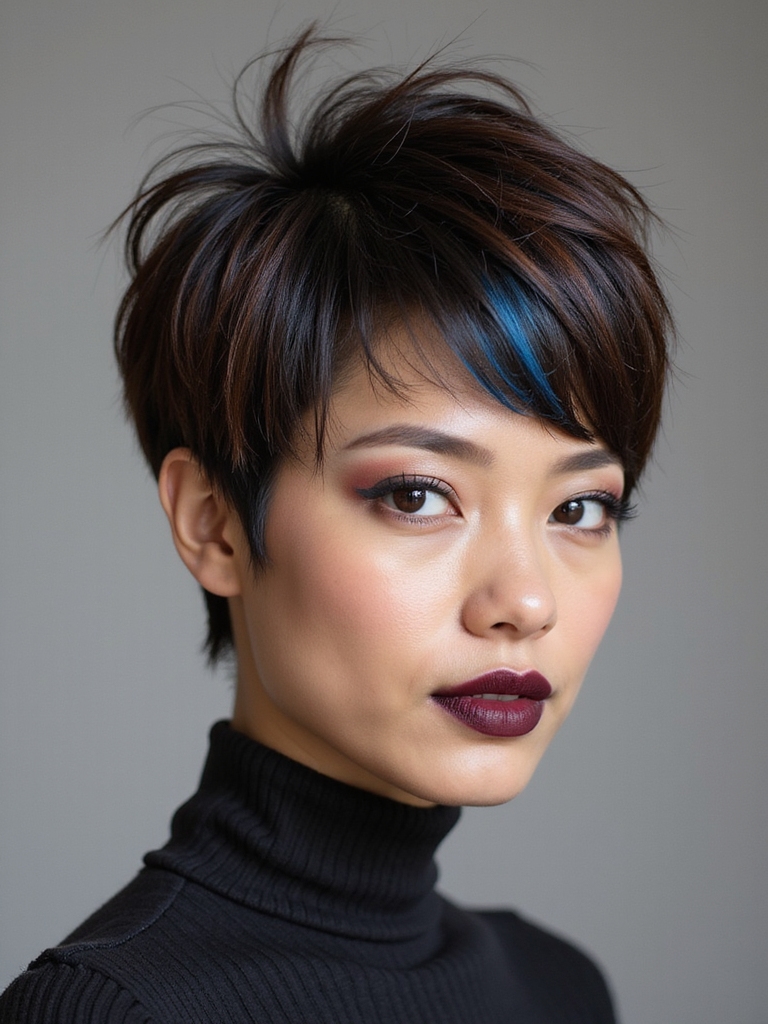
One cut, two distinctly different looks, is the quiet advantage of a shag pixie. The same hair reads polished and professional or undone and edgy depending entirely on five minutes of effort.
For work, smooth the top with a little cream and a flat iron, tuck the sides, and keep the fringe neat. For the weekend, rough everything up with paste and push the texture forward. You’re never locked into a single mood with this cut.
Accessorizing a Shag Pixie
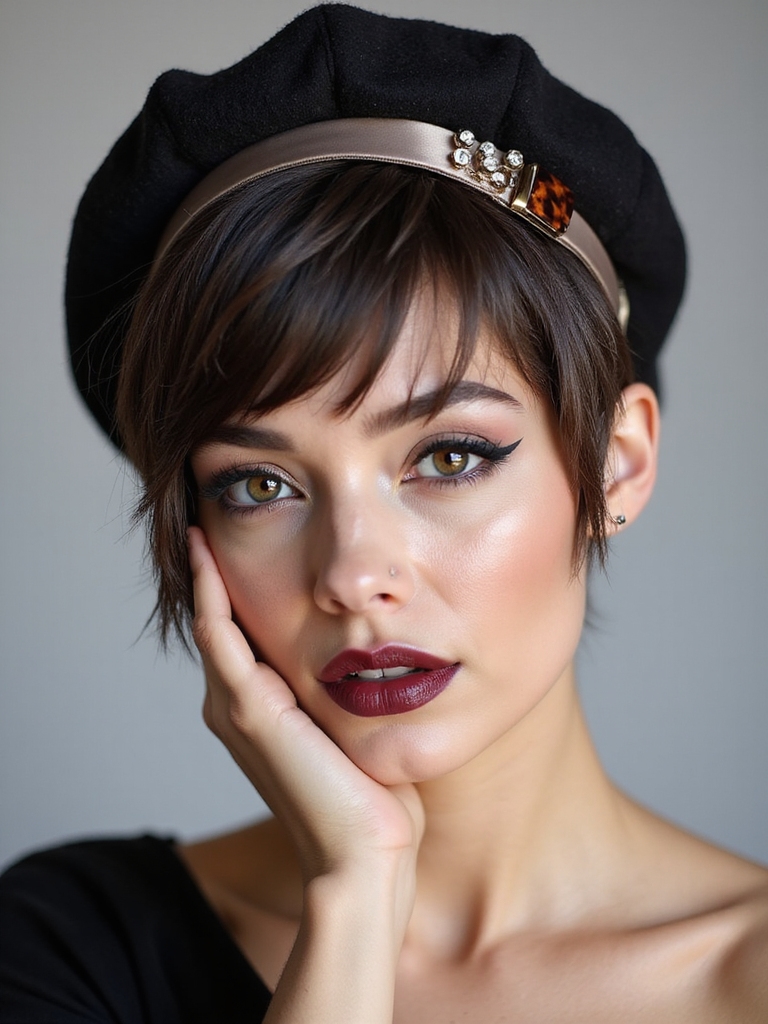
Short hair and accessories pair unusually well, and a shag pixie wears them with real attitude rather than looking like an afterthought.
Clips, headbands, and hats all sit cleanly against the cropped shape and change the read of the whole look almost instantly.
A row of small claw clips pins back a growing-out fringe, a thin headband dresses the cut up for an evening, and a beanie leans fully into the rock-chic side of the shape. The pixie haircut for black women guide covers more styling and accessory ideas at this length.
Shag Pixie Inspiration, Rock Chic to Runway
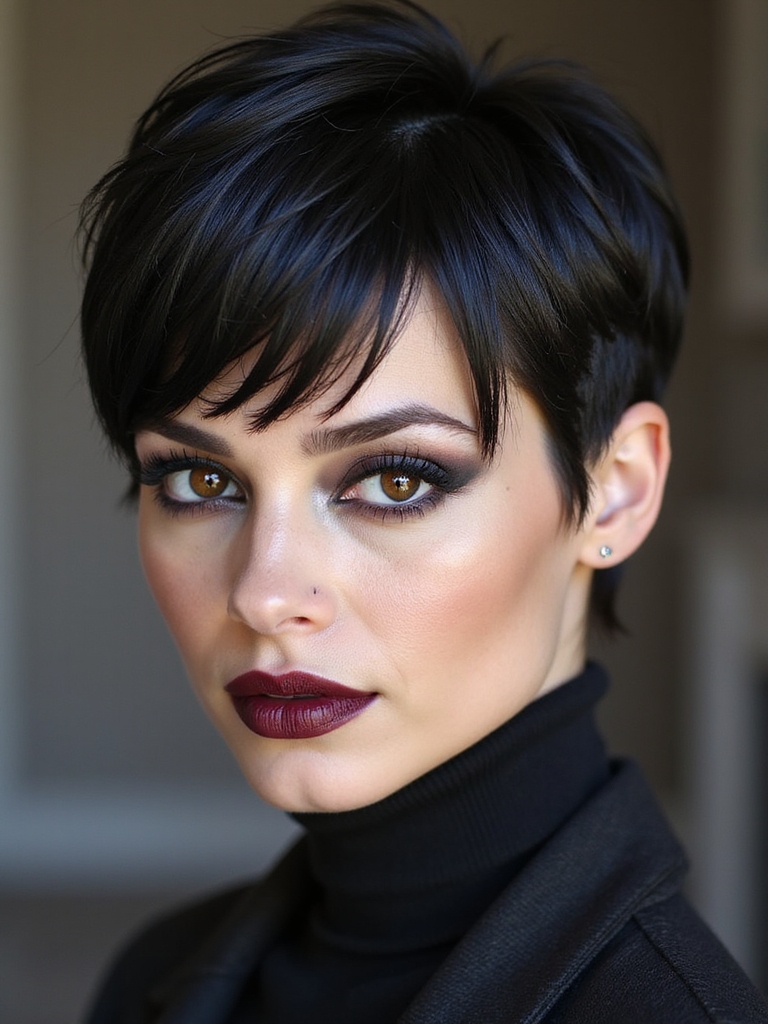
A shag pixie carries real history alongside its current moment. It nods to the rock and punk figures who first chopped hair into spiky texture, and it keeps resurfacing on runways reinterpreted for now.
- Rock-chic: a spiky crown, heavier fringe, and matte texture throughout.
- Runway: sleeker on top with piece-y, more editorial ends.
- Soft-romantic: wispier layers and a side-swept fringe that softens the whole shape.
Which accessory actually fits the moment? A quick guide.
1Fringe is between lengths
Small claw clips pin it back cleanly without disrupting the rest of the shape.
2Heading somewhere dressier
A thin headband adds polish in seconds, no restyling required.
3Third day, roots gone flat
A beanie or cap buys another day before the next wash.
Pro Tips for a Custom Shag Pixie Finish
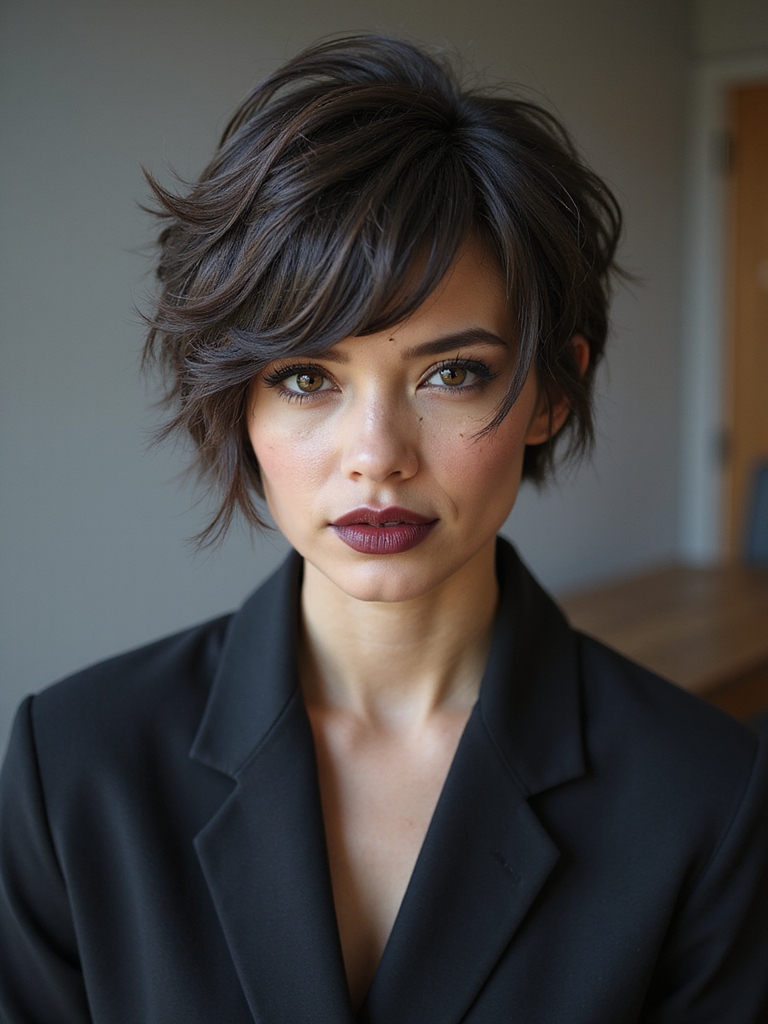
A few lessons come up again and again with this cut, the kind that separate a shag pixie you love from one you just tolerate.
Most of it comes down to communication at the consultation and a little restraint once you’re home styling it yourself.
Bring photos of both the cut and the finished style, ask your stylist to walk you through the at-home routine before leaving, and use less product than instinct suggests. Adding more later is always easier than starting over.
What to Expect
Expect a shag pixie to feel dramatic the moment the length comes off, along with a short adjustment period while you learn to style it. The first week tends to feel like the strangest part; by the second, most people are used to how little time it actually takes.
Expect, too, to become a fairly regular presence at your salon. This isn’t a cut that tolerates neglect, with shape-ups roughly monthly and fringe trims in between. What you get back is short hair with real personality, the kind that gets noticed and asks almost nothing of your actual morning.
Shag Pixie Questions
?Is a shag pixie the same thing as a shaggy pixie cut?
In practice, yes; the two names describe the same idea, choppy shag layering built onto a cropped pixie base. Some stylists use one term or the other out of habit, but neither implies a meaningfully different technique.
?Can a shag pixie work on hair that’s fine and prone to going flat?
Yes, and it’s actually one of the better short cuts for fine hair specifically. The choppy layering creates the visual density fine strands can’t build on their own, especially when paired with a little root-lifting product.
?How different is the upkeep compared to a plain pixie?
Slightly more involved, mostly because of the fringe. A plain pixie usually needs one trim schedule; a shag pixie often needs a second, shorter cycle just for the fringe to keep the whole shape from drifting out of proportion.
Is the Shag Pixie Your Next Cut?
A shag pixie isn’t the cautious short cut its pixie half might suggest. It’s bold, texture-forward, and built to reward anyone willing to commit to regular trims and a little daily play with paste.
The real question isn’t whether it will suit you, since the layers and fringe adjust to nearly anyone. It’s whether you’re ready for short hair that makes an actual statement. If the answer is yes, bring a few photos to a stylist who clearly enjoys texture and start the conversation there.
More to Try