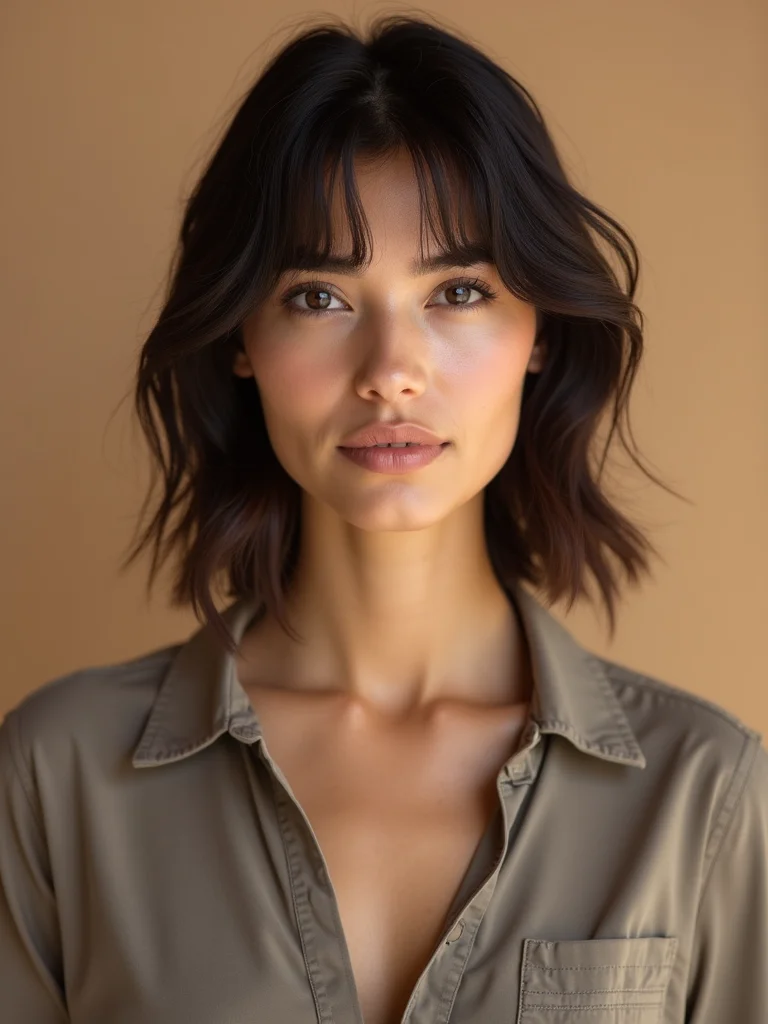
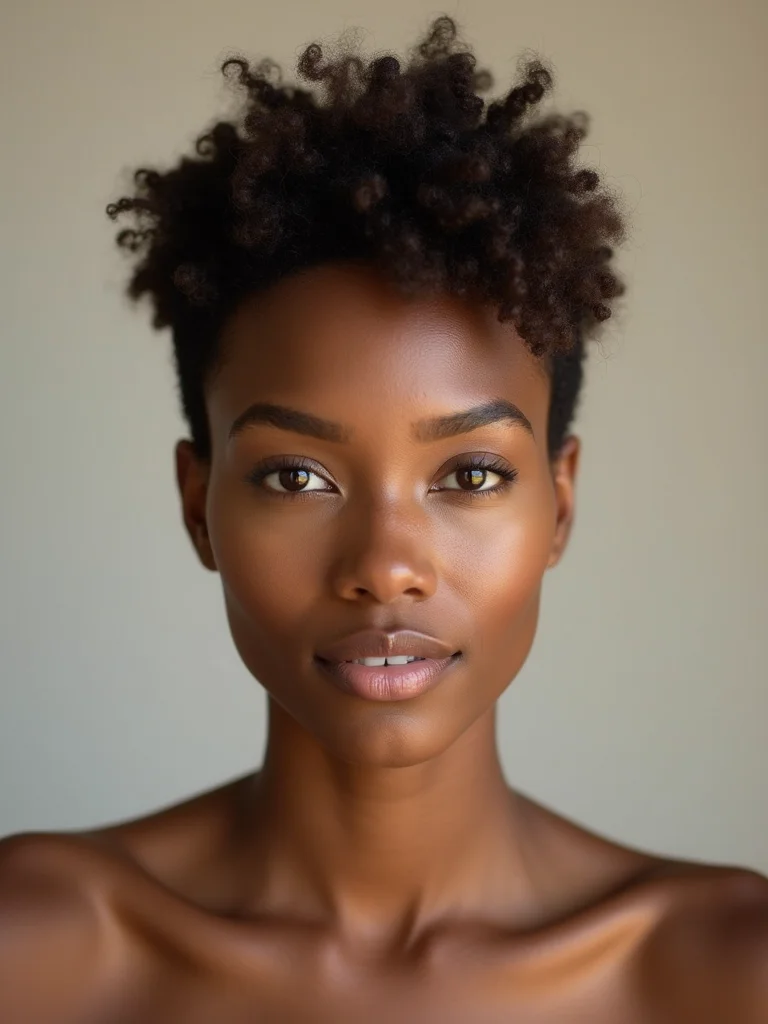
Thick hair takes the blame for almost everything a short cut can get wrong: puffing at the sides, sitting like a helmet, going flat by afternoon. Most of the time the hair wasn’t the problem. The cut left all that density packed inside the shape instead of letting it out.
A pixie on thick hair is actually one of the better matches in the salon, since density gives a crop the body and staying power finer hair can only fake. Fifteen versions follow below, each built around where the weight should actually leave the shape.
What Actually Works on Thick Hair
Is thick hair actually good for a pixie? Yes. Density holds a full, architectural shape that finer hair tends to collapse out of, as long as the cut removes weight from deep inside rather than just at the ends.
Why did an old short cut puff out instead of sitting flat? The weight was probably left in rather than removed. Internal debulking thins the hair from within so the crop hugs the head instead of pushing outward.
How much upkeep does a thick-hair pixie actually need? Plan on around $55 for a trim roughly every five weeks, since thick hair grows back into its shape faster than finer textures. Daily styling stays short: a couple of minutes with the right product.
Textured Crop With Debulked Layers
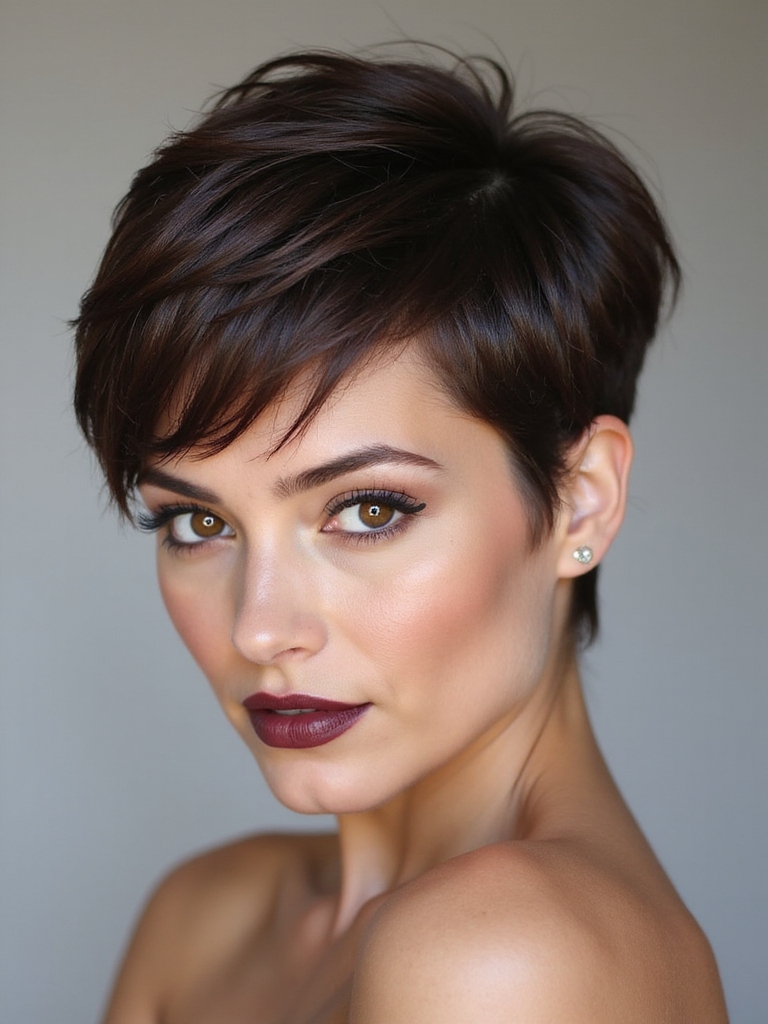
When thick hair walks in wanting a pixie, this is usually the starting point. A stylist thins the density from deep in the interior, so the crop settles against the head while the surface breaks into separated, moving pieces.
Where the Weight Comes Out
It looks modern and it actually behaves, which is the part most people stopped believing was possible after one bad short-cut experience. The real work happens with thinning shears and point-cutting through the mid-lengths, while the outline itself stays untouched.
Internal debulking is the exact phrase worth bringing to the consultation. It tells a stylist to remove weight from inside the shape, not just trim the ends down.

A Softly Textured, Airy Crop
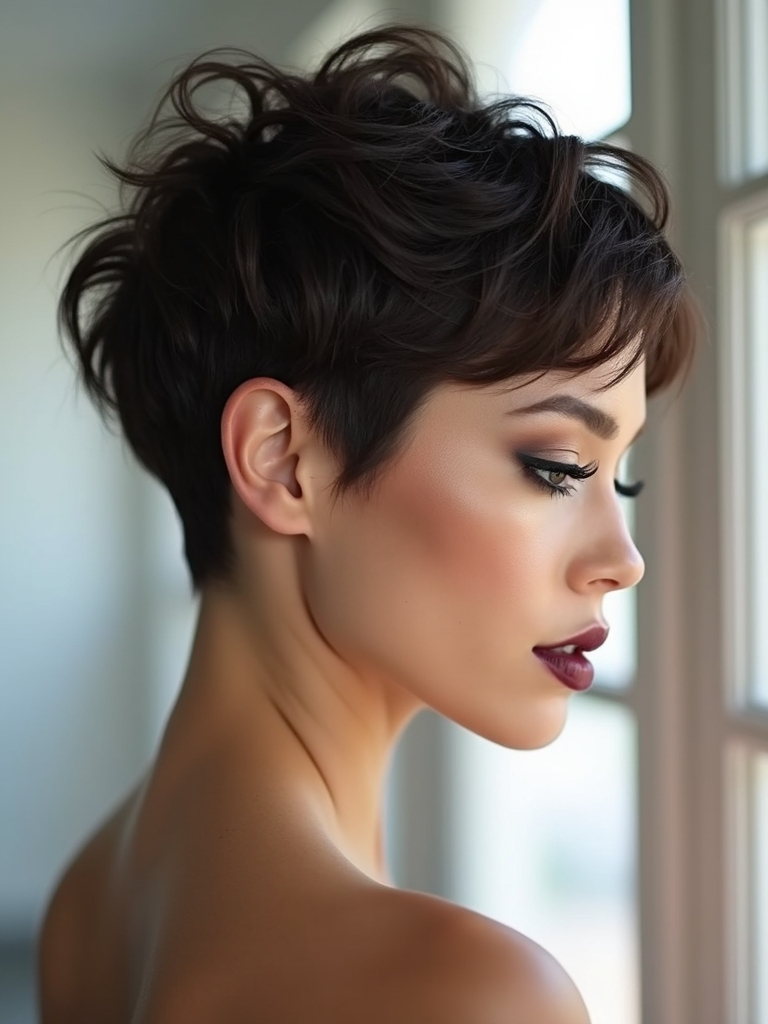
Not everyone wants sharp separation, and that’s fine. A softly textured airy crop keeps the same debulking but eases the finish, so thick hair lands soft and a little undone rather than sharply defined.
Debulked, Not Stripped
It also works as a gentler first short cut for anyone nervous about going too edgy right away, since there’s no hard line anywhere to feel self-conscious about.
The weight comes out evenly across the whole shape here, so there are no thin or scalpy patches hiding under the surface. A texture spray or a whisper of mousse keeps it light; heavy pomade flattens the entire effect.
Long Pixie With Face-Framing Layers
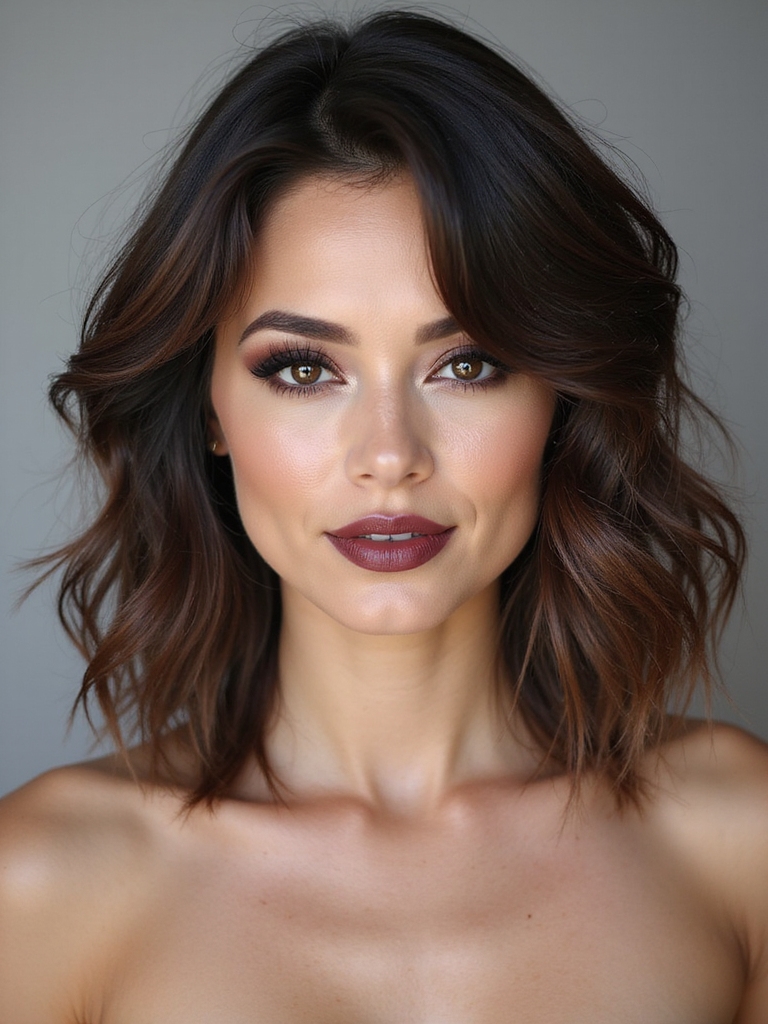
A long pixie works as the safety net for thick hair. Keeping a touch more length and adding face-framing layers gives all that density somewhere graceful to fall, softening the look while making the grow-out painless.
It’s the version most often recommended to someone who wants short hair but isn’t ready to commit to a true crop yet, since it buys time to grow into the idea. Framing pieces at the cheekbone and jaw flatter round and square faces especially well, and the extra length means it drifts into a layered pixie with no awkward in-between stage.
🅰️Ready for a true crop
Go straight for a debulked textured crop — the weight comes out immediately, no transition needed.
🅱️Not ready to commit
Start with the long pixie instead; it eases into short hair and can always go shorter later.
Tapered Nape With Lift
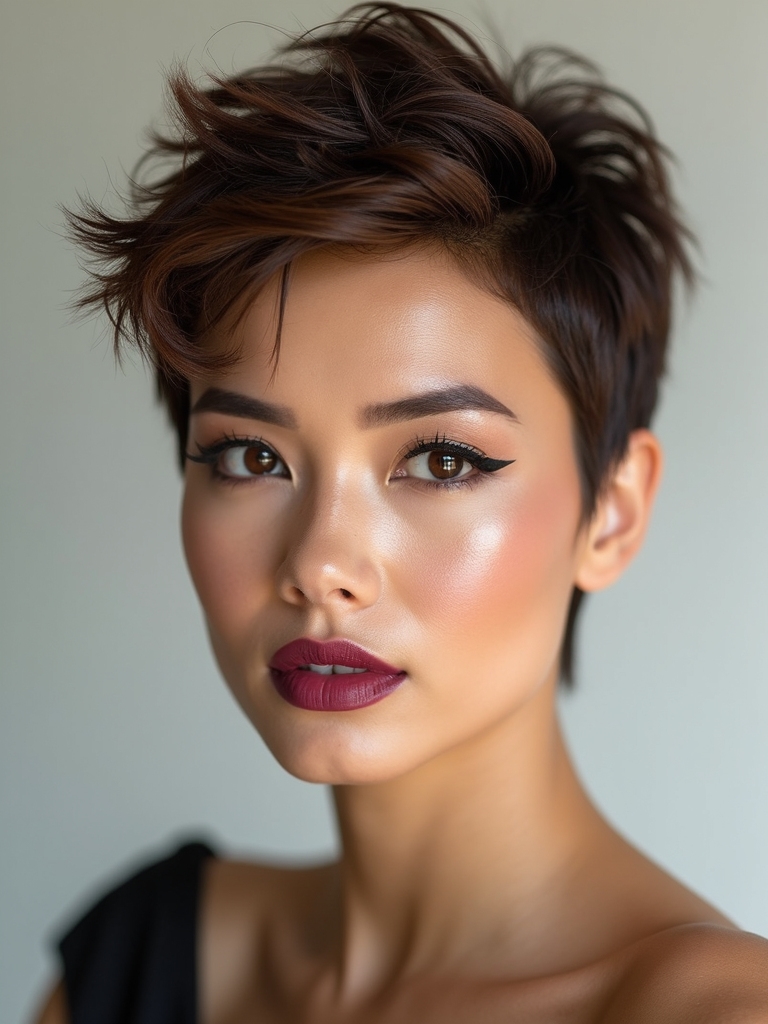
A tapered nape is where thick hair stops fighting the shape. Cutting the neck close, with fullness kept on top, removes the exact spot where density tends to bunch and push the crop outward, and the result lifts up and back on its own. That heavy weight at the nape disappears entirely, and the crop stands without any coaxing needed.
- Removes bulk from the exact spot that pushes the crop outward
- The shape lifts and stands without extra styling effort
- Flatters a shorter neck by lengthening the line visually
Piecey Pixie With Feathered Ends
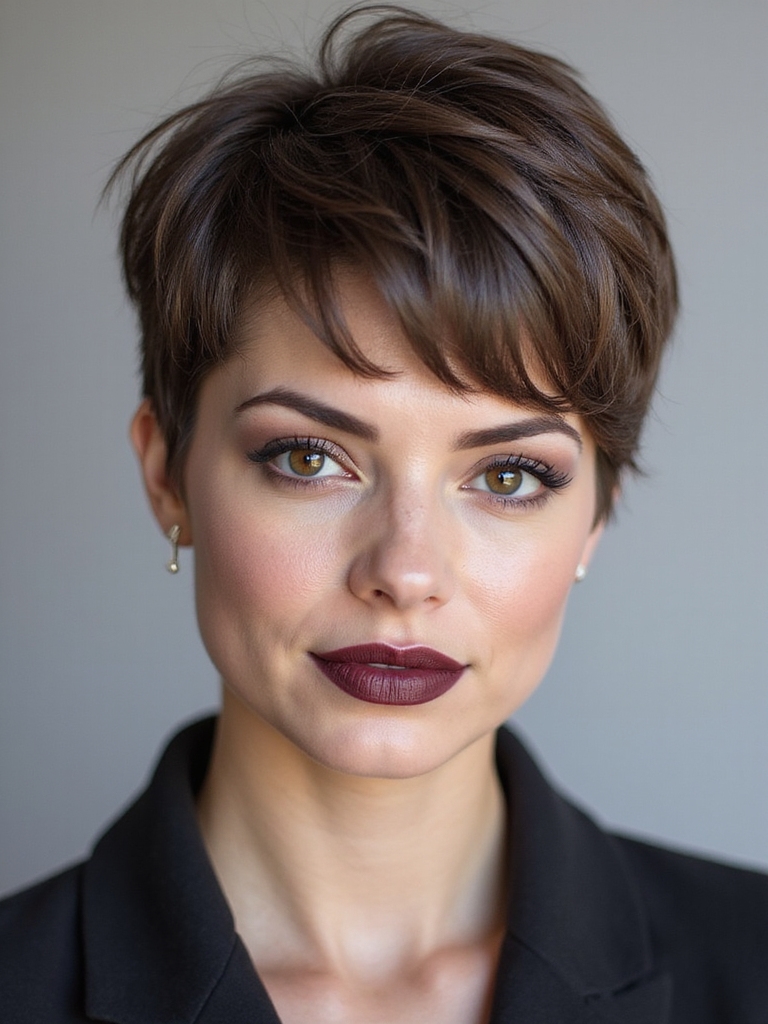
Feathering is debulking you can actually see. The ends get thinned and tapered so the crop falls into separated, piecey sections, and on thick hair the technique does double duty: removing weight while building the texture that makes a pixie look current. It works especially well on hair that’s thick and coarse both, since feathered ends soften that wiry quality right where the strands meet the face.
- Feathered ends remove weight while adding visible texture
- Especially effective on hair that’s both thick and coarse
- A fingertip of matte paste scrunched through is the entire routine
Pick your finish by how much texture you actually want.
🎯Maximum separation
The textured crop with debulked layers
🎯Soft and rounded
The softly textured airy crop
🎯A little wild
The shaggy pixie
Undercut Pixie for Serious Density
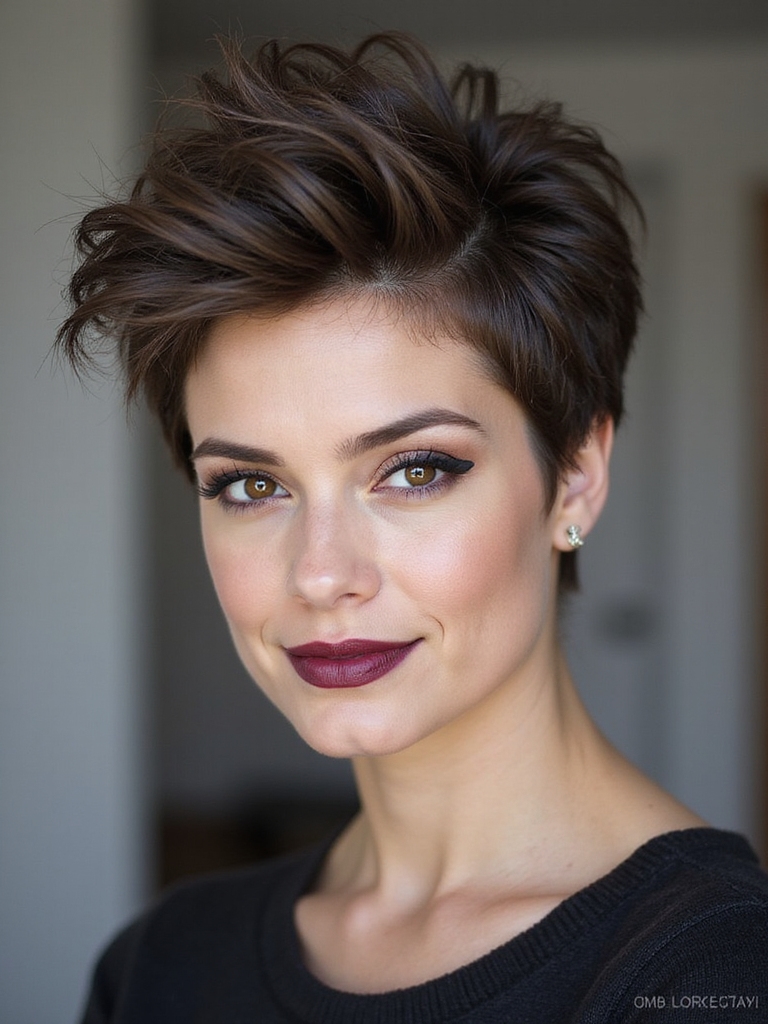
When density is the whole problem, an undercut is the most direct fix available. The sides and back get clipped close beneath a fuller top, stripping a striking amount of weight in a single pass. Thick hair that used to wing out now sits flat and sharp instead.
It’s a real commitment worth knowing upfront: those clipped sections blur within a couple of weeks and need a quick buzz around the three-week mark to stay crisp. The payoff is a crop that styles itself most mornings.
Wavy Pixie That Keeps Its Bounce
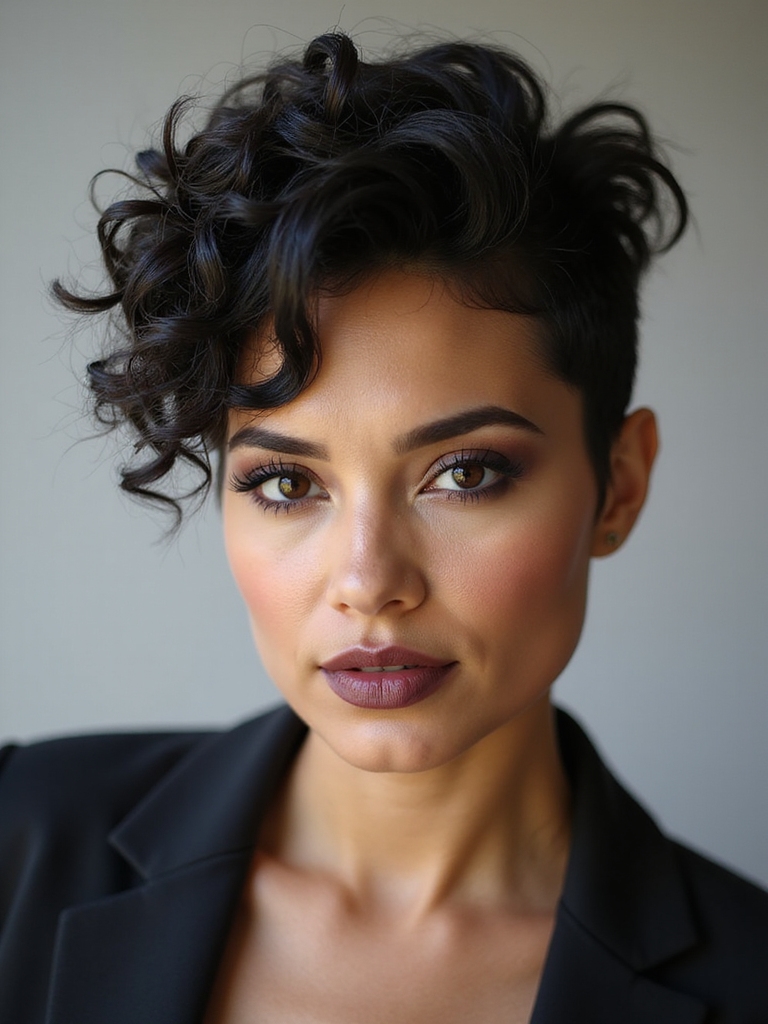
Natural wave on thick hair doesn’t need to be flat-ironed into submission. A wavy pixie works with that movement, debulked just enough to keep volume in check while the wave springs the crop into a soft, bouncy shape.
It’s about the lowest-effort look on this whole list for naturally wavy, thick hair, since the texture does most of the styling on its own. Pull out too much weight and the wave frizzes, so a light hand matters here more than usual. A sea-salt spray scrunched into damp hair coaxes the wave forward as it dries.
ℹ️The Density Myth
Thick doesn’t mean more hair; it means each strand is wider in diameter. Two people can have the same number of strands, and one reads as thick simply because those individual strands carry more width. That’s exactly why debulking works: it removes bulk per strand, not actual density.
Side-Swept Pixie With Soft Bangs
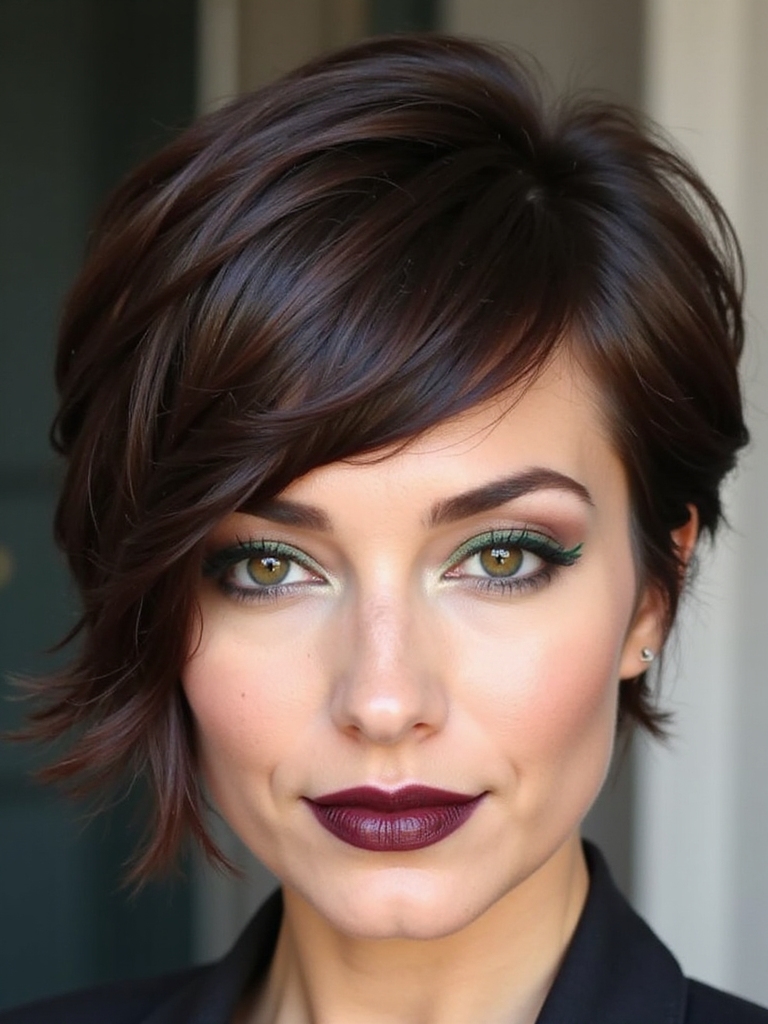
A side-swept fringe is the move for thick hair that feels top-heavy. Sweeping the fullness into a soft diagonal gives the density somewhere to point, and on round or square faces that diagonal line does a fair amount of flattering with very little morning effort. Sweep the fringe toward the cheekbone for the most face-framing effect; a round brush and a warm blast of air sets it in a couple of minutes.
- A diagonal sweep gives density somewhere to point
- Especially flattering on round or square face shapes
- Bangs on thick hair need reshaping roughly every four weeks
Razor-Cut Pixie for Airy Thickness
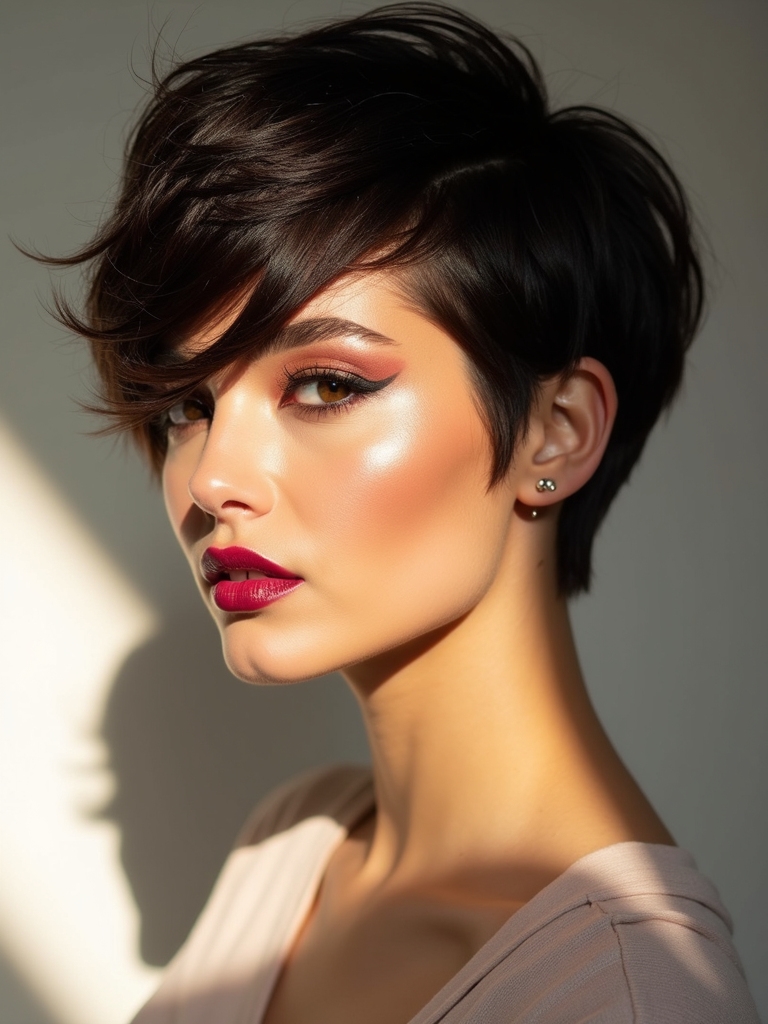
A razor does something scissors can’t. It tapers each strand to a fine point, so thick hair falls soft and airy where a blunt cut would sit heavy. The crop ends up piecey and light, with a worn-in softness around the face.
When to Skip the Razor
There’s a real caveat worth knowing. Razoring removes density fast, exactly what thick hair usually needs, but on hair that’s also dry or damaged it can rough up the ends and invite frizz.
Checking the hair’s condition before picking up a razor matters more than the technique itself. Once it’s cut, styling asks for very little beyond a texture cream worked through damp ends.
Choppy Layered Pixie for Density
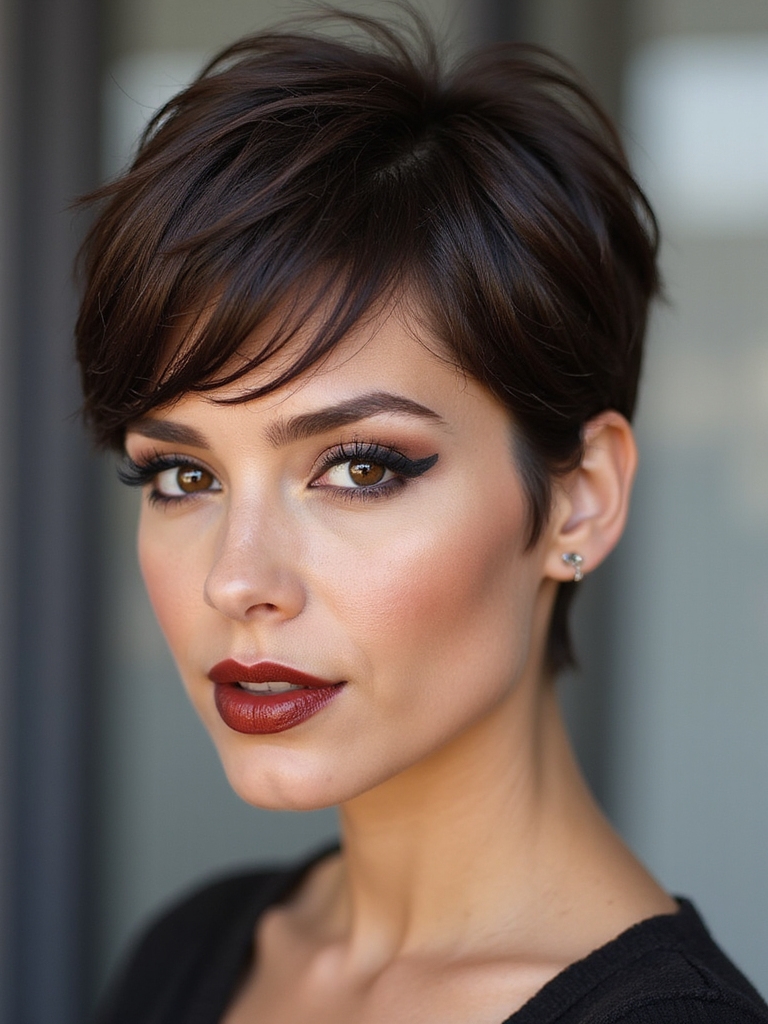
Choppy layers turn density into the best version of itself. Cut at uneven lengths, they shatter thick hair into separated, dimensional pieces that catch the light and actually move.
The layering runs throughout the whole crop, not just along the top, so no single spot ends up carrying more bulk than the rest, and the silhouette stays full without spreading wide.
A matte clay worked through the ends defines the chop and holds through the day, even on the coarsest strands.
The clients who come back every time are the ones who finally believe a short cut can hold up on thick hair. That trust takes one good debulked crop to earn.
Sleek Tapered Pixie
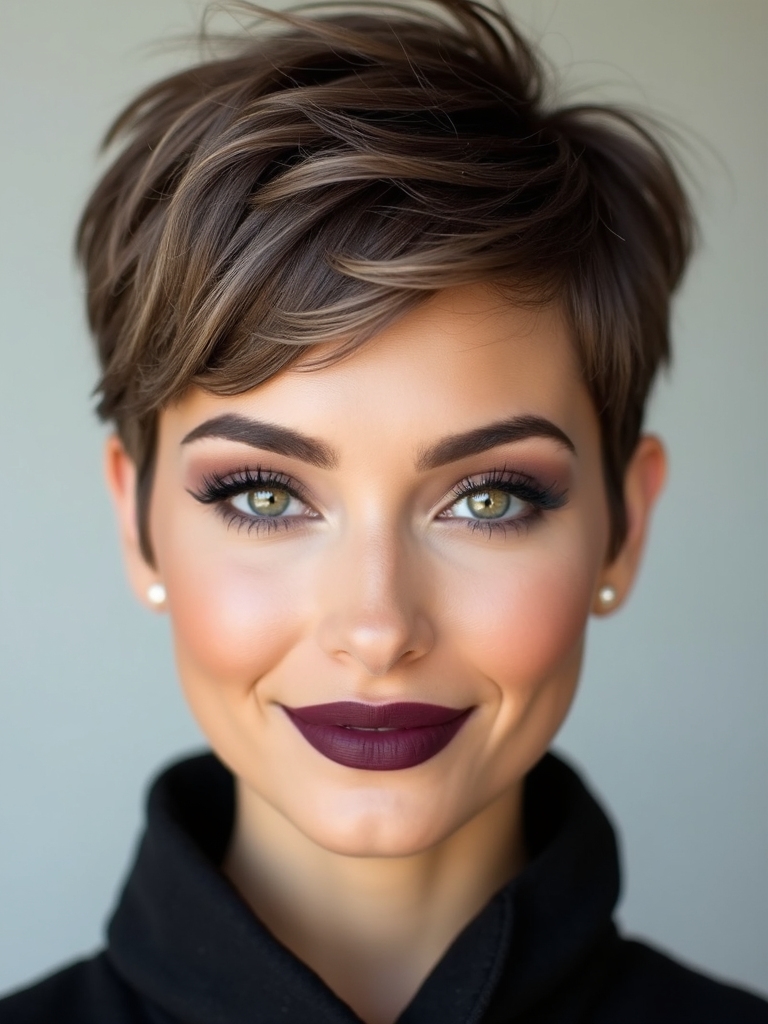
Not every thick-hair pixie needs to be piecey and undone. A sleek tapered version smooths the density into clean, polished lines, with the sides and nape tapered close so the crop reads sharp and deliberate.
Smooth only works once the bulk is actually gone; the taper and internal thinning do the real work here. Without them, a sleek finish on thick hair turns into a helmet under product. With them, a flat iron pass and a drop of serum finish it in minutes.
- The most polished, editorial look on this list
- Requires the bulk removed first, or product just sits heavy
- A flat iron and a drop of serum finish it fast
Controlled-Volume Crop
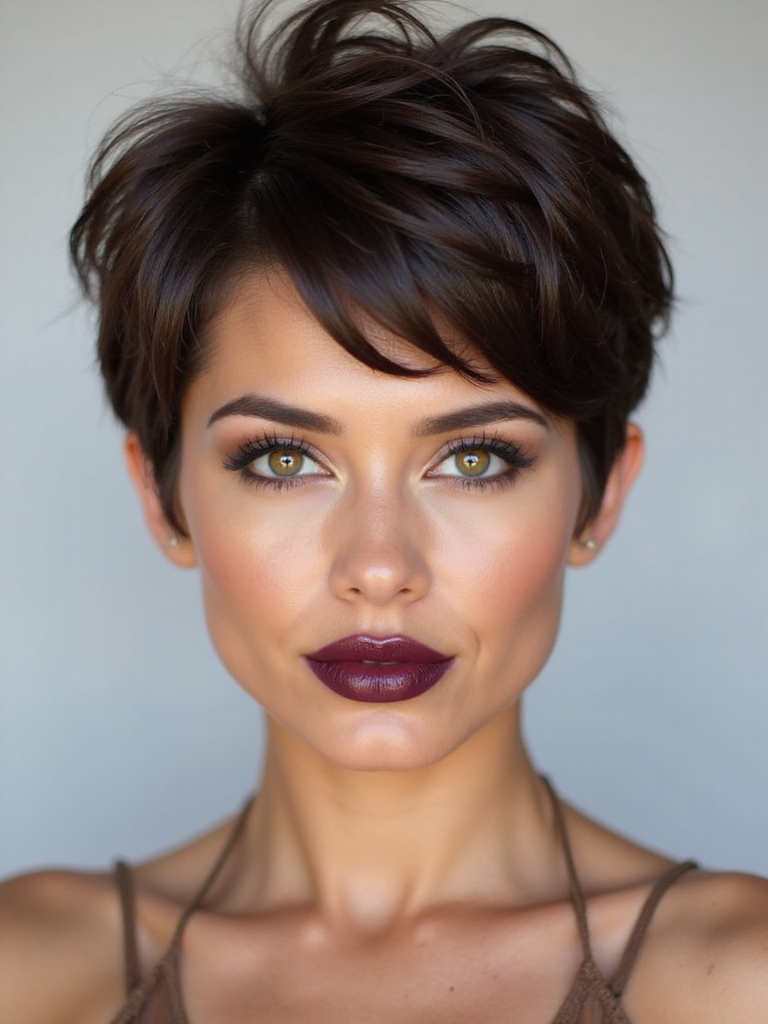
Some people love their thick hair full and simply want it short while keeping the body. A controlled-volume crop answers exactly that, shaping the density into a rounded, full pixie that stays that way without spreading out of bounds.
The Volume Is the Point
The fullness is the whole point here; the cut just gives it clean edges instead of letting it spread. Internal layering holds the shape together, paired with a product that defines while it lifts.
A light volumizing paste at the root props the fullness up exactly where it’s wanted most. This is the rare thick-hair pixie that celebrates the density rather than fighting it.
Curly Pixie for Thick, Coily Hair
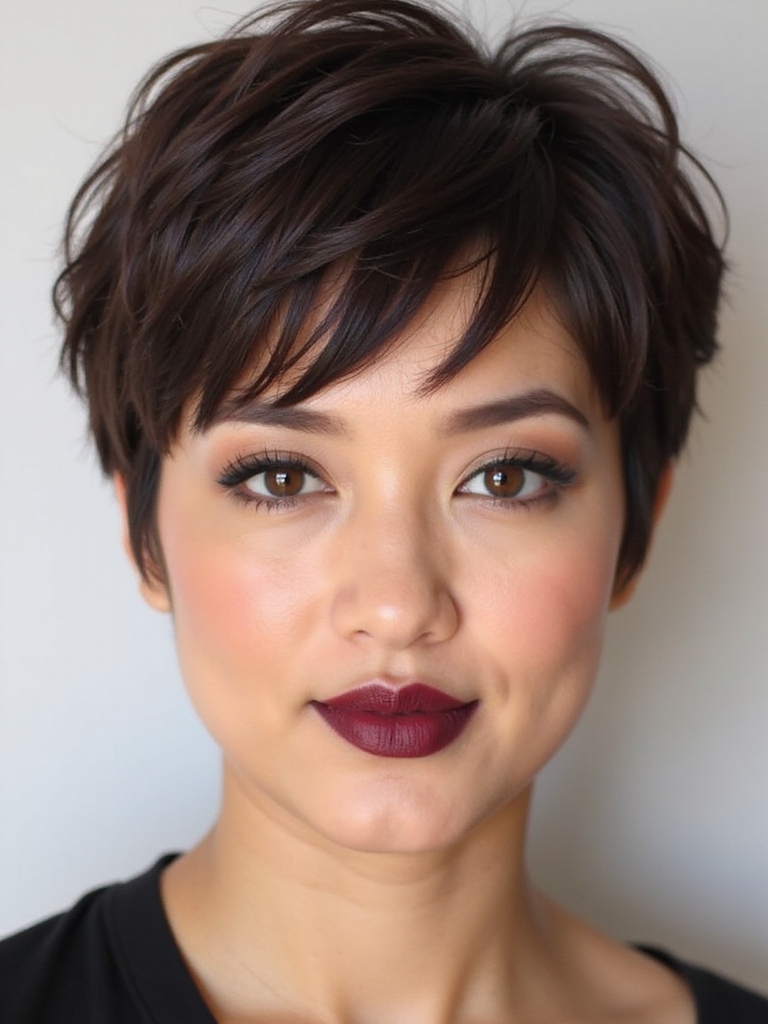
Thick, coily hair makes one of the fullest, most striking pixies in the whole salon, the coils springing up into a rounded crown of volume. One rule carries the entire look: it has to be cut dry, coil by coil, in its natural sprung state.
A wet cut turns short and boxy the moment everything dries and springs back up, so a stylist reaching for a flat iron first is the wrong fit for this cut. A curl custard or cream defines the coils day to day, and a satin bonnet at night protects the shape between washes.
Short Crop With Clean Tapered Sides
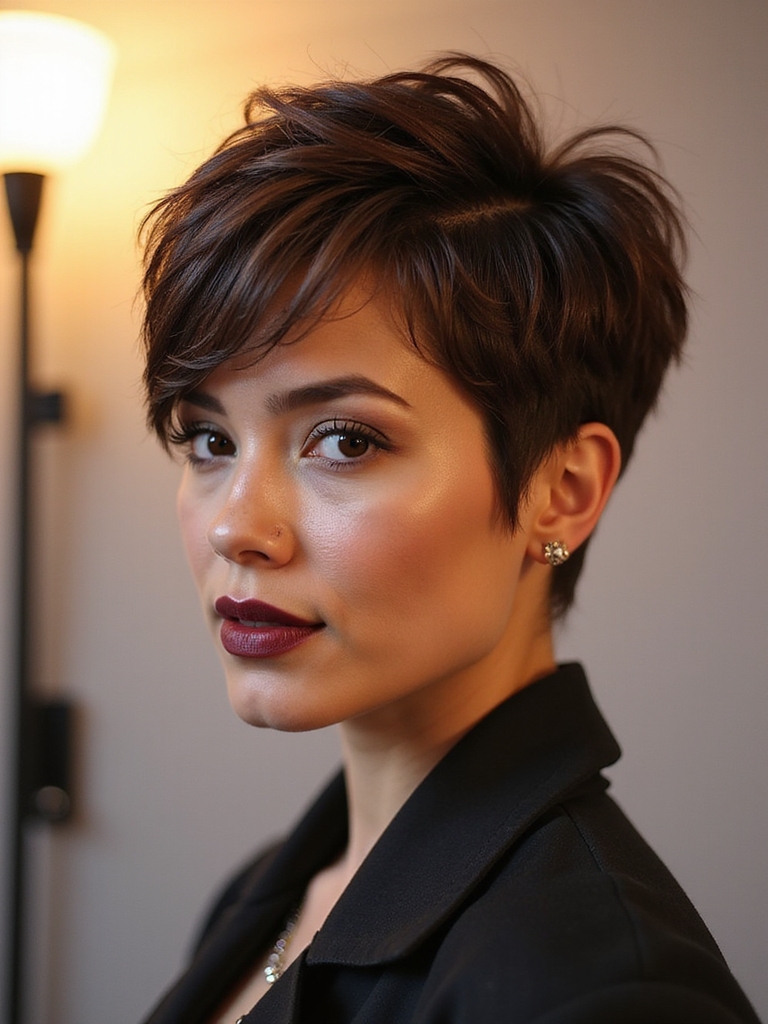
When low-fuss is the entire goal, a short crop with clean tapered sides is hard to beat. The sides go close, the top stays short, and the whole shape is built so thick hair behaves with almost zero effort.
The clean taper at the sides is what makes this survive on dense hair, removing the weight that would otherwise wing out by mid-afternoon. What’s left is crisp, neat, and close to wash-and-go, which is a real relief for a texture that rarely gets called low-maintenance.
- Built to survive on dense hair with almost no daily effort
- The tapered sides remove the weight that wings out by afternoon
- About as close to wash-and-go as thick hair gets
Shaggy Pixie for Thick Hair
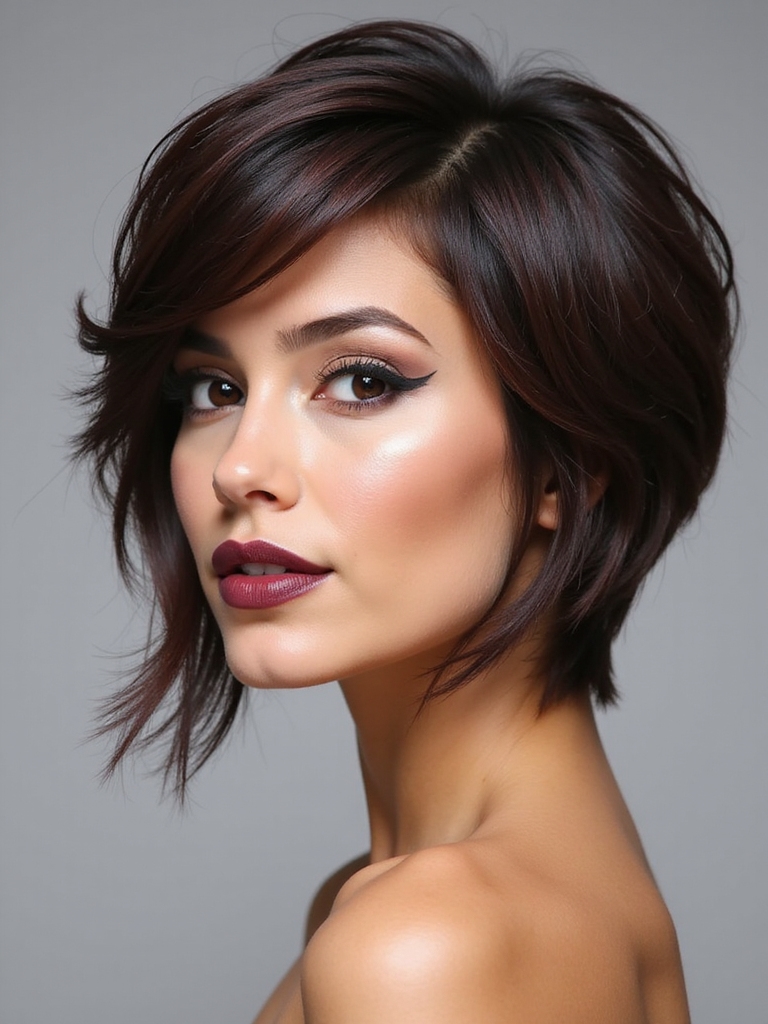
A shaggy pixie is where thick hair gets to be a little wild. The shag layering works with the density instead of against it, building a full, rumpled, textured crop that looks good precisely because nobody fussed over it. It’s about the most forgiving cut on this list: a rough morning or a slept-on pillow only helps the look rather than ruining it. A texture spray plus a quick finger-tousle builds the rumpled volume in under a minute.
Common Mistakes to Avoid
The single biggest mistake is a cut that only trims length and skips the internal debulking entirely. The crop looks fine walking out of the salon, then puffs out within a day once the hair settles back into its natural density.
The second is styling with product made for fine hair. Lightweight mousses and sprays get absorbed and disappear on thick strands; a small amount of a heavier cream or paste actually holds up, since there’s simply more hair to control.
Density Was Never the Problem
Thick hair isn’t the obstacle to a good pixie. It’s the reason the cut can look this full and architectural in the first place. Every version above is really one idea wearing fifteen different outfits: take the weight out from the inside, then let the density carry the rest.
If an old short cut left you convinced thick hair and pixies don’t mix, it’s worth asking what that cut actually got wrong before ruling it out again. Bring a photo of the version that speaks to you, and lead with the phrase that matters most: ask for the weight removed from the inside.
More Inspiration