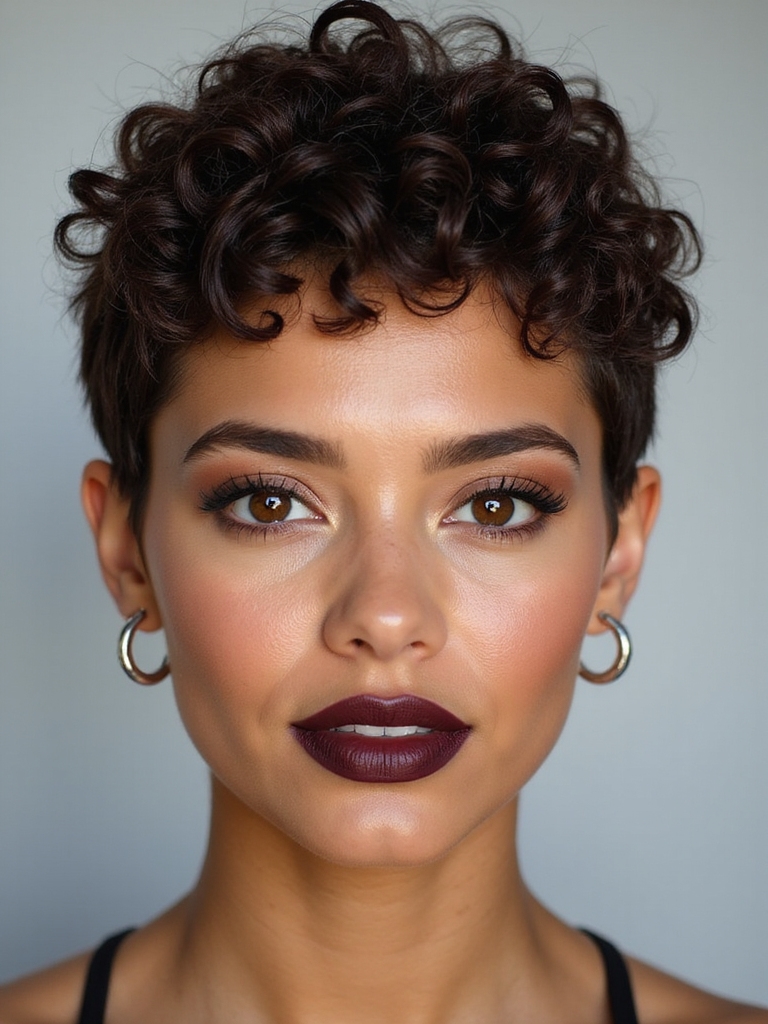
A freshly cut curly pixie springs the moment the last section falls: no weight pulling it down, just coil after coil landing exactly where it was cut to sit. That reaction, more than any before-and-after photo, is what sells the cut. Cropped short, curly and coily hair loses the length that used to drag it flat and gets to do what it does naturally instead.
Fifteen versions follow, from a softly sculpted crop to a sharp temple fade, built to work across loose waves, springy curls, and the tightest coils. Cut correctly, a short curly pixie works on nearly any texture; cut without attention to pattern, even the best shape falls apart by the second wash.
Curly Pixie, Quick Facts
- A curly pixie has to be cut dry, in its natural pattern, since curls pull up a great deal once released from length and a wet cut can land in the wrong place entirely.
- The technique flexes for every pattern: loose waves get soft layering, springy curls get shape and volume, tight coils get sculpted, low-manipulation crowns, but the cut has to be tailored, not copied from a photo.
- Upkeep splits into two parts: a reshape every 5 to 7 weeks once curls lose their outline, and daily moisture, since short curls dry out faster than longer lengths.
Softly Sculpted Curly Pixie

The softly sculpted version sits at the polished end of the curly pixie spectrum, with curls shaped into a clean, rounded silhouette that hugs the head closely, close enough that the outline reads almost sleek from a distance until the texture becomes obvious up close. The edges stay crisp while the crown keeps its curl. It looks deliberate, not just short.
- Works best with a stylist who sculpts curls dry, section by section.
- Keeping the crown consistently moisturized keeps the shape springy day after day.
- The clean edges need touching up on their own schedule, separate from the curl reshape.
Tousled Natural Curly Pixie
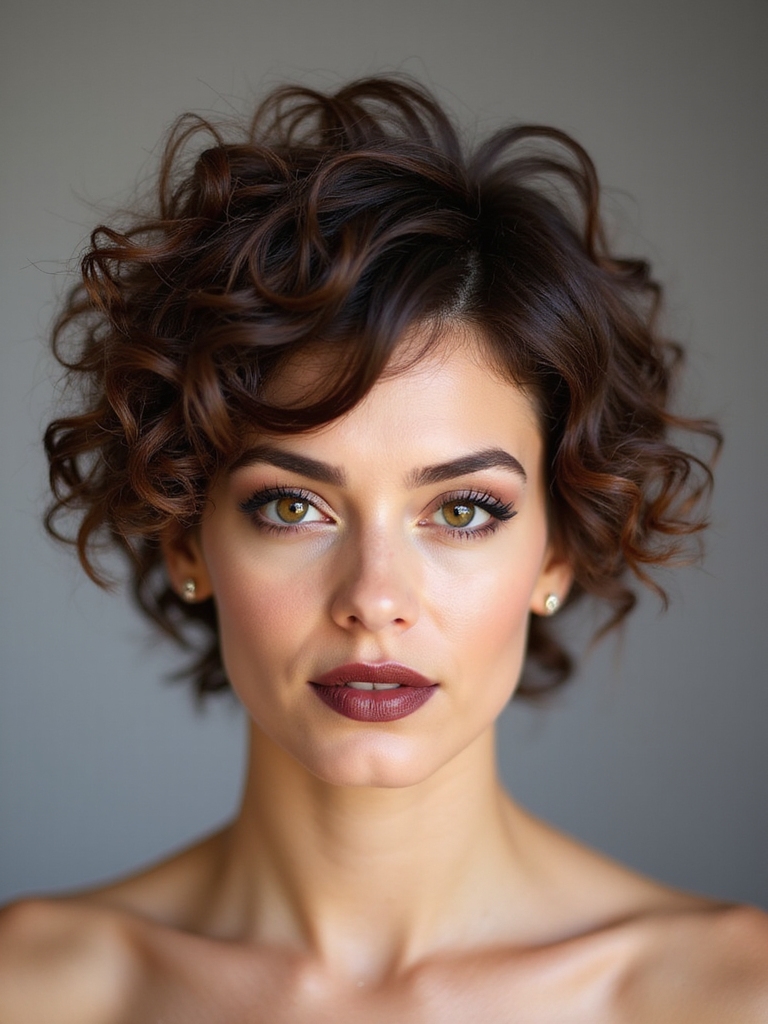
A tousled crop lets curls fall wherever they naturally want to land, for a relaxed, undone finish that needs almost no direction from a brush or comb. The pixie hairstyles roundup covers more low-effort takes on the shape.
Volume here comes straight from the texture itself, not from any styling trick, which makes this the lowest-effort version on the list by a wide margin.
- A small amount of curl cream on soaking-wet hair, then air-dry, covers the whole routine.
- Between washes, a spray bottle of water refreshes the curl pattern in seconds, no full re-wet required.
- Because nothing is sculpted, the shape barely shows a bad-hair day.
Tapered Crown Curly Pixie
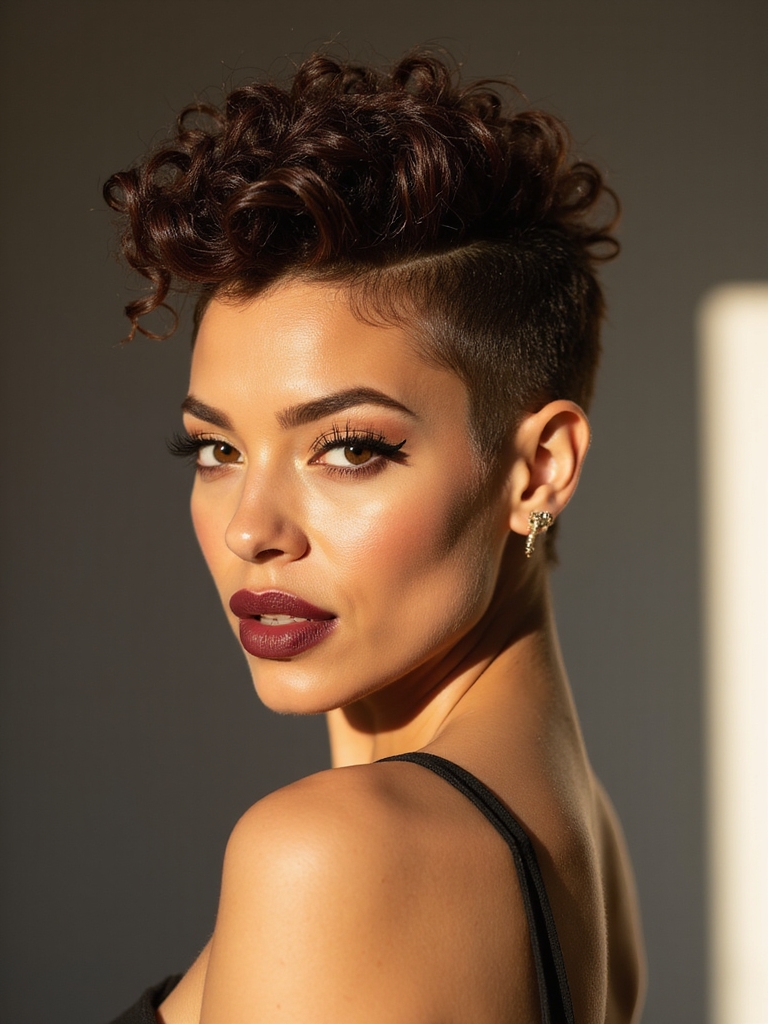
A tapered curly pixie keeps curls full and high through the crown while graduating close at the sides and nape. The taper does the sculpting, sending all the volume up top where it flatters the most.
Why It Suits Coils
It’s a favored shape in natural-hair circles for a specific reason: it works beautifully on tight coils, where the contrast between a full crown and closely tapered sides comes across sharp and intentional. The pixie haircut for Black hair guide goes deeper on cutting technique for coily patterns specifically.
The shape follows the pattern instead of fighting it, and that’s really the whole trick to a tapered coil crop holding up between visits.
Piecey Fringe Curly Pixie
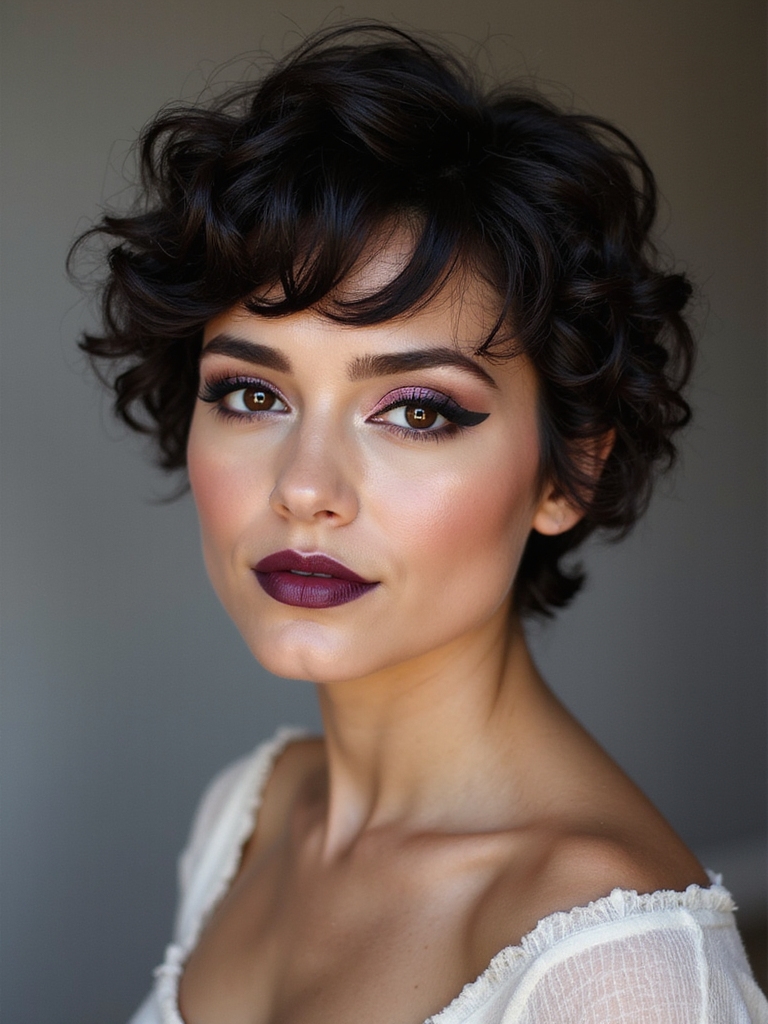
Adding a piece-y curly fringe to a pixie frames the eyes with real bounce. The fringe is simply a short section of curls left to spring forward over the forehead, separated and playful.
- Cut it dry and a little longer than the target length, to allow for shrinkage.
- A dab of water and curl cream refreshes the fringe daily on its own, no full re-wet needed.
- Loose to medium curls suit airy layering here; tighter coils hold shape best with a defined, sculpted edge.
💡Cutting Note
By week three, a tapered curly pixie usually still holds its line at the sides even as the crown curls loosen slightly, which is why most stylists build in a little extra crown length up front, leaving room for that natural loosening to happen.
Coily Curly Pixie

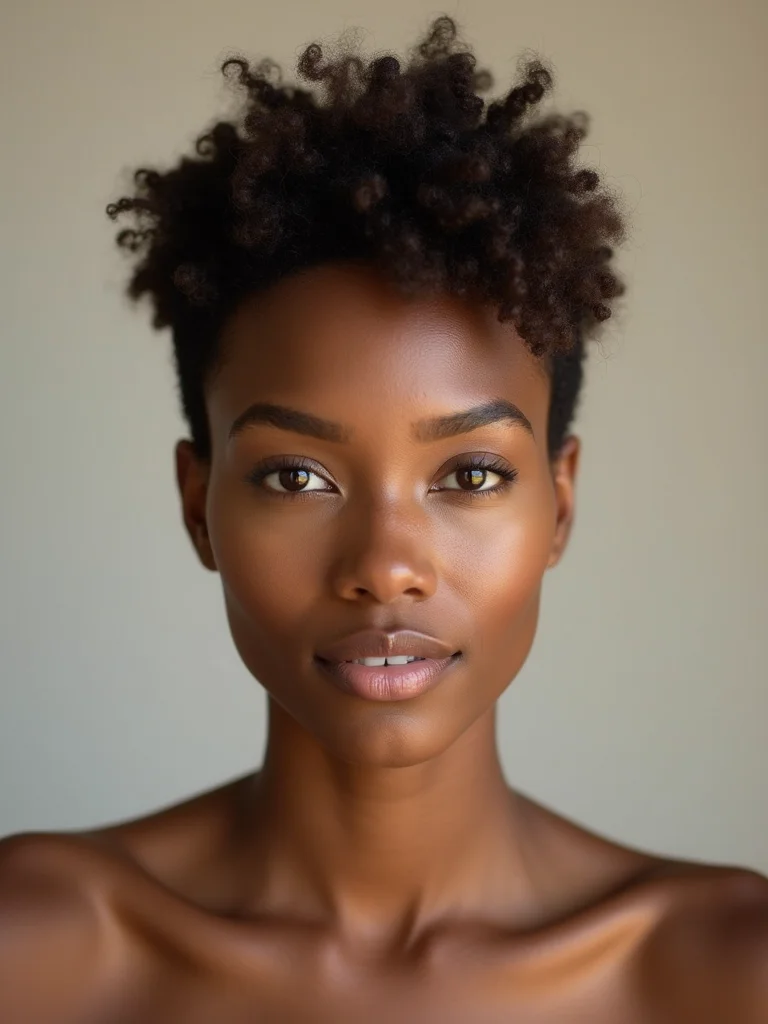
Tight coils were made for a pixie length. Cropped short, 4-pattern coils sit as a dense, sculptural crown of texture, low-manipulation and striking, hair that reads as an intentional style in its own right.
- Keeping coils moisturized and sealed is what keeps the definition from day to day.
- It’s close to a true wash-and-go, since there’s little length left for curls to tangle around.
- The shortness also cuts down on the manipulation that can stress fragile edges over time.
Curly Shag Pixie
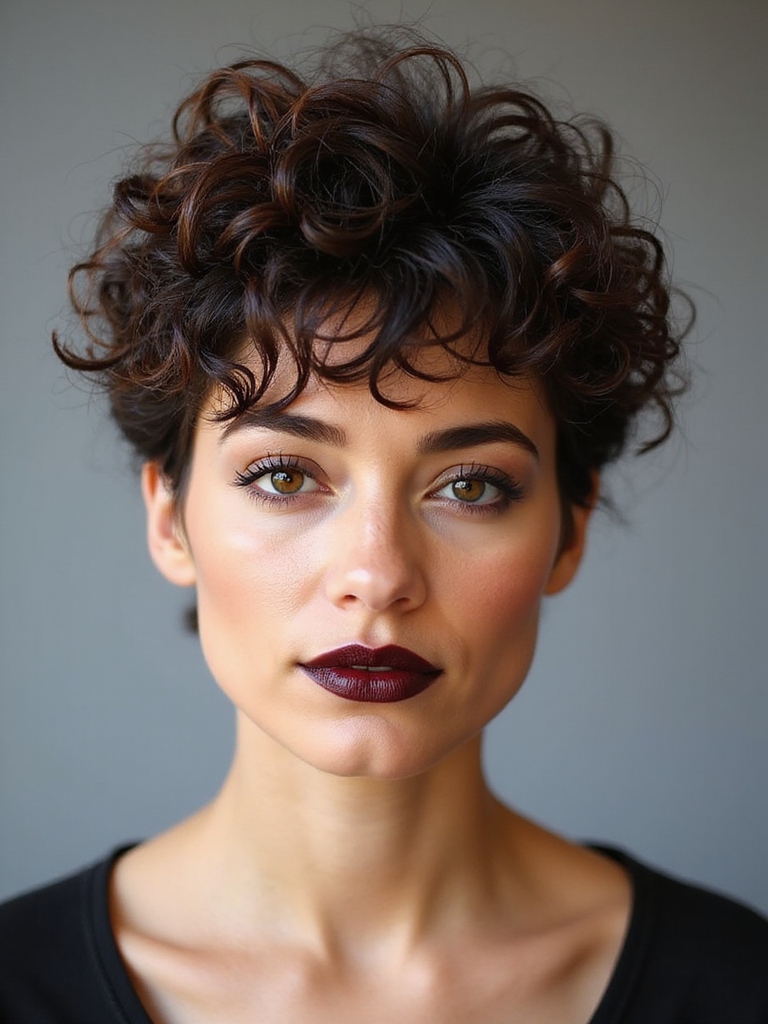
A curly shag pixie adds choppy shag layers that let the curls feather and move independently, each one springing on its own instead of holding one solid crown shape, which changes how the whole silhouette reads from across a room compared to a tighter, more sculpted crop.
It feels relaxed. It’s an easy cut to underestimate in photos, since so much of the appeal is in how it moves rather than how it sits still. It’s closer to the cool-girl cousin of the polished pixie above. The longer version of this same idea, with more length to layer, is covered in the curly shag haircut guide.
By week three of a coily pixie, most clients stop reaching for a brush entirely, wetting the coils and scrunching in product instead.
Side-Swept Curly Bangs Pixie
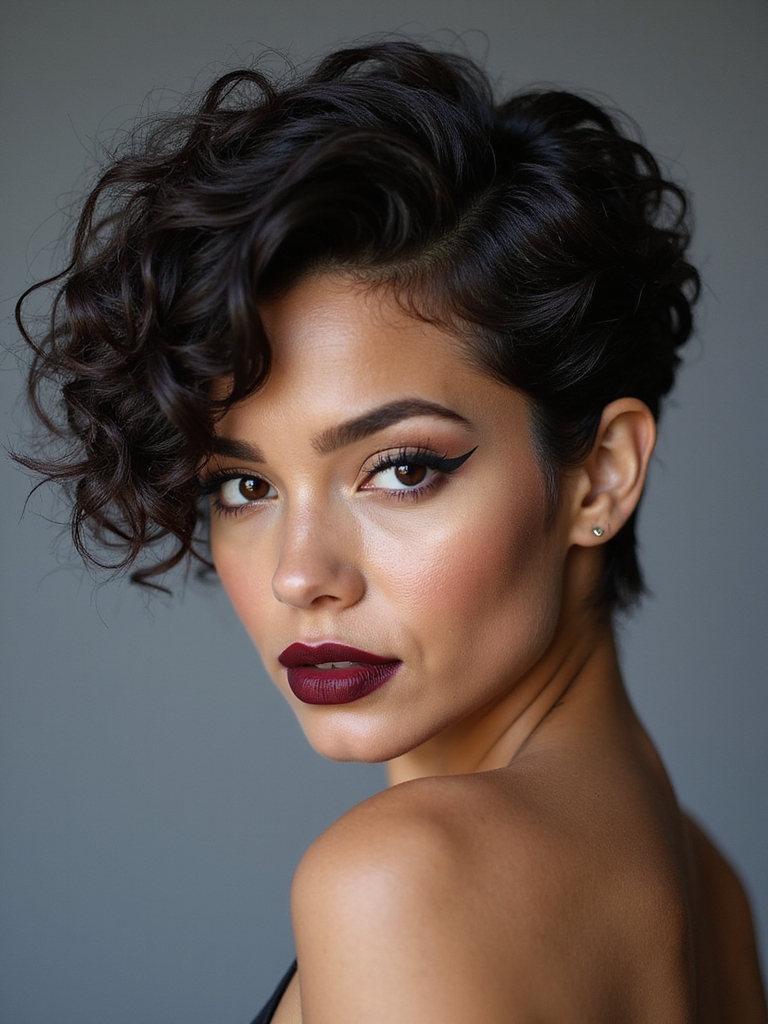
Side-swept curly bangs soften a pixie with a diagonal sweep of curl across the forehead, a gentler option than a fringe cut straight across.
The asymmetry suits a broad mix of face shapes and adds a soft edge to an otherwise cropped shape, making it a common recommendation for anyone easing into short hair for the first time.
Training the sweep happens as the curls dry: guide them to one side by hand while they’re still damp, then set the direction with a touch of cream once dry.
Micro Tight-Curl Pixie

The micro tight-curl pixie takes the crop to its shortest, most minimal form, with coils cut close all over into a single, uniform layer of texture.
With so little hair length left to look at, cheekbones and jawline end up carrying the whole shape, which is exactly the appeal for anyone drawn to this version.
- Reads clean, modern, and low-maintenance day to day.
- Consistent moisture is what keeps this short a cut looking glossy day to day.
- The shortest version on this list, with the least room for error in the cut itself.
Curly Pixie Mullet

The curly pixie mullet pairs a cropped curly top with a longer, curly nape for a bold, retro-modern silhouette that doesn’t apologize for the contrast. The pixie hairstyles for women roundup has more bold, statement-leaning versions.
The gap between the short crown and longer tail is what gives it real attitude, all spring and edge. Curl keeps the shape looking deliberate, and that same abrupt length jump would need much more careful blending on straight hair to avoid a stark, obvious line at the join.
The tail needs its own trim on a separate schedule from the top, since letting the length gap close by even an inch changes the whole read of the cut.
Undercut Curly Pixie
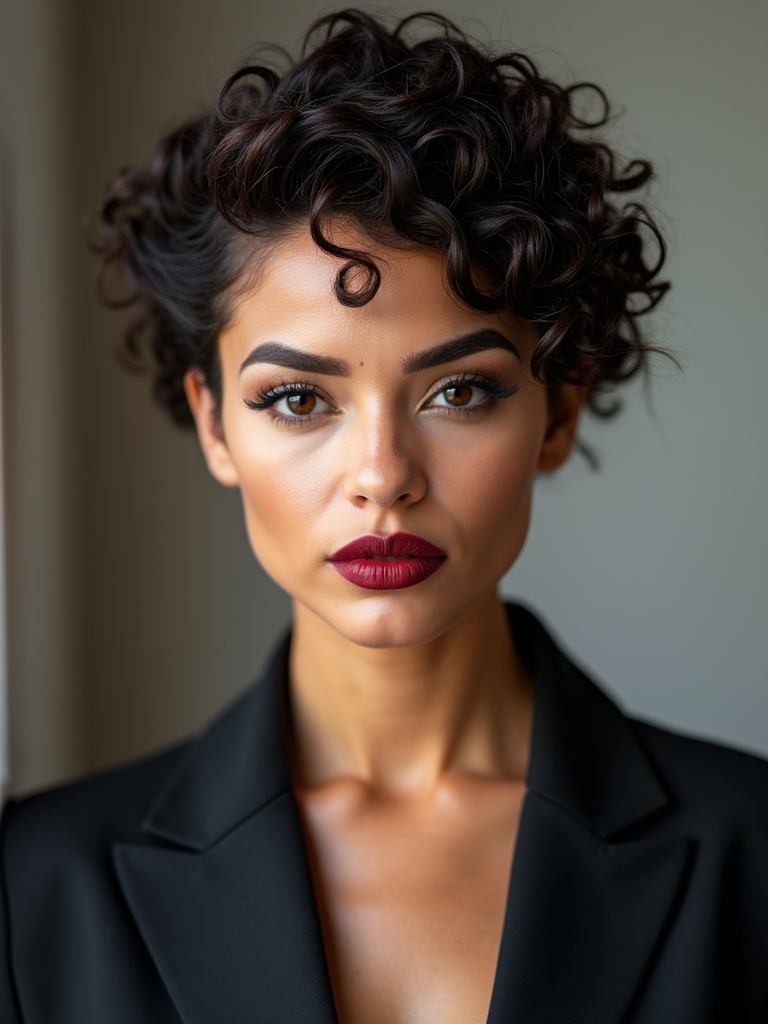
An undercut removes weight and bulk from underneath a curly pixie, leaving a lighter, cooler crop on top without touching the visible curl pattern.
The shaved or closely buzzed sections sit hidden beneath the curly top, which is exactly why this version works so well on thick, voluminous coils that feel heavier than they need to. The pixie haircut for thick hair guide covers more ways to lighten dense hair.
It needs upkeep of its own: the buzzed section grows in fast and needs a separate touch-up on a noticeably shorter cycle than the curls on top.
Rounded Curly Pixie

A rounded curly pixie shapes curls into a soft, glossy, even dome that frames the face symmetrically on every side. Nothing about it competes for attention.
It’s the most classic version on this list, all soft roundness and shine, and it suits a broad range of face shapes since the balance can be adjusted to work with individual features. A curl cream paired with a light gel gives it a smooth, defined finish.
Keeping an undercut crisp between full cuts.
1Check the growth
Run a hand against the grain under the top layer to feel how much has grown back.
2Buzz to a guard
A clipper guard matching the original length keeps the undercut consistent.
3Blend the edge
A quick pass along the join keeps the line between buzzed and curly clean.
Asymmetrical Curly Pixie

An asymmetrical curly pixie throws the balance off on purpose, with one side left longer or swept differently from the other.
Getting the Balance Right
The uneven shape looks bold and deliberate, and curls carry it especially well since the texture itself softens what would otherwise be a hard, graphic line.
The longer side typically sweeps across the forehead for a dramatic, face-framing effect, and getting the asymmetry to hold takes a precise dry cut so the curl shrinkage on each side balances out correctly.
Airy Layered Curly Pixie

An airy, layered curly pixie uses light internal layering to give curls maximum spring and separation instead of one dense mass of texture. The difference shows up mostly in movement: a curl that can bounce on its own catches light differently than one packed tightly against its neighbors.
The layers remove just enough weight for each curl to bounce independently, which suits looser to medium curl patterns especially well, where the layering creates lift while keeping the shape full. Tighter coil patterns generally need less of this kind of thinning, since the coil itself already does most of the volume work without extra help from the scissors.
Wet-Look Curly Pixie
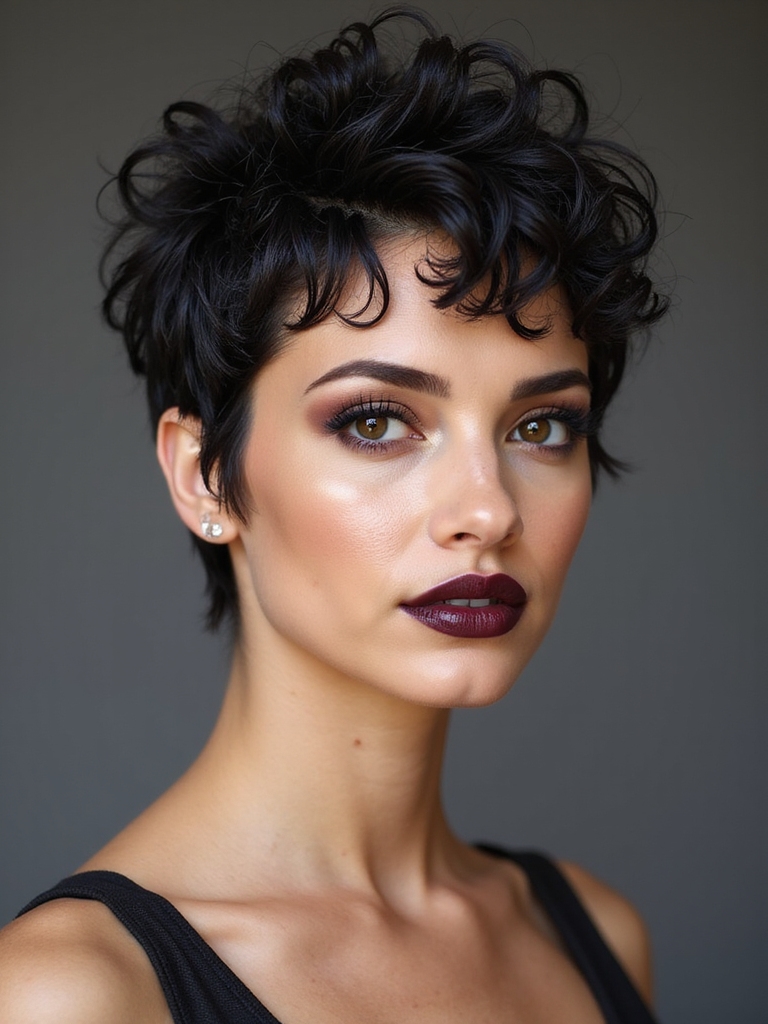
For high shine and definition, the wet-look curly pixie leans fully into gel for a sleek, glossy finish over well-defined curls. It’s especially useful on curls that run fine; the pixie haircut fine hair guide has more on managing weight with product.
A generous layer applied over the curl pattern reads sharp and polished, the kind of finish that holds all day and photographs cleanly.
- Better suited to a going-out look than an everyday routine, since that much product needs a proper wash-out.
- Apply gel to soaking-wet curls, scrunch through, then let it set or break the cast gently once dry.
- A light oil sealed over the top adds shine on top of the hold, no re-set needed.
| Curl pattern | Layering approach | Result |
|---|---|---|
| Loose waves (2A-2B) | Light, airy layers throughout | Maximum spring and movement |
| Defined curls (3A-3B) | Moderate layering at the crown | Volume without losing shape |
| Tight coils (3C-4C) | Minimal layering, sculpted taper | Definition without thinning risk |
Curly Temple-Fade Pixie

A temple fade adds a sharp, barbershop-precise edge to a curly pixie, with hair faded close at the temples while the curls stay full on top. It’s a pairing that shows up often in barbershops that work regularly with textured hair, since the technique itself carries over directly from other short cuts.
The crisp fade frames the face and creates a clean, modern contrast against the softness of the curls above it. Keeping that line sharp takes a skilled barber and touch-ups on their own, quicker-moving schedule, usually every 3 weeks or so, depending on how fast hair grows in at the temple.
What to Expect
The consultation matters more for a curly pixie than for almost any other cut, since curl pattern, density, and shrinkage all shape what the finished cut can actually do. Bringing reference photos helps, but a stylist who asks about the hair’s actual behavior day to day, not just what it looks like in a photo, tends to deliver a better result.
The first wash after the cut is the real test: curls have to spring into their true, shrunken length before anyone can judge the shape properly. A two-hour appointment, professionally priced for a dry curl cut, is a reasonable expectation for getting it right the first time.
Curly Pixie Questions, Answered
?Will a curly pixie work on my specific curl pattern?
In most cases, yes. Curly pixies work across loose waves through tight coils, but the cut has to be tailored: tighter coils generally suit a tapered, sculpted shape, while looser curls hold up well with airy layering.
?How do I keep a short curly pixie from looking dry?
Moisture matters more on short curls than long ones, since there’s less length to hold onto product. A leave-in plus a curl cream, refreshed between washes with a little water, keeps definition from fading into frizz.
?Is a curly pixie really as low-maintenance as people say?
Day to day, mostly yes, since there’s rarely much to do beyond water and product. The trade-off shows up at the salon: a dry curl cut typically runs $70 to $130, more than a standard wet cut’s $40 to $65, and reshapes come around faster since short curls blur out of shape quickly.
Texture Was Never the Problem
A short curly pixie asks for very little once it’s cut correctly: some water, a little product, and a willingness to let curls do what they already know how to do. Most of the work happens at the appointment, not in the mirror every morning.
The versions above span a broad mix of pattern, density, and attitude, from a soft sculpted crown to a barbershop-crisp fade, but they all rest on the same foundation: a dry cut that respects the pattern already there.
Where to Next