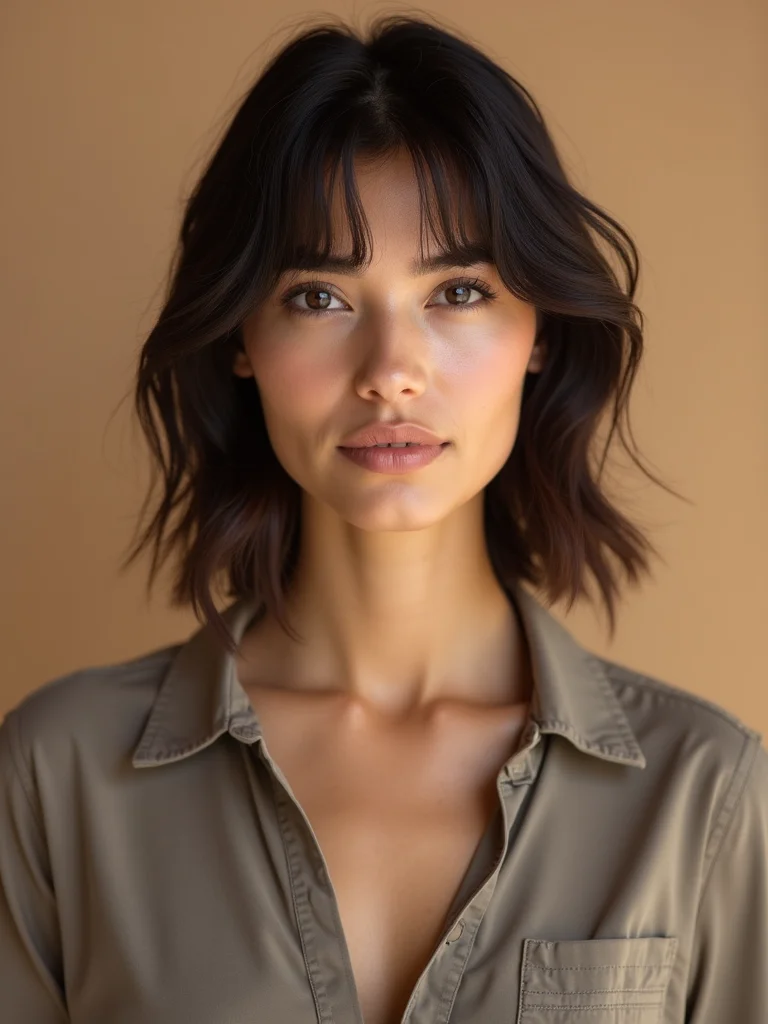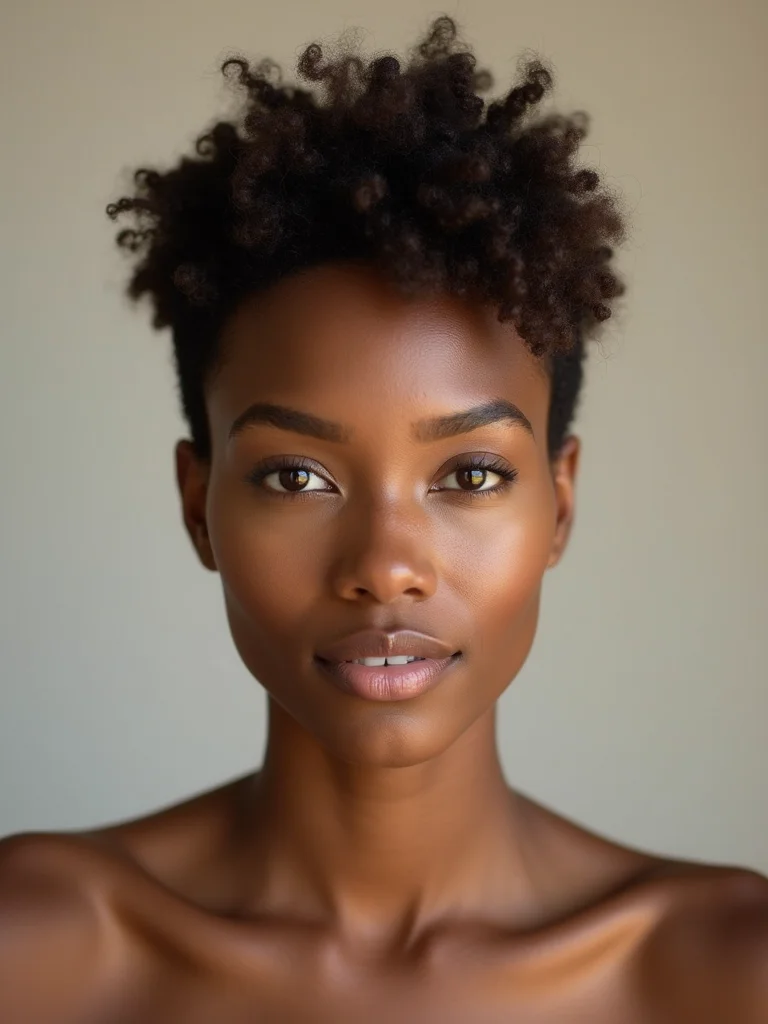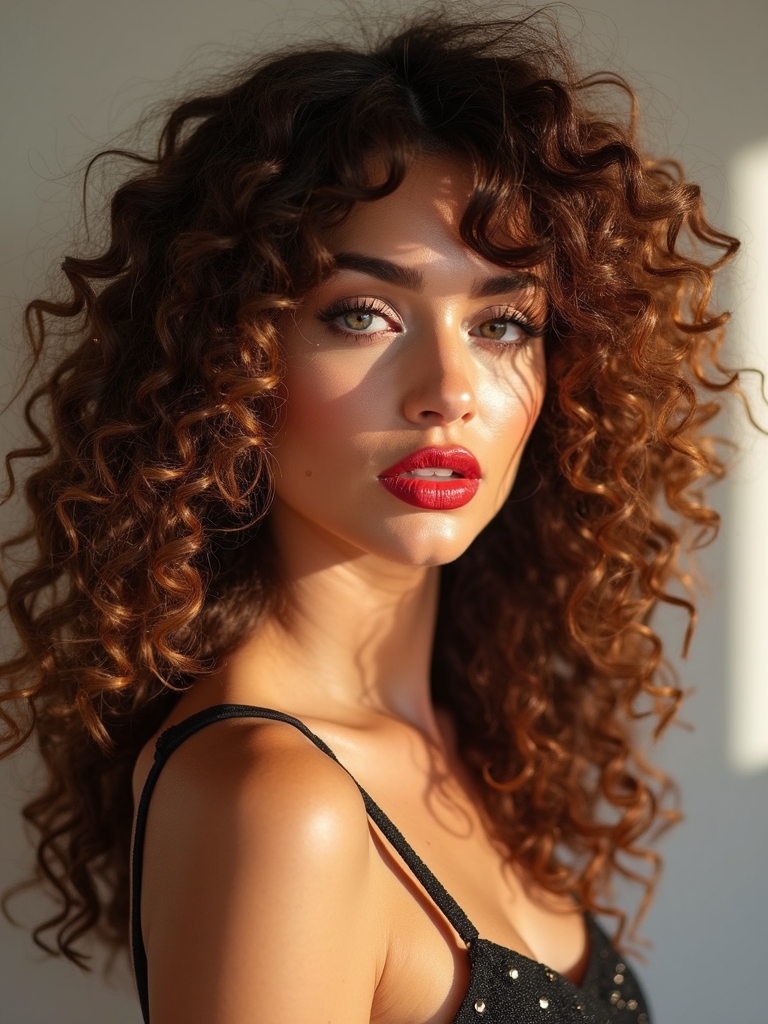
There is a stubborn idea that curls and bangs do not mix, and I would like to retire it. Curtain bangs are the one fringe shape built to part and sweep, which is exactly what curls want to do anyway. The look fails only when it is cut and styled like straight-hair bangs. That is a technique problem, and a fixable one.
So this is less a gallery and more a manual. If you want to browse finished looks, our curly curtain bangs roundup has those. Here, I walk through the things that actually decide whether curly curtain bangs work: matching them to your curl pattern, cutting dry, diffusing and air-drying without frizz, parting to flatter your face, and keeping the shape alive between appointments.
The Short Version Before You Book
Three things make or break curtain bangs on curly hair, and none of them is the photo you bring in. First, the cut: curly fringe has to be cut dry, in your natural pattern, so the stylist sees where each curl springs. Second, the curl type: loose waves, classic curls, and tight coils each need a different length and corner shape.
Third, the daily method: how you diffuse, part, and protect the bangs overnight matters more than any product. Get those right and curly curtain bangs are low-effort; get them wrong and you will fight your fringe every morning.
Why Curtain Bangs Work With Curls
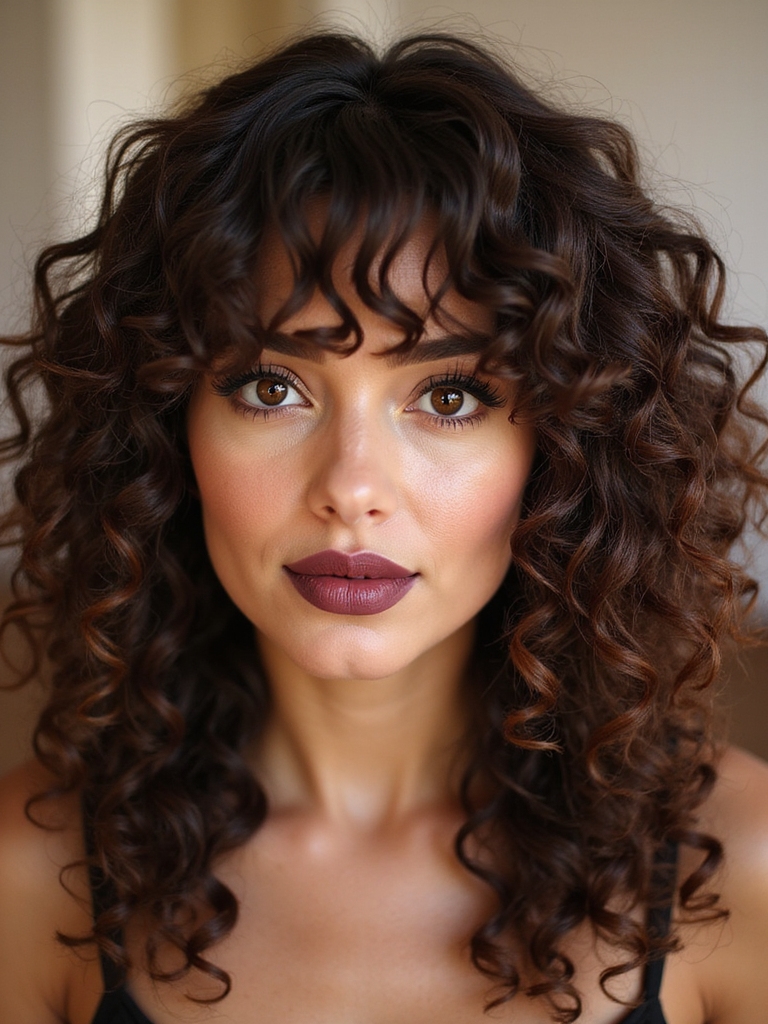
Curtain bangs work with curls because the shape is forgiving by design. A blunt, straight-across fringe demands flat, smooth hair. A curtain bang is meant to part down the middle and sweep to each side, which is the direction curls already grow. You are working with the texture. That is the whole trick. In my chair, I can usually tell within the first section how a client’s curls will take a fringe.
There is also no single hard line to maintain. Curtain bangs blend into the face-framing pieces, so a curl that springs a little differently one day does not ruin the look the way it would with precise bangs. That built-in softness is what makes the shape so curl-friendly.
The result is a fringe that frames your face and shows off your curl pattern at the same time. When it is cut for your texture, it looks deliberate and grows out without drama, which is more than most bangs can promise.
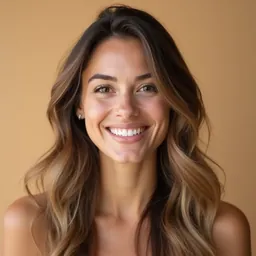
Tailoring Curtain Bangs to Your Curl Type
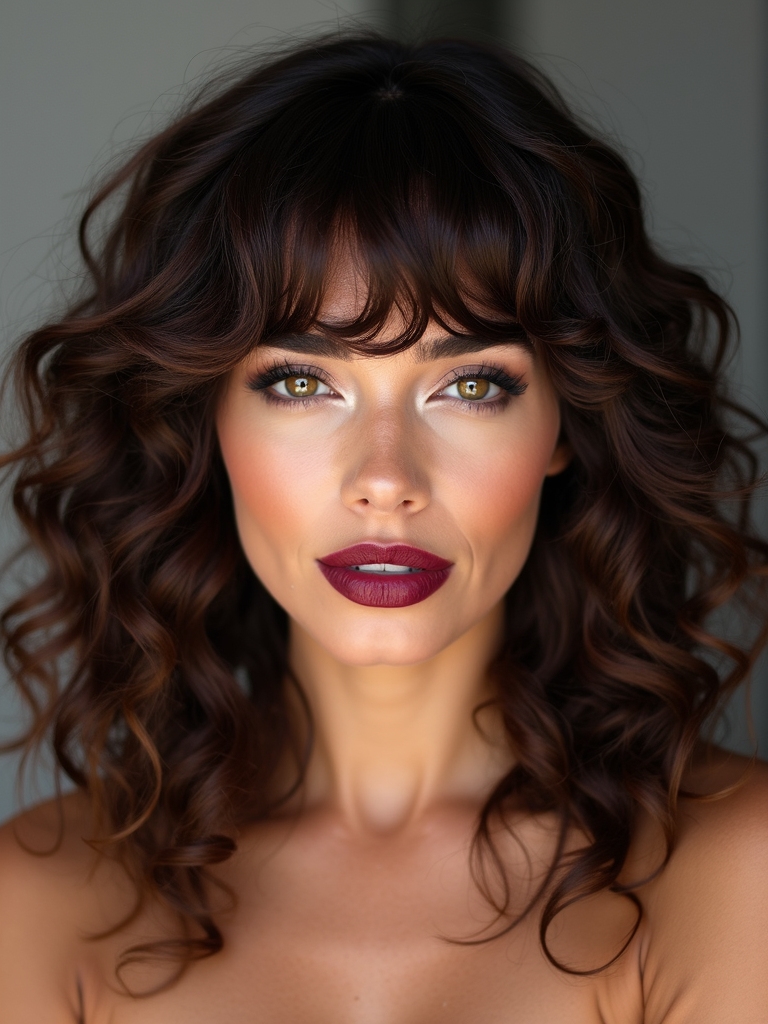
The single biggest factor is your curl pattern, because a 2A wave and a 4C coil need very different fringes. Looser textures can carry a longer, softer curtain because they fall close to their wet length. Tighter curls and coils need extra length built in to allow for shrinkage, and softer corners so the fringe does not stop abruptly.
This is why a photo only goes so far. The same cut translates completely differently across patterns, so the conversation with your stylist should be about your hair, not the model’s. A stylist who knows curls will look at how your hair springs before they decide on length.
If you are unsure of your pattern, the simple version is this: waves bend, curls form loops, and coils form tight springs or zigzags. Knowing roughly where you sit helps you ask for the right fringe and spot a stylist who actually understands texture.
Not sure which curtain bang fits your texture? Match your curl type:
1Loose waves (2-type)
Go longer and softer with feathered ends; you have the least shrinkage to plan for and the most forgiving fringe.
2Classic curls (3-type)
A feathered curtain with length left for spring; define with cream and avoid over-thinning.
3Coils and kinks (4-type)
Generous length for heavy shrinkage and softly tapered corners; insist on a dry cut from a curl specialist.
Face Shapes and Fringe Balance
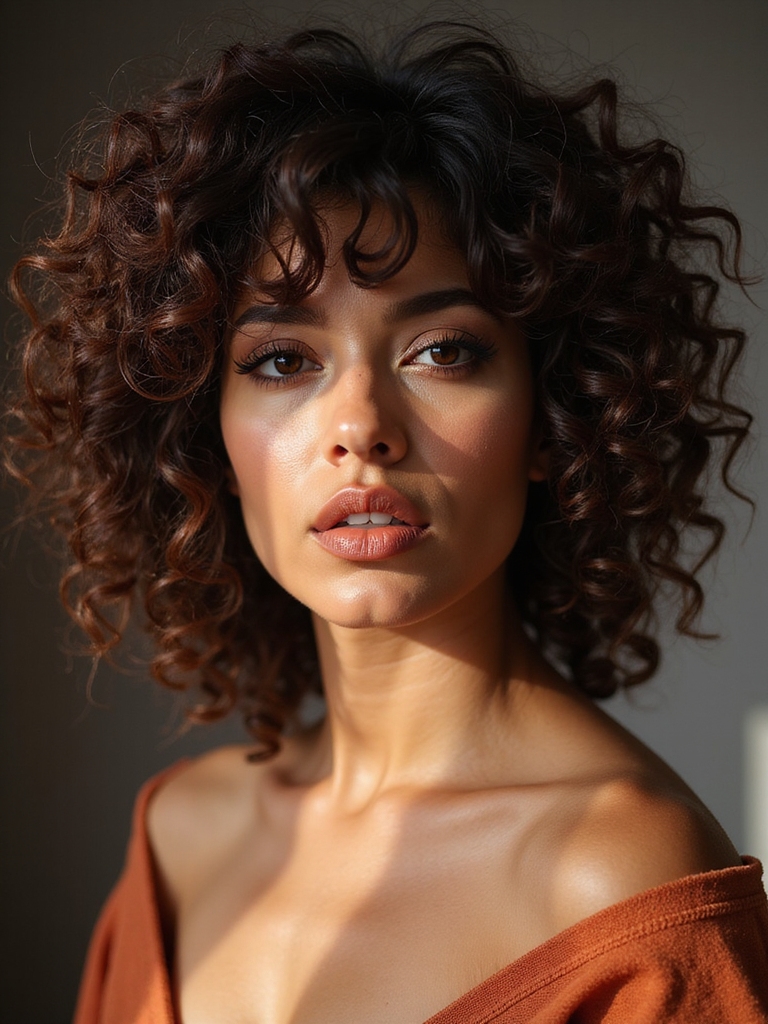
Curtain bangs are among the most universally flattering fringes because you can adjust where they hit to balance your face. A longer curtain that starts at the cheekbones softens a longer face, while a shorter, wider sweep adds width that flatters a longer, narrower shape.
Where the Curtain Should Hit
Round faces tend to suit a curtain that falls a little past the jaw, since the vertical sweep lengthens the face. Square jaws soften under a curtain with soft, curved corners; a heavy straight edge does them no favors.
The good news is that curls add their own softness, so you have more margin than straight hair does. Still, mention your face shape in the consultation so the stylist can place the sweep where it does the most for you.
Curtain Bangs for Loose Waves
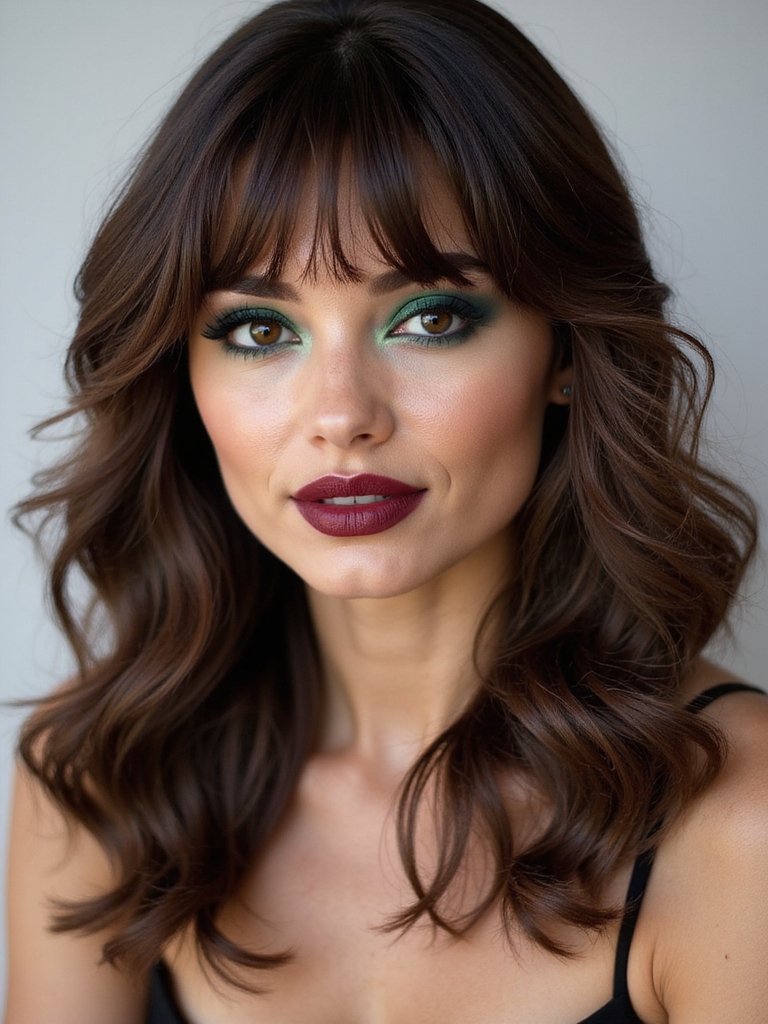
Loose waves are the easiest texture for curtain bangs, because the gentle bend does the framing without much shrinkage to plan around. You can wear them longer and softer, with feathered, point-cut ends that fall into a relaxed sweep around the cheekbones.
Because waves carry less spring than curls, the fringe length is more predictable, though I still cut it dry to be safe. Style with a light cream or a salt spray scrunched through damp hair, and break the part with your fingers once it dries for that undone, lived-with feel.
The One Rule That Matters Most
If a stylist reaches for a flat iron to cut or check the length of your curly bangs, stop them. Cutting curly fringe straightened means it springs up far too short once it returns to its natural pattern. Curly bangs must be cut dry and in their natural curl, full stop.
Curtain Bangs for Classic Curls
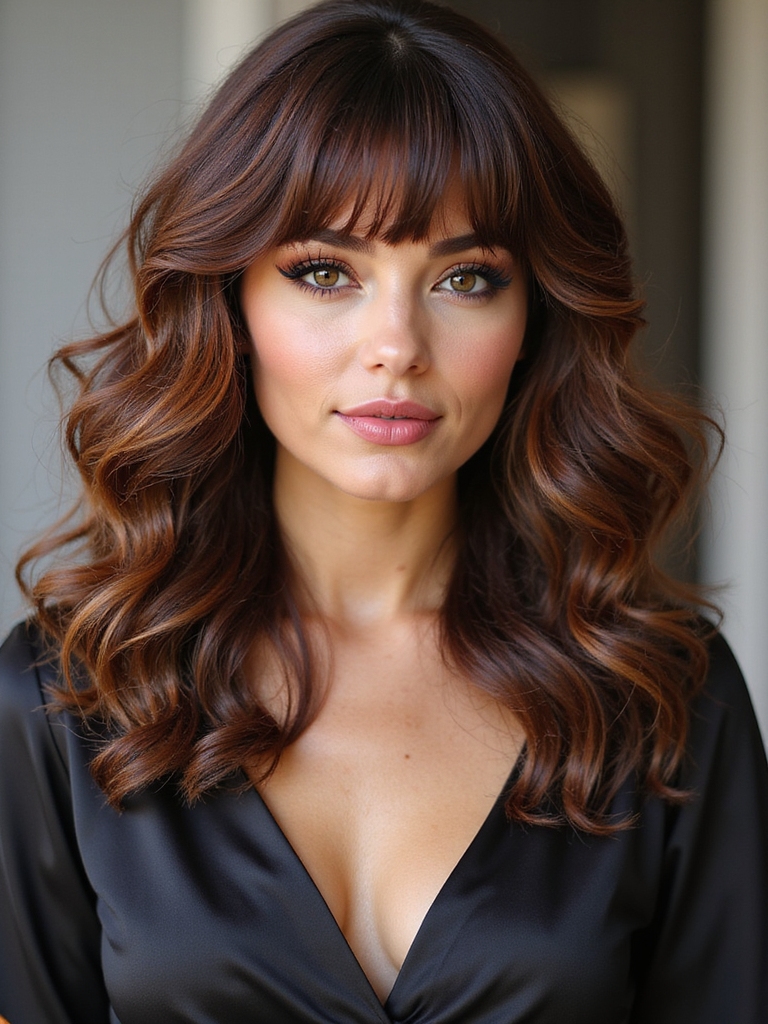
Classic, looped curls are where curtain bangs really shine, because the curl forms a natural draped shape on each side. A feathered cut keeps the fringe from looking solid and lets each curl find its place. This is the texture most people picture, and it takes the look beautifully.
The trick is leaving enough length for the curl to spring without the fringe disappearing up your forehead. Define it with curl cream on soaking-wet hair, and resist the urge to over-thin, which only makes curls frizz.
- Cut dry so the curl spring is accounted for.
- Keep the fringe a touch longer than feels right when wet.
- Define with cream or a soft gel, and keep heavy butters off the front.
Curtain Bangs for Coily and Kinky Textures
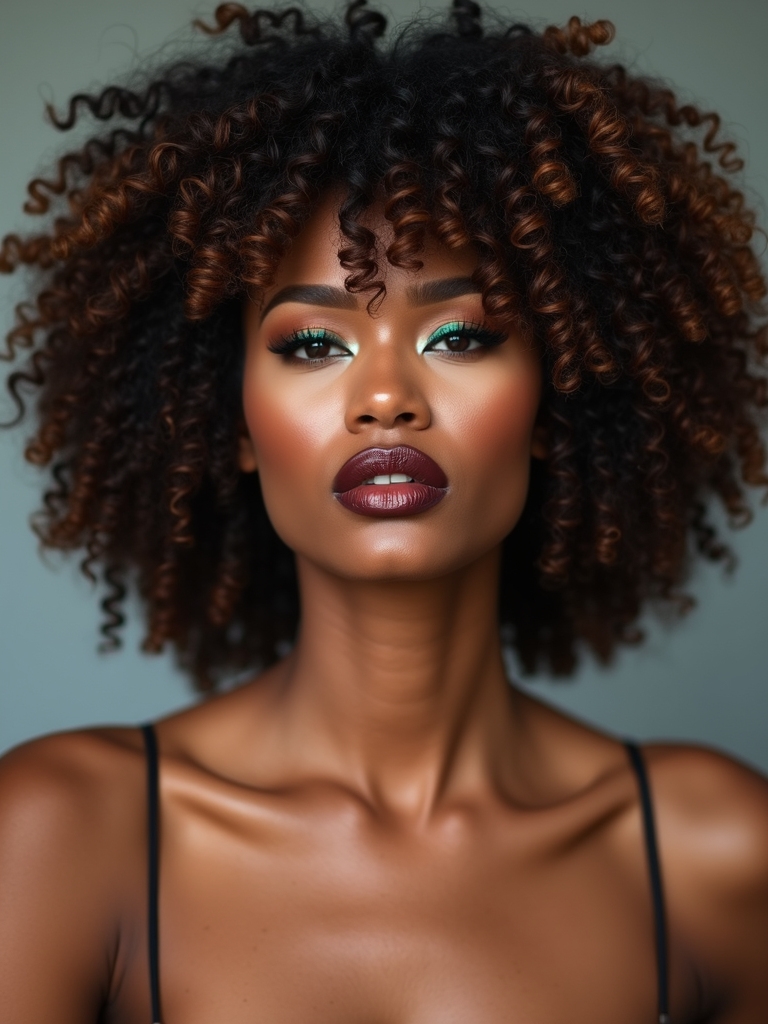
Coily and kinky textures absolutely wear curtain bangs, and they can look striking, but the margin for error is smallest here. Shrinkage is most dramatic with 4-type hair, so the cut must leave generous length, and the corners should be softly tapered so the fringe melts back into the hairline.
The Shrinkage Math on Coils
A dry cut is non-negotiable on this texture. A stylist needs to see exactly how far each coil springs, because a coily fringe cut even a little too short cannot be coaxed longer, only waited out. This is the section where finding a stylist who specializes in coils matters most. The coily fringes I am proudest of are the ones where I left what felt like far too much length and let the spring prove me right.
Once cut well, styling is straightforward: a curl custard or gel on soaking-wet hair, smoothed gently down the front, then dried without disturbing the coils. Skip any tension on the front pieces while they set, since pulling flattens the very spring you want there.
“I have lost count of the curly fringes I have fixed that were cut wet and arrived in my chair three inches too short. There is no shortcut here: the curl has to be dry so I can see where it actually lands. When a client tells me their last bangs ‘shrank,’ I already know what happened.”
Diffusing at the Roots for Airy Lift
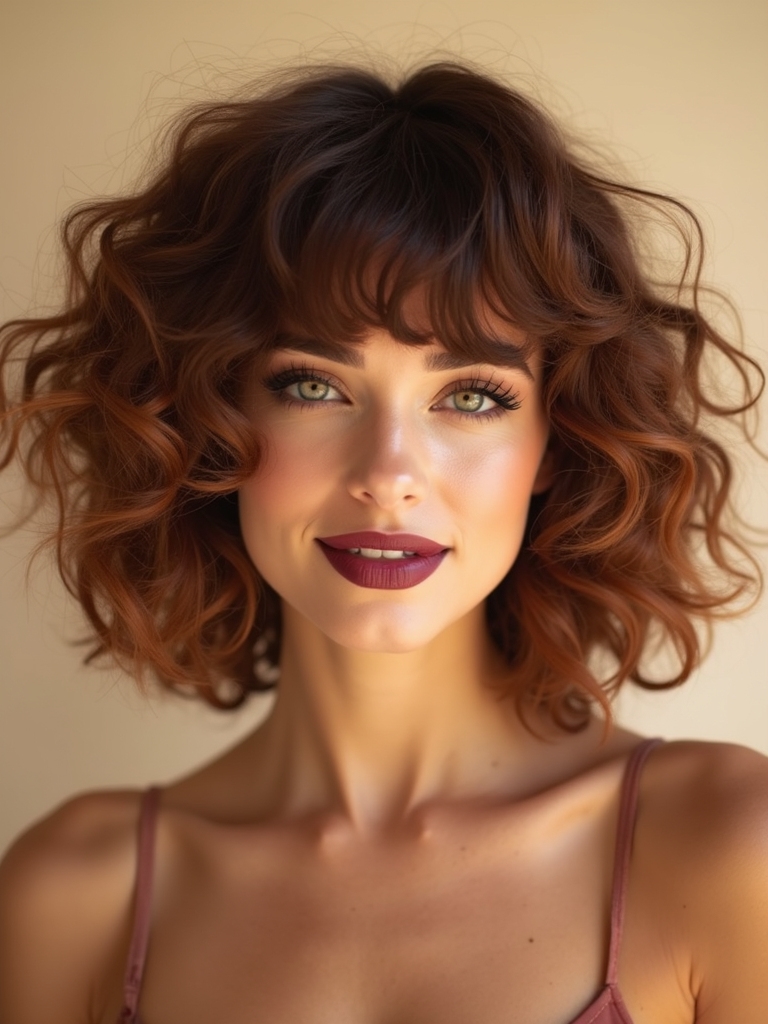
How you diffuse the fringe decides whether it lifts off your forehead or sits flat against it. The technique that works is to cup the curls into the diffuser bowl and hover at the roots, pulsing gently while keeping the dryer still. That builds volume right where the bangs need it. When I diffuse a curly fringe in my chair, I spend more time on that front section than on the entire back.
Keep the heat on low and the airflow gentle, because high speed is what blows curls into frizz. It takes ten to fifteen minutes to diffuse a full head this way, but the fringe is the part worth slowing down for, since root lift there is what keeps the curtain from collapsing.
Air-Dry Methods That Prevent Frizz
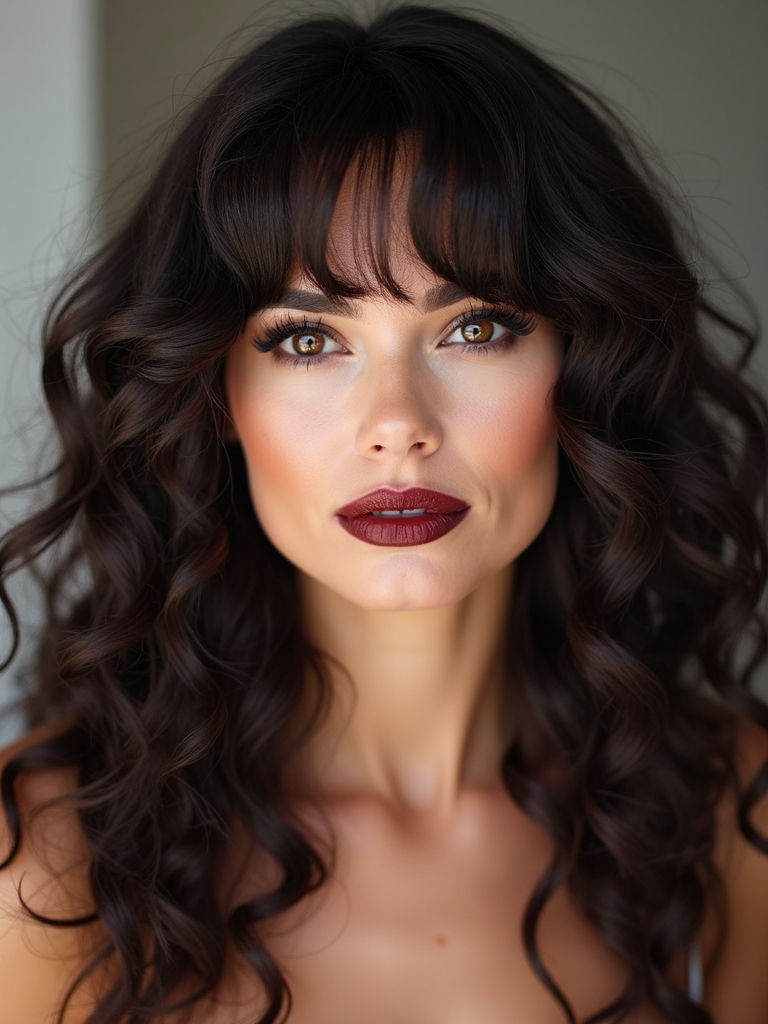
If you prefer to skip heat, air-drying the fringe cleanly comes down to not touching it. Apply your product to soaking-wet hair, shape the part, and then leave it completely alone until it is bone dry. Every touch while it dries lifts the cuticle and invites frizz.
The plopping method helps the fringe along: cradle the curls in a microfiber towel or cotton tee for fifteen or twenty minutes to soak up excess water without roughing up the cuticle. Once dry, scrunch out any gel cast and finger-separate the part. That hands-off discipline is the whole secret to a frizz-free curtain.
💡Refresh Tip
On day two or three, do not rewet the whole fringe. Dampen just the front pieces with a spray bottle, add a pea of curl cream, and reshape the part with your fingers. A full restyle is rarely needed and usually causes more frizz than it fixes.
Layered Cutting to Keep Length and Volume
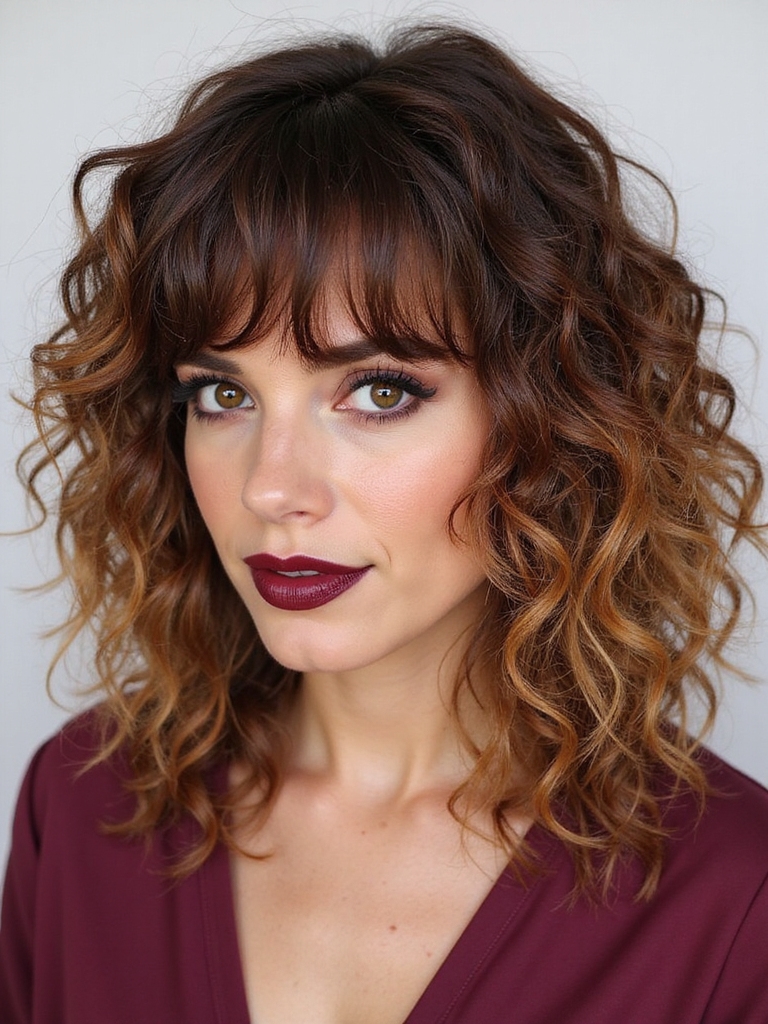
Curtain bangs do not live in isolation; the layers behind them decide how the whole shape reads. A curl-conscious layered cut removes interior bulk so the curls spring freely. Too much weight there and they pile into a heavy triangle, which leaves the curtain looking stranded at the front.
- Ask for internal layering to remove weight without losing length.
- Keep some length at the perimeter so curls do not balloon outward.
- Have the layers cut for your curl pattern, not a generic shag template.
Parting Tricks to Frame Your Features
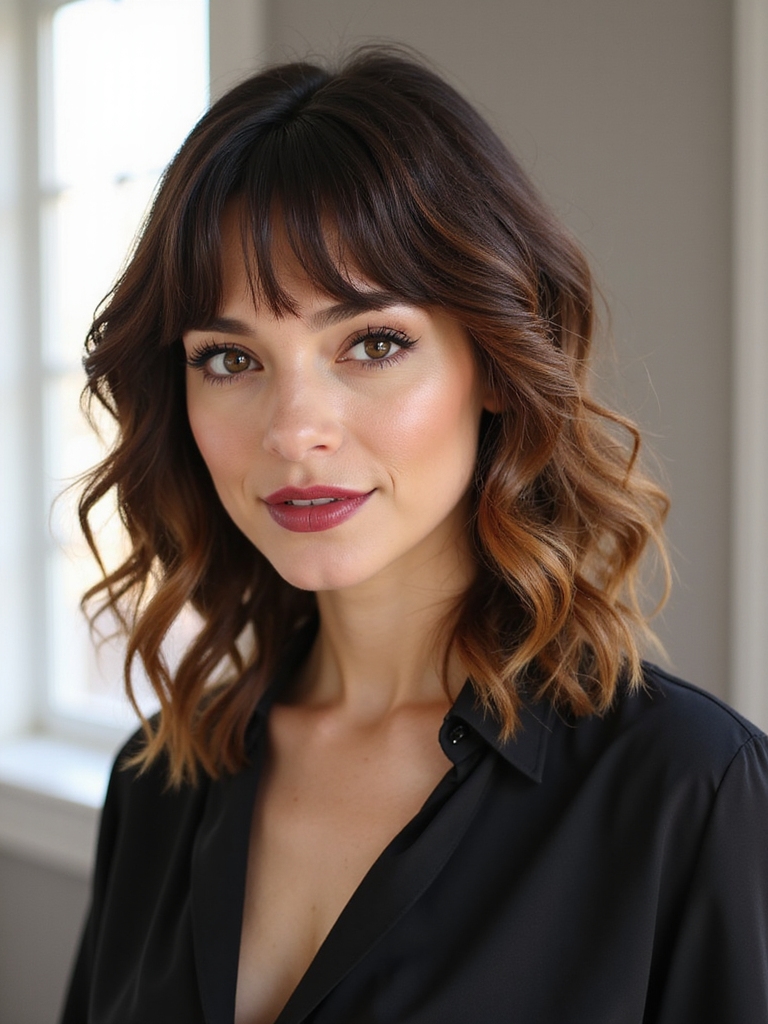
The part is a free styling tool most people underuse. Where you split the curtain changes which features it highlights, and shifting it even half an inch can open up the eyes or balance an uneven hairline. It costs nothing and changes everything about how the fringe frames your face. I often move a client’s part mid-consultation just to show them the difference on their own face.
- A center part suits balanced, oval-leaning faces and feels symmetrical.
- An off-center part adds lift and flatters rounder or wider faces.
- Switch the part now and then to keep your roots from training flat.
Products for Soft, Defined Curls
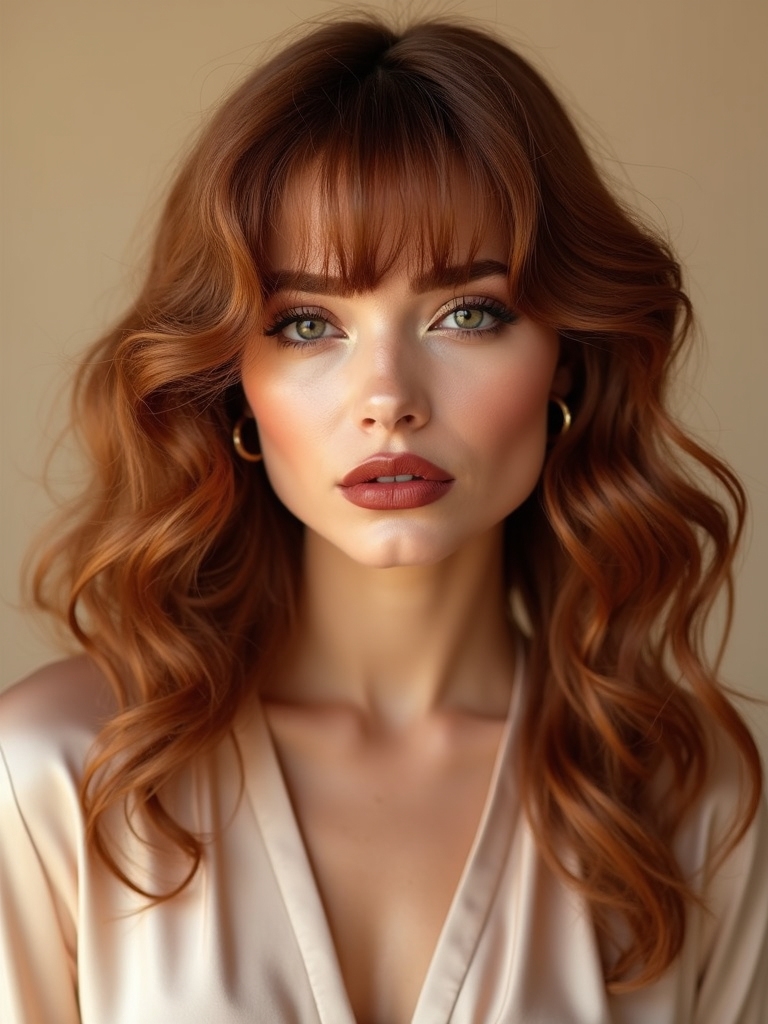
The goal for a curtain fringe is definition without stiffness, and that comes down to product choice and amount. A curl cream gives soft, touchable definition for looser textures, while a gel gives firmer hold for curls and coils that need more help staying formed. Apply either to soaking-wet hair for the cleanest clump.
The cast, that crunchy shell a gel leaves once dry, is not the finished look; it is the protection. Once your hair is fully dry, scrunch the cast out with a little oil or just your hands, and the curls drop into soft, defined pieces. That two-step is how you get hold and softness at once.
Less is more on the fringe specifically. My clients are always surprised how little product the fringe needs. Heavy butters and thick oils weigh the front curls down and pull them flat against your forehead, so keep the rich stuff for your lengths and use a light hand up top.
Nighttime Routines to Protect Your Curls
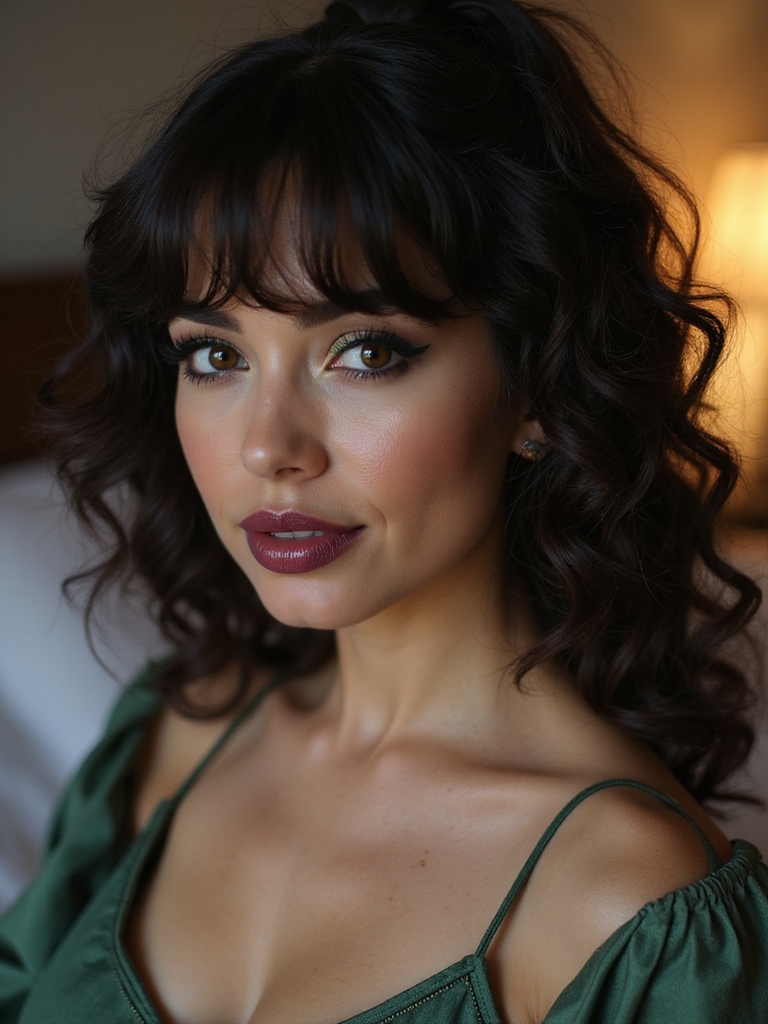
Half the battle with curly bangs is what happens while you sleep. Friction from a cotton pillowcase roughs up the cuticle and flattens the fringe, so a few simple habits buy you a second and third day of good hair without restyling.
The aim overnight is to keep the curls off the pillow and out of friction’s way, which preserves both definition and the curtain shape you set on wash day.
- Pineapple longer hair into a loose, high, gathered pile on top.
- Switch to a satin or silk pillowcase, or wrap in a satin bonnet.
- Refresh the fringe in the morning with a little water and cream, not a full restyle.
Salon Consultation Tips and Lingo
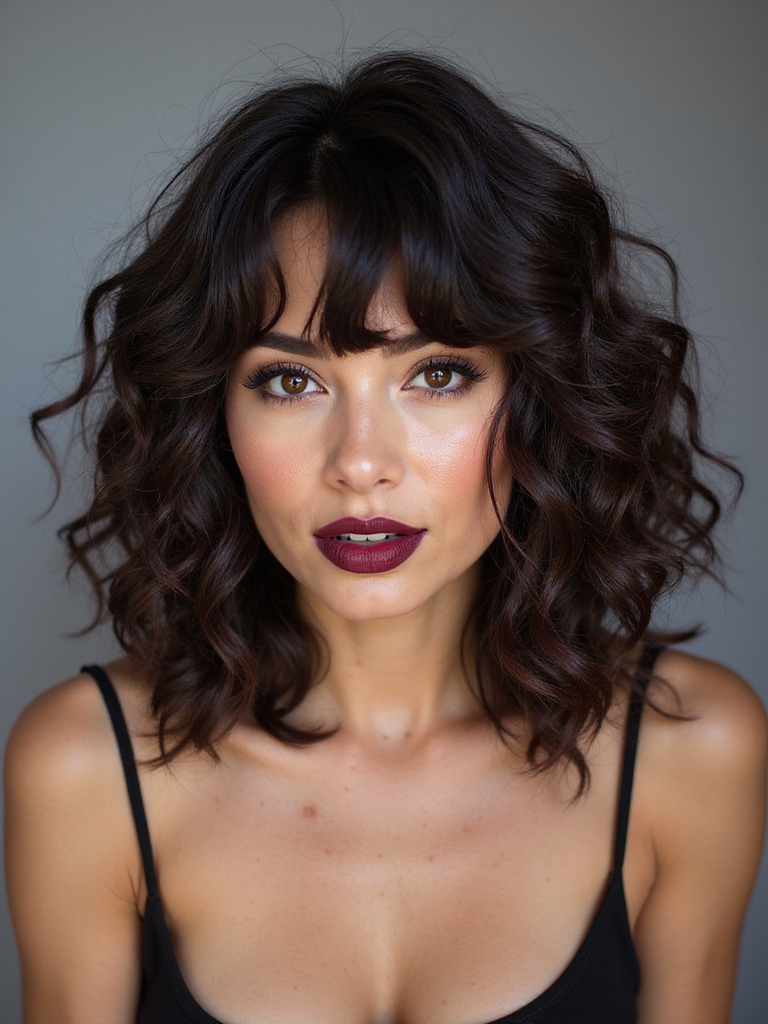
The consultation I wish every curly client booked is the one before the cut, not the apology after. A few minutes of the right questions saves you weeks of growing out a fringe that was cut wrong. Walk in with these.
- Ask directly: do you cut curly hair dry and in its natural pattern?
- Show a photo, but talk about your curl spring, not just the shape.
- Use the word shrinkage, and ask how much length they will leave for it.
- Confirm the trim cadence and rough cost before you sit down.
Trim-at-Home Guidelines Between Appointments
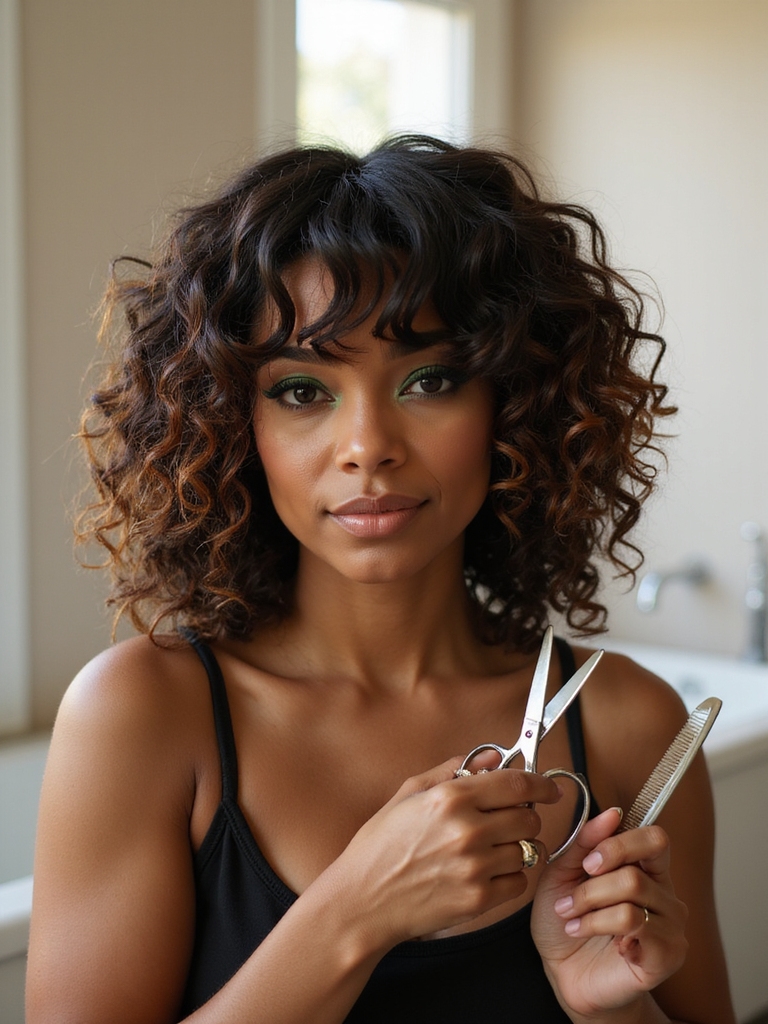
I am cautious about recommending at-home trims, but a light fringe tidy between salon visits is doable if you respect a few rules. The cardinal one: only ever trim curly bangs dry, curl by curl, and take almost nothing.
- Work on completely dry, styled hair so you see the true length.
- Trim one curl at a time, snapping into the end with the scissors pointed up.
- Take a millimeter, step back, and reassess before any second pass.
- When in doubt, leave it and book the pro; you cannot un-cut a coil.
Curtain Bangs From Subtle to Statement
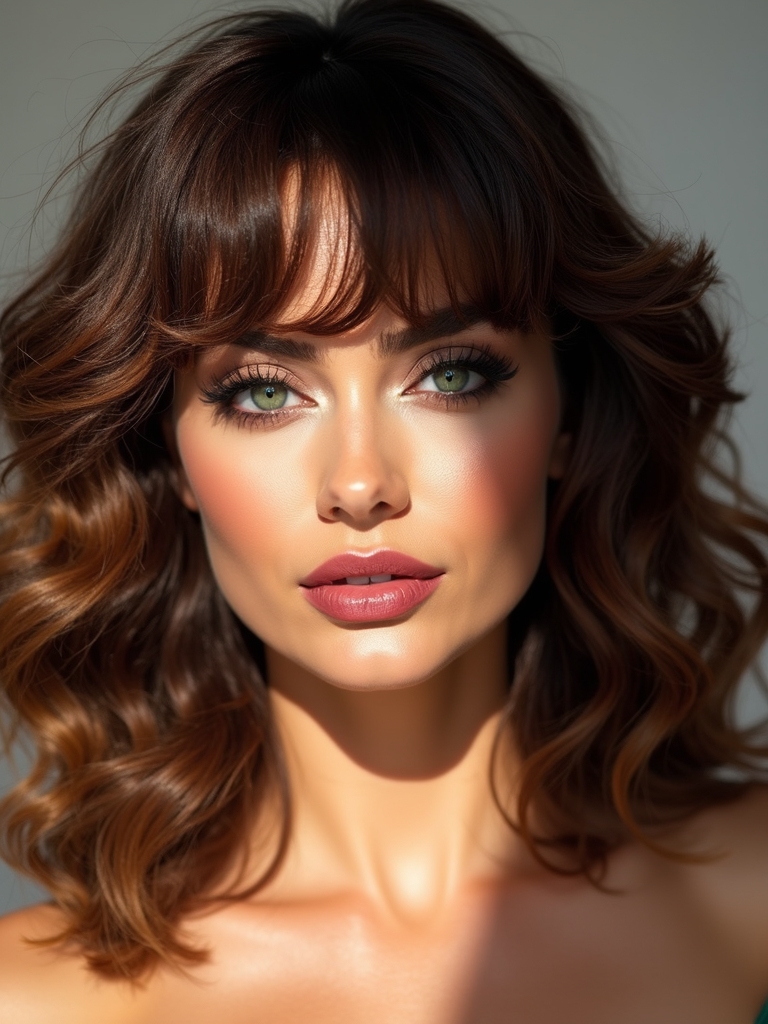
Once you understand the mechanics, you can dial curly curtain bangs anywhere from barely-there to full statement. A long, blended curtain that melts into your layers is the subtle end, easy to wear and easier to grow out. A shorter, defined fringe that sits higher and shows off the curl pattern is the bold end.
Where you land is a lifestyle choice as much as a style one. The subtler versions ask less of your mornings, while the statement versions reward people who enjoy styling. Both work on curls; it is just a question of how much fringe you want to manage.
- Subtle: long, blended, low-maintenance, near-invisible grow-out.
- Statement: shorter, defined, higher-impact, more frequent trims.
- Either way, the cut-dry rule and curl-pattern match still apply.
Maintenance, Cost, and Timing
Curtain bangs on curls are gentle on upkeep compared with precise fringes, but they are not zero. Expect a dedicated dry curly cut to run roughly $80-150 depending on your area, and a fringe-only trim between visits to cost about $15-40. Most people need that trim every six to ten weeks, with shorter, statement fringes wanting it sooner and long, blended ones waiting longest.
The bigger investment is finding the right stylist. A curl specialist who cuts dry is worth the search and sometimes the extra cost, because the cut is what every styling routine depends on. For more shapes and inspiration once you know your curl type, our curly bangs, curtain bangs wavy hair, and wispy curtain bangs guides each cover a different texture and feel.
Bangs That Work With Your Texture
Curtain bangs on curly hair are not a gamble when you treat them as a technique rather than a trend. Match the fringe to your curl pattern, insist on a dry cut, diffuse or air-dry with a light hand, and protect the shape overnight, and the look practically maintains itself.
If you have been told your curls cannot wear bangs, you were told wrong; you were just given straight-hair advice. Save this guide, take the consultation questions to a curl specialist, and let your texture do what curtain bangs were designed to let it do.
Keep the Inspiration Going