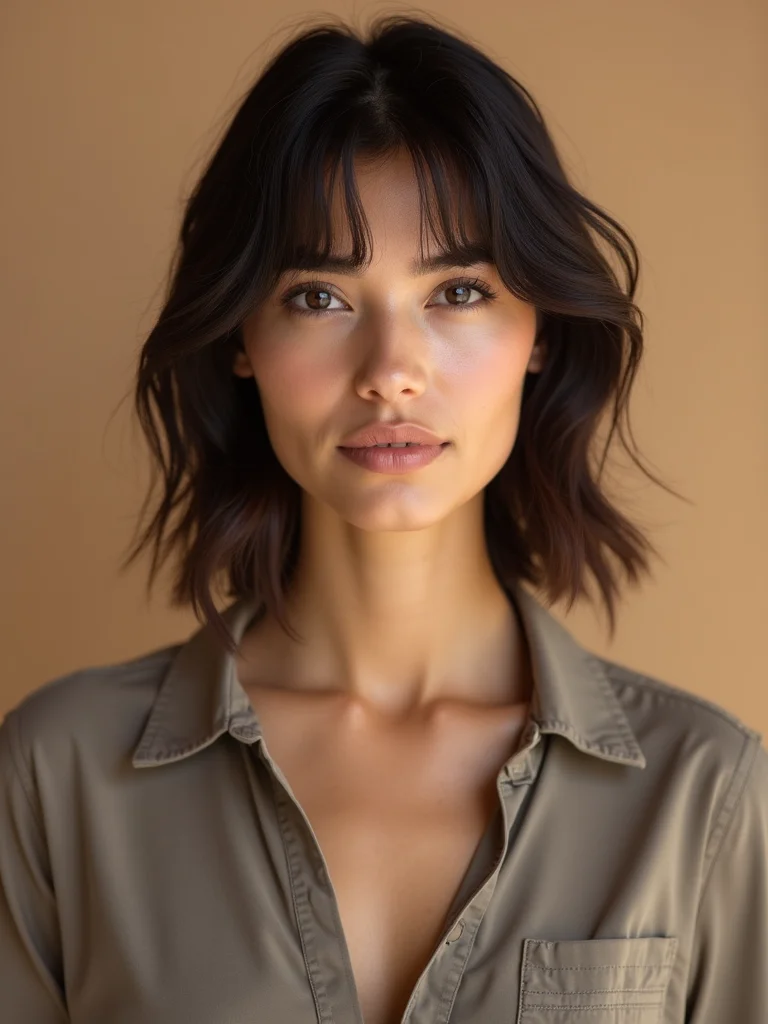
Run a hand up the back of a good medium choppy shag and the structure is obvious: short, broken layers underneath, longer pieces falling over them, every section landing at a slightly different length on purpose. That deliberate roughness is what separates a real shag from an ordinary layered cut.
Medium choppy shag hairstyles sit between the chin and the collarbone, long enough to move and short enough to stay light. The fifteen versions below range from wolf-shag hybrids to curly and fine-hair takes, each with the honest upkeep and the exact words to bring to a stylist.
Choppy Shag, Quick Facts
- Built from short, broken layers under longer pieces, cut at deliberately mismatched lengths.
- Medium length runs chin to collarbone, keeping the cut light enough to move.
- Wavy and thick hair take to this shape with almost no effort; fine hair does best with a razor-cut version.
- The shape holds for roughly two months before the texture needs sharpening again.
Classic Mid-Length Shag With Face-Framing Layers

The classic mid-length shag is where most people start, the version without the drama of a full wolf cut. Choppy face-framing layers fall around the cheeks and jaw, breaking up the shape and pulling the eye toward the face.
This version flatters most face shapes, since the framing pieces do the softening work on their own. The medium length keeps it wearable for both a workday and a weekend.
Wavy and straight hair with some natural texture hold this shape best. A rough finger-dry with a small amount of texture cream is usually the entire styling routine.

Textured Shag With Curtain Bangs

Pairing a heavily textured shag with curtain bangs softens the whole front of the cut. The center-parted bangs sweep back and merge with the layering, so fringe and cut blend into one piecey frame.
- Center-parted bangs blend directly into the shag’s layering.
- Suits nearly every face shape, since the fringe grows out gently.
- Fine hair does better with a lighter, razor-cut version of the bangs.
Airy Wolf-Shag Hybrid

The wolf-shag hybrid pushes the choppy layering into bolder territory, borrowing the heavy disconnection of a wolf cut. The crown is cropped and spiky while the lengths stay long and shaggy, and the contrast between the two sections is sharp rather than blended.
- The crown sits noticeably shorter and spikier than the lengths below it.
- Built for someone who wants visible edge, not a soft transition.
- Confident styling reads as intentional; left flat, it reads unfinished.
| Hair Type | What to Ask For |
|---|---|
| Fine | Razor-cut ends, kept perimeter |
| Thick | Heavy internal layer removal |
| Wavy | Standard choppy layers, minimal thinning |
| Curly | Dry cutting, section by section |
Piecey Mid-Shag With Bold Choppy Ends

Bold, point-cut ends give a mid-shag its most separated, broken texture, with the tips chopped so they fall in distinct, visible pieces. This is the shag at its most graphic, the version where the texture reads sharp and deliberate.
Styling for Maximum Separation
A matte clay or paste worked through completely dry hair keeps the pieces from merging back together, and pinching or twisting individual sections defines the chop further.
A brush works against this look, smoothing away exactly the separation the cut was built to show off, so fingers do all the work here.
Wavy Choppy Shag With Shattered Layers

On wavy hair, a choppy shag basically styles itself. Soft waves move through the shattered layers for a relaxed, broken texture, and the layering gives the wave pattern somewhere to spring.
- The lowest-effort shag on this list for anyone who already has a wave.
- A quick scrunch with a sea-salt product typically finishes the whole routine.
- Shattered layers amplify wave pattern more than a standard cut would.
📋Getting the Piecey Finish Right
- ✓Work product through completely dry hair, never wet.
- ✓Reach for matte clay or paste, not a shine-based product.
- ✓Twist small sections between your fingers instead of brushing through.
Curly Medium Shag With a Volume Boost

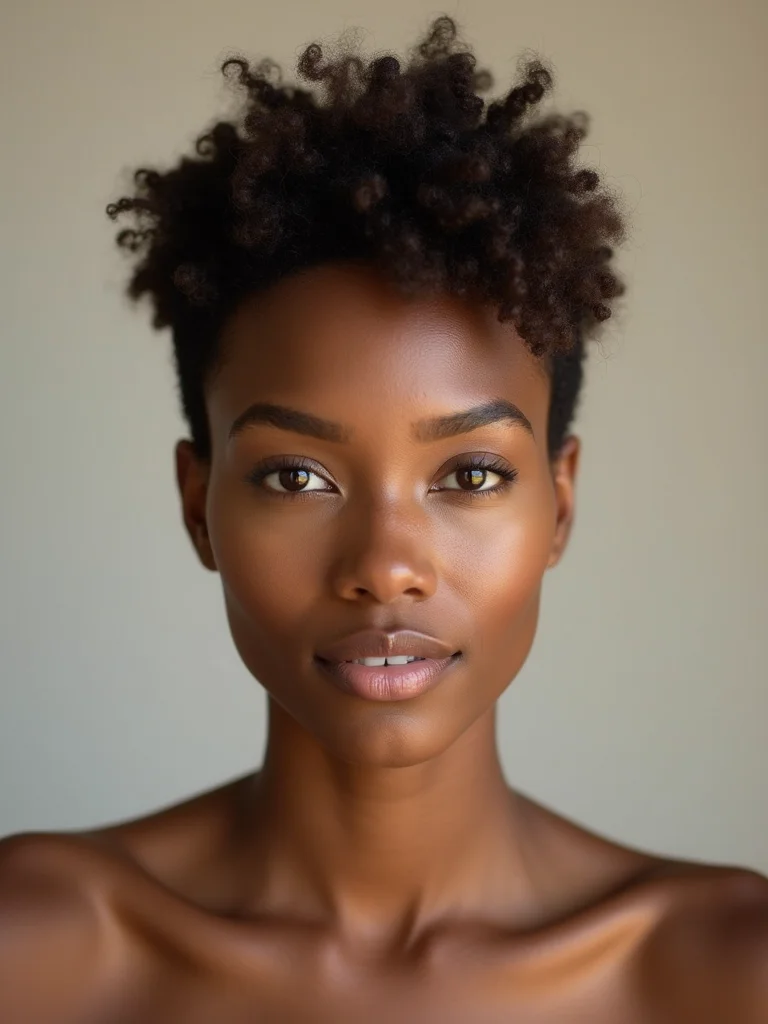
On curly hair, choppy layers cut on dry, already-set curls give a medium shag its shape and lift, taking bulk out of exactly the spots that need it.
Why the Cutting Method Matters So Much Here
Each coil gets shaped where it naturally sits, so the crown lifts and the ends separate into distinct, piecey clumps instead of one dense mass. Cutting on wet hair skips this step entirely, since nobody can predict where a coil lands until it dries.
A curl-defining product applied section by section, followed by air-drying or a diffuser on low heat, keeps the shape from collapsing before it has a chance to set.
Tousled Choppy Shag With Feathered Bangs

Feathered bangs over a tousled shag build airy, broken movement right at the front of the face. The soft, wispy fringe melts into the choppy layers below it, so the whole top of the cut reads light.
This combination lands somewhere between romantic and undone, depending on how much texture gets worked into the front on any given day.
- Scrunch-dry the bangs by hand so the pieces separate on their own.
- A small amount of texturizing spray keeps the feathered pieces apart.
- Wears equally well swept to the side or left softly forward.
Razor-Cut Choppy Shag for Fine Hair

Fine hair and shags can be a tricky combination, since too many scissor-cut layers thin the hair out rather than adding texture to it. A razor-cut version solves the problem by tapering the ends into wispy points that fake both fullness and movement, so fine hair reads like it carries more body than it actually has.
- Ask specifically for a razor cut, not additional scissor layers.
- A light mousse or texturizing spray works better here than any cream.
- Trim on schedule, since razored ends split faster than blunt ones.
Dimensional Choppy Shag With Balayage

Color and cut work together on this version. Balayage painted through a choppy shag lights up the piecey layers, since the lighter pieces catch light differently at every edge the layering creates.
The texture and the dimension amplify each other here, since a flat, single-tone color would leave the same cut looking noticeably less rich. Hand-painted color also keeps the grow-out soft, without a hard demarcation line.
A full balayage session on medium-length hair typically runs around $180, booked separately from the shorter appointment the choppy cut itself takes.
Worn-In Choppy Shag With a Center Part

A center part splits a worn-in choppy shag into two piecey halves, framing the face evenly with a cool, slightly undone look. The middle part keeps the whole cut feeling modern and a touch off-duty.
Keeping the Center Part Relaxed
This version suits balanced and oval faces especially well, since an even split doesn’t compete with the face’s proportions the way an off-center part sometimes can.
Setting the part while the hair is still damp, then letting the layers fall and rough-drying with fingers, keeps the whole thing from looking too set or deliberate.
Before You Book This Combination
A choppy shag is unforgiving on very fine, over-layered hair. If that’s your starting point, ask your colorist and cutter to plan the balayage placement around a razor-cut perimeter, kept intentionally light on scissor thinning.
Blunt-Perimeter Choppy Shag With Internal Layers

Wanting texture without giving up density is a common request, and a blunt perimeter with hidden internal layers answers it directly. The bottom edge stays strong and solid, holding the cut’s overall weight, while choppy layers inside add the piecey movement of a shag.
A Middle Ground Between Two Approaches
This is a solid option for anyone worried about thin, stringy ends, since none of the internal layering touches the outermost edge.
The blunt perimeter also sits more polished than a fully feathered shag, which matters at work, where texture is welcome but looking undone isn’t.
Choppy Shag With Wispy Micro Bangs

Wispy micro bangs add a bold, fashion-forward accent to a choppy shag, the short, broken fringe sitting high on the forehead to echo the piecey layers below it. This pairing reads editorial, putting the shortest fringe on the list against the shaggiest texture.
- Needs a trim on a tight schedule, roughly every two weeks, to stay short.
- Flatters strong brows and a balanced forehead especially well.
- Curly hair shrinks the bangs shorter than expected, worth factoring in before cutting.
Side-Swept Bang Choppy Shag for Round Faces

A side-swept bang paired with choppy layers casts a diagonal line across the face, which is exactly what flatters a round shape. The angled fringe lengthens and slims while the shaggy layers underneath add movement and lift.
- The diagonal line does slimming work a blunt, straight fringe can’t.
- Works especially well on round or full face shapes.
- Trains easily with fingers alone, without a brush or heat.
Low-Maintenance Choppy Shag for Thick Hair

Thick hair takes to a shag especially well. Heavy choppy layers remove weight from the dense interior, so the hair falls in soft, moving pieces and stops puffing into a solid triangle by afternoon.
- Removes bulk from the interior without shortening the visible length.
- Hides regrowth well and styles quickly on busy mornings.
- A rough, hands-only dry typically covers the whole routine.
Not sure which shag direction fits? Answer honestly.
1My hair is thick and puffs out by midday
A heavy choppy layering approach, debulking the interior.
2My hair is fine and needs more body
A razor-cut perimeter with light internal texture.
Beachy Choppy Shag With Natural Texture

A beachy choppy shag leans fully into whatever natural texture is already there, with the choppy layers and a salt-finished look reading like it came straight off the sand. This is the softest, most relaxed version of the cut on this list.
Why Natural Wave Makes This Version Easiest
It works best on hair that already carries a bit of wave to build on, since the cut is designed to amplify existing movement, not manufacture it from nothing.
A salt-based spray misted onto damp hair, scrunched, then left to air-dry, produces the softest and most natural version of the finish. Fingers, never a brush, keep the texture separated once it’s dry.
Common Mistakes to Avoid
Over-layering is the most common misstep, especially on fine hair, where too many short layers leave the ends looking thin. Ask for the choppiness concentrated where the hair already has some density, since thin hair generally can’t support it spread evenly throughout.
The second mistake is treating a shag like a regular layered cut in conversation with a stylist. Words like choppy, piecey, and point-cut carry specific meaning here, and leaving them out tends to produce a much softer, more conventional result. A full choppy shag appointment usually takes close to an hour; a texture-only refresh between full cuts is a much quicker visit.
Texture With a Point of View
What makes a medium choppy shag worth the appointment is the texture itself: short, broken layers under longer, piecey lengths, finished in a way that looks deliberately undone. Matching the cut to your specific hair type, and being precise with a stylist about the language, keeps it from turning into a softer layered cut wearing the shag’s name.
So which direction actually fits how your hair behaves day to day: soft and wearable, or bold enough to border on a wolf cut?
Don’t Miss These