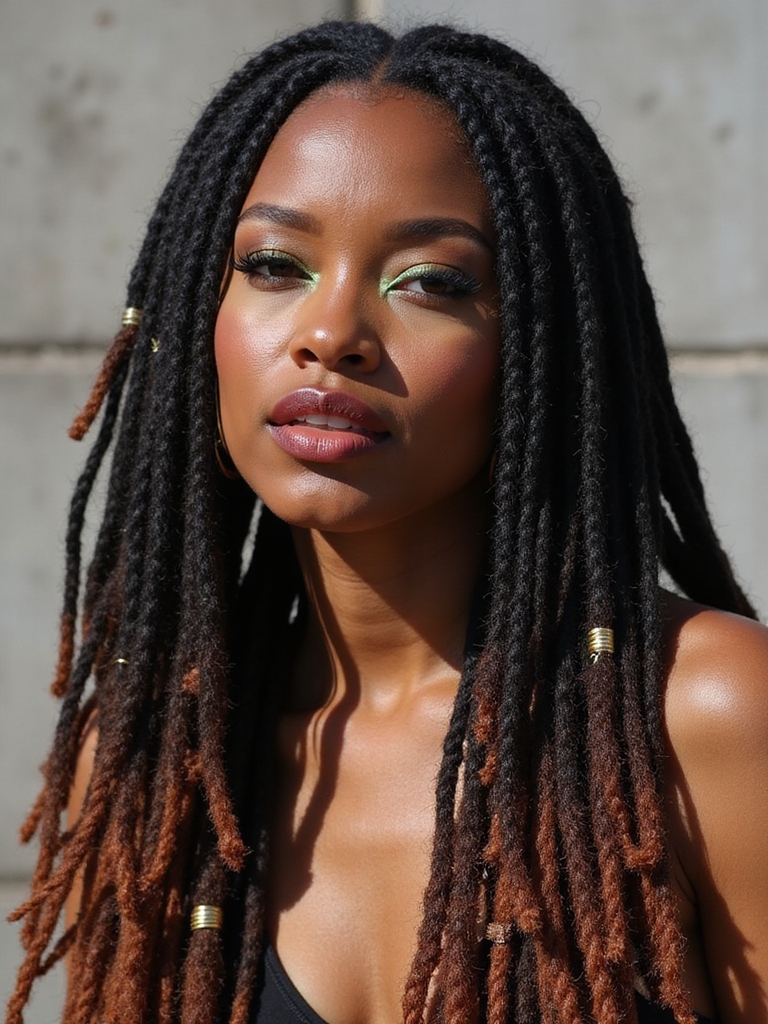
Dreadlocks hairstyles for white women follow a slower technical timeline than most guides let on. Fine, straight hair grips less than coarser, curlier texture, so by week three or four of a first set, the sections still look more like matted clumps than defined locs, and that’s normal rather than a sign anything went wrong.
Locs carry deep meaning rooted in Black and African heritage, and choosing to wear them means giving that history real acknowledgment, not a passing nod. The technical side, covered here across fifteen looks, comes down mostly to patience: finer or straighter hair locks more slowly and rewards a method built around that reality, not a rushed, do-it-yourself start.
Fine Hair, Quick Answers
Will locs actually work on straight hair? Yes, but slower. Straight hair grips less, so the early stage takes longer to lock than it would on coarser texture.
Do I need a specific method? Usually, yes. Interlocking or a comb-coil method suited to finer hair tends to work better than whatever a stylist defaults to for coarser texture.
Can I try the look before committing? Yes. Faux locs give you weeks of the look with zero permanent change, which is the honest way to test it first.
Boho, Beachy Locs Worn Loose
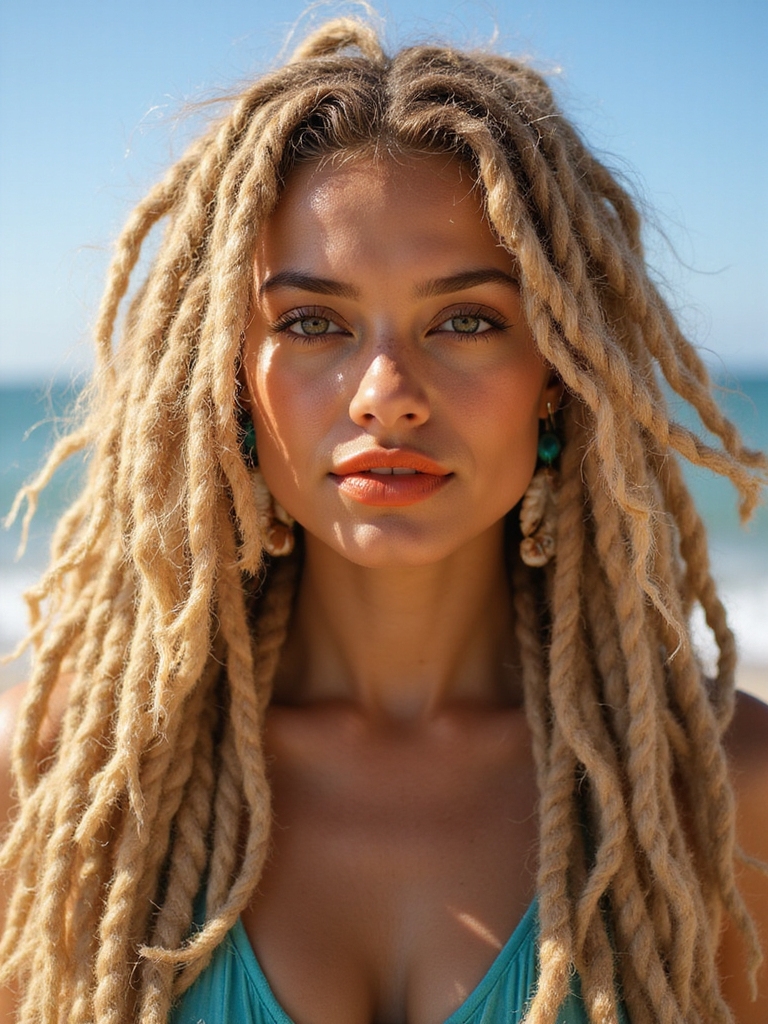
Worn loose and a little undone, boho beachy locs lean into a relaxed, festival-leaning finish, with a few natural waves or loose pieces breaking up the line.
By week three or four, a fresh set styled this way tends to soften on its own as the sections settle, which only adds to the easy, grown-in look this version is going for.
- A drop of light oil keeps any loose pieces defined instead of fuzzy.
- This is close to the lowest-effort way to wear a full set down.
- Suits a first set especially well, since the relaxed styling forgives an uneven early stage.

Sleek Rope Locs to Mid-Back
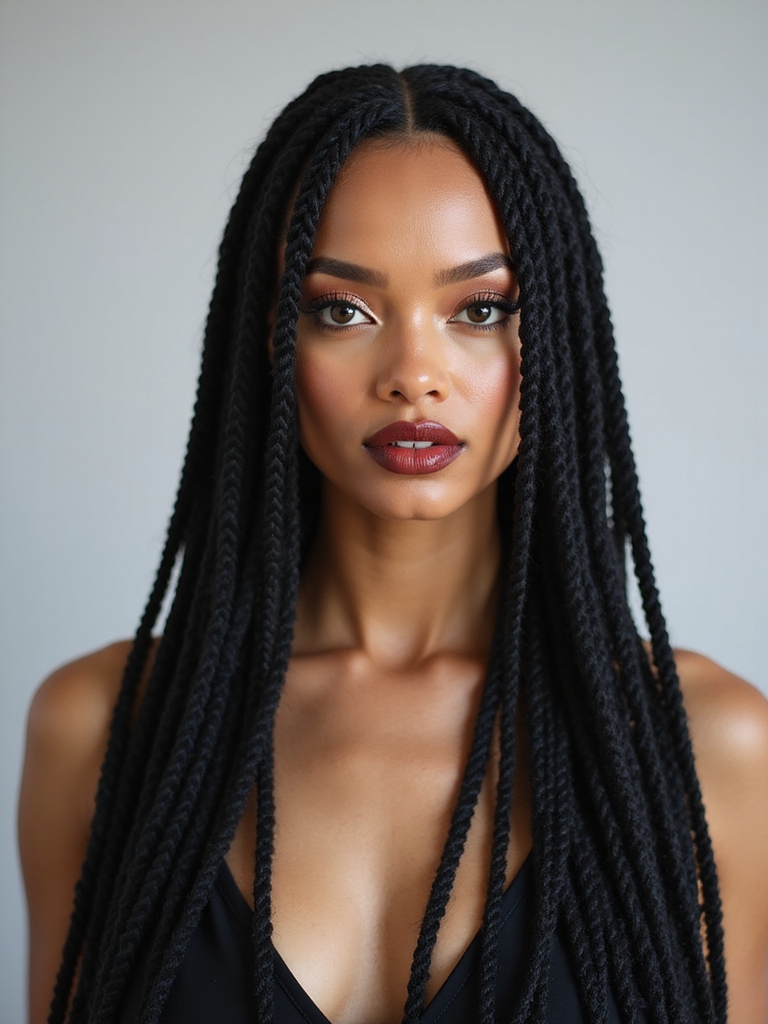
Sleek rope locs falling to mid-back make a polished, deliberate statement, with smooth, rounded twists that catch light as they move.
Length this long carries real weight, and that weight pulls at the roots more the longer locs get, so gentle handling matters even more here than on a shorter set.
On finer or straighter hair, reaching this length takes real patience, since the texture locks more slowly than coarser hair does. Consistent moisture and a skilled hand are what actually carry a set there.
Deciding how far to take the length? Weigh what matters most to you:
🎯Maximum polish
A sleek, straight rope set carries the most formal, put-together look.
🎯Lower daily upkeep
Shorter or looser styles ask less of you day to day than a long, heavy set does.
A Half-Up Crown With Flowing Tails
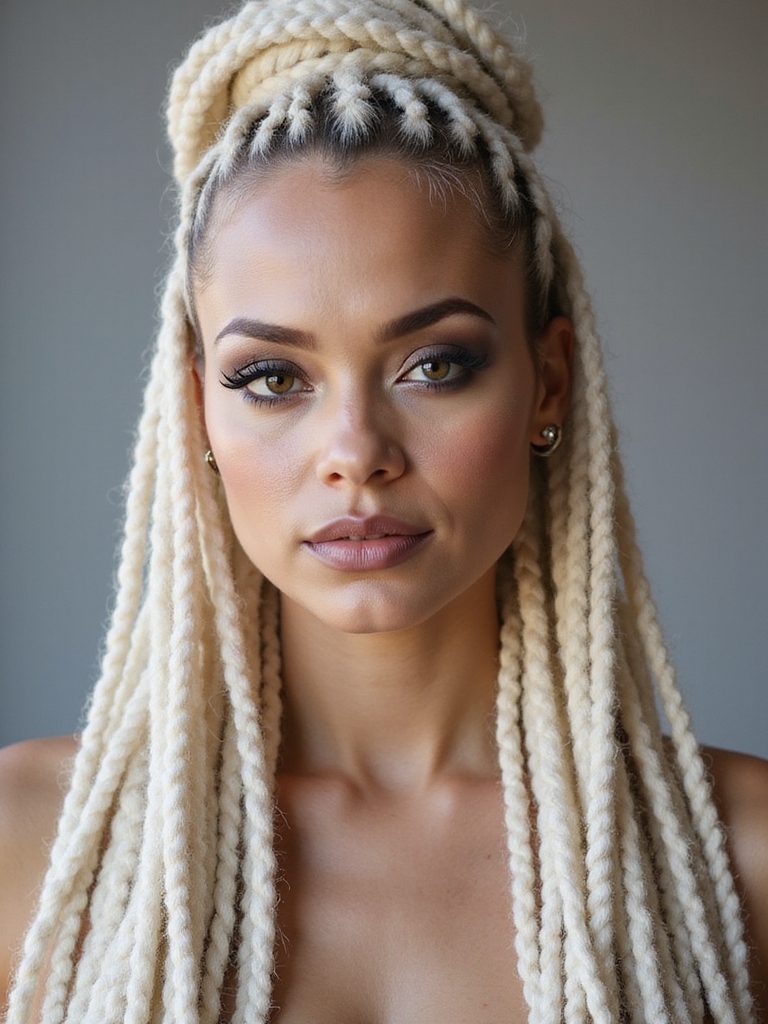
Gathering the crown section back while the tails flow free below balances a polished top half with movement through the length.
An Everyday Style That Still Looks Considered
It keeps the top half neat and off the forehead while stopping short of a full updo, and it dresses up or down with a single accessory.
A soft, twisted crown adds a hand-finished detail, and the gentle tension here is kinder to the hairline than anything gathered tighter.
A Messy Bun With Soft Tendrils
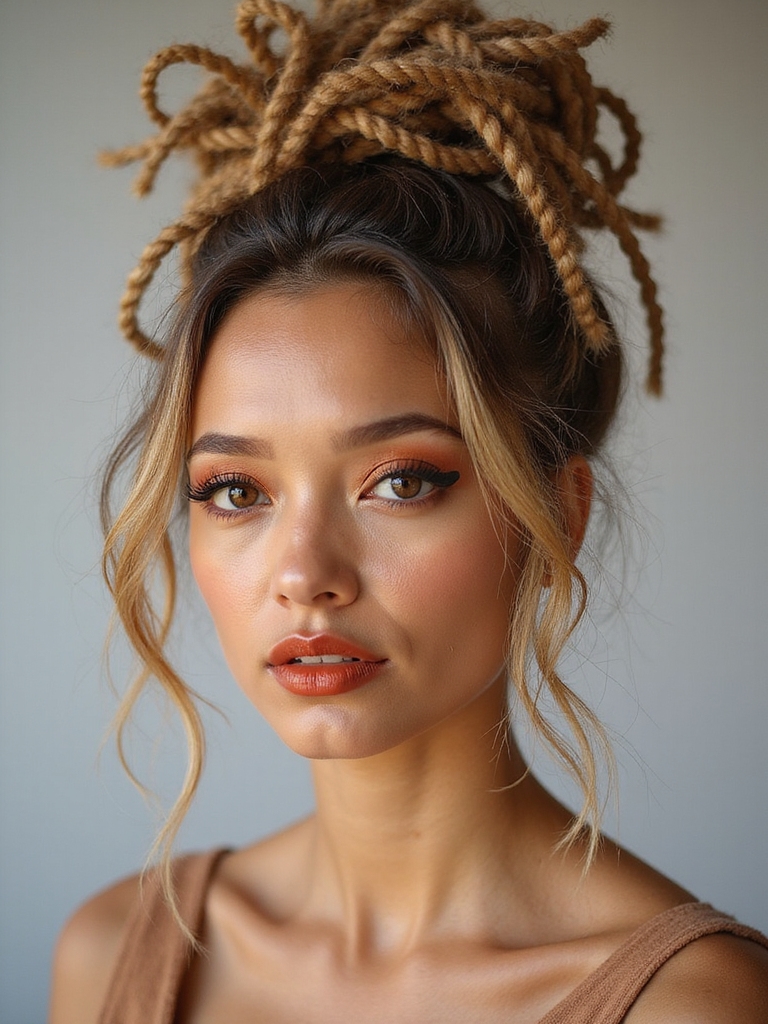
Piling locs into a loose, undone knot with a few tendrils left out to frame the face is close to the fastest styled look on this list.
Gather it loosely rather than pulling tight. A hard, high pull on locs strains the hairline over time, especially with repeated wear.
- Takes seconds, which matters most on a rushed morning.
- The loose tendrils do most of the softening work.
- Suits nearly any loc length, from a fresh set to a fully mature one.
Faux Locs to Test the Commitment First
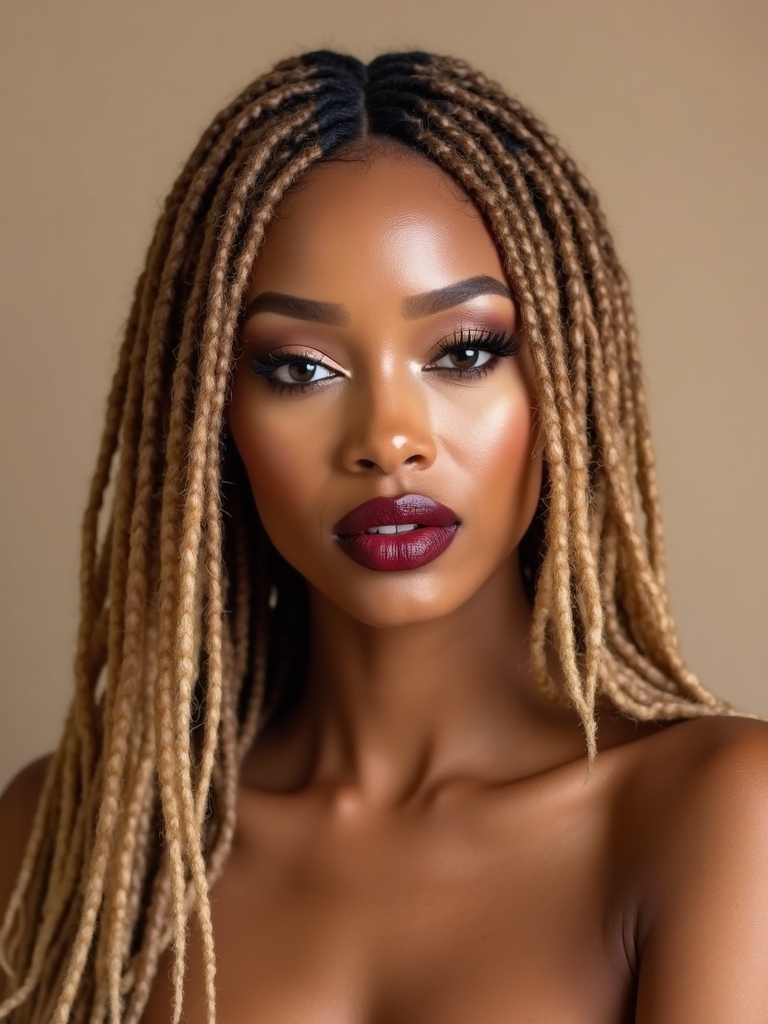
Faux locs build the look temporarily with extensions, installed in hours and removed whenever you decide, with zero permanent change underneath.
The Trial Run Worth Taking
Living with the style for a few weeks tells you more than any photo could: how the length actually feels, whether the daily upkeep fits your life, and whether you’re ready for the years-long commitment real locs ask for.
This is the honest way to test the decision before making it permanent, and it’s worth doing regardless of hair texture, not just for finer or straighter hair.
Micro Locs From a Clean Middle Part
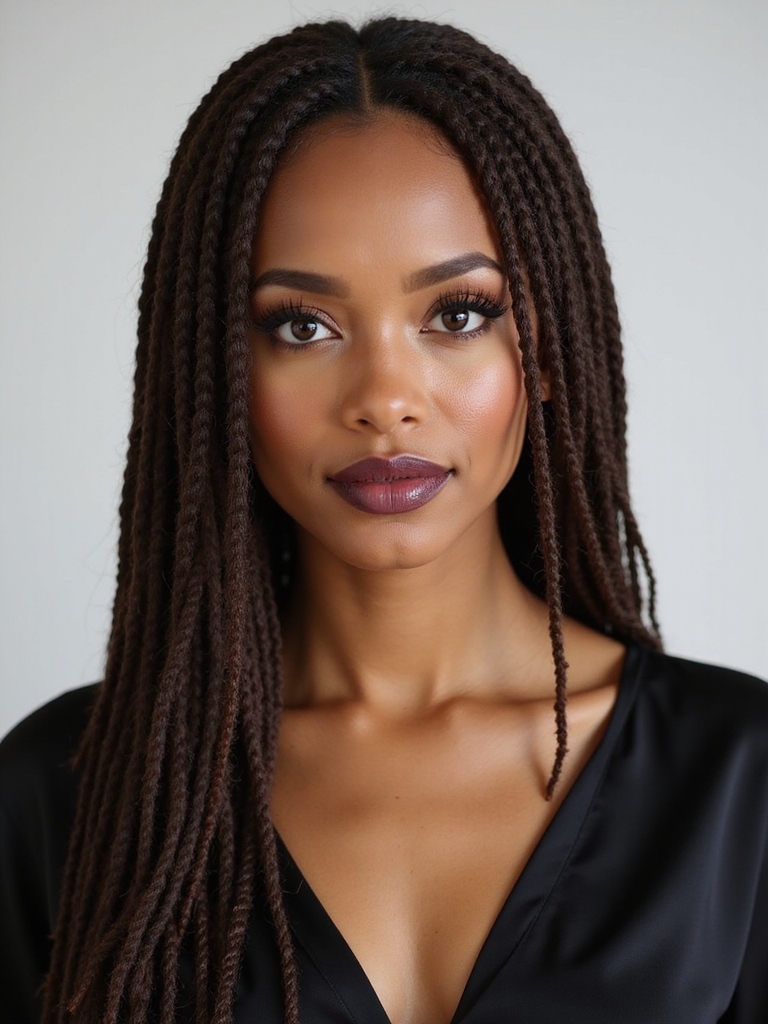
Micro locs are fine and numerous enough to move almost like loose hair, shown here from a clean, straight middle part.
- The small size gives the widest styling range of any loc method on this list.
- A defined part keeps the whole look neat and intentional rather than casual.
- The trade-off is the install itself, which takes longer than any other method here.
ℹ️Why Finer Hair Takes Longer
Straight, fine hair has less natural texture to grip onto itself, so it can take noticeably longer to fully lock than coarser or curlier hair does. That slower timeline isn’t a sign of a bad install. It’s just how the texture behaves.
A Chunky, Face-Framing Loc Bob
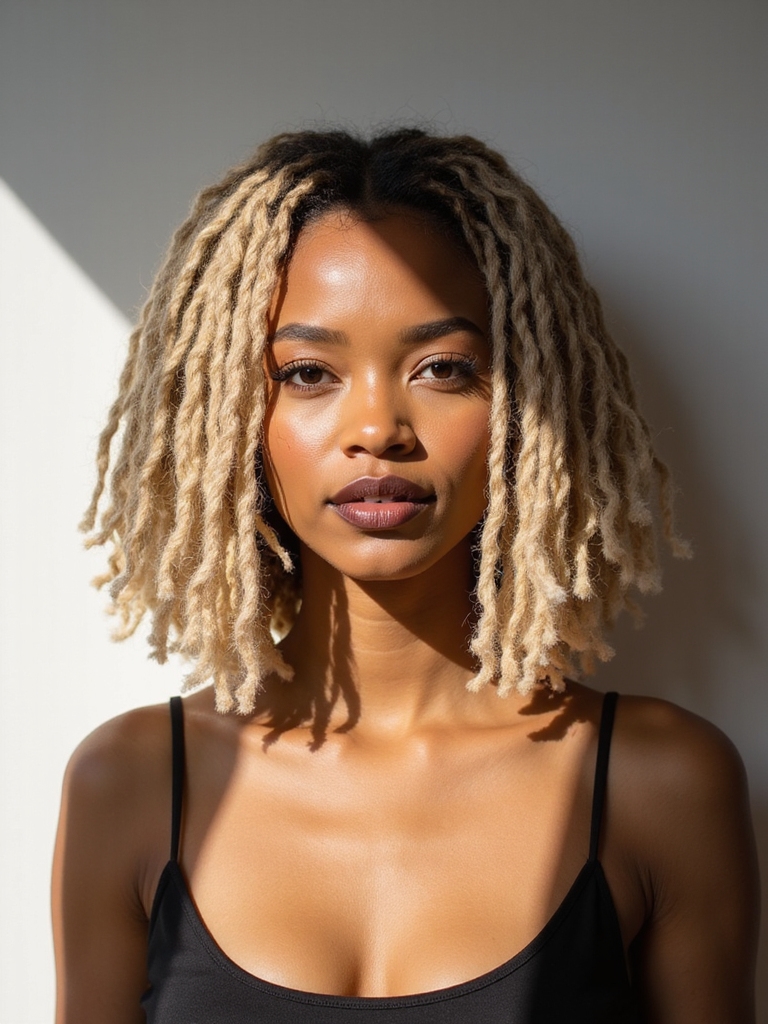
Cutting locs to a chunky, chin-to-jaw bob makes a bold, confident statement that frames the face directly.
The thicker sections and the shorter length read modern and full, with noticeably less day-to-day upkeep than a long set carries.
- Dries faster and sits lighter than a long, heavy set.
- The bolder texture reads intentional rather than unfinished.
- A softer, curved edge underneath eases the transition from long to short.
Braids That Ease Into Locs
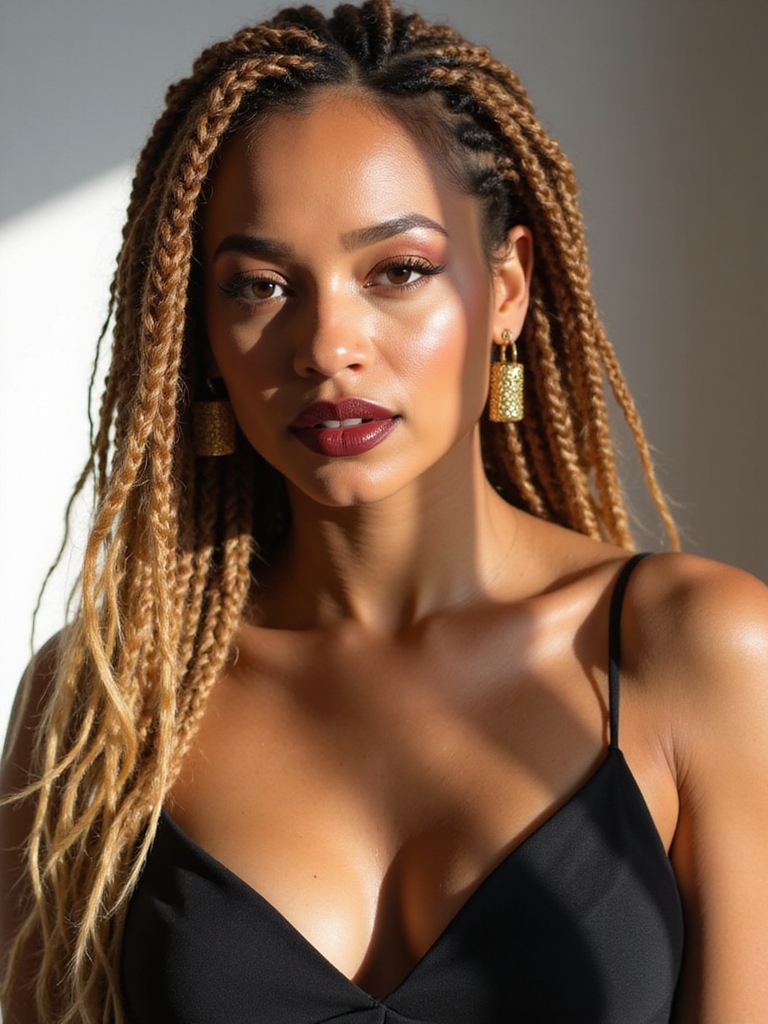
Starting in braids that gradually convert into locs eases the commitment, keeping a tidy, styled look through the entire process instead of sitting through an awkward, in-between stage.
The braids provide structure while the sections underneath settle into actual locs, which removes most of the visual roughness that worries first-timers most about starting out.
This route leans hardest on a skilled stylist of any method here. For more on the styles this eventually opens up, see dreadlocks braids hairstyles.
Space Buns Wrapped in Thread
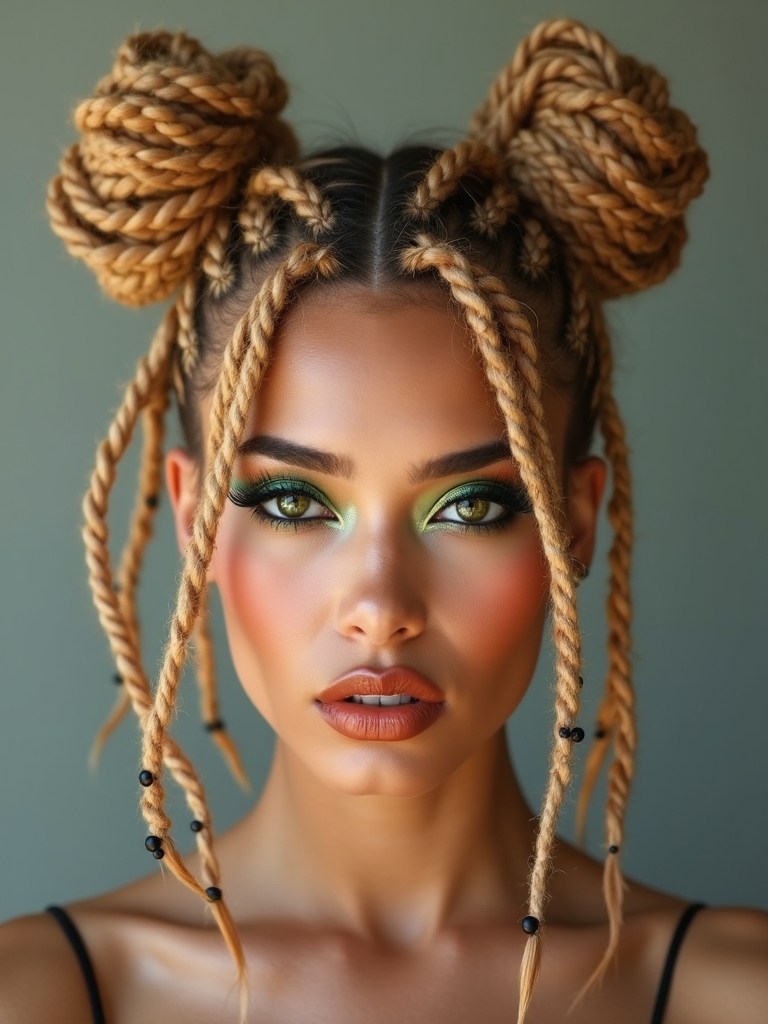
Splitting locs into two high buns off a center part, then wrapping thread or cord around each base, turns a plain set into something playful and detail-forward.
- The wrap adds color and texture and unwinds cleanly whenever you’re ready to take it out.
- Keeping both buns even and the center part crisp is what makes the whole look land.
- For more ways to gather a set up, see dreadlocks bun hairstyles.
A High Pony Tied in Silk
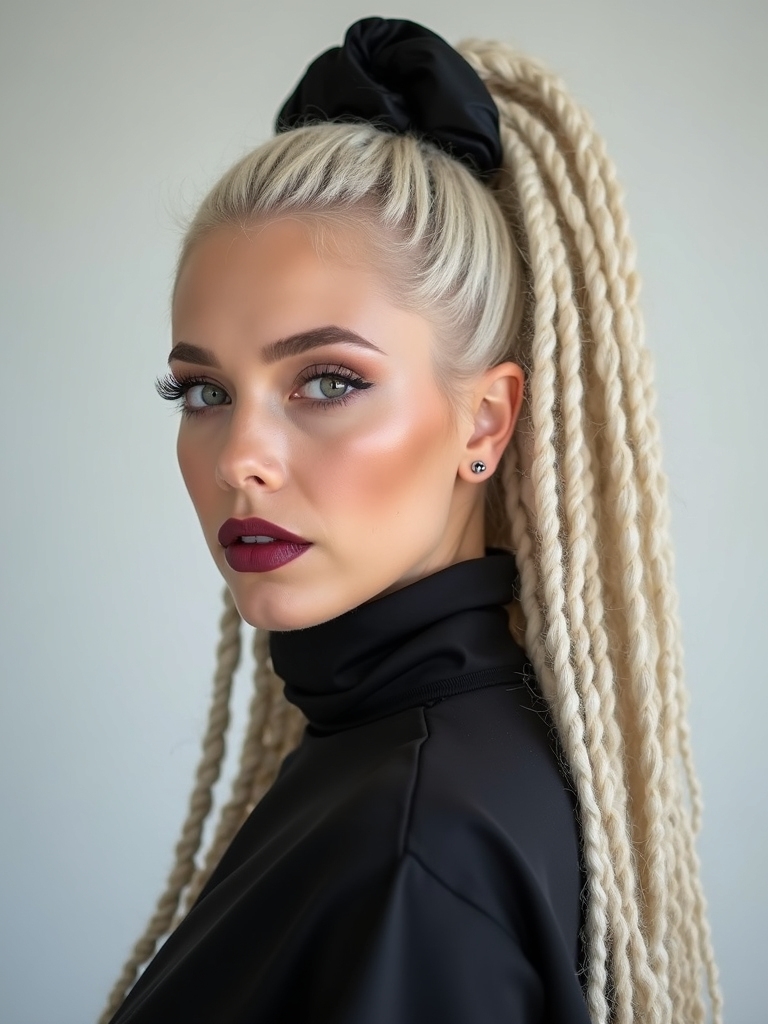
Gathering the full set up and off the face into a high ponytail, tied with a soft, snag-free scrunchie, makes for a practical style built for a workout or a packed, no-time-to-fuss day.
A soft silk or satin tie matters more than it sounds like it should: a tight elastic catches and stresses locs in a way a smooth fabric tie simply doesn’t, especially worn on repeat.
🅰️A Silk or Satin Scrunchie
Glides on and off without snagging. Gentler on locs worn up daily.
🅱️A Standard Elastic
Grips harder and holds tighter, but catches on the surface and stresses locs over repeated wear.
Color That Moves With the Locs

Color on locs ranges from soft, sun-kissed ends to a bolder ombre fading dark roots into lighter tips, and against the texture of a loc it reads especially rich.
Lightening needs a colorist who specifically works with locs, since the dense core lifts at its own pace and the hair still has to stay strong enough to keep locking properly afterward.
A Scarf-Wrapped Updo for Off-Duty Days
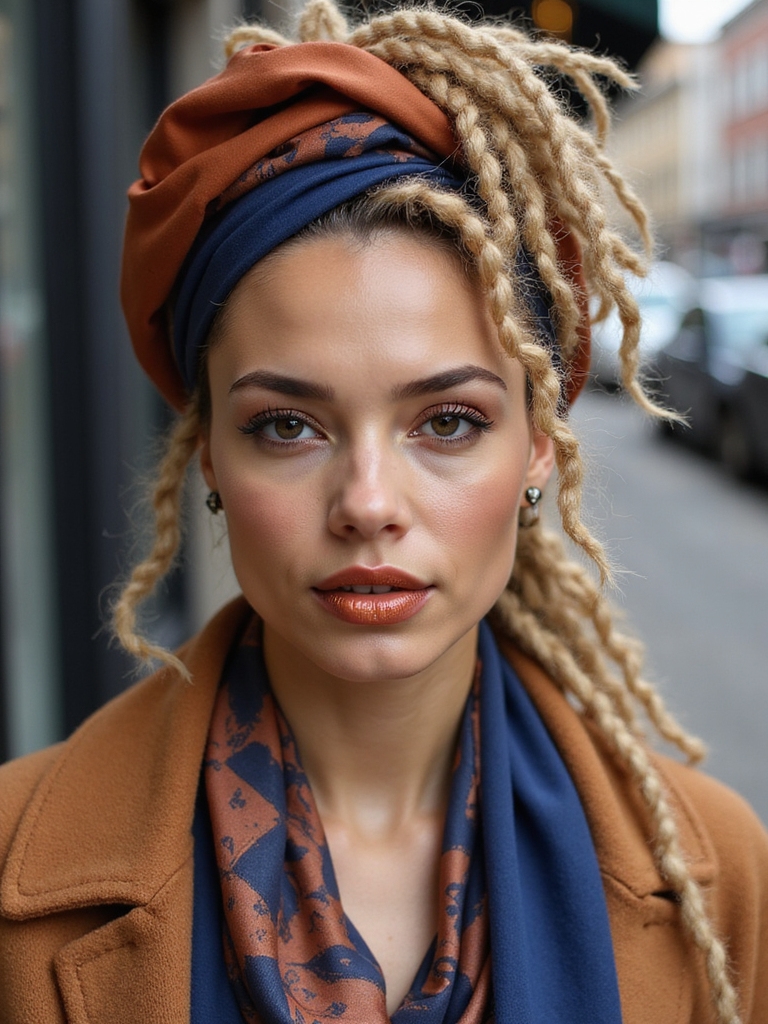
Gathering locs up and winding a silk or patterned scarf around the base, or the whole crown, makes a relaxed, off-duty look that doubles as real protection.
The scarf hides new growth at the root and dresses up a plain set in seconds, and silk or satin fabric specifically reduces the friction that roughs up the surface of a loc over time.
A contrasting scarf color makes a statement; a tonal one reads understated. Either way, it’s a five-minute style that protects while it dresses things up.
Side-Swept Locs Over a Shaved Undercut

Sweeping the full set to one side over a clean, shaved undercut creates a bold, modern contrast between bare skin and full, textured locs.
- The undercut lightens a heavy set by removing weight from one side entirely.
- Reads as the most fashion-forward, editorial option on this list.
- The shaved section needs a tidy touch-up on a regular schedule to stay sharp against the fuller locs.
The shaved side isn’t there to be subtle. It’s there so the full side has something to argue with.
Protecting Locs Overnight
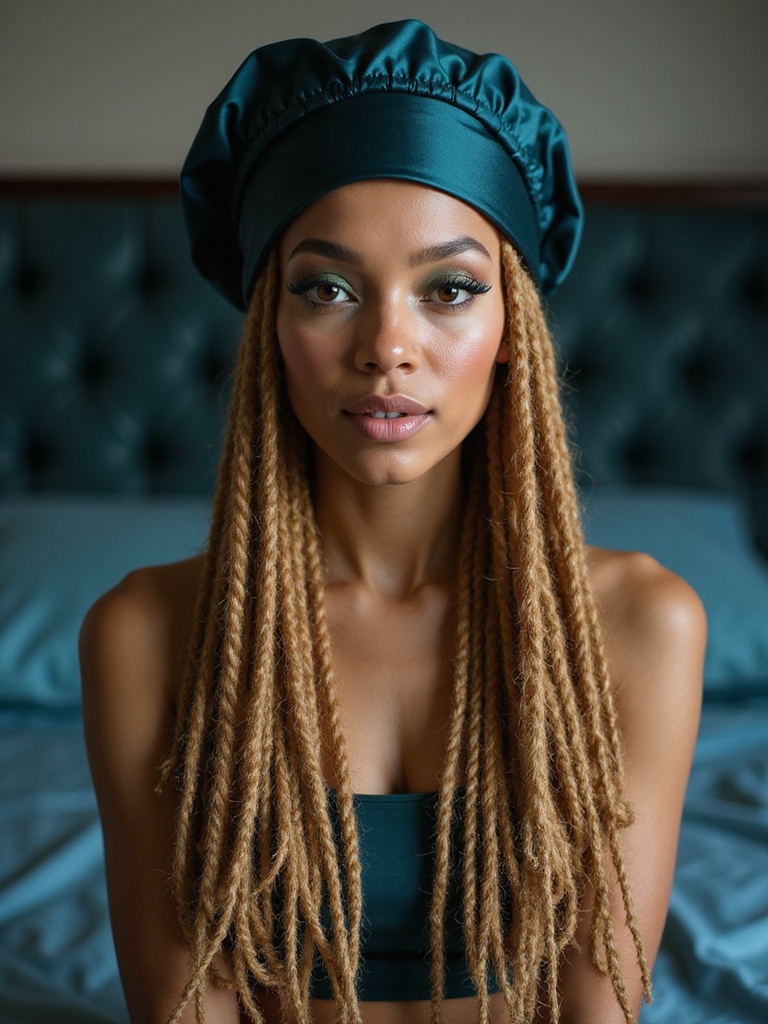
How locs get protected at night matters as much as how they’re styled during the day, especially on finer hair that loosens and frizzes more easily than coarser texture.
The One Habit That Matters Most
A satin or silk bonnet over the entire set removes the friction that a plain cotton pillowcase creates hour after hour while you sleep.
For longer locs specifically, gathering them loosely into a pineapple at the crown before bed keeps the length from getting crushed flat overnight.
Minimalist Locs, Just Clean Edges
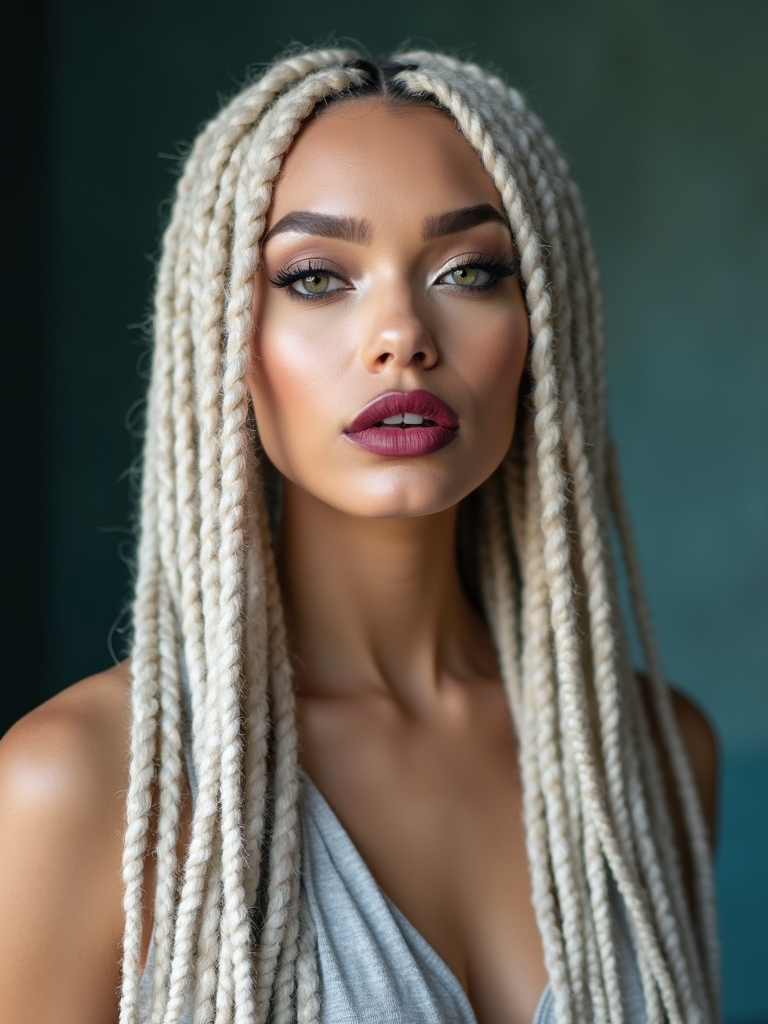
Worn simply, with a clean part and smoothed edges, minimalist locs prove the style doesn’t need an accessory or an elaborate updo to look deliberate.
The locs themselves carry the whole look here. Neatness alone is what separates polished from unkept on a style this plain.
- A tidy hairline and a clean, straight part do most of the visible work.
- Works as the everyday baseline the rest of these looks build from.
- The simplest version to maintain, since there’s no accessory or shape to keep track of.
What to Expect
Expect the early months to be the hardest part, regardless of which look you start with. Finer, straighter hair locks slower than coarser texture, so the budding stage, that rough, half-formed phase, tends to stretch out longer before things settle into real locs.
A retwist appointment with an experienced loctician typically runs $70 to $120, more than a quick add-on service, since finer sections need closer attention to stay stable. Budget the time this asks of you as much as the money, and treat acknowledging where the style comes from as part of wearing it well, not an afterthought. Anyone with curlier natural texture can compare notes in curly locs dreadlocks hairstyles.
A Real Commitment, Worn With Real Respect
Locs on finer or straighter hair are entirely possible, from boho and beachy to sleek and minimalist, but the texture asks for more patience than coarser hair needs, and the style itself asks to be worn with real acknowledgment of where it comes from. Browse more shapes in elegant dreadlocks hairstyles.
If the look has been pulling at you, faux locs are worth trying first, simply to live with the reality of the upkeep before committing to the years-long version.
More Worth Saving