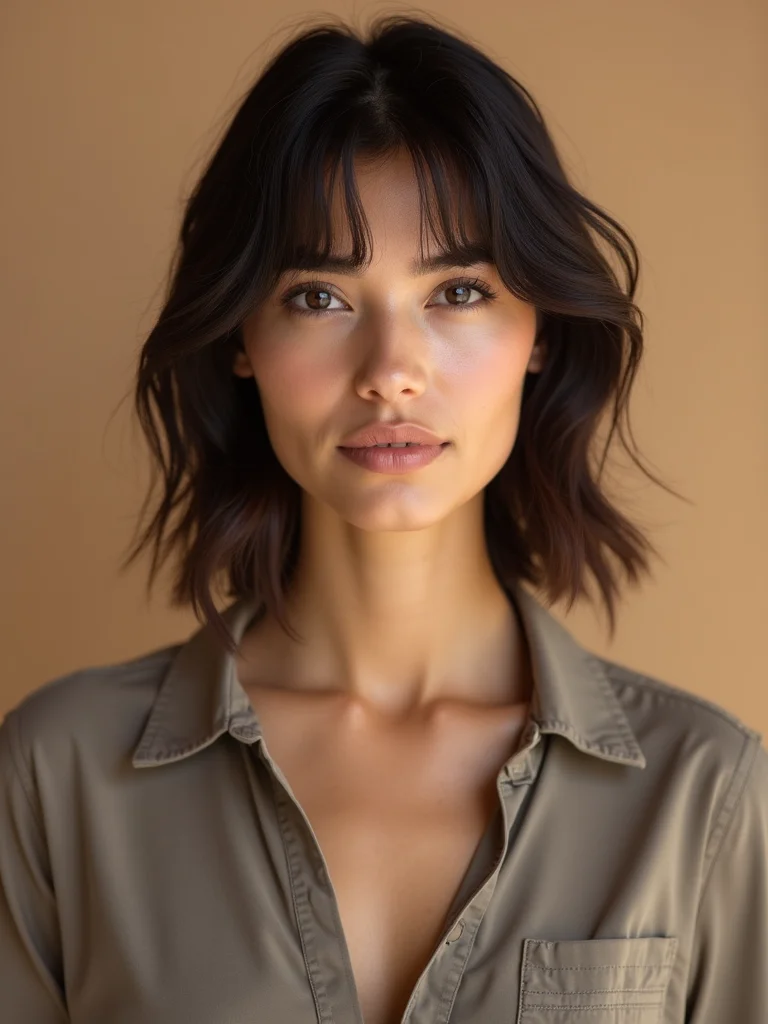
What actually separates a shag bob from a regular bob you asked to be “a little textured”? The honest answer is where the cutting technique lives. A true shag bob keeps a bob’s tidy outer shape while carving choppy, point-cut layers into the interior, so the crown moves and the perimeter still reads clean.
Ten versions follow, each sitting at a different point on that bob-to-shag spectrum, with real notes on which technique gets you there and what it takes to keep up.
Bob Outline, Shag Interior
Every version here balances the same two forces: a bob’s clean perimeter and a shag’s broken, layered inside. Lean toward one and you get polish; lean toward the other and you get movement.
The cutting technique decides everything: point-cutting and razoring for separated ends, feathering to thin weight exactly where it needs to move.
Choppy Layers Carved Into a Bob

This is the shag bob in its rawest form: choppy layers cut straight into bob-length hair so the whole shape moves the second you tilt your head. Run a hand through it and the difference is immediate, short, broken pieces near the crown tapering into a heavier line around the jaw.
How Point-Cutting Builds the Texture
That gap between an airy top and weightier ends is exactly what ties a bob’s outline to a shag’s restlessness. Nothing about it looks accidental once it’s cut correctly. Our shag haircut guide covers the technique across other lengths too.
Point-cutting builds most of the texture here. Rather than slicing straight across, the stylist angles into the ends, breaking up what would otherwise be one solid line. Expect the stylist to work section by section, checking the weight line as they go rather than committing to the whole head at once.

A Sharp Micro Bob With Shaggy Edges

Bring the length up to the chin or shorter and you land on the micro version, a tight, structured shape that still carries a shag’s broken edges. The body of the cut stays smooth and controlled, but the perimeter and the very tips get roughed up.
This sits furthest toward the bob end of the spectrum. Only the outer inch or two gets the shaggy treatment, just enough separation to soften the line without dissolving the shape. For even shorter, see our pixie bob guide.
At this length, precision matters more than it does anywhere else on the list. A half-inch of miscalculation shows immediately, so this isn’t the cut to try with a stylist you haven’t seen do detailed, controlled work before.
Where do you want to land on the spectrum?
🎯Bob-Leaning
Smooth, weighty body with just enough texture at the edges to keep it from looking stiff.
🎯Shag-Leaning
Movement built through the whole head, the bob outline mostly a suggestion by the time the layers are in.
A Curtain Fringe That Blends Into the Layers

Add a center-parted curtain fringe and the whole front becomes one continuous, face-framing sweep. The fringe opens at the cheekbones and feeds directly into the layers below, with no hard seam where the bangs end and the cut takes over. Our curtain bangs guide covers the fringe technique on its own.
- The blend at the hairline is what keeps it soft rather than choppy.
- Tousled ends underneath carry the shag’s movement.
- Flatters nearly every face shape at this length.
Curly Hair Cut Into a Round, Springy Shape

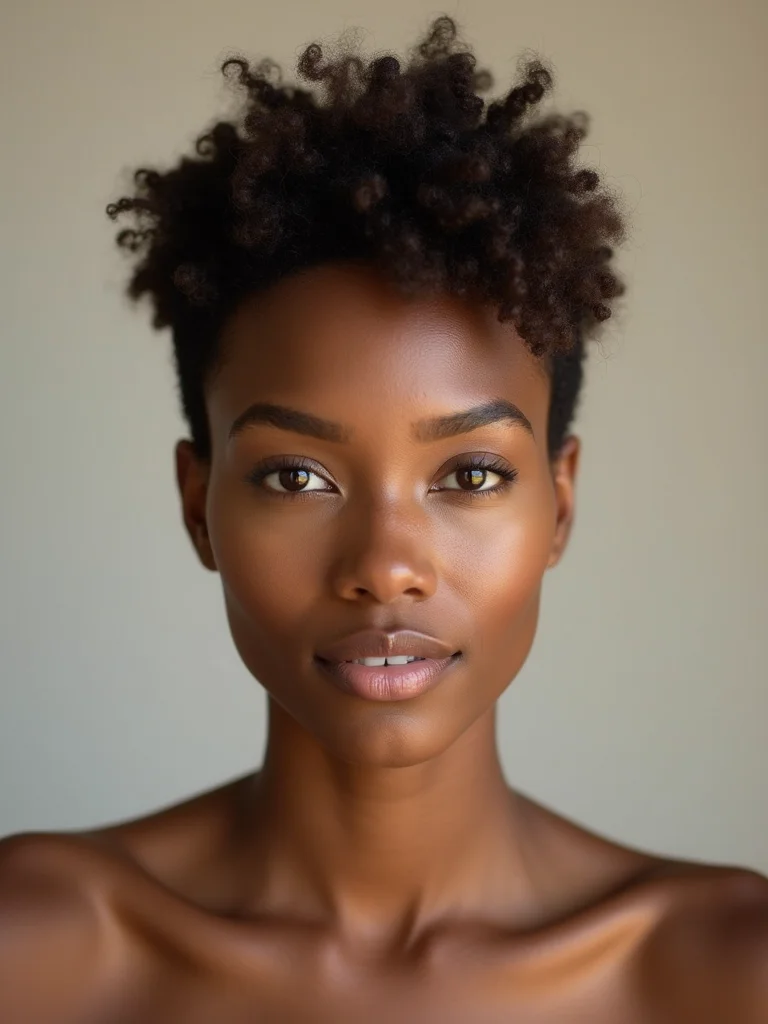
Curls and a shag bob suit each other unusually well. The layered interior gives coils room to stack and spring upward instead of piling into a dense triangle, so the finished shape reads round and dimensional at bob length.
The one rule that can’t be skipped: shape curly hair dry, coil by coil, so the stylist can account for how much each curl pulls up once it’s finished. A wet cut routinely lands shorter and less even than planned. Our curly wolf cut guide goes deeper into cutting curls dry.
- Always cut dry to account for shrinkage accurately.
- A curl cream defines the shape once it’s cut.
- The natural curl supplies most of the shag’s texture on its own.
Sleek Body With Piecey Face-Framing Layers

This version leans hard toward the bob side of things: smooth and glossy through the body, with piecey layers doing the shag’s job right at the face. The bulk of the hair stays weighty and controlled, the way a true bob hangs.
Shorter framing pieces around the cheeks and jaw carry the separated movement instead. Keeping those front pieces piecey rather than fully feathered is what stops the whole look from reading soft and blended.
- Polish comes first here; texture is a supporting detail.
- Face-framing pieces fall along the cheekbone and jaw.
- A drop of smoothing serum keeps the body glassy.
“Curly clients ask me the same question every time: will this actually hold its shape? Cut dry and in pattern, it does. The coils just need to be trusted to do their own work.”
Soft Waves Through a Feathered Mid-Length Bob

Push the length toward the collarbone and this hybrid turns soft and wavy, feathered layers giving loose waves room to bend and bounce through the cut. It sits at the most relaxed, beachy point on the whole spectrum.
Feathering here means a light, tapering cut along the ends that pulls out weight without shortening the length. That’s what lets a wave actually move instead of clumping into a single sheet.
It rewards naturally wavy hair most, though straight hair can borrow the bend with a sea-salt spray and a diffuser. For longer, looser waves, see our long shag cut guide.
Razored Ends for an Airy, Weightless Feel

A razor in practiced hands gives this hybrid its lightest possible feel, slicing the ends into fine, feathered points instead of blunt edges. The result reads like more hair than is actually there.
Why Fine Hair Takes to This So Well
That’s exactly why razoring flatters fine hair looking for the appearance of separation and movement it can’t build on its own. Pick up a section and it actually feels weightless, the tips fanning into soft points.
The technique needs a light hand, though. Over-razored hair, especially fine or already-fragile strands, can thin out fast instead of gaining texture.
A Blunt Outline With Shag Hidden Inside

This version answers a specific request: keep the blunt bob’s sharp line, but add a little movement underneath it. The outer perimeter stays clean while the shag lives entirely inside, in layers you can’t see from the outside.
Internal layering removes weight from within, letting the blunt shape move and breathe without losing its crisp edge or going stiff and helmet-like.
It’s the most discreet version on this list, structure on the outside, quiet texture underneath. Thick hair benefits especially, since the internal layers manage bulk the outline never has to show.
A razor is the one tool I trust more than shears for fine hair that wants texture without losing density it doesn’t have to spare.
A Deep Side Part With Hybrid Bangs

A deep side part changes this cut completely, sweeping the layers and a set of longer, piecey bangs across the forehead on a bold diagonal. Those bangs sit somewhere between a full fringe and a face-framing piece, connecting the swept front into the layers below.
The part itself adds instant root lift and a flattering asymmetry, favoring round and square faces especially by drawing the eye up and across. A round brush sets the sweep; a little product holds the diagonal in place. Because the part is doing real structural work here, switching back to a center part temporarily changes the whole shape rather than just the styling, so treat the deep side part as part of the cut itself, not an optional finishing touch.
Gritty Roots Against Glossy Ends

This version plays a genuine contrast game: matte, textured roots against smooth, glossy ends. The crown and mid-lengths stay piecey and roughed up, carrying all of the shag’s movement, while the very ends get smoothed into something sleek and shiny.
Two Finishes, One Deliberate Clash
The two finishes together read as deliberate rather than mismatched, since the transition between them is built into where the layers fall, not left to chance.
A matte paste or texture spray roughs up the roots and crown, then a flat iron smooths the ends before a touch of shine serum finishes them glossy. It’s the most editorial way to wear this hybrid, and a reshape runs $50 to $85 at most salons to keep the two textures distinct.
Keeping the Contrast Sharp
Whatever point on the spectrum you land on, the shape depends on its layers more than a plain bob does, so the trim cycle matters more than the daily styling. Bob-leaning versions can usually stretch to eight or nine weeks between visits, since there’s less internal texture to lose its edge. Shag-heavy versions need a shorter cycle, closer to six weeks, because the choppy layers soften and blur into the perimeter faster.
Day to day, work with the texture instead of smoothing it flat. Rough-dry the hair first, then finish with a matte paste or texture spray worked through with your fingers rather than a brush. Save any glossy product for the very ends on the finishes that call for shine, since a heavy hand near the roots flattens exactly the movement the cut is built to show off.
Bring the same photo references back to every appointment, even the touch-up ones. Stylists change small details over time without meaning to, and a shape this dependent on precise layering can drift noticeably after two or three visits if nobody is checking it against the original reference. Keep a quick note of exactly which version you asked for the first time, since ‘the shaggy bob thing we did last time’ rarely gives a new stylist enough to work from.
Shag Bob Haircut Questions From the Chair
?How is a shag bob actually different from a bob that’s just been layered?
The technique. A shag bob relies on point-cutting and razoring to break the ends into separated pieces, not just thinning with standard layers. Regular layering can add movement, but it rarely produces the shag’s specific piecey, broken texture.
?Can I go from a completely blunt bob straight into this cut?
Yes, in one appointment, though how dramatic the change feels depends on how much internal layering your stylist adds. Starting with the blunt-perimeter version is the gentlest bridge if you’re nervous about losing the clean line entirely.
?Does this cut work if my hair is already color-treated?
Generally yes, as long as the hair is in reasonable condition. Razoring specifically asks for healthier strands, since a blade can rough up hair that’s already fragile from color processing more than it flatters it.
?How do I know if I should lean bob-heavy or shag-heavy?
Think about your styling patience more than your hair type. Bob-leaning versions need less daily effort since the shape does more of the work; shag-heavy versions reward people who actually enjoy scrunching in product every morning.
?Will growing this cut out be complicated?
Not particularly. Because the layers are already internal and blended rather than stacked in visible steps, most versions grow into a slightly longer shag or lob without an awkward in-between phase.
Find Your Point on the Spectrum
A shag bob works because it refuses to fully commit to either side: a bob’s tidy outline on one hand, a shag’s restless movement on the other, both present at once depending on how the layers get placed.
Decide roughly where you want to land, bob-leaning and polished or shag-leaning and textured, bring a clear photo, and find a stylist who can show real point-cut, razored work rather than just a trim with a few extra snips.
Next Up