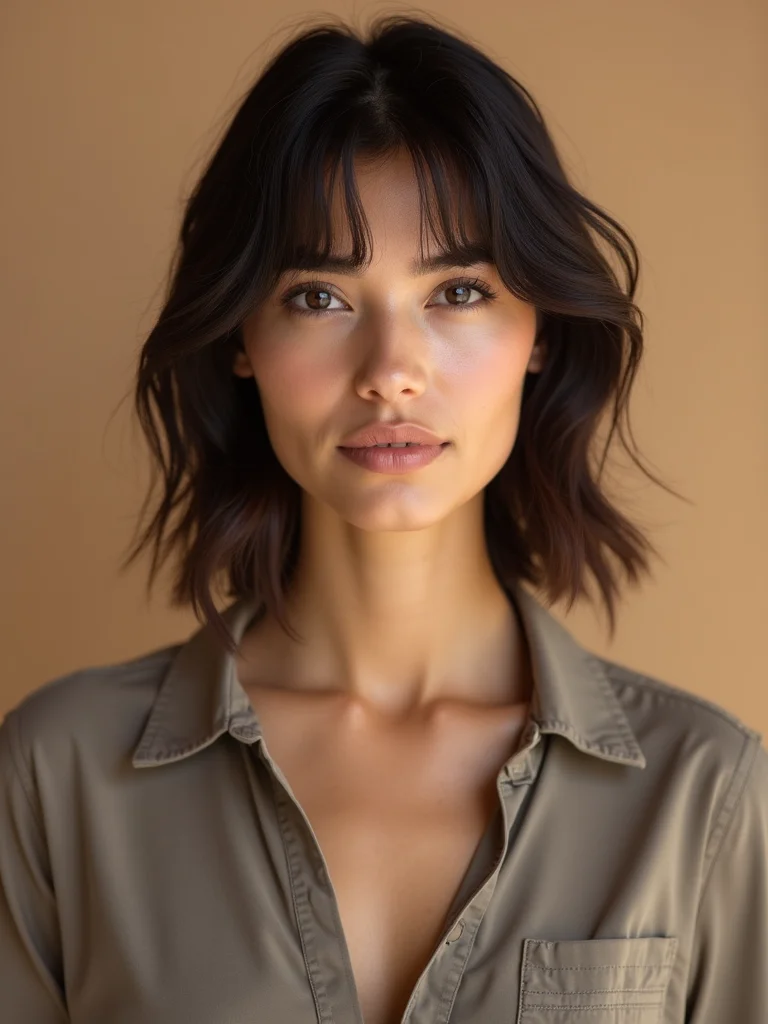
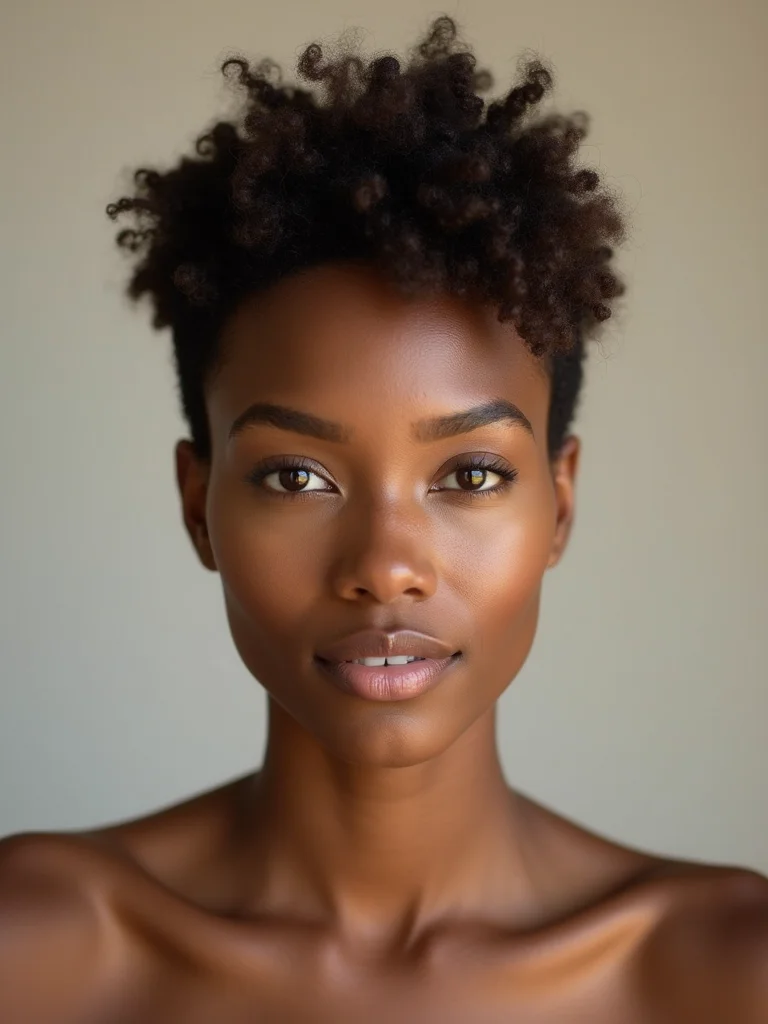
What actually separates long curtain bangs from a fringe that’s simply grown out? The part, and where the shortest piece lands. This fringe splits down the center or close to it, and each side sweeps back and lengthens as it travels toward the ears, so the face gets a real frame instead of a flat wall of hair across the forehead.
The fifteen versions below run from feathered and undone to sleek and precise, each one built around a different hair type, face shape, or existing haircut underneath it.
What Actually Makes a Fringe a Curtain
A long curtain fringe parts near the center and sweeps back on both sides, with the shortest point usually landing somewhere between the cheekbone and the jaw. Because the pieces stay long, they blend into the surrounding hair as they grow, so there’s no sharp edge to maintain and no obvious in-between stage to wait out.
The shape adapts to nearly any face and texture, since the part placement and the length of the shortest piece can both shift independently of everything else about the cut.
Curtain Bangs Blended Into Face-Framing Layers

Blending a curtain fringe straight into face-framing layers turns the two into a single moving frame, with no visible seam marking where the fringe ends and the layers begin. The shortest piece typically starts at the cheekbone and lengthens steadily as it travels back.
By the sixth week past most cuts, a fringe starts showing a visible demarcation line as it grows out. This blended version skips that stage almost entirely, since the surrounding layers simply absorb the extra length as it comes in.
A stylist cutting this way treats the fringe as part of the face-frame plan from the very first snip. That distinction is what keeps the blend looking fully intentional.
Feathered Curtain Fringe in Tousled Waves

On wavy hair, a feathered curtain fringe settles into the existing texture, avoiding the freshly-cut-in look entirely. The natural bend carries the fringe into soft S-shapes that echo the surrounding lengths, while feathered ends keep each piece light and separated.
Why waves are the most forgiving pairing
This pairing asks the least of any version here. The wave itself does most of the visible work, hiding small unevenness and adding movement without much extra effort. Our curtain bangs hub has more length and texture pairings.
A sea-salt spray scrunched through damp hair, followed by an air-dry, covers the whole routine. Twisting a few fringe pieces away from the face while they dry adds extra shape for anyone who wants it.
Match your morning to a drying method:
1Five minutes or less
Air-dry with a texture spray and walk away; the wave carries the fringe on its own.
2A little extra shape wanted
Twist a few pieces away from the face before they fully dry for a softer curve.
Center-Parted Curtain Bangs on a Sleek Lob

A clean center part turns a long curtain fringe sharp and modern, drawing a vertical line down the middle of the face that looks editorial and precise. On a sleek lob, the fringe drapes evenly on both sides, mirroring the polish of the cut underneath.
The precision of the part carries most of the visual weight here, more than the fringe length itself. A slightly crooked part undoes the effect faster than a slightly uneven fringe ever would.
- Works best when the fringe is long enough to fall past the brows and blend into the lob.
- A flat iron smooths both the fringe and the part line in one pass.
- Suits balanced and oval face shapes particularly well.
Curly Curtain Bangs With Defined Coils

Curly hair wears a curtain fringe with real character, the coils springing into a soft frame on either side of the face. Because the fringe stays long, the curls have room to fall into shape, provided the dry-cut technique respects how curls actually behave.
- Cut dry, one coil at a time, never on stretched or wet hair.
- Expect real shrinkage upward once the curls fully dry and settle.
- A lightweight curl cream keeps the coils defined without added weight. See our curly curtain bangs guide for more curl-specific detail.
Two ways this can go, depending on the cut:
🎯Cut wet or stretched
Shrinks up noticeably shorter than planned once dry; risky unless the stylist accounts for it in advance.
🎯Dry cut, one coil at a time
Settles exactly where planned, since the stylist sees the true spring before making a single cut.
Flicked-Out Sixties-Inspired Curtain Bangs

For drama, a long curtain fringe can flick outward at the ends in a voluminous, retro-leaning lift. The fringe sweeps away from the face and turns up at the tips, adding bounce and a bit of swing to the whole front section.
- A large round brush, tension, and a cool-shot finish set the flick.
- Opens up the face more than the softer, tucked-under versions of this fringe.
- A light-hold spray keeps the volume without stiffening the movement.
Long Curtain Fringe on a Shag
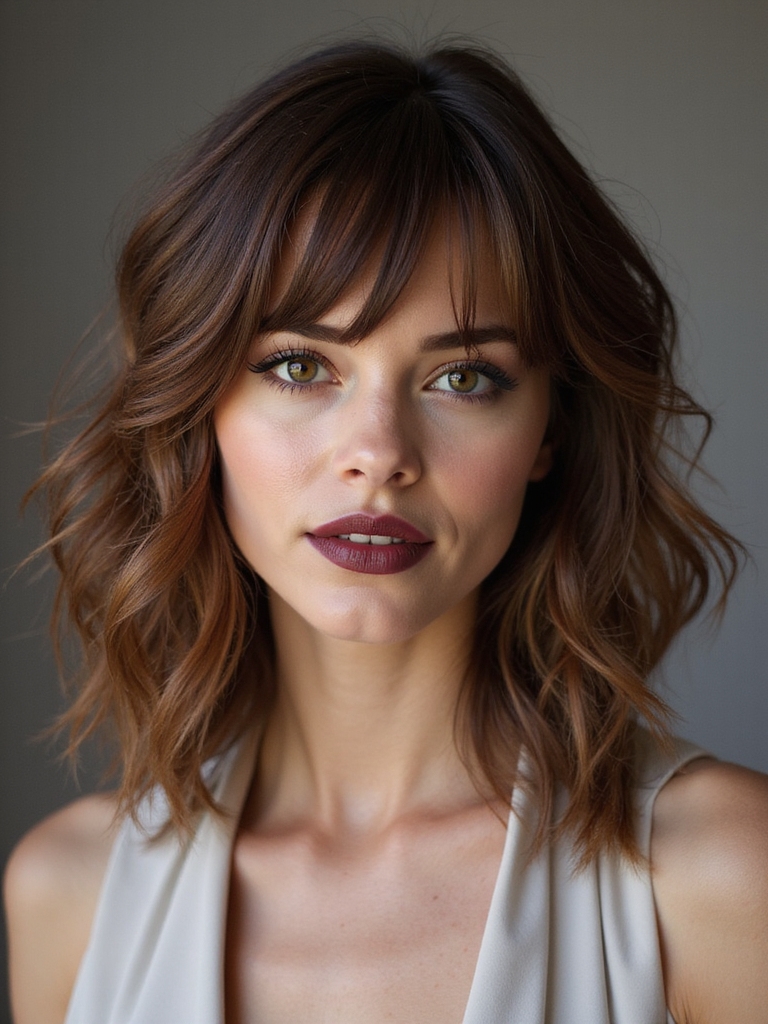
A long curtain fringe and a shag haircut share the same underlying logic: both lean undone and textured, so pairing them lets the fringe melt into the layers and the whole cut move as one piecey shape.
On a shag specifically, the fringe usually runs a touch longer and shaggier than the blended version, with point-cut ends that break it into separated pieces throughout.
- Comes across cooler and rougher than a polished, blended curtain fringe.
- A texture spray scrunched through dry hair brings out the separation.
- Skip smoothing creams here; they flatten the texture this pairing depends on.
Chin-Grazing Curtain Bangs on Medium Hair

Taking the fringe all the way down to the chin-grazing length builds a stronger, more defined frame than a shorter curtain allows. This version sits at the boldest end of the range, framing the whole face rather than sweeping past just the cheekbones.
On medium-length hair, that longer fringe balances the overall proportions, giving the cut a clearer shape around the face. Longer face shapes in particular gain width right where a chin-grazing line lands.
Because the pieces stay long, they still tuck behind the ears on a busy day. A quick sweep back into the lengths is usually all the styling this one needs.
Razored Curtain Bangs With Long Layers

Razored ends give a long curtain fringe an airy, feathered finish that pairs naturally with long layers underneath. In place of a clean scissor line, the razor tapers the ends into fine, wispy tips, so the fringe feathers away into softness.
Straight and wavy hair take to this technique especially well, where the razored finish adds weightless movement. On very fine or already-fragile hair, the same blade can leave ends looking thin and worn, without the intended feathered softness.
- Worth a conversation with the stylist first on fragile or over-processed hair.
- A little texture spray separates the feathered pieces after styling.
- The lightest, airiest version of this fringe on the whole list.
Tapered Curtain Bangs on Straight Hair

On poker-straight hair, a long curtain fringe looks most polished when it’s tapered directly into the surrounding lengths. The fringe melts into the hair beside the face with no visible end point, landing as one smooth, glossy line.
Why tapering beats a hard edge here
Tapering is what keeps straight hair from reading as blocky at the fringe’s edge. Cutting the inner edge of each piece slightly shorter than the outer edge lets the whole side of the face flow as a single continuous shape.
A center part, or one set just slightly off, feeds the sweep evenly on both sides. Smoothing with a flat iron, then finishing with a light shine product, completes the polished look.
Side-Swept Curtain Bangs

A curtain fringe doesn’t have to sit perfectly symmetrical. Swept to one side from a deeper part, it picks up a touch of asymmetry, the heavier side doing most of the framing while the lighter side tucks back and out of the way.
- The easiest way to add edge to the classic shape without a single new cut.
- A deeper part shifts visible weight to one side for an asymmetric frame.
- Softens a strong jawline through that same diagonal line.
Two terms worth knowing before this conversation:
📖Center part
A part running straight down the middle of the scalp, splitting the fringe evenly on both sides.
📖Deep side part
A part set well to one side, shifting most of the hair’s weight and creating an asymmetric frame.
Piecey Curtain Bangs With Boho Waves

A piecey, undone fringe finishes loose, boho waves with the same relaxed energy. The fringe breaks into separated, textured pieces that catch the wave pattern and carry that relaxed, worn-in feeling straight to the face.
- Looks its best on second-day hair, once some natural texture has built up.
- Working a little dry shampoo through the roots brings out the grit.
- The most festival-ready, low-effort version of this fringe.
Draping Curtain Bangs With a High Ponytail

One advantage of a long curtain fringe shows up specifically when everything else goes up. Left to drape while the length pulls into a high ponytail, the fringe keeps the face softly framed, so the pulled-back style keeps a soft edge throughout.
Leaving the curtain pieces out before gathering everything else, then shaping them into place with a quick blow-dry or a curling wand, turns a plain high pony into something considerably more polished.
Curtain Bangs on Waist-Length Hair

Very long hair can start to feel like one heavy curtain of its own. A fringe breaks that up. It’s the simplest way to add shape without cutting a single inch of actual length, and on waist-length hair, the fringe adds a frame around the face that draws the eye upward.
Because curtain bangs are already long by design, they suit very long hair naturally, blending straight into the lengths so the whole cut reads as one continuous piece.
This pairing comes up often for anyone mid-grow-out, since it gives the sense of a fresh cut without sacrificing any of the length already grown.
Elongated Curtain Frame on a Layered Bob

On a layered bob, an elongated curtain frame stretches the whole shape, the long fringe pulling the eye downward so the cut reads longer and softer than a blunt bob would on its own.
The curtain pieces connect directly into the bob’s existing layers for one continuous frame, and that elongating effect is especially kind to rounder face shapes. Our bob with curtain bangs guide has more bob-specific pairings.
- The long fringe lengthens a bob that might otherwise look rounded.
- Curtain pieces blend directly into the bob’s layers.
- Works on straight through wavy textures without much adjustment.
Where This Pairing Can Go Wrong
Cut the fringe noticeably shorter than the bob’s face-framing layers, and the elongating effect disappears, replaced by a visible step between two unrelated lengths. The fringe needs to follow the bob’s existing layer plan closely.
Heatless Styling for Long Curtain Bangs

Shaping a long curtain fringe doesn’t require hot tools at all. Zero heat needed. A couple of clips or a single roller, set while the fringe is still damp, trains the sweep just as effectively as a blow-dried version.
- Split the damp fringe down the middle and sweep each side back before clipping.
- One roller at the crown overnight sets the shape by morning.
- A gentler routine than daily heat styling, at about half the time investment.
Long Curtain Bangs, Answered
?What’s actually different between a curtain fringe and bangs that simply grew out?
A grown-out fringe usually still has one blunt edge somewhere in the mix, left over from the original cut. A true curtain fringe is shaped on purpose with graduated lengths built in from the start, so it drapes cleanly from day one, with no months-long softening period needed. Our long bangs guide covers other low-upkeep length options too.
?Can curtain bangs work on very fine, thin hair?
Yes, often better than a blunt fringe does. Fine hair tends to show gaps at a hard, straight edge, while the graduated lengths of a curtain shape hide sparseness by never presenting one solid line for the eye to judge.
?How far apart can trims be stretched with this fringe style?
Considerably farther than a blunt or short fringe allows, since the length blends into the surrounding lengths instead of needing a fixed edge maintained. Most people stretch a shaping trim to about twice as long as they would with a short, blunt style, and a standalone fringe trim usually runs around $25.
?Does a curtain fringe need to be parted exactly in the center?
No. A slightly off-center part or a fully deep side part both work well, and shifting the part is often the easiest way to change the whole feel of the fringe without cutting anything new.
?Will curtain bangs work if my hair has a cowlick at the hairline?
Usually, though the part may need to sit slightly off from where the cowlick naturally pushes the hair. A stylist can angle the shortest pieces to work with that growth pattern, sidestepping a daily fight with it.
Fifteen Versions, One Underlying Question
Every version above solves the same basic question a little differently: how long, how much sweep, and where the shortest piece should land. A softly feathered fringe and a razor-sharp center part start from that same question and end up looking nothing alike.
Save whichever one matches the texture already growing on your head, and bring it to the next appointment, well ahead of attempting to describe it from memory. Our curtain bangs on long hair guide covers even more length-specific variations.
More Worth Saving