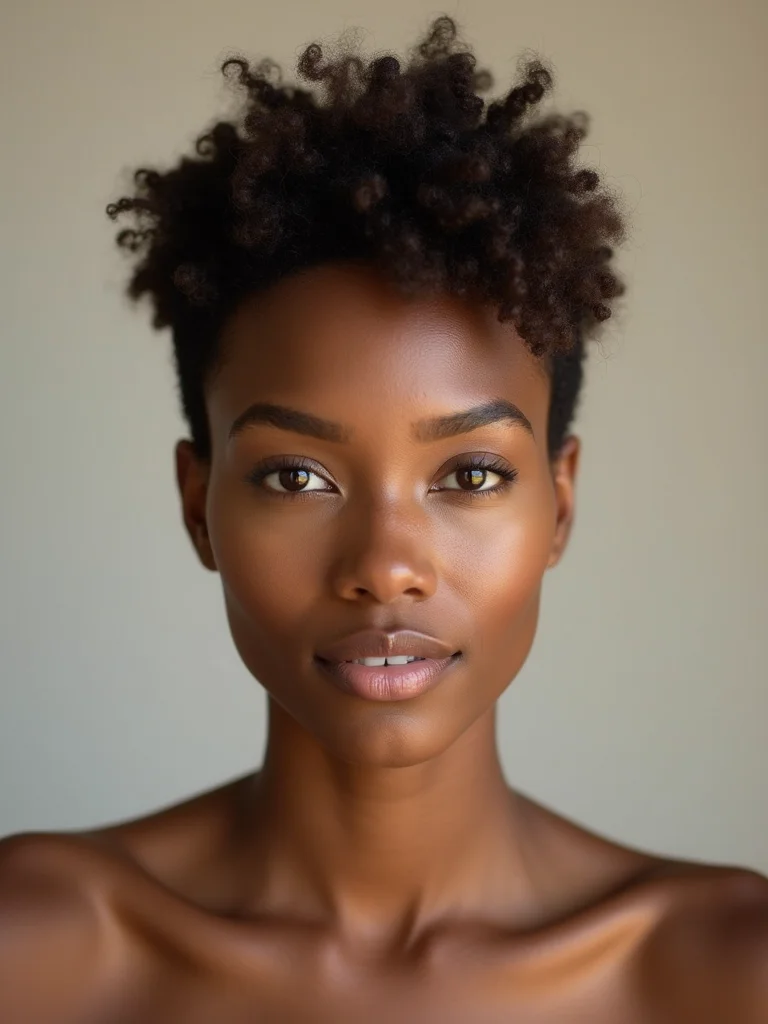
Run a hand through fresh bangs on day one and the whole face changes instantly. Run that same hand through them on a rushed Tuesday morning three weeks later, and what’s actually changed is the routine underneath, not just the reflection.
Seven bob-and-bangs pairings follow, each one weighed by what it actually adds to a morning, not just how it looks in a single photo from the chair.
The Real Cost Is Time, Not Just Trims
- Curtain and side-swept bangs add almost nothing to a morning routine; blunt and micro fringes add real minutes, every day.
- A fringe almost always needs its own trim before the bob does.
- Curly bangs must be cut dry, in the hair’s own pattern, or the length comes out shorter than planned.
Sleek Glass Bob With Blunt Fringe

This is the highest time-cost pairing on the whole list. A smooth, glass-finish bob and a clean, straight-across fringe both need a flat iron and real technique to hold their line, which means the morning routine grows by real minutes, not seconds. The two lines echo each other closely enough that they read as one deliberate shape rather than a cut with bangs added on afterward.
Every part of it has to be precise, since a glass finish shows the smallest flaw more than a softer style ever would. Anyone drawn to the look for special occasions rather than daily wear might ask a stylist about a softer version of the same idea, one that still reads sharp in photos without demanding a flat iron every single morning.
- Plan on around $65 for the fringe trim alone, on top of the bob’s own schedule
- Best on straight, healthy hair; wavy or curly texture fights the glassy finish
- By week three, the fringe typically needs its own touch-up before the bob does

Tousled Wavy Bob With Wispy Curtain Bangs

At the opposite end of the time scale, soft waves and center-parted curtain bangs add almost nothing to a morning. The bangs blend straight into the waves, so there’s no separate, high-maintenance piece to manage on top of the rest, and the whole look holds up whether the styling gets five minutes or zero.
A sea-salt spray scrunched through damp hair covers both the bob and the fringe in one step, which is most of the reason this pairing gets suggested so often as the easy option for someone who has never worn bangs before and wants to test the idea without much risk. Curtain bangs also flatter an unusually wide range of face shapes, softening a round or square jaw and adding balance to a longer face, which is rare for any fringe to manage on its own.
- Curtain bangs pin back flat with a couple of clips on days the forehead needs air
- Grows out with no real awkward in-between stage to manage
- The lowest daily-time pairing on this entire list
Before Booking the Glass Pairing
This combination photographs best on day one, straight from the chair. Anyone who won’t reach for a flat iron most mornings should ask to see how it looks air-dried, in natural light, before committing to the cut.
Soft Layered Bob With Side-Swept Bangs
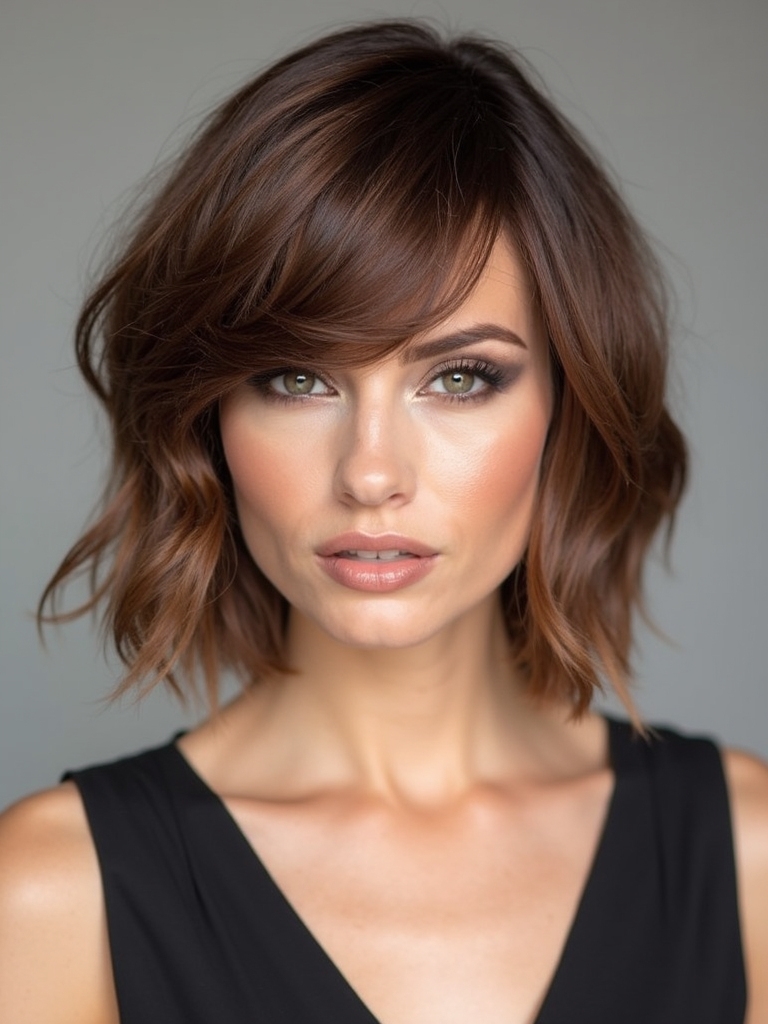
Side-swept bangs sweep across the forehead on a diagonal, softening the whole face, while gentle layers through the bob add movement without extra bulk. On a round face the diagonal adds a slimming angle; on a longer face, the same sweep and the soft layers break up the length.
A Safe Middle Ground
The time cost sits comfortably in the middle: there’s no flat-iron-every-morning demand, but the diagonal does need a quick pass with a round brush to keep it falling at the right angle rather than sitting flat. A light-hold spray at the end holds the sweep through a full day without leaving anything stiff or noticeably styled.
It flatters an unusually wide range of face shapes, so this specific pairing gets suggested most often to anyone truly unsure where to start, and both the fringe and the layers grow out with barely any transitional stage to manage in between cuts.
French Girl Bob With Micro Fringe

A short fringe cut high on the forehead pairs with a soft, chin-length French bob for a look that feels bold. The micro fringe draws attention straight to the brows and keeps the whole thing feeling a little daring, the sort of change people notice within the first conversation.
The time cost here is front-loaded rather than daily: styling itself is minimal, a rough dry and fingers, but the real commitment shows up in how slowly and visibly a micro fringe grows out. Anyone unsure should sit with the idea for a week before booking, since this isn’t a fringe that quietly blends back in if it stops feeling right.
Worn on an undone French bob, the shortness feels chic instead of severe, and a high forehead with even, balanced features tends to carry it best, more than any particular hair texture or color.
Curly Bob With Shaped Bangs

Shaped curly bangs frame the face with soft spirals that fall forward in coils against the rest of a bouncy curly bob. The whole look is playful and full of texture, since the bob length keeps the curls full while the shaped fringe softens the face without flattening any of that natural movement.
The one rule that decides whether the whole thing works: both the bob and the bangs have to be cut dry, in the hair’s own curl pattern. Cut wet, or cut too short to begin with, the same curls spring up noticeably shorter than planned once they’re released from that stretched-out state.
- Refresh coils with a little water plus curl cream, scrunching to restore the shape
- Protect the shape overnight with a satin bonnet or pillowcase
- Ask specifically for a dry cut; a wet-cut curly fringe is the single most common regret here
A curly fringe cut wet almost always comes out shorter than the client asked for. There’s no styling trick that fixes length lost at the cutting stage, and no amount of product patience makes up for it either.
Textured Shaggy Bob With Full Soft Bangs

Choppy shaggy layers paired with a fuller, softly bent fringe both lean undone and broken-up, so the whole look feels relaxed rather than precise, closer to a cool, vintage-leaning shag than a tidy modern bob. Nothing about it asks to look perfect, and that’s the whole appeal for anyone who has spent years fighting a cut into place every morning.
The time cost sits lower than it looks: the shaggy texture hides unevenness and grow-out, which forgives more than a blunt pairing ever would. Hair with a bit of natural movement or wave takes to this pairing especially well, since it already has some of the texture the cut is chasing, though straight hair can get there too with a little help from a texturizing spray worked through the ends before it dries.
- The messier it’s worn, the more the pairing actually works
- A texture cream on damp hair covers most of the daily routine
- Grows out gracefully into the existing layers
Asymmetrical Bob With Feathered Bangs

One side of the asymmetrical bob runs longer than the other here, with the fringe feathered softly to match. The imbalance supplies the drama; the soft feathering keeps that bold line wearable day to day, since a hard-edged fringe against an already-dramatic cut can tip the whole thing into looking overdone rather than intentional.
Time cost lands in the middle of the list: a deep part on the longer side and a quick round-brush pass is usually enough, though the uneven line needs closer trims than a bob cut to one even length, just to keep the two sides reading as a deliberate choice rather than a mismatch.
Left too long between visits, the contrast between the two sides softens and starts to look less like a designed line and more like hair that simply grew out unevenly. Anyone drawn to this pairing for the drama should plan on that upkeep from the start rather than being surprised by it a few weeks in.
What Actually Changes About the Morning
Across all seven pairings, the honest split is this: curtain, side-swept, and shaggy bangs add close to nothing to a daily routine, while blunt, micro, and glass fringes add real, recurring minutes. None of that shows up in a single photo from the chair on day one; it shows up three weeks later, on a rushed morning, which is exactly when it’s worth having already decided how much time a fringe is actually allowed to take.
The upkeep math splits the same way. A curtain or side-swept fringe blends into a regular bob trim with no separate appointment needed, while a blunt or micro fringe usually books its own touch-up, often free between full cuts but still one more thing to schedule on top of the usual visit.
Curly bangs sit in a category of their own: the daily routine stays light, water and curl cream mostly, but the cutting appointment itself carries more real risk if it isn’t handled by someone comfortable working with dry curls.
Mismatching the fringe to the bob is the most common regret in either direction. A blunt fringe on a soft, layered bob can look like two unrelated cuts stitched together, while wispy bangs on a sharp glass bob tend to disappear against all that precision instead of framing anything.
The second most common regret is simpler: underestimating the time cost, then resenting a fringe a month in for being constantly in the eyes. Being honest about actual styling habits before the first cut, not after the fact, avoids most of that regret entirely.
Bob and Bangs Questions Worth Sorting Out First
?Which bangs actually need the least daily effort?
Curtain and side-swept bangs, by a wide margin. Both fall on a soft diagonal and blend into the surrounding length as they grow, so there’s rarely a separate styling step beyond what the rest of the bob already needs.
?How much sooner does a fringe need trimming than the rest of a bob?
Usually a few weeks sooner. A fringe sits right at eye level, so growth shows up fast even when the bob underneath still looks perfectly fine. Many salons will do a quick fringe-only trim for free or a small fee between full cuts, which keeps it from becoming a separate expense.
?Can a blunt fringe work without a flat iron every day?
Not really, if straight and glassy is the goal. Air-dried, the same blunt fringe usually looks softer and a little less deliberate, which is fine for some people but worth knowing before booking the sharper version.
?Is a curly fringe more work than a straight one?
The daily routine is often similar, water plus curl cream either way, but the cutting stage carries more risk: a curly fringe cut wet regularly ends up shorter than planned, which a straight fringe doesn’t really risk in the same way.
Choose the Routine, Not Just the Reflection
A bob already draws a clean line at the jaw; a fringe fills in what happens above it, right at the part of the face people actually look at first. The right pairing does both at once, which is why the choice is really about the mirror and the morning together, not one without the other.
Anyone still deciding might picture a random Tuesday three weeks from now, not the day of the cut, and choose based on whichever version survives that morning with the least fuss. Bring that honest picture, along with a photo of the pairing itself, to the actual appointment; a stylist working from both will land on a far more accurate cut than one working from a photo alone.
You Might Also Like