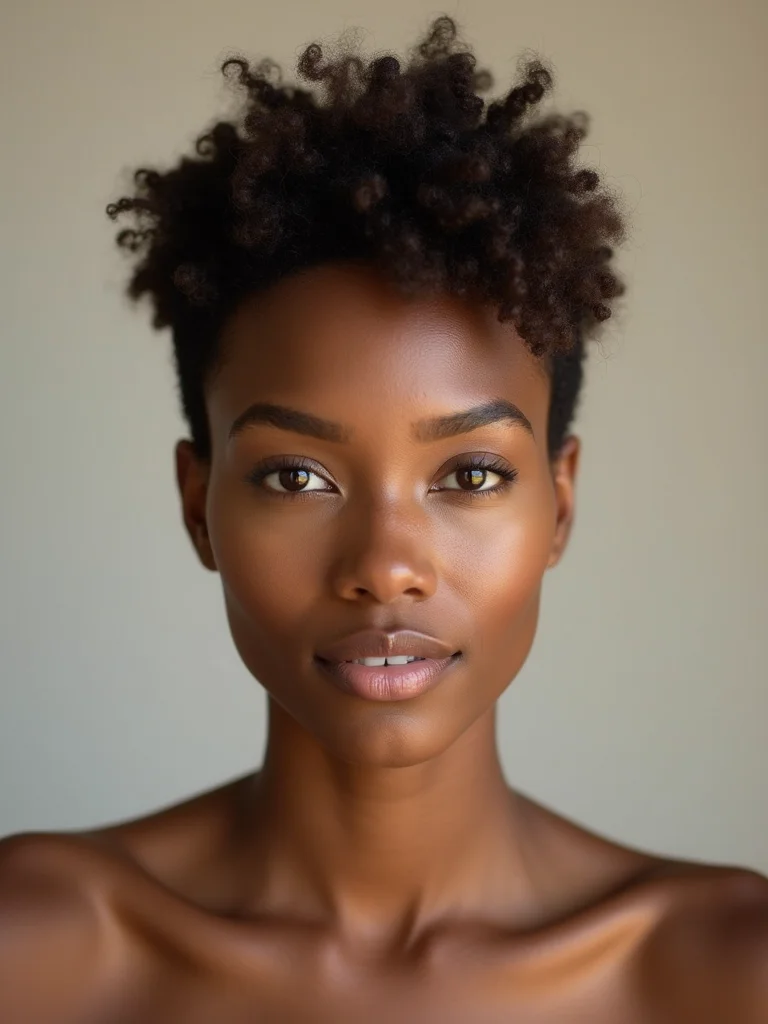
Three different lob photos land on a stylist’s table, and the client keeps pointing at the same spot on each one: the jaw. Not the length. The line. That’s the quiet mechanism behind every chin-length haircut here: ending the hair right at the jawline pulls the eye up to the cheekbones and softens the whole face in one move.
Seventeen versions follow, from a sharp blunt bob to soft layers and built-in texture, along with which one suits which face and how much morning time each one actually costs.
What Makes This Length Work
- Ending right at the jaw is the flattering mechanism itself, not any single style choice.
- Blunt reads sharp but shows grow-out fastest; layers grow out far more gently.
- Curly and wavy hair needs to be cut with shrinkage in mind, or the result lands shorter than planned.
- Face shape decides the details, like part and layer placement; the base length flatters almost everyone.
The Chin-Length Sweet Spot at the Jaw

A chin-length cut ends right around the jawline, and that single placement does most of the flattering work on its own. It pulls attention up toward the cheekbones and eyes, away from a heavier jaw or a longer midface.
By the third or fourth wear, most people stop noticing the length entirely and just notice the shape holding up around the face.
- Instant lift: the hair stops before it can drag the face downward.
- Built-in frame: the ends land exactly where they flatter most.
- Versatility: long enough to tuck or wave, short enough to stay light.

The Classic Blunt Chin-Length Bob

The blunt chin-length bob is the boldest version here: one clean, weighty line cut straight across at the jaw, with no layers softening it. It photographs sharp and deliberate, and building it well comes down almost entirely to precision.
- Hair is cut to one length with a strong, even line at the jaw.
- It’s left weighty, with little to no internal layering.
- A smooth blow-dry and a flat-iron pass keep the line crisp.
Soft Face-Framing Layers at the Chin
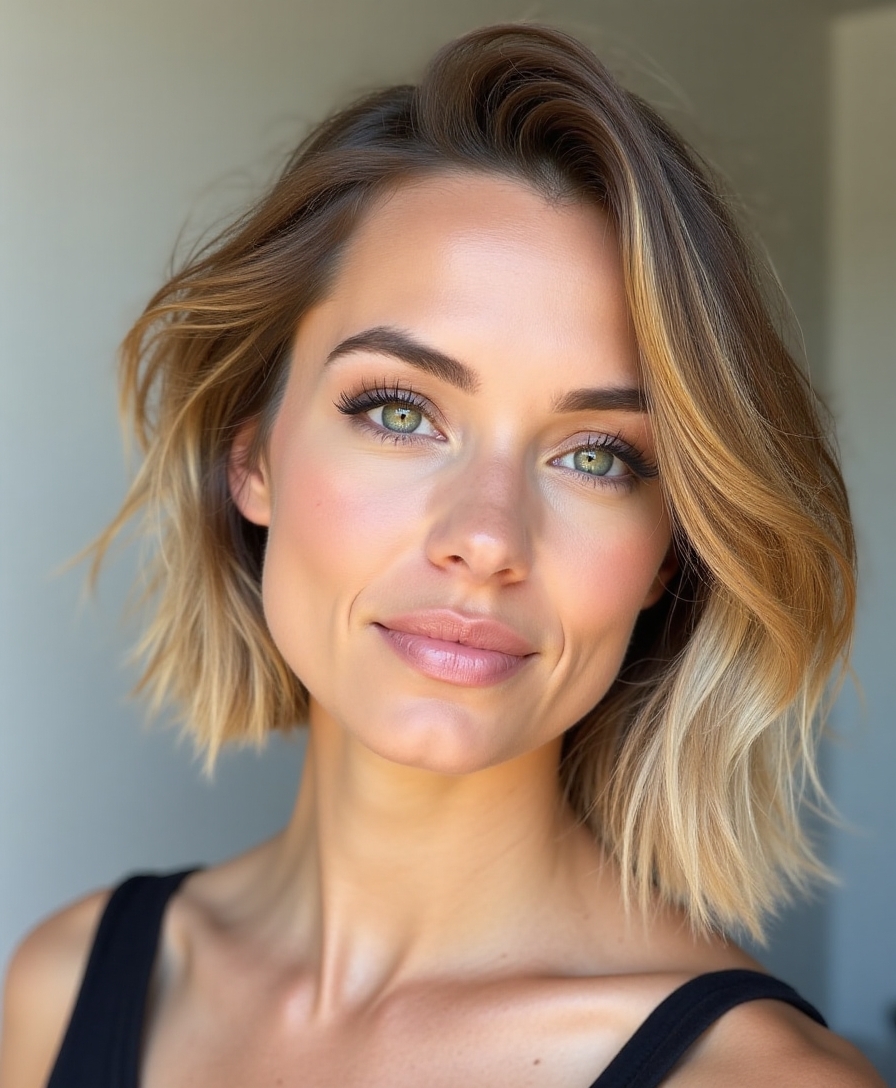
A blunt line can feel severe on the wrong day; soft, face-framing layers offer a gentler route to the same length. The bulk of the hair stays at the jaw, but lighter pieces around the face add movement and take the hardness off the line.
This version tends to flatter a wider range of face shapes and forgives more day to day, since the layers blend gradually into the grow-out with no visible shelf forming.
- Movement without losing the overall chin-length shape.
- Softer framing for round or square faces that a blunt line can harden.
- An easier grow-out, since layers blend rather than break at one length.
The Textured Chin-Length Cut

For fine or flat hair, a textured chin-length cut solves the problem a blunt line can’t: a stylist removes some interior weight with point-cutting or a razor, so the shape builds its own volume and holds up past midday. A similar principle carries into the hairstyles for fine hair guide at other lengths.
- Internal texturizing builds lift that fine hair can’t generate alone.
- Styles fast with a small amount of mousse and a rough air-dry.
- Best cut dry on wavy hair, so the texture lands where it should.
The Tools That Style It
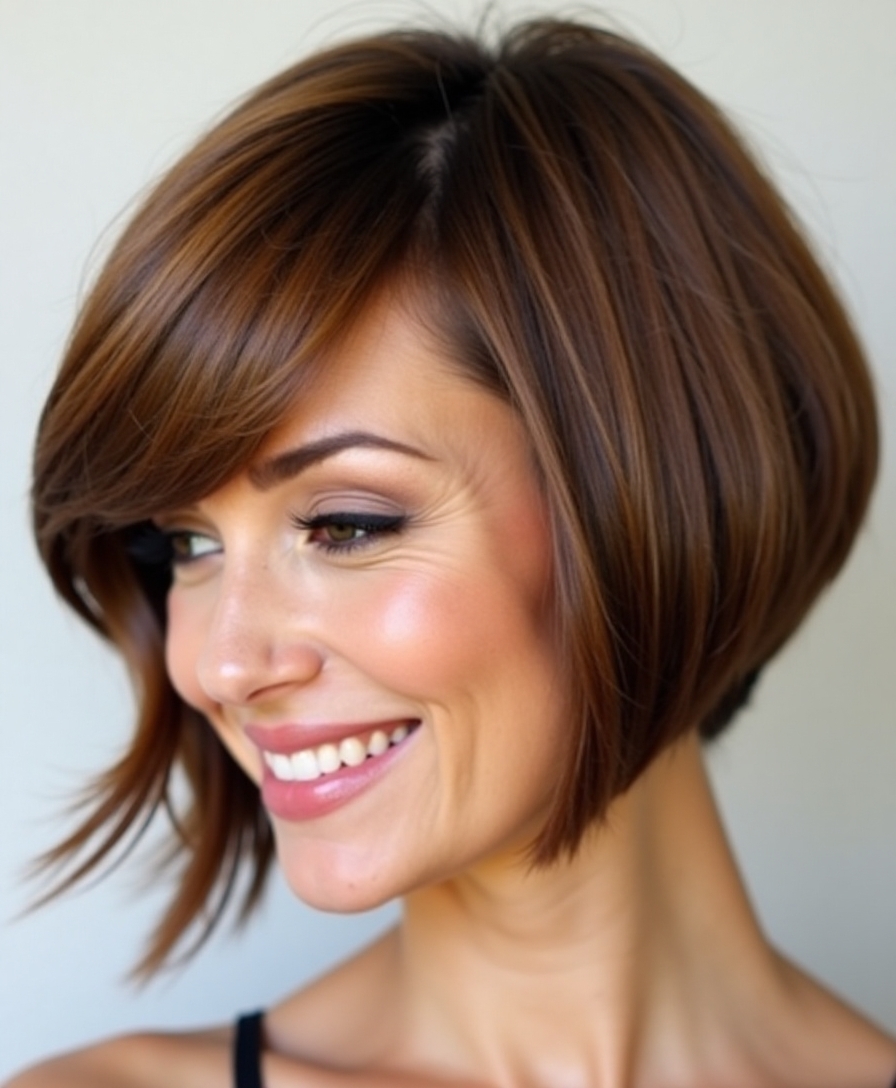
Chin-length hair is short enough that a couple of essential tools cover nearly everything a morning routine needs, and that simplicity is a big part of the length’s appeal.
- A medium round brush bends the ends under or flicks them out.
- A one-inch iron doubles as both a smoothing tool and a soft-wave tool.
- A texture spray or light mousse adds grip; heavy creams tend to flatten the shape.
Low-Maintenance Chin-Length Options

Not every chin-length cut asks for daily styling. A version built to air-dry, with enough internal texture to look intentional without heat, suits anyone whose mornings simply don’t allow for a blow-dry.
- A wavy, textured chin bob air-dries into a soft, finished shape on its own.
- A slightly longer chin-length still tucks behind the ears on rushed days.
- A sharp blunt line isn’t the move here; it needs daily smoothing to look intentional.
“By week three of skipping the blow-dryer, most people stop missing it entirely; the cut was built for exactly that.”
Choosing One for Your Face Shape

Because the cut sits right at the jaw, face shape decides the small details more than the base length does. The same chin-length cut flatters a round face and a long face in different ways, and the adjustment usually lives in the layers and the part.
Round or fuller faces tend to do best with some length variation and face-framing, so the line doesn’t add width at the cheeks; a center part helps lengthen the face further.
Long or narrow faces can carry a blunter, fuller line, which adds welcome width at the jaw, while square jaws are flattered most by soft, curved ends softening the line.
Common Mistakes to Avoid
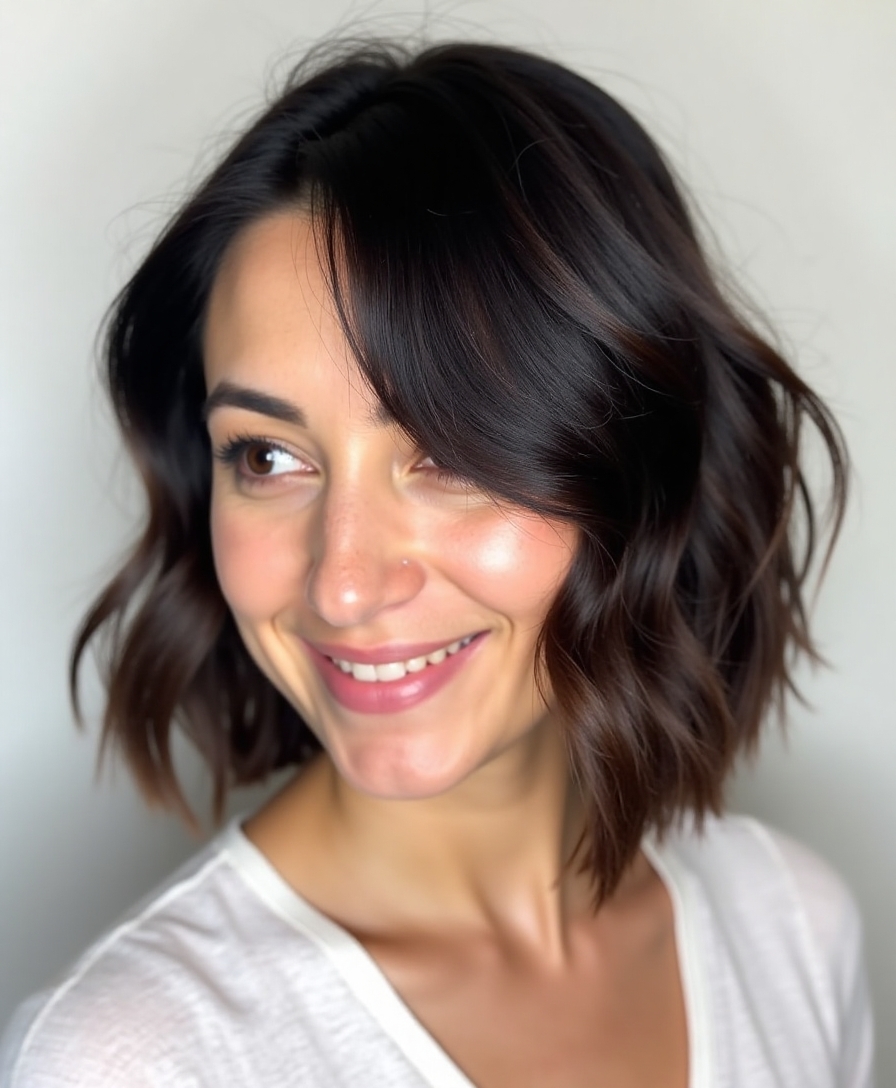
Most disappointing chin-length cuts trace back to a short, avoidable list of mistakes; the length itself is rarely the actual problem.
- Cutting curly or wavy hair wet, so it shrinks up well above the chin once fully dry.
- Going perfectly blunt on very fine hair, which can look thin at the ends.
- Spacing trims too far apart; a blunt chin bob loses its shape within a couple of months.
Bringing the Right Inspiration

Reference photos are useful at a consultation only if they actually match the hair in the chair. A glassy blunt chin bob on poker-straight hair won’t translate onto thick waves, no matter how clearly it gets described.
A little structure to what gets brought in makes the whole conversation faster and more accurate.
- Two or three photos that share length, density, and texture with the client’s own hair.
- One photo of what to avoid, often more useful than the rest combined.
- A clear note on daily styling time versus wanting the cut to air-dry.
Growing It Out Gracefully
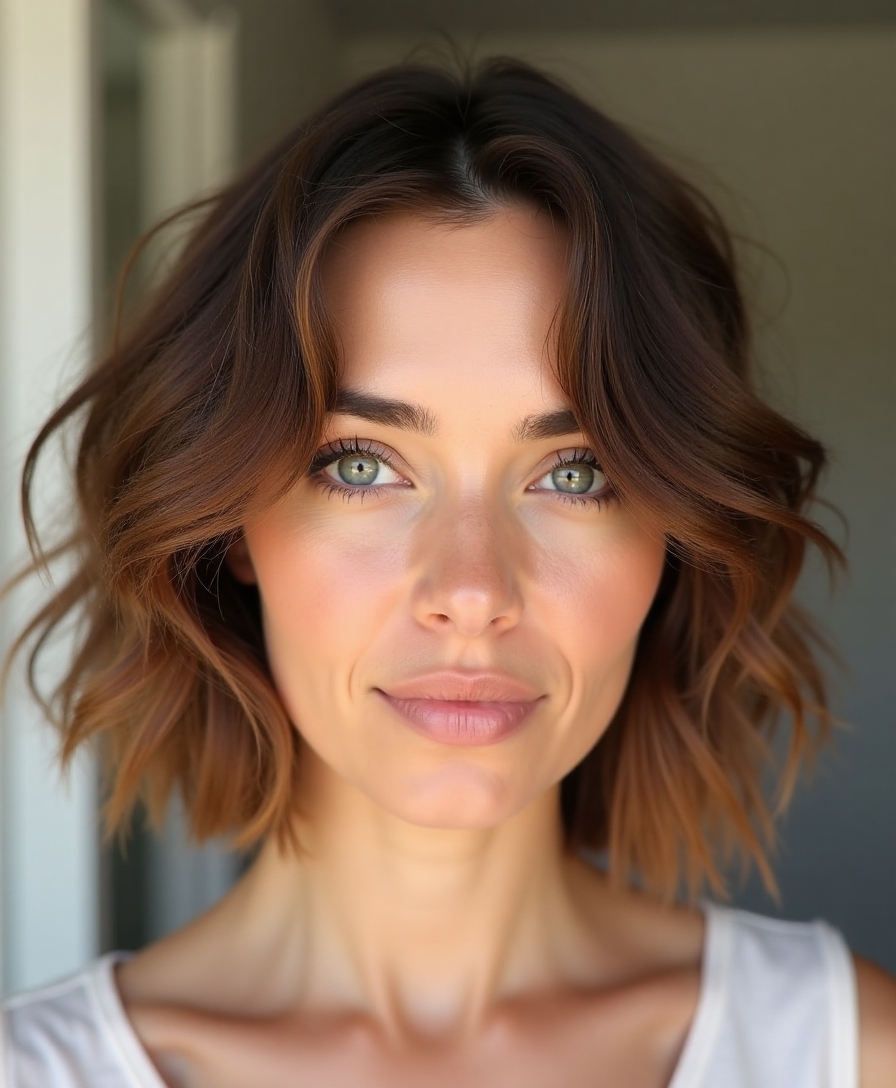
Chin length sits at a spot that either grows out smoothly or gets stuck at an awkward stage, and which outcome shows up depends heavily on how it was cut in the first place.
A heavily blunt bob tends to hit an awkward phase as it passes the shoulders, while a layered chin cut lengthens into a lob with far less drama.
- Soft layers built in early make a future grow-out considerably easier.
- A shape-up trim on a regular cycle beats letting the cut grow untouched.
- Face-framing pieces stay flattering at nearly every in-between length.
Products That Bring It to Life

The product that makes a chin-length cut look its best depends entirely on texture, and using the wrong one is usually why an otherwise good cut falls flat.
Fine hair wants a light mousse or root-lift spray at the damp stage, never a heavy serum that drags the ends down. Thick or coarse hair does better with a smoothing cream or a couple drops of oil through the lengths.
Wavy and curly hair lands in between the two: a leave-in plus a light gel or cream defines texture without adding crunch.
One assumption about product and this length worth correcting.
❌ Myth: More product always means more hold.
✅ Reality: Past a certain point, extra product just adds weight and flattens the exact volume a chin-length cut relies on.
❌ Myth: The same product works for every texture at this length.
✅ Reality: Fine, thick, and curly hair each need a distinctly different product family here; there’s no single universal pick.
Seasonal Updates for the Cut

The shape of a chin-length cut carries year-round even as the finish shifts with the season, which means a new cut usually isn’t necessary just because the weather changed.
Same Shape, Four Different Finishes
Summer suits leaning into texture, with a salt spray and an air-dry finish that works with the heat. Winter pulls the other direction, toward a sleeker blow-dry and a drop of oil to fight static and dryness.
Humid months are the real test for a blunt line specifically, since frizz fights the clean edge hardest then; a light anti-humidity product and a quick pass on just the ends usually holds it.
The Habits That Stretch Time Between Visits
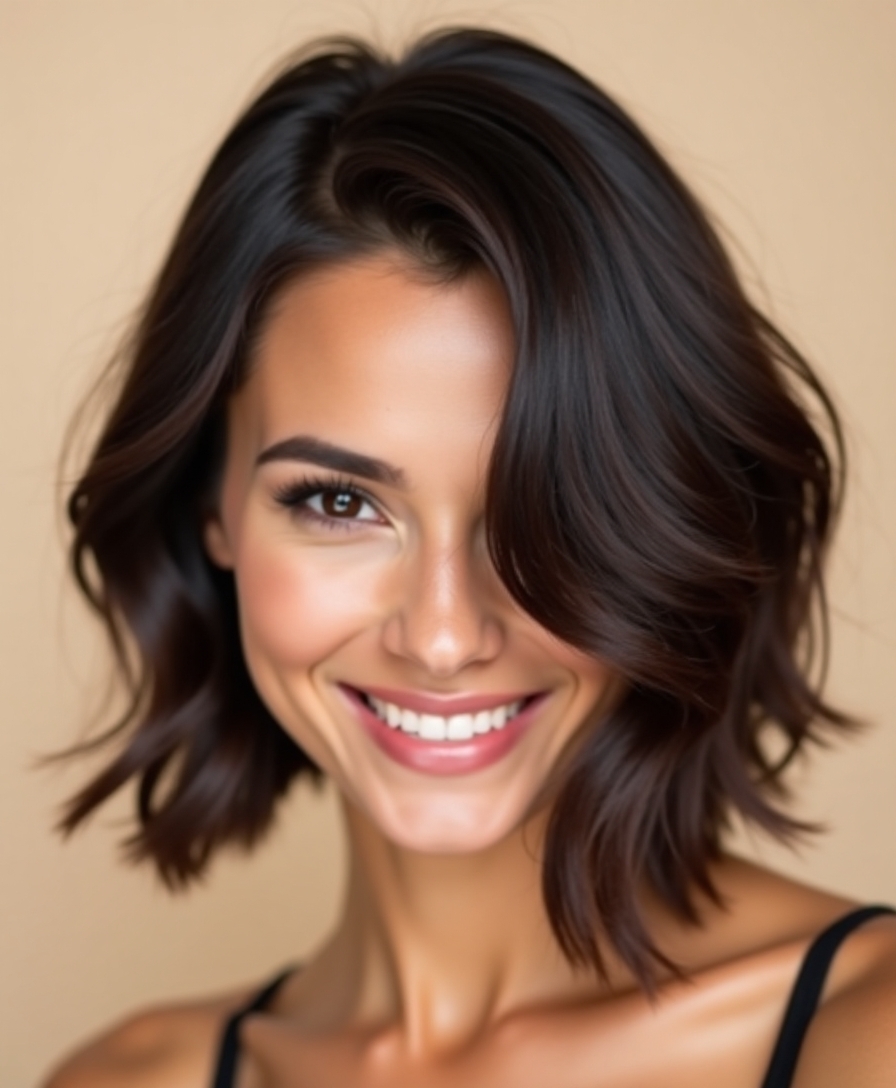
A chin-length cut shows its grow-out faster than a longer style would, though a handful of habits reliably stretch the weeks between salon visits.
A dry shampoo worked into the roots and a quick flat-iron pass on the ends keep the shape reading intentional even as it lengthens slightly.
A blunt chin bob asks for the chair on the shortest cycle of any version here to hold its line; a layered or textured cut comfortably stretches further between visits.
Chin-Length Across Different Textures

Every texture can wear this length well, as long as the cutting and the styling both suit how the hair actually behaves in real life. The same texture-first logic runs through the hairstyles for long hair guide at the other end of the length spectrum.
- Straight hair wears the sharp blunt line best, since it shows the clean edge fully.
- Wavy hair does best in a soft, textured chin bob cut dry for accurate length.
- Curly and coily hair should be cut to the dry curl pattern, so it springs to the jaw rather than above it.
Match the version to the texture in the chair, not the one in the photo.
🎯Straight hair
The blunt line, since it shows the clean edge fully.
🎯Wavy hair
A textured chin bob, cut dry for accuracy.
🎯Curly or coily hair
Cut to the dry pattern, with shrinkage built in.
Color That Complements the Cut

Color and a chin-length cut work off each other well, since a little dimension makes a blunt or layered shape look fuller and more deliberate. Flat, single-block color can read heavy on a strong chin line, hiding the movement the cut itself creates.
Soft face-framing highlights brighten the pieces right around the jaw, and a subtle brown balayage through the lengths adds depth that catches light as the ends move; both grow out softly with no hard regrowth line to chase.
A Quick Morning Routine
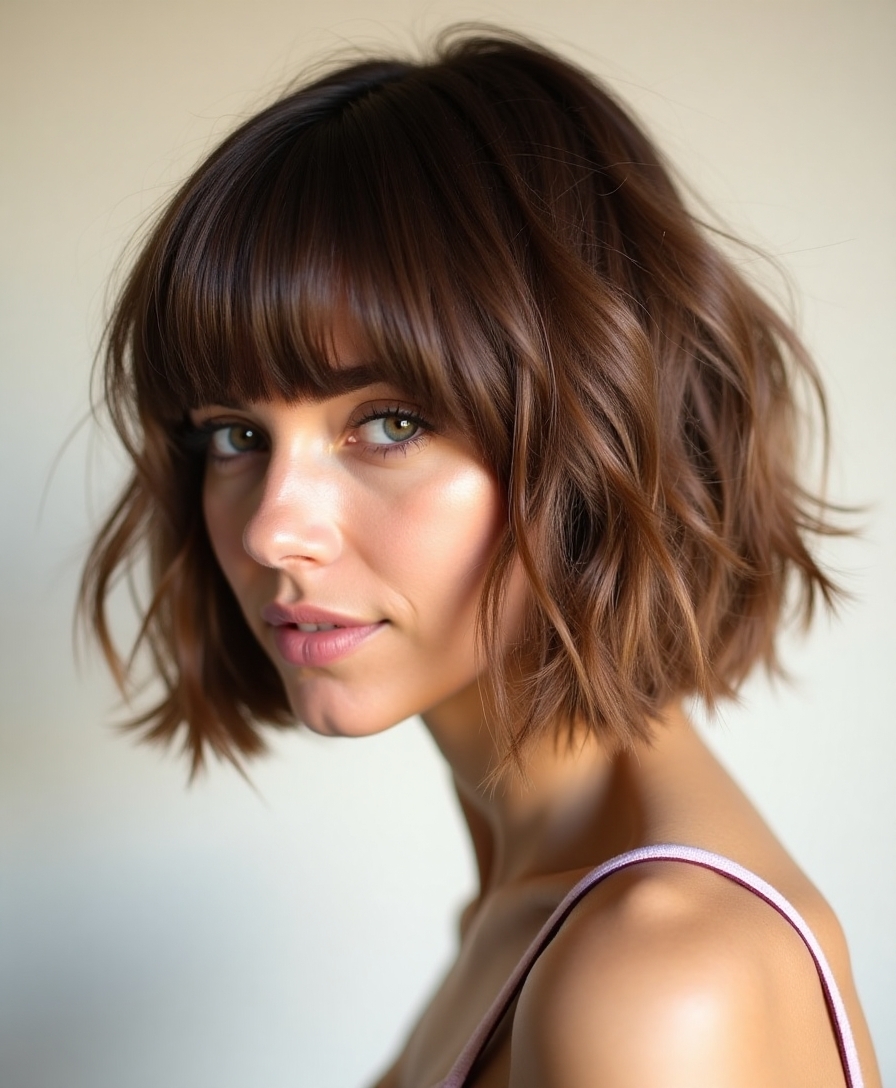
The real payoff of this length shows up in the morning, when a chin-length cut takes only a handful of minutes to look finished, and even less on second-day hair since the shape already holds.
- Mist the ends and roots lightly, then rough-dry with fingers for volume.
- Bend the ends under or out with a round brush or a quick iron pass.
- Break it up with a little texture spray on the way out the door.
Five minutes, start to finish, is a realistic number for this length once the cut itself is doing its job.
A Few Last Tips Before You Book

The difference between a chin-length cut that gets loved and one that gets tolerated usually comes down to a handful of small choices made before the scissors start. A shorter take on the same idea lives in the hairstyles for short hair guide, and a longer one in the hairstyles for medium length hair guide.
A few of those choices are worth naming directly at the consultation, well before the scissors are ever picked up.
- Name the jaw placement specifically, not just a length in inches.
- Be upfront about actual daily styling time, so the shape matches real habits.
- Factor the trim cadence into the decision before committing to a blunt line.
Maintenance and Care by the Numbers
Upkeep on a chin-length cut splits cleanly into two separate jobs: the cut itself and whatever’s happening underneath it, colored or natural. A trim on a blunt line is typically well under an hour in the chair, priced around $45 at most salons.
Colored hair at this length benefits from a sulfate-free shampoo and a scheduled gloss to keep the tone from drifting, while natural, uncolored versions mostly just need consistent moisture so the ends don’t look dry against such a sharp line.
Chin-Length Cut Questions, Answered
?Will a chin-length cut suit a round face?
Yes, with one adjustment. A little length variation and soft face-framing pull the eye down and lengthen the face; a perfectly blunt line straight across is the version round faces should approach more carefully.
?Does this length work on naturally curly or coily hair?
It does, as long as it’s cut to the dry curl pattern rather than stretched. Cutting curly hair wet at this length is the single most common reason the result lands shorter than expected.
?How long does a chin-length cut take to grow out comfortably?
A layered version can stretch several months before it looks overdue; a fully blunt bob shows its grow-out noticeably sooner, since there’s no layering to disguise the shift.
?Can this length work with second-day or unwashed hair?
Often better than day one, actually. The slight texture that builds up overnight helps a textured or layered version hold its shape with even less styling effort.
?What should I bring to a consultation for this cut?
A couple of photos that match actual hair density and texture, one photo of a result to avoid, and an honest answer about how much time gets spent styling on a normal morning.
The Most Flattering Place to Stop
What keeps this length in rotation, across seventeen versions and countless variations on it, is a simple ratio: real flattering effect against almost no daily effort required. Ending the hair at the jaw does that lifting work nearly on its own.
Anyone whose hair has started to feel heavy, or whose face has felt weighed down by length, might find it worth bringing a jaw-line reference photo to the next appointment rather than a length in inches.
More to Browse