Most roundups of softball hairstyles quietly skip the part that decides everything: whether the style survives a helmet. A ponytail that looks sharp in the dugout can shove a batting helmet crooked at the plate, and a bun that held through warm-ups is often halfway down a neck by the fourth inning.
So these twenty-one are sorted by what they actually withstand, with the helmet question answered as it comes up. Some belong on the field. A few are picture-day styles. Two of them will not move no matter what happens to you between the bases.
Three Things Worth Settling Before Warm-Ups
What makes a style survive all seven innings? Contact with the scalp. Anything braided flat against the head has nowhere to slip, while anything gathered only at a band is relying on that band alone. It is why Dutch braids outlast a ponytail every single time.
Can I wear a bun under a batting helmet? Only at or below the nape. A high bun pushes the helmet forward and sits it off-center, which is a fit problem before it is a comfort one. Drop everything low before you step into the box.
Should I wash my hair on game day? Skip it. Day-old hair grips an elastic and holds a braid far better than clean hair does. If you have to wash, dry it completely and work a texture spray through the roots before you start braiding.
The Classic High Ponytail
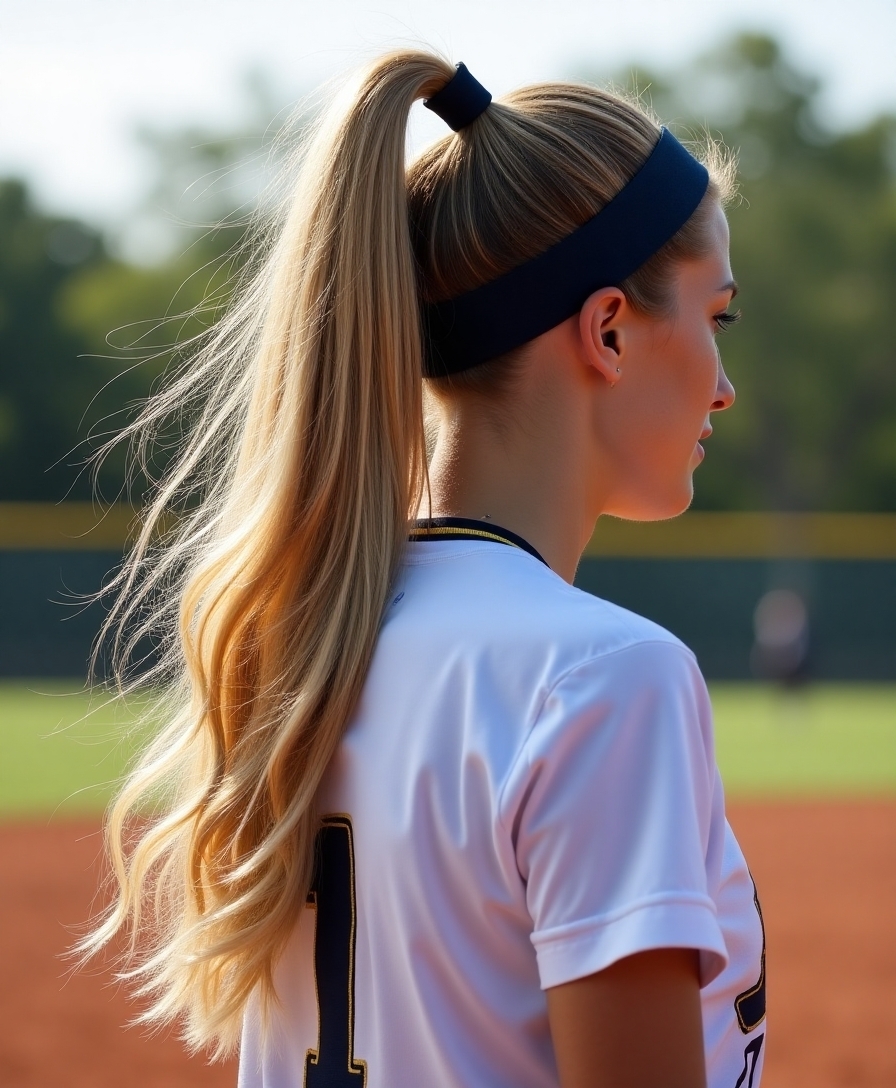
The high pony is the parking-lot special: sixty seconds, hair off your neck, done. It earns its place on hot practice days and in the outfield, where nothing is going to knock it loose. The catch shows up at the plate. A high gather sits exactly where the back of a batting helmet needs to sit, so it either gets crushed flat or tips the helmet forward over your eyes.
- Stack two elastics instead of doubling one, so the tail cannot droop by the third inning
- Wrap a strand around the band and pin the end underneath for grip through a slide
- Sixty seconds is the honest install time, which is why it survives every rushed morning
Double Dutch Braids
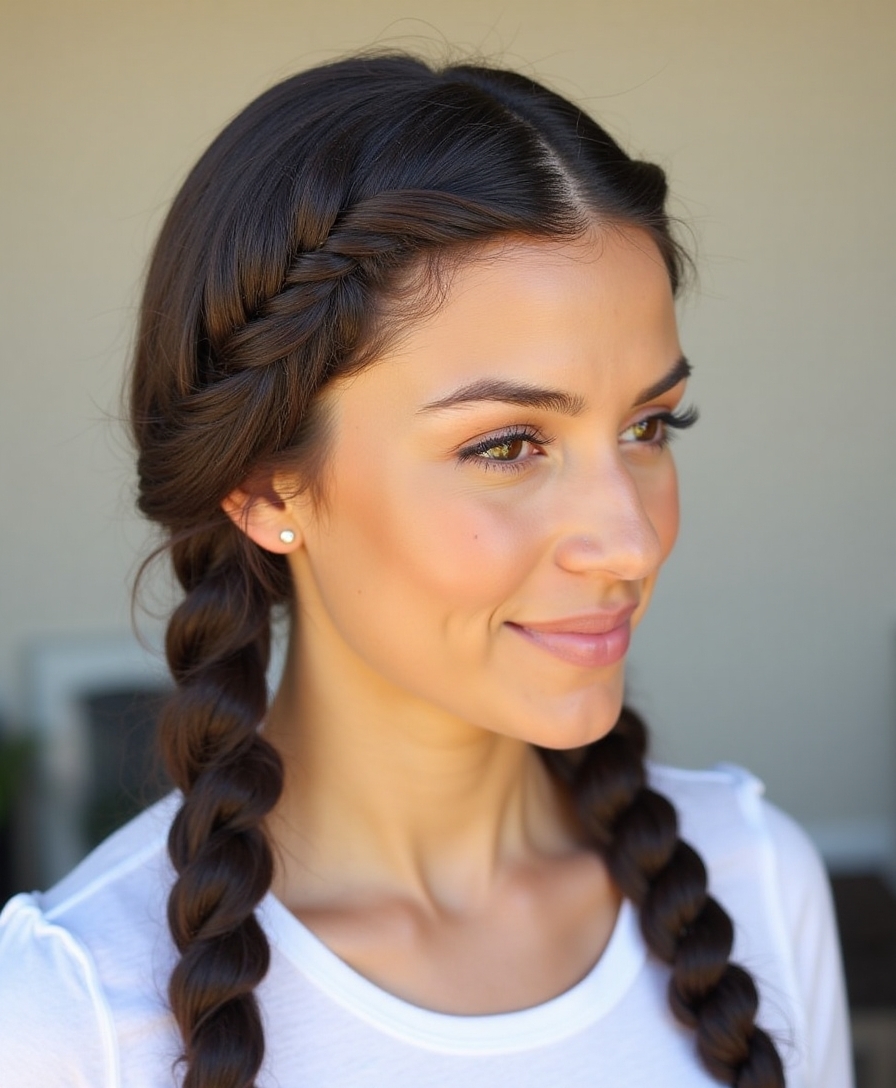
If nothing is allowed to move, this is the answer. Two rows braided under-hand against the scalp leave the hair no slack to work with, and because they sit flat, a cap or helmet goes on over them without a fight. Expect ten minutes the first few times and closer to four once your hands know the pattern.
- Part straight down the center with a comb; fingers leave a wandering line and uneven rows
- Cross each section under the others and keep the tension steady from the hairline back
- Finish both ends with no-slip elastics and check them between innings
The Fishtail Braid
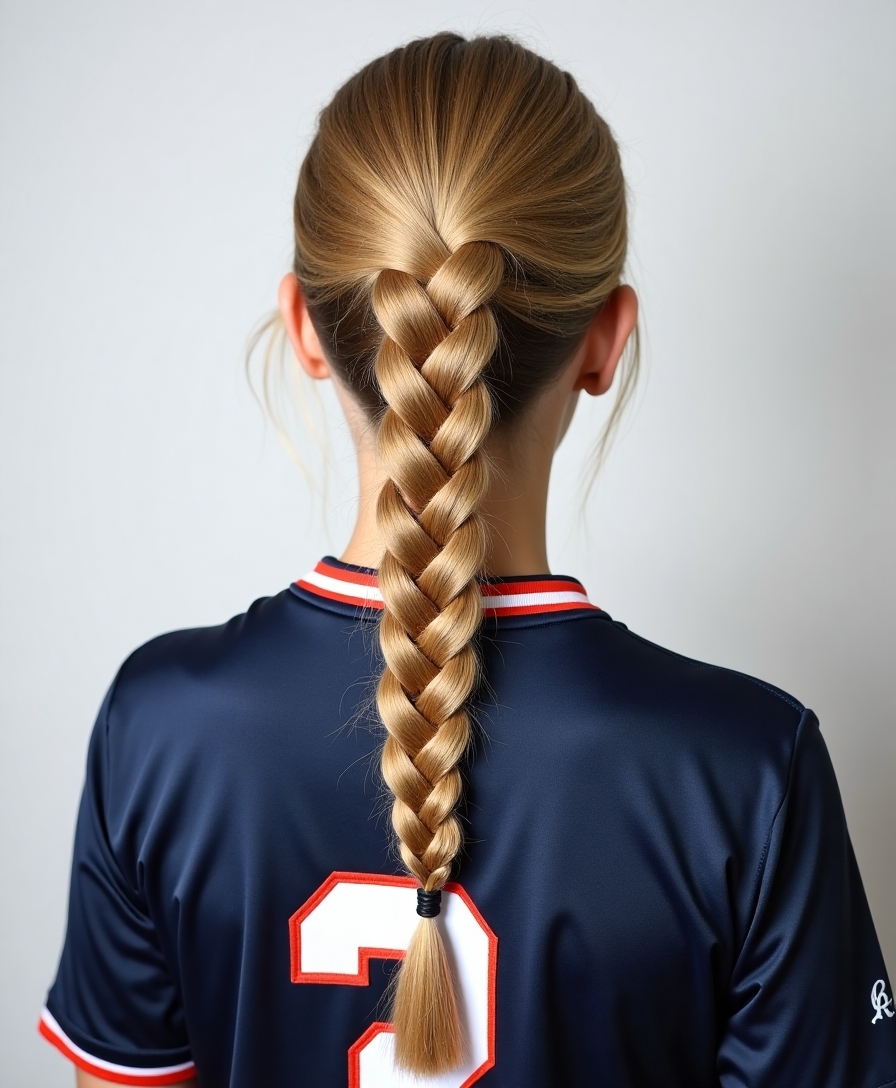
A fishtail trades a few extra minutes for a tighter weave. Thin sections mean far more crossings, so the braid itself stays tidy through a long day rather than loosening into a rope. It is not more anchored than a Dutch braid, since nothing is attached to your scalp, so it belongs on the field paired with a low tuck. Freshly washed hair slips out of those small sections faster than you can pick them up.
- Second-day hair grips best; a mist of dry shampoo does the same job in a pinch
- Keep the sections thin and the tension even from the very first crossing
- Tuck the finished tail up into a low bun when the game turns physical
Braid or ponytail? Pick by what your day looks like.
1You bat, catch, or slide today
Braid, and keep it below the helmet line. A ponytail can be re-tied between innings, but a helmet does not care that you meant to fix it.
2You are at practice or in the outfield
Ponytail. It takes a minute, keeps your neck cool, and nothing out there is going to knock it loose.
The French Braid Ponytail
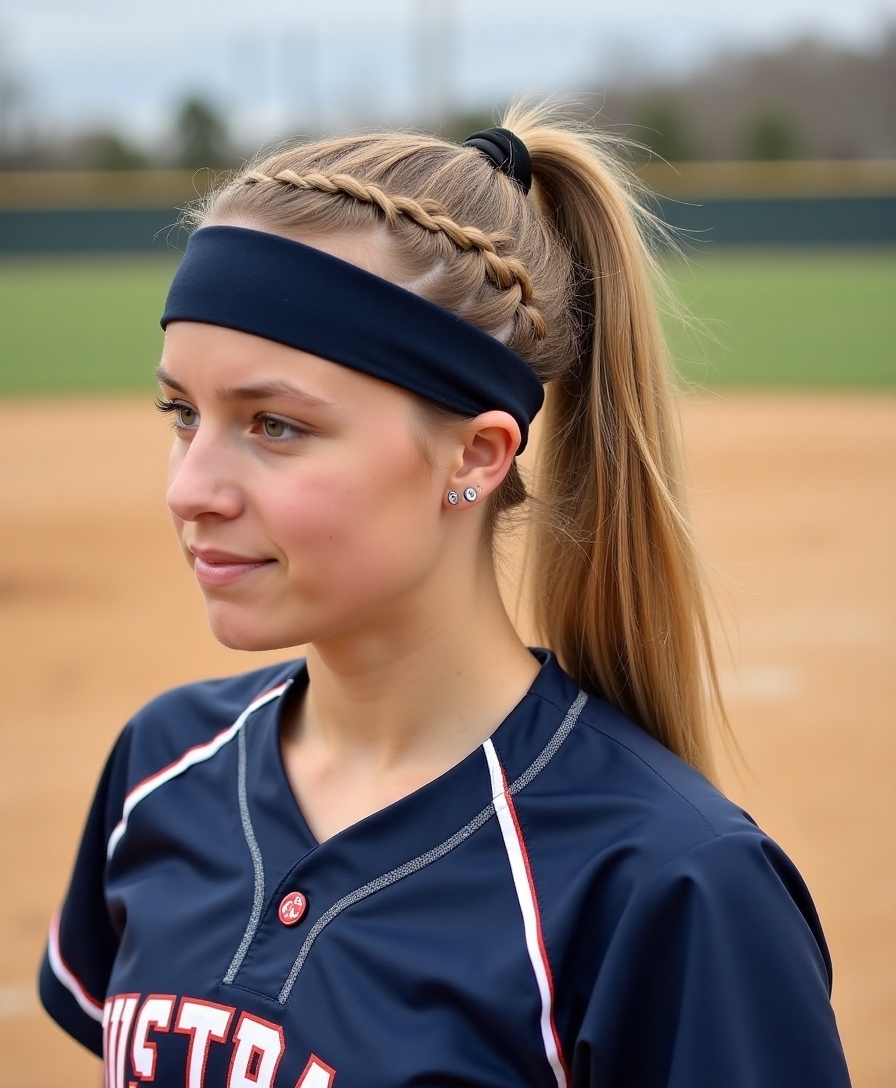
This one splits the difference. The braid controls everything from your hairline to the crown, which is the part that falls into your eyes, and the loose tail below lets air move against your neck. It is a good compromise on a hot day when full braids feel like too much. The front sits flat enough for a cap, and the tail can be tucked if the helmet goes on.
- Braid to the crown only, then tie off and leave the length free
- Angle the braid slightly toward your non-throwing side so it clears your shoulder
- The braided front stays put for two days, so it doubles as a practice-day style
The Low Braided Bun
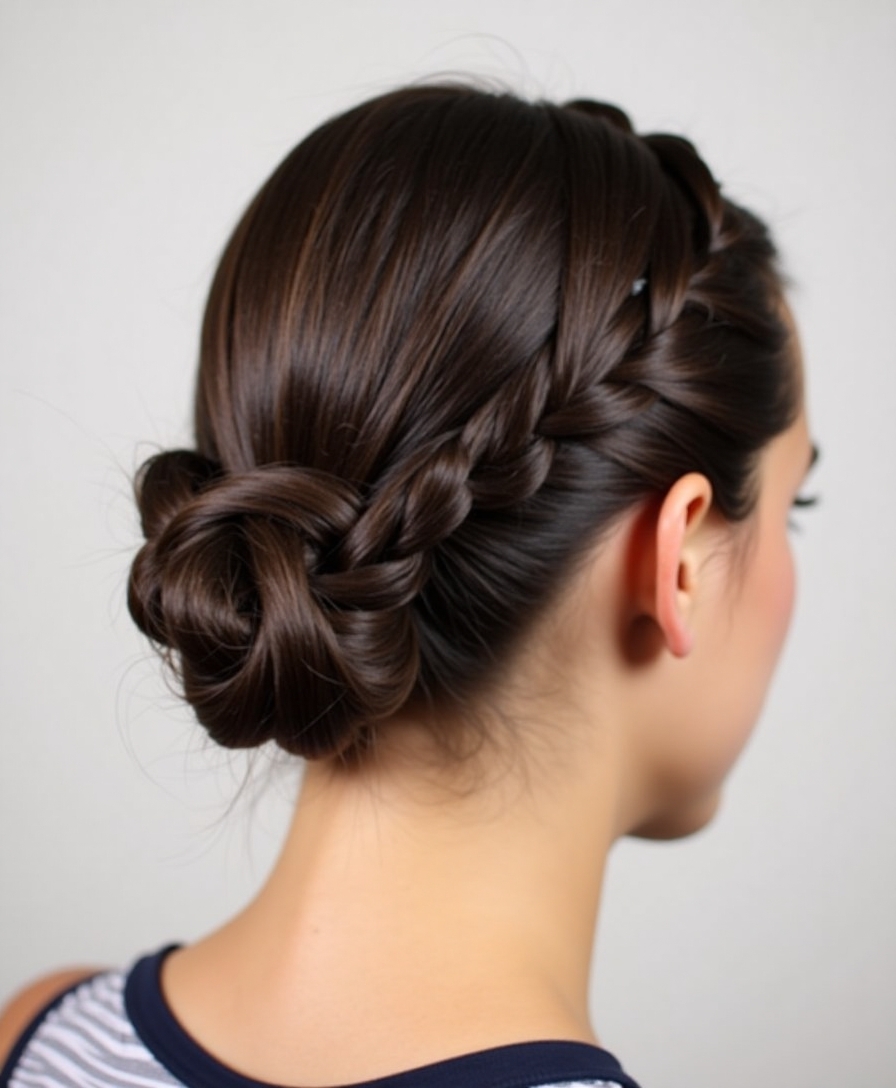
Braid first, then coil the braid at the nape and pin it. That sequence matters: a braided coil has texture gripping texture, where a smooth twisted one leans entirely on the pins.
Why Catchers Land Here
I have redone more catchers’ hair on a Saturday morning than any other position, and this is where we always land after the second time a mask strap catches a loose bun. It sits below the helmet line, clears the collar of the gear, and takes a headfirst slide without noticing.
Pin in an X pattern rather than parallel, mist the outside, and stop thinking about it. Our bun styles guide covers softer versions for after the game.
Snug, Never Sore
Here is the test I give players: if you can feel individual braids at the hairline an hour after they went in, they are too tight. Little raised bumps along the front row the next morning mean the same thing. That is tension telling you it has crossed a line, and it is worth undoing on the spot rather than playing through it.
The Bubble Ponytail
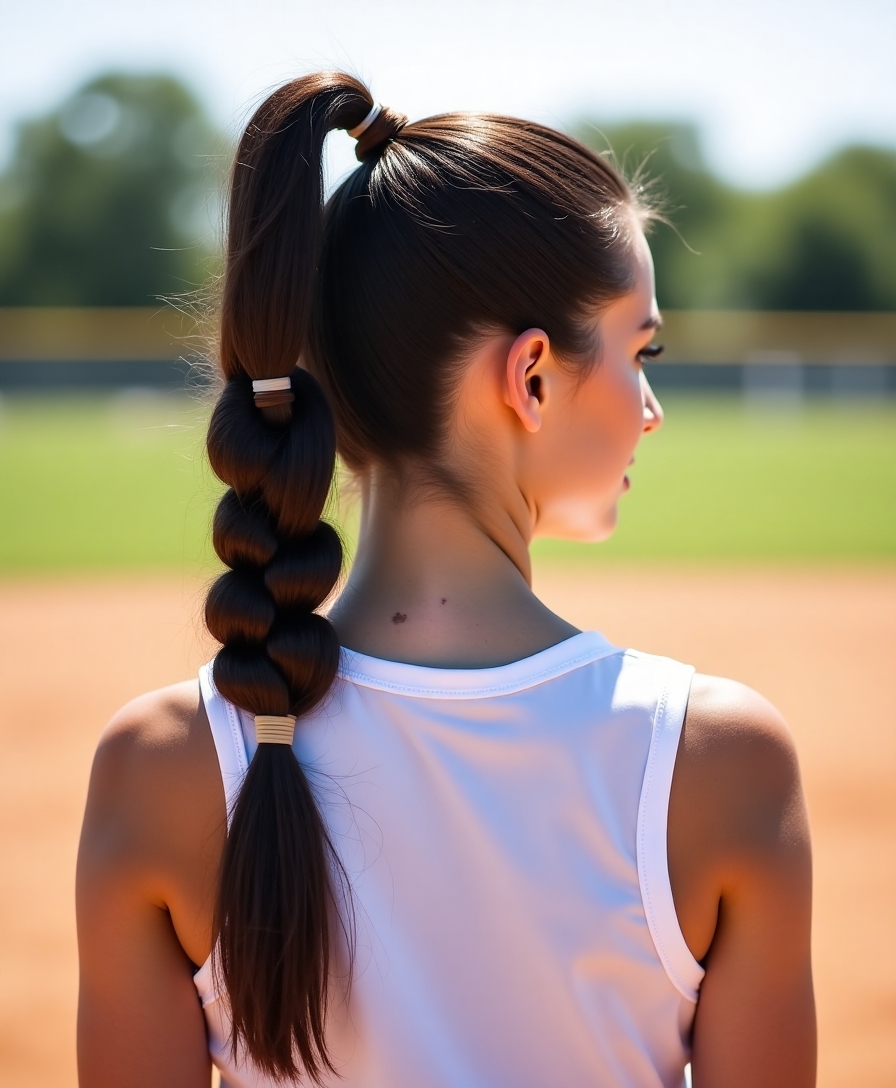
The bubble pony is the one style on this list with redundancy built in. Elastics every few inches mean that if the top band gives out, four more are still holding the tail together, so nothing ends up loose across your face. It looks like a personality choice and functions like insurance.
- Tie the base first, then add bands roughly every three inches down the length
- Puff each segment gently with your fingertips once all the bands are on
- Use no-slip bands in clear or a team color; the standard drugstore kind slides on fine hair
The Crown Braid
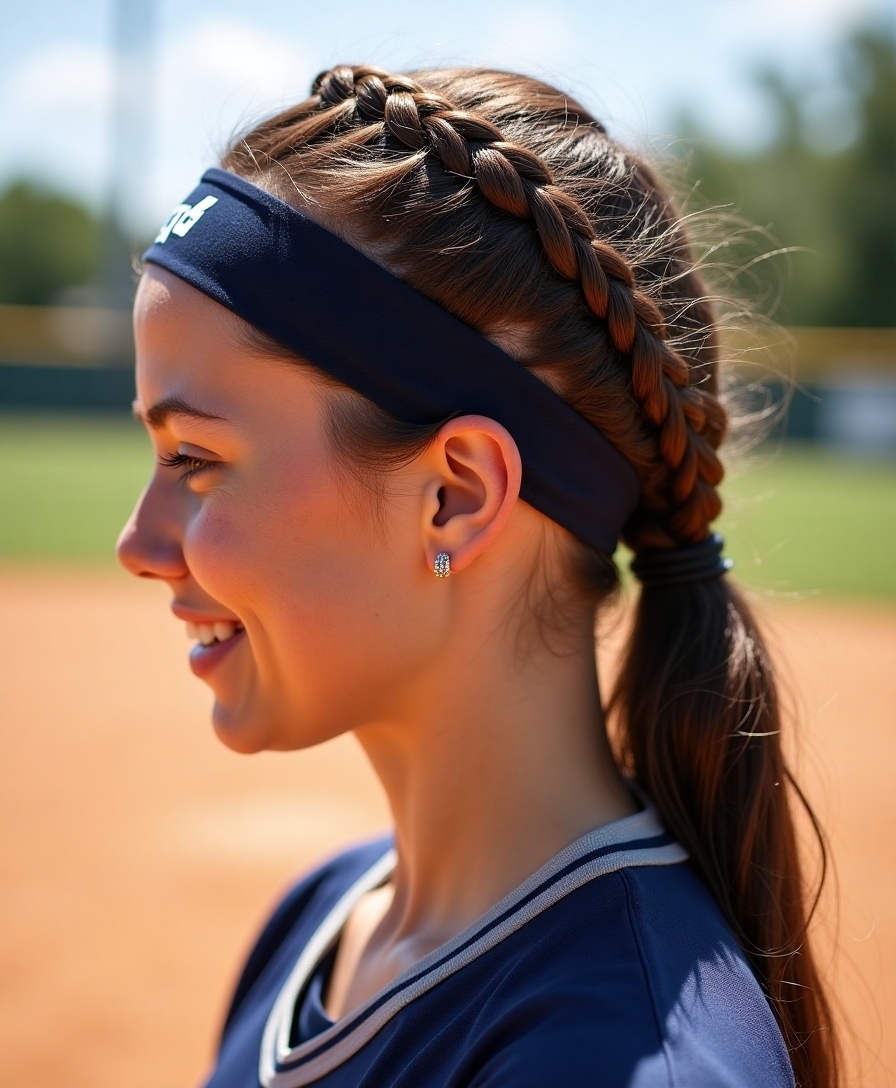
Wrapping a braid around your head turns your own hair into a headband, and the appeal is that nothing hangs anywhere. No tail to whip around on a throw, no ends to catch in a mask. It takes real practice to get the wrap even, and the honest warning is that it looks lopsided the first several attempts. Our braids guide walks through the base technique.
- Braid around the head and pin the ends underneath the opposite side
- Keep it snug at the temples where it wants to loosen first
- Sits flat under a cap, a visor, or a helmet with no adjusting
The Twisted Headband Style
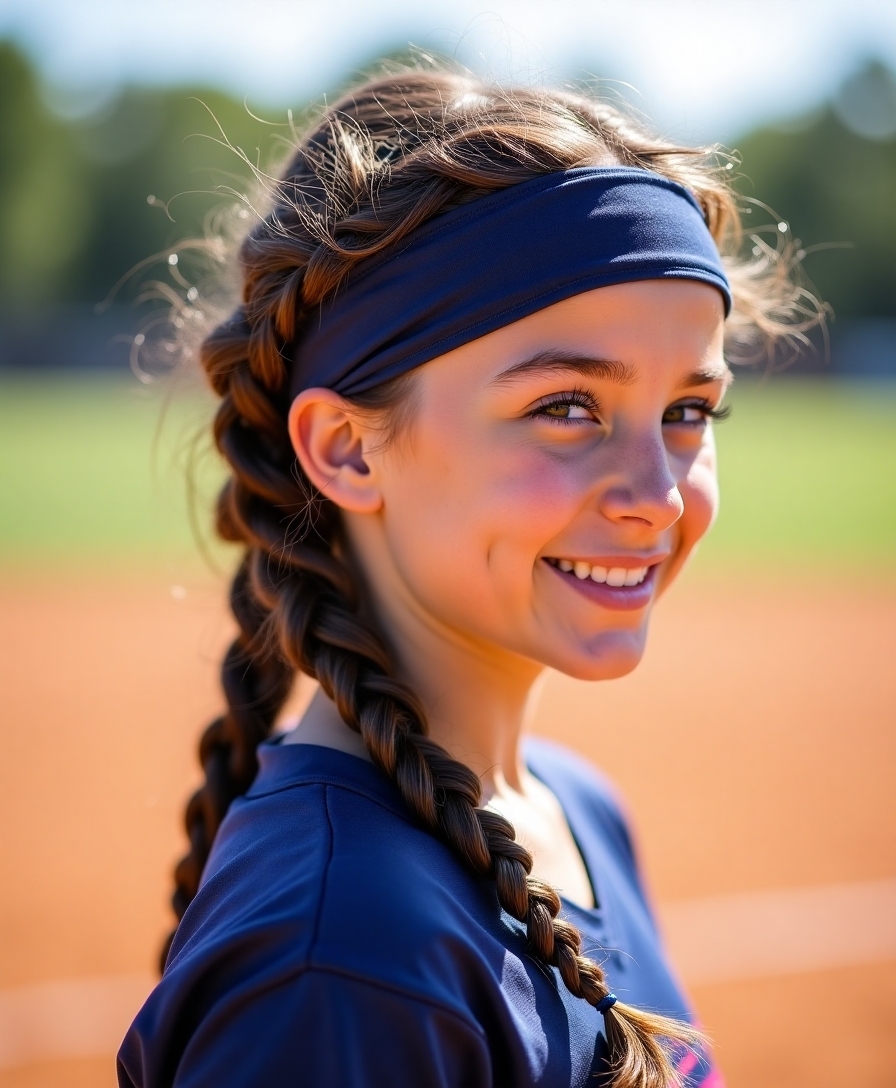
Half the players who sit in my chair before a season cannot braid their own head, and that is a completely reasonable place to be. Two twists taken from the front hairline, pulled back and pinned behind the crown, lock away every piece that would otherwise end up in your eyes. The rest goes into a ponytail. Under a minute, start to finish, which puts it alongside the fastest of our easy hairstyles.
Where this struggles is grip. Twists have less friction than braids, so on silky or freshly washed hair they creep loose by the late innings. A shot of texture spray at the roots before you twist solves it for a full game.
The Side Braid With a Tail
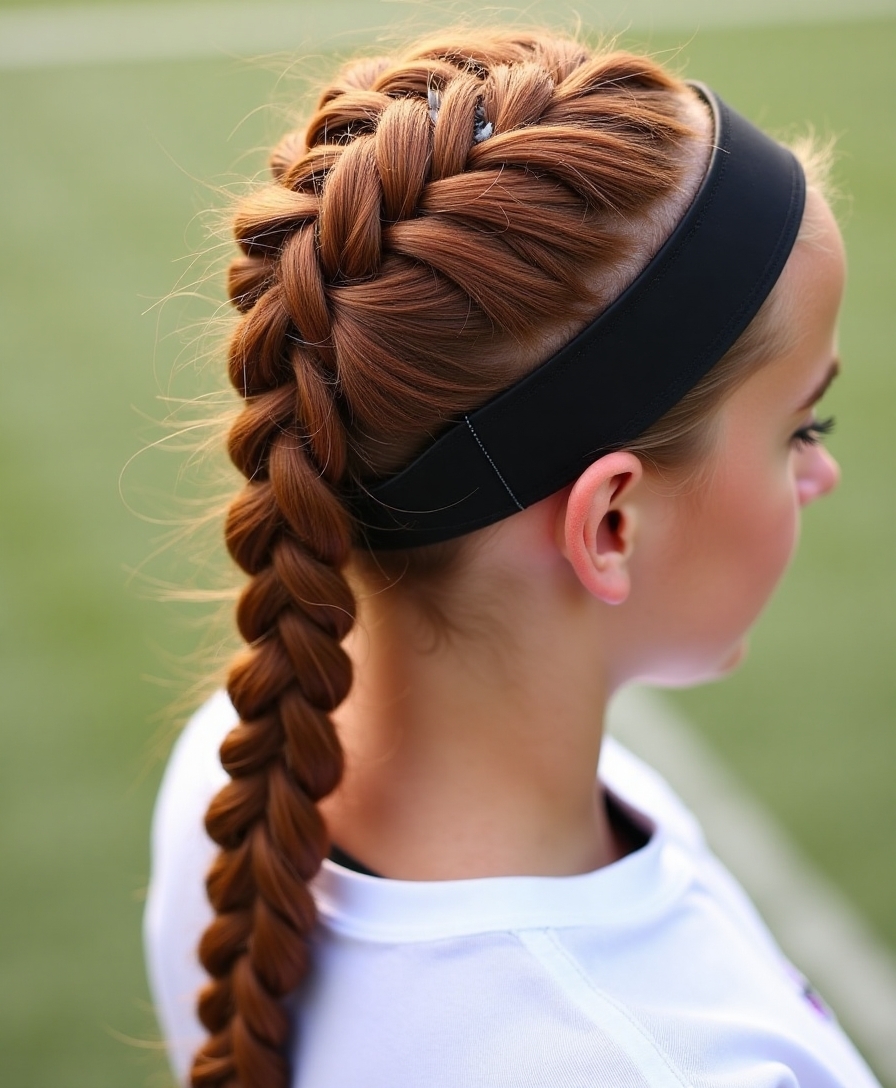
Braided from one side and tied off behind the opposite ear, this keeps the weight of your hair off the back of a hot neck. On a doubleheader in July that alone is worth something.
It is a practice style more than a game style. Because the braid is only anchored on one side, it shifts during anything acrobatic, which is fine in the cage and less fine on a diving catch.
- Braid toward your non-throwing shoulder so it never crosses your arm
- Start the braid tight at the temple; the rest can stay relaxed
- Best for practice, warm-ups, and lower-intensity innings
The Smoothed-Down Low Ponytail
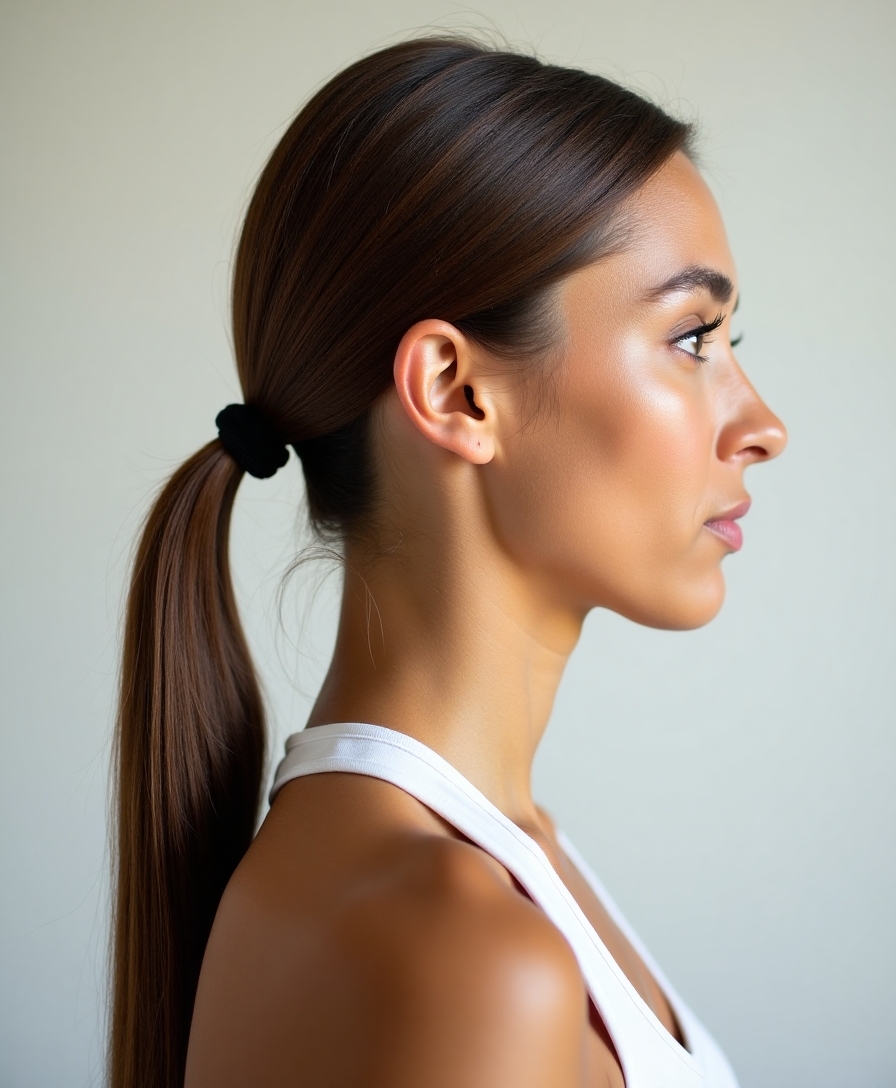
Nothing about this one is exciting, and that is the whole argument for it. Gathered at the nape and smoothed flat, it sits under a batting helmet without changing how the helmet fits, which is more than most styles here can claim.
The failure point is flyaways. Short pieces that escape under a helmet brim end up tickling your face at the worst possible moment, so a little gel or serum through the top is not vanity, it is focus.
Wrap a strand over the band and pin it underneath. That single step buys you noticeably more time before the tail starts creeping down. More versions live in our ponytail styles guide.
The Halo Braid
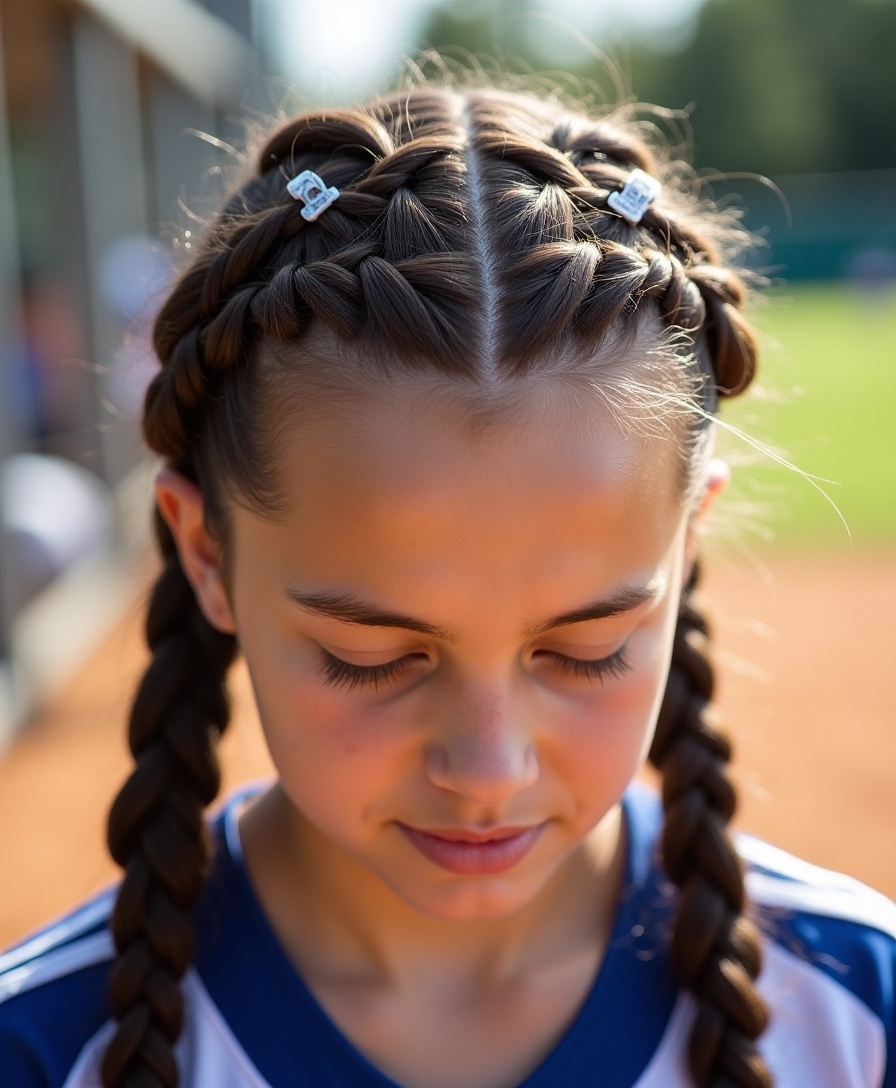
A halo sits higher and fuller than a crown braid, which makes it a tournament-photo choice. By the fourth game of a weekend you will want something simpler. Everything comes off your neck and face, and in August heat that matters as much as the look does.
It needs length and it needs time. Below shoulder length there is not enough hair to complete the circle, and rushing it produces gaps that show in every photo.
- Braid up and around in a full circle, pinning as you go instead of at the end
- Hide the finishing ends inside the braid itself, never underneath where they slip out
- A light mist holds it through a long day in the sun
The Inside-Out French Braid
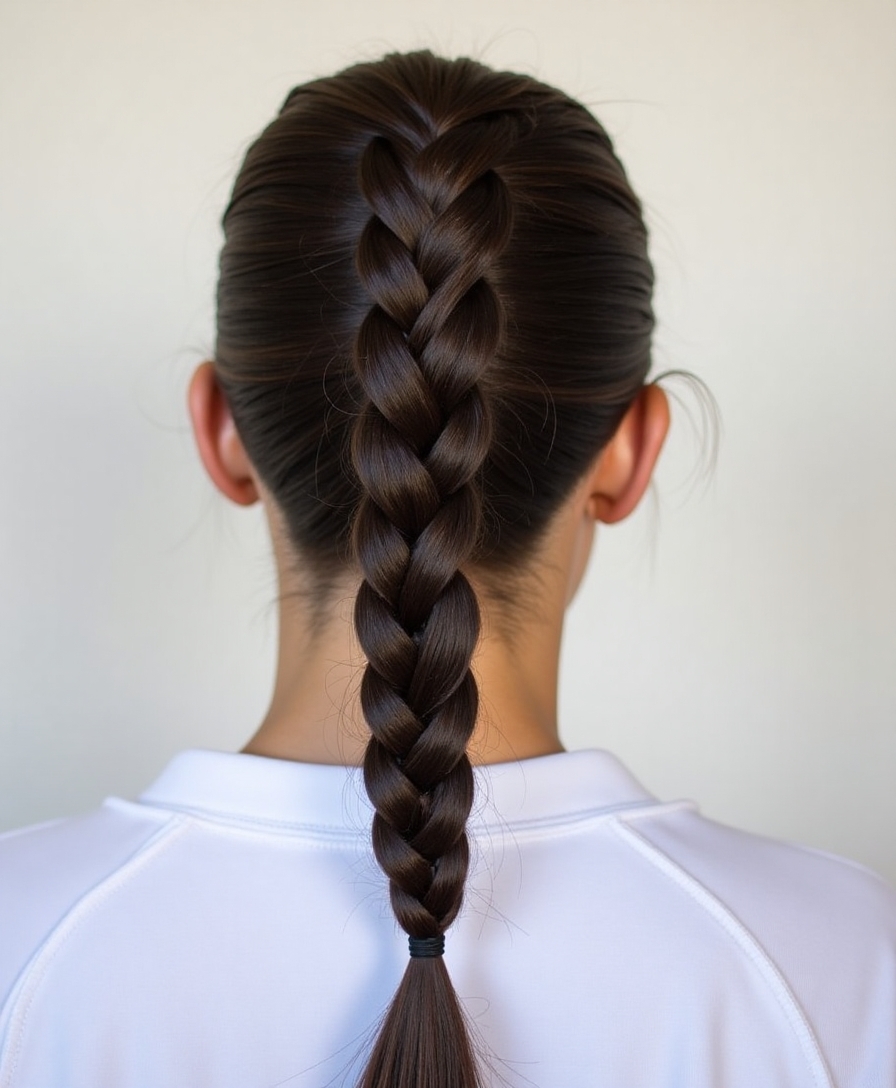
Cross the sections underneath each other and the braid stops lying flat, standing proud of the hair instead. That raised line is why it photographs so well in action shots, where a flat braid disappears into the back of your head.
Structurally it holds the same as a standard French braid, so you lose nothing by choosing it. The only difference is which way your fingers move.
You can pancake it afterward by tugging gently at the outer edges, which makes the braid look fuller. Do that after you have secured the end, never before.
The Braided Ponytail
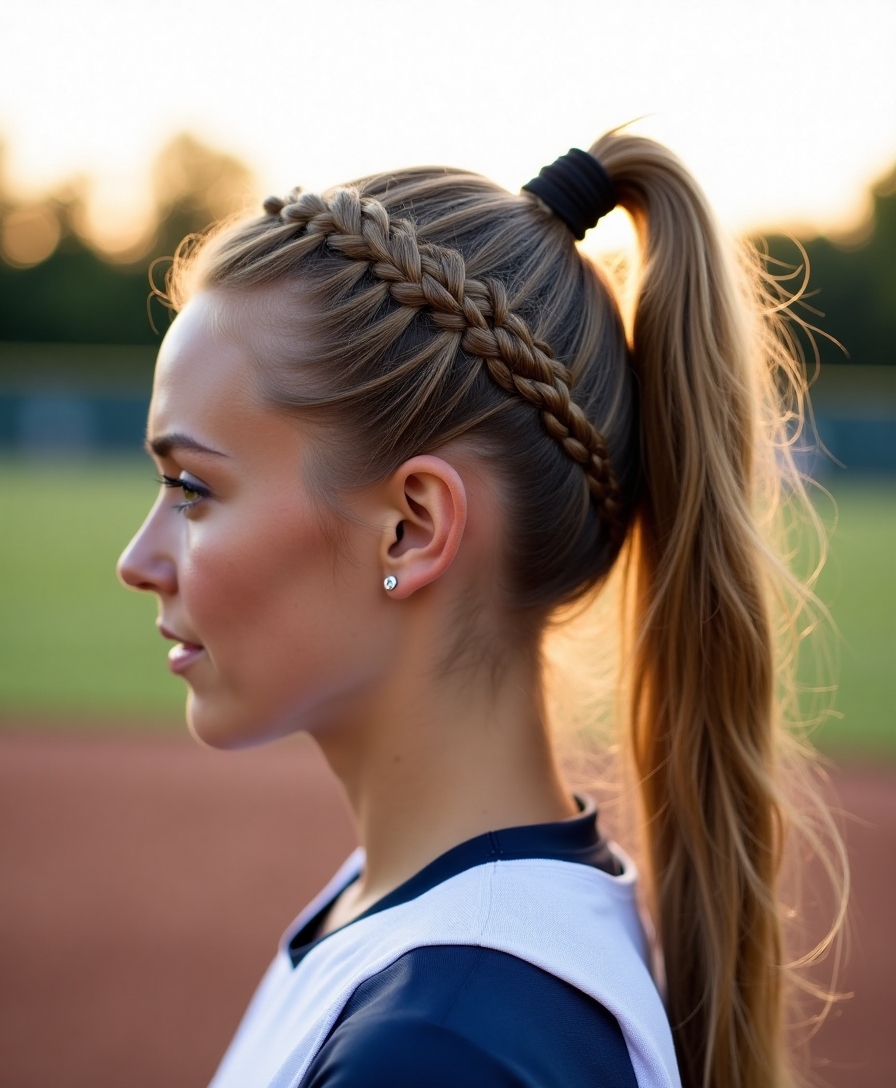
Tie the ponytail, then braid the tail. Two steps, both of them easy, and the payoff is a tail that cannot knot itself around a helmet strap or a jersey collar.
Made for Long, Thick Hair
This is the practical answer for very long or very thick hair. A loose tail of that much hair turns into a matted rope by the end of a game; a braided one brushes out clean.
Because the braid starts below the elastic, the whole thing can still be dropped low for batting. Undo nothing, just move the band.
📋What lives in the hair pocket of your bag
- ✓Bands in two thicknesses: thin for segmenting a bubble pony, thick for a base that carries weight
- ✓Eight bobby pins, not four, since a chignon eats six on its own
- ✓A small mirror, because you cannot fix a nape bun by feel in a dugout
- ✓One elastic cutter or blunt scissors for the band that will not come out
The Simple Knot Bun
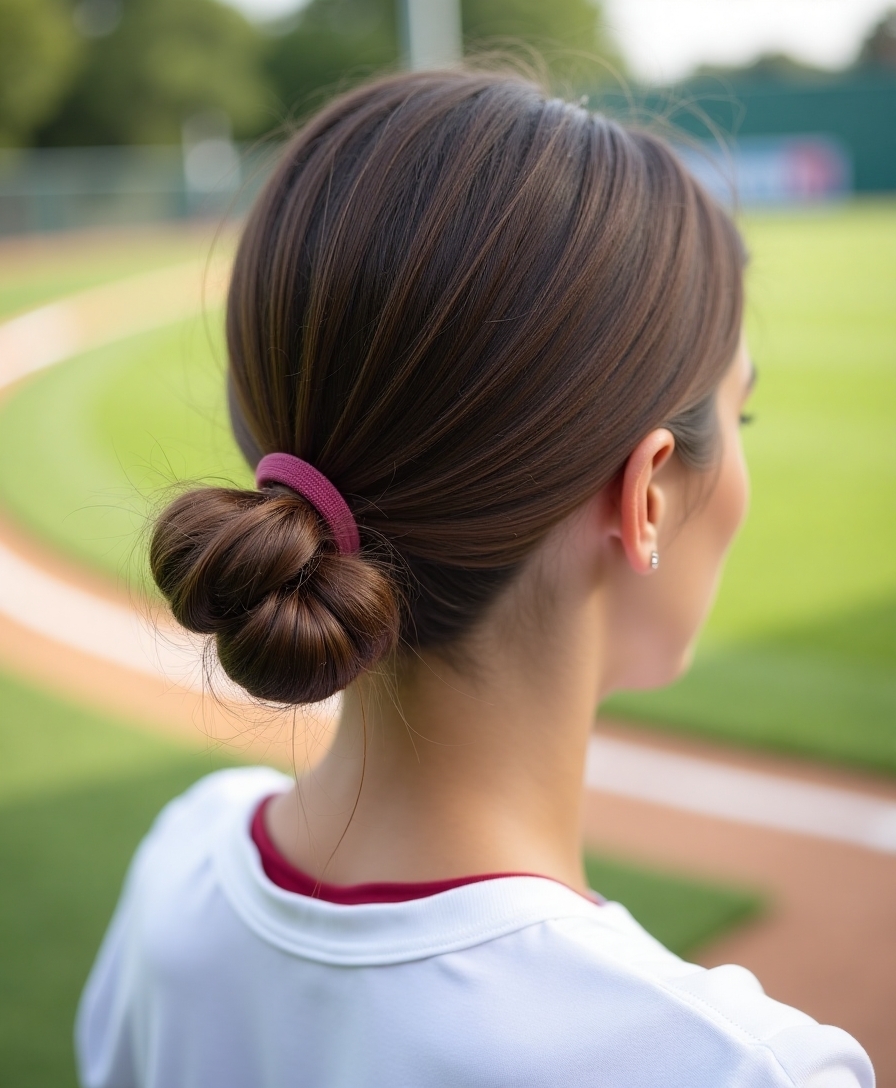
Gather low, twist the length into a loose knot, pin it. That is the entire method, and it takes less time than finding your batting gloves.
Kept at the nape it tucks under a cap and stays clear of a slide, which is the version worth learning. Our gym hairstyles guide covers the same speed problem off the field.
Honest limitation: this is the least secure option on the list. Two extra bobby pins buy you an inning or two, but on a diving-heavy day something braided will serve you better.
The Waterfall Braid
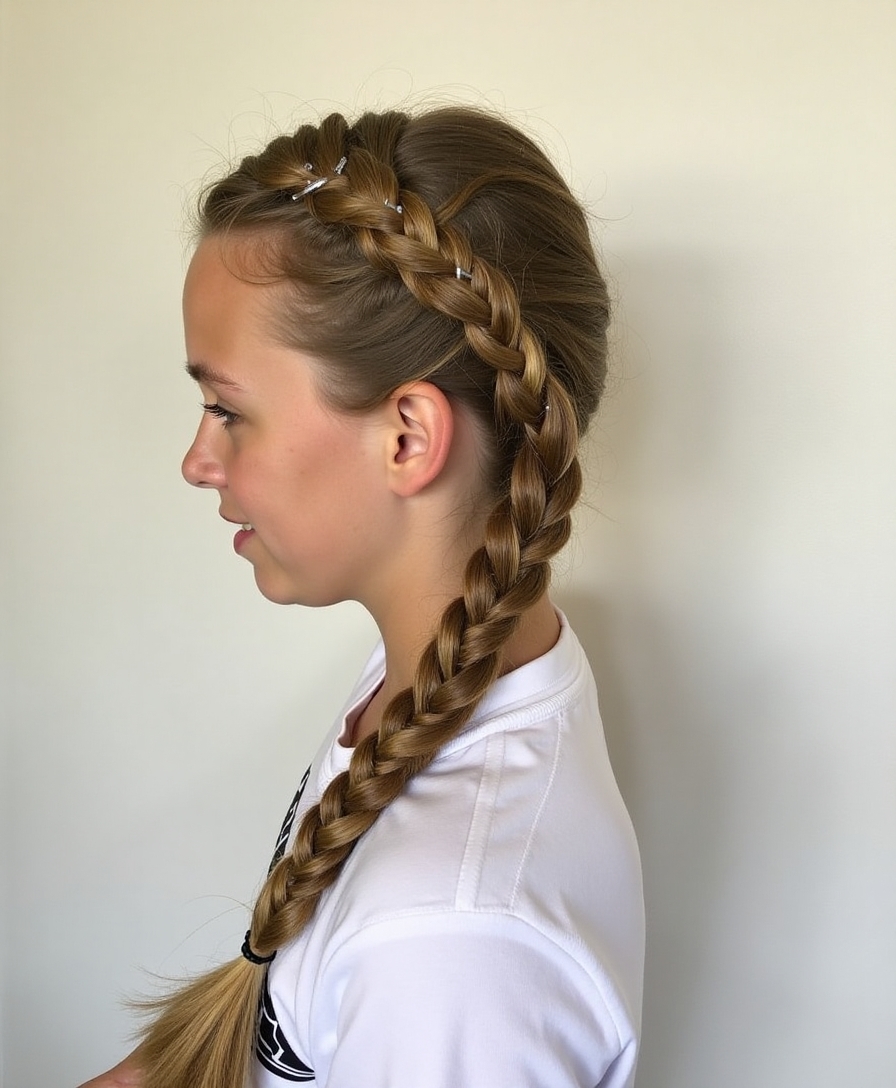
The waterfall is the prettiest thing here and the least suited to actual play, which is a fair trade as long as you know it going in. Strands are released as you braid, falling through the weave in a cascade down the back.
The front and sides stay controlled, so it is not useless on the field. The loose length below is the problem: it tangles, it whips, and it comes down in anything physical.
Save it for picture day, opening ceremonies, or a light practice, and set the woven section with hairspray before you leave the house.
Multi-Strand Braids
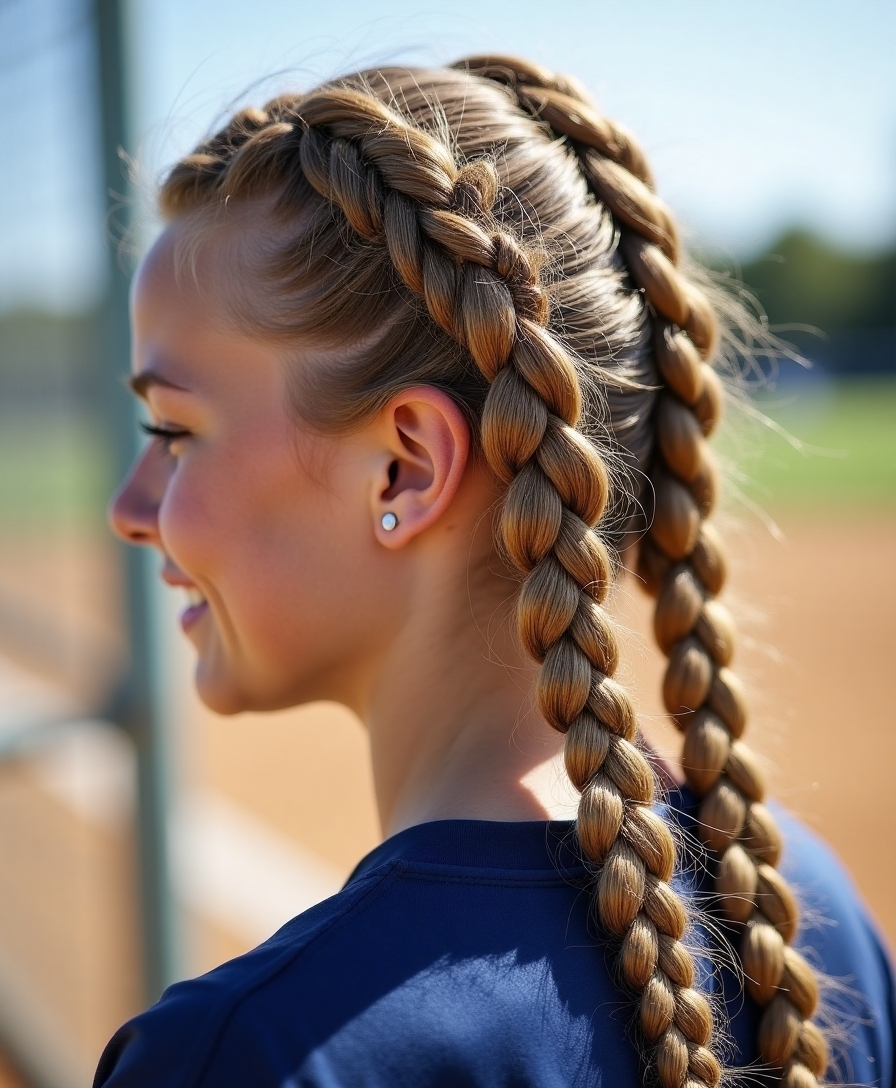
Six or eight thin braids across the scalp deliver more control than anything else here, and the players I see wearing them almost never go back. What they ask for is an hour on Sunday night. For anyone playing a three-game weekend, that hour replaces six separate morning routines, which is a trade most players take once they have tried it.
- Section cleanly with a rat-tail comb; the parts are what make it look deliberate
- Gather all the braids into one low ponytail or bun at the back for play
- Expect three to four days of wear before the roots need redoing
The Hair-Wrap Ponytail
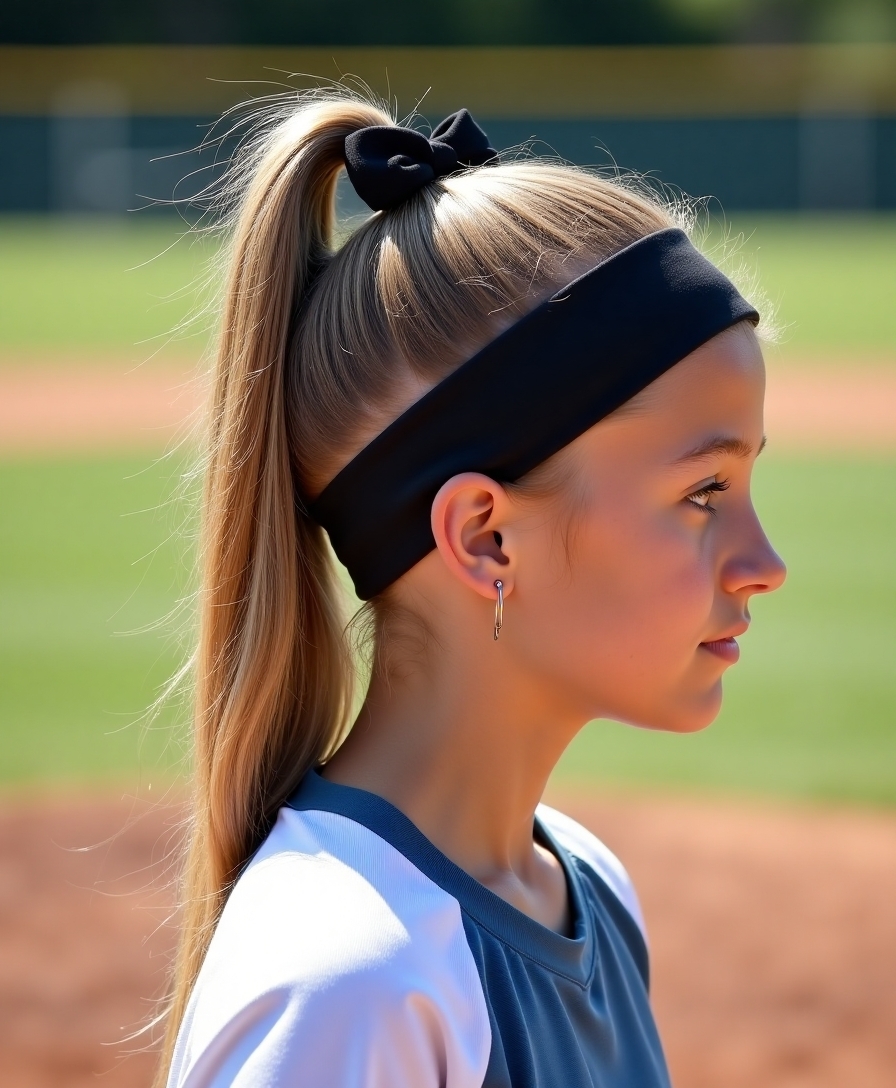
Taking a small section and winding it around the base of a ponytail hides the elastic, which is the reason most people do it. The better reason is mechanical.
The Wrap Is Doing Real Work
That wrapped strand adds friction around the band, so the whole ponytail grips itself. Elastic tension is no longer carrying the load alone, and it holds noticeably longer than a bare band under the same conditions.
Smooth the top first, wrap the strand twice, and pin the end up underneath the tail where nothing can catch it.
The Top Knot With a Braid Accent
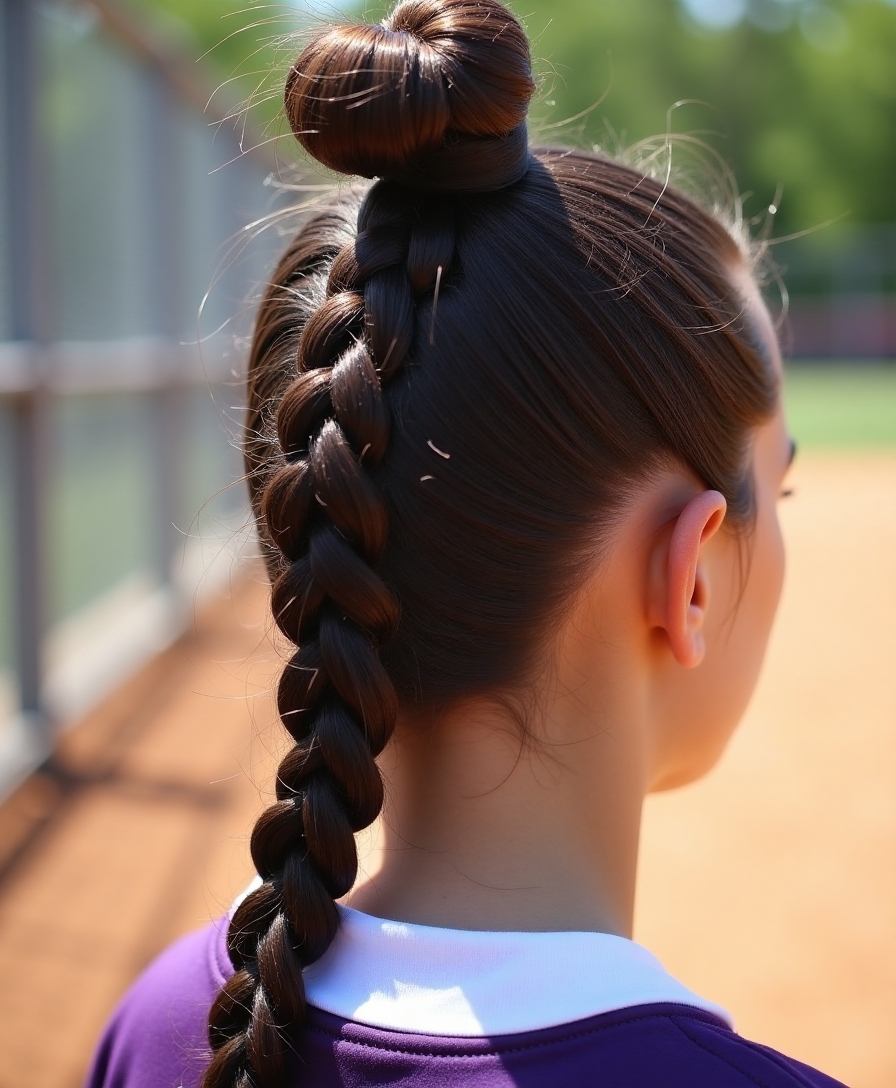
Braid one front section, gather everything else into a high knot, then wind the braid around the base. It dresses up the fastest bun there is without adding much time. This is a warm-up and practice style only, because a knot on top of your head and a batting helmet cannot occupy the same space.
- Braid the section closest to your part, since that is the piece most likely to fall
- Twist the rest up and secure with a spiral tie, which grips better than a flat elastic
- Practice and warm-ups only, so plan a second style for at-bats
The Low Rolled Chignon
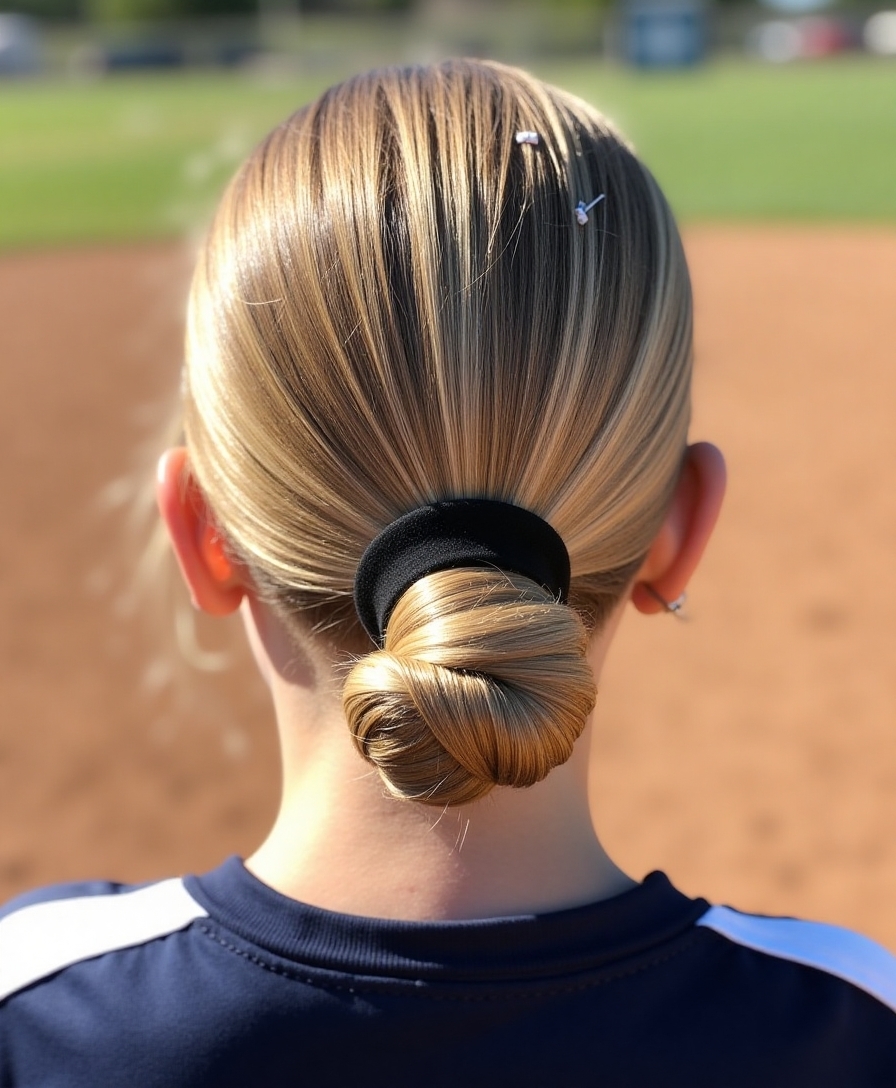
A chignon is the most polished option here, and it also happens to be among the most secure. Everything is rolled under and pinned against the head, so there is no loop, no tail, and nothing hanging out to be grabbed.
Polished and Locked Down at Once
It fits under a helmet and it photographs well, which is a rare combination on this list. Tournament finals and team photo day are its natural habitat.
The catch is the learning curve. The first few attempts come apart because the roll was too loose, and it takes a handful of tries before your hands find the right tension.
Rolling a chignon that survives a slide
1Gather low and twist
Pull everything to the nape and give the length one full twist so it starts to coil on its own.
2Roll under, not around
Fold the twisted length under toward your neck and hold the roll flat against your head with one hand.
3Pin into the scalp
Push pins through the roll and into the hair at the nape, angled toward the skull, then mist the surface.
Boxer Braids
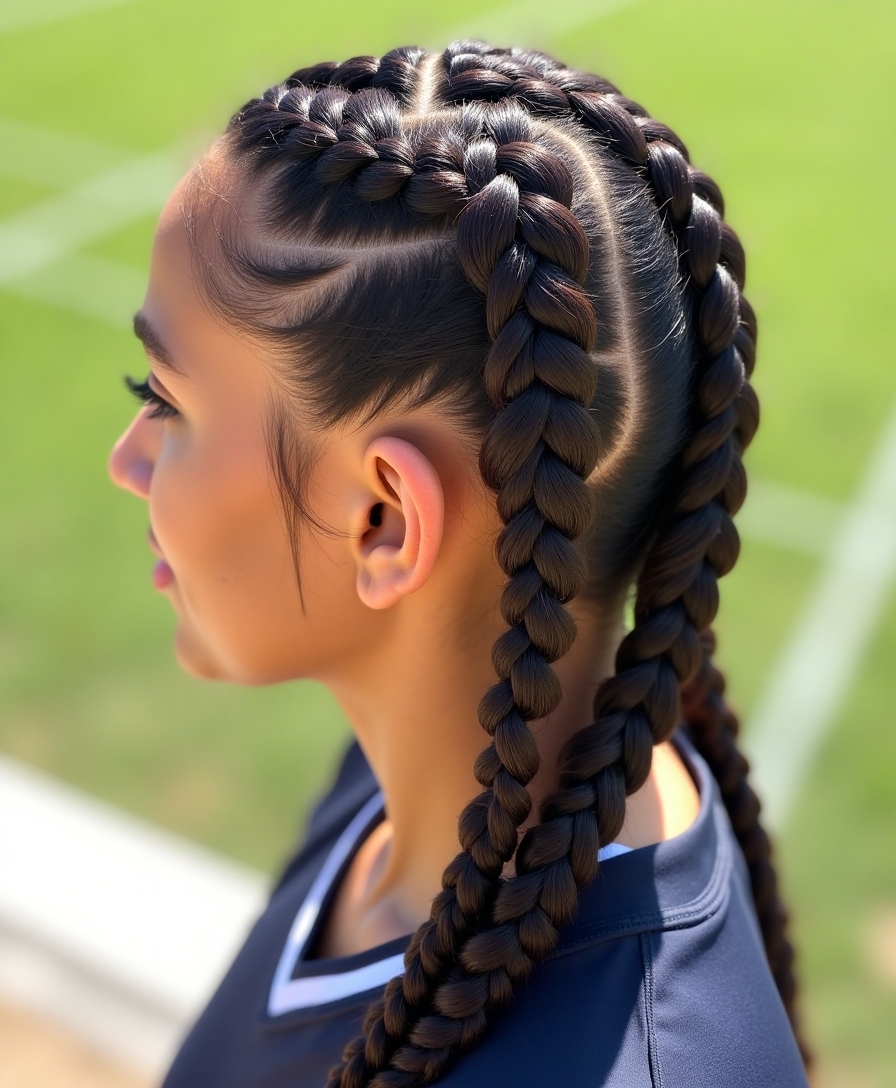
Structurally these are two Dutch braids, so the technique is already covered above. What earns them a separate entry is durability: braided this tight and this close, they are a multi-day style, and players wear them straight through a tournament weekend.
That changes the routine around them. Wrap your head in a scarf at night, spritz the parts with water and a light oil in the morning, and they hold their line through Sunday. See our twists and braids guide for related patterns that wear the same way.
- Built for wear time, not for one game; expect two to three days from a good set
- Snug at the hairline, easing off after the crown, which is far more comfortable over three hours
- Re-braid the front two rows on day three and leave the back alone
The Twisted Bun
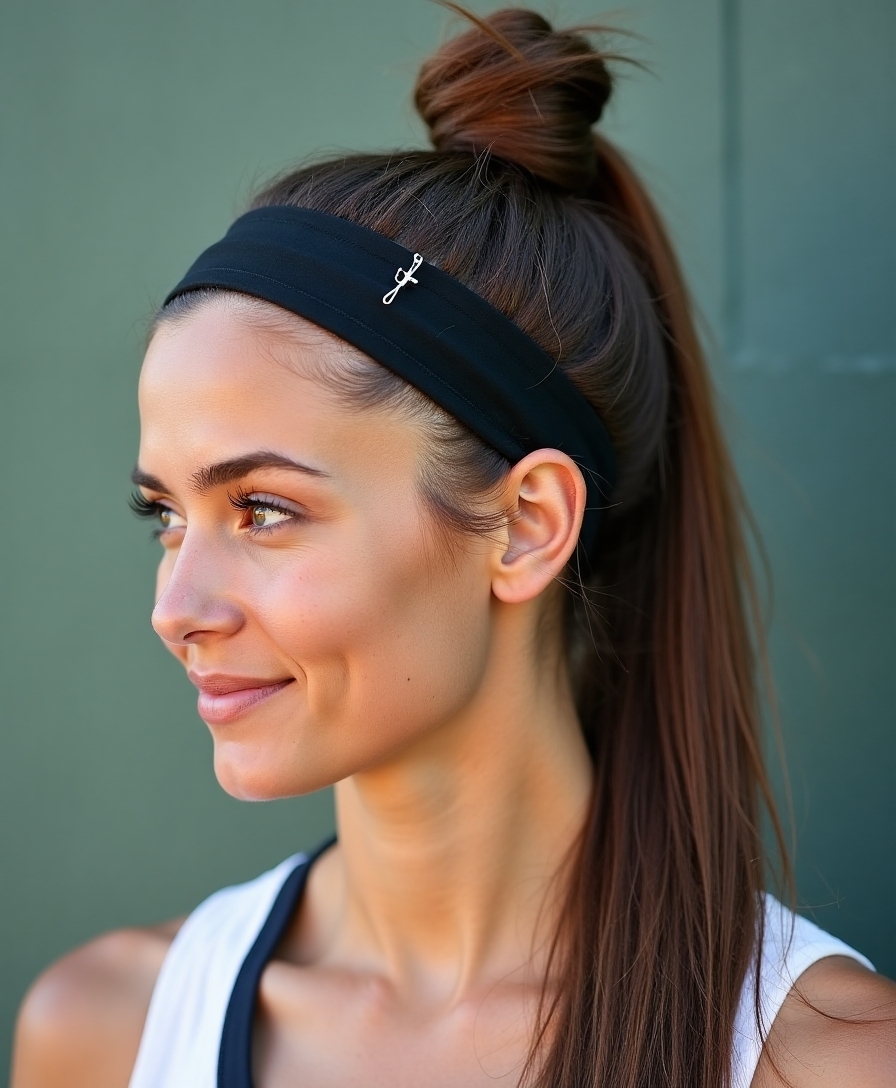
Twisting the length before you coil it changes how the bun behaves. The twist creates tension inside the coil, so the bun grips itself and needs maybe three pins where a smooth bun needs eight. It sits low and flat, which earns it a place on game day and not just in the locker room.
- Twist in one direction only, then coil in the same direction
- Pin at the base of the coil, angling toward the scalp
- Second-day hair twists tighter; freshly washed length unwinds inside an hour
How to Get the Look
The habits matter more than the technique. Start with day-old hair or add texture spray, because clean hair has no grip and every one of these fails the same way when it slides. Braid tighter at the scalp than you think you need and let the tension ease off past the crown, which holds better and hurts less over three hours.
Keep spares in your bag, since the band you are wearing is the one that will snap. A pack of proper no-slip elastics runs around $7 and outlasts a full season, which is the cheapest equipment upgrade in the sport.
The other half is rotation. The players whose hairlines still look good at the end of a season are the ones who never wear the same tension two days running: braids one day, a low ponytail the next, parts moved half an inch each time so the same sections are not carrying the load. Fine and coily hair need that rotation most.
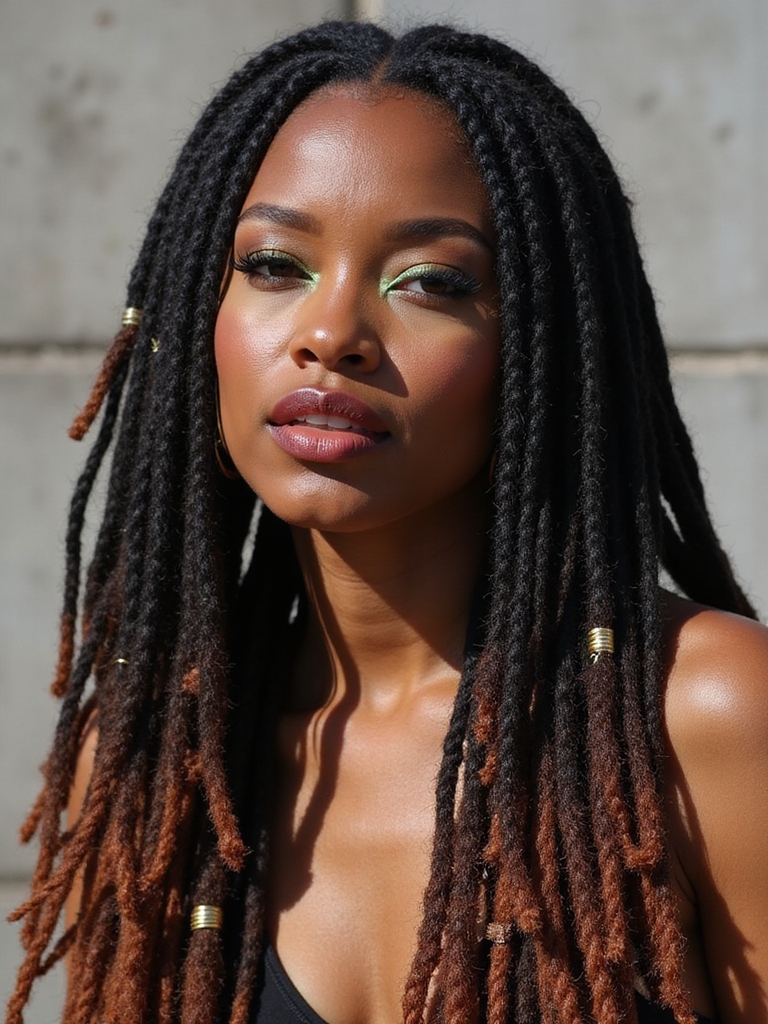
If you already wear locs, box braids, or another protective style, the helmet question changes shape. Anything gathered at the crown will push a helmet off-center, so the answer is usually to bring the length down and back: a low bun for shorter locs, a single low braid or a wrapped bundle at the nape for longer sets.
Do not force a helmet over a style it does not fit, and do not re-tighten a fresh install to make it sit lower. Wait a few days and let the set settle instead.
The Style You Stop Thinking About
The best of these twenty-one is whichever one you forget about after the first pitch. That is the only real measure. Everything else, the braid pattern, the photo, the team color of the elastic, is a distant second to not reaching up to fix something while a ball is in the air.
Pick two: one locked-down braid for helmet days and one fast option for practice. Then run both at home this week until each takes two minutes, so the first time you wear them is not the first time you need them.
More to Browse