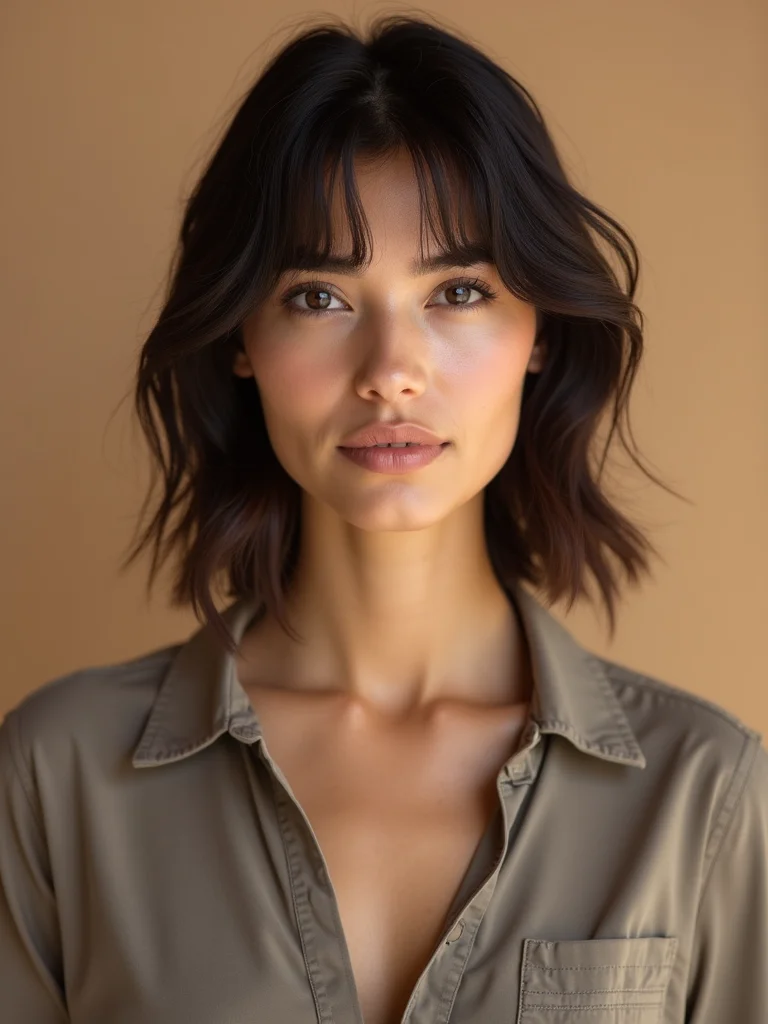
What actually separates a shag from hair that’s simply been left to air-dry? Not much, at a glance, and that’s precisely the trick. The best shags borrow the same rough, undone quality real bedhead has, just engineered into every layer so nothing about it happens by accident.
Fifteen shag haircuts follow below, chosen specifically for how deliberately careless each one manages to look.
Quick Questions About the Shag
Why does a shag read as cool instead of just messy? Because the choppy layers are placed on purpose. Real bedhead has no structure underneath it; a shag does.
Does a shag work on every hair type? Yes, though the layering approach shifts by texture; curl pattern and density each change how and where the layers are cut.
How much daily effort does it actually take? Less than the look suggests. Most versions rely on the cut itself for texture, with styling limited to a few minutes of scrunching or tousling.
Curtain Bangs for Soft Framing

Center-parted curtain bangs that sweep toward each temple soften a shag’s edges right where they meet the face, blending into the surrounding layers rather than sitting as a separate piece.
- Suits nearly every face shape, since the sweep can be adjusted wider or narrower at the consultation.
- Grows into longer face-framing pieces without an obvious in-between stage.
- Pairs with almost any length below it, from a cropped pixie to hair past the shoulders.
A Wolf Cut for Maximum Volume

Pushing shag layering to its most extreme produces the wolf cut: a spiked, heavily textured crown sitting over longer, shaggier lengths that trail behind it.
The visible jump between the short top and the long ends is deliberate, not a blending mistake, and it’s exactly what gives the shape its wild, untamed character.
This version comes across as the boldest on this whole list, so it suits anyone specifically chasing a dramatic before-and-after rather than a subtle refresh.
Which direction should your shag lean?
1Soft or bold?
Curtain bangs and feathery layers point soft; a heavy fringe or razored ends point bold.
2High or low upkeep?
Longer, blended layers grow out easy; a sharp mullet or micro fringe wants frequent attention.
A Curly Shag That Works With the Pattern

Curl pattern and shag layering pair naturally, since thinning out the interior lets each curl bounce upward on its own instead of getting pinned flat by the weight above it.
Cutting the shape on fully dry, sprung curls, rather than stretched and wet, is what determines whether the final shape actually matches what was planned.
- A curl cream worked through damp hair, then air-dried or diffused, is typically the entire routine.
- Shrinkage varies by curl pattern, so experience with the specific texture matters more than the general cut name.
- See our curly shag guide for the technique in more depth.
A Micro Bob With Jagged Ends

Cropping the shag down to bob length and cutting the ends sharply, rather than softly feathered, produces a shape that lands modern and a little severe in the best way.
Those jagged tips are what keep a short, otherwise-blunt length from looking heavy, breaking the perimeter into small, separated pieces instead of one solid edge.
- The shortest, most graphic version on this list.
- A small amount of matte paste through just the ends is usually the whole styling routine.
- Draws attention specifically to the jawline and cheekbones, since there’s little length left to distract from them.
ℹ️Where the Cool Factor Actually Comes From
A shag’s texture comes almost entirely from the cutting itself, not from any particular styling routine. Two people can use identical products and get very different results if the underlying layering is different.
Long Layers That Keep the Length

Choppy, feathered layers cut through long hair let it swing and move the way a one-length cut simply can’t, without giving up any of the actual length in the process.
- Weight comes out gradually through the lower two-thirds of the hair, not all at once near the crown.
- A curtain or face-framing fringe up front usually ties the whole shape together.
- Grows out with unusual grace, since blended layers never create a hard line to grow past. Our shag haircut guide covers shorter takes on the same idea.
A Mullet With Real Attitude

Leaning fully into the shag’s rebellious roots produces the mullet: a short, textured crown giving way to a longer, ragged tail at the nape, with real distance between the two.
- The most confrontational, attention-grabbing version in this whole roundup.
- A matte clay through the crown and a lighter texture product through the tail keeps both zones reading distinct.
- Best suited to anyone who actually wants the haircut to be the first thing people notice.
A Wavy Shag That Moves on Its Own

Natural waves running through choppy shag layers create movement that a blow-dry alone usually can’t fake convincingly.
Where the Texture Meets the Bend
The layering thins the ends just enough for individual waves to separate rather than clump into one heavy section, most of what gives this version its breezy, unbothered quality.
A salt spray scrunched into damp hair, followed by air-drying, is typically the entire routine; the wave itself does most of the actual styling.
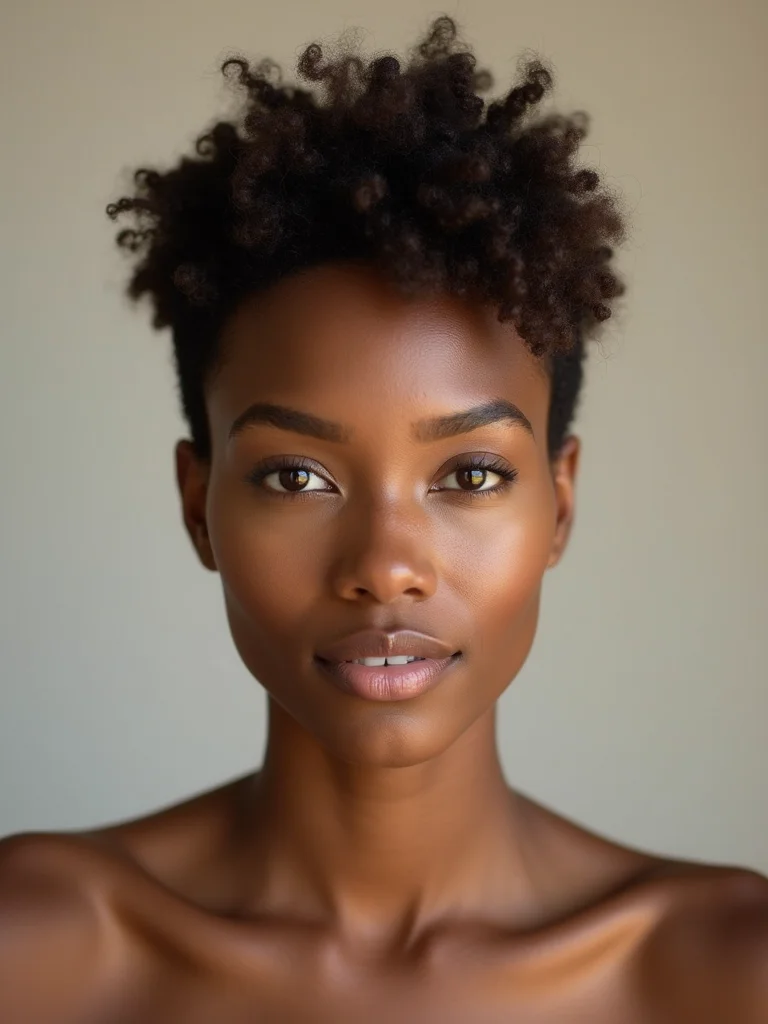
A Coily Shag Shaped for Definition

On tightly coiled patterns, shag layering shapes the coils into a defined, rounded silhouette instead of letting them stack into a heavy triangle at the crown. The cut needs to happen dry, coil by coil, since coily patterns shrink the most of any texture and a stylist has to see exactly where each coil lands before removing anything.
- A rich curl custard, worked through soaking-wet hair, defines and holds the finished pattern.
- A satin bonnet or wrap at night protects both the shape and the definition.
- 4A to 4C patterns in particular benefit from this rounded approach over a flatter, more triangular cut.
A Heavy Fringe for Bold Impact
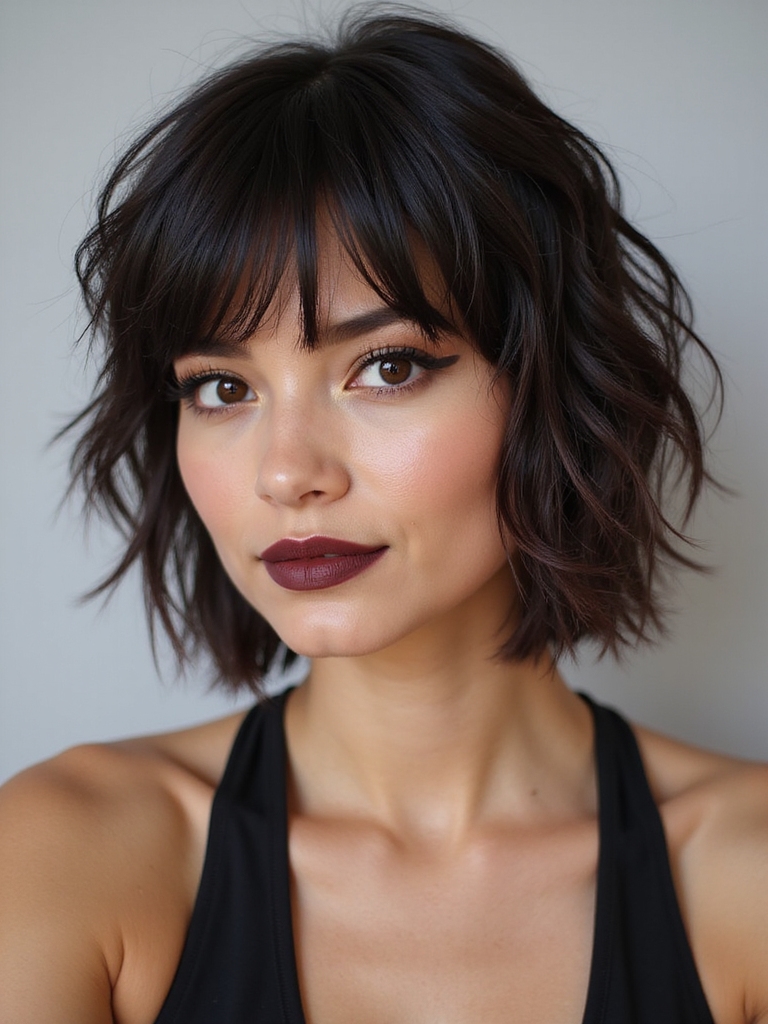
Loading the front with a dense, brow-grazing bang pushes a shag’s attitude right to the surface, anchoring the whole face behind a single bold line.
The layers behind the fringe keep that density from reading stiff, since point-cut ends break up the bottom edge enough that the heavy front still swings in step with the layers behind it.
Longer faces wear this particular pairing especially well, since the dense fringe visibly shortens the distance between hairline and brow.
A Mid-Length Feathery Shag

Sitting right at the shoulders, this version carries light, feathered layers for a full but truly airy finish.
The Most Wearable Length
Feathering tapers the ends and strips out weight, so the layers separate and lift rather than hang in one heavy curtain.
Long enough to tie back on a rushed morning and textured enough to keep the cut’s signature movement, this length tends to work for the widest range of daily routines.
A Razor-Cut Shag With Weightless Ends

Slicing the ends with a razor instead of scissors produces the lightest possible version of this cut, tapering each strand to a fine point rather than a flat edge.
That taper multiplies how many separate pieces the eye actually registers, exactly why the technique suits fine to medium hair chasing extra visual movement.
- Best reserved for hair in strong condition; a blade roughens already-fragile or very dry ends.
- A light styling spray, not a heavy oil, keeps the weightless effect intact.
- A skilled hand matters more here than with almost any other cutting technique on this list.
🅰️Air-Dried
Scrunch a light texture product into damp hair and let the layers set on their own for a looser, more relaxed finish.
🅱️Rough-Dried
Dry with fingers and a diffuser for extra lift at the crown and slightly more defined separation.
Soft Tendrils Framing the Face

Leaving a few soft, wispy pieces loose around the face while the rest of the cut carries its usual texture creates a noticeably more romantic, gentler read than the bolder versions on this list.
- The tendrils are cut short enough to curl or wave gently against the cheeks.
- A small amount of serum keeps them smooth without weighing them down.
- Flatters round and heart-shaped faces especially well, since the pieces soften a wider jaw or forehead.
A Shag-Pixie Hybrid

Cropping the shag all the way down to pixie length and sculpting it with choppy, piecey layers produces the shortest, most concentrated version of the whole texture.
The Shortest, Boldest Version
Heavy internal layering gives even this little length real volume and lift, while the piecey finish keeps the overall effect modern instead of severe.
A small amount of clay worked through with fingers defines the texture, and the whole look typically styles in well under two minutes.
📋Before You Book a Shag
- ✓Bring a photo, but also point out your specific hair type and texture.
- ✓Ask whether the stylist plans to point-cut, razor, or a mix of both.
- ✓Say how much daily styling time you’re actually willing to give it.
Color That Follows the Movement

Placing highlights, a money-piece, or a bold pop of balayage specifically where the layers turn adds real dimension to an already-textured cut.
Because a shag’s structure is already broken up, color tends to amplify that texture rather than compete with it, catching the light differently as the layers separate and move.
Placement matters more than the specific technique chosen; most colorists aim the brightest pieces at exactly the spots where the layers move the most.
A Wet-Look Shag for High Shine

Working gel through damp or dry hair and shaping the layers by hand produces a glossy, sculpted finish where every separated piece looks sharp and defined.
The shag’s layering keeps this look from reading flat, since the texture still catches light along each section even when the whole style is smoothed and controlled.
This is the version built for a night out rather than an ordinary morning; the trade-off is dryness, so a hydrating treatment afterward is worth planning for.
Styling Tips
A handful of tools cover nearly every version above: a texture spray or salt spray for anything meant to look undone, a small amount of clay or paste for definition at the ends, and a diffuser for curl and coil patterns specifically.
Most shags still ask for a reshape on roughly a seven-week cycle to keep the layering crisp, and a cut at this length typically runs around $65 depending on the salon and the specific technique involved.
The Texture Is Doing All the Work
Every version above comes back to the same mechanism: choppy, deliberately placed layers that read as relaxed rather than fussed-over, no matter the length, texture, or color underneath them.
Whichever shape stood out, bring it to a consultation and describe the specific hair type and morning routine behind it. The right layering, cut for that hair rather than copied from a photo, is what actually makes the look work.
Where to Next