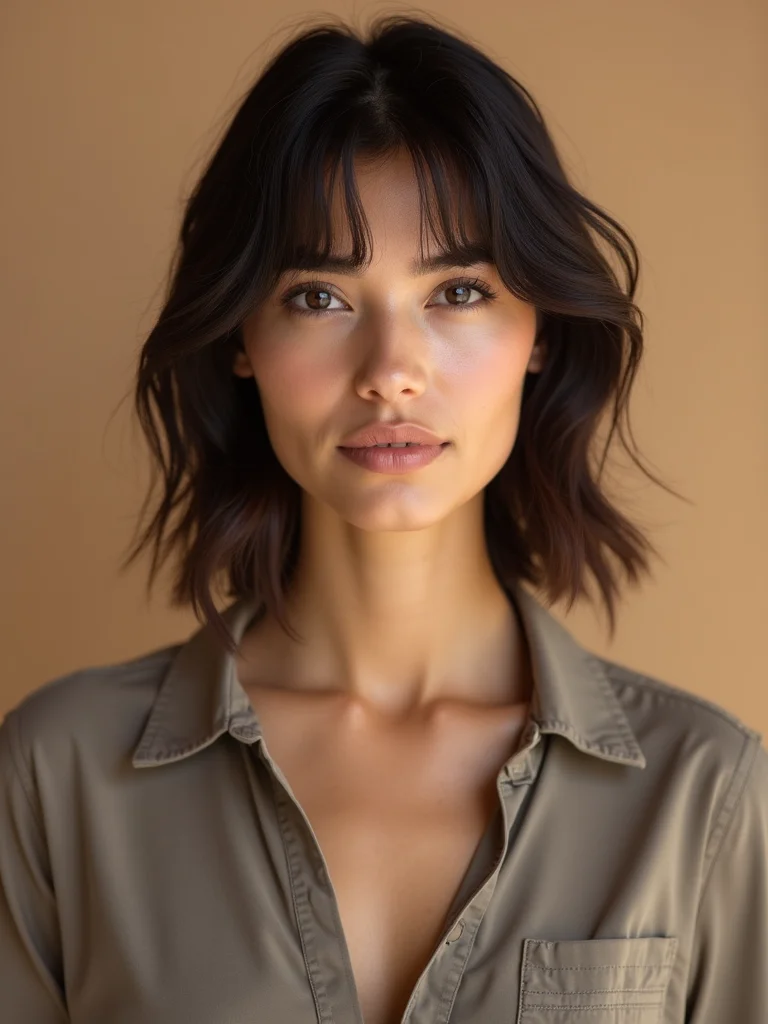
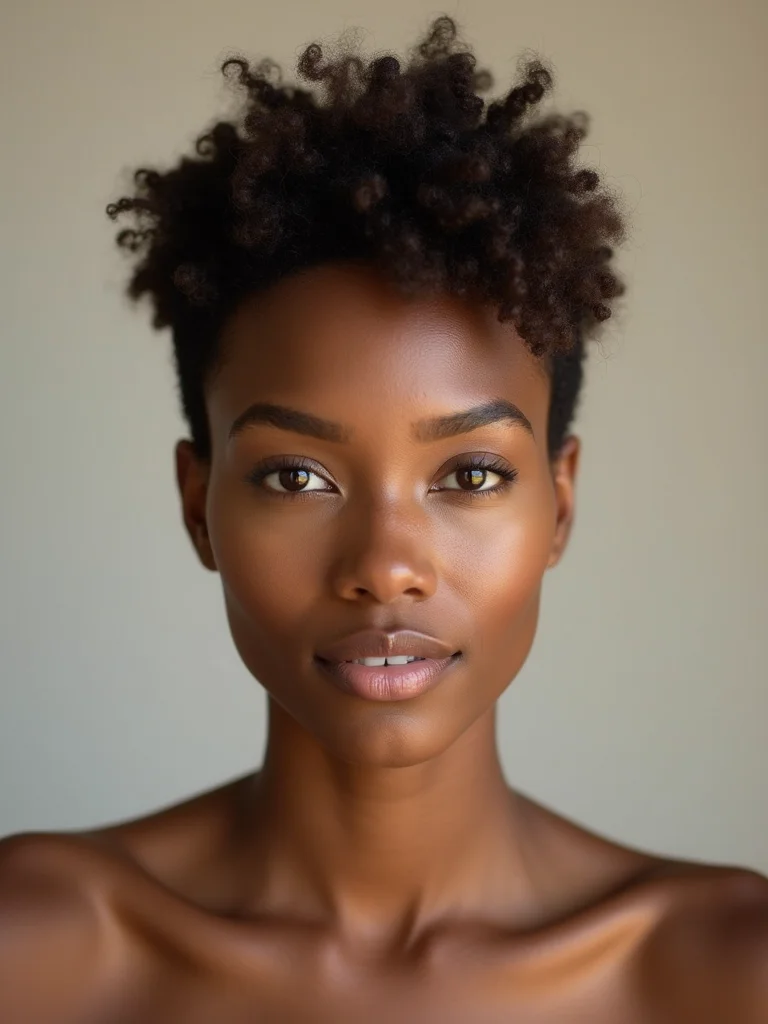
What if the most versatile color in the salon is already sitting in your roots? Brown gets written off as the safe, boring choice, but done right, brown layered hair runs from icy smoky mocha to deep espresso to warm honeyed chestnut, plenty of room to actually choose something. Layers are what turn that range into movement instead of a flat block of color.
Ten looks below pair a specific brown with a specific layered shape, from face-framing chestnut to voluminous chocolate curls. Expect shade-matching by undertone, a realistic upkeep read for each, and what to actually tell your stylist to land the one you want.
Match Your Shade to Your Undertone
| Shade | Best Undertone | Upkeep |
|---|---|---|
| Honeyed Chestnut | Warm | Gloss regularly; gold fades fastest of the warm shades |
| Smoky Mocha | Cool | Toner keeps it from pulling warm between visits |
| Maple Brunette (highlights) | Warm | Low; highlights soften as they grow |
| Caramel Balayage | Warm / Neutral | Low; painted root hides regrowth |
| Cocoa Brown | Neutral | Lowest; almost no demarcation line |
| Toffee Dimension | Warm / Neutral | Moderate; dimension needs periodic refreshing |
| Espresso | Cool | Low; solid dark holds color the longest |
| Sunlit Babylights | Nearly all | Lowest of any highlight technique here |
| Nutmeg Brown | Warm / Neutral | Moderate; even tone needs occasional gloss |
| Dark Chocolate | Warm or cool | Low; curls hide regrowth naturally |
Honeyed Chestnut Face-Framing Layers

Honeyed chestnut is brown with the lights left on: a rich base shot through with gold, warm and glowing rather than flat. On face-framing layers, the warmest pieces land right where they catch the eye first, so the color does double duty as both shade and highlight.
- Best paired with warm or golden undertones.
- Ask for the lightest pieces concentrated at the front, not scattered evenly through the whole head.
- Plan on a gloss refresh around the ten-week mark, since gold is the first tone to slide toward brass.
Smoky Mocha Long, Airy Layers
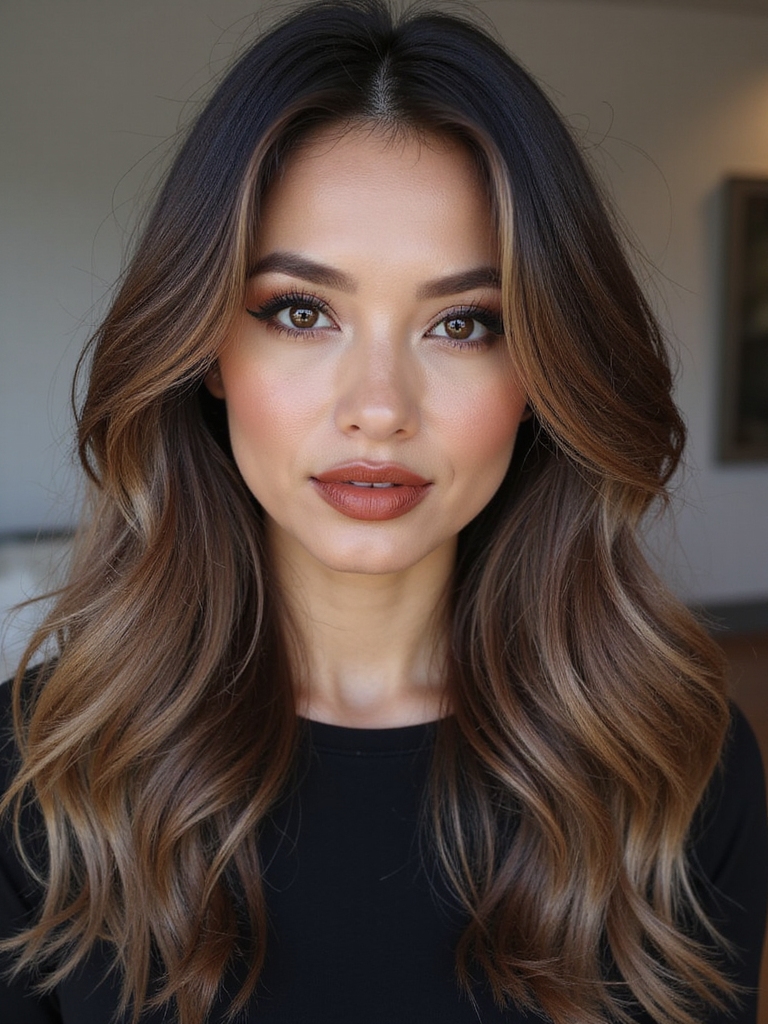
Cool, ashy, with a hint of gray-taupe running through it, smoky mocha answers for brown that keeps pulling orange a few weeks after every appointment. On long, airy layers, the cool tone stays quiet and controlled, never flat or heavy.
The airiness matters as much as the shade choice. Long, wispy layers keep the smoky tone light on the head, so it actually moves; it never sits like one dense block of color.
- Suits cool and neutral undertones; very warm skin can find it a touch draining.
- Toner appointments matter more here than for warm browns, since cool tones shift toward brass fastest.
- Works best on hair with enough length for the layers to actually swing.
Maple Brunette Shag With Highlights
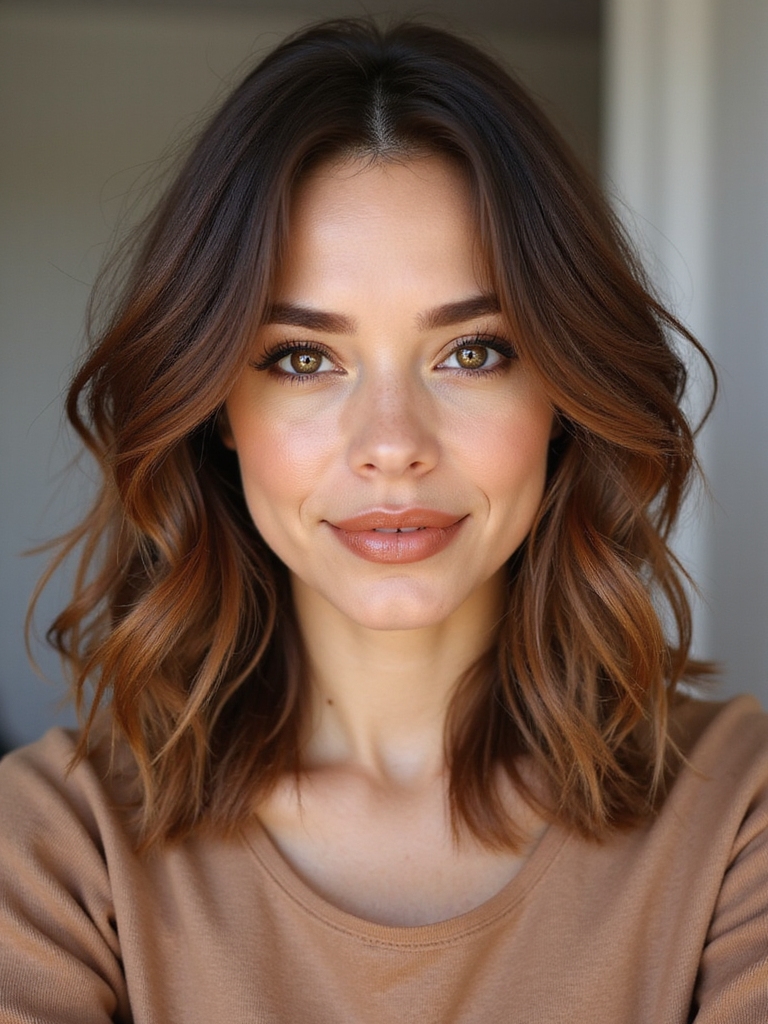
Maple brunette layers a warm, reddish-brown base with golden highlights, giving a shag real dimension instead of one flat tone. The highlights catch the shaggy layers with every turn of the head, so the color shifts as you move. This isn’t a quiet color choice, and it isn’t meant to be. If you like the choppy energy but want to see more variations, the choppy layered cut roundup is worth a look.
- Suits warm undertones especially, where the red-gold glows against the skin.
- The shag’s choppy ends scatter the highlights for dimension from more angles.
- A texture spray does most of the styling work; this cut isn’t meant to look polished.
Caramel Balayage on a Feathered Lob
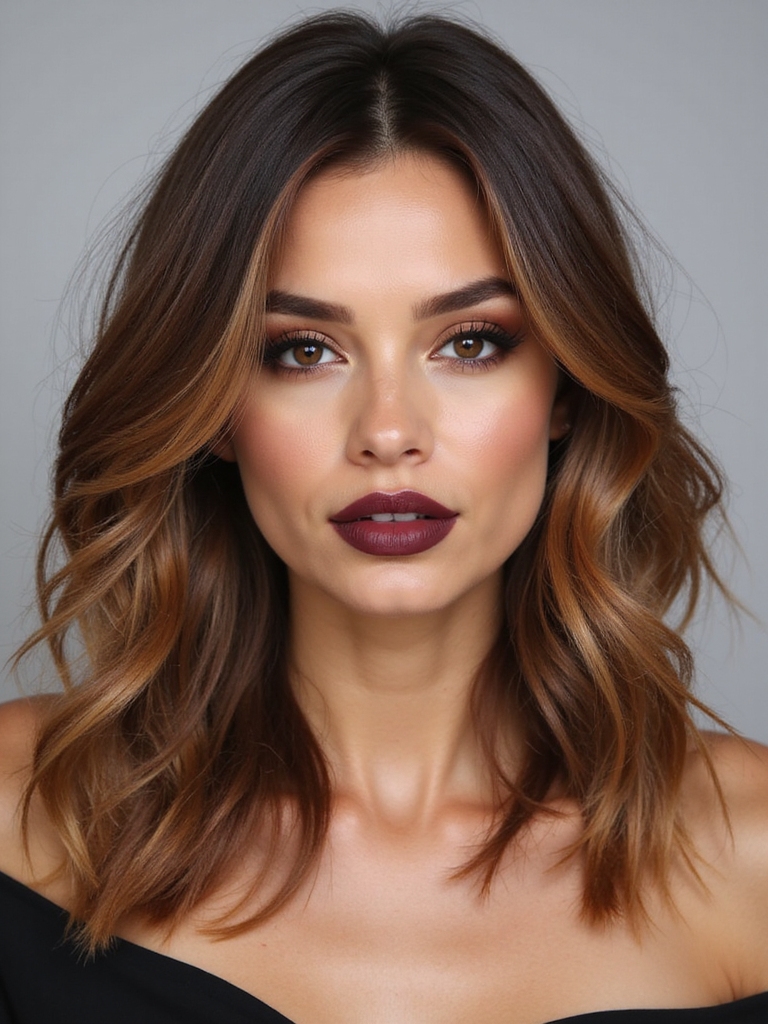
Caramel balayage hand-paints warm caramel through a brown base, concentrating the lighter ribbons toward the ends of a feathered lob. The painted caramel brightens the lengths while the root stays grounded, which is what keeps this combination low-maintenance.
The feathered lob does real work here, well beyond framing. Its soft, sliced ends let the caramel catch and flash as the hair moves. A partial balayage like this usually runs $150 to $200, roughly half what a full head of foils costs, and it holds for months without a root touch-up. For more shape ideas built around this same technique, see feathered layered hairstyles.
👍Why It Works
- +Grows out with almost no visible line, since the color is painted on rather than foiled in hard blocks.
- +Brightens the ends exactly where movement shows it off.
- +Holds its dimension for months between appointments.
👎Trade-Offs
- –Takes longer in the chair than a single-process color.
- –Needs a skilled hand; a rushed balayage can look stripy instead of blended.
- –Lighter ends need more conditioning attention than the root does.
Cocoa Brown Layers With Curtain Bangs
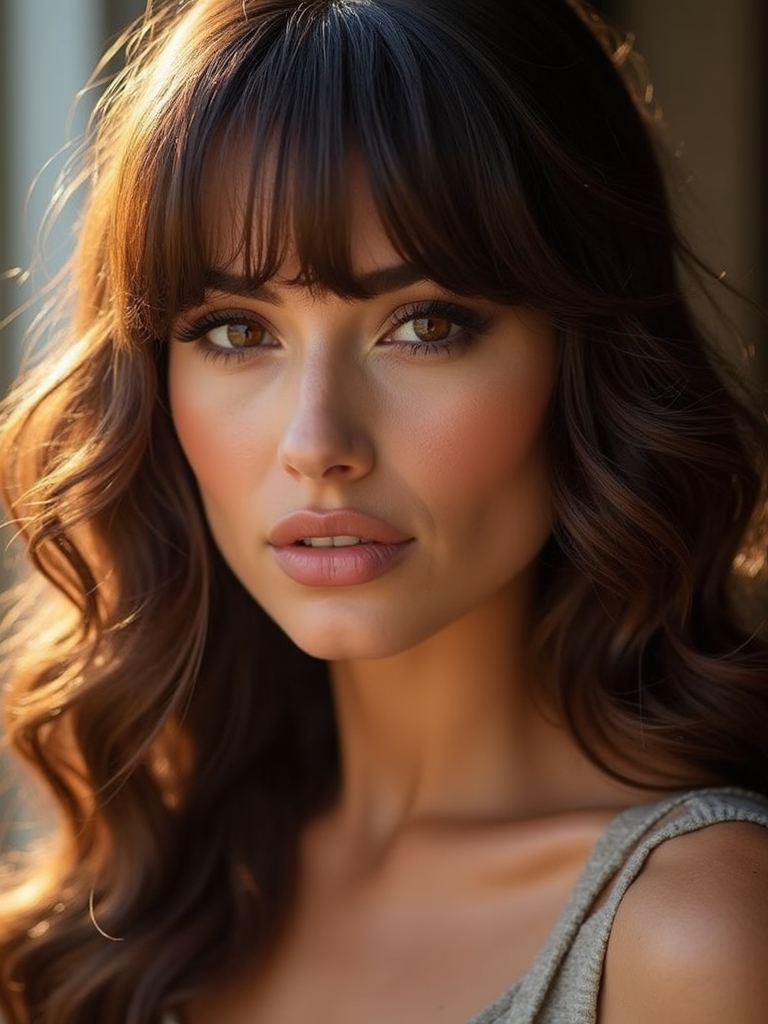
Cocoa brown is a balanced, true-neutral brown, deep and warm without tipping gold or ash. On layers with curtain bangs, the even tone frames the face with a clean, classic finish that doesn’t compete with the cut.
Why a True-Neutral Brown Wears So Easily
Cocoa sits dead center on the brown spectrum, neither warm nor cool, and that balance is a big reason it flatters such a wide range of skin tones and grows out with barely any visible demarcation line.
Curtain bangs bring the movement that keeps a neutral brown from reading flat. As they part and soften into the layers on either side, they show off the color from a completely different angle than the rest of the cut. The face-framing layered cuts guide covers more ways to work bangs into layers.
Toffee Dimension on Textured Mid-Length Layers

Toffee dimension blends a warm brown base with soft, golden-toffee tones, rich color that photographs like it tastes good. On textured mid-length layers, the dimension catches the piecey, choppy ends as they move, adding warmth and motion together.
- A strong match for warm and neutral skin; the toffee warms without tipping into red.
- Point-cut, textured layers give the dimension somewhere to actually catch light.
- A light texture product keeps the pieces separated instead of clumping into one mass.
Espresso Sliced Layers for Thick Hair
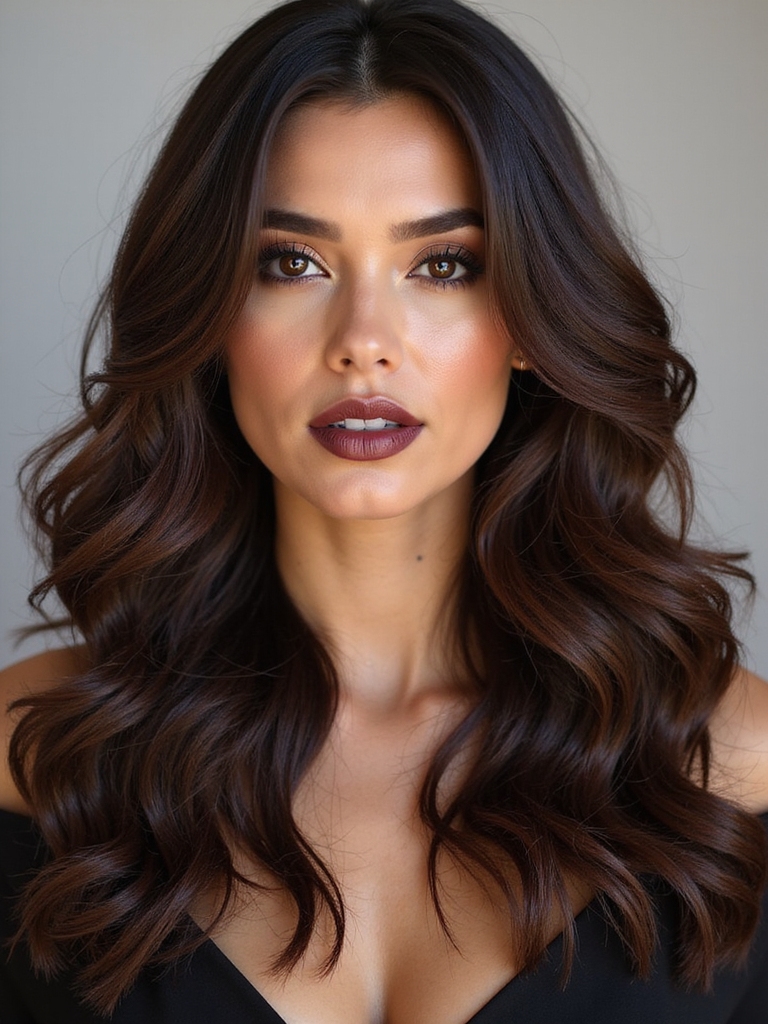
Espresso is almost-black with cool depth, the brown that looks the most expensive on a healthy, glossy head. On thick hair, the challenge is keeping all that depth from sitting like one heavy block.
Why Slicing Matters More Than Length on Thick Hair
Sliced, internal layers solve it. Removing weight from inside the length lets thick espresso hair move and shine, and the dark tone catches light across each layer, top to bottom.
Espresso flatters cool and neutral undertones especially well. On very warm skin, a touch of warmth through the front pieces keeps the color from looking severe. More cutting options for dense hair live in layered cuts for thick hair.
A few cutting terms worth knowing before this appointment.
📖Slicing
A cutting technique that removes weight from inside the hair without shortening the length, used to keep thick layers moving instead of sitting heavy.
📖Point-cutting
A finishing pass where the stylist snips upward into the ends instead of across, so a blunt line breaks up into soft, textured movement.
📖Demarcation line
The visible edge where a color change stops. Balayage and babylights are prized for keeping this soft or invisible.
Sunlit Brunette Babylights on Soft Waves

Babylights are the finest, most delicate highlights available, and on a brown base they add a soft, sunlit glow with none of the obvious contrast a full foil job creates. Through soft waves, the fine lighter strands catch the light like the hair spent a weekend outside.
- The subtlest way to brighten brown; flatters nearly every undertone.
- Grows out almost invisibly, which keeps the upkeep lower than any other highlight technique here.
- Because the placement is so fine, a refresh sits on a longer cycle than bolder techniques need.
Nutmeg Brown U-Shaped Layers
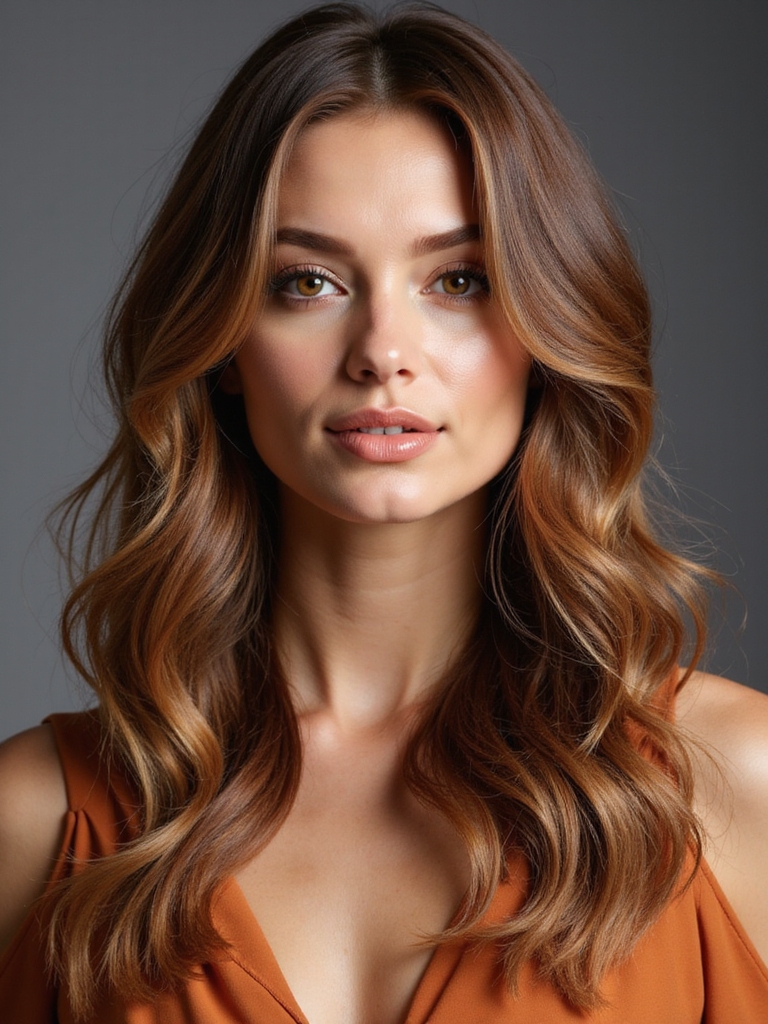
Nutmeg brown carries a soft, spicy warmth, neither fully golden nor fully ashy, an easy in-between for anyone who can’t decide on a lane. On a U-shaped layered cut, the even, warm tone fills out a rounded silhouette with glossy, consistent color.
The U-shape carries the whole look here. Cascading layers build a soft, rounded outline at the back while keeping the sides fuller, so the nutmeg tone reads as one continuous sweep of color as the hair swings. Most clients ask for a light gloss around the twelve-week mark to keep the spice from turning dull.
- Flatters warm and neutral undertones, where the soft spice warms the complexion without overpowering it.
- Works best on hair long enough to actually show the rounded shape.
- Keep it glossy: a neutral-leaning brown looks dull faster than a warmer one does.
🅰️U-Shaped Layers
Fuller at the sides, rounded at the back. Reads as one continuous curve of color and volume.
🅱️V-Shaped Layers
Longer in the center, shorter at the sides, for more drama and a sharper point of focus. See V-cut layered hair for the full look.
Dark Chocolate Voluminous Layered Curls
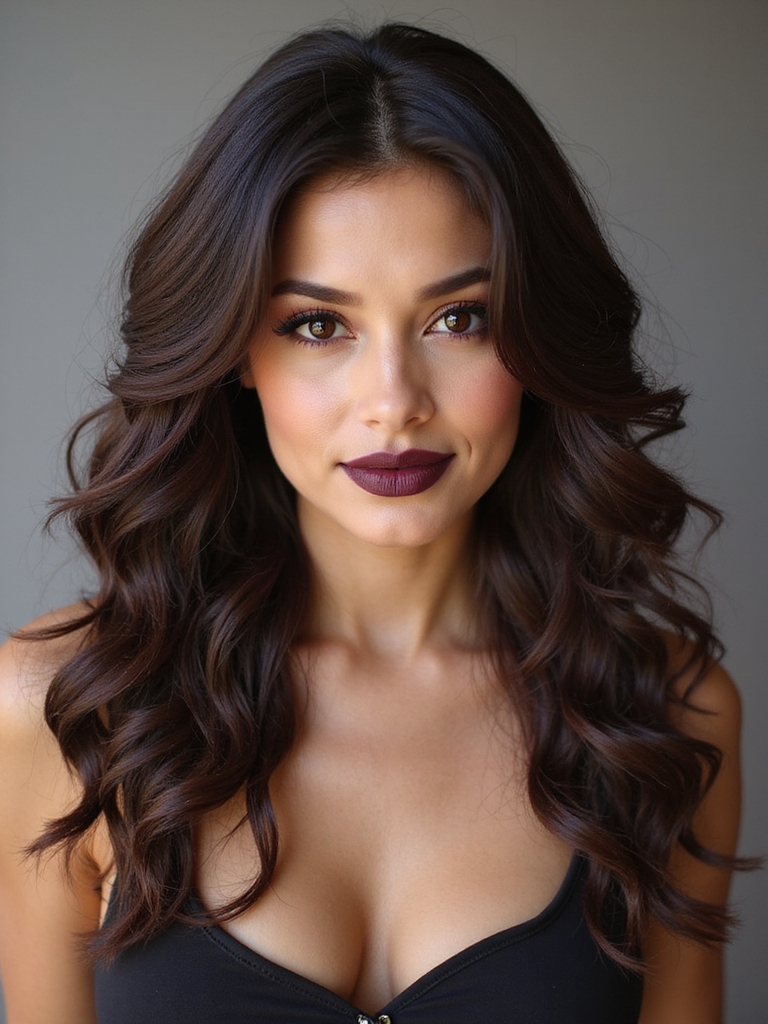
Dark chocolate brown gives curls a deep, glossy richness, a warm-dark brown that looks luxurious against voluminous, layered coils. The rich tone catches light across each curl, adding shine on top of all that volume.
Why Curly Layers Need a Dry Cut
Curly layers live and die by how the cut happens. They need shaping while dry, one ringlet assessed at a time, so the stylist can watch how each curl actually falls before deciding where to place the layer. Cut wet and guessing at the shrinkage, curly layers can land in the wrong places.
A curl cream defines individual coils while the dark chocolate tone adds glossy depth underneath. The combination reads as intentional, deliberate volume you can actually see holding its shape by day three.
Common Mistakes to Avoid
The most common misstep is picking a shade off a photo without checking it against skin undertone first. A brown that glows on one face can drain the next, and layered hair shows color from every angle, so a mismatched undertone is harder to hide than it would be on a solid, one-length cut.
The second is describing layers vaguely. Saying ‘I want layers’ tells a stylist almost nothing. Naming what you want the layers to do, remove weight, add movement, frame the face, gives the stylist something concrete to work from.
The third is underestimating upkeep before booking. A warm shade like honeyed chestnut needs far more frequent toning than a neutral like cocoa, so ask for a real maintenance estimate before falling for a photo you won’t want to keep servicing.
Brown Layered Hair, Answered
?Can I go straight from black or very dark hair to one of these lighter browns?
Usually yes, but expect more than one appointment. Very dark hair needs to lift in stages to avoid damage, so a colorist might get you to a mid-brown first and refine the tone at a follow-up rather than pushing for the full result in one sitting.
?Which of these browns needs the least upkeep?
Cocoa and dark chocolate, both neutral-to-cool tones with almost no visible regrowth line. Warm shades like honeyed chestnut fade fastest and need more frequent toning to stay rich instead of drifting brass, so budget for that if you fall for the warmer end of the spectrum.
?Do I need a fresh cut to get these layers, or can a colorist add color to hair I already have?
Color can go on existing layers, but the effect depends on the cut underneath. If your current layers are thin on movement, ask your stylist whether a light reshape alongside the color would let the dimension actually show once it’s in.
One Formula, Ten Ways to Wear It
Brown only reads as boring when it’s treated as one flat color. Match the shade to your undertone, add a technique that creates real dimension, and pair it with layers built to move: that’s the entire formula behind all ten looks above.
Bring two or three reference photos to your next appointment and let your colorist tell you honestly which one actually fits your undertone before you commit to a full head of foils.
You Might Also Like