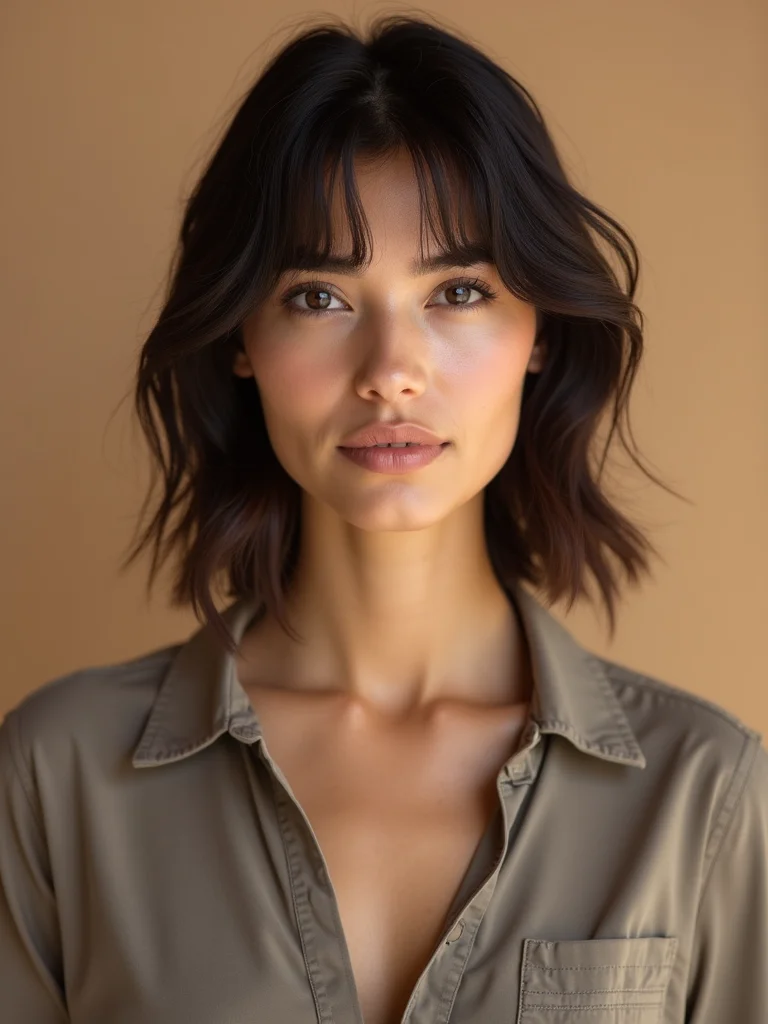
Most cuts trend for a season and quietly disappear. The shag has held on for half a century, and the reason is simple: it follows your texture and movement while fads come and go, so it flatters women at every age, on every face shape, and across every hair type.
Worn short and sharp or long and feathered, it stays relaxed, confident, and current all at once. The fifteen shag haircuts for women below cover the full range, from soft curtain-bang versions to bold mullets and richly defined coils, with the styling and upkeep behind each so you can find the one that fits your life.
Why the Shag Keeps Working
- It takes its cues from your hair, so the layers are tailored to your texture and the shape stays current for years.
- It adapts from a pixie to a long cut and suits fine, thick, straight, wavy, curly, and coily hair alike.
- Most versions want a reshape every six to eight weeks, around $50 to $80, though longer cuts stretch further.
The Curtain Bang Shag

The curtain bang shag is the most popular version among women for good reason. A soft, center-parted fringe frames the face while choppy layers move below, and the bangs sweep gently to either side and blend into the layers as they grow.
It flatters almost everyone, which makes it the safest place to begin if you have been curious about the shag but nervous about commitment. The upkeep stays low, since the fringe grows into face-framing pieces with no harsh middle stage.
Style it with a round brush, curving the bangs open and away from the face, and a light texture spray through the lengths. It is the version most women live with most easily, day in and day out. See our curtain bangs guide for the fringe on its own.
A Modern Wolf Cut Shag
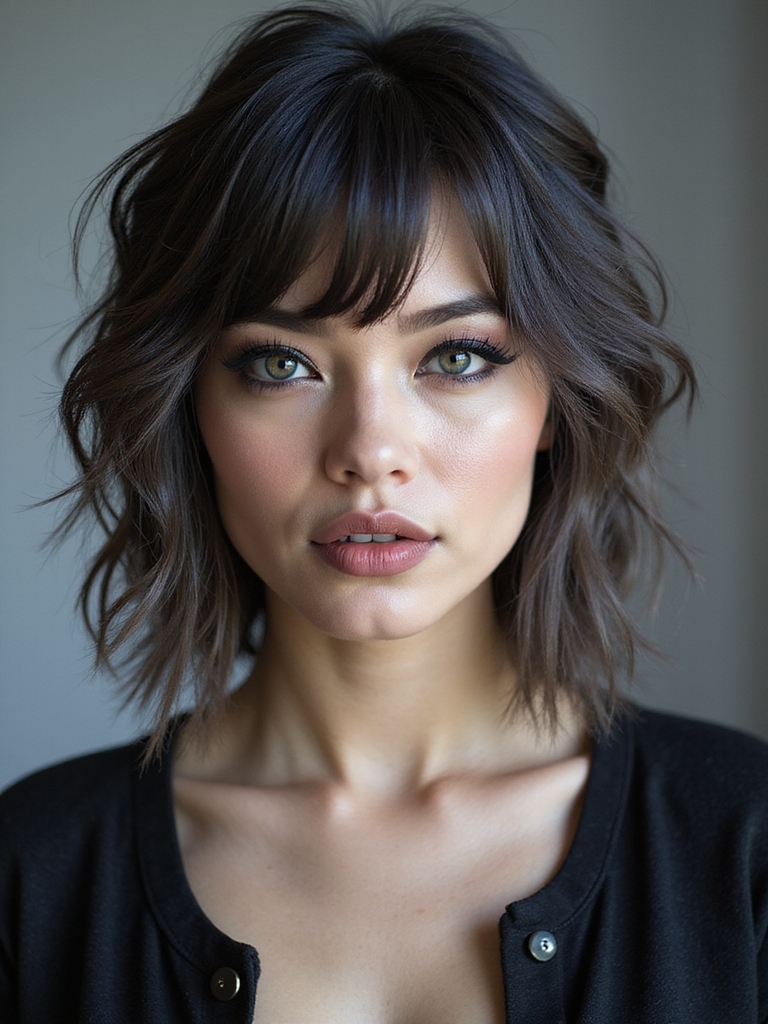
If you want your hair to be the loudest thing in the room, the wolf cut is the shag pushed to its limit. The crown is cropped and spiked for height, the back stays long and shredded, and the deliberately undone finish ties the disconnected shape together.
It is a young-at-heart cut that flatters a confident woman of any age who is done playing it safe. Styling is quick: scrunch a matte paste into the crown for grit, then mist the ends with texture spray to keep them piecey. See our wolf cut guide for the full shape.
- Heavy, disconnected layering for maximum volume and edge.
- A spiky crown over longer, shredded ends.
- Matte paste at the crown holds the height.
Heads-Up
The choppy layers and razored or point-cut ends in a shag take real skill to place well. Look through a stylist’s photos for textured, piecey work before you book, since an unpracticed hand can leave the layers thin or shapeless. A short consultation first is always worth it.
The Wavy Mid-Length Shag

A wavy mid-length shag is the everyday workhorse of the list, the airy layers breaking natural waves into soft, separated sections that fall with built-in body. The mid length keeps it versatile, long enough to tie back yet short enough to feel light, and the waves do half the styling for you.
Natural waves wear it best, and straight hair can borrow the effect with a little salt and scrunching. A sea-salt spray scrunched into damp hair brings the wave forward, and a quick scrunch with your fingers finishes it. This is the shag I cut for women who want the full effect with a five-minute routine.
A Curly Shag With Defined Coils

On curly hair, a shag finally lets the curls breathe. The layers open a dense pattern so it falls in rounded, springy tiers, and that soft, full silhouette frames a round or heart-shaped face especially well.
Booking a curl specialist who works on dry hair is the part that matters. A wet curl can hide a third of its real length, so a stylist has to see where each one settles before shaping around it.
At home, a curl cream raked through soaking-wet hair and a diffuser on low heat set the definition, with a satin bonnet to hold it overnight. Our curly shag guide goes deep on the method.
🅰️Curtain bangs
Soft, center-parted, and low-upkeep. They blend into the layers and grow out cleanly, which makes them the easy first fringe for most women.
🅱️Micro bangs
Short, blunt, and bold. They make a strong statement but ask for a higher forehead, stronger features, and a trim every few weeks.
The Short Shag Pixie

A short shag pixie crops the cut close and sends the volume straight up through a choppy, layered crown. It looks bold and a little spiky, the kind of low-fuss cut that frees up your mornings while making a strong impression.
The texture is what softens it; a pixie cut with no texture can look hard, but the broken-up layers keep the crown full and the edges easy. It rewards strong features and a willingness to go short. A pinch of matte clay lifts and separates the crown in seconds.
- Choppy crown layers push the volume upward.
- Low-effort to style once you have the shape.
- Best for women who want a bold, freeing change.
The Long Layered Shag

A long layered shag proves you can keep your length and still gain movement. Feathered layers are worked through the lengths so the hair stays dramatic while picking up the body it loses hanging straight.
Keeping Length and Gaining Movement
The feathered ends are what stop long hair from sitting like a flat curtain, breaking the perimeter into light, moving pieces. This is the version for a woman reluctant to part with her length, since it adds shape while keeping the security of real inches.
A diffuser or a rough air-dry brings the layers to life, and a drop of lightweight oil on the ends keeps them healthy. See our long shag guide for the full range of lengths.
“Tell your stylist how many minutes you actually spend on your hair in the morning, then let them place the layers around that number. The honest answer gets you a cut you will keep loving long after salon day.”
The Bottleneck Bang Shag

Bottleneck bangs split the difference between a curtain fringe and a full one, which makes them a natural fit on a shag. They are short and slightly rounded in the center, then lengthen quickly at the sides to connect with the face-framing layers, drawing the soft shape of a bottle neck across the forehead.
The center gives you the cozy, framed feeling of a real fringe while the longer sides keep the face open, so the cut holds its soft, balanced structure. It is a smart middle ground for a woman who finds a full fringe too much.
- Short and rounded in the center, longer at the sides.
- A balanced choice between curtain and full bangs.
- Tuck the long sides behind the ears to change the look.
A Razor-Cut Shag

A razor gives a shag its most feather-soft, broken-up movement. Drawn through each section, the blade thins the ends to fine points, so the cut looks fuller of pieces than it truly is.
That trick of fullness does wonders for fine and medium hair chasing movement. Texture is the one caveat: straighter to wavy hair takes a razor best, while very dry or tightly coiled ends can fray under a blade.
Match the finish to the cut and go light: a single mist of light texture spray and a rough air-dry are all it asks. It is a relaxed, modern way to wear the shape.
📋Picking Your Shag
- ✓Match the length to your routine first, then your face shape.
- ✓Be honest about trims: short and fringed versions need them every few weeks.
- ✓For curly or coily hair, book a stylist who cuts curls dry.
Building Fullness on Fine Hair

Thin, flat hair is where I have watched a shag change a woman’s whole relationship with her hair. Feathered layers and a lifted root build the body that fine strands rarely grow on their own, and a soft fringe stacks even more apparent thickness up front.
The whole thing rides on a gentle hand, so insist on point-cutting over an aggressive razor that can strand fine ends looking sparse. A volumizing powder at the roots and a cool blast of air to set it carry the lift through the day, with heavy oils kept well off the lengths. For a woman whose hair has gone limp, this is the most transformative cut here.
Taking Weight Out of Thick Hair
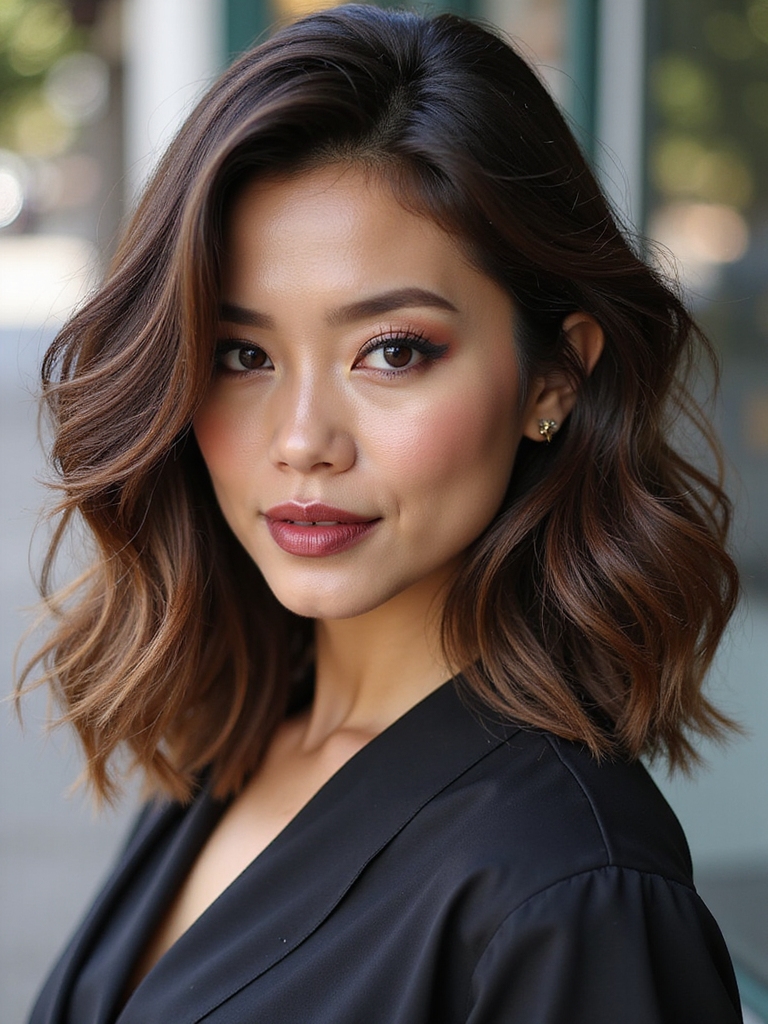
Thick, heavy hair gets its reward from a shag in what the stylist takes away. A stylist hollows the weight from underneath with internal thinning, so the density stops dragging the hair down and starts to swing.
The surface stays smooth while the movement lives below it. I always ask thick-haired clients to point out where their hair feels heaviest, usually around the ears and nape, because that is exactly where the weight should come from, well below the crown. A pea of smoothing balm through the mid-lengths tames any frizz the thinning stirs up.
- Internal thinning sheds bulk and leaves the length alone.
- Keep the weight removal low to avoid crown pouf.
- A pea of smoothing balm keeps the surface sleek.
The Shag Mullet
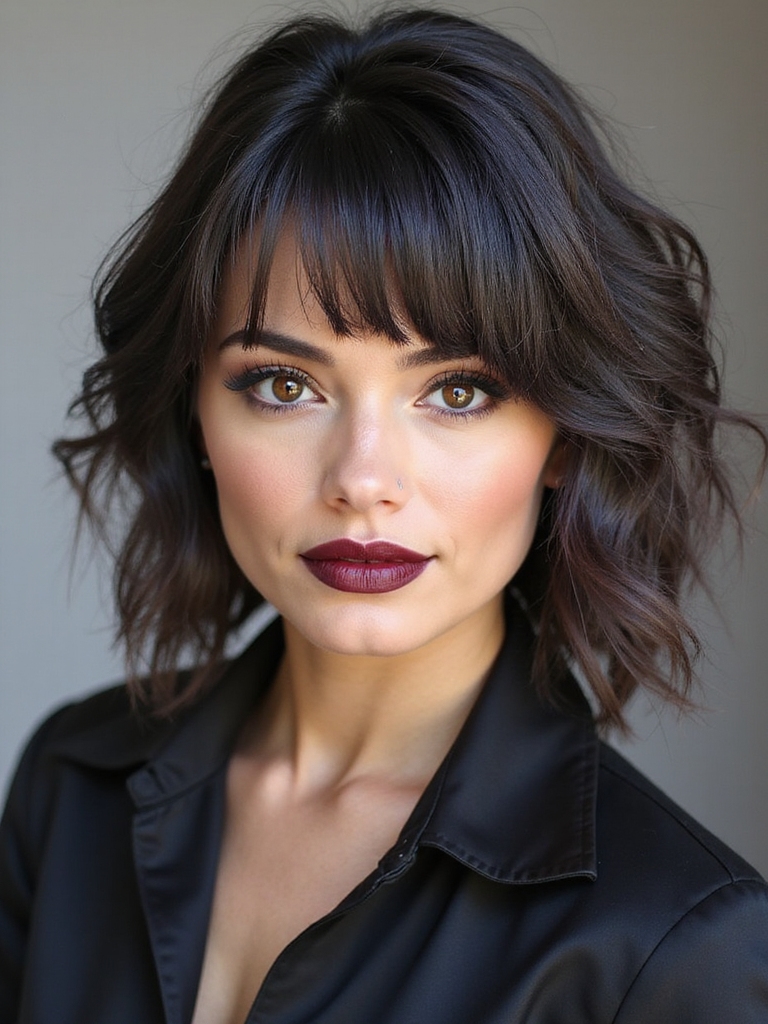
The shag mullet is pure retro-cool, and it has quietly become a top request among women who want some edge. Height stacks at the crown, the back stays long, and choppy shag layering keeps the silhouette current.
The taper in between is the magic, a soft, graduated bridge from short to long that looks intentional. It flatters a long or oval face especially, pulling the eye upward, and gives serious height up top with movement down the back. A texture paste worked through the top holds the lift.
- Short, stacked crown over a longer back.
- A soft taper keeps the shape current.
- Bold height up top, real movement down the back.
The Shoulder-Grazing Shag

A shoulder-grazing shag is the most wearable length for many women, the layers landing right at the shoulders for body that stays easy to wear. It carries the full character of the cut in a length that works at the office and at the weekend alike.
The Most Wearable Length
The layering builds movement through the mid-lengths while the shoulder-grazing ends keep it grounded and easy. It suits most face shapes and textures, which is why it is such a common request.
A light mousse at the roots and a rough blow-dry give it body, and a finger-tousle finishes it. It is the shag for a woman who wants personality and a length she can keep.
A Shattered-Layer Shag

A shattered-layer shag takes point-cutting to its extreme, the layers and ends chipped into so the whole cut looks broken-up and full of motion. Paired with a short micro fringe, it becomes the most fashion-forward look on the list.
The shattered texture keeps every layer light and moving, and it hides thinning or split ends beautifully, which makes it a smart pick for hair that struggles to grow past a point. The micro fringe adds a sharp, graphic edge. A drop of lightweight oil on the ends keeps the shattered tips from frizzing. See our micro bangs guide for more on the fringe.
- Heavily chipped layers for maximum movement.
- A micro fringe adds a bold, graphic edge.
- Hides thinning or split ends well.
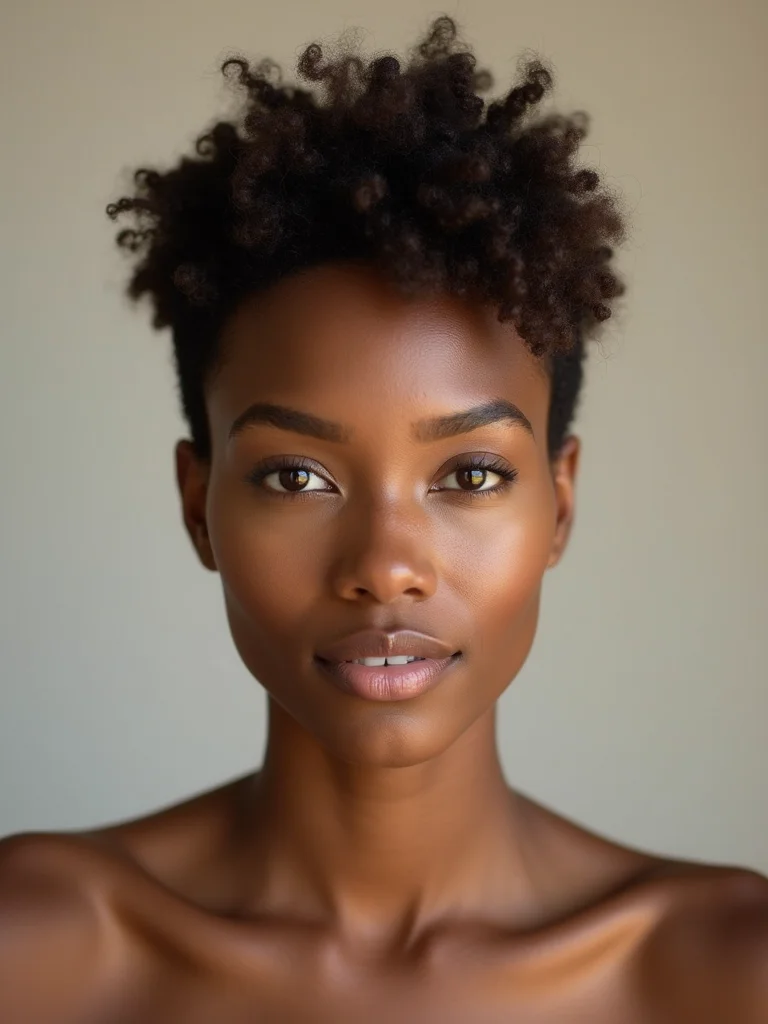
A Coily, Kinky Shag

A shag works beautifully on coily and kinky hair, where the layers give type 4 coils the room to show their shape and stretch, so they spring out defined and light. Cut with respect for the pattern, it becomes a celebration of natural texture, full of definition and lift.
Two things make it sing. First, the cut should be done dry so the stylist can read each coil at its true length and account for shrinkage, which is dramatic on tightly coiled hair. Second, ask for soft, low-tension layering and gentle treatment of the edges, since the hairline is delicate and pulling it tight over time can stress it. A skilled stylist shapes the layers to enhance the silhouette while keeping the coils healthy.
A rich curl custard or styling cream over a wash-and-go defines the pattern, and a satin bonnet or scarf at night preserves it. Refresh with water and a little more product between wash days. The result is a shaped, defined coily shag that honors your texture.
Shag Styling and Products

The whole appeal of a shag is that it looks its best with very little effort, so the styling is about bringing the texture forward, then leaving it be. Rough-dry or air-dry the hair, then work a little texture spray or matte paste through with your fingers, scrunching to define the layers.
Keep glossy, heavy products off the texture, since shine and weight flatten the piecey layers you came for. A round brush sets retro flicks on the days you want polish, and a quick finger-tousle revives the shape between washes.
- Air-dry or rough-dry, then scrunch in texture product.
- Keep heavy, glossy products off the layers.
- A finger-tousle refreshes the shape between washes.
What to Expect
Walking in for a shag, expect a conversation about your texture and your routine before anyone picks up the scissors. A good stylist will ask how much time you spend on your hair and shape the layers to match, since the same cut can be high-drama or wash-and-go depending on where the layering lands. Bring a photo of the result you want and, just as usefully, one of a grown-out stage you can live with.
Expect the cut to shape itself around your life. A woman in her twenties after a bold wolf shag and a woman in her sixties who wants soft, face-lifting layers are asking for the same cut tuned two different ways, which is why it has flattered women through five decades. Ask your stylist to read your face shape into the fringe and the front layers, since that is where the shag does its quietest flattering.
Then learn to air-dry it, because it always looks its best worn relaxed. For the broader roundup, see our shag haircuts guide and choppy shag cut.
Shag Haircuts for Women, Answered
?Is the shag a good cut for older women?
Yes. The shag flatters every age, and its soft layers and movement tend to lift and frame the face, which many women find more flattering over time than a heavy, one-length cut. The fringe and layers can be tuned to suit you.
?Does a shag work on every hair type?
It does. Fine, thick, straight, wavy, curly, and coily hair all wear a shag well, because the layering is tailored to the texture. Fine hair gains fullness, thick hair sheds bulk, and curly or coily hair gets shape and definition.
?How often does a shag need trimming?
Shorter and fringed shags want a reshape every six to eight weeks to stay sharp, since the layers soften as they grow. Longer and low-maintenance versions stretch further, sometimes only needing a tidy at your regular appointment.
?Which shag is easiest to maintain?
A long or shoulder-grazing shag with soft, grown-out layers is the lowest effort, since it forgives a skipped trim and styles off a simple air-dry. Curtain bangs are the easiest fringe to live with if you want one.
?How much does a shag haircut cost?
A shag usually runs $50 to $80 at most salons, depending on your area, length, and the stylist. More detailed or specialist curly cutting can cost more, but the price reflects the skill the layering takes.
A Cut That Grows With You
The shag has flattered women for fifty years because it bends to whoever is wearing it. It follows your texture, adapts to any length, and reads as current at every age, which is a rare thing in a haircut. Whatever your hair type or your nerve, there is a version on this list shaped to fit it.
Decide how much upkeep suits your life, then let the length and fringe follow from there. Once you find your version, the shag tends to become the cut you come back to, the one that grows with you season after season. So which one feels like yours?
More Ideas Here