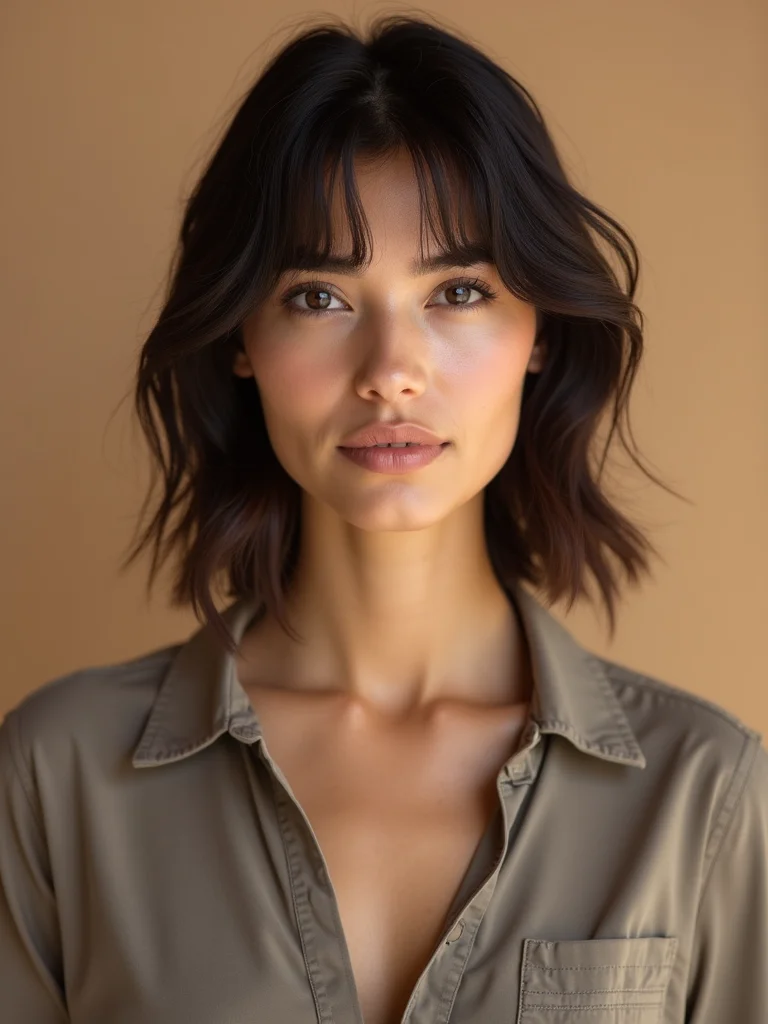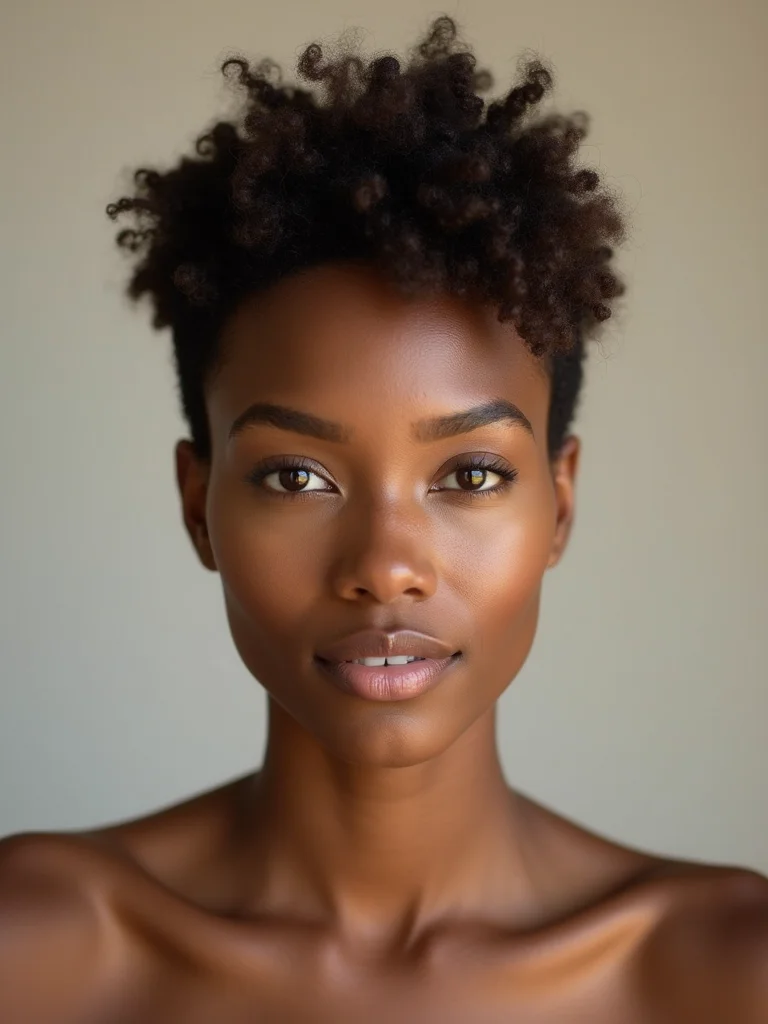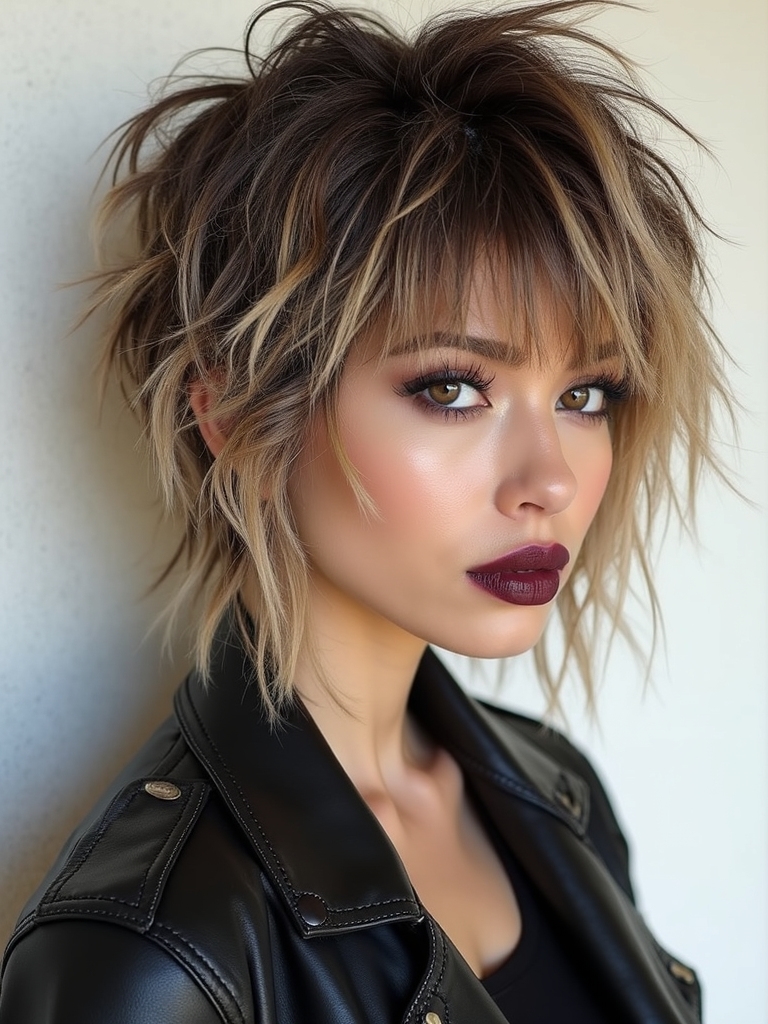
People still picture the eighties punchline the second they hear “mullet.” A modern mullet shag has almost nothing to do with that: the shag’s piecey, blended layers soften the whole shape, so what’s left is the rebellious short-top, long-back silhouette without the harsh edges that made the original a joke.
Sixteen versions follow, sorted from the gentlest way in to the most full-commitment, stage-ready takes, with an honest note on upkeep and who each one actually flatters.
Before You Commit to This Shape
- The disconnection between the short top and longer back is what grows out fastest; sharper versions need trims sooner than soft, blended ones.
- Curly and coily hair needs the cut done fully dry so a stylist can see exactly where each section actually lands.
- Start with a softer, more blended version if you’re unsure; bolder texture is easy to add at the next visit and much harder to undo.
A Soft Feathered Mullet, the Gateway Version

This is the version most first-timers actually walk out with. Feathered layers blend the short top into the longer back, so the disconnection stays soft instead of jarring. By week three, once the initial shape has settled, it reads more like textured layering than a mullet at all, which is exactly what makes it the easiest one to wear to an office on Monday. For the base shape without any mullet influence, modern shag covers that version on its own.
- Suits most face shapes and both fine and medium hair density
- A texture cream worked through with fingers brings it to life in under two minutes
- The soft edge is what keeps it from ever reading costume-y

The Choppy Micro-Mullet, Fully Committed

At the bold end sits the choppy micro-mullet: everything up top stays short and sharp, chopped into piecey layers, with just a whisper of length trailing at the nape. In a crowded room this is the one that actually turns heads, since there’s no soft transition anywhere to dilute it.
Ask specifically for point-cut layers and a short, subtle tail rather than a long one, then style with a matte paste worked through with fingers for separation. Trims land closer together here than on any softer version, since short, sharp shapes grow out into a shaggy mess faster than blended ones do.
Wolf-Cut Crown Volume, Layered Into the Mullet

Borrowing the wolf cut’s heavy crown layering adds real lift to the mullet shag, building volume right where a lot of long-back cuts otherwise go flat.
Where the Extra Volume Actually Comes From
The layering at the crown does double duty: it disguises the transition into the long back while giving the whole shape more visual height than the classic version manages on its own.
It needs enough natural density to hold up that crown lift; on very fine hair the volume can fall within a day instead of holding through it.
💡Committing Without Regret
If you’re mullet-curious but nervous, ask for a soft, moderate version of the disconnection first rather than the most extreme option shown in a reference photo. It’s easy to go bolder at your next trim and far harder to undo a cut that went further than you actually wanted.
A Curly, Textured Take on the Mullet Shape

On curls and coils, this shape turns into something sculptural: the layering lets the crown spring up while the back trails longer, so the coils do most of the visual work on their own.
Why the Dry Cut Isn’t Optional Here
In a curly client’s chair, the whole cut has to happen on completely dry hair, section by section, since shrinkage makes a wet measurement close to meaningless once the curl pattern settles back into place.
A curl cream worked through wet hair, then left to set as a wash-and-go, is usually the entire routine once the cut has grown into itself. For more curl-specific versions of this pairing, shag mullet curly hair goes further into the technique.
The Sleek Mullet, Polished Instead of Rough

Not every mullet shag has to look rough and undone. Blow-drying the layers smooth turns the disconnection into a clean, deliberate line, so the shape itself does the talking instead of the texture.
It’s proof the cut can read editorial as easily as rebellious. The same length that gets rough-dried by day can go glassy and controlled for an evening in under fifteen minutes.
- A smoothing serum and a blow-out replace the usual paste and finger-scrunch
- Best on hair with enough natural shine to hold a polished finish
- Reads dressed-up in a way the choppier versions never quite manage
A 70s-Inspired Mullet, Feathered and Winged

This is the version that leans hardest into the shape’s own history: soft, winged layers and a feathered fringe pulling straight from the era that made the silhouette famous in the first place.
The wing at the front is the whole signature move, and it needs warm air and a brush lifting the roots upward to hold through an afternoon; it drops flat by lunch without that step.
- Winged layers sweep back and away from the face on both sides
- Best on medium to thick hair with enough body to hold the flick
- Reads retro on purpose rather than dated by accident
A few terms come up constantly once you start describing this shape to a stylist.
📖Disconnection
The visible gap in length between the shorter top sections and the longer back, which is what gives a mullet its signature silhouette rather than a gradual blend.
📖Point-cutting
A technique where the scissors cut upward into the ends at an angle, breaking up a blunt line into softer, less uniform pieces.
The Midi Mullet, the Version Most People Actually Book

Keeping the length moderate softens the disconnection considerably, which makes this the balanced middle ground between a full commitment and something you can walk back easily later.
- The rock edge stays present without dominating the whole look
- Styles fast with a scrunch of texture cream and a rough dry
- Suits most face shapes and textures, which is why it’s usually the first recommendation for a hesitant first-timer; the best medium shag hairstyles covers similar lengths without the mullet influence
A Piecey Fringe Added to the Mullet Shag

A separated, textured fringe up front pulls focus toward the eyes and gives the whole shape a finished feeling the back alone can’t provide. It also softens stronger features, since the broken-up pieces never sit as one heavy block across the forehead.
- Keep the fringe piecey rather than one solid blunt line
- A small amount of paste separates the pieces for definition
- Flatters most faces; the airy break-up softens sharper bone structure
Shattered Ends for a Raw, Broken-Up Finish

Point-cutting the ends into sharp, separated pieces gives this version a raw, performance-ready energy that photographs well and, honestly, reads even bolder once you see it move in person.
The chipped-out finish depends entirely on regular upkeep. Skip a trim cycle and the sharp points blur into an ordinary, slightly ragged edge instead of the deliberate one shown in reference photos.
- Works best on hair with some natural coarseness, where the shattered points show clearly
- A matte paste pulled through dry ends keeps the separation visible
- Best on hair with enough coarseness to hold a sharp point
Power Layers, Razor-Sliced for Movement

Razor-slicing the layers strips out weight in a way scissors can’t quite match, giving the whole mullet shape airflow and a dramatic, constant sense of motion.
- Best on healthy, medium-density hair; fragile or heavily processed ends can fray under a razor
- A light mist and a finger-tousle are usually all it needs to show off the movement
- The lightness is real: this version weighs noticeably less on the head than a scissor-cut equivalent
A Short-Crop Mullet, Bold Top and Shaggy Tail

Cropping the top close while extending the nape into a longer, shaggy tail makes this the most pixie-adjacent version on the list, trading nearly all your length for maximum contrast.
- The contrast between the cropped top and the extended tail is the entire statement
- Quick to style; a little paste through the top and the tail left piecey is the whole routine
- Grows out fastest of any version here, since the cropped top is what carries the shape
Styling most versions of this cut takes about two minutes once the routine is set.
1Build the crown
Work a little mousse into damp roots and rough-dry the crown upside down for lift.
2Define the ends
Finish with a matte paste worked through dry ends to separate the pieces.
A Long Mullet Shag That Keeps the Length

For anyone attached to their length, this version delivers the shape without a big chop, keeping airy movement through the back while layers up top carry the mullet’s energy.
It’s the most low-key way into the whole trend, since the length itself softens the disconnection until it barely reads as a mullet at first glance. Mullet hair covers the base shape at even more length variations.
Face-Framing Layers That Soften the Shape

Cutting the shortest pieces to land at the cheekbone takes real hardness off the mullet shape and pulls the eye toward your features instead of the disconnection at the back.
This tweak works especially well on round and square faces, where the framing lifts and narrows in a way the base cut alone doesn’t manage.
Ask for the shortest piece specifically at the cheekbone; any higher and the framing effect gets lost in the crown layers. Curly shag haircut covers a similar framing approach for textured hair.
Before You Add Color
Bold, contrasting color panels look striking in photos but fade fastest exactly where the layers move most, which is the whole point of placing them there. Budget for touch-ups on a shorter cycle than the haircut itself needs.
Bold Bangs for the Fully Committed

A strong, eye-catching fringe up front takes this from noticeable to fully stage-ready, matching the drama of the disconnection happening at the back.
It reads as the most fully committed version on this whole list, the one for someone who wants the shape to be the first thing anyone notices.
- Keep the bangs textured, not one solid blunt block, so the look reads current
- A little paste pushed forward gives the fringe a piecey finish
- Expect more frequent fringe trims than any other part of the cut needs
Color-Blocking for a True Performance Piece

Adding contrasting color panels through the layers turns the mullet shag into pure stage energy, the most rock ‘n’ roll version of everything on this list.
Placing the contrast where the layers actually move is what makes the color flash as the hair does, rather than sitting as one flat block of two tones.
- Vivid, fashion-forward tones fade and need refreshing far sooner than the cut itself needs a trim
- Budget for upkeep about half again what the base cut alone would run, often another $35 or so on top of a standard visit
- Unmatched for visual impact if the maintenance schedule actually fits your life
Engineering the Mullet Shag for Fine Hair

Fine hair and the mullet shag turn out to be a surprisingly good match, since the disconnected, layered shape builds the illusion of volume fine hair usually can’t manage on its own. The goal is engineered crown lift, not puffy bulk piled on top of already-thin strands.
- Ask for layers that build lift specifically at the crown, keeping the perimeter soft
- A root mousse worked into damp roots does more here than any styling tool
- Over-thinning is the one mistake that leaves fine hair looking sparse instead of full
What to Sort Out Before You Book This Shape
?Is a mullet shag going to look dated the way an eighties mullet did?
Not if the layers are blended the way a shag’s are. The disconnection is intentional and soft rather than a hard, single line, which is the detail that separates a modern version from the retro punchline.
?How is a mullet shag actually different from a plain shag or a wolf cut?
A shag layers evenly through the whole head with no real length gap; a mullet shag deliberately keeps the top shorter than the back. A wolf cut sits somewhere between the two, with heavier crown layering than either.
?Will this cut work if I have very fine, thin hair?
Yes, with the layering engineered specifically for lift at the crown rather than piled all over. Ask for that by name; a generic all-over layering job on fine hair tends to look thin instead of textured.
?Can I try a milder version before committing to something bold?
Yes, and it’s the smarter way in. A soft feathered or midi-length version gives you the shape with a gentle disconnection; going choppier or shorter later is simple, while growing out an extreme first cut takes months.
How Much Energy Do You Actually Want to Bring?
The mullet shag has shaken off its dated reputation by borrowing the shag’s softness to take the harshness out of the mullet’s shape. Whether you keep it feathered and office-friendly or push it all the way to a color-blocked, stage-ready statement, the cut rewards anyone willing to have a little fun with their hair.
Match the version to your actual nerve and your actual routine, and be honest with your stylist about the upkeep before you commit to the boldest option in your saved photos.
Don’t Miss These