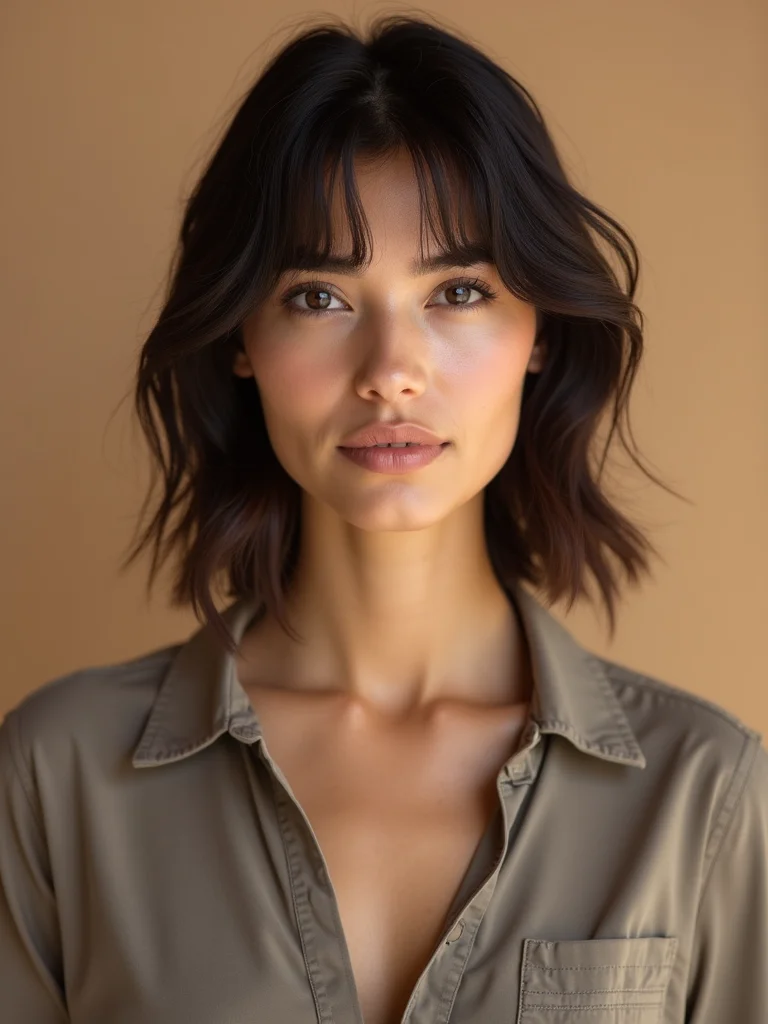
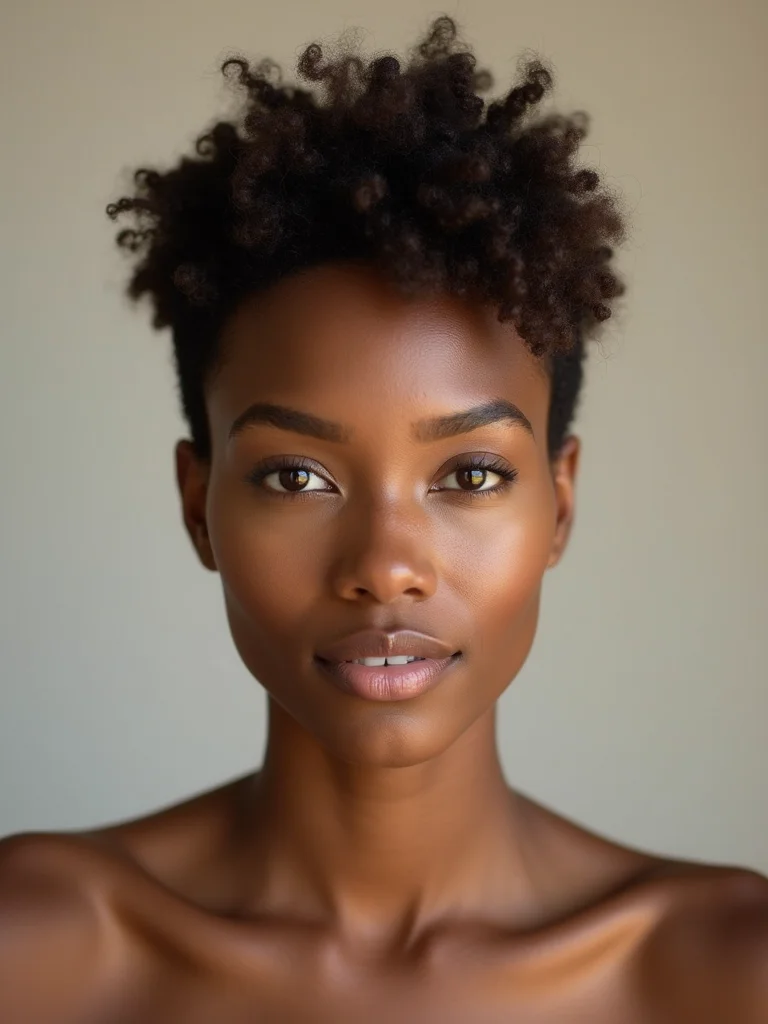
Softness has almost nothing to do with how many layers you get. A soft layered haircut is defined by how the ends are finished and how much weight leaves the hair, and both of those decisions happen in the last few minutes of the appointment, long after the length has been set.
That is why two women can ask for the same thing and walk out with completely different hair. What follows is sixteen versions of soft layering, sorted by what the cut is doing to the hair, along with the vocabulary that gets you the right one.
Where the Softness Actually Comes From
| Your hair | Ask for | Length you lose |
|---|---|---|
| Fine, wants body | Two or three long face-framing pieces and nothing underneath | Half an inch at most |
| Thick, feels heavy | Internal debulking with the perimeter left blunt | None you can see |
Face-Framing Layers That Keep Your Length

The gentlest entry point sits entirely at the front. Two or three pieces are cut around the face, starting at the cheekbone and lengthening as they travel back, so your outline changes while every inch below the shoulder stays exactly where it was.
You will notice the difference most when your hair is tucked or pushed back, because that is when the shorter pieces fall forward and do their job. Ask for the shortest piece to sit no higher than your cheekbone. Anything above that turns into a grown-out fringe within two months, and you will be pinning it back until it catches up. Our long layered hair notes go further on framing at real length.
Weightless Long Layers

Long hair goes flat for a mechanical reason: the weight of the length pulls the root down. Long layers fix that by shortening the interior just enough that the top sections stop dragging.
Why Long Hair Falls Flat
The word to use is subtle. Layers cut long and blended into the lengths remove maybe an ounce of weight per section, which is plenty. Aggressive long layering is what produces the sad triangle where the ends are thin and the crown is fluffy.
Expect the effect in movement before you see it in a mirror. Hair that hung as one sheet starts swinging in two or three loose planes.
The layers are not what makes hair look soft. The last quarter inch is.
Wispy Layers on a Medium Length

Mid-length hair carries layers better than any other length, because there is enough weight to hold a shape and not so much that the layers get swallowed. Wispy layering keeps the ends fine and separated instead of blunt.
The technique behind it is point cutting. The shears enter tip-first at an angle, so every strand in a section finishes at a marginally different place, and that staggering is what gives the ends their feathered edge. See our medium length layered hair roundup for more at this length.
A Delicate Textured Crop

Short hair without layers turns into a helmet by the second day. On a crop, soft internal layering is what lets the shape sit close at the sides and lift slightly through the top. The work it does here is structural.
The trade-off here is real. Take out too much and the crop goes wispy at the perimeter, which looks thin instead of delicate. A good stylist removes weight in the interior and leaves the outline crisp.
- Ask for internal texture with the outline left clean and unthinned
- A pea of paste worked through dry hair is the entire styling routine
- Short shapes show growth fastest; the crop needs shaping while longer cuts can wait
Two things short-haired clients are told that are not true
❌ Myth: Short hair cannot take layers
✅ Reality: Short hair needs them more than long hair does. Without interior texture a crop sits as a solid cap, and the shape collapses by the second day.
❌ Myth: Layers on short hair mean high maintenance
✅ Reality: The cut needs shaping sooner, but the daily routine gets shorter. A layered crop styles with fingers; a blunt one needs a brush and a dryer.
Curtain Bangs Blending Into Face-Framing Layers
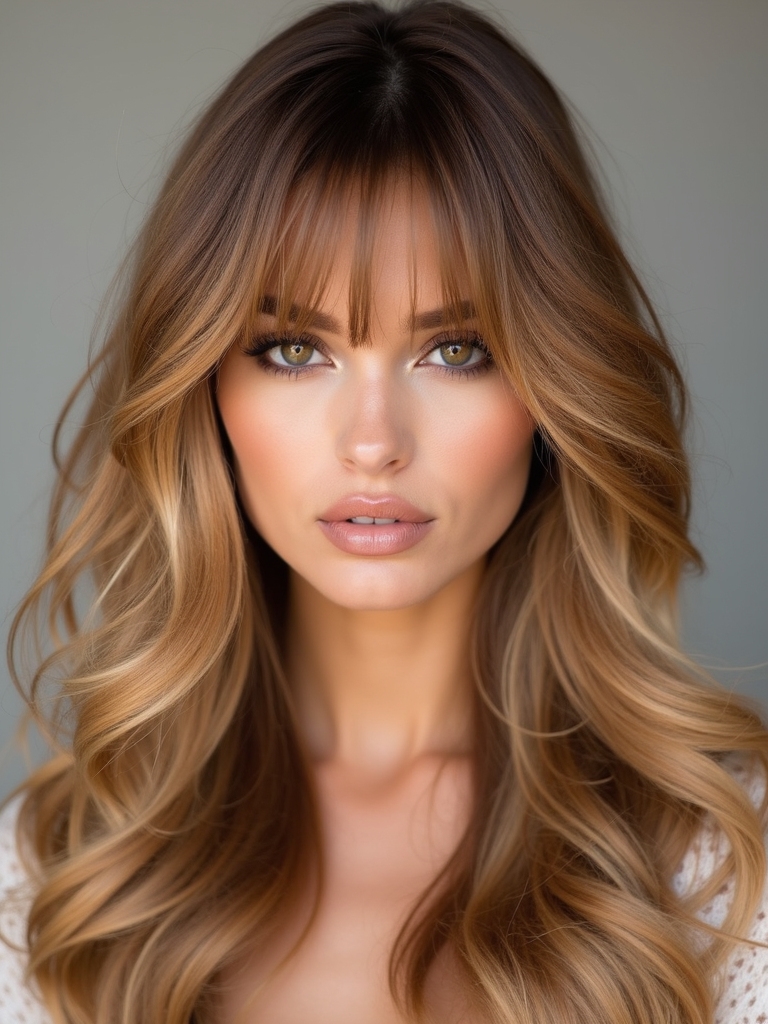
Curtain bangs and soft layers are the same cut, separated only by where the shortest point lands. A fringe that splits at the center and lengthens toward the cheekbone is already a face-framing layer; calling it bangs is a matter of how far up it starts.
Why This Grows Out Kindly
That continuity is what makes the pairing so forgiving. There is no hard line between fringe and length, so growth just looks like a slightly longer frame.
Ask for the shortest point to hit at the eyebrow or just below, and for the pieces to lengthen unbroken into the layers behind. The full breakdown lives in our curtain bangs guide, and our curly layered hair piece covers the same idea on texture.
Softly Tapered, Feathered Ends

This one is a finish applied to any cut, and it decides on its own whether layers land soft or choppy. The very tips are tapered so each strand ends at a marginally different point, which stops the ends from landing as one hard edge. On coarse hair it is a gift. On truly fine hair it needs restraint, since tapered ends on sparse hair only look sparser.
- Say tapered or feathered ends, and say it at the end of the cut when the length is already set
- Fine hair: ask for the taper on the front sections only
- Coarse or curly hair: taper throughout to stop the ends from puffing
Butterfly Layers Lifting Around the Face

Butterfly layers are the cut clients now request by name, phone already open. Short face-framing pieces curl back and away like wings while the underneath length stays untouched, so the silhouette looks layered without any real sacrifice.
What makes it work is the gap between the two lengths. The shortest wing sits somewhere around the chin, the length below stays long, and nothing in between gets touched. A graduated layer does the reverse and blends everything.
It needs length to work. Above the collarbone there is too little hair underneath to hide the disconnect, and the wings end up reading as a growing-out fringe.
Evenly Layered Curls

Curls do not sit where they are cut; they spring up, and how far depends on the individual curl. That single fact is why every rule about layering straight hair fails on curly hair, and why the triangle shape happens to so many people who asked for layers in good faith.
- Insist on dry cutting, curl by curl, so each layer lands where the curl actually falls
- Ask for rounded layers that follow the curve of your head, not stacked ones
- Diffuse on low with a curl cream scrunched into soaking hair, then leave it alone until dry
Soft Shag Layers Framing the Face

A shag is defined by short crown layers and a lot of them. The soft version keeps that architecture and changes only the finish: layers get blended into each other, and the crown lift is coaxed out with a dryer during styling.
You get the shape without the maintenance. A classic shag needs product and finger-work every morning to look intentional; a blended one air-dries into something that still reads as a shag from across a room.
This suits anyone drawn to the silhouette who does not want the shag’s daily negotiation. Our shag haircut guide covers the bolder end if the soft version turns out to be too quiet.
Whisper-Thin Invisible Layers

Internal layers solve a specific problem: you want the clean line of a blunt cut and the movement of a layered one. The answer is to layer underneath and leave the surface alone.
The stylist sections off the top inch or two, sets it aside, and cuts everything below it. When the top comes back down it covers the work completely, so the outline stays sharp while the hair beneath moves.
This is the request to make if every layered cut you have had ended up looking messier than you wanted. Nothing shows. The hair just stops sitting like a curtain.
A Soft Layered Bob at the Jawline

A blunt bob at jaw length is a strong shape that can go stiff by mid-afternoon, especially on straight hair. A few soft layers give the ends somewhere to go.
Keep the perimeter intact and take the weight from inside. Two or three light layers through the back and a pair of face-framing pieces at the front are the whole prescription, and any more starts eating the bob’s outline.
Round-brush the ends under for polish, or rough-dry and leave them where they land for a looser version. Our layered bob guide walks through both finishes in detail.
A Textured Lob at Collarbone Length

Take the bob down to the collarbone and layering changes job. At jaw length layers create movement; at collarbone length they prevent the flat, heavy hang that makes a lob look like an accident of growing out. The cut sits right at the sweet spot where hair is still long enough to tie back and short enough to feel like a decision, and soft layers are what keep it from drifting into the shapeless middle.
- Longest layer at the collarbone, shortest around the jaw, blended the whole way
- Air-dries into shape with a light cream, which is most of this cut’s appeal
- Grows out slowly, so a shaping visit roughly twice a season is enough
Micro-Layers on Fine Hair

Fine hair and layers have a bad reputation for good reason, and the caution is warranted. Every layer removes density from somewhere, and on fine hair there is not much to spare.
Placement is the workaround. Two micro-layers cut high at the cheekbone create the illusion of a second layer of hair sitting on top of the first, and the eye registers that as body. Cutting layers low through the lengths thins the ends and leaves the whole head looking sparser than it started.
Two terms that decide what your layers look like
📖Point cutting
Scissors angled into the ends vertically, leaving each strand a slightly different length. This is what makes ends read feathered.
📖Thinning shears
A notched blade that removes strands at random along the section. Fast, but it grows back as visible fuzz, which is why careful stylists avoid it near the hairline.
Soft Layering That Releases Weight

Thick hair uses layers for the opposite reason fine hair does. The goal is subtraction: bulk comes out from underneath while the outside stays dense and smooth.
The technique is slide cutting, where the shears travel down a section with the blades slightly open, thinning it gradually along the way. Done properly it is invisible. Substitute thinning shears and you get short, spiky regrowth that shows up as fuzz along the part six weeks later.
- Ask for weight removed from underneath, with the perimeter left blunt
- Say no to thinning shears near the hairline or the crown
- Smooth a cream through while soaking wet, before any heat touches it
Long, Blended Layers and How to Ask for Them

Most disappointing layer appointments go wrong at the consultation, well before anyone picks up shears. The words soft and blended mean something specific to a stylist, and using them changes the result more than any photo does.
The Words That Change the Cut
Bring an image of hair in motion. A photo of someone standing still tells your stylist about length and color, and almost nothing about layering.
Say out loud how you dry your hair. Layers cut for a round-brush finish sit differently from layers cut for air-drying, and a stylist who knows you never pick up a dryer will place them lower and blend them longer.
| What you say | What the stylist hears | What you get |
|---|---|---|
| Just some layers | Standard graduated layering | Visible steps, and often more length gone than you wanted |
| Soft, blended, longest layer at my collarbone | Point-cut, long-graduation layering | Movement with no visible line between lengths |
Airy, Separated, Flexible Finish

Styling soft layers is mostly a question of what you leave out. Heavy oils and firm-hold sprays glue the layers back into a single mass, which undoes the cut you paid for.
A $9 flexible-hold spray does more for this shape than a $200 smoothing service ever will, because the whole point of this cut is separation. Mist it at the mid-lengths and keep it off the root.
Rough-dry with your fingers for movement. Use a round brush when you want polish. Either way, stop before the hair feels done, because layers look their best slightly under-finished.
Who It Suits Best
Soft layering suits anyone whose hair currently hangs rather than moves, which covers most straight and wavy heads and a fair number of curly ones. It suits people mid-grow-out, because a few light layers stop the ends looking stringy without costing length. It suits fine hair in small doses and thick hair in large ones.
It suits you less well if your hair is already very short at the crown, badly damaged at the ends, or if you actually like a blunt line and only think you should want movement. Damaged ends need cutting off before they need shaping; layering fragile hair spreads the damage across more strands. Soft layers hold their shape for roughly ten weeks before the shortest pieces catch up and the movement quietly disappears.
Soft Layers, Answered
?Can I get soft layers while I am growing my hair out?
Yes, and it usually speeds up how the grow-out looks. Two long face-framing pieces stop the ends reading thin and stringy while the length catches up, and because the shortest piece sits at the cheekbone you lose nothing off the bottom. Skip any layering through the back until you have reached the length you want.
?Will soft layers hold a curl better than one blunt length?
They hold it noticeably longer. A blunt perimeter is heavy, and that weight drags a curl straight from the root down within a few hours. Layers break the weight into shorter sections, each of which has less pulling on it. Use a flexible spray rather than a firm one, since stiff hold makes a dropped curl look worse.
?How do I tell whether my layers were cut with shears or thinning shears?
Look at your part line about six weeks after the cut. Short, wiry pieces standing up along the part are regrowth from thinning shears. Point cutting leaves no fuzz at all, since the ends were tapered at the tip and nothing was removed mid-shaft.
?My layers look great in the salon and flat at home. Why?
Almost always the dryer. A stylist rough-dries with fingers on high heat and finishes with cool air, which sets the layers apart from one another. Drying flat with a brush, or letting hair dry pressed against your back, glues the sections together and the cut disappears.
The Last Quarter Inch Decides Everything
If one thing from this page is worth carrying into a salon, it is that the finish matters more than the layering plan. Two stylists can place identical layers and hand you two completely different haircuts, and the difference will be whether the ends were tapered or cut straight across.
So the conversation to have is about ends, weight, and how you dry your hair, right now, before anyone picks up shears. The length will look after itself.
Favorites to Revisit