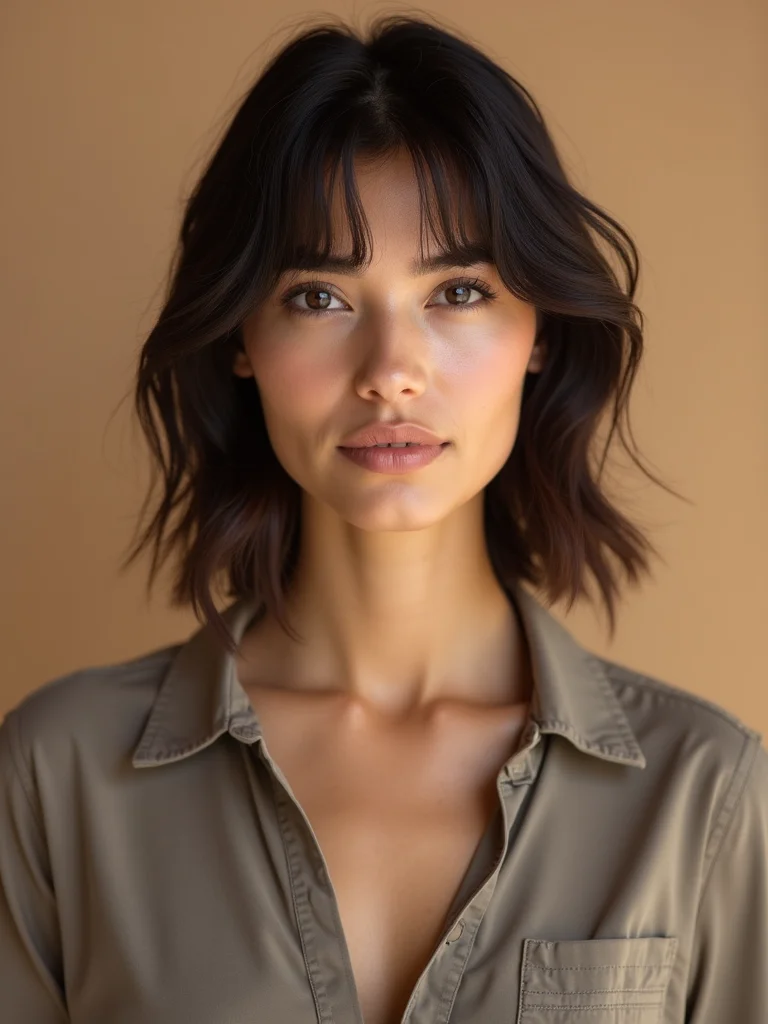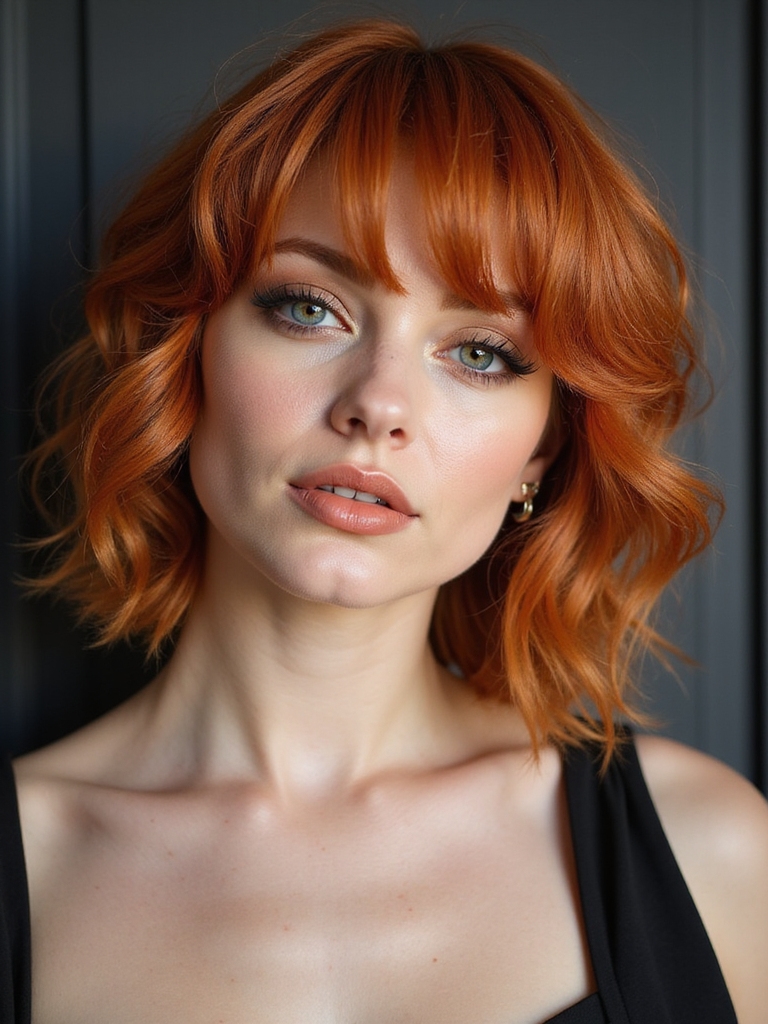
Ginger on a wolf cut turns heads, but there’s a catch nobody mentions when they show you the photo: ginger is a whole spectrum, not one color, and red fades faster than anything else in the salon. Get the shade and the upkeep right and the color stays vivid for months. Get either wrong and a bright copper slides into a flat, brassy orange within weeks.
What follows is part inspiration, part reality check: fifteen ginger wolf cuts from soft copper to neon tangerine, with straight talk on matching the shade to skin, suiting it to texture, and keeping the color alive between salon visits.
Ginger Wolf Cut, Quickly
Ginger spans soft copper to auburn to vivid tangerine, and undertone decides which one flatters, not the photo that inspired the search.
Red is the most fugitive color at the salon, so a ginger wolf cut lives or dies by its gloss schedule and at-home care, not by the initial color appointment alone.
The Ginger Wolf Cut, Explained
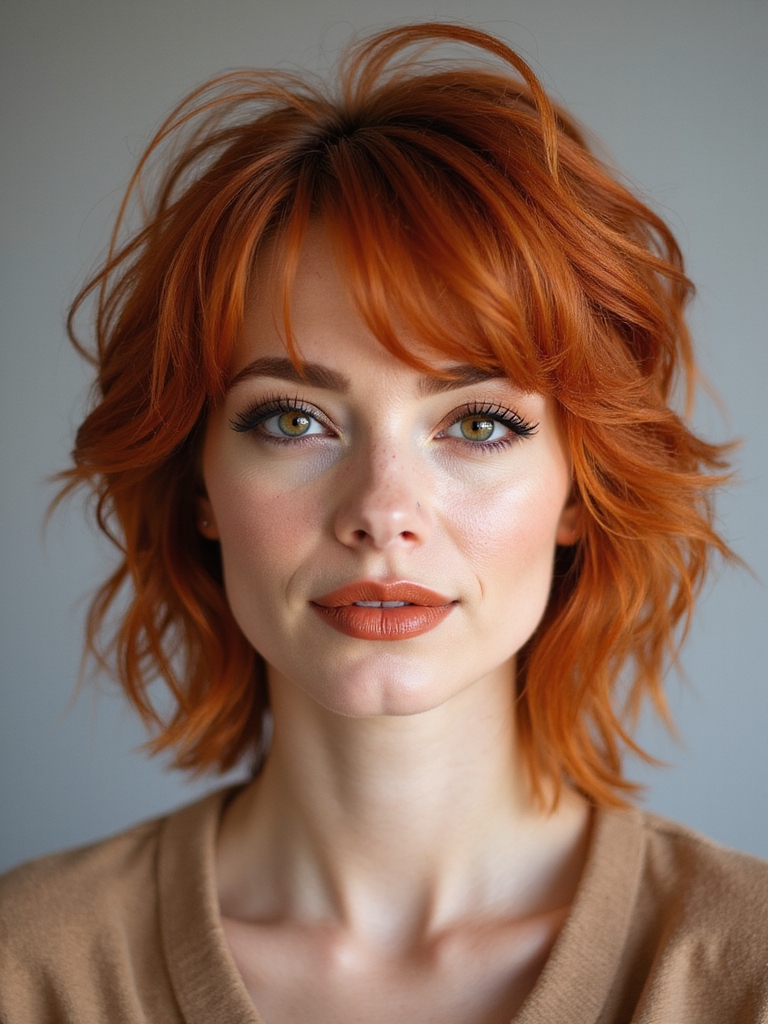
Two things shape every ginger wolf cut before a single layer gets cut. Ginger is a spectrum, not a single shade, and where it lands on that spectrum depends on skin’s undertone far more than whatever photo started the conversation:
- Soft copper, warm auburn, strawberry, and vivid tangerine all read completely differently on the same head.
- Red pigment molecules are larger than most other tones, which is exactly why this whole color family loses its punch sooner than the rest of the salon menu.
- The wolf cut’s choppy layers give any point on that spectrum extra movement, which is most of why this pairing photographs so well.
Matching Ginger to Your Undertone
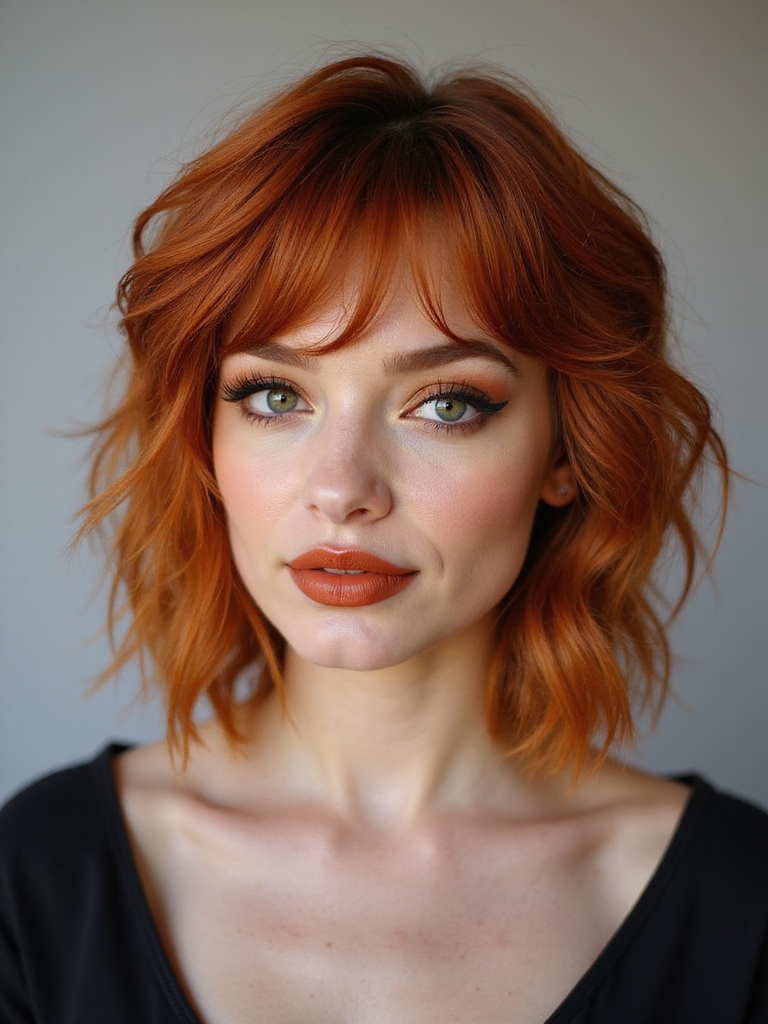
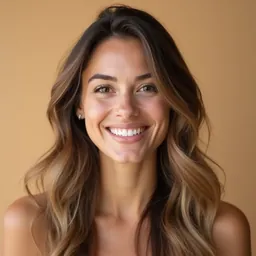
Matching ginger to undertone is the single decision most regret traces back to. The fix is looking at skin rather than the inspiration photo: warm, golden, or olive undertones can carry the brightest, most orange-leaning gingers, while cool or pink undertones tend to look best in softer, deeper auburn or strawberry tones.
The Swatch Test
Holding a warm copper swatch and a cool auburn swatch against the face in natural light settles the question in about a minute, since one will visibly lift the complexion while the other drains it.
Where this gets tricky is deep skin, which can actually carry either end of the spectrum well; the deciding factor there tends to be personal warmth preference rather than a hard undertone rule.
Soft Copper With Curtain Bangs
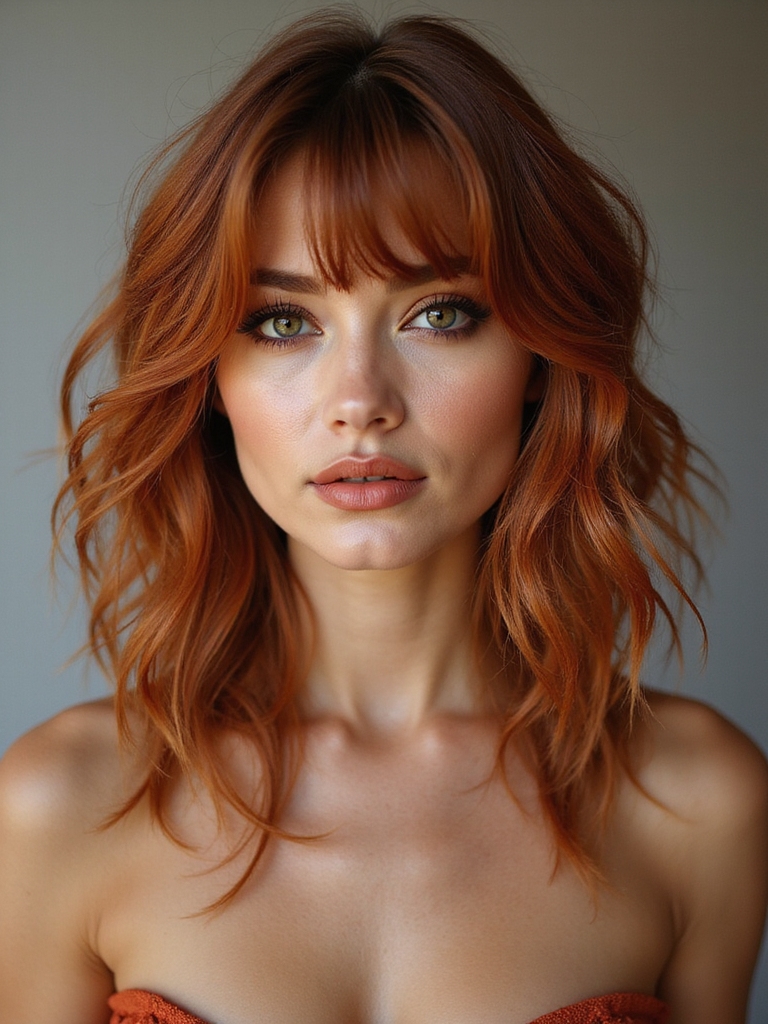
Soft copper sits as the most wearable ginger and the friendliest place to start: a warm, muted copper that flatters golden and neutral skin without shouting. Paired with curtain bangs on a wolf cut, it frames the face gently while the layers give the color room to move.
- Choose a soft, muted copper over a bright orange for an easier daily wear.
- Curtain bangs frame the face and soften the overall effect.
- A medium base often needs surprisingly little lightening to reach this shade.
Choppy Auburn for Thick Hair
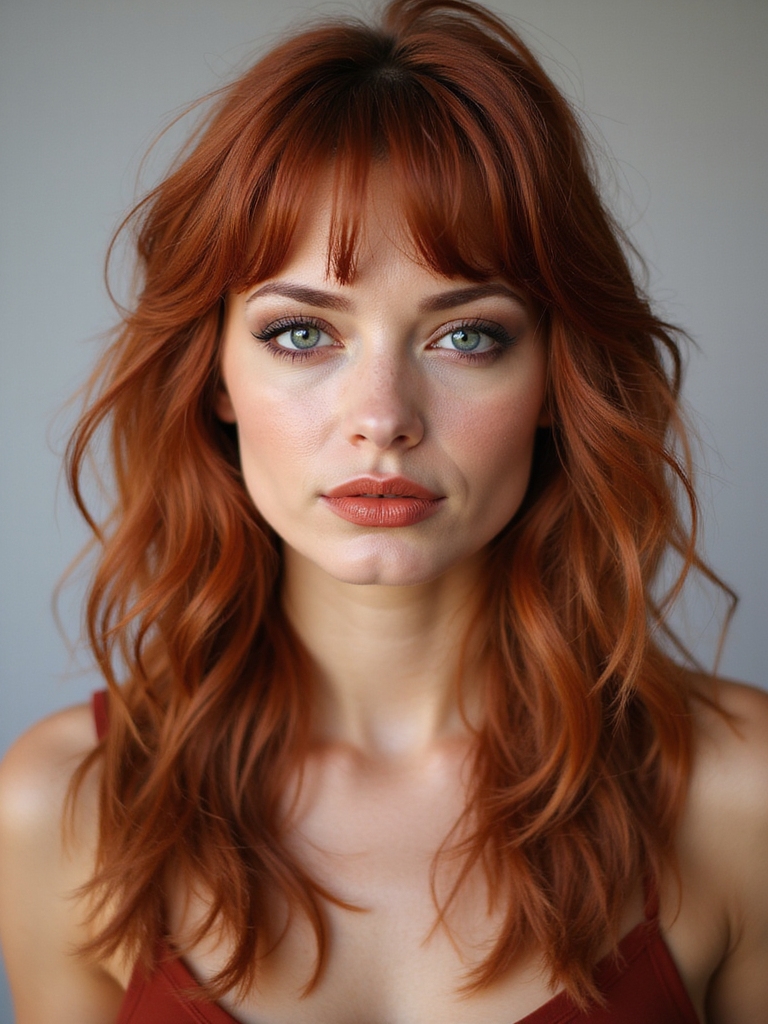
Auburn is the deep, cool-leaning end of ginger, suiting cool skin and reading rich rather than fiery. On thick hair, choppy textured layers turn that density into movement, letting the auburn catch light through the pieces instead of sitting like a heavy, dark-red mass.
The Lower-Maintenance Ginger
Where auburn actually wins is upkeep. Because it sits deeper on the color wheel, the fade shows far less obviously than it would on a bright copper or tangerine.
Ask for choppy, debulked layers that lighten the weight of thick hair while letting the auburn read through clearly rather than getting swallowed by density. The auburn hair guide covers this shade family in more depth.
💡Reading the Density
Thick hair can handle a bolder, more saturated ginger without looking flat, since there’s enough hair to show real dimension. Fine hair often reads better in a softer, more diffused version of the same shade.
Vivid Tangerine for Risk-Takers
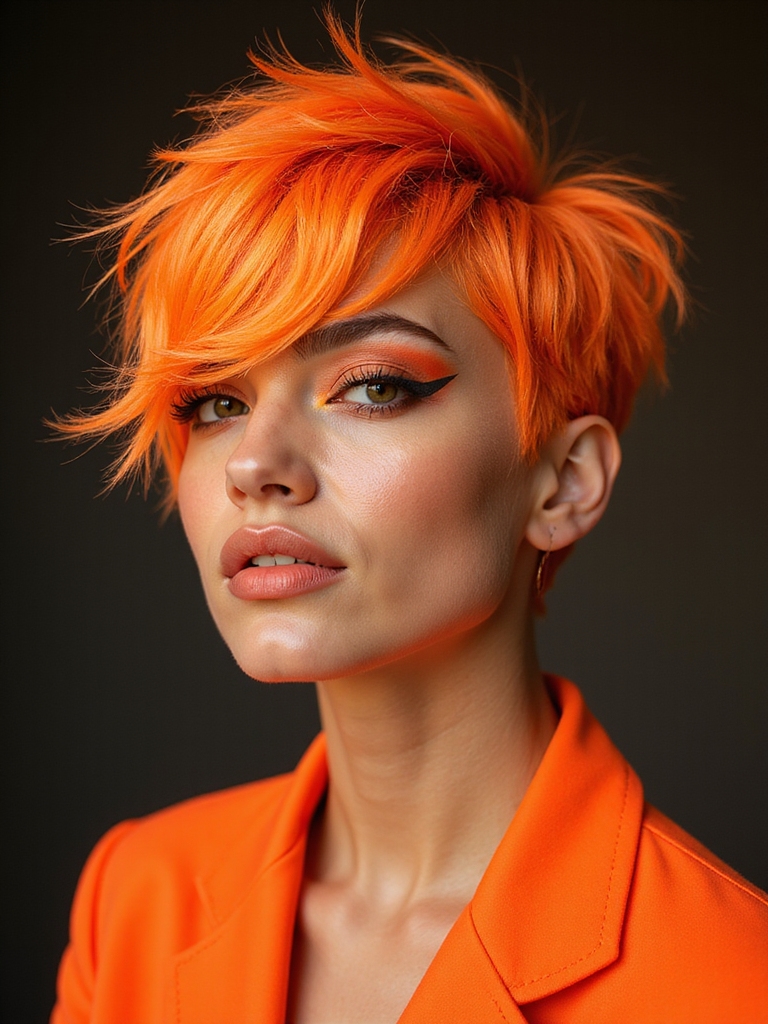
Vivid tangerine is the loudest shade on this list: a bright, juicy orange that makes the boldest statement and asks for the most upkeep in return. This sits firmly in fashion-color territory, usually needing real lightening first, and its brightness dims noticeably sooner than any softer ginger shade.
The High-Commitment Ginger
The wolf cut earns its place here specifically because the choppy texture breaks a solid, bright orange into movement, so the color reads as intentional rather than costume-like.
Warm, golden skin carries this shade best. A diffused, dimensional application, rather than one flat block of color, keeps tangerine from looking artificial under bright light.
Curly Ginger With Diffused Volume
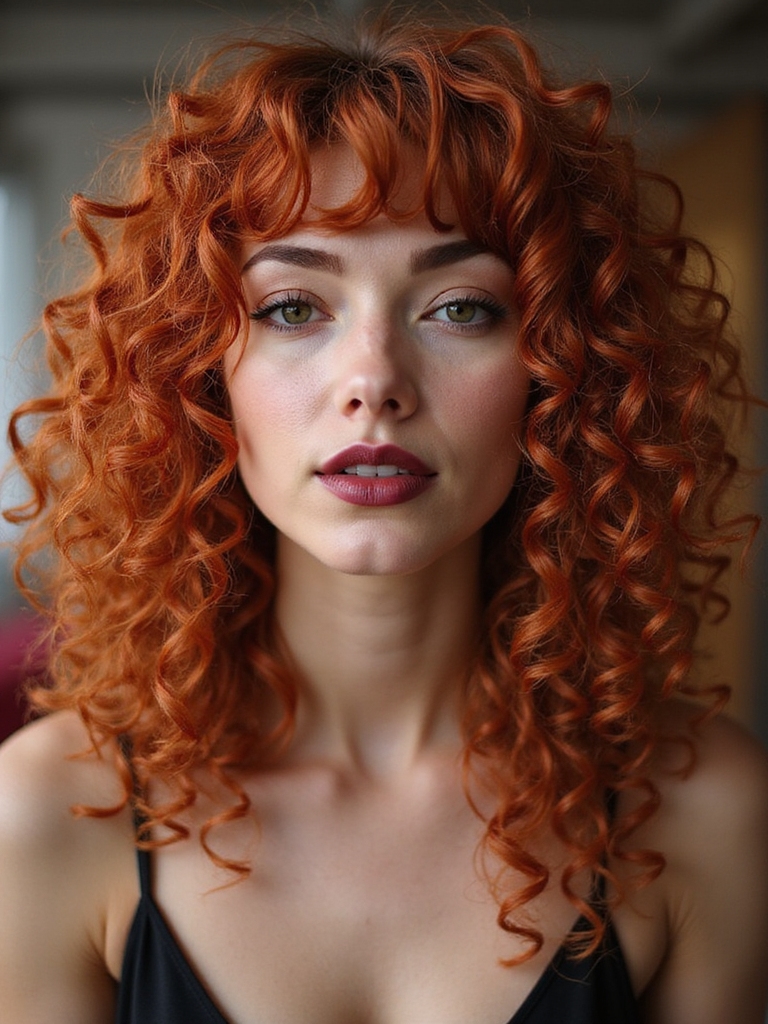
Curls and ginger make a striking pairing, the warm color lighting every coil as it springs while the wolf cut gives those curls room to pile into soft, diffused volume.
- Layers need to be cut dry so they land correctly once the curl pattern springs back up.
- Diffusing on low heat builds volume without disrupting the curl’s natural shape.
- A color-safe, sulfate-free routine matters more here, since ginger fades fast on its own before curl-specific dryness compounds it. The wolf cut for curly hair guide covers the cutting technique itself in more depth.
A couple of terms worth knowing before a ginger consultation:
📖Color-depositing conditioner
A conditioner with a small amount of pigment mixed in, used at home between salon visits to slow how fast a fading color drifts toward brassy.
📖Diffusing
Drying curly or wavy hair with a diffuser attachment on low heat, which builds volume while disturbing the curl pattern far less than a regular blow-dryer nozzle.
Feathered Ginger for Fine Hair
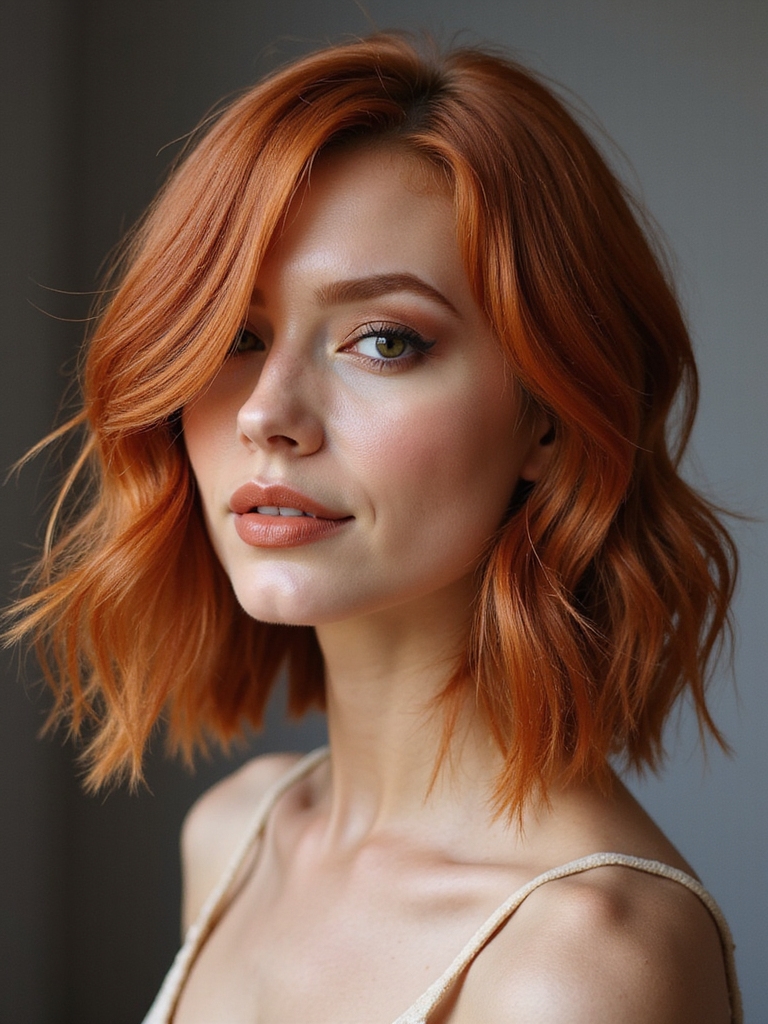
Fine hair gets a genuine double benefit from a ginger wolf cut. The layers supply volume fine hair otherwise lacks, and warm ginger tones reflect light in a way that makes thin strands look fuller than they are.
Why the Color Does Real Work Here
Kept feathered and airy, rather than thinned to the point of see-through, the cut produces plenty of lightweight pieces that lift and catch movement on their own.
A single flat, one-tone red wouldn’t do this work; the dimension built into ginger is what actually sells the illusion of fullness on fine hair.
Long Ginger Layers With Face-Framing
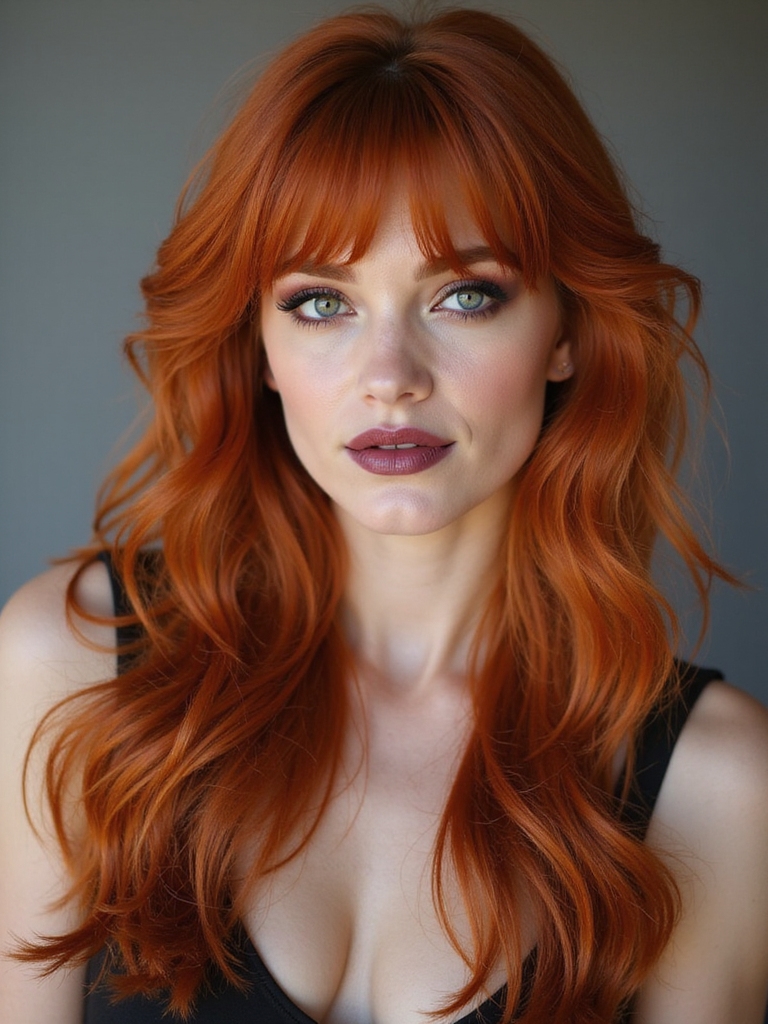
For anyone unwilling to give up length, a long ginger wolf cut delivers layered movement without a dramatic chop, with brightened face-framing pieces doing the work up front.
- Length stays long while layers cut through the mid-lengths add movement.
- Face-framing pieces get the brightest color placement to lift the complexion where it matters most.
- Gloss appointments on the lengths keep the color rich as it grows out. For more on the underlying shape, see the wolf cut for long hair and long layered wolf cut guides.
ℹ️Why Red Fades Fastest
Red and its family of tones (copper, auburn, tangerine) use larger pigment molecules than blue or brown dyes. Those molecules sit less securely in the hair shaft, which is the actual chemistry behind why ginger fades faster than nearly any other color family.
Short, Spiky Ginger Mullet
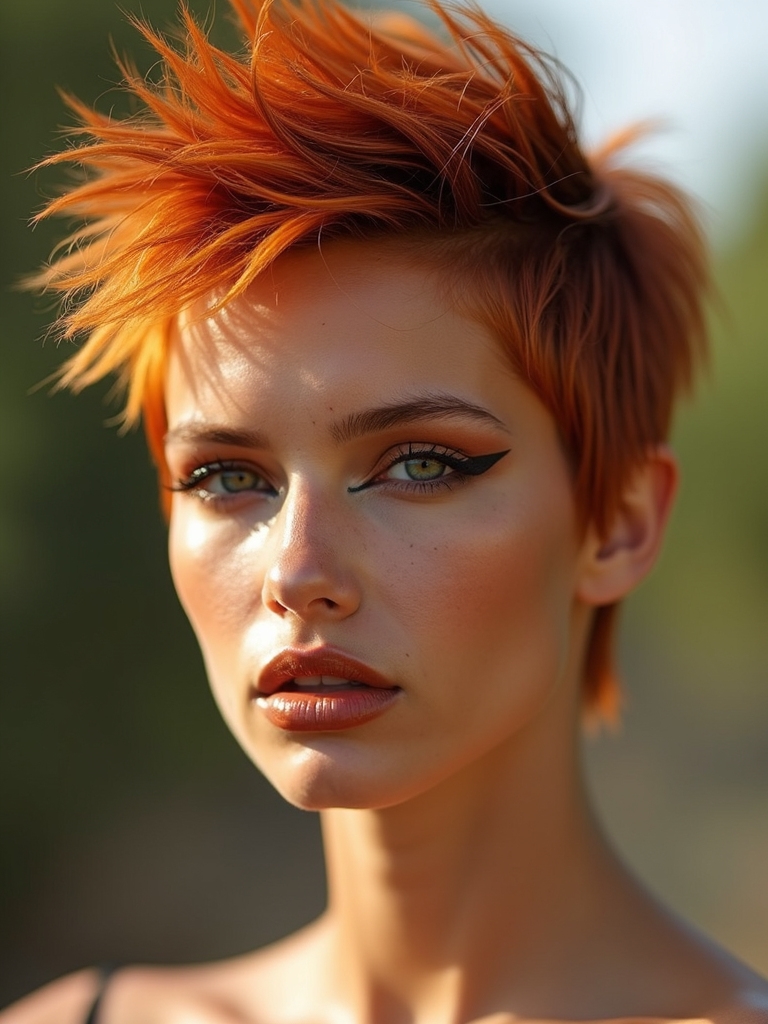
For a cut as bold as the color on top of it, a short ginger wolf mullet leans fully into the edgy, retro energy of both. The spiky, choppy layers and mullet silhouette together make a genuine statement, and in a fiery ginger the effect skews unmistakably rock-and-roll.
- Short, spiky layers create a bold, retro-edgy silhouette on their own.
- This version suits confident dressers looking for maximum visual impact.
- The shorter length needs trims on a tighter schedule to hold its spiky shape.
Sun-Kissed Copper Balayage
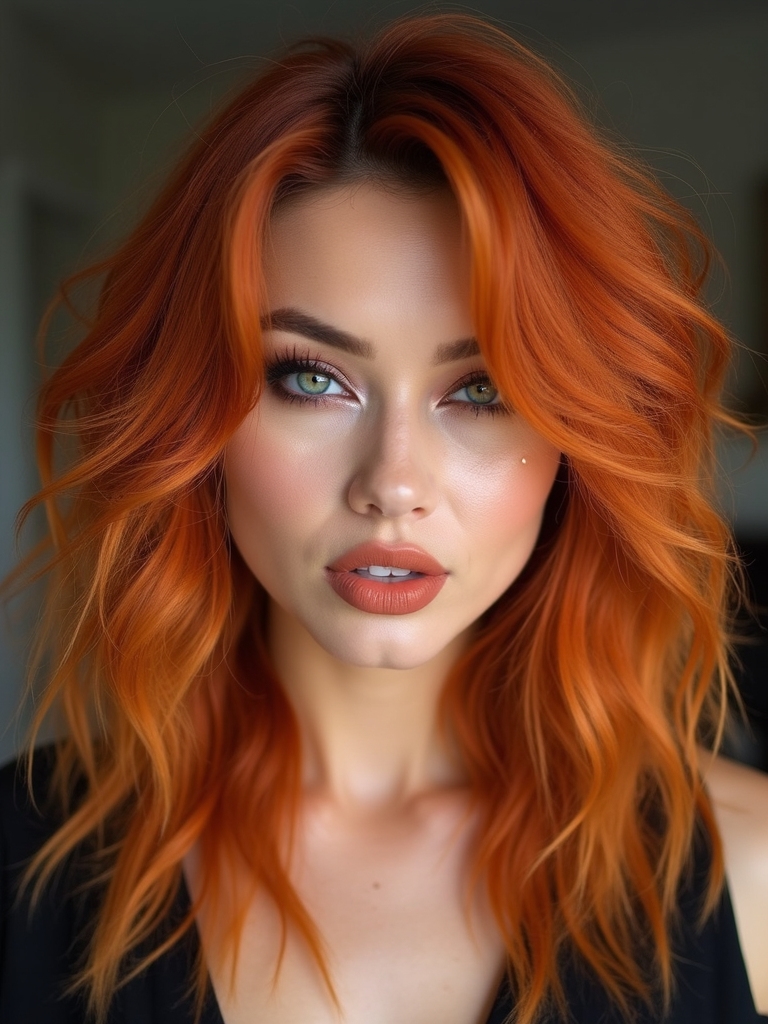
A copper balayage stands as the lowest-maintenance route into ginger, painting warm copper pieces through the base rather than committing to solid, all-over color. The hand-painted effect grows out softly with no harsh line, which matters enormously with a color that fades this fast.
Because the balayage is dimensional rather than flat, the fade blurs and softens instead of leaving an obvious orange root. The textured wolf layers show off that dimension well, catching light differently across every piece. The copper brown hair guide has more on blending copper into a deeper base.
Air-Dried and Textured, No Fuss
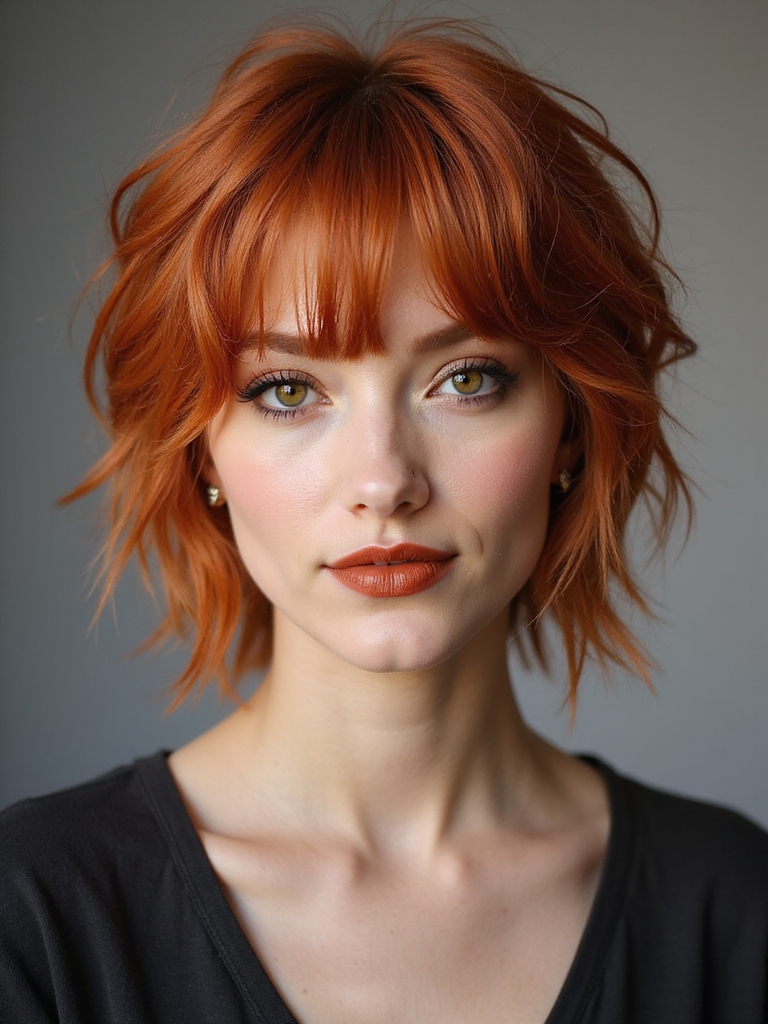
For anyone chasing low effort above all else, an air-dried ginger wolf cut leans entirely on the cut and the color to do the work. The choppy layers fall into piecey movement without help, and warm ginger catches light without any real styling involved.
- Choppy layers create texture with zero heat tools required.
- A small amount of product on damp hair, left to dry on its own, is the whole routine.
- Finger-combing through once dry is, quite literally, the only styling step left.
Heatless, Air-Dried Ginger Waves
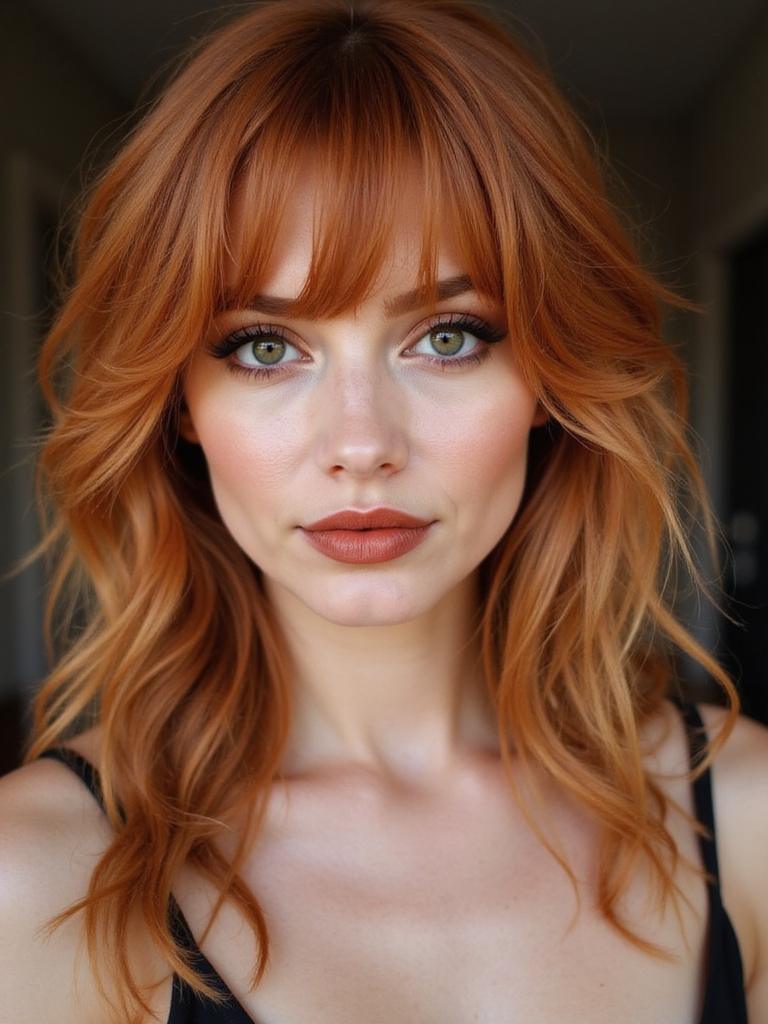
Heatless waves add movement to a ginger wolf cut while protecting color-treated hair from the heat damage that dulls red fastest of any tone. Setting the waves damp and letting them dry in place delivers soft, undone movement with zero hot tools involved.
Damp sections wrapped around a couple of foam rollers, or braided loosely overnight and unraveled in the morning, both deliver soft, piled waves that the wolf cut’s layering makes look full rather than uniform.
Skipping heat isn’t just gentler on the hair generally; it specifically protects a color that fades faster under repeated heat exposure than almost any other shade.
Not sure which ginger intensity fits the current routine? Answer honestly:
1Can a gloss appointment fit into the schedule roughly once a month?
If yes, brighter shades like copper or tangerine are realistic. If not, lean toward a deeper auburn that forgives longer gaps.
2Is heat styling part of the daily routine already?
If yes, expect faster fading regardless of shade chosen; heatless styling days will meaningfully extend color life.
Keeping Ginger Bright With Glosses
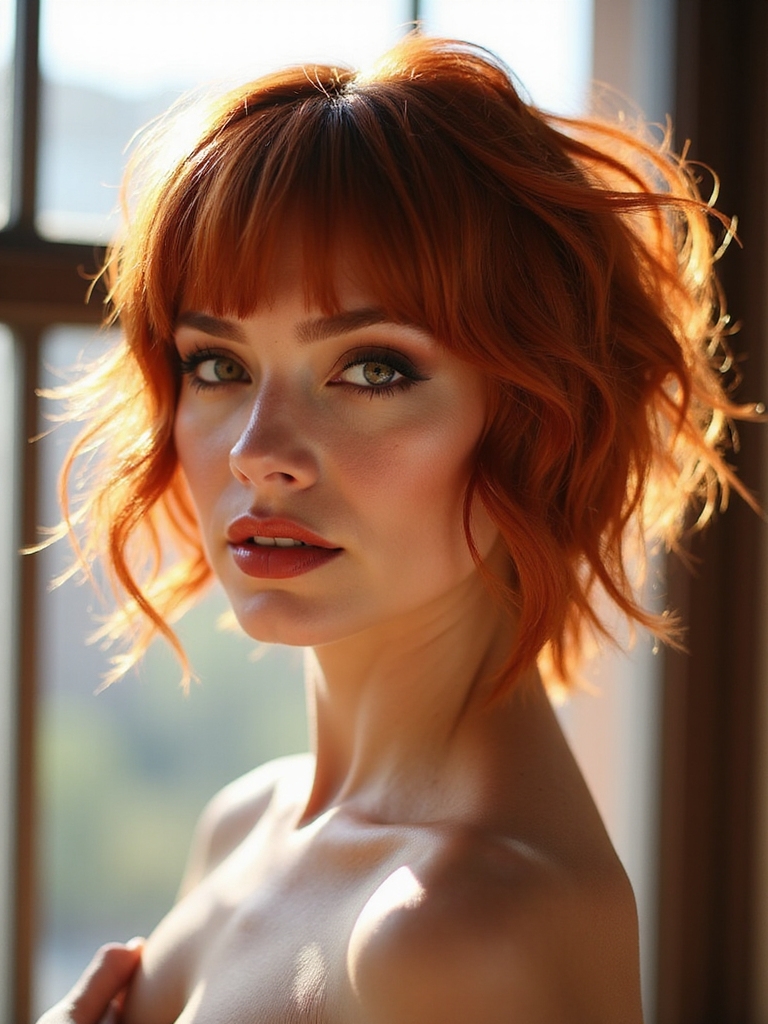
Glossing stands as the single most important habit for keeping a ginger wolf cut bright, since a gloss redeposits warm pigment and seals in shine that ordinary washing gradually strips away. Because this color family holds on for such a short window, a regular gloss is what separates a vivid ginger from a faded, brassy one.
Think of glossing as feeding the color rather than just adding shine to it. A salon visit for this typically takes about half an hour and runs around $40 to $70, and most gingers want one on a roughly monthly-to-six-week rhythm; brighter tangerines need it sooner, while deeper auburns can often stretch longer.
Between salon visits, an at-home color-depositing conditioner used weekly does real work toward extending the interval before the next gloss becomes necessary.
Lightweight Mousse and Shine Serum
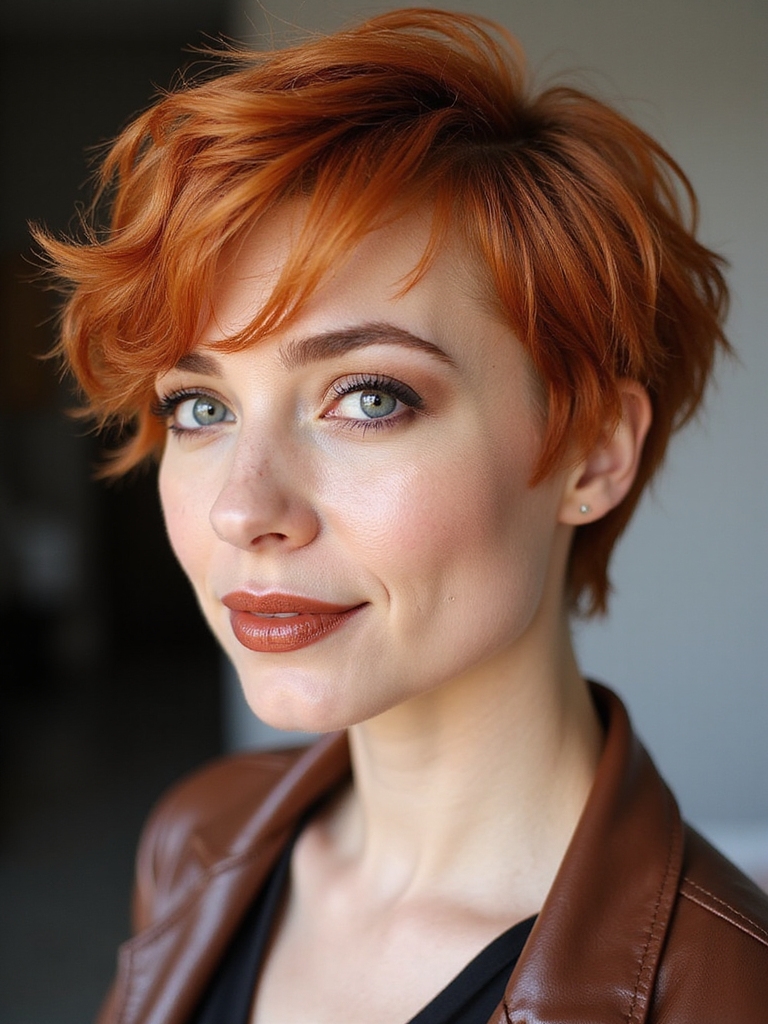
The right products make a ginger wolf cut’s layers pop, and the operating rule is lightweight, since heavy formulas weigh down the choppy texture that gives this cut its movement in the first place.
Shine matters more with ginger than with almost any other color, because a glossy red looks rich and expensive while a dull one reads faded no matter how fresh the appointment actually was.
- A lightweight mousse builds soft volume and definition without leaving crunch.
- A shine-boosting serum smoothed over just the ends brings out the color’s glossy depth.
- Both products work best applied sparingly; too much of either flattens the very texture they’re meant to enhance.
A Ginger Wolf Cut Maintenance Routine

A ginger wolf cut runs on two separate upkeep tracks, the cut and the color, and keeping both on schedule is what keeps the whole look salon-fresh rather than gradually drifting.
The cut side is the easy part: a shape-up every couple of months keeps the layers crisp. The color side asks for more consistent attention, since red simply doesn’t hold the way other tones do.
- Wash less often and in cool water to slow how fast pigment washes out.
- A sulfate-free, color-safe shampoo protects the tone on every wash day.
- A weekly color-depositing conditioner plus a gloss on a regular cadence is what actually keeps the shade from sliding toward a sad, faded orange.
Who It Suits Best
A ginger wolf cut rewards anyone truly willing to commit to a color-first maintenance routine, not just the cut itself. It suits people drawn to a bold, individual look who don’t mind the gloss appointments that come with owning it, and it particularly favors those with the warmer or cooler undertone that matches whichever end of the ginger spectrum they’ve chosen.
It’s a tougher fit for anyone who wants a wash-and-forget color, since red simply doesn’t behave that way regardless of how it’s cut. For that reader, a deeper auburn is the gentlest entry point, since it forgives fading far better than anything closer to tangerine.
Wear It Fiery, Keep It Bright
A ginger wolf cut is about as striking as a hair change gets, but pulling it off has less to do with the cut or even the exact shade than with respecting that red is, plainly, a high-maintenance color family. Match the ginger to skin, suit it to texture, and commit to the gloss-and-conditioner routine, and the result stays fiery and head-turning for months rather than fading within weeks.
Anyone still unsure where to start should try the swatch test with a softer shade first, then go bolder once it’s clear how the warmth actually sits against the face. A colorist experienced specifically with red tones makes more difference here than almost anywhere else in hair color.
More to Browse