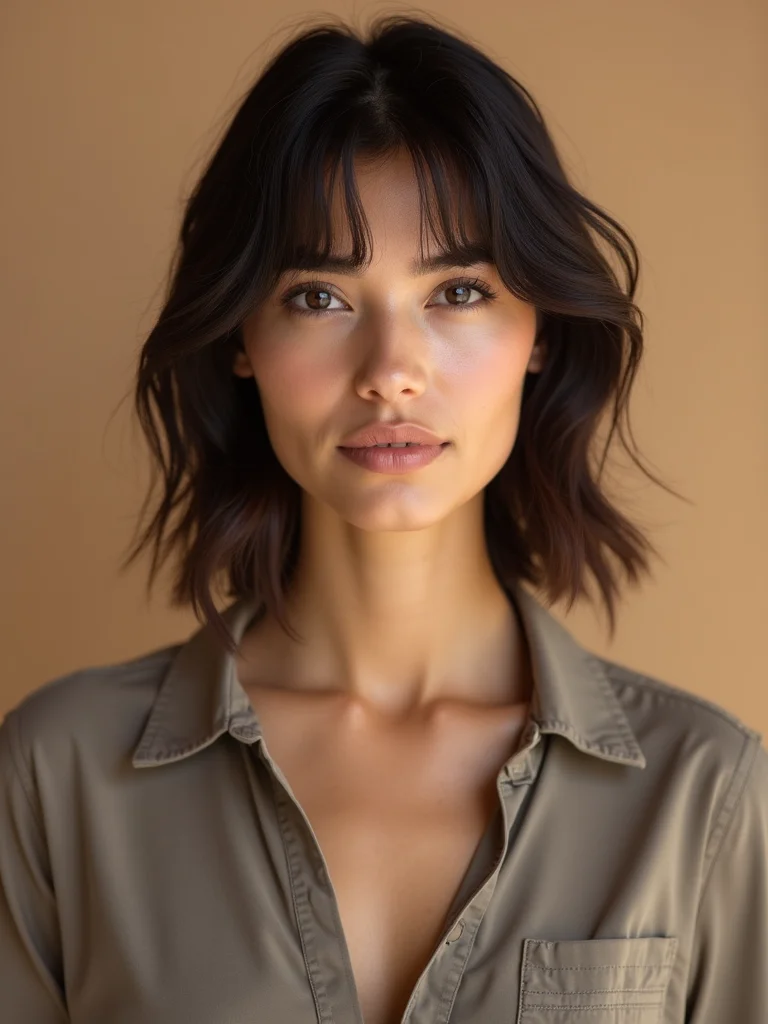
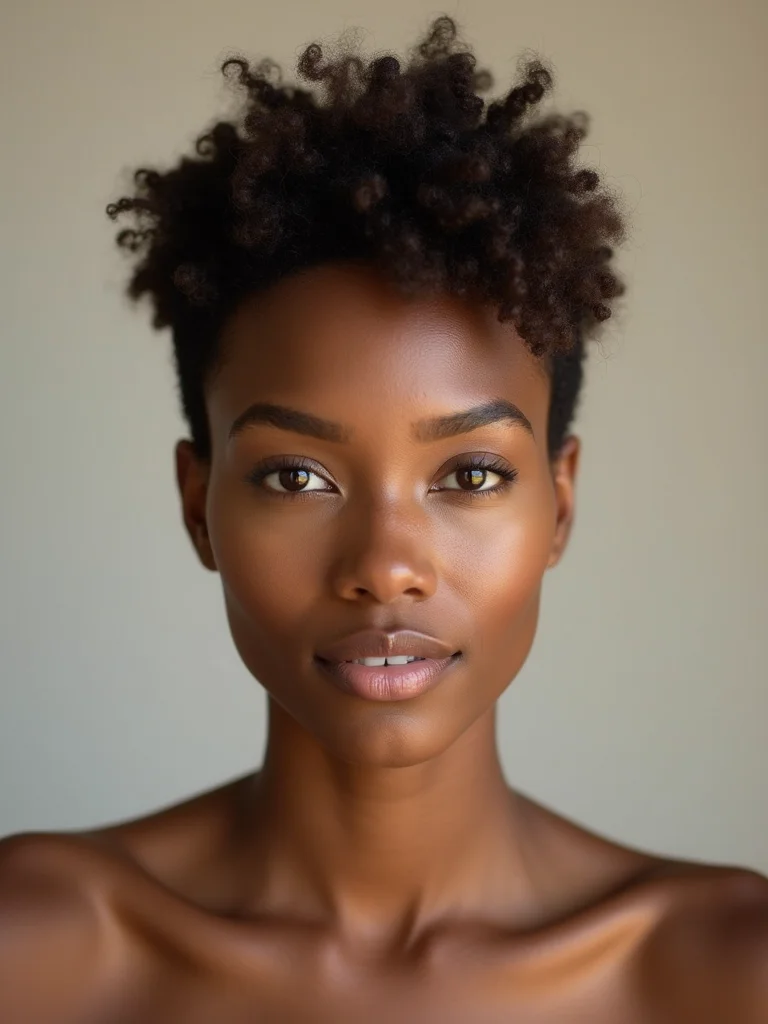
Picture a curly wolf cut on a windy winter day: the layers move, the curls bounce, and the shape only looks better as it gets tousled. This is the cut that finally works with your texture. The shag-meets-mullet shape was practically made for curls.
The wolf cut’s heavy layering and built-in volume are exactly what curly and coily hair wants, since the layers remove weight and let your curls spring up and out. These wolf cuts for curly hair cover every texture from loose waves to tight coils, how to ask for the cut, and how to style it so it lives up to the photos. If your curls have ever felt heavy or shapeless, this is the cut to try.
The Curly Wolf Cut, by Texture
| Texture | What the wolf cut does | Styling focus |
|---|---|---|
| Loose waves | Adds piecey movement and undone texture | Sea-salt spray, air-dry or rough-dry |
| Classic curls | Removes weight so curls spring up and out | Curl cream, diffuse on low |
| Coily / tight curls | Builds round, cloud-like volume and shape | Leave-in plus gel, diffuse or air-dry |
Why the Wolf Cut Loves Curly Textures

Curly hair and the wolf cut are a natural match, and once you see why, you will not want anything else. Curls carry weight at the bottom that drags the shape down; the wolf cut’s heavy internal layering strips that weight out, so your curls spring up, round out, and gain the volume they were hiding.
Built for Bounce
The shaggy, piecey nature of the cut also hides the slight unevenness curls naturally have, so it grows out gracefully and never looks like it is in an awkward stage.
The wolf cut gives curly hair shape and lift without thinning or relaxing a single strand. I cut more curly wolf cuts now than any other shape, because the before-and-after is that dramatic. The wolf cut hair guide covers the cut on every texture.
Finding Your Perfect Layer Balance

The magic and the risk of a curly wolf cut both live in the layers. Too few, and you lose the volume and movement that make the cut; too many, and very curly hair can turn into a triangle, wide at the bottom and flat on top.
The balance depends on your curl pattern: looser curls can take heavier, longer layers, while tight curls need shorter, rounder internal layers to build height up top. The right layer balance is what makes a wolf cut look intentional and deliberate. A curl-specialist stylist will read your hair and place them accordingly.
- Too few layers lose the volume; too many can triangle out.
- Looser curls take longer layers; tight curls need shorter ones.
- Layer placement should build height at the crown.
The biggest mistake with a curly wolf cut is cutting it wet. Curls have to be cut dry, curl by curl, because what you see dry is exactly what you get.
Wolf Cut Ideas for Loose Waves

On loose waves, a wolf cut reads cool and undone, all piecey, tousled texture. The layers turn relaxed waves into something with real shape and movement, the rock-and-roll end of the curly spectrum.
Easy Edge for Waves
Because waves are looser, you can wear this version longer and shaggier without losing definition. A little sea-salt spray and a rough-dry brings out the texture.
A wavy wolf cut suits anyone who wants undone, low-effort texture with an edge. It air-dries beautifully, which makes it a winter win when you would rather not heat-style.
Wolf Cut Magic for Classic Curls

On classic, springy curls, the wolf cut is transformative, since this is the texture that carries the most weight to remove. Stripping that weight with layers lets the curls bounce up into a full, round shape, and face-framing layers turn the front into soft, defined ringlets.
- Removes the weight that flattens springy curls.
- Face-framing layers become soft, defined ringlets.
- Cut curl-by-curl on dry hair for the truest shape.
| Curl type | Shrinkage to expect | Trim cadence |
|---|---|---|
| Loose waves | Minimal; cuts close to length | Every 10-12 weeks |
| Classic curls | Moderate; cut a little long | Every 10-12 weeks |
| Coily / tight | High; cut well long for draw-up | Every 8-12 weeks |
Cloud-Like Volume on Coily Wolf Cuts

On coily and tightly curled hair, the wolf cut builds a soft, cloud-like volume that celebrates the texture. Rounded internal layers give coils room to expand into a full, sculptural shape, and the result is all height and presence. I see coily hair gain the most from this cut, since it carries the most weight to lose.
- Rounded layers let coils expand into cloud-like volume.
- Account for shrinkage: coils draw up, so cut with that in mind.
- A leave-in plus gel defines the shape after the cut.
Face-Framing Layers for Every Face Shape

Face-framing layers are the heart of a curly wolf cut, and they can be tailored to flatter any face shape. Shorter pieces around the face add curl and softness right where it frames you, and where they fall changes everything. Face-framing curls that hit at the cheekbone open up a round face; longer pieces that start at the jaw flatter a longer face.
The curl pattern means these pieces spring up shorter than they are cut, so a good stylist accounts for the bounce. I always cut face-framing curls a little longer than the client expects, because curls shrink. Done right, they are the most flattering part of the whole cut. The winter curly hairstyles guide has more ways to wear them.
- Face-framing curls add softness right where it flatters.
- Cheekbone-length opens a round face; jaw-length suits a long one.
- Cut a little long to account for curl shrinkage.
A few curly-cut terms worth knowing:
📖Dry cutting
Cutting curls dry, curl by curl, to see how each one falls
📖Internal layers
Layers cut inside the shape to remove weight and build volume
📖Money-piece
A brighter face-framing highlight that lifts the front curls
📖Pineapple
Loosely gathering curls high on the head at night to preserve them
Soft Curtain Bangs vs. Bold Micro Bangs

Bangs change a curly wolf cut completely, and the choice comes down to soft or bold. Curly curtain bangs part in the middle and blend into the face-framing layers for a soft, grown-out look, while curly micro bangs sit short and high for a bold, fashion-forward statement.
- Curtain bangs blend soft and grow out easily.
- Micro bangs make a short, bold, high-fashion statement.
- On curls, cut bangs dry and a little long for shrinkage.
Shaping the Back: Shaggy vs. Mullet Lean

The back of a wolf cut can lean two ways, and it sets the whole personality of the cut. A shaggy back keeps the length more even and soft, while a mullet lean keeps real length at the back with shorter, fuller layers up top for a bolder, edgier shape.
On curls, the mullet lean reads especially dramatic, since the curl adds volume to the contrast. A shaggy back is the softer choice; a mullet lean is the statement. Decide how bold you want to be before you sit in the chair.
- Shaggy back: softer, more even, lower-commitment.
- Mullet lean: bold length-contrast, extra drama on curls.
- Decide your boldness before the appointment.
📋Before your curly wolf cut appointment
- ✓Find a stylist who cuts curly hair dry, and confirm it when you book
- ✓Bring photos of the cut on your curl pattern, not just any wolf cut
- ✓Decide your volume, face-framing length, and shaggy-vs-mullet lean ahead of time
How to Specify Texture, Layers, and Length to Your Stylist

The single biggest factor in loving your curly wolf cut is communicating it clearly, since ‘wolf cut’ means different things to different stylists. Bring photos of the cut on hair close to your own curl pattern, since the same layers behave completely differently on waves versus coils.
Be specific about three things: how much volume you want, where the shortest face-framing piece should hit, and whether you lean shaggy or mullet. And make sure your stylist cuts curly hair dry, curl by curl, since that is the only way to see how each curl will fall.
A curl-experienced stylist is worth seeking out for this cut. I tell every new client to ask the salon directly whether they cut curls dry, because the answer tells you everything.
At-Home Styling Routine for Airy Volume

A curly wolf cut is low-effort once you know the routine, and it rewards a curls-first approach. Start on soaking-wet hair, since curls define best with maximum water, and apply your products before the curls start to dry.
Rake a leave-in through, then scrunch in a curl cream or gel for hold, scrunching upward toward your scalp to encourage the curl. Let it air-dry or diffuse on low.
Scrunching upward is the move that builds the wolf cut’s signature volume. Once it is dry, scrunch out any gel cast with a drop of oil for soft, touchable curls. The whole thing takes about ten minutes.
Lightweight Products for Touchable Curl Definition

The right products make a curly wolf cut, and the wrong ones weigh it down or leave it crunchy. The goal is definition without stiffness, so reach for lightweight leave-ins, curl creams, and gels over heavy butters that flatten the volume you just cut in.
Layer light: a water-based leave-in first, then a curl cream or a light gel for hold. A lightweight gel gives definition you scrunch soft once dry, with no crunch left behind. Skip heavy oils and butters on the lengths, since they drag curly layers down.
- Lightweight leave-ins and gels, not heavy butters.
- Layer light for definition without the weight.
- Scrunch out the gel cast with a drop of oil when dry.
Diffusing Techniques for Lift and Definition

A diffuser is the curly wolf cut’s best friend, since it dries the curls while building the volume the cut is designed for. Cup sections of curls into the diffuser bowl and bring it up to your scalp, holding it there to set root lift, the secret to the cut’s height.
Root Lift Is Everything
Dry on low heat and low speed so you do not disturb the curl pattern or cause frizz, and resist touching the curls until they are fully dry.
Diffusing at the root is what separates a flat curly cut from a voluminous one. Pixie-diffusing, cupping and lifting at the roots, adds even more height for coily textures. It takes a few extra minutes but doubles the volume.
Nightly Care and Low-Maintenance Tips Between Visits

A curly wolf cut holds its shape for weeks with the right between-salon care, and most of it happens at night. Pineapple your curls loosely on top of your head and sleep on a satin pillowcase or in a bonnet, so you wake up to curls that need only a light refresh.
Sleep On It Right
Refresh second- and third-day curls with a spray of water and a little leave-in, scrunching to revive the shape, no re-wash needed. The layers hold their form for a while.
A satin pillowcase is the cheapest thing you can do for curly-cut longevity. A trim every ten to twelve weeks keeps the layers shaped, since growing curls lose the volume balance over time.
Color Pairings That Suit the Wolf Cut

Color can take a curly wolf cut from great to unforgettable, since dimension makes the layers and curls pop. Balayage and painted highlights catch the movement of the layers, while a contrasting money-piece at the face brightens the framing curls.
- Balayage and painted pieces catch the layered movement.
- A money-piece brightens the face-framing curls.
- Keep color gentle on curls; healthy curls hold shape best.
Real-Life Inspo: Trendsetting Curly Wolf Cuts
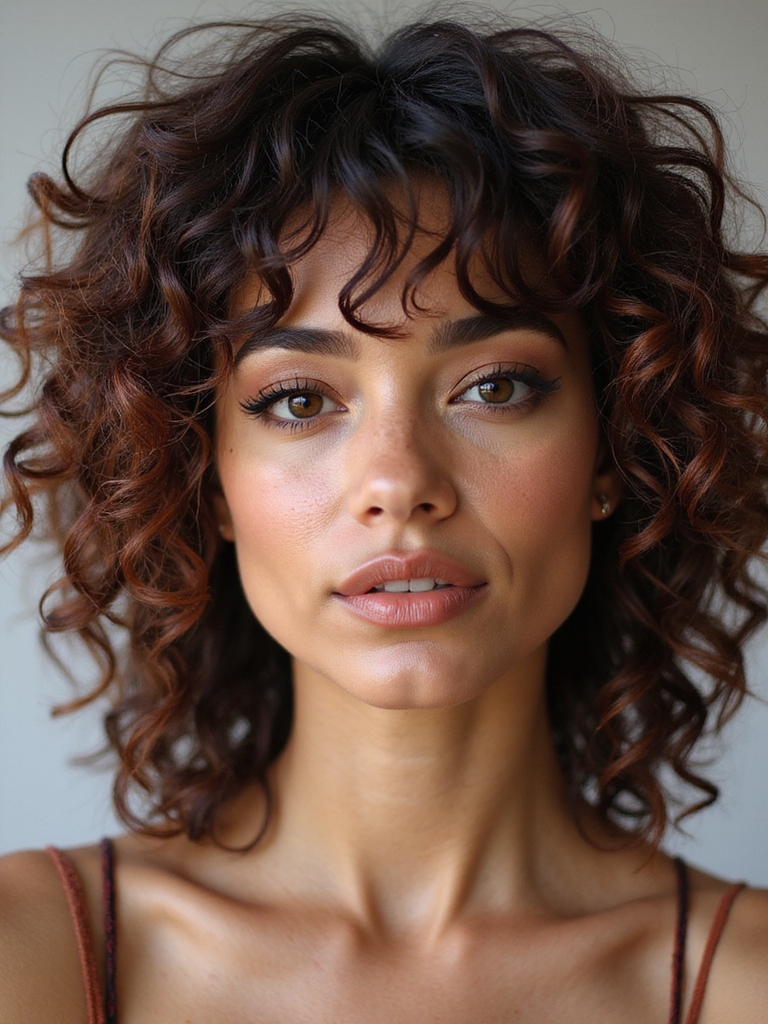
The curly wolf cut took off because real people, not just models, made it their own across every texture. You will see it on loose waves with curtain bangs, on classic curls with a bold mullet lean, and on coily hair sculpted into a rounded cloud, each one unmistakably personal.
What they share is confidence and movement; the cut invites you to lean into your texture rather than smooth it away. It is as much an attitude as a haircut.
The best curly wolf cuts are the ones tailored to one person’s curls, so use the inspo as a starting point and build yours with your stylist. The wolf cut for long hair and wolf cut for short hair guides show the cut at other lengths.
Maintenance & Care
Keeping a curly wolf cut looking its best is mostly about moisture and a light touch. Curly and coily hair runs dry, especially in winter, so deep-condition weekly and keep a leave-in in rotation to hold the curl and the layers. Refresh between washes with water and product; over-washing strips the moisture curls depend on to hold their shape.
On the cut side, a shaping trim every ten to twelve weeks keeps the layers balanced as your hair grows, since curls lose their volume balance once the layers grow out. A salon shape-up runs about $50 to $90 for this kind of detailed, curl-by-curl cut.
Treat your curls gently, keep the layers maintained, and a curly wolf cut stays the most fun, lowest-effort version of your texture all winter. The winter natural hairstyles guide has more on protecting coily curls in the cold.
The Cut That Finally Gets Your Curls
What makes the curly wolf cut special is not that it is trendy, it is that it works with your texture in a way most cuts do not. It takes the weight off, builds the volume curls naturally want, and turns the slight irregularity of curly hair into the whole point. For anyone who has felt their curls were heavy, shapeless, or stuck in a triangle, this is the cut that changes the relationship.
So if you are curly and curious about the wolf, find a stylist who cuts curls dry, bring your photos, and give it a try. Worst case, the heavy layering grows out softly; best case, you finally meet the version of your curls you have been chasing. Which texture is yours, and what would the wolf cut do with it?
Where to Next