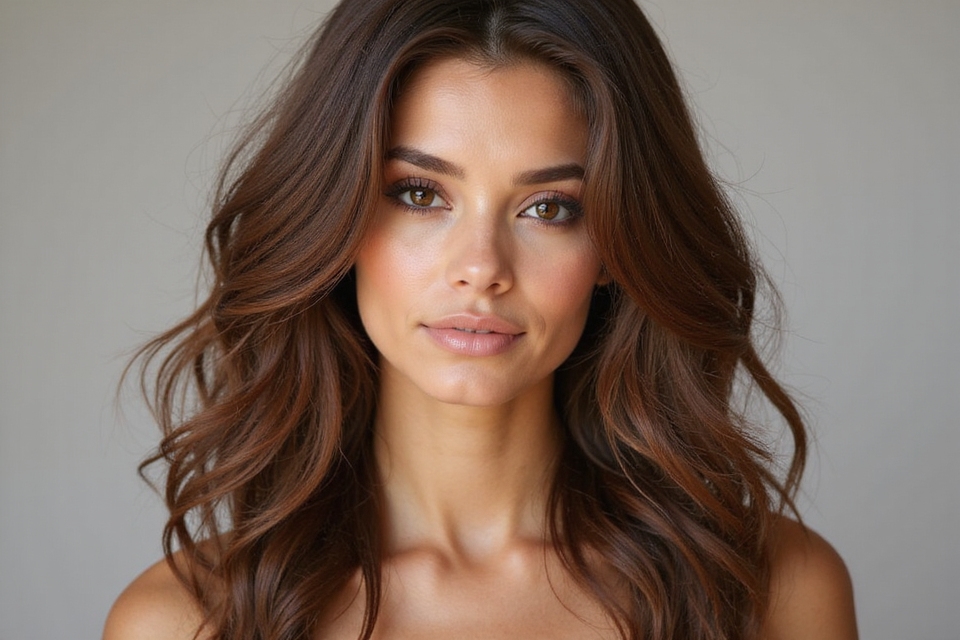
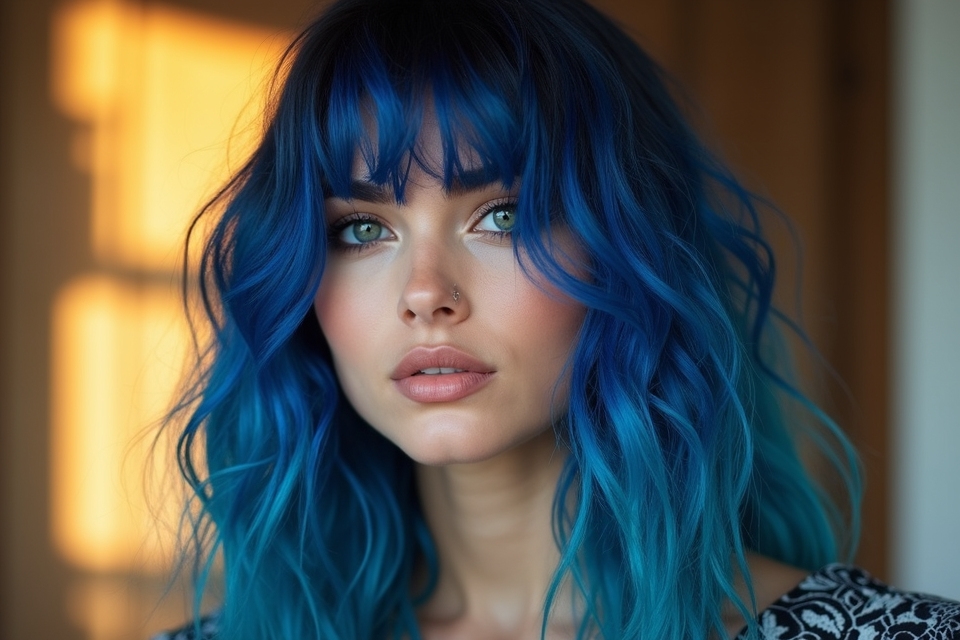
Your hair is down and smooth at the office, all natural, nothing to raise an eyebrow. Then you flip it into a ponytail after work and a streak of electric blue swings into view. That is peekaboo color, and it is the cleverest way I know to wear a bold shade without committing to it.
It all comes down to placement, a vivid hue tucked into the under-layers so it hides when your hair is down and flashes when you move. Below is a full guide to peekaboo hair colors, from choosing your shade and placement to keeping the color bright, plus why the hidden approach makes it the most flexible, workplace-friendly way to go bold.
The Short Version
Peekaboo color hides a bold shade in the under-layers of your hair, revealed only when you choose. Placement decides when it shows: deeper and lower to keep it hideable, higher and around the face to flash it more often.
Vivid colors fade fast, so cool washing and a color-depositing conditioner are essential to keep them bright. The hidden placement makes peekaboo truly workplace-friendly and easy to switch, since the color lives in one small, prepared section.
What Makes Peekaboo Color Different

Peekaboo color hides a bold or bright shade in the under-layers, so it stays concealed when your hair is down and flashes into view when you move, part it, or pin it up. Think of it as color with a built-in volume control. That hidden placement is the entire appeal: you wear a vivid, unconventional color without committing your whole head, while the top layer stays completely natural. You hold the dial. See our bold color trends for shade inspiration.
- The top layer stays your natural color; the bold hue lives underneath
- Down and smooth, it can read nearly invisible for work
- Up or flipped, the color comes out in full

Best Colors for a Hidden Flash

Peekaboo works with almost any color, but the vivid ones make the biggest impact, since the surprise is half the fun. Bright reds, blues, purples, pinks, and greens all pop dramatically against a natural top layer, while softer pastels or a shade just a few tones off your base give a gentler flash. The contrast with your top layer is what decides how dramatic it reads.
- Go bold (red, blue, violet, green) for a dramatic reveal
- Go soft (pastels, near-natural tones) for a gentle flash
- Match the boldness to how much you want it seen
ℹ️Less Damage Than It Looks Like
Because only the under-layer gets lightened and dyed, a peekaboo section usually processes a smaller percentage of total hair than even a partial balayage. That’s part of why colorists often suggest it to clients who want to test a bold shade before risking it on more hair.
How to Choose Your Peekaboo Shade

The right peekaboo shade depends on your natural color, your skin tone, and how bold you want to be. What I tell clients first is to decide whether they need to hide it for work or want it on show, since that shapes both the shade and the placement. From there, a high-contrast color against your base makes the most dramatic reveal, while a closer tone stays understated. Cooler skin often suits jewel tones; warm skin glows with reds and coppers.
- High contrast with your base looks dramatic; a close tone stays subtle
- Cool skin leans jewel tones; warm skin leans reds and coppers
- Decide hideable-for-work versus on-show before you book
Placement Techniques for Maximum Impact

Placement is everything with peekaboo, since where the color sits decides when it shows. The classic spot is the under-layer at the nape and around the lower sides, hidden when your hair is down and revealed when you move or tie it up.
Coloring the layer beneath a top section lets you flip it up to flash the color or smooth it down to conceal it. The mistake I see most is placing it too high when someone actually needs it hidden, so tell your colorist exactly when you want it to appear and let them place it accordingly.
👍Low, Nape Placement
- +Nearly invisible in daily life, easiest to keep hidden at work
- +Shows only with a full flip or updo
- +Forgiving for a first-timer testing the technique
👎Higher, Face-Framing Placement
- –Flashes with far less effort, even a loose part can reveal it
- –Shows up more in everyday photos
- –Not ideal if you need it fully concealable for work
Maintaining Your Hidden Color

Vivid peekaboo colors fade faster than natural shades, because the bright, direct dyes used for them wash out over time. Maintaining the color comes down to washing less often and cooler, using color-safe products, and topping up with a color-depositing conditioner between salon visits. The less you strip the hair, the longer the hue lasts.
- Wash less often and always in cool water
- Use a sulfate-free, color-safe shampoo
- Top up weekly with a color-depositing conditioner in your shade
Professional Versus DIY Peekaboo

Whether you can do peekaboo at home really depends on one thing: does your color need lightening first? For bright shades on dark hair, the under-layers have to be bleached before the color reads true, and that part is best left to a professional.
Lightening is the technical part
Bleaching a hidden section evenly takes skill, and the lightening is what determines how clean the color looks. Get it wrong and the shade turns muddy. Once the base is prepped, though, refreshing a vivid color at home is very doable, since the direct dyes are gentle and forgiving.
So the split is simple: pay a pro for the lightening and the first application, then keep it up yourself. That is where I point budget-conscious clients, since the at-home top-ups save the most money over time.
🅰️Bleach-Free Base
Faster, gentler appointment, but the color choice is limited to shades close to your natural depth.
🅱️Pre-Lightened Base
Opens up any vivid shade you want, at the cost of a longer first visit and ongoing bond-repair care.
Color Combinations That Work

Some of the most striking peekaboo looks layer more than one hidden color. A blended ombre of two related tones, like pink melting into purple, gives a gradient reveal, while contrasting jewel tones, like teal and violet, create a bold, multi-color flash. See our ombre color ideas for the gradient approach.
The cleanest, most dramatic option is still a single vivid hue against a natural base, where the contrast does all the work. Whichever you choose, keep the top layer natural so the hidden color stays the surprise.
Styling to Show Off Your Secret Hues

The fun of peekaboo is choosing when to reveal it, and styling is how you do that. A high ponytail, a half-up, or space buns lift the under-layers into full view for maximum impact. Braids are especially effective, since weaving the colored under-layer through a braid threads the hue across the whole style, while tucking one side behind your ear gives just a quiet flash.
- Ponytails and half-ups lift the color into view
- Braids thread the hidden hue through the whole style
- Tuck one side behind the ear for a subtle peek
“When a client wants the boldest possible reveal, I send them home practicing one go-to updo, usually a high pony or a quick braid, because a style you can do in thirty seconds is the one you will actually use to show the color off. The fanciest placement is wasted if the reveal is too fiddly for a weekday.”
Protecting Your Color From Fading

Beyond the wash routine, two specific culprits do the most damage: direct sun exposure and hot styling tools set too high. Both bleach vivid pigment out faster than washing ever could on its own.
Sun and Styling Tools Do More Damage Than Washing
At the pool or beach, a leave-in with UV filters on the colored section specifically makes a real difference; chlorine and salt water are especially harsh on direct dyes. Keep flat irons and curling wands on the lowest setting that still gets the job done on that section.
Day one matters most of all. Whatever restraint you show in the first 48 hours after coloring sets the tone for how the whole thing fades from there.
Products for the Colored Sections

The colored under-layers have gone through more chemical processing than anywhere else on your head, so treat that product routine as its own small project rather than an afterthought to your regular shampoo and conditioner.
A bond-building treatment, applied every few weeks, rebuilds strength in exactly the section that took the lightening. A silicone-based serum on the ends afterward disguises any straw-like texture that lingers between treatments.
Matching the Reveal to the Occasion

A first date, a job interview, and a night out all call for a different amount of color, and peekaboo is one of the only techniques built to answer all three from a single appointment.
Read the Room, Then Decide
For an interview or a client meeting, leave it fully down and smooth; nobody needs to know it exists. For a first date, a partial reveal at the temple or nape says more without a word.
Save the full flip-it-up moment for whenever you actually want people asking about it, since a color this deliberate deserves an audience occasionally.
Seasonal Peekaboo Colors

Peekaboo is a low-risk way to follow seasonal color trends, since you can change the hidden hue without committing your whole head. Bright corals and pinks suit summer. Deep jewel tones and burgundy feel right for fall and winter.
Because the color is hidden and relatively easy to refresh or swap, you can rotate shades with the seasons and never get bored. It is the most flexible way to play with trend colors without a dramatic, all-over commitment. See our seasonal color ideas for inspiration.
Workplace-Friendly Color

Not every job has the same appearance rules, and peekaboo adapts to more of them than most people realize. A video-call-heavy remote job cares mainly about how the hair looks on camera, framed close and usually smoothed down anyway.
A client-facing retail or healthcare role often has a written policy worth checking first; some specifically restrict unnatural colors regardless of visibility, not just “visible” color. A uniform with a collar or a name badge can also change how much of the nape area shows without you realizing it.
- Check written dress-code policy wording, not just what colleagues wear
- Remote, camera-facing roles care about a different angle than in-person ones
- A uniform collar can expose or hide more of the nape than street clothes would
Common Mistakes to Avoid

A surprisingly common mistake is picking a contrast level that’s wrong for the actual goal: choosing a near-natural tone when the whole point was a dramatic reveal, or the reverse, a neon shade for someone who really needed it to stay subtle.
DIY toning is another trap. Over-toning a bleached section at home can shift a cool white-blonde base toward an ashy gray-purple that fights whatever vivid color goes on next, and it’s a hard mistake to walk back.
The third is a mismatched color-depositing conditioner, one shade warmer or cooler than the actual dye. It looks fine in the bottle but shifts the peekaboo color slightly with every use, which adds up over months into a tone nobody chose on purpose.
Touch-Up Tips and Schedule

Vivid peekaboo colors need regular refreshing, since they fade with every wash. Topping up with a color-depositing conditioner every week or two keeps the hue bold between full salon visits, and it costs next to nothing.
The lightened base also needs root touch-ups as it grows, though far less often than an all-over color since the area is small. A salon refresh every few weeks, often $80 to $200 depending on how much lightening is involved, keeps the color looking freshly done.
Transitioning Between Shades

Because peekaboo color sits in a small, already-lightened section, switching shades is far easier than recoloring your whole head. You can move from pink to purple to blue over time with minimal extra processing. Fade the existing color out or have your colorist shift it, then apply the new hue to the same prepared section. That flexibility is a big part of what makes peekaboo such a playful, low-commitment way to wear bold color.
- The lightened section is already prepped, so changes are easy
- Move from one bold shade to the next with minimal processing
- See our bold color ideas for your next hue
Who It Suits Best
Peekaboo is made for anyone who wants bold color but cannot, or would rather not, commit their whole head to it. That covers a lot of people: the nurse or teacher with a strict dress code, the bold-color-curious who are nervous about going all in, and anyone who simply likes the idea of a secret only they control.
It also suits the indecisive, since the small, prepped section makes switching shades easy and cheap. The one person it does not serve well is someone who wants their color seen all the time, every day; if that is you, an all-over vivid or a bold ombre will make you happier than a hidden flash.
Peekaboo Color Questions
?How is peekaboo different from balayage or ombre if it’s also hidden in the layers?
Balayage and ombre are built to blend and look sun-lightened across the whole head. Peekaboo intentionally does the opposite: it isolates one section in a bold, often unnatural color that’s meant to contrast, not blend, with everything around it.
?What should I say if my workplace has a strict appearance policy?
Ask your colorist for the lowest, smallest section possible and bring a photo of your hair worn exactly the way you do for work. A good colorist can confirm the color stays invisible under your normal routine before you commit to it.
?Why do peekaboo color quotes vary so much between salons?
The biggest swing factor is how much lightening the shade needs and how experienced the colorist is with vivid, direct-dye application. A stylist who specializes in fantasy colors often charges more per section but makes fewer mistakes on tricky shades like blue or green.
Bold Color on Your Terms
If there is one reason to choose peekaboo over an all-over bold color, it is control. You decide every single day how much of it the world sees, smoothing it away for a meeting and flashing it at the concert that night. No other color technique gives you that kind of flexibility.
If you have wanted to go bold but felt boxed in by your job or your nerve, take a photo of the shade you keep dreaming about to a colorist and ask about a hidden placement. It is the gentlest way I know to test bold color without the leap.
More to Try