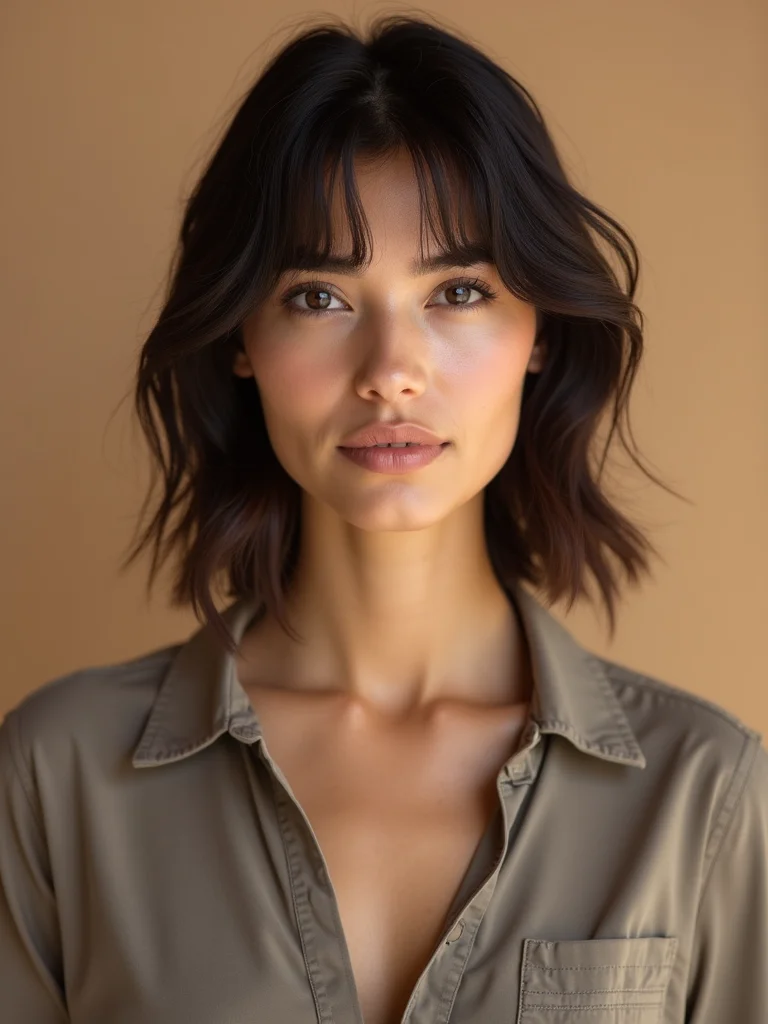
Curtain bangs are the fringe that asks the least and gives back the most, and wispy curtain bangs are the softest version of that idea. Parted down the middle and swept to either side, they frame the face from nearly any angle, whether the rest of your hair is down, up, or shoved into a clip on a rushed morning.
Fifteen ways to wear wispy curtain bangs follow here, sorted by cut and finish, from a sleek center part to a beachy wave, plus the maintenance habits that keep this fringe one of the lowest-effort ones to grow.
Wispy Curtain Bangs, Quick Answers
Why are curtain bangs so popular? Versatility. The center part and soft sweep flatter nearly every face shape and work whether hair is down, pulled back, or braided.
Are they hard to grow out? Less than almost any other fringe. The long, center-parted pieces blend into face-framing layers, so there’s no obvious in-between stage.
Do they work on curly or wavy hair? Yes. Straight, wavy, and curly hair all wear this fringe well; the cut and styling just adapt to whatever texture is already there.
Soft Waves With a Feathered Fringe to Match
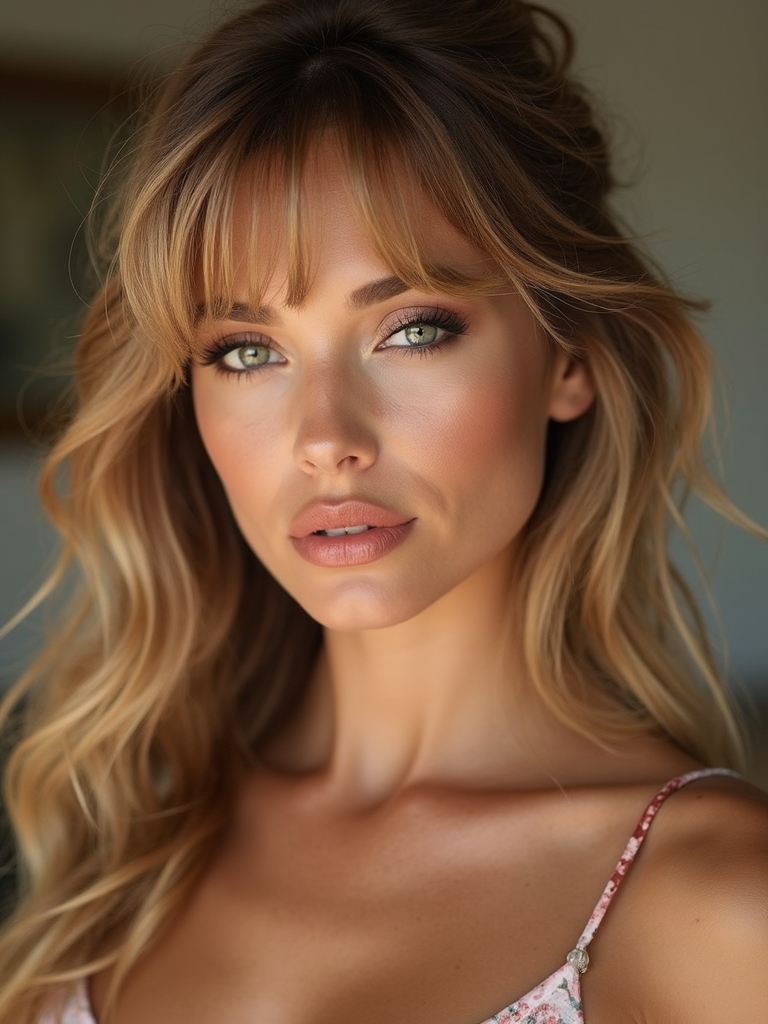
This is the version saved to the most phones, for good reason. Loose waves through the length and a feathered fringe up front share the same undone energy, so the two come together as one continuous idea, a cut with the fringe built in.
Wave the lengths the way you normally would, then run the same iron or wand lightly through the fringe so it picks up a matching bend. Skip that step and the bangs sit noticeably flatter than everything around them.
An Airy Curtain Effect on a Sleek Middle Part
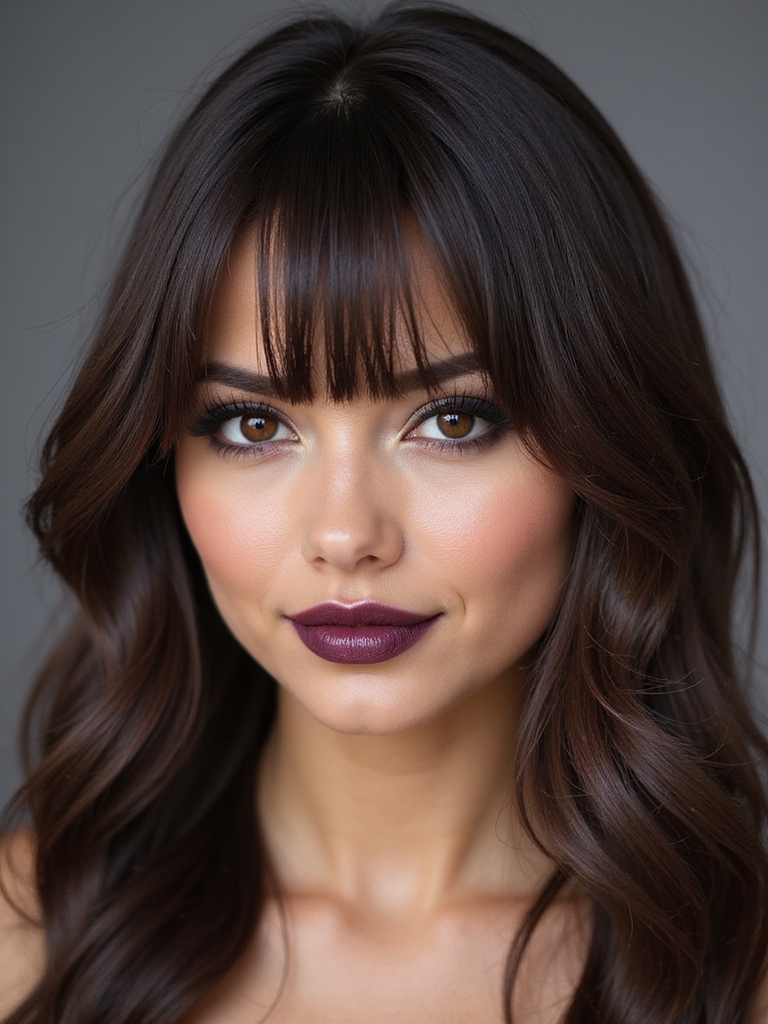
Worn sleek and straight, this fringe turns into an airy veil that drapes on either side of a clean center part. A smooth, glossy finish makes the same soft shape feel polished and editorial, proof this fringe works well beyond a texture-driven look.
- A flat iron and a light serum give the veil-like drape
- Keep the part precise; a crooked part undercuts the whole effect
- Works especially well on hair with some natural shine already
A Low Ponytail That a Split Fringe Rescues
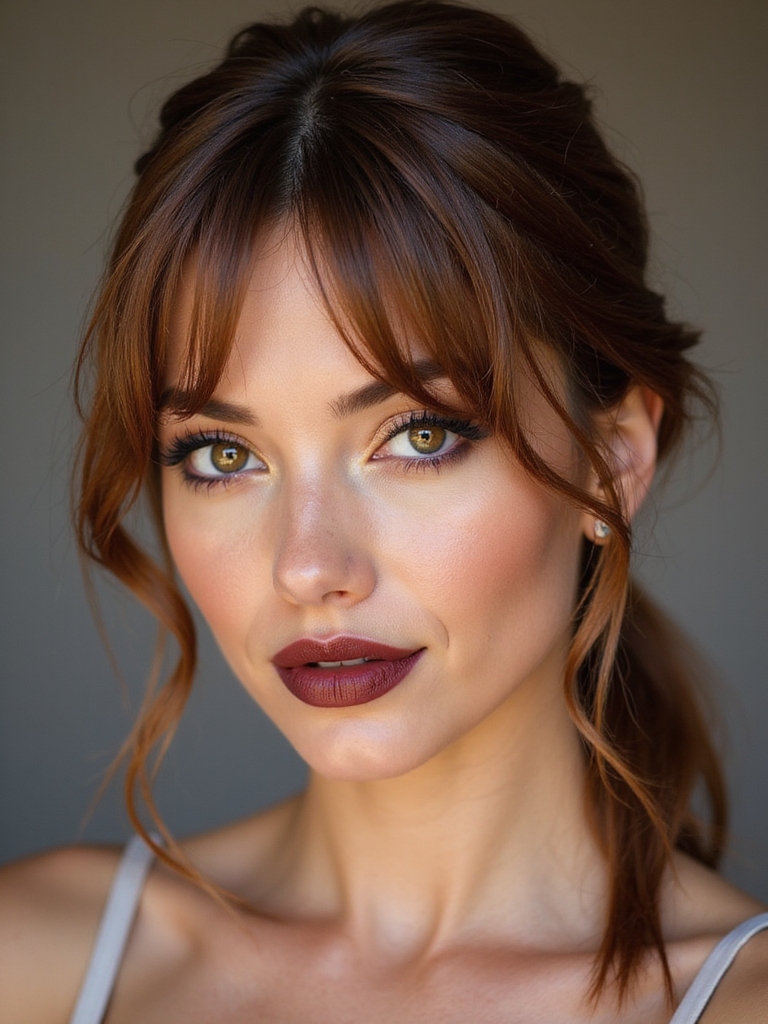
A plain low ponytail looks intentional the moment this fringe enters the picture. Gather everything back and the split pieces stay out front, so a simple pulled-back style reads considerably softer than a slicked one.
Let the pieces part naturally down the middle as you tie the pony, curving softly toward the cheekbones. A couple of loose face-framing tendrils pulled free alongside them add one more layer of softness.
This is the fastest route from bedhead to polished, since the ponytail itself takes seconds and the fringe does the rest of the visual work.
Whisper-Thin Bangs on a Tousled Lob
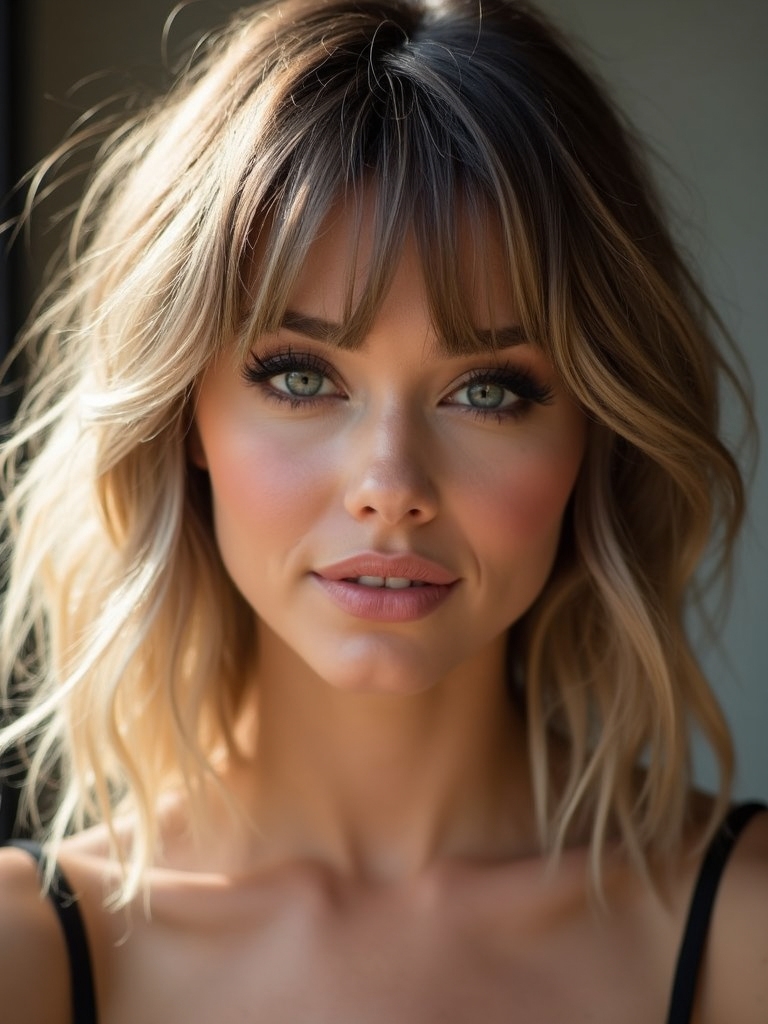
A tousled lob and whisper-thin curtain bangs make an especially low-effort pair. The collarbone length is easy to manage, the texture forgives a rushed morning, and the barely-there fringe adds framing without any real upkeep.
Tousle the lengths and the fringe together with the same product for a cohesive finish, one styling step covering both. Our side-swept bangs guide covers a related low-effort option if this one doesn’t quite fit.
- Collarbone length stays low-maintenance on busy mornings
- Whisper-thin bangs add softness with almost no extra time
- One product, worked through lengths and fringe together
The clients who keep this fringe longest are the ones who stop treating it as a separate haircut and just towel-dry it along with everything else.
Face-Framing Tendrils Under a High Bun
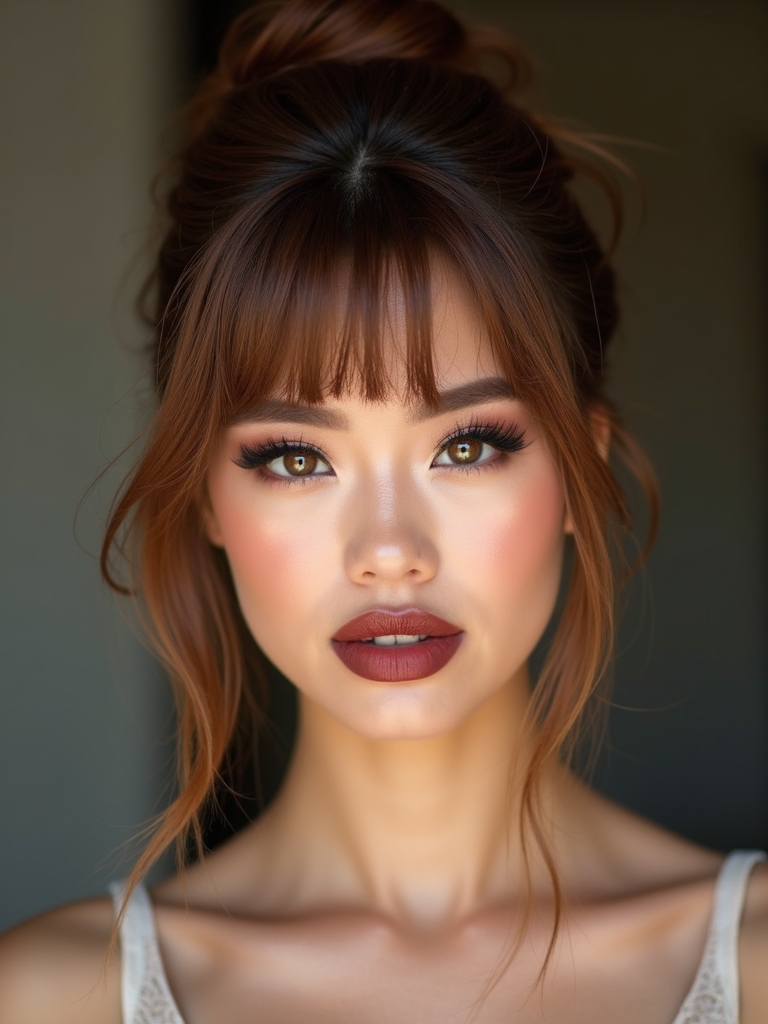
Pull hair into a high bun and leave the curtain bangs plus a few tendrils loose, and a sporty, scraped-back style turns noticeably softer. The bun gives height and a clean shape while the loose pieces keep the hairline from feeling stark.
- A sleek bun up top pairs with deliberately undone pieces at the front
- Curl the tendrils lightly for definition, or leave them straight for a cooler look
- Works as an everyday style or dressed up for an evening out
Braids That Leave the Curtain Loose at the Front
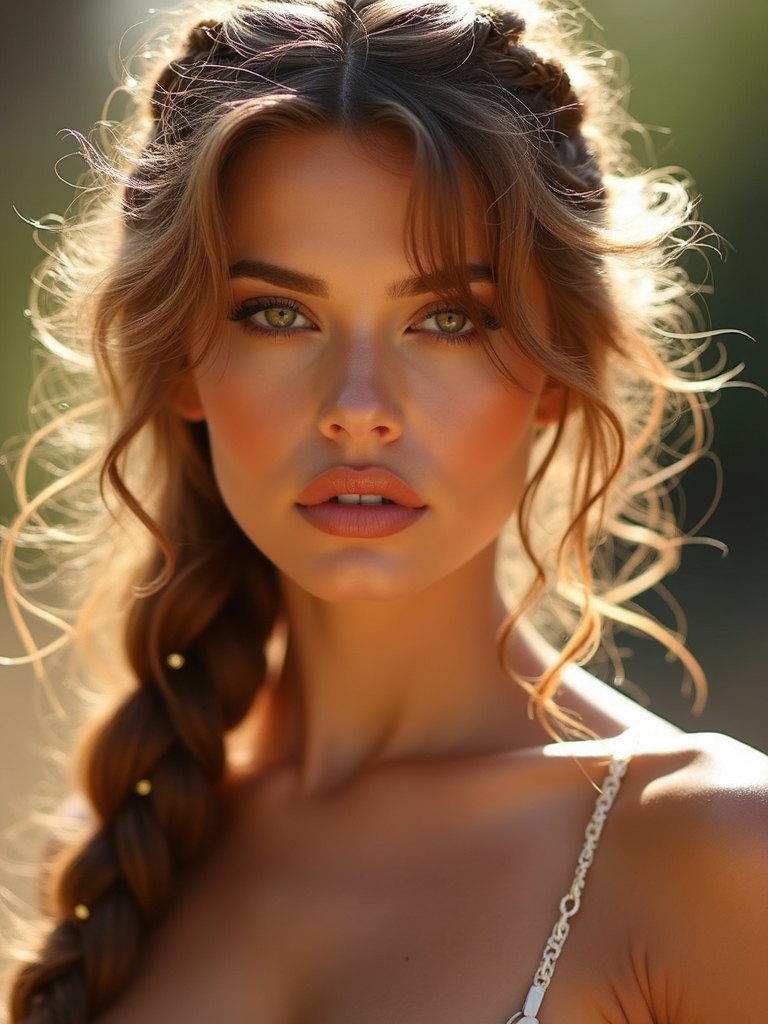
Braids and curtain bangs pair naturally for festivals, weddings, and lazy weekends alike. Whichever braid style you choose, leaving the fringe and a few wispy pieces loose at the front keeps the whole look from feeling too tight.
This works with almost any braid, from a single side plait to a crown braid or a scatter of small accent braids worked into loose waves. Pull the curtain pieces free before braiding starts, so they fall naturally, with none of the kinking a braid’s tension can leave behind.
The braid supplies the structure; the loose fringe supplies the softness. Neither one works quite as well without the other.
Timing Matters
Separate the fringe out before you start braiding, not once the braid is already done. Pulling pieces loose afterward can tug at the braid’s tension and leave flyaways instead of a soft frame.
A Blowout That Lifts the Fringe at the Root
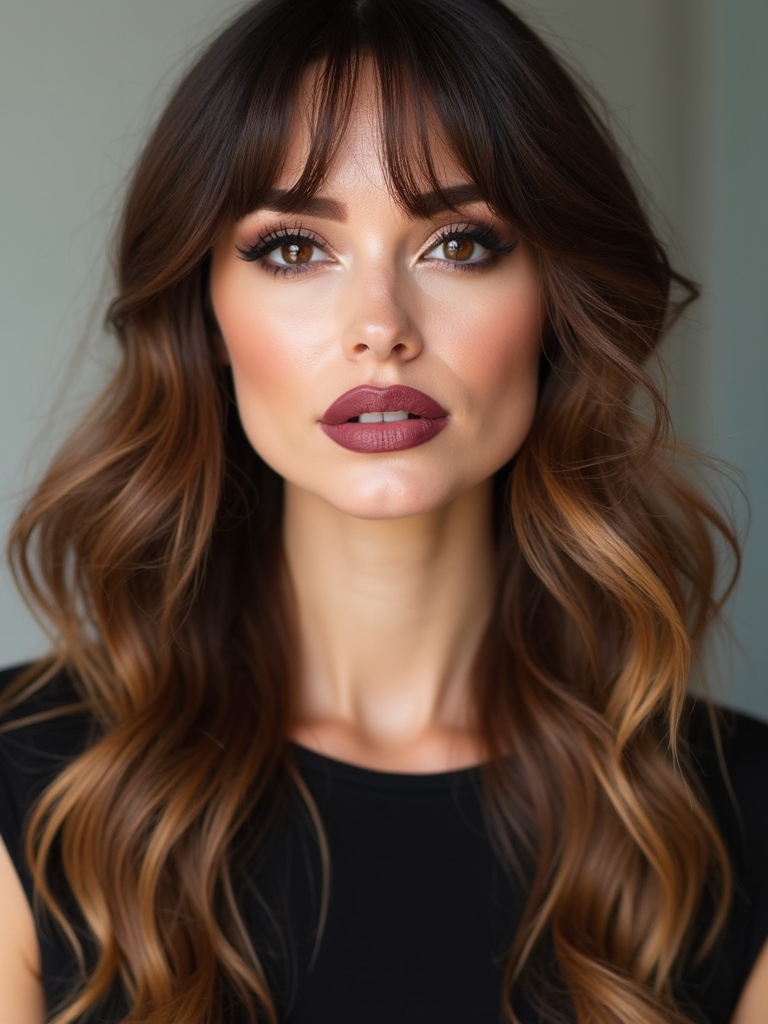
On a full, bouncy blowout, curtain bangs pick up a subtle lift at the root that turns noticeably glamorous. Round-brushing the fringe up and back while drying builds soft volume and a slight flick at the ends.
The lift is the whole trick: dry the fringe up and away from the face with a round brush, then finish with a blast of cool air to set the shape before it falls.
- A round brush pulls the fringe up and back while drying
- A cool-air finish locks the volume in place
- Best saved for a night out or any polished occasion
Just Another Layer on a Textured Shag
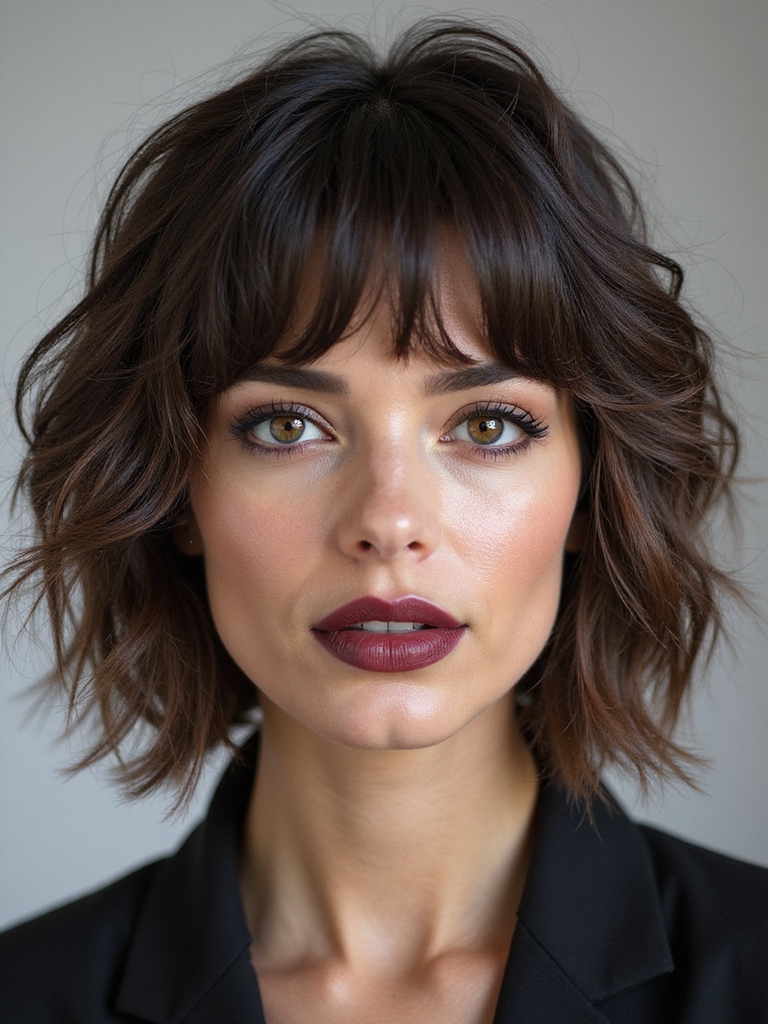
On a textured shag, curtain bangs slot in as simply the softest, shortest layer, completing the cut’s all-over movement as one piece.
Match the fringe’s texture to the choppy layers behind it, and a scrunch of texture spray pulls the whole shape together into one cohesive silhouette.
- The fringe becomes the front-most layer of the shag itself
- Texture spray, scrunched in, unifies bangs and lengths together
- Suits anyone who already wears their shag undone and loose
💡For the Flicked-Out Shape
Wrap each side of the fringe loosely around a small round brush while blow-drying, holding for a few seconds before releasing, to get the flicked-out curtain shape without doing a full blowout.
Letting Curls Keep Their Bounce in a Curly Crop
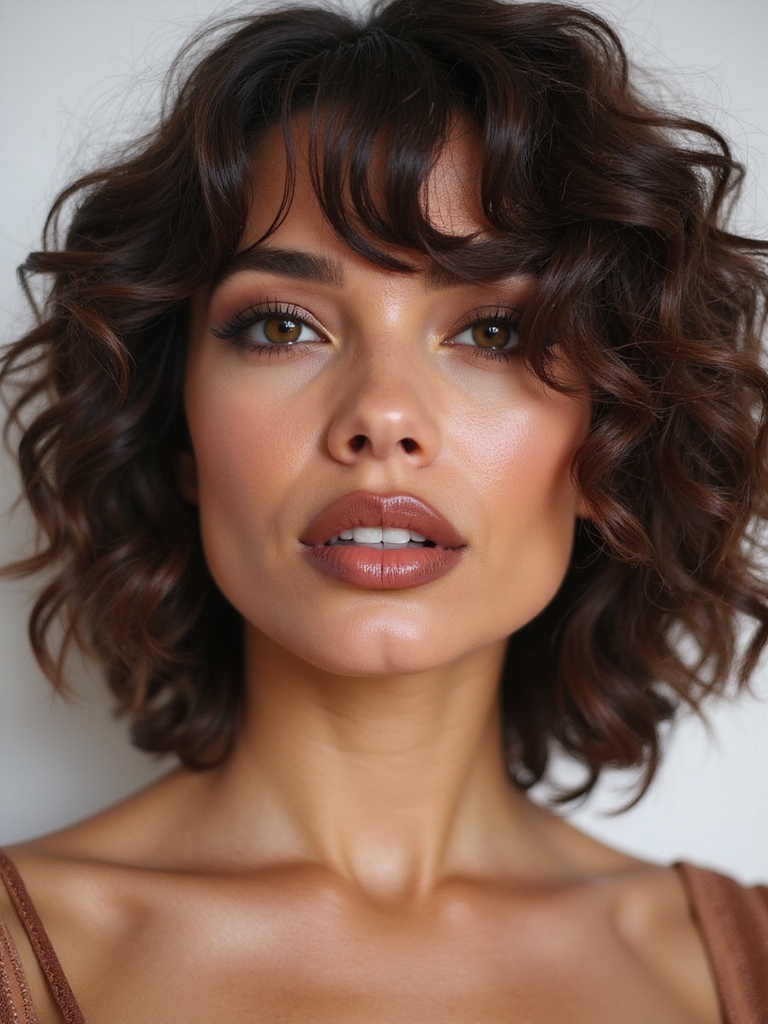
Curly hair wears this fringe well, the natural coil giving it bounce and a floating quality around the face, quite different from how a straight-cut curtain would sit.
Have the fringe shaped on dry, defined curls, so the stylist can see exactly where each coil lands. Our curly bangs guide covers the cutting technique in more depth.
- Cut on dry, defined curls for the most accurate placement
- A curl cream plus a diffuser keeps the fringe as bouncy as the rest
- Let the coils spring on their own, no forcing them into a flat shape
A Split Fringe on Long Layers, No Length Lost
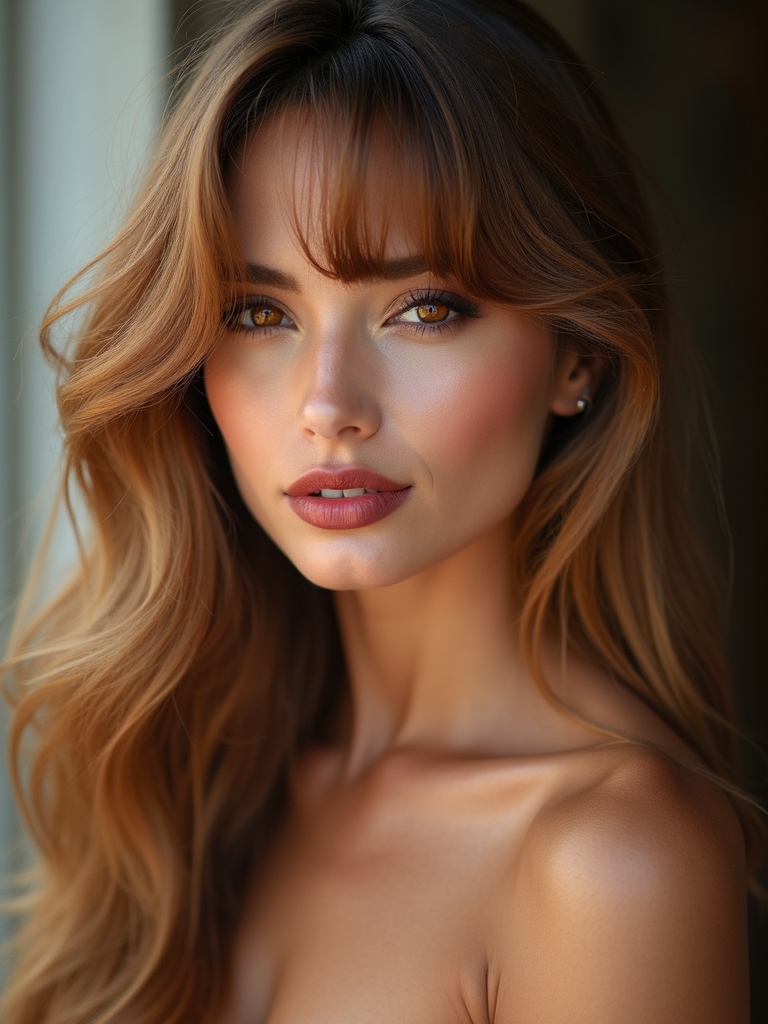
On long, layered hair, a split curtain fringe adds framing at the front without taking off any real length. The pieces part and sweep to either side, blending into the longest layers so the whole thing looks like one cut.
Because the split pieces stay long and connected to the surrounding layers, they grow out with almost no visible line, making this the lowest-commitment version of a fringe for anyone protective of their length.
Sweep the pieces back and out with fingers or a round brush so they catch movement and lift away from the face.
A Swooping Fringe Left Out of a Half-Up Twist
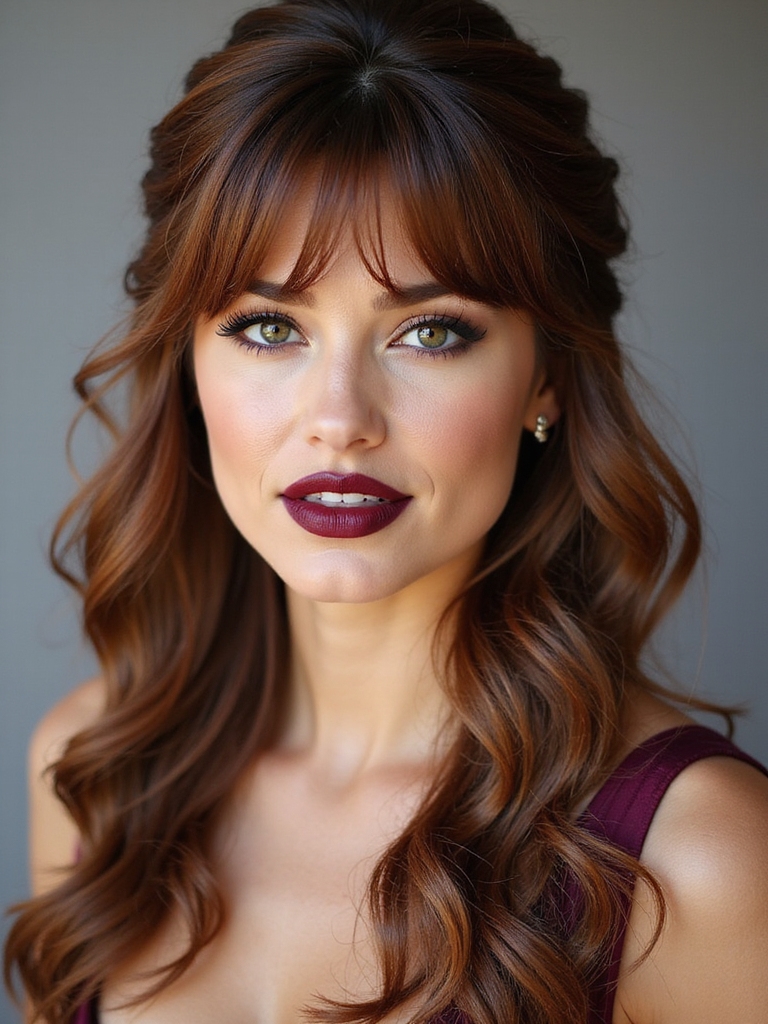
A half-up twist with the fringe left swooping at the front reads romantic and pulled-together, even on a two-minute styling morning. Twisting the top sections back keeps hair off the face while the swooping fringe and a few loose pieces frame it.
Let the fringe swoop dramatically toward the cheekbones as you pin the twist, since the contrast between the secured twist and the soft, moving fringe is what actually makes the style work.
- Twist secures the crown; the fringe supplies the movement
- Pin the twist first, then arrange the fringe around it
- Suits everything from a work day to a weekend event
Where a Glass Bob Meets a Soft Curtain Edge
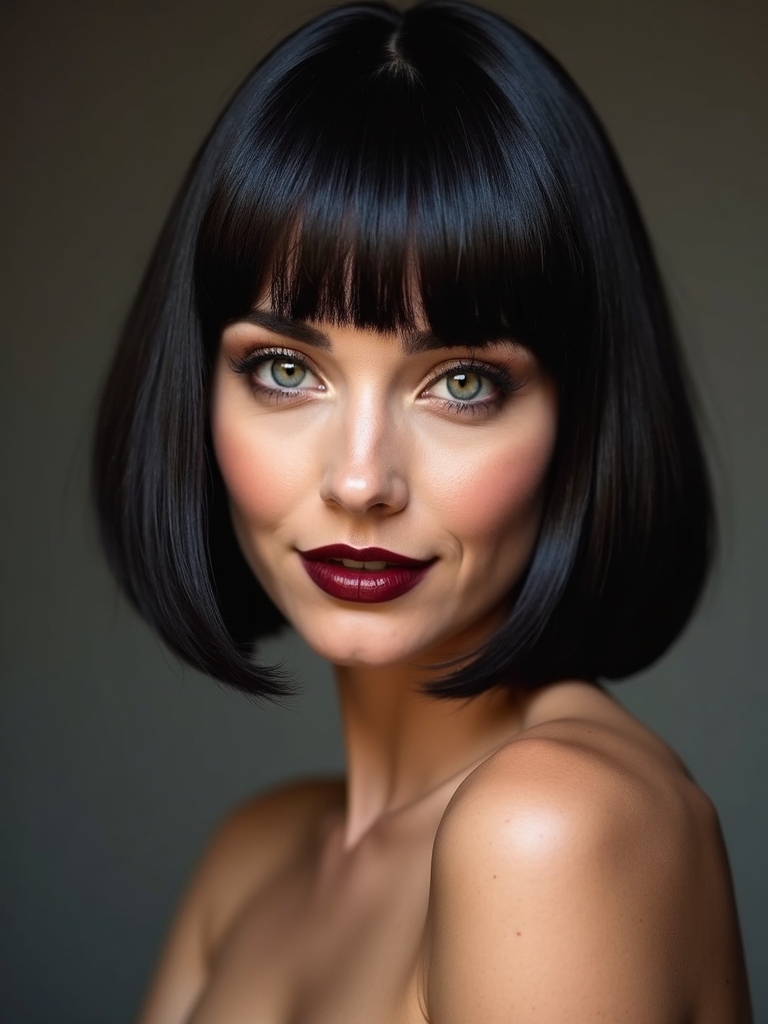
A glass bob runs on high shine and blunt precision, and softening its front edge with a wispy curtain fringe keeps the whole thing from feeling cold. The sharp, glossy line and the soft, parted bangs sit in deliberate contrast.
Keep the fringe thin and fine so it doesn’t compete with the bob’s sharp perimeter. A flat iron keeps both the bob and the fringe equally glassy.
- Fringe stays wispy so it doesn’t fight the bob’s blunt line
- A flat iron unifies the shine across bob and fringe both
- A fashion-forward pairing for anyone who wants edge with softness
📋Before You Ask for This Pairing
- ✓Confirm your stylist will keep the fringe actually thin, not just short
- ✓Bring a photo showing both the bob’s blunt line and the fringe’s softness
- ✓Plan on a flat iron most mornings; this look isn’t a wash-and-go
Piecey Texture That Matches Beachy Waves
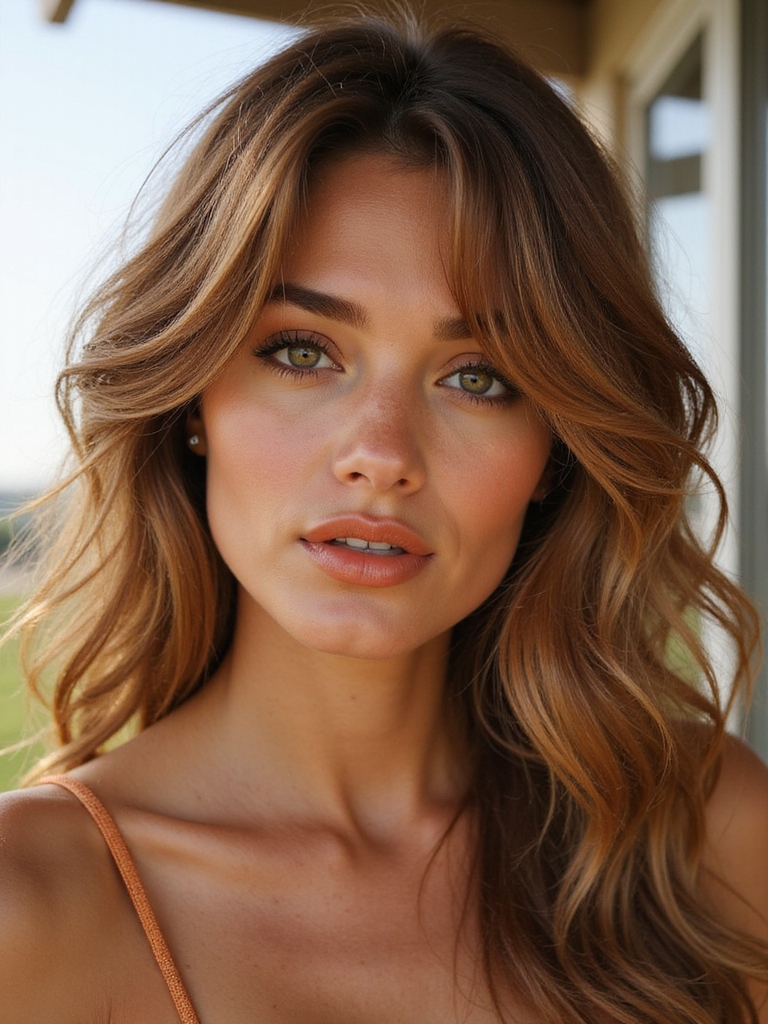
Take the soft-wave look further into full, gritty beach texture, and the fringe comes along with a matching piecey finish. The undone waves and the separated fringe share the same just-off-the-beach feel.
A sea-salt spray gives both the lengths and the fringe the same matte texture, so they come across as one unified decision. Scrunch it into the waves, then pinch a little through the bangs to separate the pieces.
Wisps Left Loose Around a Formal Updo
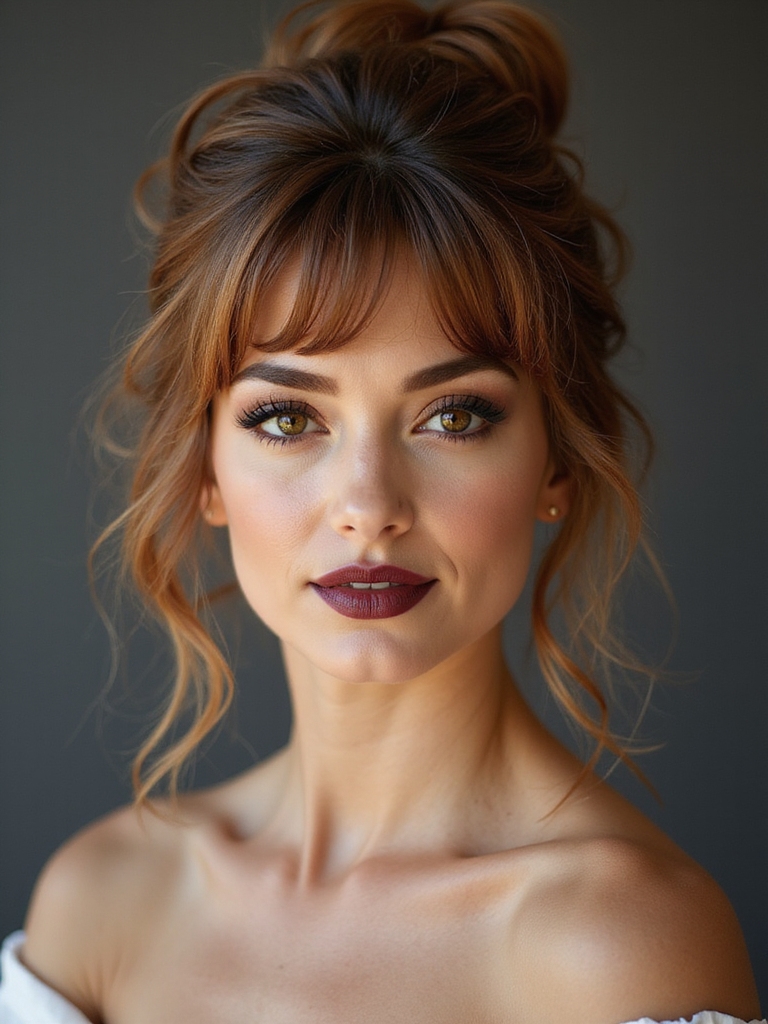
For an event, a soft, voluminous updo with the fringe and a few wisps left out turns noticeably romantic. The updo supplies height and polish while the loose pieces keep it from looking overly formal.
Free the fringe and a few face-framing strands before building the updo, and curl them softly for extra movement. This is one of the more forgiving ways to wear the fringe for a wedding, a gala, or any dressed-up night.
Air-Drying Straight Hair Into a Soft Part
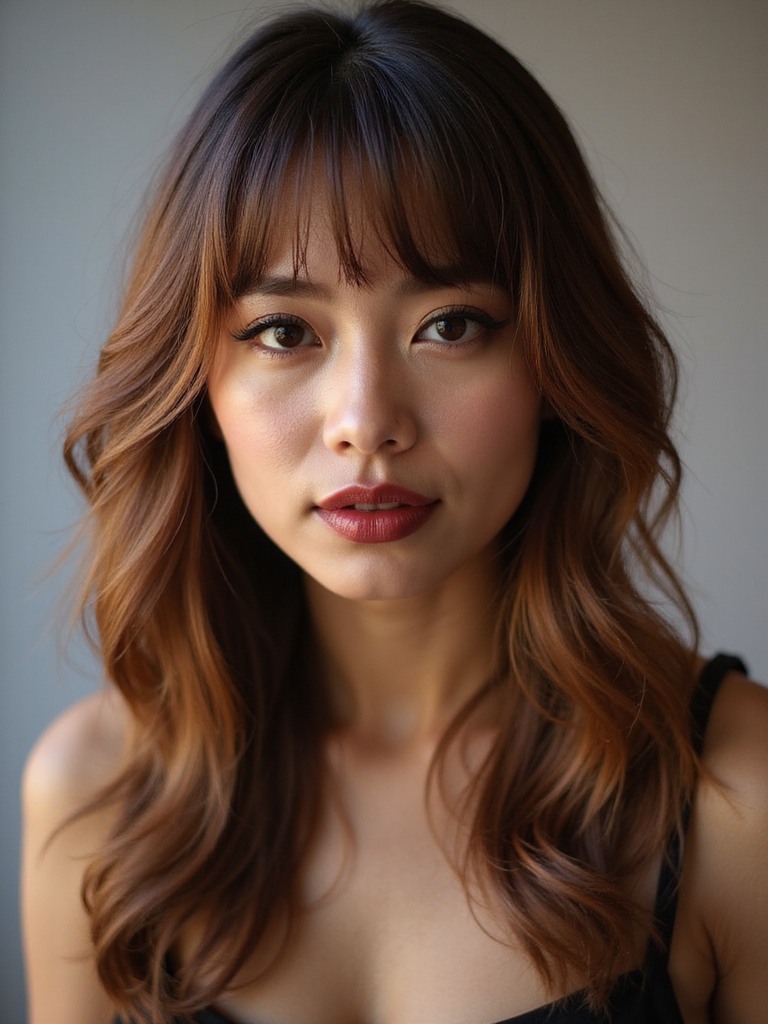
The lowest-effort version of all is air-dried straight hair with a softly parted fringe, proof that this style doesn’t need a single hot tool to look intentional.
The One Step Worth Doing
On naturally straight hair, the fringe parts down the middle and falls into a soft frame as it dries on its own. The one thing worth doing is guiding it: split it down the center and sweep each side back with fingers while it’s still damp, so it doesn’t dry flat against the forehead.
A small amount of light cream smoothed through while damp keeps flyaways down without adding any real weight.
Common Mistakes That Undercut This Fringe
The most common misstep is cutting the fringe too heavy, closer to a blunt curtain than a wispy one, which fights the whole point of the style. Ask specifically for the ends to be point-cut so the pieces stay separated.
The second is skipping product entirely on the fringe while styling everything else. A tiny bit of cream or a light hold spray on just the bangs, similar to what the rest of your hair gets, keeps them from looking like an afterthought by mid-afternoon.
Wispy Curtain Bangs Questions
?How much does upkeep on this fringe actually cost?
A standalone bang trim is often free or under $20 between full haircuts, roughly half what a dedicated fringe-only appointment would run elsewhere, since most stylists fold it into a regular visit.
?Can this fringe work with a cowlick at the hairline?
Usually, yes. A cowlick just means the part may not land perfectly center; a stylist can angle the part slightly to work with the growth pattern instead of forcing it into a straight line down the middle.
?What’s the difference between this and a full, blunt curtain fringe?
Thickness and cut technique. A wispy version is point-cut and thinner throughout, so it separates into pieces; a blunt curtain fringe stays denser and reads heavier, closer to a solid curtain than an airy one.
The Fringe That Works With Whatever You’re Already Doing
Across every look here, from a sleek bob to a beachy wave to a formal updo, the same soft fringe does the same job: it frames the face and asks almost nothing in return. It bends to whatever you’re already doing with your hair, adapting rather than dictating a whole new routine.
Save whichever version matches your everyday, and try it before your next full cut: ask your stylist to add the fringe into your existing layers first, a smaller change than committing to a brand-new haircut built around it.
More to Explore