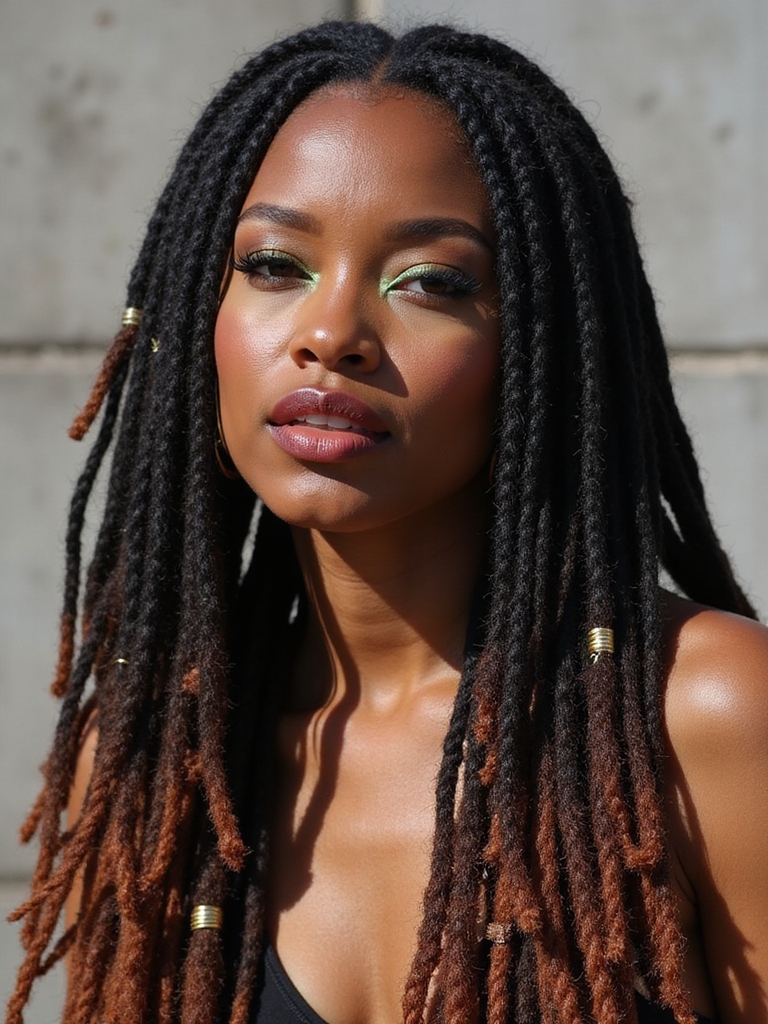
Two months into a fresh set of locs, the only style in rotation is usually a plain ponytail, tucked back out of the way while the hair figures itself out. By the time that same set matures, the rotation has grown into a real wardrobe of locs hairstyles for women who want more than one look: a five-minute half-up for a weekday, a barrel-twist updo for a wedding, maybe a honey ombre debated for a year before finally getting booked.
That’s the real story of locs for women: the locking itself is permanent, but the styling around it never stops moving. Sixteen looks follow below, from a first starter set to a braided crown, with honest notes on what each one asks of time, budget, and the hairline.
Building a Loc Wardrobe
- Method and size get chosen with a loctician at the start, since that decision shapes every style that follows for years.
- A few everyday staples, a ponytail, a bun, a half-up, cover most days with almost no effort.
- One or two rehearsed occasion looks, like a barrel-twist updo or braided crown, handle the rest.
- Loose, low-tension styling protects the hairline across the whole journey, regardless of which look is in rotation.
Starter Locs, the Foundation for Everything After
Every loc wardrobe begins here, with a starter set that decides size, pattern, and overall personality for years to come. Comb coils, two-strand twists, or interlocking are the usual starting methods, each matched to hair texture by a loctician during the first consultation.
Choosing a Size Early
A starter install commonly lands around $150, depending on length and technique chosen. The method matters most.
Patience matters more than styling at this early stage. Neat parts and a simple accessory keep a starter set looking intentional while the locks settle in, and the size chosen now stays for a long time, so it’s worth weighing honestly how much upkeep feels realistic.
Chunky Rope Locs for Bold Dimension

Thicker and fewer in number, chunky rope locs make a confident, dimensional statement with substantial, rope-like sections. The larger size alone carries real visual weight.
That scale changes the maintenance math too, since covering the same head takes noticeably fewer individual sections than a finer loc size would.
- Fewer total locs mean faster retwisting sessions than fine locs need.
- Suits anyone after strong texture and impact without heavy weekly maintenance.
- Bold and sculptural enough to read as a style on its own, no adornment required.
Microlocs for Lightweight Versatility

Microlocs are the finest, smallest version of the style, and that fineness is the entire appeal. Movement is the whole point. With so many slim sections, they gather and move almost like loose hair, opening up intricate parts, detailed braids, and gap-free updos that thicker locs simply can’t manage.
The trade-off shows up in time. Installing microlocs takes many hours, sometimes across more than one appointment, and the maintenance schedule afterward runs more frequent too, so it rewards someone who truly wants that styling range and is prepared for the upkeep it demands.
ℹ️Microlocs, By the Numbers
A full head of microlocs can run into several hundred individual sections, each roughly the width of a toothpick, which is exactly what gives the style its loose-hair-like movement.
Boho Goddess Locs With Curly Accents

Usually installed as a faux or extended style, goddess locs leave soft curly pieces loose along the length for a romantic, bohemian finish. The curls spilling between sections add movement that’s made this a go-to feminine loc look for years.
A full faux install typically costs close to double a standard retwist, and holds for several weeks before it needs redoing.
- Worn over natural hair, this rests the real strands underneath as a protective style.
- A light oil worked through the curly pieces keeps them defined between wash days.
- A romantic, softer alternative to sleeker, more uniform loc looks.
Freeform Locs That Grow Their Own Way

Freeform locs grow with little to no retwisting, so each section takes on its own size and shape as the hair decides where and how to join. For many women, this is a deeply personal choice that honors the hair’s own locking process rather than directing it, and the result is a set with character no two heads ever share.
- Each loc varies in thickness naturally; that variation is the look, not a flaw.
- The most hands-off installation method of any loc type.
- Still calls for regular washing; freeform was never meant to mean unwashed.
Barrel Twist Updos for Elegant Occasions

Barrel twists, where two locs wind around each other, pin up into sculpted, sophisticated updos that prove locs are entirely capable of formal occasions. Weight does the holding. The twists add pattern and texture, keeping a polished shape through a long evening thanks to the natural heft of the locs themselves.
- Twist pairs of locs together, then pin the twisted sections into the desired updo shape.
- Holds for hours with very little product, since loc weight does most of the work.
- Unraveled the next day, the twists leave a soft, crimped texture as a second look.
Choosing an occasion updo by how much time is available:
🎯Fifteen minutes or less
A simple bun or half-up handles most last-minute plans.
🎯Half an hour to spare
A barrel-twist updo delivers real polish without a professional appointment.
🎯Booking ahead of a big event
A braided crown, done by a stylist, holds the longest and photographs the best.
Half-Up, Half-Down for Everyday Ease

This is the everyday workhorse of loc styling. The top section pulls up while the rest falls loose, keeping hair off the face while the length still shows, and the whole thing takes barely a minute to put together.
Making It Look Deliberate
It earns a permanent spot in most rotations for exactly that reason: the pulled-up portion can be a bun, a knot, or a small ponytail, dressed up or left plain depending on the day.
Smoothing a touch of edge control along the perimeter before pinning is what makes the whole thing look finished, and reaching for a satin-covered band over a bare elastic keeps the gather point from denting the locs underneath.
Buns and Topknots With Modern Edge

Buns and topknots gather locs into clean, contemporary shapes that keep them secured and off the neck. A high topknot reads bold and current; a low bun reads refined and quiet. Both quietly protect the loc ends by tucking them away entirely.
- A topknot for bolder days, a low bun for polished ones.
- Both shapes protect the ends while keeping hair fully out of the way.
- Keeping the gather loose right at the hairline matters more than the shape itself.
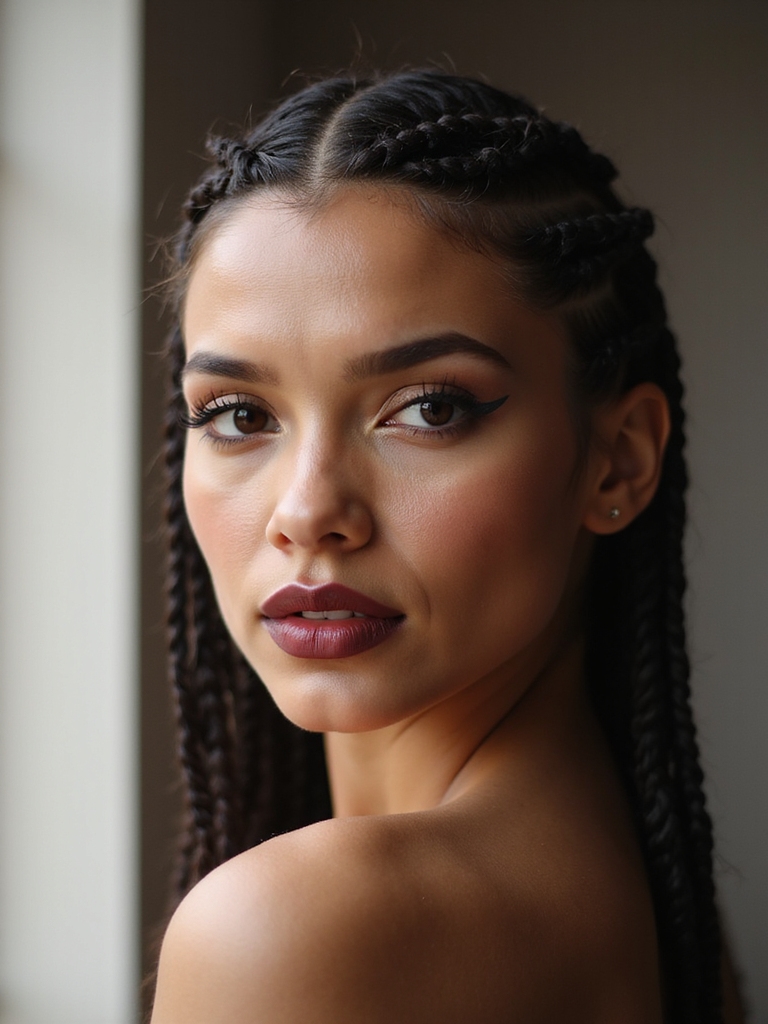
Cornrowed Locs for Clean Lines

Cornrowing locs flat against the scalp turns them into clean, patterned lines that read polished and intricate at once. The lines do the work. The patterns can run simple or elaborate, curved or geometric, and beyond the visual craft they keep hair controlled and the ends tucked away and protected.
- Sculpt simple or complex patterns depending on the occasion.
- Doubles as a protective style since the ends stay tucked throughout.
- A practical choice for travel, workouts, or any longer stretch of low-effort wear.
Color-Popped Locs With Ombre and Highlights

Color brings real personality to a loc set, ranging from subtle highlights to a full ombre melt or a saturated all-over tone. Locs take color surprisingly well, and the range runs from sun-touched caramel ends to a truly striking statement shade.
Keeping Colored Locs Healthy
Because that color sits on hair that’s already locked, placement and depth matter even more than on loose hair. An ombre kept to the lower length leaves the scalp untouched and the ongoing upkeep lighter.
Professional application protects the integrity of the locs best, followed afterward by a gentle, color-safe routine to keep the tone from fading unevenly.
🅰️Subtle Highlights
Lower-commitment, easier to maintain, and gentler on the scalp since the color sits away from the roots.
🅱️Full Ombre or All-Over Tone
A bigger visual statement that asks for more frequent professional upkeep to stay even.
Accessorized Locs With Shells and Cuffs

Adorning locs with shells, metal cuffs, beads, and thread wraps is a personal way to make a set distinctly one’s own, and for many wearers these adornments carry real cultural and personal meaning alongside their visual style. The pieces slide onto or wrap around individual locs, so the look can shift whenever the mood calls for it.
- Fit matters most: choose pieces sized to loc diameter so they sit without pulling.
- Cuffs, beads, shells, and thread wraps all personalize a set differently.
- Keep adornments light enough that they never add strain to a single loc.
Bob-Length Locs for Playful Proportion

Once locs are established and mature enough to hold a shape, cutting them into a bob delivers a chic, modern proportion with a sharp, even line. The shorter length stays light, styles quickly, and suits most face shapes without much fuss.
It suits anyone after structured locs without the added weight and upkeep that comes with long length, refreshing the whole look in a single appointment.
For a closer look at how many directions a short set can take, the loc bob guide walks through blunt, layered, and asymmetric versions worth bringing to a loctician.
Long, Flowing Locs for Dramatic Length

Long, flowing locs are the reward of years spent growing, and they make a statement purely through length. Worn down, they carry full drama; gathered up, they open into nearly endless updos, crowns, and wraps.
Managing the Weight of Length
Length also means weight, and that weight pulls steadily on the roots and hairline over time. Long locs do best with gentle handling and styling that spreads the load rather than concentrating it in one spot.
The habit worth building by the time locs reach waist length is simple: stop repeating the exact same heavy style every single day. Rotating where the weight sits is what protects both the locs and the edges beneath them.
“The clients who keep long locs looking healthiest longest are the ones who treat styling rotation as maintenance, not just variety. Repeating one heavy updo daily is what actually stresses the hairline over time.”
Braided Loc Crowns for Special Occasions

A braided loc crown wraps locs around the head in a braided or twisted halo for a regal, romantic finish that frames the face beautifully. This turns an everyday set into a true occasion style for weddings, ceremonies, and other milestone events.
The style works best on medium to long locs, since the length needs enough reach to travel fully around the head without a section running short.
- Best suited to medium-to-long locs with enough length to circle the head.
- A few adornments tucked into the braid add an extra occasion touch.
- Holds through a full event without needing a single touch-up.
Protective Styles for Active Days

On busy or active days, protective shapes like buns, braided updos, and cornrowed locs keep hair secured, off the face, and out of the way through exercise, work, or travel. Gathering locs up protects the ends during movement. This practical layer is what lets every other style on this list take its turn.
- Buns and braided updos hold up through workouts and travel alike.
- Protecting the ends matters just as much as keeping hair off the face.
- A satin wrap at night, especially after a sweaty day, holds moisture in.
Loc Hairstyles for Women, Answered
?How versatile are locs really, day to day?
Far more than the common myth suggests. The locking is permanent, but the styling is endlessly changeable: worn down, gathered into ponytails and buns, swept into updos and braided crowns, cut into a bob, colored, cornrowed, or adorned. That range only grows as the locs mature and lengthen.
?Can locs really work for formal occasions?
Absolutely. Barrel-twist updos, braided crowns, and sculpted buns all hold beautifully through long events, since the natural weight of mature locs keeps the shape in place without heavy product. A few tucked-in adornments dress the look up further.
?Does adding color damage locked hair?
Professional application, kept to the lower length rather than the roots, keeps the risk low and the scalp untouched. The bigger risk comes from skipping color-safe aftercare once the tone is in, not from the color process itself.
?What’s the single most important habit for protecting a loc set long-term?
Rotating styles rather than repeating the same heavy, pulled-back look every day. Tension concentrated in one spot, especially near the hairline, is the most common cause of lasting damage across every loc size and length.
One Head of Locs, an Entire Wardrobe
Locs are far from limiting for the women wearing them. The locking itself may be permanent, but the styling around it keeps expanding: a quick morning ponytail today, an elegant braided crown next month, a bob or a bold new color whenever the mood shifts.
Building a handful of everyday staples alongside one or two rehearsed occasion looks, personalizing with color and adornment along the way, and protecting the hairline with loose, gentle styling throughout, that combination is what turns one loc set into a genuine wardrobe rather than a single fixed look.
More Inspiration